
美团

Search documents
再惠冲刺港股IPO:营收三年复合增长28%背后 毛利率骤降7%与累计亏损21.7亿隐忧
Xin Lang Cai Jing· 2026-02-15 13:29
主营业务与商业模式:AI驱动的餐饮线上服务商 再惠定位为中国餐饮线上运营与营销解决方案提供商,核心业务包括新媒体系列服务(2024年占营收 60.3%)和在线商户解决方案(31.1%)。公司通过"AI小惠"模块实现自动化店铺诊断,"AI达人匹配"模 块连接70,712名达人资源,2024年促成超9.3亿次跨平台互动,在大众点评和小红书分别占据14.4%和 9.8%的市场份额。 来源:新浪港股-好仓工作室 商业模式采用"技术+服务"双轮驱动:新媒体系列服务按项目收取服务费(平均客单价约6.3万元/年), 在线商户解决方案采取订阅制(平均合同期6-12个月)。截至2025年9月30日,累计服务43,890家客 户,覆盖中国28个省级行政区。 营收增长30.8%:新媒体系列服务成增长引擎 公司营收从2023年的3.79亿元增长至2024年的4.95亿元,年复合增长率达30.8%;2025年前三季度营收 4.49亿元,同比增长25.9%。增长主要由新媒体系列服务驱动,该业务收入从2023年1.91亿元激增55.7% 至2024年2.98亿元,2025年前三季度进一步增至2.99亿元,占总营收比例从50.6%提升至66 ...
商米科技通过上市聆讯 蚂蚁美团等持股
Jin Rong Jie· 2026-02-15 13:01
Core Viewpoint - Shanghai Shangmi Technology, a provider of Business Internet of Things (BIoT) solutions, is undergoing a listing hearing on the Hong Kong Stock Exchange, aiming to be listed on the main board [1] Company Overview - The company's BIoT solutions include smart devices and BIoT PaaS platforms [1] - It has served over 70% of the top 50 global food and beverage companies [1] - In China, it has achieved over 70% coverage of the top 100 restaurant brands and over 60% coverage of the top 100 chain stores [1] Market Reach - As of September last year, the company's solutions have been implemented in over 200 countries and regions, covering more than 90% of the global market, including all G20 countries [1] Shareholding Structure - Alibaba's Ant Group holds a 27.3% stake in Shangmi, while Meituan and Xiaomi hold 8.2% and 7.8% stakes, respectively [1]

350余场文化惠民活动,服务近20万人次,北京市文联送上丰富“艺术年货”
Xin Lang Cai Jing· 2026-02-15 12:40
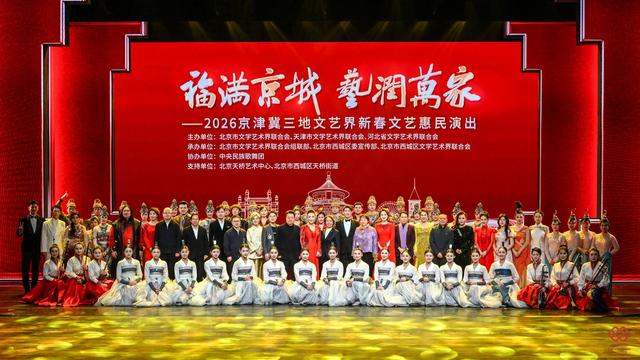
Core Viewpoint - Beijing's cultural activities during the Spring Festival have successfully engaged over 200,000 citizens, showcasing a rich cultural atmosphere and receiving widespread acclaim [1][3][5]. Group 1: Cultural Activities and Engagement - More than 350 cultural activities were organized, with over 3,000 artists participating and nearly 180,000 couplets and 11,000 folk art pieces distributed to the public [1]. - The "Send Blessings to Thousands of Families" series of cultural activities was launched in collaboration with Tianjin and Hebei, featuring performances by artists from the three regions and inviting over 800 frontline workers to attend [3]. - The 22nd Beijing Spring Concert attracted nearly 10,000 attendees, emphasizing the capital's role in national cultural development [7]. Group 2: Focus on Laborers and New Employment Groups - Activities were specifically designed for new employment groups and frontline workers, including over 40 performances and art workshops in various sectors such as delivery and construction [3][5]. - At the Meituan headquarters, diverse art forms were presented, transforming delivery workers into honored guests and enhancing their sense of belonging and happiness [5]. Group 3: Integration of Traditional Culture and Modern Elements - The "Chinese New Year Painting Collection" event combined traditional culture with modern elements, featuring various activities that highlighted the integration of art and technology [9][14]. - The "Poetry and Couplets Guessing" event at the temple fair engaged visitors with interactive cultural experiences, promoting cultural heritage in an enjoyable manner [11]. Group 4: Collaborative Efforts and Resource Sharing - The Beijing Federation of Literary and Art Circles adopted a "1+N" model to create a strong collaborative force for cultural prosperity, involving multiple local federations [15]. - Various district federations focused on integrating traditional culture with local characteristics, enhancing community engagement through immersive cultural experiences [15].

新华财经周报:2月9日至2月15日
Xin Hua Cai Jing· 2026-02-15 09:43
Domestic News - The "Modern Capital Urban Circle Spatial Collaborative Planning (2023-2035)" has been released, marking the first urban circle plan approved by the Central Committee of the Communist Party of China and the State Council. The plan emphasizes the "four zones and one engine" positioning, aiming to construct a nested structure of commuting, functional, and industrial collaboration circles, and promotes the coordinated development of Beijing-Tianjin-Hebei region to build a world-class urban circle [1] - The Ministry of Commerce announced that the first batch of national subsidy funds amounting to 62.5 billion yuan has been allocated to local commerce departments, which will guide increased subsidy distribution during the nine-day Spring Festival holiday [3] - The People's Bank of China reported that by the end of January, the broad money supply (M2) reached 347.19 trillion yuan, reflecting a year-on-year growth of 9% [6] - The State Administration for Market Regulation has interviewed seven platform companies to eliminate various forms of "involution" competition and ensure compliance with competition laws [7] Industry Developments - The State Council has issued implementation opinions on improving the national unified electricity market system, aiming for 70% of electricity consumption to be traded in the market by 2030 [2] - The Ministry of Industry and Information Technology has proposed to enhance the planning and policy support for the low-altitude industry, aiming for a 90% coverage of ground mobile communication networks for low-altitude public air routes by 2027 [4] - The National Development and Reform Commission and other departments have released opinions to promote the high-quality development of low-altitude insurance, with a mandatory insurance system for unmanned aerial vehicles expected to be established by 2027 [4] - The Ministry of Industry and Information Technology and other departments have issued opinions to strengthen the capacity building of the information and communication industry to support low-altitude infrastructure development [5] Market Regulation - The State Administration for Market Regulation has released guidelines to regulate pricing behavior in the automotive industry, aiming to promote a healthy and orderly automotive market [8] - The National Bureau of Statistics reported that in January, the consumer price index (CPI) rose by 0.2% year-on-year, with food prices decreasing by 0.7% and non-food prices increasing by 0.4% [8] - The National Bureau of Statistics also indicated that in January, the sales prices of new residential properties in first-tier cities decreased by 0.3% month-on-month, while second-hand residential prices fell by 0.5% [9]
视频丨春节红包大战的大厂被约谈了,包括抖音、百度、腾讯、京东、美团等平台企业
Xin Lang Cai Jing· 2026-02-15 08:41
Core Insights - The article discusses the recent developments in the financial market and their implications for investment strategies [1] Group 1: Market Trends - The financial market has shown significant volatility, with major indices experiencing fluctuations due to economic indicators [1] - Recent data indicates a 5% increase in consumer spending, which may signal a recovery in the economy [1] - Analysts predict that interest rates may rise by 0.25% in the next quarter, impacting borrowing costs [1] Group 2: Company Performance - Several companies reported quarterly earnings that exceeded market expectations, contributing to positive investor sentiment [1] - A notable tech company achieved a revenue growth of 15% year-over-year, driven by strong demand for its products [1] - The healthcare sector has seen a 10% increase in stock prices, attributed to advancements in biotechnology [1]



逆势“扫货”!南向资金为何“勇闯”港股?后市关注三大因素
券商中国· 2026-02-15 08:18
Core Viewpoint - The Hong Kong stock market, particularly technology stocks, has been experiencing a price correction, yet southbound funds have been actively buying, with a notable net purchase of 17.893 billion yuan on the last trading day before the holiday, indicating strong investor confidence despite market adjustments [1][4]. Group 1: Market Performance and Investor Behavior - Southbound funds have shown resilience, with a cumulative net purchase amount of 136.151 billion yuan year-to-date, nearly matching the same period last year [4]. - On February 5, southbound funds recorded a single-day net purchase of 22.206 billion yuan, the highest for the year, with several days of net purchases exceeding 10 billion yuan [5]. - Despite the Hang Seng Index closing lower at 26,567.12 points, southbound funds continued to buy, reflecting a contrarian investment strategy [4]. Group 2: Reasons for Market Weakness - Analysts attribute the weak performance of the Hong Kong stock market to liquidity shocks, particularly influenced by the nomination of a hawkish Federal Reserve chair, which has raised concerns about tightening global liquidity [2][7]. - There is a divergence in investor sentiment regarding AI capital expenditures, with concerns that increased spending may negatively impact cash flow and investment returns for major tech companies [8]. - The overall fundamentals of the Hong Kong market are perceived to be weaker than those of the A-share market, although the structural advantages of Hong Kong stocks remain [8]. Group 3: Future Outlook - Analysts believe that the fundamentals supporting the Hong Kong technology sector have not changed, and the current price discount relative to A-shares is near historical highs, suggesting a potential rebound [2][9]. - The Hong Kong technology index is characterized by a combination of oversold valuations, contrarian buying, and positive AI fundamentals, indicating a favorable risk-reward ratio for medium to long-term strategic allocation [9]. - The market adjustment is viewed as a short-term emotional disturbance rather than a fundamental trend reversal, with expectations for a gradual recovery as sentiment stabilizes and leading companies resume buybacks [9].

人民币涨了,然后呢?
Sou Hu Cai Jing· 2026-02-15 07:36
Core Viewpoint - The recent appreciation of the Renminbi (RMB) is notable, with a January settlement surplus of 559.1 billion, leading to a rise in the exchange rate to around 6.9. However, the lack of panic selling of USD raises questions about the market's confidence in the RMB's long-term strength [2][4][7]. Group 1: Factors Influencing RMB Appreciation - The RMB's recent strength is attributed to three main factors: a weaker USD, increased foreign reserves, and seasonal currency exchange for the Lunar New Year [2]. - The RMB's appreciation may also be seen as a strategic response to geopolitical tensions, particularly in light of potential tariffs from the Trump administration, which typically would pressure the RMB to depreciate [4][5][6]. Group 2: Market Sentiment and Future Outlook - Historical patterns suggest that the RMB may initially strengthen in response to trade tensions before potentially depreciating later, indicating that market sentiment plays a crucial role in currency valuation [6][7]. - The biggest uncertainties for the RMB in 2026 are not solely related to the Federal Reserve or China's economic growth, but rather the policy outcomes following the U.S. elections, which could include tariffs and other restrictions [9][10]. Group 3: Investment Considerations - Investors are advised to focus on the willingness of banks to engage in currency exchange and the structure of foreign reserves, as these indicators reflect true market confidence in the RMB [19][20]. - The current market environment suggests that while the RMB may appreciate, fluctuations are likely, and investors should be cautious about making hasty decisions based on short-term movements [12][14][27].

未来已来 抢抓时代机遇!2026未来产业新材料博览会(6月10-12日 上海)
DT新材料· 2026-02-15 07:20
Core Viewpoint - The 2026 Future Industries New Materials Expo (FINE 2026) aims to lead global innovation in new materials, emphasizing their critical role in the transformation of high-tech industries and future economic development [1][2]. Group 1: Event Overview - FINE 2026 will take place from June 10 to June 12, 2026, at the Shanghai New International Expo Center, featuring a total exhibition area of 50,000 square meters and over 300 strategic and cutting-edge technology reports [2][18]. - The expo will focus on popular innovations applicable to various industries, including artificial intelligence, aerospace, smart vehicles, and renewable energy, while addressing five common needs in future industries: advanced semiconductors, advanced batteries, lightweight functionalization, low-carbon sustainability, and thermal management [2][10]. Group 2: Historical Context and Participation - The previous events, including the 2025 International Carbon Materials Expo and the 2025 Thermal Management Expo, achieved record attendance with over 35,000 professional visitors from 27 countries and regions, showcasing more than 500 exhibitors [7][36]. - The expected participation for FINE 2026 is over 100,000 professional visitors, with targeted invitations to over 5,000 industry investors to facilitate connections between startups and industry resources [35][37]. Group 3: Thematic Focus and Special Features - FINE 2026 will feature seven specialized thematic exhibition areas, including advanced semiconductors, AI chips, thermal management, and sustainable materials, aiming to present a comprehensive chain of innovation from components to cutting-edge technologies [13][15]. - The event will host over 30 forums with more than 300 renowned experts discussing trends in technology, investment strategies, and advanced manufacturing techniques related to new materials [22][24]. Group 4: Strategic Importance - The expo is positioned as a critical platform for technology transfer and industry innovation, leveraging China's growing influence in sectors like new energy vehicles, photovoltaics, and robotics, which are expected to create significant market opportunities for new materials [10][36]. - The timing of the event in June is seen as a strategic opportunity to capture business prospects for the second half of the year, supported by Shanghai's robust industrial and technological ecosystem [10][36].

美团股东要哭死!外卖大战血流成河,一年打没了600亿,抖音转头又把刀架在团购脖子上了!
Xin Lang Cai Jing· 2026-02-15 07:19
Core Viewpoint - Meituan has issued a profit warning, expecting a net loss of over 23 billion to 24.3 billion yuan for 2025, a stark contrast to a profit of 35.8 billion yuan in 2024, indicating a significant downturn in its core local business segment [1][17]. Group 1: Financial Performance - Meituan's core local business, which includes food delivery and hotel bookings, is projected to suffer a loss of approximately 6.8 billion to 7 billion yuan in 2025, a drastic drop from a profit of 52.4 billion yuan in 2024 [2][17]. - The company's marketing expenses surged from 18 billion yuan to 34.3 billion yuan in a single quarter, reflecting the intense competition in the market [3][20]. - Meituan's quarterly performance shows a net profit of 10.05 billion yuan in Q1, a slight profit of 36.5 million yuan in Q2, followed by a significant net loss of 18.63 billion yuan in Q3, leading to a projected total loss of 23.3 billion yuan for 2025 [5][20]. Group 2: Competitive Landscape - The competition in the food delivery market has intensified, with Meituan, Alibaba (including Ele.me and Taobao Flash Sale), and JD.com engaged in a price war, collectively burning over 100 billion yuan in marketing expenses [6][20]. - Market share projections for the end of 2025 indicate Meituan holding 48-50%, Alibaba's group at 33-42%, and JD.com at 8-19%, marking a shift from a previous duopoly to a more competitive landscape [21][22]. - The entry of Douyin (TikTok) into the group buying space poses a significant threat to Meituan, as younger consumers are increasingly turning to Douyin for purchasing [28][29]. Group 3: Strategic Investments - Meituan's strategic investments include substantial subsidies to attract users, increased rider costs due to social security requirements, and efforts to lower fees for merchants to maintain competitiveness [3][18]. - Alibaba's Taobao Flash Sale is reportedly narrowing its loss per order, indicating a more efficient approach to competition, with expectations of continued investment in the instant retail market [10][25]. - The focus for both Meituan and Alibaba in 2026 will be on instant retail, with plans to enhance supply chain capabilities in key categories such as pharmaceuticals and fresh produce [14][26].
年夜饭预订爆满,北京老字号“焕新密码”是什么?
Bei Jing Qing Nian Bao· 2026-02-15 05:53
Core Insights - The article highlights the booming demand for traditional Beijing restaurants' New Year's Eve dinners, with many establishments fully booked weeks in advance, indicating a strong consumer interest in these historic dining options [1][2]. Group 1: Reservation Trends - Many traditional restaurants in Beijing, such as Bianyifang and Quanjude, reported that their New Year's Eve dinner reservations were sold out, with some bookings made as early as two months prior [2]. - Prices for New Year's Eve dinners range from hundreds to thousands of yuan, with specific packages offered by various restaurants, such as Quanjude's 400 yuan per person package and Bianyifang's 1,000 yuan for 6-8 people [2]. Group 2: Digital Transformation - Traditional restaurants are increasingly adopting digital solutions, including online ordering, VR room previews, and smart ordering systems, to enhance customer convenience and operational efficiency [3][4]. - Data shows that 206 traditional restaurant brands and 6,027 locations have completed their online transformation, with a nearly 9-fold increase in search volume and a 34% rise in order volume on platforms like Meituan [3]. Group 3: Innovation and Health Trends - The focus on health-conscious menu items is becoming a significant trend, with restaurants like Huatiansheng requiring their brands to include healthy options in their offerings [5]. - Creative product development, such as the plush toy representing Quanjude's roast duck, is being used to engage younger consumers and enhance the dining experience [5]. Group 4: Young Consumer Engagement - The proportion of young consumers (under 35) searching for traditional restaurant options has reached 48.5%, indicating a successful appeal to this demographic [5]. - The shift from merely selling products to offering experiences is a key strategy for traditional restaurants to attract younger patrons [5].