鹏鼎控股

Search documents
AI算力的下一战,不在芯片在PCB:得其新材料者得天下(附投资逻辑)
材料汇· 2025-09-29 16:02
Investment Highlights - PCB technology is evolving in materials, processes, and architecture, driving continuous value growth. The demand from AI servers, high-speed communication, and automotive electronics is pushing PCB technology upgrades across these three dimensions [2][3][9] - The upstream high-end materials are in short supply, and cost increases are being passed down to downstream PCB manufacturers. The core materials for copper-clad laminates (CCL) include copper foil, resin, and fiberglass cloth, with cost shares of 39%, 26%, and 18% respectively [4][6][46] - The PCB market is on an upward cycle, driven by AI, with both volume and price increasing across various sectors. The global PCB market is expected to reach $94.7 billion by 2029, with a CAGR of 5.2% from 2024 to 2029 [7][8] PCB Technology Evolution - The evolution of PCB technology is driven by high line density and electrical performance. PCBs serve as critical interconnects in electronic products, supporting various components and providing electrical connections [10][11] - The PCB production technology is continuously updated in materials, processes, and architecture, with significant advancements in high-density interconnects and high-performance materials [18][19][20] Upstream Materials - The core materials for CCL are copper foil, resin, and fiberglass cloth, which significantly influence signal transmission speed and loss. The CCL accounts for 40% of the total PCB cost [39][46] - The global CCL industry is highly concentrated, with a CR10 of 77% in 2024, indicating a strong oligopoly in the market [41] - The demand for high-end HVLP copper foil and ultra-thin copper foil is surging, with Japanese and Taiwanese manufacturers dominating the high-end market [60][62][63] Market Dynamics - The PCB industry is experiencing a shift towards Southeast Asia, with China's share of the global PCB market expected to be around 50% by 2029. The industry has matured, with significant competition and a fragmented market [17] - The demand for special fiberglass cloth is increasing due to AI and high-speed communication, leading to upgrades in low-dielectric and quartz cloth [66][70] Future Outlook - The PCB market is expected to benefit from the ongoing technological advancements and increasing demand from AI and high-speed communication sectors. The integration of advanced packaging technologies like CoWoP and embedded power chips is anticipated to further enhance PCB value [23][32][34]





鹏鼎控股涨2.00%,成交额6.60亿元,主力资金净流入3567.89万元
Xin Lang Cai Jing· 2025-09-29 02:46
Core Viewpoint - Pengding Holdings has shown significant stock performance with a year-to-date increase of 60.71%, despite a recent decline in the last five trading days [1] Financial Performance - For the first half of 2025, Pengding Holdings achieved a revenue of 16.375 billion yuan, representing a year-on-year growth of 24.75%, and a net profit attributable to shareholders of 1.233 billion yuan, up 57.22% year-on-year [2] - The company has distributed a total of 9.725 billion yuan in dividends since its A-share listing, with 5.097 billion yuan distributed in the last three years [3] Stock Market Activity - As of September 29, 2023, the stock price of Pengding Holdings was 57.02 yuan per share, with a market capitalization of 132.175 billion yuan [1] - The stock has appeared on the daily trading leaderboard five times this year, with the most recent net buy of 54.8954 million yuan on September 22 [1] Shareholder Structure - As of June 30, 2025, the number of shareholders increased by 30.88% to 61,500, with an average of 37,502 circulating shares per person, a decrease of 23.59% [2][3] - Major shareholders include Hong Kong Central Clearing Limited and various mutual funds, with some holdings decreasing while new investors have entered [3]
精准成立,却跑输大盘!两大因素无缘“翻倍基”
证券时报· 2025-09-28 07:26
Core Viewpoint - Since September 24 of last year, the A-share market has experienced significant growth, with funds established around that time achieving notable returns [1][4]. Group 1: Fund Performance - Funds established at low points have not produced "doubling funds" this year, with average returns lagging behind the Shanghai and Shenzhen stock indices [2][8]. - Nearly 50 actively managed equity funds were "precisely established" during this period, with all included funds showing positive performance and an average return rate of 35.94% [5][6]. Group 2: Market Dynamics - The investment logic in the A-share market has shifted, with sectors like innovative pharmaceuticals and artificial intelligence leading the charge, resulting in several funds performing exceptionally well [4]. - The issuance of new equity funds was significantly impacted by market conditions, with only 50 billion units issued in July and August 2024, compared to 355 billion and 472 billion units in the same months this year [4]. Group 3: Fund Strategy and Holdings - Many funds that were established during low market conditions adopted a cautious investment strategy, focusing on high-dividend and value stocks, which limited their ability to capitalize on the subsequent market rally [8][9]. - For instance, the Allianz China Select fund initially invested in high-dividend stocks but later shifted to high-growth stocks to capture better returns [8]. Group 4: Dividend Resilience - Despite the recent market adjustments, high-dividend stocks have shown resilience, with expectations for increased dividend payouts as companies move past capital expenditure peaks [11][12]. - The long-term outlook for dividend assets remains positive, with a focus on stable cash flow companies that can provide consistent returns to investors [12].

精准成立,却跑输大盘!两大因素无缘“翻倍基”
券商中国· 2025-09-28 05:17
Core Viewpoint - Since September 24 of last year, the A-share market has experienced significant growth, with funds established around that time achieving notable returns [1][3]. Fund Performance - Nearly 50 actively managed equity funds were "precisely established" during this period, with an average return of 35.94% across all funds, despite the challenging market conditions at the time of their launch [4][5]. - Specific funds such as Yongying Rong'an A and Allianz China Select A have seen returns of 89.09% and 74.96%, respectively, since their establishment [4][5]. Investment Strategy and Challenges - Many of the funds established during the low market point adopted a cautious investment strategy, focusing on dividend and value stocks, which led to underperformance compared to the broader market [2][6][8]. - The cautious positioning resulted in these funds missing out on the rapid market recovery, with some funds maintaining low exposure to high-growth sectors like technology [7][9]. Dividend Stocks Resilience - Despite the shift towards growth sectors, dividend-paying stocks have shown resilience, with expectations for increased dividend payouts as companies move past capital expenditure peaks [11][12]. - The long-term outlook for dividend assets remains positive, with a focus on stable cash flow companies that can provide consistent returns to investors [12].

元件板块9月26日跌4.47%,中富电路领跌,主力资金净流出67.65亿元





Zheng Xing Xing Ye Ri Bao· 2025-09-26 08:41
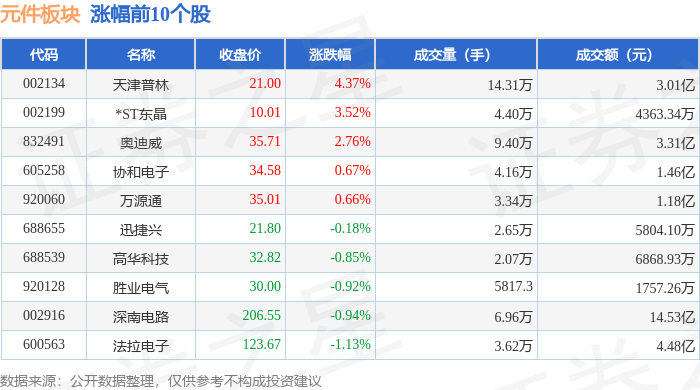
Market Overview - The component sector experienced a decline of 4.47% on September 26, with Zhongfu Circuit leading the drop [1] - The Shanghai Composite Index closed at 3828.11, down 0.65%, while the Shenzhen Component Index closed at 13209.0, down 1.76% [1] Stock Performance - Notable gainers included: - Tianjin Pulin (002134) with a closing price of 21.00, up 4.37% on a trading volume of 143,100 shares and a turnover of 301 million [1] - ST Dongjing (002199) closed at 10.01, up 3.52% with a trading volume of 44,000 shares [1] - Major decliners included: - Zhongfu Circuit (300814) closed at 48.52, down 8.61% with a trading volume of 137,800 shares and a turnover of 689 million [2] - Dongshan Precision (002384) closed at 68.58, down 7.44% with a trading volume of 862,600 shares [2] Capital Flow - The component sector saw a net outflow of 6.765 billion in institutional funds, while retail investors contributed a net inflow of 5.702 billion [2] - The table of capital flow indicates varying levels of net inflow and outflow among individual stocks, with notable movements in Tianjin Pulin and ST Dongjing [3]
推理驱动算力需求高歌猛进,高阶PCB迎量价齐升
2025-09-26 02:29
Summary of Conference Call on PCB Industry Industry Overview - The conference call discusses the PCB (Printed Circuit Board) industry, highlighting the significant demand driven by advancements in AI and data centers, particularly due to NVIDIA's investment in OpenAI of 100 billion RMB, indicating a robust demand for GPU and ASIC chips, which in turn boosts PCB demand [1][2]. Key Insights and Arguments - **NVIDIA's Product Evolution**: NVIDIA's transition from the eight-card architecture to the GB200/GB300 series and now to the Ruby series has led to significant enhancements in PCB specifications, including increased layers and density, which raises the value of single-chip PCBs [1]. - **Market Demand Projections**: The global PCB market demand is expected to exceed 90 billion RMB by 2026, but supply-side capacity remains tight due to the heavy asset nature of the industry and long production cycles, with overseas production lagging behind expectations [1][8]. - **Supply-Demand Dynamics**: The PCB industry is anticipated to experience a relative shortage of capacity in the coming years, as companies like Huadian Technology and Shenghong Technology are accelerating expansion, but at a pace slower than the explosive demand growth [1][9]. - **Investment Potential**: Companies such as Huadian Technology, Shenghong Technology, and Pengding possess significant investment potential due to their client progress and capacity expansion. Additionally, upstream material suppliers like Shengyi Technology are gaining traction within the NVIDIA and Amazon supply chains, indicating strong future growth [1][10]. Additional Important Points - **Role of PCBs in Data Centers**: PCBs play a crucial role in data centers for carrying and transmitting signals, with specifications improving significantly with each chip iteration. The shift towards PCBs over traditional copper cables is driven by better heat dissipation and lower maintenance costs [3]. - **Specific Requirements of NVIDIA's Series**: The Ruby series introduces an orthogonal backplane solution, replacing some copper cable connections, which enhances assembly efficiency and significantly increases the value of single-chip PCBs to approximately 150,000 to 200,000 RMB [6]. - **Material Upgrades**: The PCB market's growth is also tied to advancements in upstream materials, particularly in copper-clad laminates (CCL) and copper foil, with companies like Shengyi Technology adapting production lines to meet demand surges [11][12]. - **Future Supply-Demand Structure**: The supply-demand structure in the PCB industry is expected to remain tight due to rapid demand growth and the heavy asset nature of the industry, which prolongs new factory setups and customer validation cycles [13]. - **NVIDIA's Orthogonal Backplane Progress**: The orthogonal backplane solution from NVIDIA is still in the validation phase, with expectations of adoption, indicating a potential upward valuation for the PCB segment [14].


中银晨会聚焦-20250926
Bank of China Securities· 2025-09-26 01:41
Core Insights - The report highlights that the company, Mindray Medical, experienced a decline in performance during the first half of 2025, with revenue of 16.743 billion yuan, a year-on-year decrease of 18.45%, and a net profit of 5.069 billion yuan, down 32.96% [2][6][7] - Despite the challenges faced in the first half, there is optimism for a turnaround in the third quarter, driven by a recovery in domestic medical equipment bidding activities and growth in international business [6][7][8] Financial Performance - In the second quarter of 2025, the company reported a revenue of 8.506 billion yuan, a decrease of 23.77% year-on-year, and a net profit of 2.420 billion yuan, down 44.55% [7] - The decline in performance is attributed to factors such as medical anti-corruption measures, tight local fiscal funding, and a reduction in the issuance of special medical bonds, which delayed the bidding for medical equipment updates [7] International Business Growth - The company's international business revenue increased by 5.39% year-on-year, accounting for approximately 50% of total revenue [8] - Mindray Medical is enhancing its international in-vitro diagnostic business through local platform construction and has established localized production projects in 14 countries [8][9] Technological Advancements - The company has launched the world's first clinical application of a severe medical AI model, indicating significant advancements in integrating AI into clinical practices [9] - Mindray Medical is building a digital healthcare ecosystem that combines equipment, IT, and AI, aiming for personalized and high-quality medical services [9]

鹏鼎控股:公司严格保障女职工各项合法权益
Zheng Quan Ri Bao Zhi Sheng· 2025-09-25 10:14
Core Viewpoint - The company emphasizes its commitment to sustainable development and social responsibility, particularly in protecting the rights of female employees [1] Group 1: Employee Rights and Welfare - The company strictly adheres to labor laws and regularly signs collective contracts to protect the rights of female employees [1] - Specific care policies and activities are in place for pregnant and breastfeeding employees, including multi-birth subsidies, designated breastfeeding rooms in production facilities, and the option to leave work one hour early during breastfeeding periods [1]
万亿级赛道争夺战:广东、江苏很强势,珠海或冲C位
2 1 Shi Ji Jing Ji Bao Dao· 2025-09-25 04:25
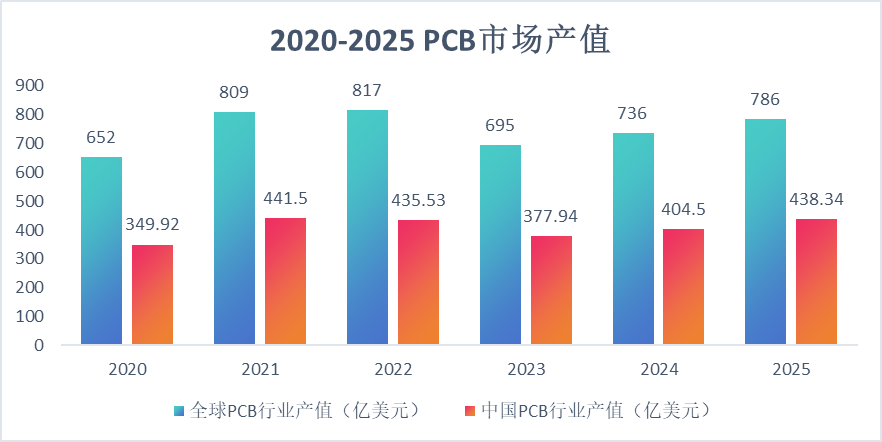
Core Insights - The PCB (Printed Circuit Board) industry is a crucial component of modern electronics, often referred to as the "mother of electronic products" due to its role in connecting electronic components and enabling signal transmission [1] - The global PCB market is projected to reach a value of $73.565 billion in 2024, with a year-on-year growth of 5.8%, while China's PCB market leads globally with a value of $41.213 billion and a growth rate of 9.0% [3] Industry Overview - Guangdong province accounts for approximately 60% of China's PCB production capacity, housing a cluster of listed companies with a combined market value exceeding one trillion yuan [4][5] - The high-end PCB sector is becoming increasingly important in the context of global technological competition, particularly with the rise of AI technologies that demand advanced PCB solutions for applications like computing and communication [4] - The PCB industry in China has evolved significantly since the 1990s, with major advancements in production and technology leading to its current status as the world's largest PCB producer [8][9] Regional Developments - The PCB industry is experiencing a shift, with cities in central and western China, such as Xinfeng in Jiangxi and Guangde in Anhui, emerging as new hubs due to favorable policies and cost advantages [11][12] - Xinfeng has attracted over 200 electronic enterprises, becoming a significant PCB cluster with a reported output value of 22.887 billion yuan in 2024, reflecting a growth of 23.2% [12] - Guangde has transformed from an industrial wasteland to a thriving PCB production area, housing over 92 electronic circuit enterprises and achieving an output value exceeding 10 billion yuan [13] Investment and Expansion - Major companies are ramping up investments in high-end PCB production to meet the growing demand driven by AI and advanced technologies, with significant projects underway in cities like Zhuhai [14][15] - Notable investments include a 50 billion yuan project by Jingwang Electronics in Zhuhai and a 10 billion USD investment plan by Dongshan Precision for high-layer PCB production [15][16] - As of 2025, Zhuhai is expected to emerge as a leading center for high-end PCB production, with a current output value of 44.4 billion yuan, accounting for 15.2% of China's total PCB output [16]
万亿级赛道争夺战:广东、江苏很强势,珠海或冲C位
21世纪经济报道· 2025-09-25 04:17
Core Viewpoint - The PCB (Printed Circuit Board) industry is a crucial component of modern electronic products, with China leading the global market in production value and growth rate [1][3]. Industry Overview - The global PCB market is projected to reach $73.565 billion in 2024, with a year-on-year growth of 5.8%, while China's market is expected to reach $41.213 billion, growing at 9.0% [1]. - Guangdong province accounts for approximately 60% of China's PCB production capacity, housing a cluster of listed companies with a combined market value exceeding one trillion yuan [3][6]. Historical Development - China's PCB industry has evolved from limited production capabilities in the 1950s to becoming the world's largest producer by the mid-2000s, with significant contributions from Taiwan and Japan [5][6]. - The industry is concentrated in the Pearl River Delta and Yangtze River Delta regions, with Guangdong being the primary production base [5]. Market Dynamics - As of September 2025, there are 43 listed PCB companies in China's A-share market, with a total market capitalization of 1.46 trillion yuan, representing 1.27% of the total A-share market [6]. - Major cities for PCB companies include Shenzhen, Huizhou, Changzhou, and Shanghai, with Guangdong's listed companies valued at 1.03 trillion yuan [6]. Regional Development - The PCB industry is experiencing a shift towards midwestern cities, with regions like Jiangxi and Anhui emerging as new hubs due to favorable policies and cost advantages [8][10]. - Xinfeng County in Jiangxi has attracted over 200 electronic enterprises, achieving a production value of 22.887 billion yuan in 2024, marking a 23.2% increase [9]. - Guangde County in Anhui has developed into a significant PCB production area, with over 92 electronic circuit companies and an annual output exceeding 10 billion yuan [10]. Technological Advancements - The rise of AI technology is driving demand for high-performance PCBs, particularly for applications in AI servers and smart driving, necessitating advanced manufacturing processes [12]. - Leading companies in the PCB sector are increasing investments in high-end production capabilities, particularly in Zhuhai, which is becoming a new center for high-end PCB manufacturing [12][14]. Investment Trends - Major PCB manufacturers are planning significant expansions, with investments in advanced PCB production facilities across various cities, including Zhuhai and Huizhou [13][14]. - For instance, Jingwang Electronics is investing 5 billion yuan in a high-end HDI production project in Zhuhai, while Dongshan Precision has a total investment plan of $1 billion for its operations [13][14].