Momenta

Search documents
汽车业加速供应链重构
Jing Ji Ri Bao· 2025-05-12 21:58
Core Insights - The automotive supply chain is crucial, with suppliers playing a significant role in providing key components and participating in R&D and design processes, thus being referred to as the foundation of the automotive industry [1] - The transformation towards electric and intelligent vehicles is reshaping the supply chain, elevating China's position in the global automotive supply chain and making it a source of innovation [1][5] Group 1: Electric Vehicle Supply Chain - Tesla's success in China is attributed to its collaboration with over 400 local suppliers, which has enhanced quality, efficiency, and cost control, allowing for lower prices compared to the U.S. market [2] - The price difference for Tesla's Model 3 and Model Y between China and the U.S. is significant, with the Model 3 priced at approximately 22.99 million RMB in China versus about 28.86 million RMB in the U.S., a difference of nearly 60,000 RMB [2] - The rise of Chinese automotive supply chain companies is driven by the shift from traditional fuel vehicles to electric and intelligent vehicles, creating new opportunities and value [5][6] Group 2: Technological Advancements - BMW has integrated DeepSeek technology into its vehicles, enhancing the human-machine interaction experience, marking a significant step in its localization strategy in China [3] - The collaboration between automotive companies and tech firms is crucial for innovation, with AI being a key area of focus for enhancing vehicle capabilities [3][6] - The cost of components like LiDAR has drastically decreased from 80,000 USD a decade ago to below 200 USD today, showcasing the impact of technological advancements and economies of scale [6] Group 3: Industry Challenges - Despite the growth, challenges remain, including product homogenization and intense competition leading to pressure on profitability [8] - The supply chain for raw materials, batteries, and core components faces risks due to concentrated global resources, which may lead to supply shortages [8] - The automotive chip industry is characterized by high risk and uncertainty, with increasing software complexity and safety concerns posing additional challenges [8]
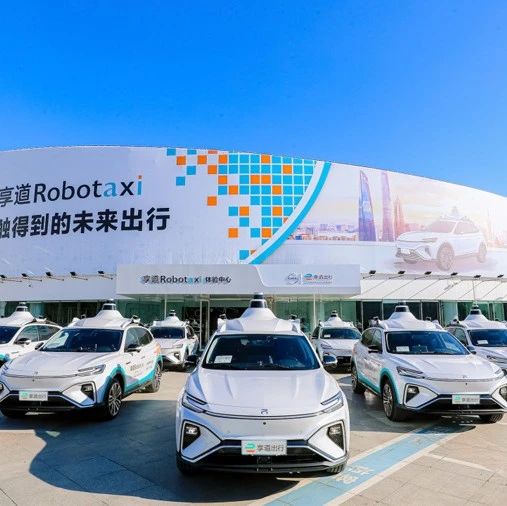
享道出行完成超13亿元人民币C轮融资,已正式启动港股IPO计划
IPO早知道· 2025-05-12 03:16
Core Viewpoint - Xiangdao Mobility has completed a C-round financing of over 1.3 billion RMB, marking the largest single financing amount in China's mobility industry in the past three years. The company has officially launched its Hong Kong IPO plan, with notable investors including Alibaba and CATL in previous rounds, and this round supported by industrial funds and local governments [2]. Group 1: Financing and Growth Strategy - The three rounds of financing correspond to the company's development stages: data empowerment, technology breakthroughs, and ecosystem construction, showcasing a strategic foresight in capturing industry opportunities [2]. - The company aims to deepen technology-driven initiatives, enhance service quality, and expand into diverse scenarios following the completion of the C-round financing [4]. Group 2: Business Operations - In personal mobility, Xiangdao Mobility's ride-hailing service has established a network in nearly 100 cities, with an average compound growth rate of nearly 30% during the 14th Five-Year Plan period [3]. - In corporate mobility, the brand "Xiangdao Car Rental" operates in over 150 cities with a fleet of more than 25,000 vehicles, serving over 5,000 corporate clients, including over 300 Fortune 500 companies [3]. - The Robotaxi service, launched in 2021, has completed over 330,000 orders, with more than 48,000 operational points and a total distance exceeding 2.5 million kilometers [3]. Group 3: Future Developments - Xiangdao Robotaxi is a key component of SAIC Group's smart mobility ecosystem, with plans to develop an L4-level Robotaxi fleet in Shanghai, aiming for a scale of 200 vehicles by 2026 [4]. - The company is focused on promoting sustainable and high-quality commercial operations of Robotaxi, advocating for "technology equity" to make advanced technology accessible to the public [4].

吉利汽车建议私有化极氪小鹏汇天生产许可证申请获受理
Huafu Securities· 2025-05-11 06:47
行 业 汽车 2025 年 05 月 11 日 研 究 行 业 定 期 报 告 汽车 吉利汽车建议私有化极氪 小鹏汇天生产许可证 申请获受理 投资要点: 本周专题:吉利汽车建议私有化极氪 小鹏汇天生产许可证申请获受理 5 月 7 日,吉利汽车公告称,公司于 2025 年 5 月 7 日向极氪提交 非约束性报价函,建议私有化极氪,收购所有已发行及发行在外的极 氪股份及美国存托股票(本集团实益拥有者除外)。公告称,建议购 买价为每股极氪股份 2.566 美元或每股美国存托股票 25.66 美元。 一旦私有化建议落实并完成,极氪将成为吉利汽车的全资附属公 司,实现私有化并于纽交所退市。此举是吉利汽车进一步落实《台州 宣言》,聚焦汽车主业,提升资源利用效率,深化品牌协同的重要步 骤,将强化吉利汽车在智能新能源汽车领域的全球竞争力。 5 月 9 日,小鹏汇天宣布,"陆地航母"飞行体生产许可证(PC) 申请正式获得民用航空中南地区管理局受理,标志着飞行汽车产品量 产体系开始接受局方审查。 生产许可证(PC) 是民航主管部门颁发给民用航空产品型号设计 批准持有人或其权益转让人的证件,用于表明其已建立航空产品的生 产体系和质 ...

上汽旗下公司完成逾10亿元融资,启动港股IPO计划
证券时报· 2025-05-09 14:17
Core Viewpoint - The article highlights the successful completion of a C-round financing of over 1.3 billion yuan by SAIC Group's mobility brand, Xiangdao Mobility, marking the largest single financing amount in China's mobility industry in the past three years. This financing is a significant milestone for the company as it prepares for an IPO in Hong Kong [1][2]. Financing and Strategic Development - The C-round financing not only injects capital but also deepens the connection with industrial resources, allowing Xiangdao Mobility to leverage the advantages of SAIC Group and its partners to build a comprehensive autonomous driving ecosystem [2][3]. - The company plans to collaborate with Momenta to establish a fleet of L4-level Robotaxi in Shanghai, aiming to scale up to 200 vehicles by 2026, promoting sustainable and high-quality commercial operations of Robotaxi [2][3]. Historical Financing and Growth Stages - Since its establishment in 2018, Xiangdao Mobility has undergone three rounds of financing, with notable partners including Alibaba and CATL in the A-round, and Momenta and Amap in the B-round, leading to a strategic focus on data capabilities, technological breakthroughs, and ecosystem construction [3]. - The three rounds of financing correspond to the company's development stages: data empowerment, technology advancement, and ecosystem building, showcasing its strategic foresight in capturing industry opportunities [3]. Operational Achievements - Xiangdao Robotaxi, launched in 2021, is the first L4 autonomous driving operation platform backed by a car manufacturer in China, holding operational licenses in Shanghai and Suzhou, and has completed over 330,000 orders with more than 2.5 million kilometers driven [4]. - Following the C-round financing, the company aims to consolidate its market share in core cities while extending its services to overseas markets [4].


Uber多头押注中国企业,文远和小马谁能跑出财务困局?
Nan Fang Du Shi Bao· 2025-05-09 14:09
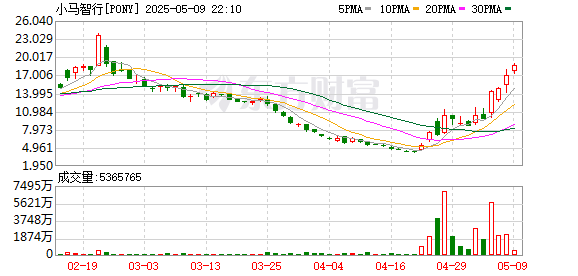
Core Insights - Uber is making significant investments in China's autonomous driving sector, including a $100 million equity investment in WeRide, a partnership with Pony.ai for a Middle East Robotaxi platform, and collaboration with Momenta for European market vehicle production [2][3] Investment Strategy - Uber's strategy involves a calculated approach with complementary investments: a substantial investment in WeRide for scale, a lighter partnership with Pony.ai for technology integration, and collaboration with Momenta for L2-L4 synergy [3] - The investment in WeRide aims to leverage the Middle East's market advantages, such as a 30% vehicle purchase subsidy in the UAE and the ability to operate without safety drivers [3] Financial Performance - WeRide's aggressive strategy has led to a 10.2% decline in revenue to 361 million yuan in 2024, while allocating 90% of R&D resources to overseas markets [4] - Despite the challenges, WeRide's overseas operations have achieved a gross margin of 30.7%, but the company faces cash flow issues due to rising sales and administrative expenses [4][5] - Pony.ai has demonstrated better cost control, with a 4.3% revenue increase to 548 million yuan in 2024, driven by a significant growth in its Robotruck segment [4] Market Dynamics - The collaboration with Uber has resulted in a surge in Pony.ai's stock price, but concerns remain regarding its declining gross margin and Robotaxi service revenue [5] - The financial health of both companies is under scrutiny, with WeRide needing to prove the scalability of its overseas market strategy and Pony.ai balancing cost reduction with revenue growth [6] Future Outlook - WeRide has a strategic window of approximately three years, supported by Uber and sovereign fund backing, but must demonstrate significant operational improvements to cover costs [6] - Pony.ai faces a critical juncture in 2025, needing to fulfill profitability promises for its Robotaxi business to avoid potential reevaluation by industry partners like Toyota [6]

上汽旗下公司完成逾10亿元融资,启动港股IPO计划,阿里巴巴、宁德时代皆入局
Zheng Quan Shi Bao Wang· 2025-05-09 11:46
Core Viewpoint - The completion of over 1.3 billion yuan in Series C financing for SAIC Group's mobility brand, Xiangdao Mobility, marks the largest single financing amount in China's mobility industry in the past three years, facilitating the company's IPO plans in Hong Kong [1][2]. Group 1: Financing and Strategic Development - Xiangdao Mobility has successfully completed three rounds of financing since its establishment in 2018, with the Series C round introducing industrial capital and local government resources, which is seen as a significant strategic milestone [2][3]. - The Series C financing will enable Xiangdao Mobility to leverage the advantages of SAIC Group and its industrial partners to build a closed-loop autonomous driving ecosystem based on the Xiangdao platform [1][2]. - The company aims to establish a fleet of 200 L4-level Robotaxi vehicles in Shanghai by 2026, promoting sustainable and high-quality commercial operations of Robotaxi [1][2]. Group 2: Competitive Advantages and Market Position - Despite facing intense competition in the personal mobility sector, Xiangdao Mobility benefits from the industrial resources and technological accumulation of SAIC Group, providing it with a unique advantage [2]. - The company has developed a "technology-scenario-ecosystem" growth path through its financing rounds, showcasing its strategic foresight in capturing industry opportunities [3]. - Since the launch of its Robotaxi service in 2021, the company has completed over 330,000 orders, with more than 48,000 operational points and a total distance exceeding 2.5 million kilometers [3].

AI浪潮录丨人工智能为什么是年轻人的事业?专访95后师天麾
Bei Ke Cai Jing· 2025-05-09 00:52
Group 1 - Beijing is actively building itself as a "global open-source capital," with numerous research institutions and companies embracing open-source technology, which has penetrated various industries including automotive and robotics [1] - The AI industry is characterized by a significant presence of young talent, with 59.90% of active AI professionals being under 30 years old, indicating a shift towards a younger workforce in this sector [6] - The company Qingcheng Jizhi, founded by a group of Tsinghua University alumni, focuses on AI infrastructure and has an average employee age of under 30, reflecting the trend of youth in the AI field [7] Group 2 - The founder of Qingcheng Jizhi, Shi Tianhui, emphasizes the importance of innovation over traditional corporate structures, stating that large companies often impose constraints that hinder creativity [5] - The company has developed an open-source model inference engine called "Chitu," which allows for efficient deployment of AI models on both old NVIDIA GPUs and domestic chips, aiming to bridge the gap in computing power [17][19] - Qingcheng Jizhi's product offerings have shifted from training to inference services, with the emergence of DeepSeek leading to increased demand for their solutions, which are designed to be user-friendly and accessible to companies without specialized AI teams [14][15] Group 3 - The company aims to help domestic chips compete with NVIDIA by enhancing their capabilities through software solutions, rather than solely focusing on hardware advancements [19][21] - The current market shows a growing acceptance of domestic technology stacks, with state-owned enterprises beginning to procure domestic graphics card equipment, indicating a shift in market dynamics [20] - Qingcheng Jizhi's ultimate goal is to provide consistent performance across different hardware platforms, ensuring that users can achieve similar computational services regardless of the underlying technology [22]


智驾营销「退潮」,自动驾驶行业洗牌加速?
雷峰网· 2025-05-07 10:47
" L2监管趋严,并不代表会影响到自动驾驶的发展。 " 作者丨王瑞昊 编辑丨相辉 "智驾"这两个字,正在淡出公众视野。 近日小米对于智驾的措辞进行了统一修改,将"智驾"更改为"辅助驾驶",这一消息再度冲上热搜,小米回 复媒体称"智驾改名系响应国家号召"。 此前4月30日华为常务董事、终端BG董事长余承东在一则科普视频中也未提及"智驾"二字,而是统一表述 为"智能辅助驾驶",在这之前余承东都是使用"智驾"表述。 雷峰网了解到,今年"五一"假期期间多家新能源品牌门店已撤下了此前占据C位的"智能驾驶"宣传标语, 理想、小米、蔚来、小鹏等品牌的销售人员在介绍智能驾驶时均改变了话术,有的销售甚至在消费者主动 提问时才会提及。 智能驾驶正在从车企宣传的核心话术中逐渐淡出,"智驾"两个字俨然已成为禁用词,这一趋势在刚刚结束 的上海车展上体现得尤其明显。 01 营销降温,车展回归理性 多家车企围绕智驾规划的一系列营销,在车展上悉数被叫停。 5月2日闭幕的上海车展上,此前大热的智驾出现降温现象,全民智驾、一键召唤等此前经常出现的营销词 汇消失了,车企在经历前期的激进宣传后,开始回归理性,聚焦于技术打磨与产品落地。 虽然有的车企 ...




多家自动驾驶企业牵手Uber,中国“玩家”加速布局Robotaxi海外市场
Mei Ri Jing Ji Xin Wen· 2025-05-07 10:22
每经记者|刘曦 每经编辑|孙磊 5月6日,自动驾驶公司文远知行和小马智行先后宣布与移动出行公司Uber扩大或达成合作。其中,文远知行宣布计划未来五年新增15座国际城市,通过 Uber平台部署Robotaxi(自动驾驶出租车)服务;小马智行宣布与Uber达成全球战略合作,其Robotaxi服务和车队将在今年下半年接入Uber平台,合作率 先于今年在中东市场启动。 对此,小马智行联合创始人兼CEO彭军表示:"通过将小马智行成熟的自动驾驶系统与Uber的出行平台相结合,我们将从中东市场起步并拓展至全球,让 全球更多用户在日常生活里享受到真实且美好的自动驾驶服务。" 值得注意的是,在早些时候的5月2日,自动驾驶公司Momenta也与Uber联合宣布达成战略合作协议,将自动驾驶车辆引入Uber平台,计划从2026年初开始 在欧洲启动商业化服务,形成三家中企"梯次出海"的协同态势。 广发证券研报表示,相较于早期百万的改装成本,当前中国Robotaxi单车的传感器+计算单元总成本已压缩至20万~30万元区间,且仍在持续下探。此 前,张宁在接受记者采访时也透露,从小马智行第七代车型开始,全车的传感器和算力成本加在一起,预计会 ...
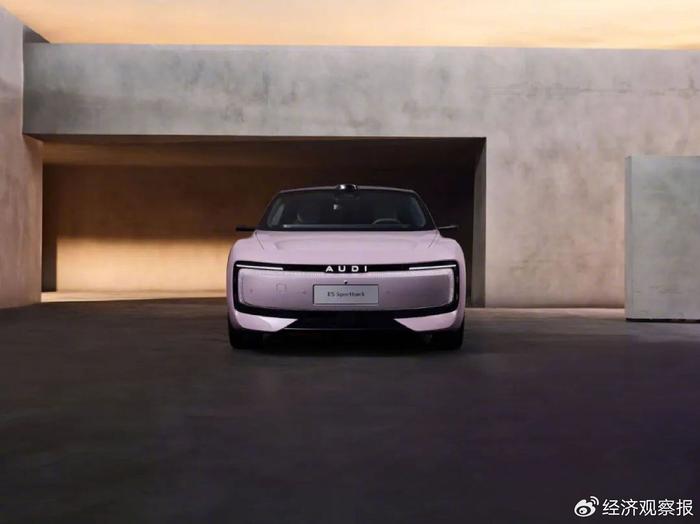
进入中国近40年,奥迪再次成为率先破局者
Jing Ji Guan Cha Bao· 2025-05-07 06:43
Core Viewpoint - Audi's strategic transformation is marked by the launch of five new models at the Shanghai Auto Show, showcasing a significant shift in its approach to the Chinese market and emphasizing local innovation and collaboration [1][3][4]. Group 1: Product Launch and Innovation - Audi unveiled five new models: A5L, A5L Sportback, Q5L, A6L e-tron, and the first production model of the new AUDI brand, the E5 Sportback, all designed with advanced driver assistance systems tailored for Chinese road conditions [1][4]. - The E5 Sportback is positioned as a potential phenomenon in the luxury electric coupe market, appealing to younger consumers with its innovative design [6][16]. - The new models reflect Audi's dual strategy of maintaining both fuel and electric vehicle offerings, with three fuel models and two electric models among the five [6][10]. Group 2: Strategic Partnerships and Local Adaptation - Audi's collaboration with Huawei and other local tech firms aims to create a smart ecosystem, aligning with the brand's core principle of "breaking through technology, inspiring the future" [3][13]. - The establishment of the AUDI brand represents a new phase in Audi's localization strategy, focusing on co-creation with Chinese partners to meet local consumer demands [3][8][11]. - The partnership with SAIC has led to the development of an Advanced Digitized Platform, enhancing Audi's ability to respond to the unique digital needs of the Chinese market [11][13]. Group 3: Future Outlook and Market Strategy - Audi plans to accelerate the launch of new products specifically developed for the Chinese market starting mid-2025, supported by three major technology platforms [4][10]. - The brand's strategy includes a clear commitment to maintaining a balanced portfolio of fuel, hybrid, and electric vehicles, reflecting a deep understanding of regional market differences [10][14]. - Audi's dual-brand strategy aims to attract different consumer segments, with the traditional Audi brand catering to classic luxury seekers and the new AUDI brand targeting tech-savvy younger consumers [14][16].