
三星电子

Search documents
格局落定,价值归真:从周期波动走向技术溢价
Soochow Securities· 2026-02-06 06:11
证券分析师:张良卫 执业证书编号:S0600516070001 联系电话:021-60197988 二零二六年二月六日 请务必阅读正文之后的免责声明部分 1 摘要:从传统周期到AI驱动的技术溢价与高成长性 证券研究报告 格局落定,价值归真:从周期波动走向技术溢价 建议关注:闪迪(SNDK.O)、SK 海力士(000660.KS)、三星电子(005930.KS)、美光科技(MU.O)。 风险提示:下游AI资本开支(CAPEX)不及预期风险; 存储原厂产能扩张失控导致供需格局恶化风险;新技术研发进度或良率爬坡不及预期风 险。 2 ➢ 增长逻辑重构:AI 带来的不是反弹,而是指数级增长的新需求,存储不再仅仅跟随宏观经济进行简单的库存周期波动,而是成为了AI算力的 决定性瓶颈(存力决定算力的效率)。 ➢ 训练端(Scaling Laws 驱动): 模型参数量呈线性增长(如GPT-3到GPT-4增幅超9倍),直接拉动HBM(容纳参数)和SSD(存Checkpoint) 的容量需求呈指数级爆发 。 ➢ 推理端(商业化落地驱动): 随着RAG(检索增强生成)和超长上下文(Long Context)的应用,KV Cache( ...
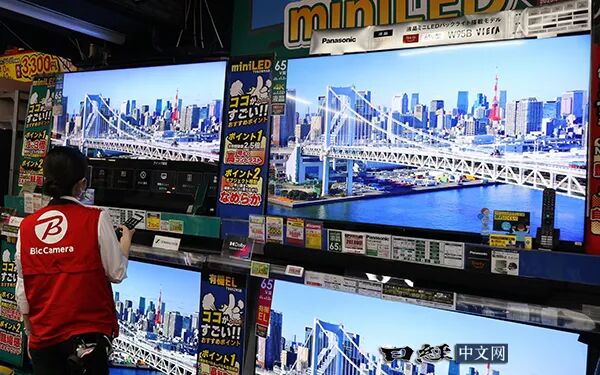
中国厂商掌握6成日本电视市场
3 6 Ke· 2026-02-06 05:16
Group 1 - The core viewpoint of the articles highlights the increasing dominance of Chinese companies in the Japanese television market, with projections indicating that they will control 60% of the market share by 2025 due to the withdrawal of Japanese brands like Sony and Toshiba [2][3]. - Sony Group plans to divest its television business by 2027, transitioning it to a joint venture with TCL, which will hold a 51% stake, while Sony retains 49% [2]. - REGZA, a brand associated with Toshiba, is primarily manufactured and sold by TVS REGZA, which is 95% owned by China's Hisense Group, indicating a significant shift in ownership and market dynamics [2]. Group 2 - Chinese companies are outperforming Japanese firms in pricing, with TCL's 43-inch 4K LCD TV priced around 50,000 yen (approximately 2,257.55 RMB), compared to Sony's price of around 100,000 yen (approximately 4,515.1 RMB) [3]. - By 2025, REGZA is projected to lead the Japanese television market, with Chinese brands like Hisense and TCL collectively holding 50% of the market share, which could rise to 60% if Sony's brand is transferred to the TCL-led joint venture [3]. - The global television market is increasingly dominated by companies like Samsung, LG, Hisense, and TCL, which together hold over 50% of the market share, indicating a decline in the presence of Japanese companies [5]. Group 3 - Panasonic is the only major Japanese company pursuing an independent path in the television sector after Sony's divestment, but it is also considering selling or exiting the television business [5]. - Japanese companies are struggling with scale and supply chain issues, making it difficult to compete in the hardware-centric home appliance market [6]. - Companies like Sony and Hitachi are shifting their business models towards digital infrastructure and subscription-based products, indicating a strategic pivot away from traditional home appliances [6].




BCN综研:“中国系”厂商将掌握6成日本电视市场
Sou Hu Cai Jing· 2026-02-06 03:54
Group 1 - The core viewpoint of the articles indicates that Chinese companies are significantly increasing their market share in the Japanese television market, projected to reach 60% by 2025, highlighting the need for Japanese companies to adapt their business models [1][4] - Chinese companies are outperforming Japanese firms in pricing, with TCL's 43-inch 4K LCD TV priced at approximately 50,000 yen (around 2,211 RMB), compared to Sony's price of about 100,000 yen (around 4,422 RMB) [1] - According to BCN Research, REGZA is expected to lead the Japanese TV market, while the combined market share of Hisense and TCL will account for 50%, potentially increasing to 60% if Sony's brand shifts to a TCL-led joint venture [1] Group 2 - Global television market data from Euromonitor International shows that Samsung Electronics is the leading company, with LG Electronics, Hisense, and TCL collectively holding over 50% of the global market share [3] - Chinese companies are not only enhancing their cost competitiveness but also improving their technological capabilities, moving away from the perception that "cheap products are of low quality" [3] - The earlier announcement by Sony Group regarding the spin-off of its television business into a joint venture with TCL represents a significant restructuring of its home entertainment segment [4]
2月半导体需求或将进一步复苏,科创芯片ETF(588200)聚焦国产芯片投资机遇
Xin Lang Cai Jing· 2026-02-06 03:06
Core Viewpoint - The semiconductor and chip industry is experiencing fluctuations, with the Shanghai Stock Exchange's Sci-Tech Innovation Board chip index down by 1.01% as of February 6, 2026, amid mixed performance among constituent stocks [1] Group 1: Market Performance - As of 10:20 AM on February 6, 2026, the Sci-Tech Innovation Board chip index decreased by 1.01%, with stocks like Zhongke Feimiao and Zhongke Lanyun showing gains of 1.18% and 1.09% respectively, while companies like Chip Origin and Yuanzhe Technology faced declines [1] - The top ten weighted stocks in the Sci-Tech Innovation Board chip index account for 59% of the index, including companies like Lanke Technology and SMIC [2] Group 2: Industry Developments - Amazon plans to invest approximately $200 billion throughout the year, primarily in AWS, focusing on self-developed hardware and AI vertical integration to build long-term competitive advantages and high ROIC [1] - The price of storage chips continues to rise significantly, with DRAM and NAND Flash prices increasing by 5.95% to 63.43%, and Samsung Electronics has raised NAND flash prices by over 100% [1] - AI server CPUs are facing supply shortages, with AMD products nearly sold out, prompting both AMD and Intel to consider raising average prices by 10-15% in the first quarter [1] Group 3: Investment Insights - Donghai Securities indicates that semiconductor prices continued to rise in January, with demand recovering, and February is expected to see further demand resurgence [1] - The semiconductor industry is slowly recovering, with AI investments exceeding expectations and storage chip price increases surpassing forecasts [1] - The market currently has high capital enthusiasm, and it is recommended to consider low-cost investments [1]
苹果(AAPL.US)搁置AI健康教练大计 战略收缩下转向渐进式功能迭代
智通财经网· 2026-02-06 03:03
Core Insights - Apple is scaling back its virtual health coach service, part of a strategic reassessment of its approach to the growing health services market [1][2] - The project, codenamed "Mulberry," has been halted, with plans to integrate some features into the existing "Health" app [1] - Leadership changes in Apple's health division have prompted a need for faster and more competitive action in the health sector [1][2] Group 1 - The new health service, initially aimed to provide AI-driven health recommendations, has been delayed multiple times and is now being completely restructured [2] - Apple has invested years in developing this AI-driven service, which was intended to generate detailed health reports and combine various health data sources [2][3] - The company is also developing an AI chatbot for health inquiries, aiming to compete with existing applications in the market [3] Group 2 - Apple faces increasing competition in the health tracking market from companies like Samsung and fitness platforms such as Strava [2] - The company has been enhancing its devices with health features, but these tools primarily serve as alerts rather than proactive health management solutions [3] - Future plans include integrating a new generation of Siri with advanced health-related queries in the upcoming iOS 27 [3]

中国厂商掌握6成日本电视市场
日经中文网· 2026-02-06 02:52
Core Viewpoint - The Japanese consumer electronics industry, particularly in the television sector, is experiencing a significant shift towards Chinese ownership and influence, with projections indicating that Chinese companies will dominate the market share in the coming years [2][5]. Group 1: Market Dynamics - In Tokyo's electronics retail stores, brands like REGZA, BRAVIA, and Viera are prominently displayed, but the capital structure reveals that Chinese companies will control 60% of the market share due to the withdrawal of Japanese firms [2][4]. - Toshiba's REGZA brand is primarily owned by Hisense, a Chinese appliance giant, holding 95% of the shares, while Toshiba retains only 5% [4]. - Sony plans to divest its television business by 2027, transitioning to a joint venture with TCL, where TCL will hold 51% and Sony 49%, effectively placing the Sony brand under Chinese control [4][5]. Group 2: Competitive Landscape - According to BCN Research, REGZA is projected to lead the Japanese television market by 2025, with Chinese brands like Hisense and TCL collectively holding 50% of the market share. If Sony's brand moves to the TCL-led joint venture, the Chinese share will rise to 60% [5]. - In the global television market, Japanese companies are losing ground, with South Korea's Samsung Electronics leading the market, followed by LG, Hisense, and TCL, which together account for over 50% of the global market share [7]. Group 3: Strategic Shifts - Panasonic is the only major Japanese company left pursuing an independent path in the television sector after Sony's divestment. Panasonic is also considering selling or exiting its television business by 2025 [7]. - The restructuring is not limited to televisions; Toshiba sold its refrigerator business to Midea Group in 2016, and Hitachi is contemplating selling its domestic business [7]. - Japanese companies are struggling with scale and supply chain issues, prompting a shift towards digital and subscription-based business models, as seen with Sony's focus on PlayStation and infrastructure digitalization [8].
东海证券晨会纪要-20260206
Donghai Securities· 2026-02-06 02:45
Group 1: Semiconductor Industry Insights - The semiconductor industry showed continued recovery in January 2026, with prices on an upward trend driven by AI computing demand, AIOT, semiconductor equipment, key components, and storage price increases [5][7] - Global semiconductor demand is improving, with slight growth in PCs and smartphones, and rapid growth in TWS headsets, wearable devices, and smart home products. AI servers and new energy vehicles are experiencing high growth, indicating a potential continued recovery in demand for February 2026 [5][10] - January 2026 saw a significant increase in storage prices, with DRAM and NAND Flash prices rising between 5.95% and 63.43%. The overall semiconductor price trend is expected to remain positive in February [7][10] Group 2: Company-Specific Analysis - Jerry Holdings - Jerry Holdings secured a new gas turbine generator order worth $181.5 million, which represents approximately 9.47% of the company's audited revenue for 2024. This is the fourth such contract with a U.S. client since November 2025 [13][14] - The company has accumulated over $400 million in gas turbine generator orders, establishing a new growth curve. It has expanded production capacity to meet North American demand [14][15] - Jerry Holdings has formed strategic partnerships with major players in the gas turbine industry, enhancing its supply chain resilience and providing integrated power solutions [15][17] Group 3: Investment Recommendations - The semiconductor industry is experiencing a slow recovery in demand, with AI investments exceeding expectations and storage chip price increases also surpassing forecasts. It is recommended to consider leading companies in AIOT and semiconductor sectors for investment [11] - For Jerry Holdings, the diversified business model and strong order book in gas turbine generators are expected to support significant profit growth, with projected net profits of 3.164 billion, 3.778 billion, and 4.449 billion yuan for 2025-2027 [17]
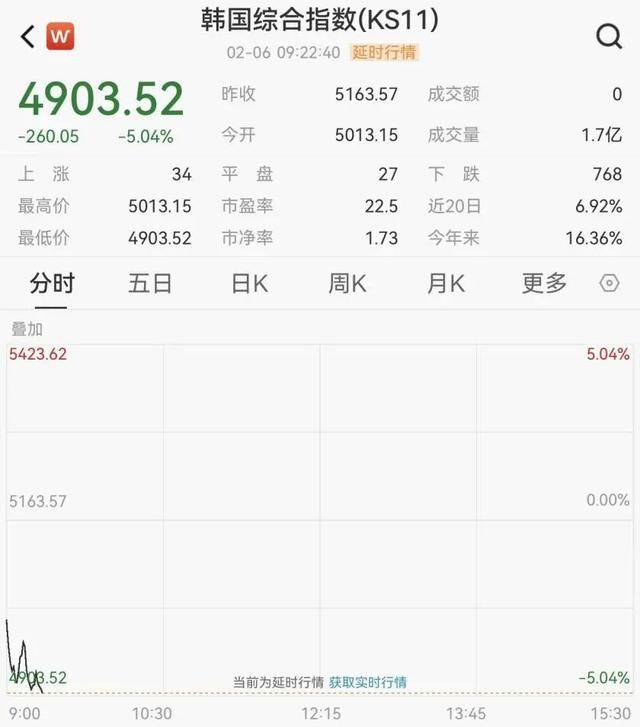
韩国综合指数开盘大跌超5%
Sou Hu Cai Jing· 2026-02-06 02:29
Market Overview - The South Korean Composite Index (KOSPI) opened significantly lower, dropping over 5% on February 6, triggering a trading halt for 5 minutes due to the decline in KOSPI 200 futures [1][2] - The KOSPI index was reported at 5163.57, down 260.05 points or 5.04% from the previous close [2] - Major stocks like Samsung Electronics and SK Hynix followed the downward trend seen in the US markets, opening sharply lower [1][2] Company Performance - Samsung Electronics saw a decline of 3.95%, trading at 153,000 KRW, with a market capitalization of 905.70 trillion KRW [3] - SK Hynix experienced a drop of 5.70%, trading at 794,000 KRW, with a market capitalization of 578.03 trillion KRW [4] Future Market Developments - The chairman of the Korea Exchange, Jeong Eun-bo, expressed optimism that the KOSPI could surpass the 6000-point mark, emphasizing the need for market development initiatives [4][5] - Plans include extending trading hours to 24 hours to enhance liquidity and attract foreign investment, aligning with global market practices [5] Precious Metals Market - The silver market saw a significant drop, with spot silver prices falling over 9% before rebounding, currently reported at 67.82 USD/oz [7] - COMEX silver futures plummeted over 15%, now trading at 64.955 USD/oz, reflecting a substantial decrease from previous levels [10][11] - Gold prices also fell, with spot gold down 1.18% to 4720.03 USD/oz [7][13]
市场坠入“狂震模式”!白银两日暴跌超20%创纪录,韩国股市重挫暴露“高贝塔”脆弱性
Jin Rong Jie· 2026-02-06 02:28
截至发稿,现货白银下跌2.85%,报每盎司68.95美元;黄金下跌1.29%,报每盎司4719美元。铂金和钯金 亦下跌。衡量美元走势的彭博美元现货指数微跌0.05%,本周累计上涨0.7%。 智通财经获悉,在周四重挫20%后,白银价格继续下探。由于流动性急剧枯竭,这个正在艰难寻底的市 场出现了剧烈的价格震荡。与此同时,全球科技抛售潮加剧冲击,标普受到巨大冲击之时,韩国股市也 遭遇重挫。 现货白银在亚洲早盘交易中一度跌至每盎司64美元,较1月29日创下的历史高点回落逾40%,彻底抹去 了上个月全部惊人涨幅。黄金价格亦连续第二日下跌。 由于市场规模较小、流动性相对匮乏,白银历来比黄金面临更剧烈的价格波动。但近期行情以其幅度与 速度之猛格外突出——这是自1980年以来波动最剧烈的时期,投机动能与清淡的场外交易进一步放大了 波动。 "当波动性上升时,做市商自然会扩大买卖价差并减少资产负债表使用,导致市场在最需要流动性的时 候流动性反而最弱,"盛宝银行大宗商品策略主管奥勒·汉森在一份报告中指出。在某种秩序恢复之 前,"波动性可能陷入自我强化的恶性循环。" 在地缘政治风险加剧、对美联储独立性的担忧以及中国投机性买盘的支撑下 ...