伊利股份

Search documents
未知机构:华泰必选春节一站式调研大众品行业跟踪要点260222调味-20260224
未知机构· 2026-02-24 04:50
【华泰必选】春节一站式调研-大众品行业跟踪要点 260222 调味品: #春节动销:26年1-2月餐饮板块生意近年最好,销售额同比增长约20%,农贸批发渠道销售额下滑;海天、李锦记 同比增长15%+,厨邦无增长;春节备货量按平均用量的1.5倍准备(往年为1.2倍),备货周期从10天延长至近半 个月;正月初四即被客户要求开工补货(为近年来首次)。 #驱动因素:增长由量(人流)驱动,1-2月 【华泰必选】春节一站式调研-大众品行业跟踪要点 260222 调味品: #春节动销:26年1-2月餐饮板块生意近年最好,销售额同比增长约20%,农贸批发渠道销售额下滑;海天、李锦记 同比增长15%+,厨邦无增长;春节备货量按平均用量的1.5倍准备(往年为1.2倍),备货周期从10天延长至近半 个月;正月初四即被客户要求开工补货(为近年来首次)。 #驱动因素:增长由量(人流)驱动,1-2月中型/大型餐饮的团拜、宴席、年夜饭等场景需求显著增加,核心商 区、步行街餐饮区人流密集,人均100元以上(家庭/商务消费)及人均30-60元的餐饮生意较好。 #费用投放:各品牌在春节期间同比未明显增投,海天搭赠+出货总费用5%-6%,25年费 ...
未知机构:华东食品综合大商要点20260222春节整体动销-20260224
未知机构· 2026-02-24 04:35
华东食品综合大商要点20260222 春节整体动销: ■1-2月食品大类各品类均实现正向增长(出货销售额口径,下同),主因:1)春节错期,今年动销期更长;2) 返乡消费拉动性强。 ■结构性特征:刚需品增长更好,下沉市场动销积极,礼赠需求有所修复,价格促销同比收敛。 ■节后补库预期:良性动销下, 分品类: ■休闲食品:同比增长约10 华东食品综合大商要点20260222 春节整体动销: 分品类: ■休闲食品:同比增长约10%。 盐津、劲仔双位数增长,品类内表现最优;卫龙、洽洽增长较稳。 礼盒装分化明显,高价位礼盒复购乏力。 ■冻品:同比增长约7%。 安井增长约18%,全品类均表现积极(丸子、预制菜、肉类冻品等),思念、三全等增长约5~10%。 ■饮料:同比增长约5%,大规格(1L装)增速高。 东鹏特饮增长12%+,电解质水20%;农夫水品类同比个位数增长,无糖茶双位数增长。 ■1-2月食品大类各品类均实现正向增长(出货销售额口径,下同),主因:1)春节错期,今年动销期更长;2) 返乡消费拉动性强。 ■结构性特征:刚需品增长更好,下沉市场动销积极,礼赠需求有所修复,价格促销同比收敛。 ■节后补库预期:良性动销下, ...
26年春节消费趋势解读专题:春节消费开门红:总量增长,结构分化



GUOTAI HAITONG SECURITIES· 2026-02-24 02:32
Investment Rating - The report rates the industry as "Buy" [5] Core Insights - The 2026 Spring Festival consumption exceeded expectations, with service consumption leading the growth, driven by a significant increase in dining and travel demand [2][7] - The report highlights a notable recovery in the travel sector, with an expected total of 9.5 billion people traveling during the Spring Festival, marking a historical high [10][12] - The report emphasizes the importance of quality and experience in consumer spending, with a shift towards premium products and services [7][19] Summary by Sections 1. Spring Festival Consumption Trends - The Spring Festival holiday from February 15 to 23, 2026, saw a "good start" in consumption, with key retail and dining enterprises reporting a 10.6% increase in average daily sales compared to the same period in 2025 [10][22] - The first four days of the holiday recorded an 8.6% increase in average daily sales for key retail and dining enterprises compared to the previous year [10][19] - Government initiatives, including a 20.5 billion yuan fund for consumer subsidies, significantly boosted consumer spending [11][10] 2. Baijiu (Chinese Liquor) Market - The Baijiu market showed signs of improvement, with a narrowing decline compared to previous major holidays, although brand differentiation became more pronounced [27][30] - High-end Baijiu brands like Moutai and Wuliangye continued to lead the market, with a focus on price elasticity and rational consumer behavior [27][30] - The report identifies three key changes in the Baijiu market: increased importance of personal consumption, a more relaxed approach from manufacturers regarding sales targets, and improved channel sentiment [30][31] 3. Snack and Food Market - The snack market is expected to benefit from an extended peak season, with a longer preparation and sales cycle compared to 2025 [33][34] - Offline channels, particularly membership-based supermarkets and discount stores, are performing better than online channels, with significant growth in sales during the holiday period [34][35] - The report notes a diversification in snack offerings, with strong performance in high-quality nut gift boxes and innovative packaging strategies enhancing brand visibility [35][36]
2026新春走基层 | 开足马力保供应
Xin Lang Cai Jing· 2026-02-22 06:37
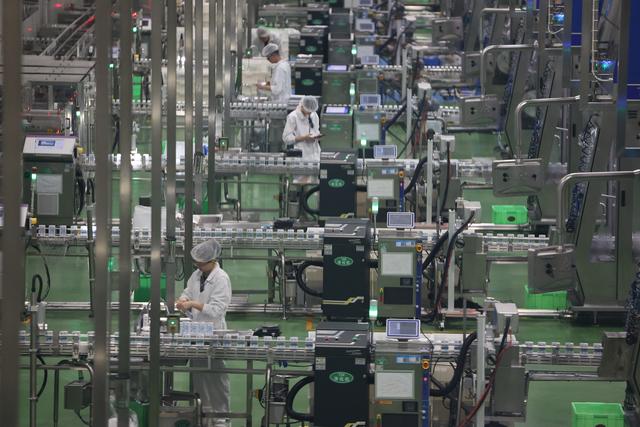
Group 1 - The core viewpoint of the article highlights the continuous increase in order volume for dairy products during the Spring Festival, indicating strong market demand [2] - The company operates multiple production lines at full capacity to ensure uninterrupted supply and meet market needs [2] - The facility is recognized as a global benchmark for intelligent manufacturing in liquid milk production, showcasing the company's commitment to innovation and efficiency [2]


2025年1-12月酒、饮料和精制茶制造业企业有5965个,同比下降1.08%
Chan Ye Xin Xi Wang· 2026-02-22 03:35
上市公司:承德露露(000848),阳光乳业(001318),皇氏集团(002329),贝因美(002570),西 部牧业(300106),品渥食品(300892),熊猫乳品(300898),三元股份(600429),光明乳业 (600597),妙可蓝多(600882),伊利股份(600887),李子园(605337) 相关报告:智研咨询发布的《2026-2032年中国饮料行业市场运营格局及未来前景分析报告》 数据来源:国家统计局,智研咨询整理 知前沿,问智研。智研咨询是中国一流产业咨询机构,十数年持续深耕产业研究领域,提供深度产业研 究报告、商业计划书、可行性研究报告及定制服务等一站式产业咨询服务。专业的角度、品质化的服 务、敏锐的市场洞察力,专注于提供完善的产业解决方案,为您的投资决策赋能。 2025年1-12月,酒、饮料和精制茶制造业企业数(以下数据涉及的企业,均为规模以上工业企业,从 2011年起,规模以上工业企业起点标准由原来的年主营业务收入500万元提高到年主营业务收入2000万 元)为5965个,和上年同期相比,减少了65个,同比下降1.08%,占工业总企业的比重为1.13%。 2016-202 ...

开足马力保供应
Xin Lang Cai Jing· 2026-02-21 20:16
Group 1 - The core viewpoint of the article highlights the continuous increase in order volume for dairy products during the Spring Festival, indicating strong market demand [3] - The company, Yili, has multiple production lines operating at full capacity to ensure uninterrupted supply to the market [3] - The facility is recognized as a global benchmark for intelligent manufacturing in liquid milk production [3]
美国1750亿美元关税退税,对A股的影响(附50股)
Sou Hu Cai Jing· 2026-02-21 11:41
Group 1 - The core point of the article is that the recent US Supreme Court ruling on the $175 billion tariff refund has significant implications for both China and the A-share market, despite the refund being an internal US matter [2][6][28] - The $175 billion in tariffs was primarily collected from imports, including a 10% tariff on Chinese goods, and is now being refunded to US importers [8][10] - The refund will indirectly benefit Chinese companies as US importers, who have been financially strained by tariffs, will use the refunded money to pay off debts to Chinese suppliers and resume orders [12][14][28] Group 2 - The immediate impact on the A-share market is expected to be positive, with a potential "opening red" for A-shares as market sentiment improves following the ruling [40][46] - The ruling is seen as a signal that the previous high tariffs on Chinese goods may not be a permanent state, which could lead to a more favorable environment for Chinese exports [20][48] - Structural opportunities in the A-share market are identified, focusing on five main lines: export-oriented sectors, domestic substitution, strategic resources, domestic consumption, and new energy [51][62][88] Group 3 - Export-oriented sectors, particularly those with high exposure to the US market, are expected to benefit directly from the tariff refunds, with companies like Midea Group and Haier expected to see improved performance [52][72][73] - Domestic substitution and self-sufficiency in sectors like semiconductors and military equipment are highlighted as long-term strategic focuses, with companies like SMIC and AVIC Shenyang Aircraft being key players [53][78][86] - Strategic resources such as rare earths and gold are also expected to see price support due to ongoing global supply chain disruptions, benefiting companies like Northern Rare Earth and Shandong Gold [56][87]




全市众多工业企业春节假期连续生产
Xin Lang Cai Jing· 2026-02-20 20:41
位于东丽区未来科技城南区的环晟新能源(天津)有限公司3条产线在春节期间连续生产。公司相关负 责人介绍,作为TCL中环旗下高效太阳能叠瓦组件的研发与制造企业,春节期间组织部分产线连续生 产,主要是为了确保紧急交付订单按时履约,特别是针对海外地区的订单,需保障国际客户的供应链稳 定性,维护企业海外市场信誉;同时,部分国内长期合作客户的紧急订单也需优先响应,避免因假期延 误影响后续合作。"我们3条产线春节期间不停工,保留了一半产能,既能减少设备停机重启带来的损 耗,也能保障节后员工返岗后快速衔接生产节奏,避免因工序脱节导致的效率下降,确保全年生产计划 稳步推进。"他表示,"受4月1日光伏行业海关退税政策预期影响,今年一季度企业订单量明显提升,生 产节奏稳步加快,产品合格率保持在行业较高水平,客户满意度持续稳定。" 位于空港经济区的天津海河乳品有限公司巴氏奶产线春节期间一直正常生产。大年初四,供应全国市场 的花色奶产线也全部复工,除了部分行政人员还在休假,生产部门员工全部上岗,日产500吨牛奶的生 产线全速运转,常温奶、酸奶、冰淇淋等100余种乳制品源源不断被打包运往全国各地。公司党委书 记、董事长邹旸告诉记者,产线 ...
春晚广告位争夺战:四十年国民记忆与商业暗流
凤凰网财经· 2026-02-19 10:54
Core Viewpoint - The evolution of the Spring Festival Gala sponsorship reflects the transformation of China's economy and consumer behavior over the past 40 years, showcasing the shift from material scarcity to technological innovation and brand storytelling [4][5]. Group 1: 1980s to Early 1990s - The Era of Material Scarcity - The transition from a planned economy to a market economy in the 1980s led to a scarcity of goods, making items like watches and bicycles symbols of wealth and status [6][7]. - The first brand to sponsor the Spring Festival Gala was Kambas watches in 1984, which used 3,000 quartz watches as payment, marking the beginning of brand sponsorship in the event [7][9]. - Kambas became a household name, with production reaching 1.26 million units by 1987 and over 2 million by 1991, highlighting the impact of the Gala on brand visibility and market demand [9][10]. Group 2: Mid-1990s to Early 2000s - The Rise of Consumerism - The late 1990s saw a surge in consumer spending, with households moving from basic necessities to larger purchases like televisions and refrigerators [12][14]. - In 1995, Shandong Kongfu Banquet Wine became the first "advertising king" of the Spring Festival Gala, paying 30.79 million yuan, initiating a trend among liquor companies [12][14]. - The sales of Qin Pool Wine skyrocketed from 180 million yuan in 1995 to 950 million yuan in 1996 after winning the sponsorship, demonstrating the immediate impact of Gala advertising [17]. Group 3: 2000s to 2010s - The Era of Brand Awareness - The early 2000s marked a shift towards household appliances as the main consumer focus, with Midea becoming a prominent sponsor, securing 16 sponsorships from 2003 to 2019 [18][20]. - The cost of advertising during the Gala increased significantly, with Midea's sponsorship rising from 6.8 million yuan in 2005 to 57.2 million yuan in 2011, reflecting the growing value of the event [20]. - Brands began to focus on storytelling and emotional connections with consumers, as seen with Haier and Gree, indicating a maturation of brand marketing strategies [21]. Group 4: Mid-2010s to Present - The Digital Economy and Technological Innovation - The rise of internet companies has transformed the Spring Festival Gala into a platform for digital engagement, with WeChat's "red envelope war" in 2015 significantly increasing viewer interaction [24][26]. - The Gala has become a battleground for tech giants, with platforms like Douyin and Kuaishou participating in interactive sponsorships, showcasing the shift towards a two-way communication model [29]. - The introduction of robots and AI technologies in recent Galas reflects China's transition from manufacturing to intelligent manufacturing, highlighting the importance of innovation in the economy [31].


春晚广告位争夺战:四十年国民记忆与商业洪流
Xin Lang Cai Jing· 2026-02-19 07:21
Core Insights - The evolution of the CCTV Spring Festival Gala sponsorship reflects the transformation of Chinese society and economy over the past 40 years, showcasing the changing consumer demands and emerging industries [20][21]. Group 1: 1980s to Early 1990s - The Era of Scarcity - In the 1980s, as China transitioned from a planned economy to a market economy, consumer goods were scarce, leading to a high demand for basic commodities [22]. - The first brand to sponsor the Spring Festival Gala was Kambas watches in 1984, which used 3,000 quartz watches as payment, marking the beginning of brand sponsorship in the gala [22][23]. - Kambas became a household name, with production reaching 1.26 million units in 1987 and over 2 million by 1991, despite the high price of its watches relative to average incomes [23][24]. Group 2: Mid-1990s to Early 2000s - The Rise of Consumerism - The mid-1990s saw a shift in consumer spending from basic goods to electronics, with Shandong Kongfu Banquet Wine becoming the first "advertising king" by paying 30.79 million yuan for sponsorship in 1995 [26]. - The competition among liquor brands for sponsorship reflected the rise of "social consumption," where premium liquor became a status symbol for social gatherings [28]. - After winning the Spring Festival sponsorship, Qin Pool Wine's sales skyrocketed from 180 million yuan in 1995 to 950 million yuan in 1996, demonstrating the immediate impact of gala sponsorship [29]. Group 3: 2000s to Early 2010s - The Home Appliance Boom - The early 2000s marked a shift towards home appliances as the primary consumer focus, with Midea becoming the most frequent sponsor, securing 16 sponsorships from 2003 to 2019 [30]. - The cost of advertising during the gala increased significantly, with Midea's sponsorship fee rising from 6.8 million yuan in 2005 to 57.2 million yuan in 2011, an increase of 840% [30]. - Midea's revenue grew from 17.5 billion yuan in 2003 to over 140 billion yuan in 2014, reflecting the effectiveness of its gala sponsorship strategy [12][30]. Group 4: Mid-2010s to Present - The Digital Economy and Technological Innovation - The rise of internet companies has transformed the Spring Festival Gala into a platform for digital engagement, with WeChat's "red envelope war" in 2015 significantly boosting viewer interaction [15][35]. - The gala's advertising has evolved from one-way promotion to interactive engagement, with platforms like Douyin and Kuaishou participating in sponsorships [16][35]. - The presence of technology companies has increased, with innovations such as AI and robotics showcased during the gala, indicating a shift from traditional advertising to technology-driven marketing [19][37].