
元气森林

Search documents
市值缩水近四成 华润饮料换帅破局
Guo Ji Jin Rong Bao· 2026-01-19 16:04
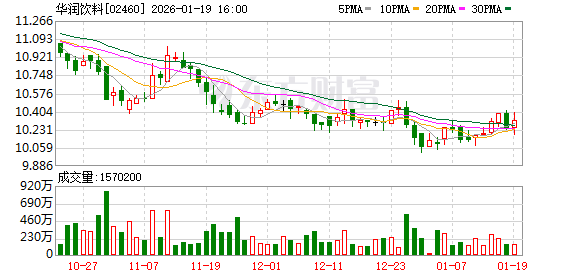
Core Viewpoint - The leadership change at China Resources Beverage, with Gao Li taking over as chairman, comes at a critical time as the company faces performance pressures and intensified industry competition [2][3]. Group 1: Leadership Change - Gao Li, a veteran of the China Resources Group, has been appointed as the new chairman, succeeding Zhang Weitong, who stepped down due to work adjustments [2]. - Gao Li has a strong financial background, having served as the financial director of China Resources Beverage from 2012 to 2020 and as the general manager of the finance department of China Resources Group since January 2025 [2]. Group 2: Performance Challenges - China Resources Beverage's revenue growth has stagnated, with a reported revenue of 13.52 billion yuan in the year of its IPO, reflecting only a 0.05% increase, while profit growth of 23.12% was primarily due to cost control [4]. - In the first half of 2025, the company experienced a decline in both revenue and profit, with revenue dropping to 6.206 billion yuan, a year-on-year decrease of 18.52%, and net profit falling to 808 million yuan, down 28.63% [4]. Group 3: Market Competition - The bottled water market has seen significant changes, with competitors like Wahaha and Nongfu Spring impacting China Resources Beverage's sales, particularly in the small-sized bottled water segment [5]. - In the first half of 2025, Nongfu Spring's bottled water revenue grew by 10.7% to 9.443 billion yuan, while China Resources Beverage's revenue in the same segment fell by 23.1% to 5.251 billion yuan [6]. Group 4: Strategic Initiatives - To diversify its revenue streams, China Resources Beverage has been actively launching new products in tea, juice, and sports drinks, introducing 14 new SKUs in the first half of the previous year [7]. - Despite these efforts, non-water beverage revenue only accounted for approximately 15.4% of total revenue, indicating that the second growth curve has not yet materialized [7]. Group 5: Market Position and Valuation - China Resources Beverage's revenue has remained stagnant around 13.5 billion yuan in 2023 and 2024, with expectations that its total revenue for 2025 will likely be surpassed by competitors like Dongpeng Beverage and Yuanqi Forest [7]. - As of January 19, 2026, the company's stock price had dropped to 10.32 HKD, a decline of 29% from its one-year high and over 38% from its IPO closing price, resulting in a market capitalization of 24.749 billion HKD, down 36.8% from its IPO value [8].

市值缩水近四成,华润饮料换帅破局
Guo Ji Jin Rong Bao· 2026-01-19 16:02
Core Viewpoint - The leadership change at China Resources Beverage comes at a critical time as the company faces declining performance and increased competition in the beverage industry [1][3]. Group 1: Leadership Change - Zhang Weitong has stepped down as Chairman of China Resources Beverage due to work adjustments, with Gao Li taking over for a three-year term [1]. - Gao Li has a strong financial background and has previously held key positions within the China Resources Group, including serving as the CFO of China Resources Beverage from 2012 to 2020 [1]. Group 2: Performance Challenges - In 2024, China Resources Beverage's revenue growth stagnated, with total revenue at 13.521 billion yuan, reflecting a mere 0.05% increase, while net profit grew by 23.12% mainly due to cost control [3]. - By the first half of 2025, the company experienced a decline in both revenue and profit, with operating income at 6.206 billion yuan, down 18.52% year-on-year, and net profit at 0.805 billion yuan, down 28.63% [3]. - The core packaged water business, which accounts for nearly 90% of revenue, has seen significant declines, particularly in the sales of its flagship product, Yibao [3][5]. Group 3: Market Competition - The competitive landscape in the packaged drinking water market has shifted, with Wahaha regaining market presence and Nongfu Spring launching a low-priced product that negatively impacted Yibao's sales [3]. - In the first half of 2025, Nongfu Spring's revenue from packaged drinking water reached 9.443 billion yuan, a 10.7% increase, while China Resources Beverage's water segment revenue fell to 5.251 billion yuan, a 23.1% decline [5]. Group 4: Growth Strategy - China Resources Beverage has been criticized for its reliance on a single product line and has attempted to diversify by launching new products in tea, juice, and sports drinks [6]. - In the first half of 2025, non-water beverage revenue was 0.955 billion yuan, a 21.3% increase, but still only accounted for about 15.4% of total revenue, indicating that a second growth curve has not yet materialized [6]. Group 5: Market Position and Valuation - Competitors like Dongpeng Beverage and Yuanqi Forest are expected to surpass China Resources Beverage in revenue, with Dongpeng projected to exceed 20 billion yuan and Yuanqi Forest anticipating a 26% growth [8]. - China Resources Beverage's stock price has declined significantly, with a closing price of 10.32 HKD on January 19, 2026, down 29% from its peak and over 38% from its IPO price, leading to a market capitalization decrease of 36.8% from its initial value [8].
茶里的自救难题
Bei Jing Shang Bao· 2026-01-19 13:30
Core Insights - The company "Cha Li" is facing significant financial difficulties due to strategic missteps in its bottled tea business, leading to a decision to terminate this segment by 2024 [1][4] - The failure to establish a successful product in the ready-to-drink tea market has exacerbated cash flow issues, resulting in delayed salary payments and supplier settlements [4][7] - The competitive landscape for bottled tea has become increasingly saturated, making it difficult for "Cha Li" to replicate its earlier success in the bagged tea segment [9][10] Financial Situation - "Cha Li" has reported a debt of 200 million yuan, which requires nearly 2 billion yuan in revenue to address, a target that few traditional tea companies can achieve [4][5] - The company has undergone nine rounds of financing since its inception, with significant investments from notable firms, but has now shifted focus to stabilizing core operations and addressing employee compensation [5][6] Market Dynamics - The bottled tea market is described as highly competitive, with established brands like Nongfu Spring and emerging players like Yuanqi Forest posing significant challenges [9][10] - "Cha Li" attempted to enter the ready-to-drink tea market in June 2022, investing heavily in production facilities and marketing, but has struggled with inventory buildup and high marketing costs without sufficient returns [6][7] Strategic Missteps - The company's ambition to surpass competitors like Suntory in sales within two years has not materialized, highlighting the risks associated with cross-industry expansion without a solid foundation [8][9] - Analysts suggest that "Cha Li" has over-relied on external funding and market trends without building a robust supply chain or brand loyalty, leading to vulnerabilities when market conditions change [9][10]

饮料市场加速分化 接班潮涌能否讲出新故事?
Zhong Guo Jing Ying Bao· 2026-01-19 08:41
Core Insights - The beverage industry is shifting from merely quenching thirst to emphasizing health attributes, with this trend expected to be more pronounced by 2025 [1] - Reports indicate that low-sugar and no-sugar options will become standard in the beverage market by 2025, reflecting a clear trend towards health-conscious consumption [1] - The industry is experiencing a bifurcation, with some companies capitalizing on market trends for growth while others face declining performance [1] Industry Performance - In November 2025, China's beverage production reached 10.46 million tons, a year-on-year increase of 0.4%, with a cumulative production of 165.61 million tons from January to November, reflecting a 3.3% growth [2] - Eastroc Beverage reported impressive performance with a revenue of 16.844 billion yuan in the first three quarters of 2025, a 34.13% increase year-on-year, while Nongfu Spring achieved a revenue of 25.622 billion yuan, up 15.6% [2] - Conversely, traditional giants like Master Kong faced challenges, with a revenue decline of 2.7% in the first half of 2025 [2] Segment Analysis - Sales of tea beverages fell by 6.3% to 10.67 billion yuan, fruit juice sales dropped by 13.0% to 2.956 billion yuan, and packaged water sales decreased by 6.0% to 2.377 billion yuan [3] - Carbonated and other beverages saw a growth of 6.3%, reaching 10.256 billion yuan [3] - The plant-based protein drink segment struggled, with leading brands like Yangyuan and Chengde Lulux experiencing revenue declines of 7.64% and 9.42%, respectively [3] Competitive Landscape - Companies are adjusting to revenue declines, with some experiencing double-digit drops; for instance, China Resources Beverage's revenue fell by 18.5% to 6.206 billion yuan [4] - The competitive landscape is marked by price wars, particularly in the packaged water segment, leading to significant revenue drops for brands like "Yibao" [4] - Analysts suggest that the success of Nongfu Spring's tea segment indicates a shift from basic hydration to quality tea beverages, while traditional companies must innovate to escape the price war trap [4] Emerging Trends - The rise of functional beverages is evident, with products tailored for specific scenarios, such as sports and fitness, gaining traction [7] - Brands are focusing on packaging innovations and marketing strategies that align with health and fitness trends, such as electrolyte water and convenient single-use formats [7][8] - The health and wellness segment is seeing explosive growth, with numerous new brands entering the market, particularly in traditional Chinese health drinks [6] Leadership Transition - The beverage industry is witnessing a generational shift, with new leaders taking over established companies, such as Wei Hongcheng at Master Kong and Xu Yangyang at Dali Foods [9][10] - These new leaders bring fresh perspectives and experiences, which may help navigate the challenges of a saturated market [11] - However, not all transitions are smooth, as seen in the ongoing succession issues at Wahaha, highlighting the complexities of generational change in the industry [11]


食品饮料行业周度市场观察-20260118
Ai Rui Zi Xun· 2026-01-18 05:07
Investment Rating - The report does not explicitly provide an investment rating for the food and beverage industry Core Insights - The food and beverage industry is experiencing significant trends, including the rise of health-conscious products and innovative marketing strategies to attract younger consumers Industry Environment - Multiple condiment companies are accelerating their IPOs to tap into overseas markets amidst rising costs and intense competition, with the industry expected to reach a scale of 498.1 billion yuan by 2024 [2] - The popularity of turmeric drinks has surged among young consumers, driven by health benefits such as anti-inflammatory properties, with sales showing strong growth despite higher prices [2] - The emergence of health-focused tea shops in hospitals is attracting young consumers, integrating traditional Chinese medicine concepts into modern beverage offerings [6] - The upcycled food industry is gaining traction as a sustainable solution to food waste, with a projected global market size of 74.8 billion USD by 2029, driven by innovative technologies [6] - The health beverage market is booming, with consumers increasingly favoring low-sugar and natural products, reflecting a shift in consumer behavior towards healthier options [10] Top Brand News - The brand "Guozi Shule" is expanding its product line into electrolyte water after securing a top position in the no-sugar tea market, indicating a strategy of diversification and targeting younger demographics [16] - "Tai Er" is rebranding to focus on fresh ingredients and new dishes, responding to market changes and performance pressures, while maintaining its traditional offerings [16] - Danone's "Pulse" beverage is expected to reach nearly 7 billion yuan in revenue, highlighting the growth potential in the functional bottled water market [17] - "Haidilao" is diversifying into the seafood market with a new model that emphasizes fresh and affordable options, aiming to capture a growing segment of consumers [17] - The brand "Xiaoguan Tea" has successfully launched a new brewing method that caters to the "lazy economy" trend, simplifying tea preparation while maintaining quality [20]
跨境出海周度市场观察-20260118
Ai Rui Zi Xun· 2026-01-18 05:06
Industry Trends - Goldman Sachs' "2025 Global E-commerce Handbook" suggests Chinese sellers focus on ASEAN, Latin America, and the EU, as global e-commerce growth slows[1] - China's direct investment in South Africa is projected to reach $13.21 billion in 2024, shifting from traditional infrastructure to consumer goods and renewable energy[1] - Chinese automotive global market share is expected to reach 38%, with overseas sales potentially hitting 15%-20% by 2030[1] - By 2025, China's outbound model is expected to shift from single-point sales to systematic capability output, enhancing user shopping experiences[1] Top Brand News - Genki Forest has entered over 40 countries, emphasizing brand value and cultural attitudes rather than low prices[10] - Sweet Tea has opened over 200 overseas stores in two years, focusing on balancing global standards with local operations[11] - INTO YOU's overseas sales have surpassed 150 million yuan, marking a shift from product output to brand output in the beauty sector[12] - Xiangpiaopiao plans to invest $38 million in Thailand to expand in Southeast Asia amid declining domestic revenue[14]
台湾“大九学堂”青年交流团来京感受传统文化
Xin Lang Cai Jing· 2026-01-17 21:49
Group 1 - The "Dajiu Academy" youth exchange group from Taiwan visited Beijing from January 15 to 20, marking the first group to exchange with the mainland in 2026 [1] - The group, led by Wang Guangci from the Ma Ying-jeou Foundation, included nearly 40 students from various Taiwanese universities, accompanied by 4 student volunteers from Peking University [1] - The exchange program focuses on four core themes: ice and snow events, traditional culture, fashion technology, and Beijing's unique characteristics, including experiences in ice sports and visits to cultural landmarks [1] Group 2 - The "Youth in the Double Olympic City" Taiwan Youth Beijing-Tianjin-Hebei Ice and Snow Season event started in December last year and will continue until February this year, aiming to build friendship bridges between youth from both sides [2] - Approximately 1,000 young people from Taiwan are expected to participate in the exchange during the event, allowing them to experience the warmth of Beijing in winter [2]
台湾“大九学堂”2026来陆首团到访北京,近40名台青感受冰雪魅力
Xin Lang Cai Jing· 2026-01-17 10:32
Core Viewpoint - The "Dajiu Academy" youth exchange group from Taiwan visited Beijing for the "Double Olympic City Youth Appointment" ice and snow season event, marking the first group from the academy to exchange in mainland China in 2026 [1][3]. Group 1 - The exchange group, led by Wang Guangci, Executive Director of the Ma Ying-jeou Foundation, included nearly 40 young students from major Taiwanese universities [1][3]. - The event aims to foster friendship between youth from both sides of the Taiwan Strait, with approximately 1,000 young people from Taiwan expected to participate in exchanges in Beijing during the winter season [5]. Group 2 - The activities will focus on four core themes: ice and snow events, traditional culture, fashion technology, and Beijing's unique characteristics, including experiences in ice sports and visits to historical sites like the National Museum, Forbidden City, Great Wall, and Summer Palace [3]. - Participants will also engage with contemporary brands and cultural performances, enhancing their understanding of mainland China's economic and social development [3].

2025年第53周:跨境出海周度市场观察
艾瑞咨询· 2026-01-17 00:03
Group 1: Cross-Border E-commerce Trends - Goldman Sachs' "2025 Global E-commerce Handbook" highlights a slowdown in global e-commerce growth, recommending Chinese sellers focus on ASEAN, Latin America, and the EU as potential markets [2] - ASEAN has low penetration but certain growth, Latin America shows rapid growth, and the EU offers stable returns [2] - Emerging platforms like TikTok Shop, Shopee, and MercadoLibre are challenging Amazon's dominance, with online food and beverage being a key growth area [2] Group 2: Investment in South Africa - The Belt and Road Initiative has led to significant Chinese investment in South Africa, projected to reach $13.21 billion in 2024, shifting from traditional infrastructure to consumer goods and renewable energy [4] - Political and economic risks exist in the South African market, necessitating compliance with China's ODI filing requirements for Chinese enterprises [4] - Simplified ODI filing processes can provide policy support and risk reduction for companies [4] Group 3: Automotive Industry Globalization - China's automotive industry is entering a critical phase of globalization, with an expected global market share of 38% [5] - The industry is shifting from cost-effectiveness to technological leadership, emphasizing "industry chain collaboration" and "deep localization" as key strategies [5] - Future growth may slow in the next two years, but by 2030, overseas sales could account for 15%-20% of total sales [5] Group 4: 2025 as a Turning Point for Chinese Exports - By 2025, China's export model is expected to shift from single-point sales to systematic capability output, with platforms like Temu and AliExpress rapidly gaining global traffic [6] - The success of these platforms is attributed to supply chain density, organizational efficiency, and fulfillment systems [6] - Chinese products are moving beyond the "cost-performance" label, indicating a shift towards emotional value and identity expression [6] Group 5: Hainan's Role in Trade - Hainan's free trade port is set to enhance "institutional openness" with zero tariffs on 6,637 items, aiming to improve trade efficiency [8] - The Hainan International Economic Development Bureau is focused on attracting investment and facilitating enterprise services [8] - The Hainan Expo is highlighted as a significant platform for policy implementation and international trade [8] Group 6: C-beauty Brand Expansion - Huaxizi's entry into Ulta Beauty marks a significant milestone for Chinese beauty brands in the U.S. market, reflecting a shift from transaction-oriented to system-oriented approaches [9] - Ulta Beauty's rigorous selection process underscores Huaxizi's maturity in product, supply chain, and brand narrative [9] - This event signifies the growing recognition of "C-beauty" in mainstream retail [9] Group 7: Trust in Globalization - The discussion at GTC2025 emphasized that the core barrier for Chinese companies going global is the lack of international thinking among founders [10] - Building long-term trust is likened to a marathon, requiring a deep integration into local cultures [10] - Leadership qualities and values are deemed crucial for successful internationalization [10] Group 8: Sports Brand Globalization - Chinese sports brands are quietly expanding overseas to address domestic competition and seize global opportunities [11] - Brands like DJI and Soundcore are leveraging technological innovation and international partnerships to enhance their global presence [11] - Emerging brands are using unique designs and community penetration strategies to enter international markets [12] Group 9: Innovative Pharmaceuticals - The Chinese innovative pharmaceutical sector is entering a phase of value realization, with authorized transactions exceeding $92 billion in the first three quarters of 2025 [13] - Companies like BaiLi Tianheng and HengRui Pharma are achieving significant milestone payments and strategic collaborations [13] - The establishment of a multi-tiered payment system for high-value innovative drugs is expected to open new pathways for market access [13] Group 10: Brand Globalization Strategies - Yuanqi Forest has entered over 40 countries, emphasizing the importance of brand value and cultural attitude in its globalization strategy [14] - The brand has adapted to local tastes and regulations while maintaining its core product quality [14] - The focus is on product strength, compliance, and cultural resonance rather than low prices [14] Group 11: New Tea Beverage Expansion - The Chinese tea brand Tianlala has opened over 200 overseas stores, focusing on balancing global standards with local engagement [15] - The brand's strategy includes a dual supply chain and deep localization to meet diverse market demands [15] - This approach allows for a broad consumer base while avoiding low-price competition [15] Group 12: INTO YOU's Global Strategy - INTO YOU's globalization has shifted from product output to brand output, focusing on building a cohesive brand identity [18] - The brand has achieved significant sales in 49 countries, with overseas sales exceeding 150 million yuan [18] - This transition reflects a broader trend of Chinese brands moving towards systematic brand building for long-term recognition [18] Group 13: SwiftX Logistics Company - Former Meituan executive Zhang Chuan founded SwiftX to provide end-delivery services for e-commerce in the U.S. market [19] - The company has received investments from Meituan and leading logistics firms, aiming to innovate in the U.S. logistics sector [19] - SwiftX plans to leverage peak shopping seasons to scale operations and compete with established logistics companies [20] Group 14: Xiangpiaopiao's Southeast Asia Expansion - Xiangpiaopiao is investing $38 million to build a factory in Thailand as part of its strategy to address declining domestic sales [21] - The company faces challenges from established competitors in the Southeast Asian market [21] - Despite efforts to revitalize sales through new products and marketing, revenue has continued to decline [21] Group 15: Yuanji Cloud Dumplings as a Benchmark - Yuanji Cloud Dumplings has been recognized as a benchmark for Chinese cuisine going global, utilizing cross-border supply chain integration and localized operations [22] - The brand's model emphasizes cultural preservation while adapting to local market needs [22] - The success of this approach highlights the importance of systematic and localized capabilities in the competitive landscape of international markets [22] Group 16: JD's European Market Strategy - JD.com is accelerating its expansion into the European market with its Joybuy platform, focusing on brand flagship stores and local services [23] - The company has acquired a majority stake in German retail group Ceconomy to enhance its local presence [23] - JD's strategy emphasizes long-term investment in local infrastructure and compliance, aiming to differentiate itself from traditional cross-border e-commerce models [23]

逆势而动还是顺势而为 起底2025元气森林异业合作
Zhong Guo Jing Ji Wang· 2026-01-16 06:32
Core Insights - The opening of the "Yuanqi Forest Atlantis" youth music nightlife space in Hefei marks a significant move in Yuanqi Forest's cross-industry collaboration strategy, aligning with local economic initiatives [1] - The brand's approach to cross-industry partnerships has shifted from aggressive collaboration to a more measured and strategic focus on long-term engagement with consumers [4] Group 1: Cross-Industry Collaborations - Yuanqi Forest has launched various collaborations in 2025, including partnerships with music festivals, stationery brands, gaming IPs, and even Disney, indicating a focus on engaging younger audiences [3] - The number of cross-industry collaborations has decreased significantly, with new tea beverage industry collaborations dropping from 149 in the first half of 2024 to 72 in the same period in 2025, reflecting a broader trend of reduced collaboration activity [4] Group 2: Strategic Shift - The brand's recent collaborations emphasize building long-term emotional connections with consumers rather than merely leveraging traffic, showcasing a shift towards a more sustainable and meaningful engagement strategy [4] - The development of the Hefei project took a year and a half, highlighting the brand's commitment to thorough market research and careful planning in its cross-industry initiatives [4] Group 3: Industry Trends - The trend of reduced collaboration activity is not unique to Yuanqi Forest but is observed across the new tea beverage industry, suggesting a collective move towards more strategic and less frequent partnerships [4][5] - The focus on deep interaction and emotional resonance in brand collaborations is becoming a common strategy among new consumer brands, indicating a potential shift towards a "long-term relationship" era in cross-industry marketing [5]