国家电投

Search documents
重组整合提速 国资布局优化“大动作”频现
Zhong Guo Zheng Quan Bao· 2025-12-05 20:23
● 本报记者 刘丽靓 在国企改革深化提升行动攻坚收官的关键阶段,国有资本布局优化与结构调整正加速破局。数据显示, 2025年1至11月,全国国企并购重组事件累计达265件,同比增长14.22%。从中央到地方,随着一系列 指向明确、措施精准的政策接连出台,一批重大项目密集签约落地,一场以专业化整合为主线、 向"新"而行的国资深度变革正向纵深推进,持续为构建新发展格局汇聚新动能。 提升国有资本配置运营效率 12月1日,国务院国资委主任张玉卓在《人民日报》发表署名文章提出,要加强战略性、专业化重组, 围绕强化功能使命、提升规模效益,加大力度合并"同类项",避免重复建设和无序竞争。 在央企重组深入推进的同时,地方国企改革亦呈加速态势。知本咨询数据显示,2025年1至11月,地方 国企完成并购重组事件56件,同比增长36.59%,增速显著高于央企。 各地结合自身资源禀赋与发展阶段,探索出特色鲜明的改革路径。12月4日,湖北省国资委主任陈忠表 示,坚持"三线并进",强化资本运作,以战略性并购重组为重要手段,加快省属实体产业转型升级。 同日,四川省委金融办会同四川证监局联合印发《四川省推进企业上市和上市公司并购重组三年行动 ...
强链破“卡点” 激活“核动力”——核技术应用产业剑指6000亿元市场
Zhong Guo Zheng Quan Bao· 2025-12-01 22:34
Core Insights - The Chinese nuclear technology application industry is transitioning from a "follower" to a "leader" position, with significant advancements in key isotopes and domestic medical equipment [1][2] - The market for radioactive drugs is projected to grow from 9.3 billion yuan in 2025 to 26 billion yuan by 2030, indicating strong growth potential [3][4] Industry Developments - The successful domestic production of Lu-177 isotope marks a significant milestone, enabling targeted therapies for prostate cancer and neuroendocrine tumors, with annual production capacity meeting domestic demand [2][3] - Over 90 types of radiation therapy equipment have been approved for market, with domestic brands accounting for over 70% of the market share, reducing reliance on imports [2][3] Market Potential - The radioactive drug market is expected to grow significantly, with projections indicating a rise from 9.3 billion yuan in 2025 to 26 billion yuan by 2030 [3] - Nuclear technology applications are expanding beyond healthcare into industrial and agricultural sectors, driving modernization and growth [3] Policy and Support - The "Three-Year Action Plan for High-Quality Development of the Nuclear Technology Application Industry (2024-2026)" aims for an annual economic output of 400 billion yuan by 2026, supported by legal frameworks and national research facilities [4] - The establishment of a national-level isotope supply base is part of the strategy to enhance supply chain resilience and reduce dependency on single sources [7][8] Challenges and Solutions - The industry faces challenges such as single-point dependency risks for key isotopes and insufficient supply chain elasticity, which could impact stability in nuclear medicine and industrial applications [5][6] - A "Strong Chain Action Plan" has been initiated to address these challenges, focusing on collaborative efforts among state-owned enterprises, research institutions, and private companies to enhance the entire industry chain [7][8] Future Outlook - The nuclear technology application industry is expected to maintain a compound annual growth rate of over 10%, with a target output of 600 billion yuan by the end of the 14th Five-Year Plan [7] - The integration of nuclear technology with AI and new materials is anticipated to create significant new value, potentially exceeding 100 billion yuan during the 14th Five-Year Plan period [8]
强链破“卡点” 激活“核动力”
Zhong Guo Zheng Quan Bao· 2025-12-01 20:25
Core Insights - The Chinese nuclear technology application industry is transitioning from a "follower" to a "leader" position, particularly in the nuclear medical field, with significant advancements in the supply of key isotopes and domestic market share of radiation therapy equipment [1][2][3] - The market for radioactive drugs is projected to grow from 9.3 billion yuan in 2025 to 26 billion yuan by 2030, indicating strong growth potential in the nuclear medical sector [3] - The "Nuclear Technology Application Industry High-Quality Development Three-Year Action Plan (2024-2026)" aims for the industry to achieve a direct economic output of 400 billion yuan by 2026, with a target of 600 billion yuan by the end of the 14th Five-Year Plan [3][5] Achievements - The successful production of Lu-177 isotope by Qinshan Nuclear Power, which is expected to meet domestic market needs for targeted cancer therapies, marks a significant milestone in self-sufficient isotope supply [1][4] - Over 90 radiation therapy devices have been approved for market use by the National Medical Products Administration, with more than 70% being domestic brands, reducing reliance on imports [2] - The development pipeline for new radioactive drugs has accelerated, with over 200 candidates entering clinical trials, enhancing treatment options for cancer [2] Challenges - The industry faces risks related to single-point dependency on key isotopes and insufficient elasticity in the supply chain, which could jeopardize stability in nuclear medicine and industrial applications [4] - There is a lack of understanding among small and medium enterprises regarding national support policies, leading to difficulties in seizing development opportunities [4] - Issues such as insufficient investment in basic research, weak pilot testing for technology transfer, and imbalanced regional development are hindering overall industry progress [4] Strategic Initiatives - The "Strong Chain Action Plan" was launched to address existing challenges and promote a systematic upgrade of the nuclear technology application industry, involving collaboration among state-owned enterprises, research institutions, and private companies [5][6] - The plan emphasizes a collaborative approach to enhance the entire industry chain, ensuring the stability of domestic isotope supply and fostering innovation through cross-sector integration [6] - The initiative aims to create industrial clusters in key regions to address developmental imbalances and stimulate growth across the industry [6]
派驻中管企业纪检监察组聚焦规范化法治化正规化建设高标准锻造高素质队伍
Zhong Yang Ji Wei Guo Jia Jian Wei Wang Zhan· 2025-12-01 00:40
Group 1 - The Central Commission for Discipline Inspection (CCDI) and the National Supervisory Commission organized the first digital modeling exchange event for supervision and case handling, showcasing smart supervision models applied in various business areas such as oil and gas sales, material procurement, and engineering construction [1] - The event aimed to enhance the capabilities of discipline inspection and supervision personnel in utilizing big data for supervision and investigation work, aligning with the CCDI's focus on high-quality development in discipline inspection [1] - The CCDI has completed the deployment of discipline inspection teams to state-owned enterprises, emphasizing the importance of professional training and systematic learning for improving the capabilities of inspection personnel [1] Group 2 - The CCDI's discipline inspection team at China Petroleum developed a practical training plan for discipline inspection personnel, focusing on real-world training and establishing mechanisms for comprehensive learning and mentorship [2] - The discipline inspection team at China Unicom issued a three-year training plan to ensure that all key personnel participate in relevant training organized by the CCDI, emphasizing the need for targeted and effective training [2] - Training methods include theoretical guidance, case studies, and scenario simulations to enhance the practical skills of discipline inspection personnel [2] Group 3 - The discipline inspection team at the South-to-North Water Diversion Group focused on common disciplinary issues by embedding real cases into relevant scenarios for simulation exercises, enhancing practical capabilities through immersive training [3] - The team at State Power Investment Corporation set up courses on evidence collection, data empowerment, and case safety, addressing the specific characteristics of corruption issues in state-owned enterprises [4] - The discipline inspection team at China Mobile developed training courses on investigation procedures and practical operations, aiming to improve the effectiveness and relevance of training [4] Group 4 - The CCDI's discipline inspection teams are innovating training models by involving personnel in case handling and on-the-job training to enhance their capabilities in compliance and law enforcement [4] - The discipline inspection team at China Sinochem sent personnel for practical training at the CCDI headquarters and organized extensive training sessions to improve compliance capabilities at all levels [4] - The discipline inspection team at China Baowu Steel Group is focusing on developing the skills of promising lower-level inspectors through hands-on involvement in significant investigations [5]
“白色森林”装上智慧大脑,山东探路海上风电运维新模式
Da Zhong Ri Bao· 2025-11-28 22:41
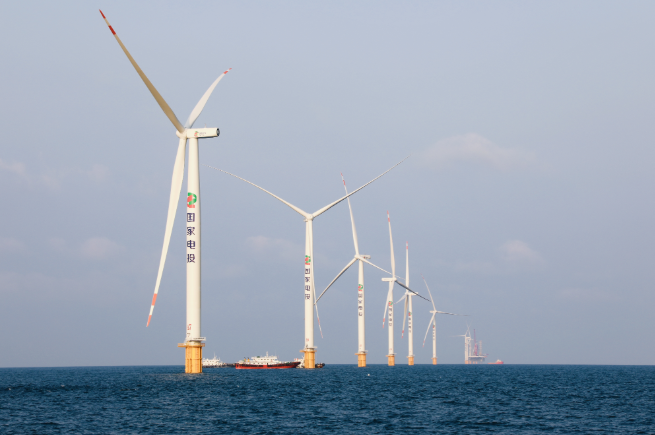
Core Viewpoint - The development of offshore wind power in Shandong has significantly increased green electricity supply and reduced carbon emissions, positioning the region as a leader in renewable energy in northern China [1][6]. Group 1: Offshore Wind Power Development - The construction of 235 giant wind turbines by State Power Investment Corporation (SPIC) in the southern sea area of Shandong generates 4.35 billion kilowatt-hours of green electricity annually, equivalent to the carbon absorption of 14 million trees [1]. - As of October 2023, Shandong's offshore wind power installed capacity reached 5.92 million kilowatts, making it a crucial engine for the province's green, low-carbon, and high-quality development [1]. Group 2: Operation and Maintenance Innovations - Offshore wind power operation and maintenance (O&M) costs typically account for 20%-30% of project construction costs, which is significantly higher than onshore wind power [3]. - The integration of AI in offshore wind power O&M has improved efficiency, with a smart system capable of real-time monitoring and alerts for equipment issues, thus preventing potential damages [3][4]. Group 3: Communication and Inspection Enhancements - A 5G base station has been established at the offshore wind farm, extending coverage up to 77 kilometers, which enhances communication capabilities for maintenance and safety [5]. - The deployment of inspection robots has replaced 70% of manual inspection work, improving efficiency and ensuring the safety of personnel during maintenance operations [5][6]. Group 4: Renewable Energy Growth and Future Goals - Shandong aims to achieve a total installed power capacity of over 250 million kilowatts by October 2025, with clean energy accounting for one-third of electricity consumption [6][9]. - The province has seen a nearly 10 percentage point increase in the share of renewable energy generation from 2021 to 2024, with new energy storage capacity growing more than fivefold compared to the end of 2022 [9].

百亿并购重组,国家电投整合煤电铝资产,旗下“煤炭航母”浮出水面
3 6 Ke· 2025-11-27 04:00
Core Viewpoint - The asset restructuring valued at 11.149 billion yuan is part of State Power Investment Corporation's strategy to build a coal-electricity-aluminum empire in Inner Mongolia, enhancing its operational efficiency and market position [1][2]. Group 1: Asset Restructuring Details - State Power Investment Corporation plans to acquire 100% equity of Baiyinhu Coal Power Co., Ltd. from its controlling shareholder, Inner Mongolia Energy Co., Ltd., for a total price of 11.149 billion yuan [1]. - The acquisition will be financed through a combination of share issuance and cash payment, along with a fundraising plan of up to 4.5 billion yuan for ongoing projects and working capital [1][2]. - Post-acquisition, the coal production capacity will increase to 63 million tons per year, and aluminum production capacity will exceed 1.26 million tons [2]. Group 2: Strategic Implications - The restructuring is part of a broader strategic adjustment by State Power Investment Corporation, focusing on specialized operations across its listed platforms [2]. - Other subsidiaries are also undergoing transformations, such as Yuanda Environmental Protection acquiring hydropower assets and shifting focus to nuclear power [2]. - The integration aims to create a closed-loop system where coal is converted to aluminum on-site, significantly reducing production costs by 2,300 yuan per ton compared to market prices [2][3]. Group 3: Financial Impact - The acquisition is expected to increase the total assets of State Power Investment Corporation from 54.979 billion yuan to 80.079 billion yuan, with projected revenue growth from 14.464 billion yuan to 19.942 billion yuan by mid-2025 [4]. - Analysts estimate that the transaction could enhance the annual net profit attributable to shareholders by approximately 1.867 billion yuan [5]. - However, Baiyinhu Coal Power Co., Ltd. has a high debt level, with total liabilities reaching 16.9 billion yuan and a debt ratio of 67% as of mid-2025, raising concerns about financial stability [5][6]. Group 4: Industry Trends - The merger reflects an accelerating trend of asset securitization in the power industry, with state-owned enterprises increasingly optimizing their asset structures [7]. - The focus has shifted from merely filling funding gaps to strategically enhancing asset structures, particularly in the renewable energy sector [7]. - The restructuring also indicates a renewed recognition of the value of traditional energy sources, as coal prices stabilize and the role of coal in the new power system is reassessed [7].

三年行动收官 电力央企在深化改革中破解复杂命题
Zheng Quan Shi Bao· 2025-11-25 18:28
Core Insights - The "New Three-Year Action Plan" (2023-2025) is seen as a significant initiative for state-owned enterprise reform, distinguishing it from the previous "Old Three-Year Action" (2020-2022) [1] - The plan emphasizes the importance of state-owned enterprises in key sectors such as energy and resources, aiming to enhance national strategic security and improve capital allocation efficiency through market-oriented restructuring [1][2] - There are challenges in the asset securitization of electric power central enterprises, including unclear positioning of listed companies and potential competition among subsidiaries [1] Group 1: Asset Securitization Challenges - The complexity of asset nature is a significant barrier, as traditional power assets are heavy, have long cycles, slow returns, and high debt ratios, leading to valuation discounts in capital markets [2][3] - Regulatory and approval processes involve multiple agencies, making the asset restructuring and listing processes lengthy and complicated, particularly in the power sector affected by various regulations [2] - There is a mismatch in profitability and valuation, with investors favoring high-growth, predictable cash flow assets, while traditional power assets have limited growth potential [3] Group 2: Future Directions for Electric Power Central Enterprises - Electric power central enterprises should focus on expanding renewable and clean energy production, including wind, solar, pumped storage, and hydrogen energy [3] - Increased overseas projects in power and infrastructure can provide funding for acquisitions and project development, aligning with the national "going out" strategy [3] - Emphasis on integrating fundraising with national strategies such as "dual carbon," energy security, and modern power system construction is crucial for effective fund management and risk control [3]


风光氢氨醇一体化前景广挑战多
Zhong Guo Chan Ye Jing Ji Xin Xi Wang· 2025-11-25 00:14
Core Viewpoint - The National Energy Administration emphasizes the expansion of non-electric utilization of renewable energy as a key direction for high-quality and stable development during the 14th Five-Year Plan, focusing on integrated projects for wind and solar hydrogen, ammonia, and methanol production [1] Group 1: Industry Development - The wind-solar hydrogen-ammonia-methanol integration model is seen as a transformative approach that converts unstable green electricity into green hydrogen, which can then be synthesized into green ammonia and methanol, addressing the dependency on stable power grids in traditional chemical production [2] - As of October 2023, over 800 hydrogen-ammonia-methanol integration projects have been planned in China, with a total planned green hydrogen capacity of nearly 9 million tons per year, and over 200,000 tons per year already in operation, positioning China as a global leader in this sector [2] Group 2: Regional Focus - Most of the green hydrogen and methanol projects are concentrated in resource-rich regions such as Northwest, North, and Northeast China, with provinces like Inner Mongolia, Jilin, and Xinjiang actively promoting large-scale development [3] - Notable operational projects include the Xinjiang Kuqa green hydrogen demonstration project and the Inner Mongolia Yigao 100,000-ton green methanol project, among others [3] Group 3: Project Diversity and Challenges - The project participants are increasingly diverse, including major state-owned enterprises and private companies, creating a competitive landscape [4] - Despite the promising outlook, many hydrogen-ammonia-methanol projects are still in preliminary stages, with significant challenges in scaling production and reducing costs [6] Group 4: Market Potential and Future Outlook - The green hydrogen and methanol industry faces high production costs and slow supply chain development, but there is significant market potential driven by low-carbon trends in shipping and aviation [6] - The long-term prospects for the hydrogen and methanol market are optimistic, but the industry must overcome high investment and operational costs to meet growing demand [6]
12.426亿,未来科学城置业竞得昌平未来科学城东区核心地块
3 6 Ke· 2025-11-19 09:45
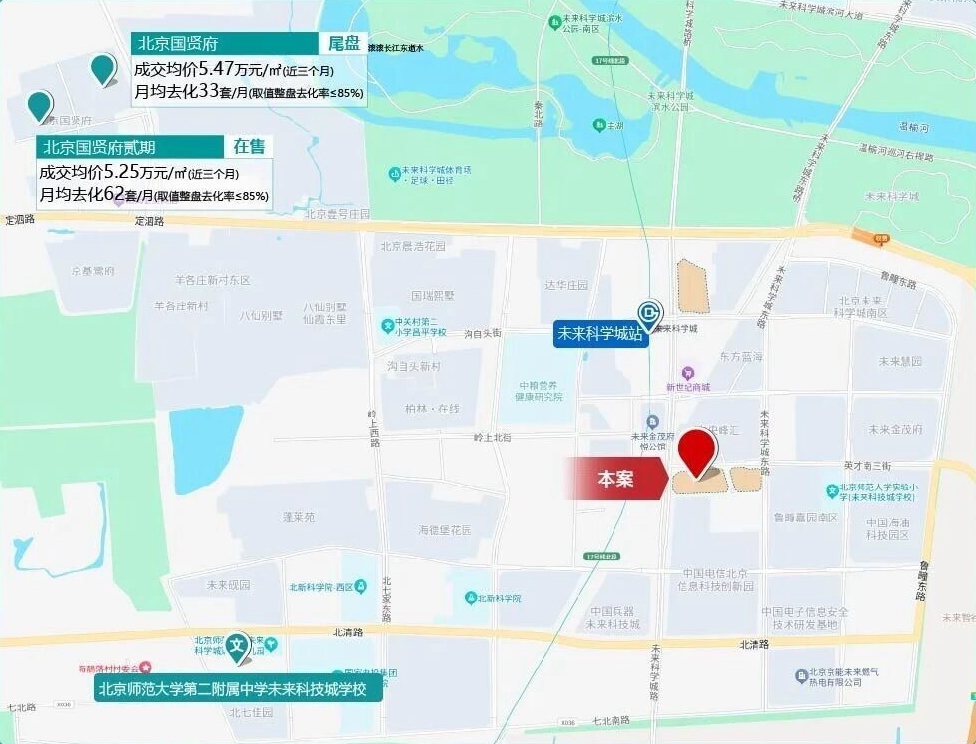
Core Insights - The Changping District Future Science City project (South Area) land development project was successfully auctioned for a base price of 1.2426 billion, with a floor price of approximately 23,200 per square meter [1] - This is the first high-quality land supply following the release of the "Good Housing New Policy" in Future Science City, marking a significant independent acquisition by Future Science City Real Estate [1] Group 1 - The land is located approximately 400 meters from the Future Science City Station on Metro Line 17, which is expected to officially open by the end of this year, enhancing connectivity with major lines and core functional areas [2] - The site includes two residential plots and one cultural facility plot, covering a construction area of 43,000 square meters with a planned building area of 82,200 square meters and a plot ratio of 1.91 [2] - Future Science City is a key area in Beijing's "Three Cities and One District" initiative, covering approximately 170.6 square kilometers and focusing on national energy strategy and technological innovation since its establishment in 2009 [2] Group 2 - Future Science City has evolved from an energy technology experimental zone to a model area for industrial-city integration in northern Beijing, featuring a "Two Valleys and One Park" innovation pattern [5] - The Energy Valley has attracted over 300 enterprises, including major state-owned companies, forming a trillion-level industrial cluster [5] - The new project will adhere to planning requirements to enhance regional living facilities and align industrial development with resident needs, aiming to create a city model that balances technological innovation and high-quality living [5]
巴西这个地方,情况太复杂了
3 6 Ke· 2025-11-18 09:20
Core Insights - Brazil is increasingly seen as a key market for Chinese companies, second only to Mexico, due to strengthened political and diplomatic ties between China and Brazil [1] - Despite the high export figures from China to Brazil, the market share of Chinese cross-border e-commerce platforms in Brazil is declining, indicating a complex market environment [1][2] - The Brazilian market presents both opportunities and challenges, with a divide between successful head brands and struggling small and medium enterprises [2] Group 1: Market Dynamics - In 2024, China's export to Brazil is expected to reach $72.08 billion (approximately 513.78 billion RMB), a year-on-year increase of 22% [4] - Brazil is a major investment destination for China, with expected investments exceeding $4.8 billion (approximately 34.2 billion RMB) in 2024, more than doubling from the previous year [4] - The Brazilian automotive market is expanding, with new car sales projected to grow by 14.1% to 2.635 million units in 2024, driven by government policies promoting electric vehicles [5][6] Group 2: Investment Opportunities - Emerging industries such as clean energy, digital economy, and logistics are becoming focal points for Chinese investment in Brazil, with significant opportunities in electric vehicles and solar energy [5][9] - The Brazilian government is supportive of solar energy projects, with multiple initiatives launched since 2012 to promote the solar industry [9] - The local market's demand for electric vehicles is growing, with Chinese brands like BYD and Great Wall Motors capturing significant market shares [6] Group 3: Challenges for SMEs - The complex tax system in Brazil, with over 50 different tax types, poses significant challenges for small and medium enterprises, making market entry difficult [11] - The overall tax burden for businesses in Brazil can exceed 40%, which can erode profit margins for companies with lower gross margins [11][12] - Recent changes in tax policies, such as the cancellation of tax exemptions for small packages, have further increased costs for Chinese e-commerce businesses [15] Group 4: Localization and Compliance - Localization is critical for Chinese companies operating in Brazil, with a focus on hiring local talent to navigate the complex regulatory environment [16][19] - The Brazilian government encourages local hiring, and companies face penalties for non-compliance with labor laws, highlighting the importance of understanding local labor regulations [18] - Chinese companies must adapt their corporate culture and employment practices to attract and retain local talent, as Brazilian workers prioritize job flexibility and career development opportunities [19]