老板电器

Search documents
当AI走进后厨:商用厨房正在发生的一次系统性升级
第一财经· 2026-01-22 10:25
Core Viewpoint - The restaurant industry is experiencing a tension between consumer demand for authentic cooking and operational pressures on restaurant operators, leading to a transformation in kitchen operations where AI and automation are becoming integral to managing efficiency and experience [3][22]. Group 1: Market Potential - The commercial kitchen market is substantial, with a projected revenue of 57,982 billion yuan by 2025, yet the penetration of smart technology is below 10% [5]. - The operational logic of commercial kitchens has traditionally relied on human experience, which becomes problematic as restaurants scale up, leading to challenges in consistency and rising labor costs [5][6]. Group 2: Technological Integration - Cooking robots are emerging as essential operational tools, addressing the most challenging aspects of kitchen standardization, such as timing and experience [6]. - Companies like Boss Electric are integrating AI into their long-term strategies for commercial kitchens, utilizing extensive cooking data to enhance kitchen management and operational efficiency [6][9]. Group 3: Strategic Positioning - Boss Electric's investment in Youte Smart Kitchen signifies a shift towards a comprehensive kitchen system rather than merely supplying equipment, aiming to create a cohesive operational framework [12][18]. - The focus of competition in the commercial kitchen sector is shifting from individual devices to system capabilities, emphasizing the need for a holistic approach to kitchen management [12][18]. Group 4: Future Implications - The evolution of commercial kitchens is driven by the need for efficiency and consumer expectations, with AI technology playing a crucial role in this transformation [22]. - As kitchens become more systematized and managed, those relying solely on traditional methods may find themselves increasingly outpaced by more innovative competitors [22][23].



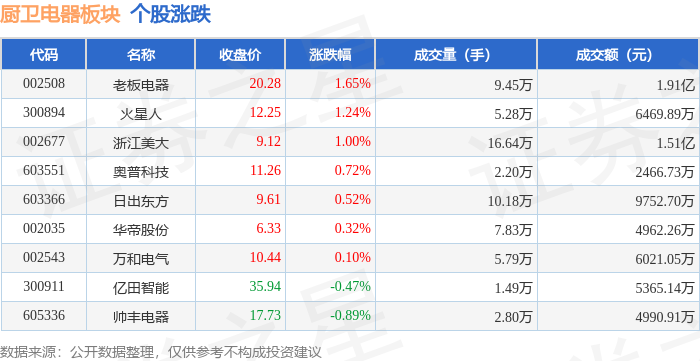
厨卫电器板块1月22日涨0.72%,老板电器领涨,主力资金净流出1065.1万元
Zheng Xing Xing Ye Ri Bao· 2026-01-22 09:01
Group 1 - The kitchen and bathroom appliance sector increased by 0.72% on January 22, with Boss Electric leading the gains [1] - The Shanghai Composite Index closed at 4122.58, up 0.14%, while the Shenzhen Component Index closed at 14327.05, up 0.5% [1] - Key stocks in the kitchen and bathroom appliance sector showed varied performance, with Boss Electric closing at 20.28, up 1.65%, and other notable stocks like Mars Man and Zhejiang Meida also showing positive gains [1] Group 2 - The net capital flow in the kitchen and bathroom appliance sector showed a net outflow of 10.65 million yuan from institutional investors and 21.11 million yuan from retail investors, while individual investors had a net inflow of 31.76 million yuan [1] - Specific stock performances indicated that Zhejiang Meida had a net inflow of 5.59 million yuan from institutional investors, while Boss Electric experienced a net outflow of 1.19 million yuan [2] - The overall capital flow dynamics suggest a mixed sentiment among different investor categories, with retail investors showing a preference for certain stocks despite the overall outflows from institutional and speculative investors [2]




杭州2025年GDP超2.3万亿元
Hang Zhou Ri Bao· 2026-01-22 02:50
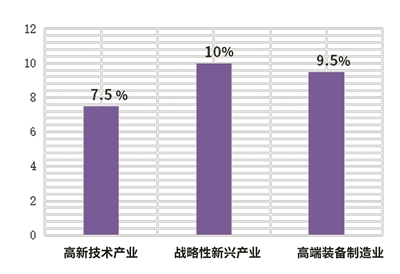
Economic Growth Overview - Hangzhou's GDP reached 2.3011 trillion yuan in 2025, growing by 5.2% year-on-year, surpassing the national growth rate [5] - The city aims to achieve a GDP of 3 trillion yuan and a per capita GDP exceeding 30,000 USD by 2030, laying a solid foundation for these targets [5] Industrial Performance - The industrial added value for large-scale industries grew by 6.0%, with high-tech industries, strategic emerging industries, and high-end equipment manufacturing increasing by 7.5%, 10.0%, and 9.5% respectively [5] - The computer communication and other electronic equipment manufacturing sectors saw a growth of 13.4%, while the automotive manufacturing sector experienced a significant increase of 36.7% [5] Emerging Technologies - New energy vehicle production surged by 383.0%, while industrial robot and 3D printing equipment production increased by 38.6% and 15.1% respectively, showcasing the success of Hangzhou's "digital-physical integration" strategy [6] Service Sector Contribution - The service sector's added value reached 1.6997 trillion yuan, accounting for 73.8% of GDP, with a growth rate of 5.3% [6] - Key digital economy enterprises like Alibaba and Ant Group are driving growth, with Alibaba's "cloud + AI" strategy supporting the national large model industry [6] Export and Domestic Demand - Total foreign trade exports reached 646.9 billion yuan, growing by 8.7%, driven by local enterprises expanding overseas [7] - Domestic consumption also showed strong growth, with retail sales of consumer goods reaching 949.9 billion yuan, reflecting a shift towards high-end, intelligent, and quality products [8] Overall Economic Strategy - Hangzhou's economic growth is characterized by a systemic high-quality development driven by new productive forces, integrating industrial upgrading with service innovation [8] - The city is positioned as a hub for private economic development, with local enterprises playing a crucial role in market innovation [9]
厨卫电器板块1月21日跌0.52%,火星人领跌,主力资金净流出2925.24万元
Zheng Xing Xing Ye Ri Bao· 2026-01-21 08:53
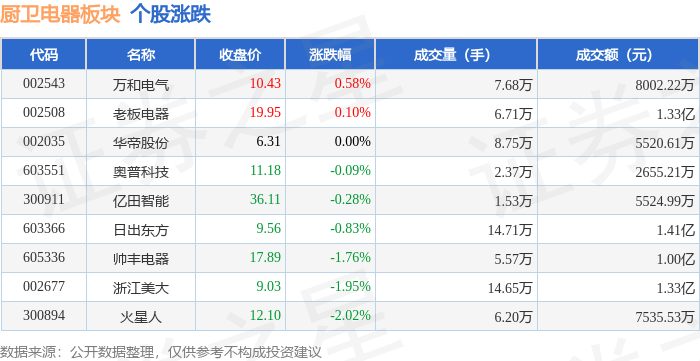
证券之星消息,1月21日厨卫电器板块较上一交易日下跌0.52%,火星人领跌。当日上证指数报收于 4116.94,上涨0.08%。深证成指报收于14255.12,上涨0.7%。厨卫电器板块个股涨跌见下表: | 代码 | 名称 | 收盘价 | 涨跌幅 | 成交量(手) | 成交额(元) | | --- | --- | --- | --- | --- | --- | | 002543 | 万和电气 | 10.43 | 0.58% | 7.68万 | 1 8002.22万 | | 002508 | 老板电器 | 19.95 | 0.10% | 6.71万 | + 1.33 Z | | 002035 | 未受股份 | 6.31 | 0.00% | 8.75万 | 5520.61万 | | 603551 | 奥普科技 | 11.18 | -0.09% | - 2.37万 | 2655.21万 | | 300911 | 亿田智能 | 36.11 | -0.28% | 1.53万 | 5524.99万 | | 603366 | 日出东方 | 9.56 | -0.83% | 14.71万 | 1.41亿 | | 605336 ...
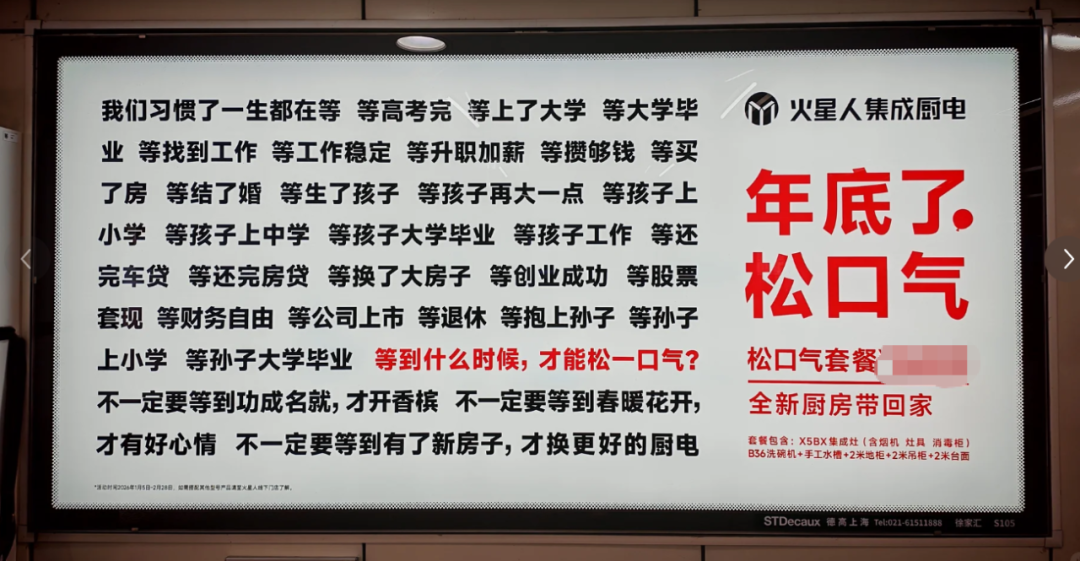
贩卖焦虑or暴露焦虑? 4年连跌的火星人,都快熄火了 | BUG
Xin Lang Cai Jing· 2026-01-21 01:20
Core Viewpoint - Mars Integrated Stove has faced significant criticism for its marketing strategy, which has been perceived as "selling anxiety" by referencing critical life milestones. The company has since updated its promotional materials, indicating a shift from a technology-focused narrative to one that resonates emotionally, possibly reflecting underlying growth concerns [1][2][9]. Financial Performance - Mars Integrated Stove has experienced a continuous decline in revenue and net profit for four consecutive years, with revenue dropping from 2.319 billion yuan in 2021 to 577 million yuan in the first three quarters of 2025, and net profit declining from 375.7 million yuan to a loss of 218 million yuan during the same period [1][2][11]. - The annual revenue figures from 2022 to 2025 are as follows: 2.277 billion yuan (2022), 2.139 billion yuan (2023), 1.376 billion yuan (2024), and 577 million yuan (2025), with year-on-year declines of 1.81%, 6.03%, 35.68%, and 43.03% respectively. The net profit figures show a similar trend, with declines of 16.29%, 21.39%, 95.49%, and 1546.12% [2][11][12]. Market Context - The integrated stove industry is closely tied to the real estate market, and the recent slowdown in new housing deliveries has negatively impacted business growth. However, compared to competitors like Boss Electric and Vanward Electric, Mars Integrated Stove's revenue and profit declines are more severe, suggesting that internal factors also play a significant role [3][12]. Operational Challenges - Key operational issues contributing to Mars Integrated Stove's performance include an over-reliance on integrated stoves (over 80% of product mix), a lack of product innovation (low R&D spending), and a dependence on a "burning money for growth" strategy. These factors have exacerbated the company's performance decline [4][13]. - The company's sales expense ratio surged to 46.8% in the first three quarters of 2025, up from 27.47% the previous year, yet this increase in marketing expenditure coincided with a significant revenue drop of 43.03% and a net profit decline of 1546.12% [4][13]. Shareholder Actions - Recent significant share reductions by major shareholders indicate a lack of confidence in the company's future. For instance, from October 14, 2025, to January 13, 2026, major shareholders reduced their holdings by a total of 5.293 million shares, representing a 1.30% decrease [5][14]. Management Changes - In response to ongoing performance issues, Mars Integrated Stove has undergone significant management changes, including the resignation of key executives and the appointment of new leadership from Vanward Electric. This includes the new marketing general manager, who has a track record of successful strategies in the industry [6][10][17]. - The company has also implemented salary reductions for top executives, reflecting the urgency of addressing the declining performance. Total compensation for executives decreased by approximately 22% from the previous year [15][16]. Strategic Considerations - The future direction of Mars Integrated Stove remains uncertain, as the company must decide whether to continue focusing on integrated stoves or expand into broader kitchen appliance solutions. The effectiveness of new management in addressing these strategic challenges is yet to be determined [8][18].
贩卖焦虑or暴露焦虑?4年连跌的火星人,都快熄火了 | BUG
Xin Lang Ke Ji· 2026-01-21 00:17
Core Viewpoint - Mars Integrated Stove has faced criticism for its marketing strategy that allegedly promotes anxiety by referencing significant life events, leading to a shift in its brand narrative from "technical symbols" to "emotional resonance" [2][3] Financial Performance - Mars Integrated Stove has experienced a continuous decline in revenue and net profit for four consecutive years since 2021, with revenue dropping from 23.19 billion yuan and profit of 3.76 billion yuan in 2021 to 5.77 billion yuan and a loss of 2.18 billion yuan in the first three quarters of 2025 [3][10][11] - The company's revenue figures for the years 2022 to 2025 are 22.77 billion yuan, 21.39 billion yuan, 13.76 billion yuan, and 5.77 billion yuan, reflecting year-on-year declines of 1.81%, 6.03%, 35.68%, and 43.03% respectively [10] - Correspondingly, the net profit figures are 3.145 billion yuan, 2.472 billion yuan, 1.115 million yuan, and a loss of 2.183 billion yuan, with year-on-year declines of 16.29%, 21.39%, 95.49%, and 1546.12% respectively [11] Marketing and Brand Strategy - Following backlash over its "breath easy package" marketing campaign, Mars Integrated Stove has proactively revised its advertising content to remove potentially discomforting phrases [6][8] - The company’s marketing expenses surged to 46.8% in the first three quarters of 2025, up from 27.47% in the previous year, yet this increase did not translate into improved financial performance [13] Management Changes - In response to ongoing poor performance, Mars Integrated Stove has undergone significant personnel changes, including the resignation of its deputy general manager and the appointment of a new marketing general manager from the Wanhe Group [15][16] - The company’s actual controller and several executives have also experienced salary reductions, with total executive compensation dropping from 13.23 million yuan in 2023 to 10.28 million yuan in 2024, a decrease of approximately 22% [15] Industry Context - The integrated stove industry is closely tied to the real estate market, and the decline in new housing deliveries has adversely affected business growth [12] - Despite challenges faced by the industry, Mars Integrated Stove's performance has deteriorated more significantly than its peers, indicating internal management issues alongside external market pressures [12][17]
湘财证券晨会纪要-20260121
Xiangcai Securities· 2026-01-20 23:47
Industry and Company Overview - The home appliance industry experienced a decline of 0.34% this week, with the home appliance components sub-industry leading the gains [2] - The home appliance industry ranks 16th among 31 industries in the Shenwan classification, while the CSI 300 index declined by 0.57% during the same period [2] - The top five gainers in the home appliance sector this week were Tianyin Electromechanical (+41.20%), Lek Electric (+21.13%), Zhaochi Co. (+18.58%), *ST Gauss (+10.61%), and Hesheng New Materials (+10.37%) [2] Valuation Insights - As of January 16, the price-to-earnings ratio (PE-ttm) for the home appliance industry is 15.63 times, ranking 25th among 31 Shenwan industries [3] - The PE ratio for the CSI 300 index is 13.50 times, indicating that the home appliance industry's valuation is relatively low [3] - The valuation percentile for the home appliance industry is 39.2%, further highlighting its investment attractiveness compared to the CSI 300 index's 84.4% [3] Smart Kitchen Appliances Focus - Boss Electric announced a capital increase of 100 million RMB in Youte Smart Kitchen, aiming to deepen its involvement in the cooking robot sector [4] - The cooking robot industry is rapidly expanding, with the Chinese market expected to reach 3.7 billion RMB by 2025 and exceed 11.7 billion RMB by 2030 [4][5] - Global cooking robot market is projected to grow from 4.01 billion USD in 2025 to 12.37 billion USD by 2035, with a CAGR of 11.92% [5] Investment Recommendations - The home appliance industry is transitioning from incremental competition to stock integration, with a focus on efficiency optimization, product innovation, and technological upgrades [6] - Three main investment themes are recommended for 2026: 1. Focus on white goods leaders with solid market positions, improved operational efficiency, and high dividend yields during the industry downturn [6] 2. Identify niche sectors that can explore new demands through new products and technologies, such as kitchen robots and smart home devices [6] 3. Look for opportunities driven by "trade-in" policies and upgrades in AI and smart home industries [6] - The overall rating for the home appliance industry is maintained at "overweight" [6]
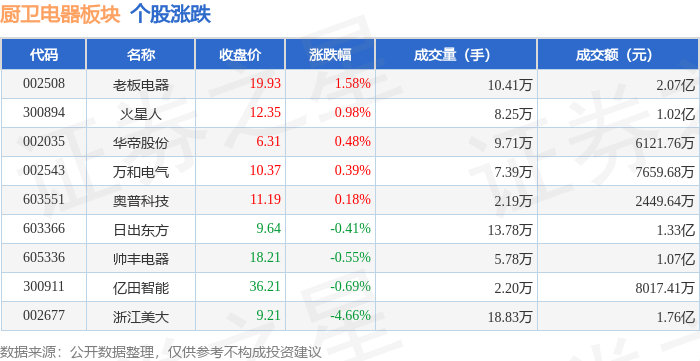
厨卫电器板块1月20日涨0.08%,老板电器领涨,主力资金净流出1374.98万元
Zheng Xing Xing Ye Ri Bao· 2026-01-20 08:51
Core Viewpoint - The kitchen and bathroom appliance sector experienced a slight increase of 0.08% on January 20, with Boss Electric leading the gains, while the overall market indices showed a decline [1] Group 1: Market Performance - The Shanghai Composite Index closed at 4113.65, down 0.01% [1] - The Shenzhen Component Index closed at 14155.63, down 0.97% [1] - Boss Electric's stock price rose by 1.58% to 19.93, with a trading volume of 104,100 shares and a transaction value of 207 million yuan [1] Group 2: Individual Stock Performance - Mars Man's stock price increased by 0.98% to 12.35, with a trading volume of 82,500 shares and a transaction value of 102 million yuan [1] - Vatti Corporation's stock price rose by 0.48% to 6.31, with a trading volume of 97,100 shares and a transaction value of 61.22 million yuan [1] - Wanhe Electric's stock price increased by 0.39% to 10.37, with a trading volume of 73,900 shares and a transaction value of 76.60 million yuan [1] - Aupu Technology's stock price rose by 0.18% to 11.19, with a trading volume of 21,900 shares and a transaction value of 2.45 million yuan [1] - Sunrise Oriental's stock price decreased by 0.41% to 9.64, with a trading volume of 137,800 shares and a transaction value of 13.30 million yuan [1] - Shuaixing Electric's stock price fell by 0.55% to 18.21, with a trading volume of 57,800 shares and a transaction value of 107 million yuan [1] - Yitian Intelligent's stock price decreased by 0.69% to 36.21, with a trading volume of 22,000 shares and a transaction value of 80.17 million yuan [1] - Zhejiang Meida's stock price dropped by 4.66% to 9.21, with a trading volume of 188,300 shares and a transaction value of 176 million yuan [1] Group 3: Capital Flow - The kitchen and bathroom appliance sector saw a net outflow of 13.75 million yuan from institutional investors and 10.81 million yuan from retail investors, while individual investors contributed a net inflow of 24.56 million yuan [1] - Boss Electric had a net inflow of 16.53 million yuan from institutional investors, while retail investors experienced a net outflow of 3.64 million yuan [2] - Mars Man had a net inflow of 6.11 million yuan from institutional investors, with retail investors seeing a net outflow of 1.09 million yuan [2] - Shuaixing Electric had a net inflow of 4.32 million yuan from institutional investors, while retail investors had a net inflow of 5.26 million yuan [2] - Vatti Corporation had a net inflow of 1.49 million yuan from institutional investors, with retail investors seeing a net inflow of 0.36 million yuan [2] - Yitian Intelligent experienced a net outflow of 3.91 million yuan from institutional investors, while retail investors had a net inflow of 0.37 million yuan [2] - Aopu Technology had a net outflow of 4.30 million yuan from institutional investors, with retail investors seeing a net inflow of 1.71 million yuan [2] - Wanhe Electric had a net outflow of 7.97 million yuan from institutional investors, while retail investors had a net inflow of 7.84 million yuan [2] - Sunrise Oriental experienced a net outflow of 12.99 million yuan from institutional investors, with retail investors seeing a net inflow of 4.79 million yuan [2] - Zhejiang Meida had a net outflow of 13.03 million yuan from institutional investors, while retail investors had a net inflow of 15.44 million yuan [2]


家电行业周报(26年第3周):12月家电内外销景气持续承压,美国家电需求回归稳健增长
Guoxin Securities· 2026-01-20 00:45
Investment Rating - The report maintains an "Outperform the Market" rating for the home appliance industry [5][6][12]. Core Views - The home appliance sector is expected to recover in 2026, driven by the continuation of national subsidies and stabilization of exports, suggesting a positive outlook for leading white goods companies [1][12][18]. - December retail performance for home appliances showed signs of bottoming out, with significant declines in major appliances but a relatively stable performance in small appliances [1][19]. - The report highlights the resilience of leading companies in the home appliance sector, with a focus on white goods, which are expected to maintain steady growth despite high base effects [12][13]. Summary by Sections 1. Key Recommendations - Recommended companies include Midea Group, Haier Smart Home, TCL Smart Home, Gree Electric Appliances, and Hisense Home Appliances for white goods; Hisense Visual for black goods; and Roborock, Bear Electric, and Ecovacs for small appliances [4][12][13]. 2. December Retail Performance - In December, the retail sales of major appliances saw declines exceeding 20%, while small appliances showed slightly better demand, with air fryers experiencing growth [1][19]. - The offline sales channels for major appliances faced declines of over 40%, while kitchen small appliances remained relatively stable [1][19]. 3. Export Performance - In December, China's home appliance exports decreased by 8.1% year-on-year, with air conditioners facing a significant decline of 20.7% [2][37]. - Other categories like refrigerators and washing machines showed modest growth, indicating a mixed performance across different product lines [2][37]. 4. U.S. Market Insights - U.S. retail sales for home appliances showed a slight increase of 0.8% in November, indicating a gradual return to stable growth despite challenges such as tariffs and inflation [3][43]. - The inventory levels in U.S. appliance stores are returning to normal, suggesting improved market conditions [3][43]. 5. Company Earnings Forecasts - The report provides earnings forecasts for key companies, indicating expected EPS growth for Midea Group, Gree Electric Appliances, and Haier Smart Home, among others, with all rated as "Outperform the Market" [5][76].





家电行业周报(26年第3周):12月家电内外销景气持续承压,美国家电需求回归稳健增长-20260119
Guoxin Securities· 2026-01-19 09:50
Investment Rating - The report maintains an "Outperform the Market" rating for the home appliance industry [5][6][12] Core Insights - The home appliance sector is expected to recover in 2026, driven by the continuation of national subsidies and improvements in export performance. It is recommended to actively invest in leading white goods companies [1][12][18] - December retail performance for home appliances showed signs of bottoming out, with major appliances experiencing a decline of over 20% in domestic retail sales, while small appliances showed slightly better demand [1][19] - The report highlights that the U.S. home appliance retail sales saw a slight increase in November, indicating a gradual return to stable growth despite challenges such as tariffs and inflation [3][12] Summary by Sections 1. Core Recommendations - Key recommendations include investing in leading companies in the white goods sector such as Midea Group, Haier Smart Home, TCL Smart Home, Gree Electric, and Hisense Home Appliances. For small appliances, Stone Technology and Bear Electric are recommended [4][12][13] 2. Research Tracking and Investment Thoughts - December retail performance for home appliances continued to face pressure due to high base effects, with significant declines in major appliances. However, small appliances showed relative stability, particularly in air fryers [1][19] - December exports of home appliances decreased by 8.1% year-on-year, with air conditioners facing the most significant pressure, while refrigerators and washing machines showed modest growth [2][37] - U.S. home appliance retail sales increased by 0.8% year-on-year in November, with inventory levels returning to normal [3][12] 3. Key Data Tracking - The home appliance sector achieved a relative return of +0.23% this week compared to the broader market [49] - Raw material prices for copper and aluminum decreased by 0.5% and 0.7% respectively, while cold-rolled steel prices also saw a decline [51] - Shipping indices for routes to the U.S. West Coast, East Coast, and Europe showed slight increases, indicating a stabilization in shipping costs [64] 4. Company Announcements and Industry Dynamics - Notable company announcements include Midea Group's ongoing efforts in overseas markets and Gree Electric's dividend distribution plans [71][72] - The report discusses the structural adjustments in the air conditioning export market and the anticipated trends for 2026, highlighting the challenges and opportunities in the global supply chain [74]