优必选

Search documents
东方证券:CES展中国人形机器人占主导地位 看好具备构建大脑能力的领跑公司及产业链
智通财经网· 2026-01-12 02:23
智通财经APP获悉,东方证券发布研报称,人形机器人在近期CES展中大放异彩,我国产业链快速发 展,具有极强的竞争力。向前看,该行认为简单机器人的量产对投资的影响会边际变弱,但AGI的叙事 有望边际变强,看好具备构建大脑能力的领跑公司及产业链,包括特斯拉(TSLA.US)核心产业链和具有 垂直场景的本体公司。 东方证券主要观点如下: 看好具备构建大脑能力的领跑公司及产业链 相比于快速上量,该行认为国家也在引导大脑能力的建设。近期国家发改委提到要着力防范重复度高的 产品"扎堆"上市、研发空间被压缩等风险;支持企业、高校、科研机构等围绕"大小脑"模型协同、云侧 与端侧算力适配、仿真与真机数据融合等技术进行攻关,解决产业卡点堵点问题。该行认为两类领跑型 公司具有投资机会,第一类是特斯拉核心产业链,特斯拉官宣在自研世界模型中训练Optimus,第二类 是具有垂直场景的本体公司,场景应用有利于数据和模型的积累。 CES展人形机器人瞩目,中国人形机器人占主导地位 相关标的:拓普集团、三花智控、五洲新春、恒立液压、震裕科技、杭叉集团、安徽合力、杰克科技、 永创智能、优必选。 在近期的CES展中,机器人获得重点关注,特别是中国 ...

宇树科技,全球第二!
DT新材料· 2026-01-11 23:28
Core Insights - The global humanoid robot market is expected to enter a rapid growth phase by 2025, with total shipments projected to reach 13,318 units [1][2] - Chinese manufacturers are leading in mass production and shipment volume, with ZhiYuan achieving over 5,100 units in annual shipments, capturing 39% of the global market share, ranking first in both metrics [1][2] Group 1: Market Overview - The humanoid robot market is projected to grow significantly, with an expected shipment of 1.3 million units in 2025 [1] - By 2035, global shipments are anticipated to reach 2.6 million units, indicating exponential growth in the next decade [6] Group 2: Key Players and Market Share - ZhiYuan, Unitree, and UBTECH are the top three players in the market, with respective shipments of 5,100 units (39% market share), 4,200 units (32% market share), and 1,000 units (7% market share) in 2025 [4] - Other notable companies include Leju Robotics, Engine AI, and Tesla, with shipments ranging from 150 to 500 units [5] Group 3: Competitive Landscape - The report categorizes humanoid robot companies into tiers based on various performance metrics, with ZhiYuan, Figure AI, Tesla, UBTECH, and Unitree in the top tier [5] - The second tier includes Agility Robotics, Apptronik, Fourier Intelligence, and Leju Robotics [5] Group 4: Future Trends and Developments - The integration of generative AI with robotics is driving the evolution of robots towards "general embodied intelligence," enhancing their autonomous learning and environmental adaptability [6] - 2026 is identified as a critical turning point for the humanoid robot industry, with significant differentiation expected among startups based on technological breakthroughs and industrial capabilities [6] - Companies like Xiaopeng Motors and ZhiYuan are preparing for large-scale production, with ZhiYuan's sales revenue expected to exceed 1 billion yuan in 2025 [2][6][7]


6646亿!江苏省2026重大项目清单发布,新兴和未来产业占比达80%!(附清单)
DT新材料· 2026-01-11 23:28
Core Viewpoint - Jiangsu Province has officially released the major project list for 2026, which includes 670 major projects with a planned investment of 664.6 billion yuan, representing a year-on-year increase of 12 billion yuan. The focus is on quality improvement alongside quantity increase, with a significant emphasis on strategic emerging industries and future industries [2]. Group 1: Major Projects Overview - The list includes 670 major projects with a total planned investment of 664.6 billion yuan, an increase of 12 billion yuan compared to the previous year [2]. - Among these, 414 projects are in the industrial sector, accounting for over 75% of the total, with a planned investment of 295 billion yuan [2]. - Infrastructure projects number 118, with a planned investment of 323.6 billion yuan, while 18 projects focus on livelihood and environmental protection, with a planned investment of 46 billion yuan [2]. Group 2: Focus on Quality and Industry - The proportion of strategic emerging industries and future industries in manufacturing projects has increased from 74% to 80%, while high-energy-consuming industries like chemicals and metallurgy have seen a significant reduction [2]. - Strict controls are in place for projects in industries with overcapacity, such as power batteries and photovoltaics [2]. Group 3: Key Projects Listed - Notable projects include advanced silicon wafers, AI servers, and high-performance materials for various applications, such as robotics and aerospace [3][4][5]. - Specific projects highlighted include the development of new generation information technology, high-end equipment manufacturing, and new materials, with a focus on innovation and sustainability [6][7][8]. Group 4: Future Industries and Innovations - Future industries include advancements in aerospace technology, AI robotics, and energy storage solutions, with several projects aimed at enhancing capabilities in these areas [8][9][10]. - The list emphasizes the importance of integrating new technologies and materials to drive growth in strategic sectors [11][12]. Group 5: Investment Opportunities - The focus on strategic emerging industries presents significant investment opportunities, particularly in sectors such as new energy, advanced manufacturing, and green technologies [2][3][4]. - The planned investments in these areas indicate a strong commitment from the Jiangsu government to foster innovation and economic development [2][11].

能干活、接地气,中国机器人领跑全球
Xin Lang Cai Jing· 2026-01-11 17:16
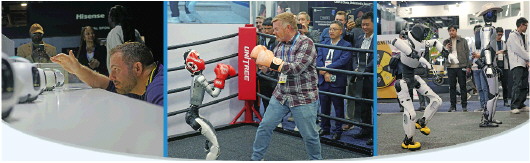
Core Insights - The CES 2026 showcased a significant "Chinese moment" in the robotics sector, highlighting the transition of humanoid robots from experimental stages to market-ready products, emphasizing their practicality and readiness for household integration [2][5] Industry Overview - Among the 598 exhibitors in the robotics sector, 149 were Chinese companies, accounting for nearly a quarter of the total. In the humanoid robot segment, 21 out of 38 exhibitors were from China, representing over half [3] - The event featured a diverse range of products from industrial to consumer-grade robots, with notable participation from both established companies and new entrants [3][4] Product Innovations - Zhiyuan Robotics, leading in humanoid robot shipments, showcased a full range of products, including the portable Q1 robot, which redefines humanoid robot design [3][4] - The introduction of the fully autonomous humanoid nanny robot by "Chinese Figure" Wan'an targets the vast household service market, capable of performing laundry tasks autonomously [5] - The Jupiter robot, equipped with a specialized training environment, can navigate complex home settings, while the W1 robot integrates emotional interaction capabilities [6] Market Trends - The trend towards consumer-grade humanoid robots is accelerating, with significant price reductions making them more accessible. The price of humanoid robots is expected to drop by over 25% compared to 2024 due to increased domestic production of key components [6][7] - Companies like Yushutech and Songyan Power are breaking the traditional high-price barrier, with products priced below 30,000 yuan and even under 10,000 yuan [6][7] Sales and Delivery Projections - The humanoid robot shipment volume in China is projected to reach 18,000 units in 2025, a more than 650% increase from 2024, with expectations of further growth to 62,500 units in 2026 [7][8] - Leading companies are already achieving significant delivery volumes, with estimates of over 5,100 units for Zhiyuan Robotics in 2025 and plans to increase to tens of thousands in 2026 [8] Global Competitive Landscape - The competition in the global humanoid robot market is shifting towards engineering, commercialization, and ecosystem development, with Chinese companies gaining more influence in this trillion-dollar sector [8]

商业航天加速发展,AI基建景气持续
Xinda Securities· 2026-01-11 15:08
Investment Rating - The investment rating for the mechanical equipment industry is "Positive" [2] Core Insights - The commercial aerospace sector is accelerating, and the demand for AI infrastructure remains strong, indicating potential investment opportunities in these areas [11][12] - The performance of excavators and other construction machinery is showing a significant recovery, with notable increases in both domestic and export sales [13][73] Company Summaries 1) Rilian Technology - Rilian Technology is a leading domestic supplier of industrial X-ray intelligent detection equipment and core components, establishing significant technological barriers in core components, AI software, and detection equipment. In the first three quarters of 2025, the company's revenue grew by 44.01% year-on-year, and net profit attributable to shareholders increased by 18.83%. The slower profit growth compared to revenue is attributed to costs related to new production bases and employee stock incentives. The company is expected to convert orders into revenue effectively, leading to profit elasticity release as cost impacts diminish [3][14]. 2) Konstar - Konstar focuses on the research and sales of digital testing instruments. Despite facing performance pressure from tariffs, the company saw a positive turning point in Q3 2025, with revenue reaching 148 million yuan, a year-on-year increase of 22.24%, and net profit attributable to shareholders growing by 30.66%. The company demonstrates strong operational resilience in international markets under tariff pressures, and its domestic business is performing well, with growth potential in MEMS sensors [4][15]. 3) Xinxin Co., Ltd. - Xinxin Co., Ltd. specializes in hard alloys and tools, reporting a revenue growth of 38.02% and a net profit increase of 75.40% in Q3 2025. The company is experiencing accelerated growth in both revenue and profit, driven by effective cost management amid rising raw material prices [5][16]. Industry Trends - The demand for AI-related infrastructure continues to thrive, with significant investments in AI technologies and related supply chains expected to benefit from this trend [12]. - The construction machinery sector is witnessing a comprehensive recovery, with excavator sales reaching 23,095 units in December 2025, a year-on-year increase of 19.2%, and loader sales growing by 30.00% [13][73].
中国车企出海业务100%使用阿里云;中国「科技军团」闪耀CES2026,通义智能硬件展同期举办|36氪出海·要闻回顾
36氪· 2026-01-11 13:35
Core Insights - Chinese automotive companies are fully utilizing Alibaba Cloud for their global business operations, marking a shift from vehicle sales to "smart infrastructure export" [5] - The 2026 CES showcased over 1,100 Chinese companies, representing about 25% of total exhibitors, highlighting China's strength in AI, robotics, and consumer electronics [6] - XTransfer is accelerating its entry into the North and South American markets by establishing partnerships with major U.S. banks for compliance and localization [6] - Cainiao has become the first logistics company to offer G2G services across three continents, launching cross-border logistics from the U.S. to Mexico [7] - Xiaomi International has joined AliExpress's "Super Brand Export Plan," achieving significant sales during the Black Friday event [7] - JD Logistics successfully completed its first overseas drone test flight in Saudi Arabia, enhancing its international logistics capabilities [8] - Meituan Keeta has expanded its food delivery services to Bahrain, marking its fifth country in the Middle East [9] - TikTok Shop is experiencing rapid growth, with projected active consumers reaching 400 million by 2025 and GMV nearing $100 billion [10] - Guanzhou Automobile International has formed a strategic partnership with Grab to promote electric vehicles in Southeast Asia [10] - Nine Science Information has completed a B2 round of financing to enhance its overseas business layout [10] - Yao Le Technology has secured nearly 100 million yuan in Pre-A financing to expand its market presence [11] - The global humanoid robot market is expected to see a shipment of 13,000 units by 2025, with Chinese manufacturers leading the market [12] - Recent reports indicate a high demand for transformers in overseas markets, particularly in the Middle East, Europe, and South America [13] - Saudi Arabia plans to open its financial market to all foreign investors starting February 1, aiming to attract more overseas capital [13]


中国公司全球化周报|中国车企出海业务100%使用阿里云/中国“科技军团”闪耀CES 2026,通义智能硬件展同期举办
3 6 Ke· 2026-01-11 03:55
Company Dynamics - All Chinese automotive companies have integrated their global operations with Alibaba Cloud, marking a shift from vehicle sales to "smart infrastructure export" [2] - XTransfer has made its debut at CES 2026, aiming to expand into North and South America with compliance and localization partnerships with major U.S. banks [3] - Cainiao has launched cross-border logistics services between the U.S. and Mexico, becoming the first logistics company to offer G2G services across Asia, Europe, and America [4] - AliExpress has initiated a large-scale recruitment drive for quality merchants, with a focus on supporting businesses in Zhejiang, Guangdong, and Henan [4] - Xiaomi International has joined AliExpress's "Super Brand Export Plan" to enhance localized operations and brand building in overseas markets [4] - JD Logistics has successfully completed its first overseas drone test flight in Saudi Arabia, enhancing delivery efficiency [5] - The autonomous driving service platform "萝卜快跑" has received a full unmanned testing license in Dubai, becoming the first company to do so [6] - Meituan Keeta has launched food delivery services in Bahrain, marking its expansion into the fifth Middle Eastern country [6] Investment and Financing - Jiukexin has completed a B2 round of financing exceeding 100 million RMB, focusing on product development and international business expansion [8] - YaoLe Technology has secured nearly 100 million RMB in Pre-A financing, targeting core technology iteration and overseas market expansion [8] Policy & Market - The global humanoid robot market is projected to reach 13,000 units shipped in 2025, with Chinese manufacturers leading the market [9] - There is a growing demand for transformers in overseas markets, with companies reporting full order books and significant growth in data center-related orders [9] - Saudi Arabia plans to open its financial market to all foreign investors starting February 1, aiming to attract more overseas capital [9]


机器人产业跟踪:从CES看 简单量产叙事将边际变弱 AGI叙事将边际变强
Xin Lang Cai Jing· 2026-01-11 00:32
风险提示 厂商生产不及预期、场景需求落地不明确导致低于预期、国家政策变化导致行业发展放缓、行业融资不 及预期、模型发展和数据采集慢于预期、订单执行效果低于预期、产品降价风险。 看好具备构建大脑能力的领跑公司及产业链。相比于快速上量,我们认为国家也在引导大脑能力的建 设。近期国家发改委提到要着力防范重复度高的产品"扎堆"上市、研发空间被压缩等风险;支持企业、 高校、科研机构等围绕"大小脑"模型协同、云侧与端侧算力适配、仿真与真机数据融合等技术进行攻 关,解决产业卡点堵点问题。我们认为两类领跑型公司具有投资机会,第一类是特斯拉核心产业链,特 斯拉官宣在自研世界模型中训练Optimus,第二类是具有垂直场景的本体公司,场景应用有利于数据和 模型的积累。 人形机器人在近期CES 展中大放异彩,我国产业链快速发展,具有极强的竞争力。向前看,我们认为 简单机器人的量产对投资的影响会边际变弱,但AGI 的叙事有望边际变强,看好具备构建大脑能力的 领跑公司及产业链,包括特斯拉核心产业链和具有垂直场景的本体公司。相关标的:拓普集团 (601689,买入)、三花智控(002050,买入)、五洲新春(603667,买入)、恒立液压 ...
2025,AI行业发生了什么?
Jing Ji Guan Cha Bao· 2026-01-10 09:01
Core Insights - The AI industry experienced significant milestones in 2025, marked by technological innovations, business model transformations, and global regulatory dynamics [2] Group 1: Multi-Modal Integration - AI models have advanced rapidly in text and reasoning but lagged in multi-modal capabilities, limiting their effectiveness [4] - Developers are shifting from "assembled" models to "native multi-modal" models that can process text, images, audio, and video simultaneously [5] - The development of multi-modal models is becoming a primary focus for leading AI companies, enhancing their ability to perform real-world tasks [5][6] Group 2: Embodied Intelligence - The focus of embodied AI has shifted from experimental demonstrations to market-ready solutions, with companies announcing mass production of robots [8] - The cost of humanoid robots has significantly decreased, making them more accessible for commercial use [9] - The rise of embodied intelligence is driven by advancements in multi-modal AI and increasing labor costs, leading to greater demand for robotic solutions [9] Group 3: Computing Power Competition - The competition for computing power has evolved from a focus on acquiring GPUs to a more complex, efficiency-driven battle [10] - Companies are now prioritizing how to effectively utilize limited computing resources rather than just increasing their total computing power [10] - Some developers are moving towards self-developed chips to reduce reliance on dominant suppliers like NVIDIA [10] Group 4: Paradigm Controversy - There is a growing debate in the theoretical community regarding the "scale law" that has traditionally guided AI development [12] - Some experts argue that simply increasing model size does not lead to general intelligence, suggesting a need for new training paradigms and reasoning mechanisms [13] - Despite differing opinions, both sides recognize the need for a reevaluation of existing paradigms to find better development paths [13] Group 5: Rise of Agents - The emergence of AI agents, capable of executing complex tasks autonomously, signifies a shift in human-computer interaction from function-driven to task-driven systems [14][15] - This transition is expected to reshape organizational structures and business models, focusing on task completion rather than capability provision [15] Group 6: Open Source Renaissance - Open-source models have become a foundational infrastructure for global innovation, increasingly rivaling closed-source systems in performance and adoption [16] - The rise of open-source is attributed to changing AI innovation logic, where community collaboration and rapid customization are prioritized [17] Group 7: Business Innovation - The AI industry is moving towards clearer business paths, with different players finding monetization strategies that align with their capabilities [18] - The concept of "Outcome-as-a-Service" is gaining traction, shifting the focus from selling functionalities to delivering task completion [19] Group 8: Regulatory Dynamics - AI governance has become a critical area of focus, balancing innovation with regulatory frameworks to avoid stifling technological development [20] - Different regions are adopting varied approaches to governance, reflecting their priorities and institutional frameworks [21][22] Group 9: International Competition - The competition in AI has escalated from corporate to national levels, with countries vying for leadership in defining technological paths and standards [23] - The U.S. maintains a strong position in core technologies, while China focuses on optimizing existing frameworks for scalable applications [23][24] Group 10: Youth Leadership - A trend of young scientists gaining significant influence in AI companies is emerging, reflecting a shift in the industry's leadership dynamics [25][26] - This generational change is seen as essential for navigating the evolving landscape of AI, where innovative problem definition and evaluation are crucial [26]

给具身机器人上保险
经济观察报· 2026-01-10 08:22
Core Viewpoint - The demand for insurance has become a prerequisite for the mass sales of embodied robots, which is a significant shift in the industry [5][10]. Group 1: Market Development - The founder of an embodied robot company, Hu Lei, is optimistic about producing over 200 robots for commercial performances this year, which is more than five times the output expected in 2025 [2]. - The "Ecological Report on Humanoid Robots 2025" indicates that the industry is entering a phase of large-scale production, with leading companies expected to deliver thousands of units [3]. - The spending on embodied intelligent robots in China is projected to exceed $1.4 billion in 2025 and soar to $77 billion by 2030, with a compound annual growth rate (CAGR) of 94% [9]. Group 2: Insurance Demand - As the number of robots purchased increases, downstream companies are increasingly aware of the risks and are requesting insurance to cover potential damages and liabilities [4][10]. - Major insurance companies have begun to offer specialized insurance products for embodied robots, but they face challenges in risk assessment due to a lack of operational data from manufacturers [5][15]. - The relationship between embodied robots and insurance is likened to the necessity of car insurance for vehicles, highlighting the growing need for insurance as robots are used in various applications [12]. Group 3: Challenges in Insurance - Insurance companies are hesitant to offer mass coverage due to the absence of critical operational data, which is often withheld by manufacturers citing confidentiality [15][16]. - The uniform appearance of robots poses a risk of fraud in claims, leading insurers to limit the number of robots they cover [16]. - The rapid technological advancements in embodied robots outpace the development of insurance risk models, complicating the underwriting process [21][22]. Group 4: Solutions and Innovations - Insurance companies are exploring partnerships with robot leasing platforms to obtain necessary data while managing risks through innovative models like "insurance + leasing" [19][20]. - There is a push for dynamic risk assessment models that can adapt to the fast-paced changes in robot technology and application scenarios [22]. - Collaborative efforts between insurance companies, research institutions, and manufacturers are essential for developing a comprehensive risk database for accurate pricing and risk management [22].