罗氏

Search documents
地缘经济论 | 第十章 产业创新:从国家竞争力看并行产业发展
中金点睛· 2025-09-27 00:06
Core Viewpoint - The article discusses the concept of parallel industries in China and the U.S., highlighting their respective strengths and challenges, particularly in the context of geopolitical economic power and the need for China to enhance its domestic demand and international competitiveness in sectors like AI, platform economy, innovative pharmaceuticals, and commercial aerospace [3][5][10]. Summary by Sections 1. Parallel Industries and Geopolitical Economic Power - Parallel industries are defined as sectors where both China and the U.S. have their strengths and are developing concurrently, such as AI, platform economy, innovative pharmaceuticals, and commercial aerospace [3][5]. - From a geopolitical economic perspective, competition in these industries is not just about business rivalry but also about enhancing national economic power [10]. 2. Challenges Facing China's Parallel Industries - China's parallel industries face challenges including weak domestic demand, limited external market expansion, significant financing constraints, and a need to improve its influence over technical standards [3][10]. - The primary contradiction is insufficient demand, necessitating strategies to expand market demand, especially for small and medium-sized enterprises [3][10]. 3. Sector-Specific Analysis AI - AI is viewed as a critical technology for national competitiveness, with significant potential to enhance productivity [11]. - The U.S. has established a strong military application for AI, emphasizing the need to maintain leadership in this field [11]. Platform Economy - The platform economy is crucial in the digital age, influencing information dissemination and resource allocation [12]. - Chinese platforms like Alipay and WeChat are leading domestically but face challenges in international expansion due to reliance on the SWIFT system [12]. Innovative Pharmaceuticals - The COVID-19 pandemic highlighted the strategic value of pharmaceutical innovation, with countries that control vaccines and treatments gaining significant geopolitical power [13]. - China's pharmaceutical market is growing, but it still lags behind the U.S. in terms of innovation and market share [23]. Commercial Aerospace - The rise of commercial aerospace has lowered entry barriers, allowing private companies to participate in satellite manufacturing and launching [14]. - The global space economy is projected to reach $1.8 trillion by 2035, with significant military applications [14]. 4. Demand-Side Challenges - Insufficient demand is a key constraint on the development of China's parallel industries, with factors such as market saturation and low payment willingness among consumers [31][33]. - The platform economy faces user saturation, while commercial aerospace relies heavily on public sector orders, limiting private sector growth [33][34]. 5. Supply-Side Issues - The lack of vibrant capital markets and insufficient technical standard influence are significant challenges for innovation in parallel industries [52][53]. - The number of new unicorns in sectors like AI and innovative pharmaceuticals has declined, indicating reduced market vitality [55].


白宫:最新药品关税不适用于已与美达成贸易协定国家!特朗普此前宣布对专利及品牌药品加征100%关税
Mei Ri Jing Ji Xin Wen· 2025-09-26 23:12
Group 1 - The U.S. government announced that new tariffs on pharmaceuticals will not apply to countries with existing trade agreements, maintaining a 15% tariff cap for partners like the EU and Japan [1][2] - President Trump declared a 100% tariff on all brand-name and patented drugs starting October 1, complicating the recently established U.S.-EU pharmaceutical tariff agreement [2][3] - European pharmaceutical companies, including Roche, Novartis, and AstraZeneca, may benefit from exemptions if they have initiated drug production investments in the U.S., but most face new tariff barriers [2][3] Group 2 - The Belgian Pharmaceutical Association expressed concerns that the new tariffs violate the U.S.-EU agreement and could significantly impact multiple EU countries, creating uncertainty for investment decisions [3] - Economic analysts from Goldman Sachs and Morgan Stanley indicated that the tariffs could lead to increased prices for EU goods in the U.S., potentially passing the burden onto American consumers [4] - The U.S. economy is showing signs of slowing growth, with predictions of only 1.25% growth in 2026, significantly lower than the expected 2.8% in 2024, partly due to the impact of tariff policies [4]
新药品关税“雷声大雨点小”?瑞银:主要药企已在美投资数百亿美元,可获完全豁免
Hua Er Jie Jian Wen· 2025-09-26 14:27
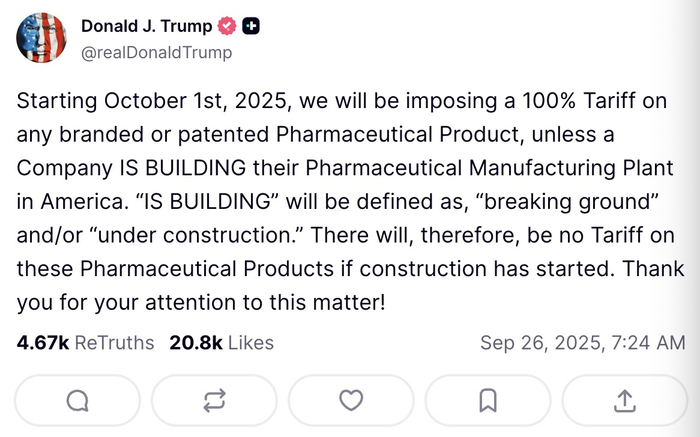
特朗普周四晚间宣布对进口药品征收100%关税后,瑞银等投行纷纷告诉客户,这一政策的实际影响或 将微乎其微。分析师指出,由于大型制药公司已在美国投资数百亿美元建设生产设施,大多数企业可获 得关税豁免。 据央视新闻报道,当地时间9月25日,美国总统特朗普在其社交媒体"真实社交"宣布,自10月1日起,美 国将对多类进口产品实施新一轮高额关税,其中对专利及品牌药品加征100%关税。 根据特朗普在社交媒体上的表态,对"任何品牌或专利药品"的100%关税将从10月1日起生效,但正在美 国建设制药生产厂的公司可获豁免。这一豁免条款被定义为"破土动工"或"在建中",只要开始施工就无 需缴纳关税。 周五亚洲股市因关税消息走低,亚洲制药股出现下滑。但欧洲大型制药股在特朗普隔夜宣布药品进口关 税后表现相对稳定。 市场普遍认为,鉴于主要药企已有大量美国生产布局,新关税政策的实际冲击有限。分析师预计,这一 政策更多具有象征意义,旨在推动制药业回流美国,而非真正打击进口药品贸易。据彭博经济学家分 析,受此举影响最大的国家是新加坡和瑞士。英国也有一些重要的对美制药出口——其与美国的贸易协 定提到,如果出现新的232条款关税,将考虑特殊税率 ...


欧盟与日本自信面对美国药品关税 称此前协议确保税率不会超过15%
Zhi Tong Cai Jing· 2025-09-26 12:17
Core Viewpoint - The European Union and Japan have confirmed that the United States has set limits on tariffs for pharmaceuticals, ensuring that the tax rate will not exceed 15% as per a trade agreement reached in July [1] Group 1: Tariff Agreements - The European Commission cited a joint statement from the trade agreement with the U.S., which specifies that tariffs on pharmaceuticals, semiconductors, and timber will not exceed 15% [1] - The EU is the only trade partner of the U.S. to achieve this tariff cap, providing assurance to European exporters that they will not face higher tariffs [1] Group 2: U.S. Tariff Measures - President Trump announced a new round of tariffs, including a 100% tariff on pharmaceuticals unless pharmaceutical companies establish manufacturing plants in the U.S. [1] - Additional tariffs include 25% on trucks and 30%-50% on furniture [1] Group 3: Company Responses - Swiss pharmaceutical company Roche has initiated the construction of a new factory in the U.S. [1] - Another Swiss company, Novartis, has committed to significant investments in the U.S. earlier this year, although it has not provided immediate comments regarding the new tariffs [1] - Industry insiders speculate that the newly announced tariffs may not apply to Roche and Novartis based on preliminary statements from the U.S. [1]
特朗普单方面宣布药品高额关税 欧美贸易协议再陷混乱
Yang Shi Xin Wen· 2025-09-26 10:31
Group 1 - The European Commission has agreed to set a 15% cap on drug tariffs for American pharmaceuticals, providing protection for European companies [1] - President Trump announced a 100% tariff on all imported brand-name or patented drugs starting October 1, undermining the previously established EU-US drug tariff agreement [1] - Major European pharmaceutical companies like Roche, Novartis, and AstraZeneca have announced expansion projects in the US, which may allow them to avoid the new tariffs [1] Group 2 - The Belgian Pharmaceutical Association expressed that the industry expects a response from the EU regarding Trump's tax announcement, highlighting that it violates the EU-US agreement [2] - The uncertainty created by the tariff announcement is putting pressure on investment decisions across Europe [2]
特朗普100%药品关税又是“狼来了”?多家上市药企高管回应
经济观察报· 2025-09-26 10:22
Core Viewpoint - The potential imposition of a 100% tariff on imported brand and patented drugs by the Trump administration starting October 1, 2025, has raised concerns among pharmaceutical companies, particularly those in China, leading to a decline in their stock prices [2][3]. Group 1: Impact on Pharmaceutical Companies - The announcement of the tariff has caused significant declines in the stock prices of Chinese pharmaceutical companies, with Heng Rui Pharmaceutical dropping 3.03% in A-shares and 2.23% in Hong Kong shares, and BeiGene falling 4.38% in A-shares and 1.55% in Hong Kong shares [2]. - The Hang Seng Innovative Drug Index (HSIDI) fell by 2.37%, with notable declines in stocks such as Fosun Pharma, which dropped 5.82%, and 3SBio, which fell by 5.34% [3]. - Industry experts suggest that the impact of the tariff on Chinese pharmaceutical companies may be limited, as many are focused on generic drugs and active pharmaceutical ingredients (APIs) [4]. Group 2: Industry Perspectives - Some industry leaders believe that the tariff policy may not be implemented as proposed, citing the high cost of drugs in the U.S. and the potential for political changes in future administrations [4][5]. - Companies like Heng Rui Pharmaceutical indicated that their current exports primarily consist of generics and APIs, suggesting minimal impact from the proposed tariffs [4]. - Other companies, such as Lepu Biopharma, noted that their licensing partnerships would shield them from significant effects [5]. Group 3: U.S. Policy Context - The Trump administration has previously threatened to impose tariffs on imported drugs, with discussions around a 200% tariff and subsequent smaller tariffs leading to a potential increase over time [6][7]. - Major multinational pharmaceutical companies have responded to the tariff threats by committing to significant investments in U.S. manufacturing, with companies like Novartis and Roche pledging $23 billion and $50 billion respectively over the next five years [8].

特朗普100%药品关税又是“狼来了”?多家上市药企高管回应
Sou Hu Cai Jing· 2025-09-26 10:21
Core Viewpoint - The potential implementation of a 100% tariff on all brand-name and patented drugs by the U.S. government starting October 1, 2025, unless companies are building drug manufacturing plants in the U.S. [2] Group 1: Market Reaction - Pharmaceutical stocks in multiple markets, including China, Japan, and South Korea, experienced a collective decline following the announcement [3] - Specific declines included a 3.03% drop in Hengrui Medicine (600276.SH/01276.HK) A-shares and a 2.23% drop in Hong Kong shares, while BeiGene (ONC.NASDAQ/06160.HK/688235.SH) saw a 4.38% drop in A-shares and a 1.55% drop in Hong Kong shares [3] - The Hang Seng Innovative Drug Index (HSIDI) fell by 2.37%, with notable declines in stocks such as Fosun Pharma (600196.SH/02196.HK) down 5.82% and 3SBio (01530.HK) down 5.34% [4] Group 2: Industry Perspectives - Industry experts suggest that Chinese pharmaceutical companies aiming to expand internationally need to consider the potential implementation of this policy and explore possible solutions [5] - Some executives believe that the high cost of drugs in the U.S. may hinder the realization of this policy [5] - Hengrui Medicine's executive noted that the impact of the potential policy would be limited as their exports mainly consist of generic drugs and APIs [5] - Other companies, such as Lepu Biopharma, indicated that their licensing partnerships would not be significantly affected [5] - Investors pointed out that this is a political issue that could change with future administrations, suggesting that while there may be short-term negative impacts, the long-term effects may not be significant [5] Group 3: Historical Context - Historically, pharmaceuticals have been excluded from tariff lists, but President Trump has repeatedly threatened to impose tariffs on imported drugs this year [5] - The Trump administration initiated a "232 investigation" under the Trade Expansion Act of 1962, which allows for tariffs if imports threaten national security [6] - Previous statements from Trump indicated plans for escalating tariffs on imported drugs, with initial small tariffs leading to potential increases up to 250% [7] Group 4: Investment Commitments - In response to the tariff threats, several multinational pharmaceutical companies have committed to investing in U.S. manufacturing facilities, with significant investments announced by companies like Novartis, Roche, Sanofi, and AstraZeneca [8] - Notably, Novartis and Roche pledged $23 billion and $50 billion respectively over five years, while AstraZeneca committed to a $50 billion investment by 2030 [8]
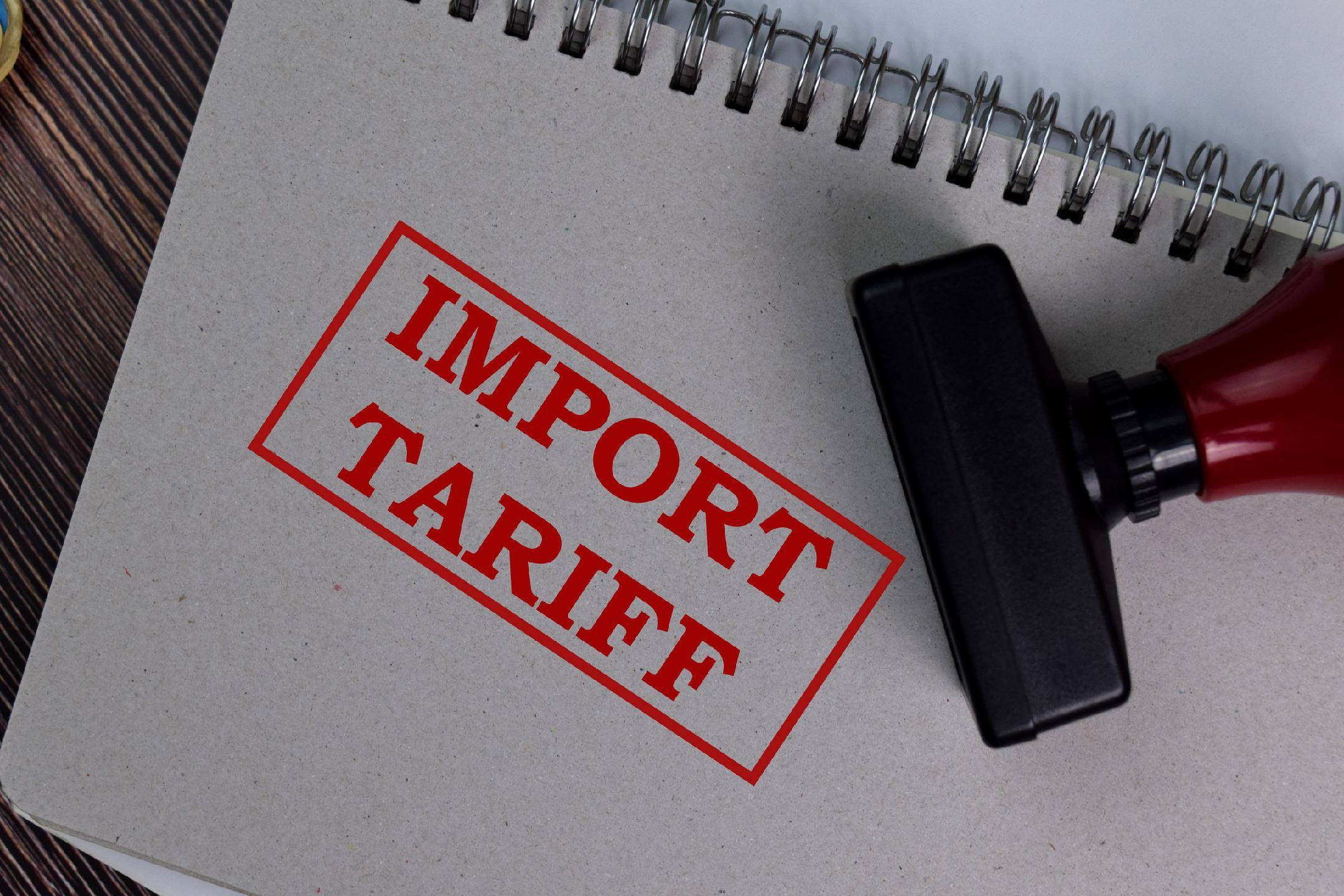
特朗普要对药品加征100%关税,国产创新药将受什么影响?
Xin Lang Cai Jing· 2025-09-26 10:16
Core Viewpoint - The U.S. plans to impose a 100% tariff on all branded and patented drugs starting October 1, 2023, with exemptions for companies building drug manufacturing plants in the U.S. [1][12] Drug Tariff Impact - The proposed tariff primarily targets branded pharmaceutical products and patented drugs, likely excluding generic drugs and biosimilars [2][4] - Branded drugs are typically sold under trademark names and can include both patented and off-patent products, which are often more expensive than generics [2][4] - Patented drugs are those still under patent protection, allowing only the original developer to produce and sell them [3][4] Export Data and Structure - In 2024, China's pharmaceutical exports to the U.S. are projected to reach $19.047 billion, with $6.425 billion in Western medicines and $0.87 billion in traditional Chinese medicine [4][5] - Raw materials account for 70.35% of China's pharmaceutical exports to the U.S., with $4.52 billion in raw material exports [4][5][6] Impact on Chinese Innovative Drugs - Several Chinese innovative drugs sold in the U.S. may be affected by the new tariffs, including products from companies like BeiGene and Legend Biotech [7][8] - The number of affected drugs is currently limited, with only a few Chinese companies having received FDA approval for their products [7][8] Global Manufacturing Trends - The new tariff policy is seen as an attempt to encourage pharmaceutical manufacturing to return to the U.S., with exemptions for companies already investing in U.S. production [11][12] - Major pharmaceutical companies have announced plans to increase investments in U.S. manufacturing, including companies like Eli Lilly, Novartis, and Roche [12][15] Global Supply Chain Dynamics - The global pharmaceutical manufacturing landscape has been shaped by cost-saving measures, with China and India becoming key players in raw material production [15][16] - The U.S. relies heavily on imports for raw materials, with 80% of its raw materials sourced from China and India [18] - The geopolitical climate is prompting a shift towards localized production, as companies seek to mitigate tariff and geopolitical risks [19]
Prediction: 2 Stocks That Will Be Worth More Than BigBear.ai 5 Years From Now
The Motley Fool· 2025-09-26 08:42
Group 1: BigBear.ai Overview - BigBear.ai has experienced significant stock price growth, with shares up over 70% year to date in 2025 [1] - The company currently has a market capitalization of approximately $2.9 billion [5] - BigBear.ai reported an 18% year-over-year revenue decline in Q2 2025 and has not achieved positive free cash flow [5][6] Group 2: Diebold Nixdorf Analysis - Diebold Nixdorf has a market capitalization of just over $2 billion, which is lower than BigBear.ai's [5] - The company serves major global financial institutions and retailers, providing cash management solutions and software applications [4] - Diebold Nixdorf's revenue fell only 2.6% year-over-year in Q2 2025, and it reported a 9% revenue increase from Q1 2025 [5] - The company ended Q2 with a backlog of around $980 million and has generated three consecutive quarters of positive free cash flow [6] - Diebold Nixdorf's price-to-sales ratio is significantly lower at 0.59 compared to BigBear.ai's 14.4 [6] - The company is also focused on AI, with its Vynamic Smart Vision technology recently winning an award [7] Group 3: Recursion Pharmaceuticals Insights - Recursion Pharmaceuticals has a smaller market capitalization compared to BigBear.ai, but its AI-driven drug discovery approach is seen as a potential game changer [8][10] - The company is currently reliant on collaboration agreements for revenue, with major partners including Roche, Sanofi, Bayer, and Merck KgAA [12] - Recursion has three experimental cancer therapies in development and is exploring treatments for rare genetic diseases [11] - The company has attracted significant interest from Nvidia, which owns approximately 7.7 million shares of Recursion [12] - There is optimism that Recursion's innovative approach could lead to a higher valuation than BigBear.ai in five years if its pipeline performs well [13]


特朗普宣布将对专利及品牌药品加征100%关税,对国内药企影响几何?
财联社· 2025-09-26 07:06
Core Viewpoint - The article discusses the announcement by President Trump regarding a new round of high tariffs on various imported products, particularly focusing on the pharmaceutical industry, which will see a 100% tariff on patented and branded drugs starting October 1, 2023, significantly higher than the previous 15% agreement with Europe [1][2]. Group 1: Tariff Details and Market Reaction - The new tariffs include a 50% tariff on kitchen cabinets and bathroom sinks, a 30% tariff on imported furniture, and a 100% tariff on patented and branded drugs, with exemptions for companies that have manufacturing facilities "under construction" in the U.S. [1][2] - Following the announcement, the innovation drug index and various biotech ETFs saw declines of over 1%, with specific companies like Huahai Pharmaceutical and Baiyue Shenzhou experiencing stock price drops [2][3]. Group 2: Company Responses and Strategies - Many domestic pharmaceutical companies are assessing the impact of the new tariffs, with some indicating that their production capabilities in the U.S. may mitigate the effects. For instance, Huahai Pharmaceutical is evaluating whether its facilities meet the criteria for exemption [4][5]. - Major U.S. pharmaceutical companies like Johnson & Johnson and Eli Lilly have already invested significantly in expanding their domestic production capabilities, with Johnson & Johnson planning to invest approximately $20 billion in North Carolina and Eli Lilly announcing a $270 billion investment for new factories [3][4]. Group 3: Expert Opinions and Future Outlook - Industry experts suggest that the 100% tariff is politically motivated and may not significantly impact domestic innovative drug companies, as many already have manufacturing in the U.S. and the majority of their sales are through partnerships with multinational corporations [6][7]. - The anticipated implementation of a global drug pricing model by the U.S. government could further influence drug pricing and market dynamics, but experts believe that the overall impact on the domestic pharmaceutical industry will be limited [6][7].