雀巢

Search documents
直播管理员称“吃了绝对不会抑郁”引争议!脆脆鲨致歉
Nan Fang Du Shi Bao· 2025-08-31 01:30
Group 1 - The snack brand "Crispy Shark" faced complaints from some netizens after a live stream administrator made a statement implying that eating their products would prevent depression, which some interpreted as a reference to the well-known actress Zhao Lusi, who has publicly discussed her struggles with depression [1] - The brand clarified that the statement was not intended as a joke about depression but was a response to disruptive comments from fans of certain artists during the live stream [1] - Following the incident, "Crispy Shark" conducted an internal investigation and acknowledged that a management error led to unauthorized personnel being set as live stream administrators, and they expressed regret for the mistake [1] Group 2 - "Crispy Shark" is a well-known snack brand specializing in chocolate wafer biscuits, established in 2009, with origins dating back to 1996 [1] - Recent sales data indicates that the official flagship store of "Crispy Shark" achieved sales between 250,000 to 500,000 yuan and sold between 10,000 to 25,000 items in the last 30 days [1] - The brand has not conducted any live streams since August 25, following the incident [1] Group 3 - In April, "Crispy Shark" announced actress Yu Shuxin as its brand ambassador, who is currently facing scrutiny due to past comments and allegations of financial misconduct related to her family business [2] - Yu Shuxin's studio has taken legal action against those spreading rumors about her, asserting that they will hold responsible parties accountable [2] - Another brand represented by Yu Shuxin, "Naturally", postponed a scheduled live event due to the ongoing controversies surrounding her [2]
2025全球乳业20强公布:8家公司互换位置,2026年预计将出现大幅调整
3 6 Ke· 2025-08-29 06:36
Core Insights - Rabobank has released the 2025 Global Dairy Top 20 ranking, based on the projected performance of dairy companies in 2024, which is considered one of the most authoritative rankings in the global dairy industry [1][3] Group 1: Market Performance - The total revenue of the top 20 global dairy companies is projected to grow by 0.5% in 2025, following a 0.6% increase in 2024 [3] - Lactalis maintains its leading position in the dairy sector, with an estimated revenue of $31.9 billion for 2024, and is expected to continue its dominance through significant acquisitions [3][5] - Nestlé ranks second with an estimated revenue of $23.9 billion, while Dairy Farmers of America holds the third position with $23.0 billion, significantly impacted by U.S. milk prices [3][6] Group 2: Company Rankings and Changes - The 2025 ranking indicates that approximately half of the listed companies are expected to retain their positions by 2026, with major mergers anticipated to cause significant shifts in the rankings [4] - Notable mergers include Royal FrieslandCampina with Milcobel, Arla Foods with DMK, and Unilever's divestment of its ice cream business, which may lead to the exit of Unilever and DMK from the top 20 [4] - Potential candidates to fill the vacancies left by Unilever and DMK include Dream (Unilever's spun-off subsidiary) and Emmi (Swiss dairy company) [4] Group 3: Detailed Rankings - The estimated revenues for the top 5 companies in 2025 are as follows: 1. Lactalis: $31.9 billion [5] 2. Nestlé: $23.9 billion [6] 3. Dairy Farmers of America: $23.0 billion [6] 4. Danone: $20.7 billion [6] 5. Yili: $15.8 billion [6] - Other notable companies in the top 20 include Arla Foods, Fonterra, FrieslandCampina, and Unilever, with varying estimated revenues [6][7]





“人造肉第一股”被硅谷抛弃了
阿尔法工场研究院· 2025-08-29 00:14
Core Viewpoint - Beyond Meat has experienced a dramatic decline from a peak market value of $20 billion to under $200 million, reflecting a significant market correction after initial hype around plant-based meat alternatives [4][6][8]. Company Overview - Beyond Meat's market capitalization has plummeted approximately 98% since its peak, with current figures at $1.9 billion (approximately 13 billion RMB) compared to $20 billion (approximately 143 billion RMB) at its height [6]. - The company's latest financial report for Q2 2025 shows revenues of only $75 million, a nearly 20% year-over-year decline, and a net loss of $33.2 million, with total debt reaching $1.2 billion [6][7]. Market Dynamics - The plant-based meat market is growing at a compound annual growth rate (CAGR) of only about 10%, significantly lower than the previously anticipated disruptive growth [7][16]. - Beyond Meat's market share in the U.S. is currently only 2.5%, with growth slowing due to high prices and lack of significant improvements in taste, leading to low consumer repurchase rates [7][8]. Competitive Landscape - Traditional food giants like Nestlé and Tyson have entered the plant-based meat market, leveraging their distribution channels and cost advantages to capture market share from Beyond Meat [7][8]. - The competitive environment has intensified, with many new entrants diluting differentiation in the market, leading to a reassessment of growth expectations [16][18]. Marketing and Branding - Beyond Meat successfully marketed its products as a lifestyle choice that combines environmental sustainability, health, and fashion, appealing to millennial values and ESG investment trends [11][12]. - Celebrity endorsements from figures like Bill Gates and Leonardo DiCaprio helped elevate the brand's profile, turning it into a cultural symbol [12][13]. Challenges and Future Outlook - The company faces significant challenges related to pricing, taste, and overall demand, with its products often priced 30% to 50% higher than real meat, making them less attractive to cost-sensitive consumers [16]. - The long-term viability of the plant-based meat industry hinges on reducing costs and increasing consumer demand, with a need for better integration into everyday food choices [20][22].


2025中瑞商业大奖隆重揭晓:表彰卓越商业成就,共庆中瑞建交75周年
Di Yi Cai Jing Zi Xun· 2025-08-28 12:01
Core Points - The Swiss Business Awards were announced on August 27, 2023, to celebrate Swiss enterprises' achievements in China and commemorate the 75th anniversary of Sino-Swiss diplomatic relations [2][4] - The awards focus on recognizing outstanding contributions in innovation, sustainable development, digital transformation, talent development, and Sino-Swiss business cooperation [4] - A new Heritage Award was introduced this year to honor companies with a strong Swiss brand identity that have operated in China for over 20 years [6] Event Highlights - The event was attended by over 400 distinguished guests, including leaders from both Swiss and Chinese political and business sectors [2] - Swiss Federal Council President Andrea Caroni emphasized the deepening relationship between Switzerland and China, highlighting Switzerland's role as the first European country to sign a free trade agreement with China [8][9] - Guo Shuqing, a member of the National People's Congress, noted China's strong economic resilience and potential, affirming the commitment to improve the business environment for foreign investments [11] Award Categories and Winners - Innovation Pioneer Award: - Small Enterprise: Bien-Air - Large Enterprise: Bühler [17] - Sustainable Development Award: - Small Enterprise: Cellcosmet - Large Enterprise: Nestlé [17] - Digital Transformation Award: - Small Enterprise: TeamWork - Large Enterprise: Swiss Re [17] - Talent Development Award: - Small Enterprise: Swisstouches - Large Enterprise: Sulzer [17] - Sino-Swiss Partnership Award: - Bank of China Limited Geneva Branch [17] - Heritage Award Winners include notable companies such as ABB, Nestlé, and UBS, among others [18]
2025中瑞商业大奖隆重揭晓:表彰卓越商业成就,共庆中瑞建交75周年
第一财经· 2025-08-28 10:49
Core Points - The article discusses the 2025 China-Switzerland Business Awards, celebrating outstanding achievements of Swiss enterprises in China and commemorating the 75th anniversary of diplomatic relations between China and Switzerland [2][4] - The awards focus on recognizing contributions in innovation, sustainable development, digital transformation, talent development, and China-Switzerland business cooperation [4][16] - A new Heritage Award has been introduced to honor companies with a strong Swiss brand identity that have operated in China for over 20 years, symbolizing long-term stable cooperation between the two countries [6] Event Highlights - The event was attended by over 400 distinguished guests, including political and business leaders from both Switzerland and China, such as Andrea Caroni, President of the Swiss Federal Council, and Guo Shuqing, Vice Chairman of the Financial and Economic Affairs Committee of the National People's Congress [2][9][11] - The awards have been held biennially since 2013, aiming to showcase the remarkable achievements of both small and large enterprises in bilateral economic cooperation [4] Award Categories and Winners - Innovation Pioneer Award: - Small Enterprise: Bien-Air - Large Enterprise: Bühler [18] - Sustainable Development Award: - Small Enterprise: Cellcosmet - Large Enterprise: Nestlé [18] - Digital Transformation Award: - Small Enterprise: TeamWork - Large Enterprise: Swiss Re [18] - Talent Development Award: - Small Enterprise: Swisstouches - Large Enterprise: Sulzer [18] - China-Switzerland Partnership Award: - Bank of China Limited Geneva Branch [18] - Heritage Award Winners include notable companies such as ABB, Nestlé, and Roche [18]

专访中国瑞士商会主席张志强:瑞士企业正在持续加码在华投资
Di Yi Cai Jing Zi Xun· 2025-08-28 06:45
Core Insights - The 7th China-Switzerland Business Awards were held in Beijing, celebrating Swiss companies' achievements in China and commemorating the 75th anniversary of diplomatic relations between China and Switzerland [1] - The awards focused on innovation, sustainable development, digital transformation, talent cultivation, and China-Switzerland business cooperation, recognizing companies like Bühler Group, Bien-Air, Nestlé, and Cellcosmet [1] Group 1: Swiss Companies in China - Swiss companies have achieved remarkable success in the Chinese market, leveraging their strengths in quality, innovation, and sustainable development [3] - The reputation of Swiss brands in China is bolstered by their commitment to excellence in sectors such as finance, precision manufacturing, pharmaceuticals, and high-end consumer goods [3] - Increasing numbers of Swiss SMEs are entering the Chinese market, while established companies are expanding local operations and R&D centers [4] Group 2: Business Environment and Growth Potential - China has made significant progress in improving its business environment, particularly in market access, foreign investment treatment, intellectual property protection, and overall business convenience [4] - The growth potential in China is substantial, driven by strong demand in areas like green transformation, digitalization, and health aging [4] - Understanding China's modernization path and policy direction will enable Swiss companies to play a more active role in the next growth phase [4] Group 3: Free Trade Agreement and Cooperation - The second round of upgrades to the China-Switzerland Free Trade Agreement is expected to optimize trade terms and expand the scope of cooperation, enhancing bilateral trade and investment [5] - There are emerging cooperation opportunities in green technology, life sciences, digitalization, and carbon neutrality, leveraging Switzerland's innovation strengths and China's market potential [6] - Successful projects in AI-enabled medical devices, sustainable energy solutions, and biopharmaceuticals highlight the potential for deeper collaboration between Swiss and Chinese entities [6] Group 4: Challenges and Resilience - Swiss companies face challenges from global geopolitical tensions, supply chain restructuring, and regulatory changes, which complicate risk management [7] - Despite these challenges, Swiss firms demonstrate resilience and flexibility through established distributed supply chains and risk management mechanisms [7] - Continuous investment in China, along with digital transformation and local R&D, enhances their responsiveness to market changes, showcasing their core competitive advantage [7]

德国大学食堂素食论战:个人道德选择还是资本逻辑扩展?
Xin Lang Cai Jing· 2025-08-27 06:57
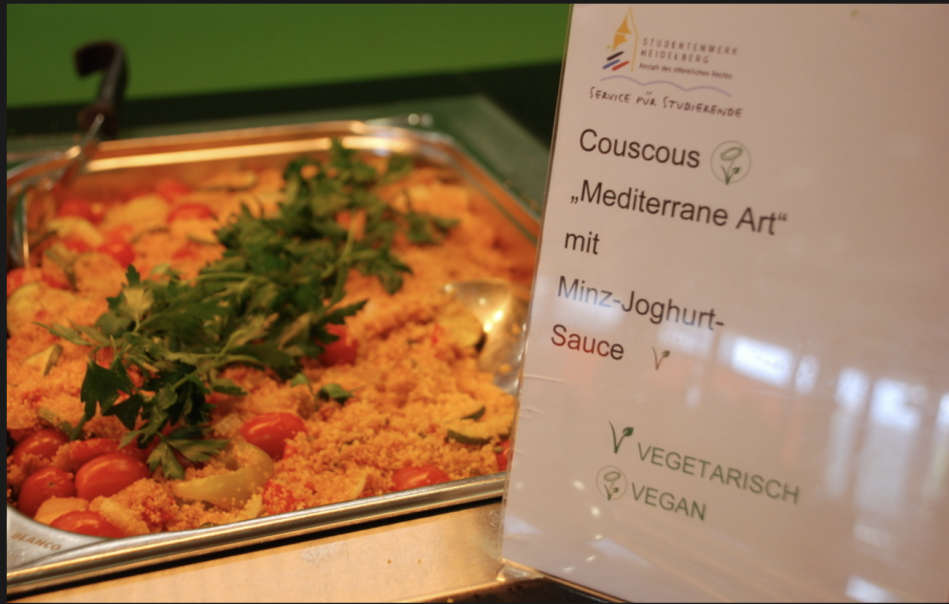
Group 1 - The core argument of the article is that the rise of vegetarianism in Germany, particularly in universities and urban dining establishments, is driven more by capital logic and cost-cutting measures than by genuine ethical or environmental concerns [1][4][24] - The institutionalization of "vegetarian days" in university cafeterias has led to a division among consumers, creating a conflict between vegetarians and non-vegetarians, which is exacerbated by economic disparities among students [4][5][22] - The article highlights that the promotion of vegetarianism often serves as a facade for cost optimization, with institutions using environmental narratives to justify reduced options for low-income students [5][8][24] Group 2 - The vegetarian movement in Germany has transitioned from a niche lifestyle to a mainstream consumption pattern, with approximately 10% of the population adhering strictly to vegetarian or plant-based diets, and over 35% identifying as "flexitarians" [9][10] - Major food corporations, such as Nestlé and Unilever, have increasingly integrated plant-based products into their offerings, indicating a shift towards commercial interests overshadowing ethical motivations [10][11] - The article discusses how organic certification systems, originally intended to promote sustainable practices, have been co-opted by capital interests to enhance profit margins, often leading to a disconnect between marketing claims and actual practices [11][13] Group 3 - The operational efficiency of vegetarian menus in university cafeterias and popular bakeries is often prioritized over ethical considerations, as these menus simplify management processes and reduce compliance risks [15][20] - The article points out that the shift towards vegetarian options is not solely based on ethical choices but is also a strategic move to minimize operational costs and risks associated with handling animal products [20][24] - The narrative surrounding vegetarianism has transformed it into a moral symbol, where consumers are categorized as either "progressive" vegetarians or "backward" non-vegetarians, leading to a loss of genuine choice and increased social tension [21][22][25]
新美星2025年中期净利大增118%,技术创新与全球布局双轮驱动
Quan Jing Wang· 2025-08-27 05:35
Core Viewpoint - Jiangsu Xinmeixing Packaging Machinery Co., Ltd. reported strong financial performance for the first half of 2025, with significant growth in revenue and net profit, indicating robust profitability and high-quality growth [1][2]. Financial Performance - The company achieved operating revenue of 580 million yuan, a year-on-year increase of 14.65% [1]. - Net profit attributable to shareholders reached 41.057 million yuan, a substantial increase of 118% year-on-year [1]. - The non-recurring net profit was 40.361 million yuan, reflecting a growth of 158.71% [1]. - Basic earnings per share were 0.14 yuan, up 133.33% year-on-year [2]. - The weighted average return on equity was 6.80%, an increase of 3.75 percentage points compared to the same period last year [2]. Business Operations - Xinmeixing focuses on providing integrated solutions for liquid product production lines, with products including pre-treatment systems, blow-filling machines, filling systems, secondary packaging equipment, and intelligent logistics systems [2]. - The company has deepened collaborations with renowned enterprises such as Coca-Cola, Danone, Nestlé, Nongfu Spring, and Haitian Flavoring & Food, with products exported to over 80 countries and regions [2]. Technological Innovation - Xinmeixing holds 676 authorized patents, including 319 invention patents, leading the industry in patent quantity [3]. - The company has participated in the formulation of over 40 national and industry standards, showcasing its technical leadership [3]. - Projects like the "High-Speed Rotary Fully Automatic Bottle Blowing Machine" and "Key Technologies and Applications for Environmentally Friendly Lightweight Bottled Drinking Water" have reinforced its advantages in advanced technology fields [3]. Financial Health and Future Outlook - The company maintains a healthy cash flow, with cash reserves of 740 million yuan, a 3.30% increase from the previous year [4]. - The asset-liability ratio remains within a reasonable range, with long-term loans increasing to support key project construction and global market expansion [4]. - Xinmeixing aims to enhance its competitiveness in the global liquid packaging machinery market through continuous technological research and product upgrades [4]. - The strong mid-year performance validates the company's strategic direction and lays a solid foundation for sustainable development in the future [4].

“咖啡因经济”热潮消退!Keurig Dr Pepper(KDP.US)豪掷180亿拆解饮料帝国 迎合资本“单品”偏好
智通财经网· 2025-08-26 13:17
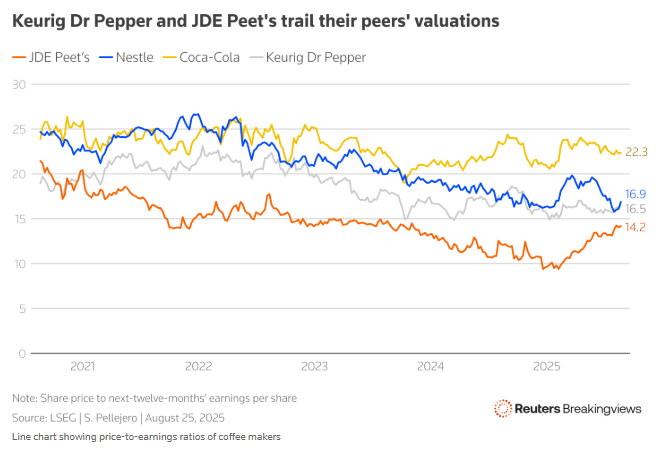
Core Viewpoint - Keurig Dr Pepper (KDP) is implementing a strategy focused on its core business to reverse the underperformance following its merger, with plans to split into two companies: one focusing on coffee and the other on energy drinks and sodas [1] Group 1: Acquisition Details - KDP announced the acquisition of JDE Peet's for €15.7 billion (approximately $18.3 billion), marking the end of a decade of expansion driven by the "caffeine economy" that failed to yield substantial returns [1] - The acquisition price of €31.85 per share represents a 20% premium over JDE Peet's closing price prior to the announcement, while JDE Peet's stock has risen 59% this year under new CEO Rafael Oliveira [2] Group 2: Financial Implications - The transaction's cost is considered high, with an estimated investment capital return rate exceeding 7%, but still below JDE Peet's weighted average cost of capital of 8% [2] - The carbonated beverage subsidiary is projected to achieve an EBITDA of $3.3 billion over the past 12 months, potentially leading to a valuation of approximately $67 billion based on an average valuation multiple of 20 times [3] Group 3: Valuation and Market Position - The coffee business's valuation is less compelling due to previous struggles with rising coffee bean prices and failed ventures in capsule coffee, but the merger is expected to provide economies of scale [6] - The independent coffee subsidiary's EBITDA of $3.1 billion could correspond to a valuation of around $35 billion, based on a valuation multiple of over 11 times from competitors like Nestlé [6] - The combined valuation of both subsidiaries is projected to exceed $100 billion, while their current enterprise value is approximately $83 billion [6] Group 4: Challenges Ahead - The transaction does not address ongoing challenges such as rising coffee bean prices and increasing competition from global giants like Starbucks and local coffee shops [6] - The declining appeal of carbonated beverages among health-conscious consumers remains an unresolved issue, indicating that long-term value creation will depend on overcoming these deeper challenges [6]

宠物智能,是「养宠自由」还是「焦虑税」?
3 6 Ke· 2025-08-26 09:46
Core Insights - The pet smart products market in China has been growing at over 40% for three consecutive years, with a market size of approximately 10.2 billion, accounting for about 20% of the overall pet products market [4][12] - Despite the growth, there is a rising trend of second-hand sales on platforms like Xianyu, with common reasons for selling including dissatisfaction and maintenance difficulties [3][12] - The industry is experiencing a shift from single product development to creating product ecosystems, with major brands focusing on comprehensive solutions for pet care [9][10] Group 1: Market Growth and Trends - The pet smart products market reached a size of approximately 102 billion, with significant contributions from smart feeders, cameras, and water dispensers [4] - The emergence of smart pet devices began as early as 2013, with significant advancements in 2018 due to the proliferation of IoT technology [4][5] - Brands like PETKIT have successfully capitalized on the IoT trend, raising significant funding and launching popular smart products [5][6] Group 2: Competitive Landscape - Major brands are increasingly competing on the basis of data value and ecosystem construction rather than just product features [11] - The market is seeing a rise in competition leading to product homogenization, with many brands offering similar functionalities [12] - Traditional pet industry giants are also seeking to transition into smart products, with companies like Mars acquiring tech brands to create comprehensive ecosystems [10] Group 3: Challenges and Consumer Trust - The industry faces challenges such as product sameness and the emergence of "pseudo-demand" and "pseudo-intelligence," which erode consumer trust [13][14] - Many smart products do not meet the expected performance standards, leading to consumer skepticism about their effectiveness [13][14] - The reliance on consumables and subscription services for revenue generation is creating a consumer trap, with many brands struggling to create a cohesive ecosystem [15] Group 4: Path to Resolution - Companies need to focus on genuine user needs and pain points to drive innovation and product development [16] - Emphasizing technological depth and user experience over superficial features can lead to more successful products [16][17] - Creating interconnected ecosystems rather than isolated products can enhance user experience and foster customer loyalty [17]