龙湖集团

Search documents
龙湖接手,北京世贸天阶将变身“天街”?
3 6 Ke· 2025-11-12 03:55
Core Viewpoint - The signing of the agreement between Beijing Aozhongxingye and Longfor Commercial for the Beijing World Trade Center project marks a significant transition for the CBD landmark, indicating Longfor's completion of its tenth commercial project in Beijing [1][4]. Group 1: Project Background - The Beijing World Trade Center, which opened in 2007, was once a vibrant commercial hub featuring Asia's largest sky screen, attracting significant foot traffic and hosting high-profile brands like ZARA and the upscale restaurant chain, Golden Jaguar [2]. - In recent years, the project has faced severe competition from nearby commercial areas, such as Taikoo Li Sanlitun and THE BOX, which have drawn away customers and contributed to the decline of the World Trade Center [2][3]. - The pandemic exacerbated the situation, leading to financial difficulties for tenants, resulting in many opting to vacate the premises after unsuccessful negotiations for rent reductions [2]. Group 2: Market Dynamics - The World Trade Center was previously put up for sale in 2015, with a reported valuation of approximately 4 billion yuan, but the sale fell through due to asset issues faced by the owner [3]. - According to a report by CBRE, over 1 million square meters of new commercial space is expected to be added in Beijing in 2024, intensifying competition in the core area and further squeezing the World Trade Center's market position [3]. Group 3: Longfor's Strategy - Following the acquisition, Longfor Commercial has established a network of commercial projects in Beijing, including nine "Tianjie" locations, enhancing its market presence across various districts [5]. - The successful transformation of the Beiyuan Tianjie project, which achieved a 99% leasing rate and generated over 33 million yuan in revenue within the first three days of opening, sets a positive precedent for the upcoming operations of the World Trade Center [5][6]. - Longfor's commercial operations reported a rental income of 7.01 billion yuan for the first half of 2025, reflecting a 2.5% year-on-year increase, with a high occupancy rate of 97% across its 89 shopping centers [6].

龙湖接手,世贸天阶能否引来北京“二次向上看”?
Bei Ke Cai Jing· 2025-11-12 03:16
Core Viewpoint - The partnership between Longfor Commercial and Beijing Aozhong Xingye aims to revitalize the Beijing World Trade Center (WTC) project, positioning it as a commercial aesthetic landmark in Beijing's CBD, marking Longfor's 10th project in the city [1][4]. Group 1: Historical Context and Challenges - The WTC was once a prominent commercial landmark in Beijing, known for its massive electronic canopy, which cost 250 million yuan and is the largest in Asia [2]. - The WTC gained fame during the 2008 Beijing Olympics but has since struggled with declining foot traffic and brand appeal due to the emergence of new commercial entities [2][3]. - The overall retail real estate market in Beijing is under pressure, with a reported 3.5% decline in effective rents and a 7.1% vacancy rate in the city center as of Q3 2025 [3]. Group 2: Current Developments - Longfor Commercial's entry into the WTC project is part of its strategy to expand its presence in Beijing, now operating 10 commercial projects in the city [5]. - The collaboration aims to leverage the WTC's historical significance while addressing its operational challenges, focusing on creating a new identity as a commercial aesthetic landmark [4][6]. - The success of this partnership will depend on Longfor's ability to innovate and attract foot traffic, as traditional shopping centers face the need for systemic innovation beyond mere tenant acquisition [6].
现在的第四代住宅,实在有点犯规
3 6 Ke· 2025-11-12 02:35
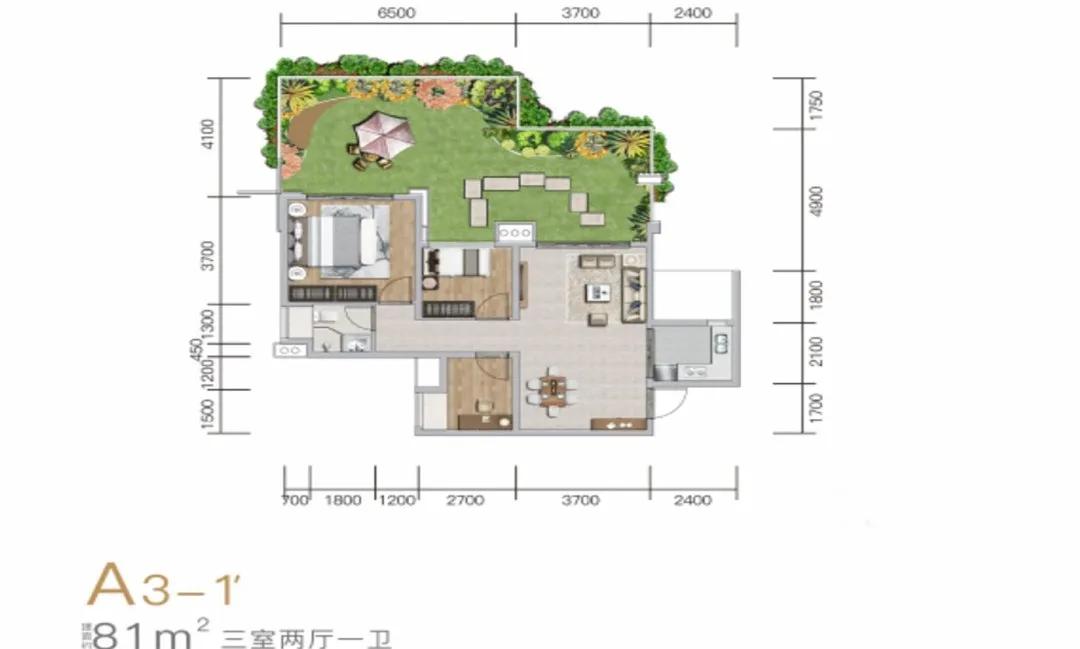
Core Insights - The trend of smaller fourth-generation residential units is increasing, with many new products under 140 square meters receiving positive market feedback, achieving high sales rates of over 90% during initial launches [1] - The concept of "residential product equality" is emerging, allowing buyers with limited budgets to access living experiences previously reserved for luxury properties [1] - The core advantage of fourth-generation residences lies in features like sky courtyards and significant gift areas, leading to higher usable space and attractive pricing for consumers [1] Group 1: Expansion Strategies - Developers are utilizing strategies such as half-gifted balconies and fully gifted terraces to increase usable space, with some projects achieving a total gift area of 55 square meters, resulting in impressive usable rates [2] - Full-gifted entrance gardens and innovative designs, such as large sky courtyards, are being implemented to enhance living space, with some units achieving usable rates of up to 112% [2][4] - The introduction of full-window designs is also being used to maximize interior space, with some projects expanding window depths to 90 cm, significantly increasing usable areas [6] Group 2: Evolving Terrace Designs - The design of terraces is evolving, with double terraces becoming a standard feature in compact units, enhancing both functionality and comfort [9] - Many new fourth-generation residences are designed with terraces surrounding the main living areas, promoting interaction and creating social spaces [13] - Innovative designs are being employed to address privacy concerns, such as staggered layouts and solid walls to prevent direct sightlines between units [20][22] Group 3: Competitive Features in Compact Units - The competition among compact units is intensifying, with a focus on functionality, comfort, and cost-effectiveness, particularly in the 100 to 143 square meter range [24] - Features like private elevator halls and dual kitchen designs are increasingly being integrated into smaller units, which were previously exclusive to larger luxury properties [25] - The introduction of additional functional spaces, such as dedicated service and storage rooms, is becoming common, enhancing the overall living experience [27]

永旺、龙湖、凯德涌入,长沙这个区的商业又要“开挂”了
3 6 Ke· 2025-11-12 02:24
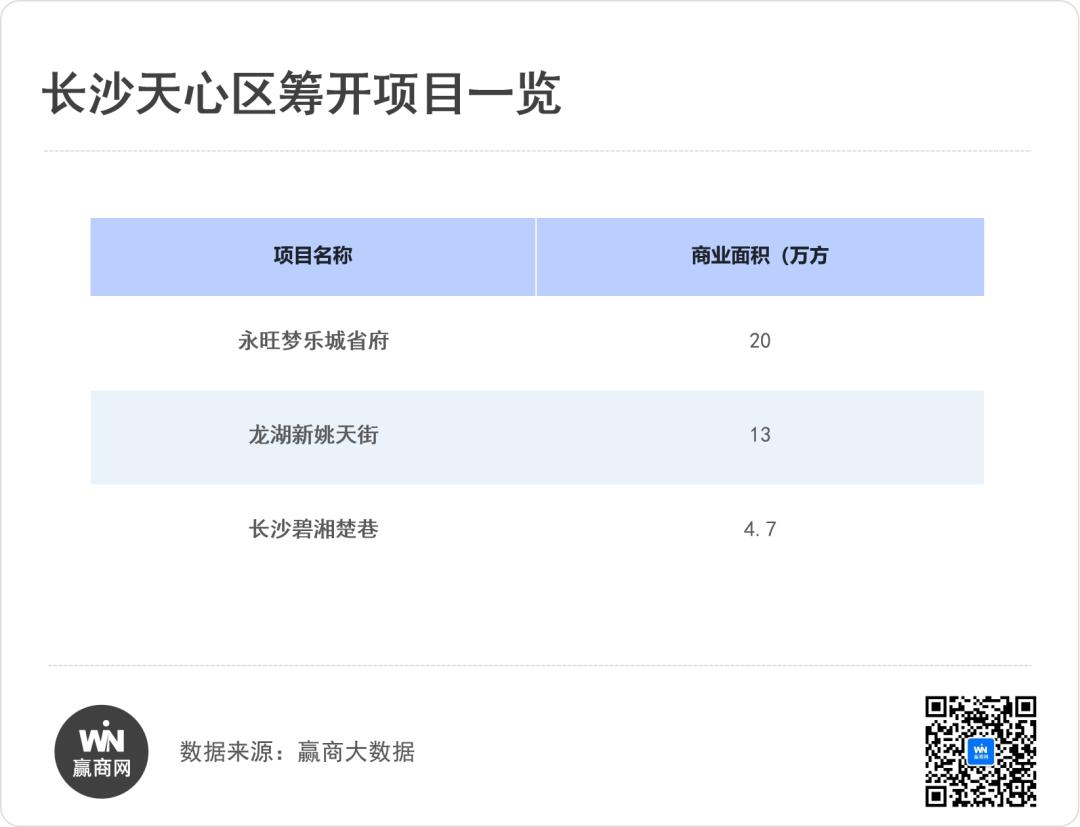
Core Insights - The article highlights the commercial development in Changsha's Tianxin District, emphasizing its unique cultural identity and strategic location as a commercial hub, which includes significant historical sites and modern retail giants [1][2][8] Commercial Expansion - Three major new projects are set to add 377,000 square meters of commercial space, making Tianxin District the leader in commercial growth among Changsha's administrative districts [2][8] - The current per capita shopping center commercial area in Changsha is 0.89 square meters, while Tianxin District has reached 1.15 square meters, significantly exceeding the city average [2] Key Projects - The Aeon Mall Tianxin project, the third of its kind in Hunan, is set to create a large-scale commercial complex that includes various retail and entertainment options, further enhancing Aeon's presence in Changsha [4][8] - Longfor's new Yao Tian Street is positioned as a quality lifestyle destination in southern Changsha, with a total area of approximately 130,000 square meters [6][8] Commercial Landscape Upgrade - The entry of major players like Aeon and Longfor is expected to significantly enhance the consumption potential of the Xiangfu consumption center, contributing to a new commercial landscape characterized by "North Wuyi, Central Xiangfu, and South Changzhutan" [8][19] Historical Context - Tianxin District's commercial evolution can be divided into four distinct phases, reflecting the transition from traditional to modern retail environments over the past two decades [9][12][14][15][16][17] Future Considerations - The article raises questions about how Tianxin District can maintain its commercial leadership in a saturated market, focusing on balancing historical significance with modern commercial needs and ensuring differentiated operations among new projects [19]
王石再次预测中国房地产未来走向!前3次都准!这次可能又是对的?
Sou Hu Cai Jing· 2025-11-11 19:15
Core Insights - Vanke's founder Wang Shi has made significant predictions about the future of China's real estate market, emphasizing a structural transformation characterized by "three trends, two shifts, and one core" [4][10]. Group 1: Trends - The first trend is the long-term adherence to the "housing is for living, not for speculation" principle, which will become a cornerstone of the Chinese real estate market [6]. - The second trend indicates a shift in the industry's focus from scale expansion to quality improvement, as the market enters a "stock era" with a noticeable slowdown in new housing supply [6]. - The third trend highlights an increasing market differentiation, with urban areas experiencing varied dynamics based on population inflow and product segmentation [6][10]. Group 2: Shifts - The first shift involves a transformation in developers' operating philosophies, moving from high-leverage, high-turnover models to a more stable, cash-focused strategy [8]. - The second shift reflects an upgrade in consumer purchasing attitudes, where the new generation prioritizes suitability over mere ownership, indicating a more rational approach to home buying [9]. Group 3: Core Judgment - The core judgment is that real estate will return to its fundamental purpose of providing living spaces, moving away from excessive financialization and profit-driven motives [10][17]. Group 4: Market Predictions - Wang Shi predicts that in the next five years, first-tier cities like Beijing and Shanghai will see stable housing prices with fluctuations not exceeding 15%, while second-tier cities may experience slight increases, and many third- and fourth-tier cities will face downward pressure on prices [10]. Group 5: Consumer Strategies - Ordinary homebuyers are advised to focus on meeting their living needs rather than viewing real estate solely as an investment [11]. - The importance of location is emphasized, with a focus on areas with population growth and strong industrial bases [12]. - Quality and service are highlighted as key factors in determining property value, with a shift towards properties that offer superior living environments [13]. Group 6: Technological Impact - Wang Shi underscores the role of digital transformation in real estate, with smart homes and communities becoming significant trends, as evidenced by the growth of the smart home market [14]. - Developers are encouraged to evolve from merely constructing homes to providing comprehensive urban services, enhancing their competitive edge [14]. Group 7: Historical Context - Wang Shi's historical predictions have proven accurate, such as his warnings about market bubbles and the transition to a "silver age" of real estate, showcasing his foresight and understanding of market dynamics [5][15].

房地产行业周报(25/11/1-25/11/7):五部门推智慧城市计划,新房及二手房成交走弱-20251111
Hua Yuan Zheng Quan· 2025-11-11 15:39
Investment Rating - The investment rating for the real estate industry is "Positive" (maintained) [3][4] Core Viewpoints - The report emphasizes that real estate is a crucial asset allocation and investment direction for Chinese households, and stabilizing housing prices is significant for facilitating economic circulation. The policy environment is expected to strengthen further, promoting high-quality development in the real estate sector. There is an anticipated wave of development for high-quality residential properties due to policy guidance and changes in supply-demand structure [4][48]. Market Performance - The Shanghai Composite Index rose by 1.1%, while the real estate sector (Shenwan) declined by 0.2% during the week [4][7]. - In the new housing market, 154 million square meters were sold across 42 key cities from November 1 to November 7, representing a 38.7% decrease from the previous week and a 46.7% year-on-year decline [4][13]. - The second-hand housing market saw 191 million square meters sold in 21 key cities during the same period, reflecting a 7.6% decrease week-on-week and a 26.7% year-on-year decline [4][28]. Data Tracking - For new housing, the cumulative sales in November (up to the week of November 7) were 154 million square meters, showing a 195.2% increase month-on-month but a 46.7% decrease year-on-year [4][17]. - In the second-hand housing market, cumulative sales for November reached 191 million square meters, indicating an 895.9% increase month-on-month but a 26.7% decrease year-on-year [4][31]. Industry News - The National Development and Reform Commission and other departments issued a plan to promote the development of smart cities, aiming to establish over 50 fully digital transformation cities by the end of 2027 [4][45]. - Shenzhen is supporting the conversion of idle non-residential properties into affordable rental housing, while Hunan's Pingjiang County is implementing a comprehensive approach to selling existing homes [4][45]. Company Announcements - In October, major real estate companies reported significant declines in sales, with China Overseas Development at 186.6 billion (down 55.1% year-on-year) and Poly Development at 211.2 billion (down 50.1% year-on-year) [4][48].




港股收盘 | 三大指数集体收涨 半导体和黄金股走弱
Xin Lang Cai Jing· 2025-11-11 08:33
Market Performance - The Hong Kong stock market saw all three major indices close higher, with the Hang Seng Index up 0.18% at 26,696.41 points, the Tech Index up 0.15% at 5,924.39 points, and the National Enterprises Index up 0.19% at 9,461.49 points [1][3]. Real Estate Sector - Real estate stocks performed strongly, with Longfor Group rising 3.95%, Longfor Properties up 2.15%, and China Resources Land increasing by 1.93% [3]. - According to the China Index Academy, the top 100 real estate companies acquired land worth 783.8 billion yuan from January to October 2025, marking a 26.4% year-on-year increase, although the growth rate has slowed compared to previous months [4]. Property Management Sector - The property management sector also saw gains, with Kaisa Group Holdings up 4.41% and China Resources Mixc Lifestyle rising 3.88% [4]. Aviation Sector - Airline stocks experienced slight increases, with Cathay Pacific up 2.20%, China Eastern Airlines up 1.78%, and China Southern Airlines up 1.54% [6]. - Cathay Pacific's research report maintains an "overweight" rating for the aviation and oil transportation sectors, predicting a potential super cycle for the airline industry due to high passenger load factors and low ticket prices [7]. Semiconductor Sector - Semiconductor stocks faced adjustments, with Hua Hong Semiconductor down 3.65%, SMIC down 2.74%, and Hongguang Semiconductor down 1.08% [8]. - SMIC is set to hold a board meeting on November 13 to review its Q3 performance, while Hua Hong Semiconductor reported a record Q3 revenue of $635.2 million, a 20.7% year-on-year increase [9]. Gold Sector - Gold stocks showed weakness, with Zhenfeng Gold down 8.37%, Zijin Mining down 1.08%, and Chifeng Jilong Gold down 0.98% [10]. - Despite the decline in gold stocks, the People's Bank of China reported an increase in gold reserves to 74.09 million ounces as of the end of October, marking the 12th consecutive month of increases [11]. AI Sector - Huiliang Technology rose 5.02% following positive Q3 results from AppLovin, which reported a revenue of $1.41 billion, a 68.9% year-on-year increase [12]. Entertainment Sector - Lehua Entertainment fell 6.80% amid concerns regarding Wang Yibo's contract renewal, with the company stating that his income share is gradually decreasing and his contract will expire next year [13].


中国的新兴前沿-C-REITs:开启未来十年的投资新篇章
2025-11-11 02:47
Summary of C-REITs Conference Call Industry Overview - The Chinese real estate industry is transitioning from new residential construction to rental asset operations, coinciding with the development of the REIT market, which may reshape the competitive landscape for developers and redefine long-term investment logic in the sector [1][3][11]. Key Points Importance of Current Developments - Since Q3 2025, favorable policies have accelerated the issuance of domestic REITs (C-REITs), expanding the range of assets and issuing entities. C-REITs are expected to become a significant asset class over the next 10 to 20 years, with a market potential of approximately $1 trillion, which is over 30 times the current size [3][9]. - The limited trading volume of C-REITs suggests that listed developers are a good entry point into this rapidly expanding theme due to their large rental asset portfolios and low participation in REIT issuance [3][9]. Beneficiaries - In-depth analysis indicates that China Resources Land (1109.HK) has the highest short-term benefit potential, followed by Seazen Holdings (601155.SS) and Longfor Group (0960.HK), due to their substantial shopping center portfolios and high pledge ratios. Other companies like China Overseas Land & Investment (0688.HK), China Merchants Shekou (001979.SZ), Vanke (2202.HK), Poly Developments (600048.SS), and Gemdale (600383.SS) also have significant non-retail rental assets that could benefit in the medium term as REIT coverage expands [4][9]. Signals to Watch - The normalization of REIT issuance, especially with private developers' participation, the expansion of covered commercial asset types, and increased flexibility in capital recycling will strengthen confidence in the mid-term investment logic [4][9]. Regulatory Framework and Market Development - C-REITs have a more stringent regulatory framework compared to mature markets like the US and Japan, including requirements on structure, holding ratios, leverage levels, and initial yield [15][19]. - The development of C-REITs has progressed through four phases over the past 25 years, with significant milestones including the first public REITs listed in 2021 and the expansion of eligible asset types [11][12]. Market Size and Performance - As of September 2025, there are 75 publicly listed C-REITs with a total issuance size of approximately RMB 200 billion and a market capitalization of about RMB 220 billion. Despite significant growth since the first listings, C-REITs currently represent only 0.15% of the total market capitalization of China's stock market [20][29]. - The average trading yield of C-REITs has compressed to 4.4%, reflecting a price increase of about 10% since IPOs, with specific sectors like water facilities and new infrastructure seeing substantial price increases [21][40]. Long-term Potential - The potential market size for C-REITs could reach between $800 billion to $1 trillion, which is 28 to 33 times the current market size, driven by the growth of commercial REITs and the completion of new properties [41][43]. - The estimated total value of commercial properties completed since 2000 is approximately $4.9 trillion, indicating a significant opportunity for C-REITs to capture a larger market share in the future [41][42]. Conclusion - The C-REIT market in China is poised for significant growth, driven by favorable policies, a shift in investment focus, and the potential for substantial market capitalization increases over the next decade. Developers with large rental portfolios are well-positioned to benefit from this emerging asset class [3][4][9].



裁员缩编的地产行业,谁还在招兵买马?
3 6 Ke· 2025-11-11 02:31
Core Insights - The real estate industry is experiencing a trend of layoffs and hiring freezes, with a focus on key positions such as product, marketing, and customer research [1][2] - The importance of product development is increasing, with companies consolidating resources to enhance product capabilities and integrate various departments [2][4] - The shift in market dynamics necessitates a more nuanced approach to product development, moving away from standardization to a focus on innovation and customer-centric design [4][10] Group 1: Product Position - The term "good house" has become a key focus, emphasizing that product strength is a core competitive advantage for real estate companies [1] - Many companies are merging departments like engineering and marketing into product teams to enhance product development [2] - The high barriers to effective product development highlight the need for skilled professionals who can innovate and adapt to market changes [4][6] Group 2: Customer Research Role - The role of customer research is evolving from basic reporting to a critical function that informs land acquisition and product positioning [6][7] - Companies are increasingly recognizing the need for precise market analysis to avoid costly mistakes in land acquisition and project development [7][9] - Understanding customer preferences and market trends is essential for creating products that resonate with buyers [10][11] Group 3: Marketing Strategy - Marketing has become a crucial function in the current real estate landscape, with a shift from traditional methods to digital marketing strategies [11][14] - The changing customer demographics require real estate companies to adapt their marketing approaches to better align with consumer needs [12][13] - Successful marketing now involves proactive engagement and community building, emphasizing the importance of customer relationships [17][18] Group 4: Commercial Sector Transformation - The commercial real estate sector is gaining importance as a stable revenue source, contrasting with the declining performance of traditional development businesses [20] - Companies like China Resources Land and Longfor Group are seeing significant profits from their commercial operations, indicating a shift in focus [20] - The demand for talent in commercial real estate is increasing as these sectors become more integral to overall business strategies [20]
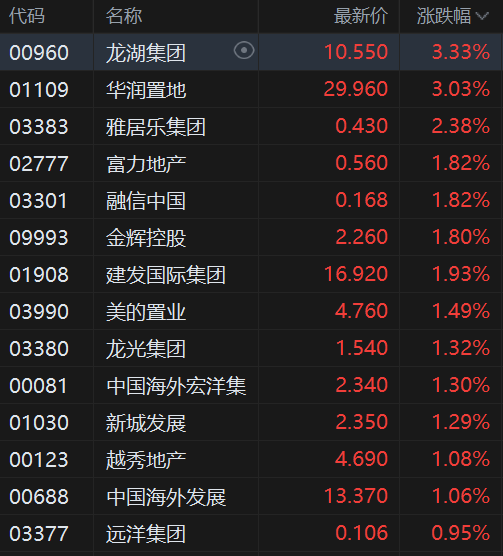
港股异动丨内房股普涨 龙湖集团涨3.33%,华润置地涨3% 10月行业债券融资同比大增76.9%
Ge Long Hui· 2025-11-11 02:13
Group 1 - Hong Kong real estate stocks experienced a general rise, with Longfor Group up 3.33%, China Resources Land up 3%, and Agile Group up 3.4% [1] - Other notable increases include R&F Properties, Jin Hui Holdings, Ronshine China, and Jianfa International Group, each rising approximately 2%, while Midea Real Estate, Longguang Group, New City Development, and China Overseas Macro Holdings rose over 1% [1] Group 2 - The China Index Academy recently released the October financing report, indicating that the total bond financing in the real estate sector for October 2025 reached 51.24 billion yuan, a year-on-year increase of 76.9% [1] - The issuance of credit bonds in October also saw a year-on-year increase, primarily from state-owned enterprises, with real estate credit bond financing amounting to 32.7 billion yuan, up 50.7% year-on-year, accounting for 63.8% of the total [1] Group 3 - CITIC Securities suggests that 2026 may be a critical year for real estate companies to enter a balance sheet repair phase, with some firms potentially reaching the bottom of a long-term profit cycle [1] - Companies that manage to recover first are likely those with well-positioned assets in good cities, operational investment properties, or financial assets with appreciation potential [1]