
水晶光电

Search documents
“试水”产品搅动二级市场,AI眼镜概念冲高回落
Di Yi Cai Jing· 2025-06-27 10:25
产品整体配置下来,据咨询机构Wellsenn XR小米AI眼镜BOM拆解报告显示,小米每副AI眼镜综合成本 约1281元,对比1999元的起售价,仍有较大盈利空间。对此数据,Rokid创始人祝铭明对记者表示,还 需要考虑ODM(原始设计制造商)与影像音质等方面的调教成本,其中ODM企业负责从概念设计到量 产的全部环节,品牌方仅参与需求确认和最终验收。调教成本指为了使AI眼镜在图像拍摄、视频录制 以及音频播放等方面达到良好效果所投入的成本,涉及硬件调试、软件算法优化等多个环节。 小米在AI眼镜方面的动作试水意味比较重。 受益于小米集团(1810.HK)发布旗下首款AI眼镜,6月27日,AI眼镜概念高开,相关成分股冲高回 落。Wind数据显示,小米产业链指数(884665)涨0.48%。 具体产业链企业合作方面,据商络电子(300975.SZ)披露,公司为小米智能眼镜间接供应被动器件和 射频器件等产品;作为小米公司客户的中科创达(300496.SZ)主要与小米在软件开发领域具有广泛合 作;佰维存储(688525.SH)为小米提供ePOP存储芯片,系闪存和内存垂直堆叠封测的产品;歌尔股份 (002241.SZ)表示 ...
水晶光电(002273) - 2025年6月25日投资者关系活动记录表
2025-06-27 05:22
Business Overview - The company, established in 2002, initially focused on security monitoring and later expanded into the high-end camera market, maintaining a significant market share in Japan [2]. - Transitioned to smartphone business due to rapid smartphone development, entering the North American supply chain in 2012 and evolving into a strategic technology partner for major clients [2][3]. - The company has built six production bases, with significant investments in Vietnam, where a second phase is expected to commence production in the second half of 2023 [2]. Growth Strategies - The company has identified three growth curves: 1. Smartphone business as the first growth curve 2. Automotive electronics as the second growth curve 3. AR glasses as the third growth curve [3][5]. - The smartphone segment, particularly the IRCF infrared cutoff filter, remains a major revenue source, with a strong market presence in the Android client segment [4]. Automotive Electronics - The automotive electronics segment includes products like AR-HUD and laser radar window components, with a leading market share in the domestic AR-HUD market [5]. - Despite pricing pressures in the domestic market, the penetration rate of HUDs continues to rise, especially for AR-HUDs, indicating potential for improved profitability as overseas clients ramp up production [5]. AR Glasses Development - The AR glasses segment is still in the R&D phase, with significant potential due to high hardware costs [5][9]. - The company is focusing on developing core optical components for AR glasses, with ongoing collaborations with leading tech firms [9][10]. Future Outlook - The year 2025 is seen as a pivotal year for the company, marking a strategic transition and the opening of new development avenues [6]. - The company aims for a revenue growth target of 0% to 30% in 2025, indicating a focus on strategic adjustments over the next 1-2 years [11].

1999元起!雷军正式发布小米AI眼镜
新华网财经· 2025-06-26 13:34
Core Viewpoint - The release of Xiaomi's AI glasses marks a significant milestone in the maturity of the AI glasses industry, prompting increased interest and investment from various companies in the sector [1][9]. Industry Developments - Investors are increasingly focused on the AI glasses supply chain, with many companies revealing their involvement and technological advancements in this emerging field [2]. - Xiaomi's AI glasses are priced at 1999 yuan, showcasing a high cost-performance ratio, supported by deep collaboration across the chip, optics, and acoustics supply chains [4]. - Several companies in the "Mi Chain" ecosystem are actively collaborating with Xiaomi, providing components and software development for the AI glasses [6]. Company Progress - Baiwei Storage anticipates revenue of approximately 106 million yuan from AI glasses in 2024, with a projected growth of over 500% year-on-year in 2025 [7]. - GoerTek has a broad business layout in hardware development for smart glasses, indicating a strong competitive advantage in the market [7]. - Hengxuan Technology reported a significant increase in net profit, driven by the growth in the smart wearable market, with a 590.22% year-on-year increase in Q1 2025 [7]. Strategic Investments - Riju Optoelectronics plans to invest approximately 822 million yuan in a project to enhance its production capacity for functional films, which are essential for wearable applications [9]. - Luxshare Precision is expanding its business in the Android ecosystem, emphasizing the importance of smart glasses in its consumer electronics product line [11]. - Various companies, including DiAo Micro and Longqi Technology, are developing new products and expanding their offerings in the AI glasses market, with optimistic growth forecasts [11][12]. Product Launches - Thunderobot Technology launched AI smart glasses in March, integrating features like music playback, photography, and AI translation, aiming to enhance user experience through a comprehensive product ecosystem [13].



研判2025!中国高速摄像机行业概述、产业链、发展现状及发展趋势分析:应用领域不断拓宽,行业市场规模增长至4.4亿元[图]
Chan Ye Xin Xi Wang· 2025-06-25 01:18
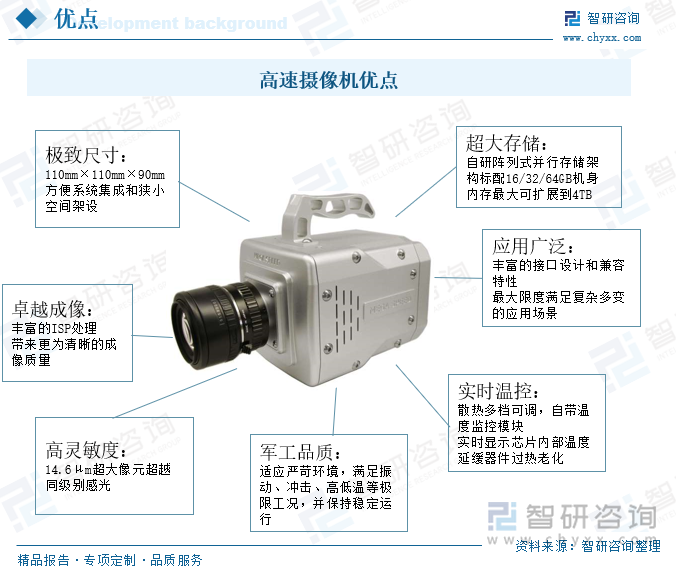
Core Insights - The high-speed camera market is experiencing steady growth, driven by technological advancements and expanding application areas in research, industry, sports, and military [1][12] - The market size of China's high-speed camera industry is projected to reach 440 million yuan in 2024, reflecting a year-on-year increase of 10.28% [1][12] Industry Overview - High-speed cameras can capture thousands to hundreds of thousands of frames per second, significantly exceeding the frame rates of standard cameras [2] - The technology primarily utilizes CCD or CMOS image sensors for image recording, with data stored in high-speed memory [2] Industry Chain - The upstream of the high-speed camera industry includes core component suppliers providing essential parts like CCD/CMOS sensors, optical lenses, and power systems [4] - The midstream involves the production and development of high-speed cameras, while the downstream encompasses various application fields such as scientific research, industrial inspection, and sports photography [4] Key Components - Image sensors are critical to high-speed cameras, with CMOS sensors being widely used due to their low power consumption and high integration [6] - The market for CMOS image sensors in China is expected to grow from 13.9 billion yuan in 2018 to 51.7 billion yuan by 2024 [6] Application in Sports - High-speed cameras are essential in sports for analyzing athletes' techniques through slow-motion playback, enhancing training and performance [8] - The total scale of sports competition and performance activities in China reached 75.2 billion yuan in 2023, a year-on-year increase of 93.81% [8] Application in Film Production - In the film industry, high-speed cameras are used to create stunning visual effects, particularly in action scenes [10] - The number of films produced in China is projected to reach 612 in 2024, a decrease of 22.73% from 2023, indicating a focus on improving content quality [10] Competitive Landscape - The high-speed camera market in China is largely reliant on imports, but domestic companies are improving their R&D capabilities and competitiveness [14] - Key domestic companies include Hefei Zhongke Junda Vision Technology Co., Ltd., Hunan Ketiankian Optoelectronic Technology Co., Ltd., and Shenzhen Deep Vision Intelligent Technology Co., Ltd. [14][15] Development Trends - The trend of domestic substitution is accelerating, with local companies gaining market share in mid-to-low-end segments and gradually moving into high-end markets [19] - The application areas for high-speed cameras are expanding, with potential growth in sectors like new energy vehicles and smart manufacturing [21]
八成胜率,当被动投资装上主动引擎,指增ETF正在焕发第二春
市值风云· 2025-06-24 10:17
Core Viewpoint - The traditional divide between ETFs and actively managed funds is being disrupted by the emergence of enhanced index ETFs, which combine the advantages of both product types [2][23]. Group 1: Enhanced Index ETFs Overview - Enhanced index ETFs track indices but allow fund managers to adjust the composition and weight of the underlying stocks to achieve outperformance [2]. - Since the launch of the first enhanced index ETF in December 2021, the product has rapidly expanded, with 35 such ETFs in the A-share market by May 2025, totaling a scale of 6.72 billion [2]. - In the U.S., actively managed ETFs reached a size of 857.9 billion, accounting for 8.1% of the total ETF market, indicating significant growth potential for enhanced index ETFs [2]. Group 2: Performance of Enhanced Index ETFs - Among 19 enhanced index ETFs analyzed, 16 have generated excess returns, with the 500 Enhanced ETF leading at 6.1% [4]. - The 500 Enhanced ETF (561550.SH) and the China Securities 500 Enhanced ETF (563030.SH) have both achieved over 5% excess returns this year [4][6]. - The top ten holdings of the China Securities 500 Enhanced ETF have an average increase of 8.3%, with notable performers like Chifeng Jilong Gold Mining rising 73% this year [6][7]. Group 3: Market Trends and Future Prospects - The small-cap enhanced index ETFs, such as the China Securities 2000 Enhanced ETF, have shown explosive growth, with a year-to-date increase of over 20% and a 328.7% rise in scale [9]. - The development of enhanced index ETFs is driven by both policy and technological advancements, with new regulations promoting the growth of index-based investments [10]. - Fund companies are increasingly adopting AI-driven models to enhance investment strategies, moving from traditional multi-factor approaches to machine learning [11]. Group 4: Investment Strategies and Considerations - Investors are advised to adopt a core-satellite strategy, using broad-based enhanced index ETFs as the core of their portfolio while allocating to sector-specific or style-specific ETFs for additional exposure [14]. - The enhanced index ETFs focused on technology, such as the Sci-Tech 50 Enhanced ETF, offer significant policy benefits but require careful consideration of industry cycles [15][19]. - The Sci-Tech index has shown high elasticity, with a beta of 1.18 and a cumulative increase of 17.2% since its base date, indicating its potential for capturing innovation opportunities [16][19].


AI眼镜专家行业交流
2025-06-23 02:09
Summary of AI Glasses Industry Conference Call Industry Overview - The global AR smart glasses shipment volume is expected to significantly increase in 2024, with Meta and LiPeng's collaboration achieving sales of approximately 800,000 to 900,000 units. The domestic market remains relatively small, but the second-generation product from Thunderbird has become a bestseller due to improved camera quality and integration with large models, marking a turning point for the industry [1][4]. Core Insights and Arguments - **Key Pain Points**: The main challenges for AI smart glasses include display technology optimization, battery life enhancement, cost control, and increasing market acceptance. Technological innovation and market strategy adjustments are crucial for industry growth [1][5][6]. - **Core Components**: Key components of AI glasses include the Qualcomm XR2 chip (provided by Yidao Information), batteries from Yiwei Lithium Energy/ BYD, cameras from Crystal Optoelectronics/Sony, and optical display systems from Shanghai Xianyao Technology, gradually integrating large models [1][8][9]. - **Technological Breakthroughs**: Major breakthroughs in smart glasses technology focus on silicon carbide waveguides and Micro LED. The use of inorganic material etching processes by companies like United Imaging improves waveguide reliability and reduces costs, while Micro LED offers high brightness, making it more competitive in outdoor scenarios [1][10][13]. Market Trends and Future Outlook - **Sales Growth**: The global sales revenue for AR smart glasses reached a million-level in 2024, indicating the product's entry into a growth phase with potential for large-scale expansion. Domestic manufacturers like Rokid, Chargeurs, and Link 5 are also beginning to produce small AR smart glasses to meet market demand [4][30]. - **Future Projections**: The combination of Micro LED and waveguide technology may become the ultimate display solution, but improvements in resolution and brightness are still needed for broader application [10][13]. Additional Important Insights - **Rokid's Transition**: Rokid, originally focused on smart speakers, shifted to AR glasses in 2020 due to market pressures and has primarily targeted the B-end market initially. Their revenue from B-end products was around 80-90 million in 2021-2022, while C-end contributions were minimal [17][21]. - **Challenges in Sales**: Rokid's actual sales figures may not reflect the pre-order numbers due to inventory pressures from distributors. The company plans to launch new products based on the sales performance of existing models [19][20][21]. - **Technical Limitations**: Current AI glasses face issues such as weight, battery life, and interaction capabilities. The lightest AR glasses weigh around 70-80 grams, but prolonged wear can still be uncomfortable. Solid-state battery technology is still in its infancy, with significant advancements expected in the next two to three years [7][11]. Conclusion The AI smart glasses industry is at a pivotal moment, with significant growth potential driven by technological advancements and market strategies. However, challenges such as cost, user experience, and market acceptance must be addressed to achieve widespread adoption.
AI眼镜从“时尚单品”到“垂类场景专业工具”,应用拓宽定位升级
Orient Securities· 2025-06-22 13:45
Investment Rating - The industry investment rating is maintained as "Positive" [5] Core Viewpoints - AI glasses are evolving from "fashion items" to essential tools for specialized scenarios, with the potential to become the next generation of independent AI smart terminals after incorporating display functions [3][7] - The global smart glasses market is expected to ship 12.05 million units in 2025, representing a year-on-year growth of 18.3%, with non-display audio glasses and audio shooting glasses expected to see shipments more than double [7] - Meta's collaboration with Oakley on new AI glasses focuses on sports scenarios, enhancing functionality and battery life, which is expected to drive market acceptance and further application in specialized fields [7] Summary by Sections Investment Suggestions and Targets - Focus on leading companies in the supply chain of AI glasses, including: 1. Complete machine and PCBA manufacturers: GoerTek (002241, Buy), Longqi Technology (603341, Not Rated), Lens Technology (300433, Buy), Luxshare Precision (002475, Buy), and Huaqin Technology (603296, Buy) [3] 2. SoC suppliers: Hengxuan Technology (688608, Buy) and Amlogic (688099, Buy) [3] 3. Component suppliers: Camera lens glass supplier Yutong Optical (300790, Not Rated), microphone and speaker supplier AAC Technologies (02018, Not Rated), and SiP module supplier Huanxu Electronics (601231, Buy) [3] 4. Waveguide manufacturers: Lantech Optical (688127, Buy), Crystal Optoelectronics (002273, Buy), and Sunny Optical Technology (02382, Buy) [3] Market Trends - The AI glasses market is experiencing rapid growth due to improved hardware and software capabilities, leading to increased value and potential upgrades in the traditional eyewear industry [7] - Major tech companies are expected to release new AI glasses products in the second half of the year, which will catalyze industry growth [7]



500质量成长ETF(560500)震荡调整,机构:市场或将呈现成长和价值轮动态势
Sou Hu Cai Jing· 2025-06-20 06:01
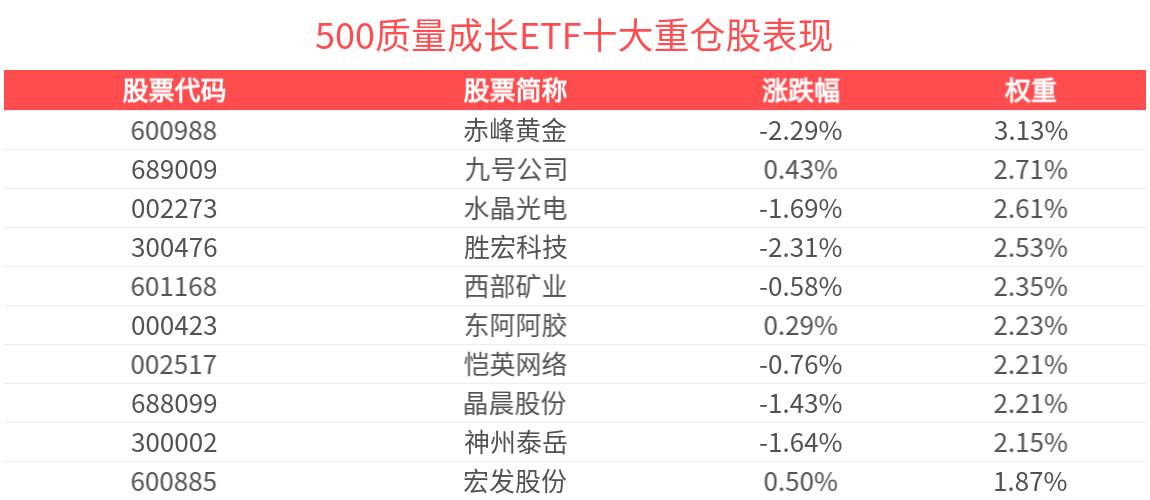
Group 1 - The core viewpoint of the news is that the 中证500质量成长指数 (CSI 500 Quality Growth Index) has shown mixed performance among its constituent stocks, with some stocks gaining while others declined, indicating a volatile market environment [1] - As of June 20, 2025, the CSI 500 Quality Growth Index decreased by 0.36%, while the CSI 500 Quality Growth ETF (560500) fell by 0.10%, reflecting a slight downturn in the market [1] - The top-performing stocks included 常熟银行 (Changshu Bank) with a gain of 1.73%, and 齐鲁银行 (Qilu Bank) with an increase of 1.69%, while 柏楚电子 (Bachu Electronics) led the decline with a drop of 5.76% [1] Group 2 - Looking ahead to the second half of 2025, 中原证券 (Zhongyuan Securities) anticipates that the core driving factors for the equity market will include ongoing policy support focused on technological innovation and domestic demand [2] - The report suggests that the liquidity environment is improving due to a loose domestic monetary policy and increasing capital repurchases, which is expected to enhance market liquidity [2] - As of May 30, 2025, the top ten weighted stocks in the CSI 500 Quality Growth Index accounted for 23.79% of the index, with 赤峰黄金 (Chifeng Gold) being the highest at 3.13% [2][4]

2025年浙江台州市新质生产力发展研判:加快打造以“5+5+6”产业为核心的台州特色现代化产业体系[图]
Chan Ye Xin Xi Wang· 2025-06-20 01:16
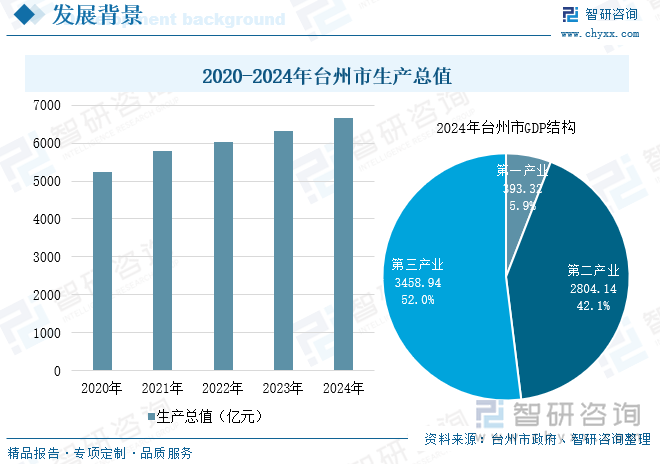
内容概要:台州市是浙江省下辖的地级市,位于浙江省中部沿海。近年来,台州市围绕打造"5+5+6"台 州特色现代化产业体系,一手抓传统产业、优势产业的巩固和优化,瞄准链主型企业、专精特新"小巨 人"企业等开展靶向招引,提升平台首位产业辨识度;一手抓新兴产业、未来产业的培育和壮大,聚焦 算力、氢能、低空经济、合成生物、机器人、泛半导体等六大未来产业,加快发展新质生产 力。"5+5+6"产业发展不断实现新突破,竞争力持续增强,产业生态日益完善,现代产业基础不断夯 实,助力经济稳步增长。 上市企业:水晶光电(002273)、航天彩虹(002389)、海正药业(600267)、海翔药业(002099)、 九洲药业(603456)、杰克股份(603337)、信质集团(002664)、百达精工(603331)、海正生材 (688203)、夜光明(873527)、华海药业(600521)、浙江永强(002489)、伟星股份(002003)、 伟星新材(002372)、永太科技(002326)、万盛股份(603010)、奥翔药业(603229)、本立科技 (301065)、联盛化学(301212)、浙江正特(001238)、天山 ...
红宝书20250618
2025-06-19 09:47
Summary of Key Points from Conference Call Records Industry or Company Involved - **AI Glasses**: Multiple significant products are set to be released, including those from Meta and Xiaomi [2][15] - **Liquid Cooling**: National standards for liquid cooling are about to be published, indicating growth in this sector [3] - **Superconductors**: Shanghai Superconductor's IPO application has been accepted, aiming to raise 1.2 billion yuan for high-temperature superconducting materials [4][17] - **POE Particles**: Domestic production of POE particles is being initiated to replace imports [5][16] - **High-end PCB**: Companies like Zhongjing Electronics and Yihua New Materials are involved in high-end PCB production for various applications [6][10] - **Air Conditioning Components**: Shunwei Co. is a leading supplier of air conditioning fan blades, indirectly supplying Xiaomi [7][16] - **Laser Defense Systems**: New developments in lightweight laser defense systems are being tested [12][17] Core Points and Arguments - **AI Glasses Market**: - Meta plans to release new AI glasses with expected sales of 4-5 million units in 2025 [15] - Xiaomi's AI glasses are in small-scale production with projected sales of 300,000-500,000 units [15] - Companies like Biyi Co. and Lianchuang Optoelectronics are heavily involved in AR/VR technologies [15] - **Liquid Cooling Industry**: - The market for liquid cooling servers in China is projected to reach $16.2 billion by 2029, with a CAGR of 46.8% from 2024 to 2029 [3] - Current penetration in data centers is below 10%, indicating significant growth potential [3] - **Superconductors**: - Shanghai Superconductor holds over 80% market share in domestic high-temperature superconducting materials [17] - The company reported a revenue increase of 189% year-on-year, reaching 240 million yuan in 2024 [17] - **POE Particles**: - The domestic market for POE is expected to reach 50-60 billion yuan in 2025, with significant import substitution potential [16] - The company anticipates net profits of 0.5 billion yuan in 2025, increasing to 5.2 billion yuan by 2027 [16] - **High-end PCB**: - Companies are focusing on high-end applications in AI, VR, and gaming, with significant demand for flexible circuit boards [16] - The domestic high-end PCB market is experiencing rapid growth due to increased demand from tech companies [16] - **Air Conditioning Components**: - Shunwei Co. has a global market share of over 35% in plastic air conditioning fan blades [7] - The company is also involved in the low-altitude economy through partnerships in agricultural drone technology [16] Other Important but Possibly Overlooked Content - **Market Dynamics**: The AI glasses market is highly competitive, with major players like Meta and Xiaomi launching new products [15] - **Regulatory Environment**: The upcoming national standards for liquid cooling may streamline the industry and enhance growth prospects [3] - **Investment Opportunities**: Companies involved in superconductors and liquid cooling are positioned for significant growth due to technological advancements and market demand [4][3] - **Financial Performance**: Many companies are reporting substantial year-on-year growth, indicating a robust recovery and expansion in their respective sectors [17][16] This summary encapsulates the critical insights from the conference call records, highlighting the evolving landscape of various industries and the companies poised to benefit from these trends.


