奔驰

Search documents
国泰海通:10月乘用车市场价格竞争持续缓和 维持行业“增持”评级
Zhi Tong Cai Jing· 2025-11-13 11:29
Core Insights - The passenger car market is transitioning from price competition to refined operations, with a trend of "anti-involution" expected to continue into Q4 [1] - The overall market shows a stabilization in prices, with the average discount rate for passenger cars at 18.5%, a decrease of 0.3% month-on-month [1][2] - There is a significant structural differentiation within the industry, with domestic new energy brands having a notably lower discount rate compared to joint venture brands [1][2] Market Trends - In October, the average discount rate for traditional energy vehicles remained high at 26.3%, with an average price decrease of 900 yuan month-on-month and an increase of nearly 1600 yuan year-on-year [2] - New energy vehicles maintained a stable discount rate of 12.8%, with average prices showing little change month-on-month and a year-on-year increase of 1300 yuan [2] - The price strategies among different brand camps are increasingly differentiated, with domestic new energy brands like AITO and Xpeng having discount rates below 10% [2] Segment Analysis - The SUV market is experiencing intense competition, with major models like the Volkswagen Tayron and Mercedes-Benz GLC seeing average prices drop to historical lows, with declines ranging from 4200 to 8300 yuan [3] - Average discount rates for popular SUV models such as the Volkswagen Tiguan L and Buick Envision Plus have increased, reaching 25.7% and 29.2% respectively [3]

国泰海通|汽车:10月乘用车批发价格趋稳,价格竞争持续降温
国泰海通证券研究· 2025-11-13 11:03
Core Insights - The passenger car market in October shows a continued stabilization in prices, with a decrease in competitive pricing intensity, indicating a shift towards refined operations in the industry [1][2] - The average discount rate for the passenger car market in October 2025 is 18.5%, a month-on-month decrease of 0.3%, while the average wholesale price has slightly decreased by 500 yuan [1] - New energy vehicles (NEVs) demonstrate significantly better price stability compared to traditional fuel vehicles, with NEVs maintaining a discount rate of 12.8% and an average price increase of 1300 yuan year-on-year [1][2] Price Strategy Differentiation - There is a notable differentiation in pricing strategies among brands, with domestic new energy brands like AITO, Xiaomi Auto, and Xpeng maintaining discount rates below 10%, while joint venture brands have an average discount rate above 20% [2] - The average price for AITO has increased by 1900 yuan month-on-month, contrasting with the price declines seen in joint venture brands such as FAW-Volkswagen and Buick [2] Market Competition in SUV Segment - The SUV market is experiencing intense competition, with major models like the Volkswagen Tayron and Mercedes-Benz GLC seeing average prices drop to historical lows, with declines ranging from 4200 to 8300 yuan [2] - The average discount rates for models such as the Volkswagen Tiguan L and Buick Envision Plus have increased to 25.7% and 29.2%, respectively, indicating a rising trend in discounting within this segment [2]


固态电池何时“上车”
Jing Ji Wang· 2025-11-13 08:25
Core Insights - Solid-state batteries are reaching a critical stage with significant advancements in technology, production capacity, and commercialization [1][3][6] - The technology utilizes solid electrolytes instead of traditional liquid ones, addressing issues like range and fire hazards, and is considered the "ultimate solution" for power batteries [3][6] Technological Breakthroughs - Recent developments include a high-energy density solid-state battery module from Chery Automobile, achieving 600Wh/kg and a range of 1200-1300 kilometers, with plans for validation by 2027 [3] - A new polymer solid-state battery from Xinwanda boasts an energy density of 400Wh/kg and a cycle life of 1200 weeks under low pressure, demonstrating high safety standards [4] - Research teams have developed an anion regulation technology that enhances the contact between the electrolyte and lithium electrode, crucial for practical solid-state battery applications [5] Production and Commercialization - Dongfeng Motor has successfully mass-produced solid-state batteries and aims for vehicle integration by 2026 [3] - Toyota and Nissan are also advancing their solid-state battery projects, with Toyota targeting 2027-2028 for its first mass-produced model and Nissan achieving double the current battery range with plans for 2028 mass production [4] - BMW and Mercedes-Benz are making strides in solid-state battery testing, with BMW's i7 and Mercedes' Solstice battery showing promising results [4] Market Dynamics - The solid-state battery sector has seen explosive growth, with the index rising from 1552.99 points on May 30 to 2390.20 points by November 4, indicating strong investor interest [6] - The potential for solid-state batteries to exceed 500Wh/kg energy density could lead to electric vehicles achieving over 1000 kilometers of range, surpassing traditional fuel vehicles [6] Cautionary Perspectives - Despite the positive developments, some experts remain cautious about the maturity of solid-state battery technology and the lack of significant actions from leading battery companies [7] - The complexity of commercializing solid-state batteries, including cost and supply chain readiness, suggests that large-scale production may not occur until after 2030 [7]
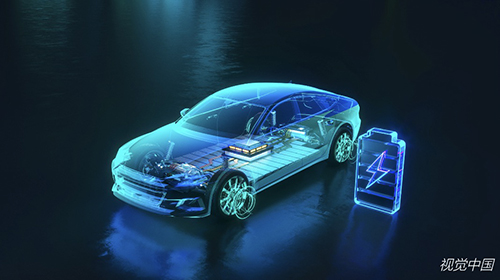
特斯拉、沃尔沃、奔驰三家外资车企大模型通过国家备案
Xin Hua Cai Jing· 2025-11-13 06:51
Core Insights - Recently, Tesla's xBot customer service, Volvo's XiaoWo intelligent assistant, and Mercedes-Benz's virtual assistant model have been approved for launch as the first batch of foreign enterprise large model products in China [1][4]. Group 1: Tesla xBot Customer Service - Tesla xBot customer service is designed to provide intelligent Q&A scenarios for Tesla owners and potential users, facilitating multi-turn conversations through the Tesla App's online customer service module [2]. - Users can inquire about vehicle prices, schedule test drives, check logistics information, seek usage advice, and find Tesla charging station locations, enhancing the customer service experience [2]. Group 2: Volvo XiaoWo Intelligent Assistant - The XiaoWo intelligent assistant targets users of the Volvo car app and WeChat mini-program, offering smart Q&A related to vehicle usage, purchasing, and maintenance [3]. Group 3: Mercedes-Benz Virtual Assistant - The Mercedes-Benz virtual assistant utilizes Douyin's "Yunque" AI model to provide voice dialogue, smart navigation, and cabin control for the newly launched pure electric CLA model, aiming to serve 70,000 users annually by 2026 [4]. - The CLA model features a new intelligent human-machine interaction system that pushes commonly used functions to the user interface, improving interaction efficiency by 50% compared to previous models, with a wake-up speed of 0.2 seconds and an end-to-end execution speed of 0.8 seconds, achieving a 1.5 times speed increase [4].

起点研究十周年感谢信:十年风雨兼程 感恩与您同行!
起点锂电· 2025-11-13 02:37
Core Viewpoint - The article celebrates the 10th anniversary of Qidian Research, highlighting its commitment to the renewable energy sector and the journey from a small dream to a significant research institution with professional value in the industry [2][3]. Group 1: Company Development - Qidian Research has evolved from focusing solely on lithium batteries to covering the entire renewable energy industry chain, including sodium batteries, solid-state batteries, energy storage, electric vehicles, and wind-solar storage [3]. - The company has developed a comprehensive service matrix consisting of 1 research institute, 1 exhibition, 6 media platforms, and 4 membership platforms, enhancing its capabilities and influence in the industry [3][21]. Group 2: Industry Achievements - Over the past decade, Qidian Research has provided services to over 1,000 leading companies in the renewable energy sector, including major players like CATL, Panasonic, and BYD, covering areas such as batteries, materials, equipment, and electric vehicles [8]. - The company has published numerous industry reports that have been widely cited, contributing valuable market analysis and technical insights to support decision-making for various enterprises [12]. Group 3: Future Outlook - The renewable energy industry is poised for unprecedented growth opportunities, driven by carbon neutrality goals, the proliferation of electric vehicles, and advancements in energy storage and AI technologies [14][15]. - Qidian Research aims to enhance its research capabilities and service levels, expand its research scope, and strengthen international cooperation to provide more valuable insights for the industry [15].

固态电池设备行业深度报告:产业化进程加速
材料汇· 2025-11-12 15:48
Core Viewpoint - Solid-state batteries exhibit superior performance and have a wide range of applications, with accelerated industrialization processes both domestically and internationally [5]. Group 1: Advantages of Solid-State Batteries - Solid-state batteries have higher energy density and better safety compared to liquid batteries, with energy density expected to reach over 500 Wh/kg [15][11]. - They can operate under extreme conditions without the risk of combustion or explosion due to the use of non-volatile solid electrolytes [15]. - The design of battery cells, modules, and systems is simplified due to the non-flowing nature of solid electrolytes, optimizing the PACK design [15]. Group 2: Solid Electrolyte Technologies - Solid electrolytes are the core component of solid-state batteries, with various technology routes including polymers, oxides, sulfides, and halides, with sulfides being the most widely accepted due to their high ionic conductivity [16][14]. - Each type of solid electrolyte has its advantages and disadvantages, with sulfides offering excellent processing advantages and flexibility [16]. Group 3: Production Challenges - The mass production of solid-state batteries faces challenges such as the interface contact between solid electrolytes and electrodes, as well as the engineering issues related to cost reduction [19][22]. - Key challenges include ensuring the stability of the solid-solid interface and the large-scale preparation of sulfide solid electrolytes, which significantly impact the commercial viability of solid-state batteries [22][19]. Group 4: Domestic and International Industry Landscape - Major domestic battery manufacturers have clarified their technology routes, focusing on sulfide electrolytes and aiming for small-scale production by 2027, with energy density targets around 400 Wh/kg [26][23]. - Internationally, companies in the US and Japan are advancing rapidly, with many planning to achieve large-scale production of solid-state batteries by 2030 [27][25]. - Policies in China are accelerating the development of solid-state batteries, with significant support from government agencies aimed at achieving commercial applications by 2026 [29][31].





国际五大车展,中国车企偏偏对东京“无感”?
Jing Ji Guan Cha Bao· 2025-11-12 07:23
Core Insights - Chinese automotive brands have significantly increased their presence at international auto shows, yet they have largely been absent from the Tokyo Motor Show, highlighting a paradox in their global strategy [1][4][5] Group 1: Participation in International Auto Shows - The 2025 Munich Motor Show saw 116 Chinese exhibitors, making up nearly one-third of all overseas participants, showcasing a full range of automotive technologies [2] - Chinese brands have also made notable appearances at the Paris Motor Show, outnumbering other countries' exhibitors, with companies like BYD and Geely gaining recognition [3] - Despite historical participation, no Chinese companies attended the recent North American International Auto Show, although they had previously made significant impacts in earlier years [2] Group 2: Challenges in the Japanese Market - Japan's automotive market has been described as one of the most closed globally, with a long history of protective policies that have hindered foreign brands [4][5] - Non-Japanese brands accounted for only 5% of new vehicle registrations in Japan from August 2024 to July 2025, indicating a strong domestic market preference [4] - The K-Car regulations create additional barriers for foreign brands, requiring unique product designs and significant investment for market entry [5] Group 3: Emerging Opportunities - The shift towards electric vehicles presents a potential breakthrough for Chinese brands in Japan, as local manufacturers lag in electric technology [6] - Sales of Chinese brands like BYD and Tesla in Japan have seen significant growth, with BYD's sales tripling in September 2023 [6] - The Tokyo Motor Show featured Chinese elements, including Nissan's new electric vehicle developed by a Chinese team, indicating a growing acceptance of Chinese automotive technology [7][8] Group 4: Changing Perceptions - A survey indicated that 28% of Japanese consumers under 35 are open to considering Chinese electric vehicles, a 12 percentage point increase since 2020, reflecting a shift in consumer attitudes [8] - Chinese companies are beginning to establish a foothold in Japan, with plans for localized products and partnerships to enhance market entry strategies [8]

老登审美席卷新能源车
远川研究所· 2025-11-11 13:07
Core Viewpoint - The article discusses the evolution of luxury in the electric vehicle (EV) market, highlighting how traditional luxury car definitions are being challenged and redefined by new energy vehicles (NEVs) that adopt retro aesthetics and offer high-end features at competitive prices [15][20][39]. Group 1: Electric Vehicle Market Trends - The penetration rate of domestic new energy vehicles has surged from 5% to nearly 50% over the past five years, driven by policy subsidies and improved electric infrastructure [15]. - The luxury segment of the EV market is characterized by models priced above 400,000 yuan, which have historically been dominated by traditional fuel vehicles [21][24]. - The article notes that the luxury car market, despite the rise of EVs, remains a stronghold for established brands like BBA (BMW, Benz, Audi), with only a few domestic brands making significant inroads [24][25]. Group 2: Redefining Luxury - The traditional luxury car classification system, based on engine power and comfort features, has been disrupted by the entry of electric vehicles that offer high performance at lower costs [19][20]. - New energy vehicles are increasingly providing "over-spec" configurations at lower price points, effectively democratizing luxury features that were once exclusive to high-end fuel vehicles [19][20]. - The article emphasizes that the aesthetic revival of traditional luxury design elements in EVs is not merely a nostalgic trend but a strategic move to redefine luxury in the context of electric mobility [13][39]. Group 3: Consumer Preferences and Market Dynamics - The consumer base for luxury vehicles is shifting, with a notable preference for classic design elements and high-quality materials, as seen in the interior designs of models like the Zeekr 9X and Lantu Taishan [10][12][38]. - The article highlights that the emotional value associated with luxury vehicles is becoming increasingly important, as consumers seek identity and status through their vehicle choices [38][40]. - The competitive landscape is evolving, with brands like Xiaomi leveraging traditional design cues to appeal to a more affluent demographic, indicating a shift in how new entrants approach the luxury market [32][34].

国内外固态进展加速,设备成竞争新高地
Guotou Securities· 2025-11-10 07:53
Investment Rating - The report suggests a continuous focus on the demand within the industry chain and new technological changes, highlighting key equipment companies such as XianDao Intelligent, LianYing Laser, NaKeNuoEr, HongGong Technology, YingHe Technology, HangKe Technology, LiYuanHeng, XianHui Technology, and HaiMuXing, while also noting interest in XiZhuang Co., Ltd. and MeiAi Technology [5] Core Insights - The solid-state battery technology is advancing rapidly both domestically and internationally, with significant collaborations and developments from companies like Solid Power, BMW, and Samsung SDI, aiming for higher energy density and safety [1] - Major automotive manufacturers are investing heavily in solid-state battery technology, with Mercedes achieving a real-world test range of 1205 kilometers using solid-state batteries, and Volkswagen planning to mass-produce solid-state batteries by 2030 [2][3] - The competition in the solid-state battery sector is intensifying, with equipment manufacturers playing a crucial role in the breakthrough of this technology, as evidenced by successful deliveries of solid-state battery production equipment to major clients [4] Summary by Sections - **International Developments**: Solid Power collaborates with BMW and Samsung SDI for solid-state battery validation, while Mercedes and Volkswagen are making strides in solid-state battery testing and production plans [1][2] - **Domestic Progress**: Companies like Guoxuan and Xiaopeng are advancing solid-state battery production, with Xiaopeng's new humanoid robot being the first to utilize solid-state batteries [3] - **Market Dynamics**: The report emphasizes the leap in energy density and safety of solid-state batteries compared to liquid batteries, indicating a competitive landscape where both domestic and international firms are vying for leadership in this technology [4]
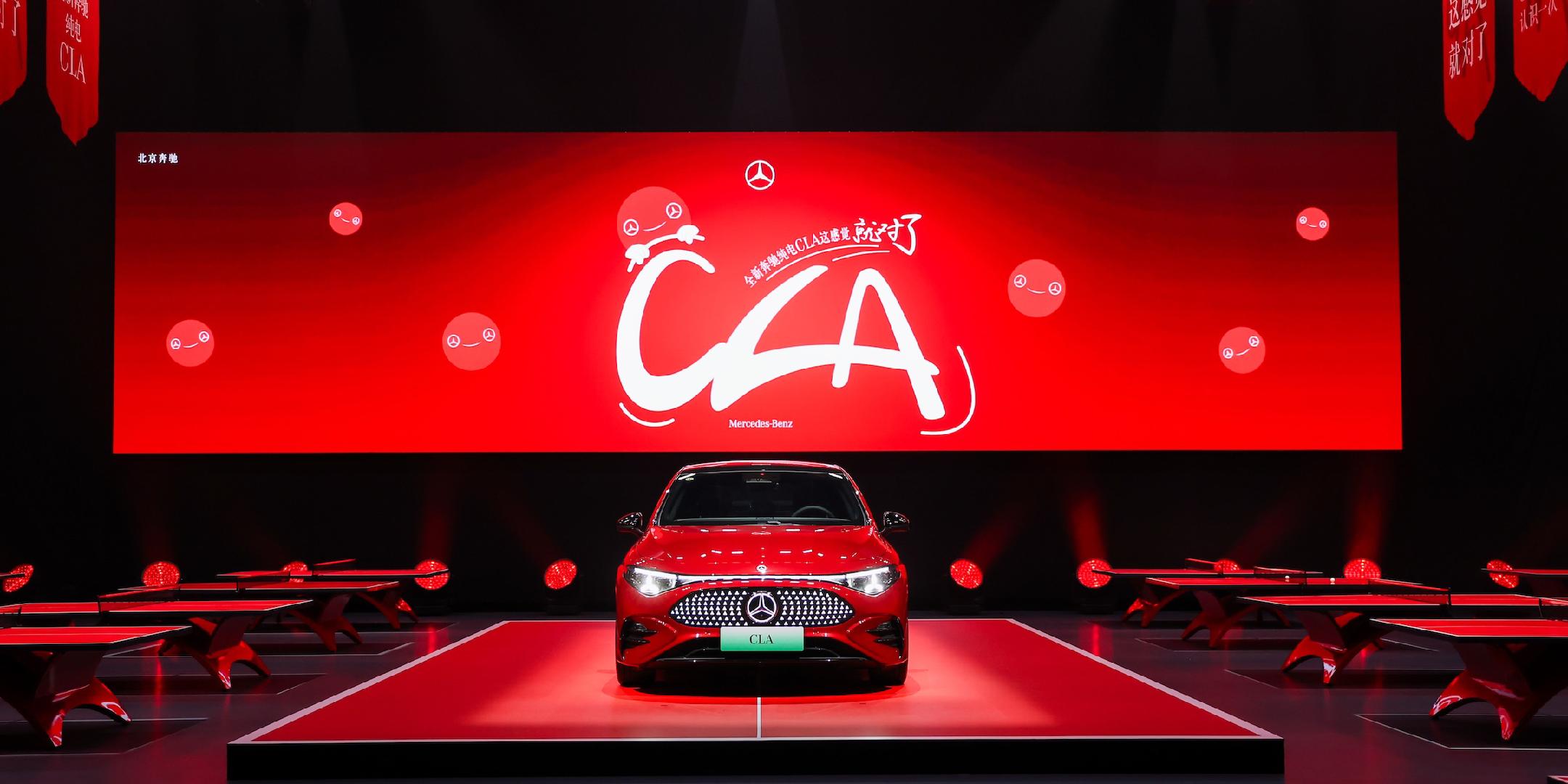
奔驰全新纯电CLA:用“中国配方”追逐年轻流量
Jing Ji Guan Cha Wang· 2025-11-10 03:24
Core Insights - The collaboration between table tennis player Wang Chuqin and Mercedes-Benz for the electric CLA model represents a strategic marketing move aimed at reshaping the brand's value system in China, focusing on technology and premium capabilities [2][3] - The Mercedes-Benz electric CLA is positioned as a core strategic product for the year, with a starting price of 249,000 yuan, which is 10,000 yuan lower than the pre-sale price, and features such as an 800V high-voltage architecture and a range of 866 kilometers [2][3] - Mercedes-Benz aims to narrow the technological gap with local brands by increasing local R&D and collaborating with domestic technology suppliers, a common goal among joint venture brands in the current market [2][3] Product Strength and Differentiation - The electric CLA emphasizes safety with standard features like 11 airbags and a five-star rating in China's electric vehicle fire safety index, along with leading the development of international standards for electromagnetic safety [3] - The marketing strategy includes engaging younger consumers, with the new leadership in the China region and a focus on appealing to the younger demographic through relatable marketing efforts [3][4] - The pricing strategy of the electric CLA, set below 250,000 yuan, is a direct response to the increasing price sensitivity of Chinese consumers and aims to compete in a crowded market alongside models like Tesla Model 3 and Zeekr 007 [4] Market Positioning and Challenges - Mercedes-Benz is adapting to a more localized approach in its marketing and product offerings, acknowledging the diminishing "technology halo" and the need to balance brand premium with cost control [4] - The entry into the competitive segment of electric vehicles means that Mercedes-Benz will face challenges in brand recognition, channel service, and user engagement in the Chinese market [4]