
华创证券

Search documents
从央行报告看居民“钱包”变化,2025年更热衷于存还是贷?
Xin Lang Cai Jing· 2026-01-20 00:13
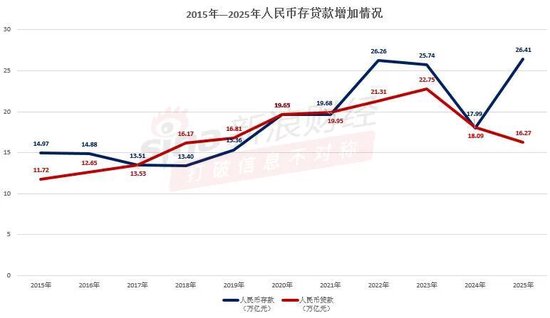
Core Viewpoint - The People's Bank of China (PBOC) reported that in 2025, the total increase in RMB deposits reached 26.41 trillion yuan, which is 8.42 trillion yuan more than the previous year, indicating a strong deposit growth despite a significant decline in household loan growth compared to previous years [1][2][5]. Group 1: Deposit Growth - The total RMB deposits increased by 26.41 trillion yuan in 2025, with a year-on-year increase of 8.42 trillion yuan [1][2]. - Household deposits rose by 14.64 trillion yuan, remaining stable compared to the previous year, while the increase is lower than the peak in 2022 [1][5]. - Non-bank financial institutions saw a deposit increase of 6.41 trillion yuan, marking the highest growth since 2015, with a year-on-year increase of 3.82 trillion yuan [1][8]. Group 2: Loan Growth - In 2025, RMB loans increased by 16.27 trillion yuan, which is approximately 1.82 trillion yuan less than the previous year, indicating a slowdown in loan growth [4][5]. - Household loans only increased by 441.7 billion yuan, significantly lower than the nearly 8 trillion yuan peak in 2021, reflecting weak demand in the housing market [4][5]. - The increase in loans in December 2025 was approximately 910 billion yuan, which is significantly higher than November's 390 billion yuan, suggesting a year-end push for credit [4]. Group 3: Monetary Supply - By the end of December 2025, M2 (broad money) reached 340.29 trillion yuan, growing by 8.5% year-on-year, while M1 (narrow money) grew by 3.8% [12][14]. - The M2-M1 gap expanded to 4.7%, the highest level since June 2025, indicating a slowdown in the conversion of funds into demand deposits [12][14]. - The increase in M2 is supported by government bond financing and the introduction of new policy financial tools, which have contributed to deposit growth [13][14].

股债期市场协同改革提升服务高质量发展质效
Zhong Guo Zheng Quan Bao· 2026-01-19 21:11
Core Viewpoint - The China Securities Regulatory Commission (CSRC) 2026 work meeting outlines a clear roadmap for deepening capital market reforms, focusing on enhancing the service quality of the stock, bond, and futures markets to support high-quality economic development [1][2]. Equity Market: Enhancing Inclusiveness and Adaptability - The primary focus is on improving the inclusiveness and adaptability of the multi-tiered equity market, which is crucial for linking technological innovation with industrial transformation [1][2]. - The meeting emphasizes the need to deepen reforms in the ChiNext and STAR Market, aligning financing reforms with the demands of industrial transformation and technological innovation [2]. - The reform approach is characterized by differentiated progress and collaborative efforts, shifting from "institutional construction" to "deepening execution" and "releasing effectiveness" [2]. Bond Market: Improving Quality, Adjusting Structure, and Expanding Scale - The bond market is tasked with the mission of improving quality, adjusting structure, and expanding total volume, highlighting its role in optimizing structure and enhancing service precision for national strategies [3]. - Innovative bond types such as sci-tech bonds and green bonds are expected to continue expanding, with supportive measures likely to increase [3]. - The public REITs market is set to expand into the commercial real estate sector, which is anticipated to provide strong support for revitalizing existing assets and exploring new development models [3][4]. Futures Market: Strengthening Regulation and Quality Development - The futures market reform is aimed at steady progress and quality development, with a particular emphasis on strengthening the regulation of the linkage between futures and spot markets [5][6]. - The meeting highlights the need to enhance the pricing mechanism and risk management functions of the futures market to better serve the spot industry and national strategies [5]. - There is a focus on expanding the range of specific futures products and increasing internationalization while ensuring risk control [5][6].
【资产配置快评】2026年第3期:Riders on the Charts:每周大类资产配置图表精粹-20260119
Huachuang Securities· 2026-01-19 14:46
Group 1: Inflation and Commodity Performance - The total return ratio of gold to U.S. Treasuries reached 0.41 by December 2025, indicating that high inflation risks may have been fully priced in, as historical comparisons show similar levels during periods of high inflation with CPI at 9.7% and 8.3%[5] - The S&P Goldman Sachs Commodity Index fell by 1% in the first nine months of 2025, while the CRB Commodity Index rose by 1.7%, reflecting a subdued performance in commodities due to the contraction of the U.S. "twin deficits" from 11.5% to 9.8% of GDP[11] - The gold-to-silver price ratio dropped to 51 as of January 16, 2026, below the 60-year average of 59, suggesting potential downward pressure on gold prices[8] Group 2: U.S. Debt and Interest Rates - The weighted average yield of U.S. Treasuries rose to 3.36% by Q3 2025, the highest since Q2 2009, while interest expenses as a percentage of GDP increased to 3.86%[14] - The U.S. mortgage effective rate was 4.2% as of Q3 2025, which is 2.1% lower than the 30-year mortgage rate, indicating a potential overestimation of the pressure on household consumption from high mortgage rates[17] - The weighted duration of U.S. Treasuries decreased from 72 months to 71.3 months, alleviating some pressure on government interest expenses[14] Group 3: Equity Risk Premium and Market Indicators - The equity risk premium (ERP) for the CSI 300 Index was 4.1% as of January 16, 2026, which is below the historical average by one standard deviation, indicating potential for valuation uplift[20] - The total return ratio of domestic stocks to bonds was 29.3 as of January 16, 2026, above the past 16-year average, suggesting increased attractiveness of equity assets relative to fixed income[30] - The forward arbitrage return for China's 10-year government bonds was 34 basis points as of January 16, 2026, which is 64 basis points higher than the level in December 2016[22]
中小行“开门红”购债逻辑生变:从博弈利得到锁定票息
Xin Lang Cai Jing· 2026-01-19 12:52
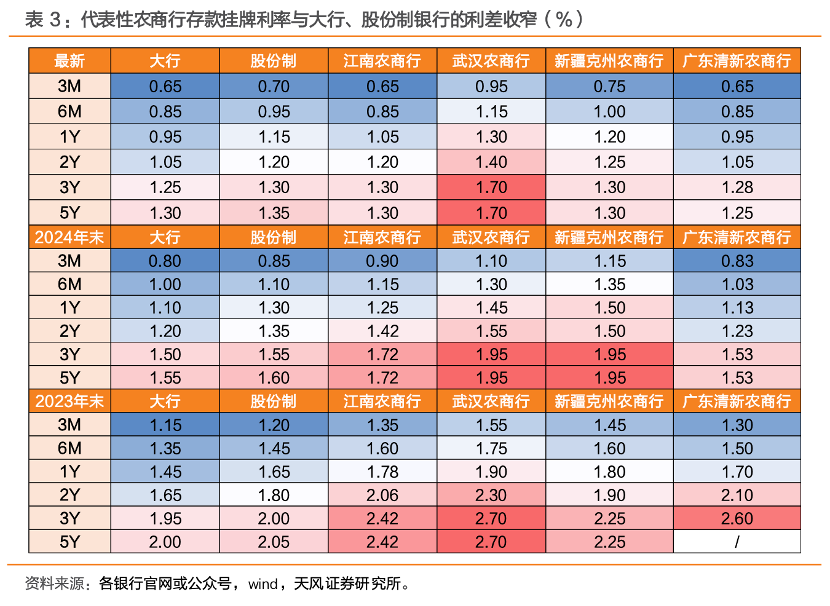
Core Viewpoint - The trend of small banks purchasing bonds is expected to continue, but the underlying logic is changing due to a weakening of their liability advantages and a decrease in deposit attraction, which constrains their demand for bond allocation [1][5][9]. Group 1: Small Banks' Bond Purchasing Trends - Small banks have shown a consistent increase in bond investment, with their bond investment balance reaching 46.41 trillion yuan by the end of May 2025, marking an 11-month continuous rise [2]. - Despite the current volatility in the bond market, many institutions believe that the trend of small banks purchasing bonds will persist during the "opening red" period [3]. - The first quarter has historically seen small banks, particularly rural commercial banks, maintain a high loan-to-deposit spread, leading them to invest heavily in bonds to enhance performance [3][4]. Group 2: Changes in Deposit Attraction - The attractiveness of deposits from small banks has diminished, leading to a reduction in their ability to attract deposits through high-interest rates [5]. - Recent observations indicate that the interest rate gap between small banks and large banks is narrowing, with some small banks resorting to non-price methods such as physical rewards to attract deposits [5]. - The decline in deposit rates for small banks is expected to weaken the deposit diversion effect from large banks, impacting their overall deposit absorption capabilities [5][6]. Group 3: Market Environment and Investment Strategies - The bond market has entered a phase of volatility after two years of a bull market, with the yield on 10-year government bonds rising approximately 25 basis points to 1.852% by the end of 2025 [7]. - Many banks have reported unrealized losses on bond assets due to rising interest rates, affecting their non-interest income [7]. - In response to the changing market conditions, small banks are likely to adopt a more conservative investment strategy focused on holding bonds to maturity for interest income rather than speculative trading [8][9]. Group 4: Future Expectations - The first quarter of 2026 is anticipated to see a concentration of bond purchases by rural commercial banks, driven by seasonal deposit inflows and the need to secure interest income early [8]. - Analysts suggest that the configuration process for bond investments has already begun, supported by favorable conditions such as increased deposit growth and regulatory adjustments [9].
非银存款同比少减2.84万亿元,券商分析师解读
券商中国· 2026-01-18 09:38
Core Viewpoint - The financial data for December 2025 indicates a decrease in non-bank deposits by 330 billion yuan, with a year-on-year reduction of 2.84 trillion yuan, raising market concerns about the implications for the stock market and financial institutions [1][2][3]. Group 1: Non-Bank Deposit Trends - Non-bank deposits decreased by 330 billion yuan in December, which is significantly lower than the average reduction of 532.7 billion yuan in 2022 and 2023, indicating a notable shift in market dynamics [2]. - Analysts attribute the high year-on-year reduction to a low base effect from December 2024, when non-bank deposits saw a historic drop of 3.17 trillion yuan due to regulatory changes [1][2]. - The overall non-bank deposit scale reached 34.5 trillion yuan by the end of December, accounting for 10.5% of total deposits, reflecting a slight decrease in proportion compared to previous years [2]. Group 2: Market Influences - The reduction in non-bank deposits is partly attributed to seasonal factors, such as the return of funds to deposits from off-balance-sheet products and the influence of a vibrant stock market [3][4]. - Analysts suggest that the capital market's performance, particularly the "924" market rally, has led to significant capital inflows, impacting the overall deposit landscape [3][5]. - The trend of "deposit migration" continues, but the pathways and timing of fund flows may become more complex due to varying asset return expectations and market conditions [3].

收益差择时系列之二:如何在A股指数与恒生指数构建多空模型?
Huachuang Securities· 2026-01-16 11:26
金融工程 证 券 研 究 报 告 【专题报告】 收益差择时系列之二:如何在 A 股指数与恒 生指数构建多空模型? ❖ 摘要 本文是华创金工在港股指数量化择时研究的第三篇,上一篇《收益差择时 模型:基于 A 股指数与恒生指数的实证》构建了上下行收益差的多头策略, 本文的目标是构建上下行收益差的多空策略。 上下行收益差多空策略在 A 股指数上的年化收益与夏普比率基本上超越 了各自上下行收益差多头策略。尤其在上证 50 指数、沪深 300 指数、上证 180 指数、中证 100 指数大盘风格指数的年化和夏普均能显著超越各自多头策略, 历史回溯表现优秀。 在恒生指数上面,上下行收益差多空策略与成交额上下行收益差多空策略 表现并不尽入人意。因此我们另辟蹊径,选择上证 50 指数作为恒生指数的相 似指数,构建了上下行收益差相似多头策略与上下行收益差相似多空策略。 上下行收益差相似多头策略在恒生指数(HSI)表现如下,年化收益为 8.86%,最大回撤为 41.72%,夏普比率 0.4,胜率 48.80%,盈亏比 1.93。上下 行收益差相似多头策略在恒生国企指数(HSCEI)表现如下,年化收益为 12.3%, 最大回撤为 ...
杰瑞股份(002353) - 2026年1月15日-1月16日投资者关系活动记录表
2026-01-16 08:42
Group 1: Company Overview and Investor Relations - The company conducted investor relations activities including site visits and meetings with representatives from various financial institutions [2][3] - Key participants included representatives from institutions such as 富国基金 (Fidelity Fund), 广发证券 (Guotai Junan Securities), and 中再资产 (China Re Asset) [2] Group 2: Gas Turbine Sales and Performance - The company signed a $106 million contract for gas turbine generator sales, equivalent to approximately ¥742 million, aimed at North American data centers and industrial power supply [3] - The success in North America is attributed to product performance, business experience, delivery capability, and comprehensive service strength [3] Group 3: Supply Chain and Strategic Partnerships - The company has established long-term partnerships with major gas turbine manufacturers like Siemens and Kawasaki Heavy Industries, enhancing its global supply chain [3][4] - The focus is on building a diversified gas turbine supply system to improve supply chain resilience and provide integrated power solutions [3] Group 4: Future Business Outlook - The company aims to deepen its involvement in three key areas: data centers, industrial energy, and new power systems, through continuous technological innovation and product iteration [4] - Plans include developing integrated solutions covering power generation, distribution, and thermal management to enhance energy system safety and efficiency [4] Group 5: Oil and Gas Engineering Services - The company emphasizes selecting high-quality oil and gas engineering projects based on profitability and cash flow criteria [5] - Successful projects include collaborations with Kuwait Oil Company and various other significant EPC projects, enhancing market recognition [5] Group 6: Natural Gas Business Development - To support the growth of its natural gas equipment business, the company has established the杰瑞天然气工业园 (Jereh Natural Gas Industrial Park) and is expanding capacity through various measures [6] - The company is also focusing on talent recruitment and training to ensure efficient operations in research, design, and manufacturing [6] Group 7: Site Visit and Facility Overview - The site visit included an introduction to the geographical layout and functional planning of the industrial park, showcasing high-end equipment manufacturing and natural gas facilities [7] - Key equipment demonstrated included fracturing equipment, cementing equipment, and gas turbine generators, highlighting the company's technological capabilities [7]

解构2025金融收官数据:M2反弹源于理财回流,社融降速受累基数,信贷结构延续“企强民弱”
Hua Er Jie Jian Wen· 2026-01-16 01:08
Core Viewpoint - The financial data for 2025 marks a significant point in China's macroeconomic transition, highlighting a divergence between M2 growth and social financing, indicating a shift from simple monetary expansion to a more precise restructuring of financial resources [1] Group 1: Social Financing Dynamics - The decline in social financing (社融) is not alarming; December saw a new social financing of 2.21 trillion yuan, a year-on-year decrease of 645.7 billion yuan [2] - The primary drag on social financing comes from government bonds, which saw a year-on-year decrease of 1.07 trillion yuan, attributed to a base effect from the previous year [3] - Direct financing channels are gaining strength, with corporate bond financing in December increasing by over 170 billion yuan year-on-year, driven by "hard technology" bonds [4][5] Group 2: Credit Structure Analysis - The credit structure shows a "K-shaped" dynamic, with strong corporate borrowing contrasted by weak household borrowing [6] - Corporate loans demonstrated unexpected resilience, with short-term loans increasing by 370 billion yuan in December, significantly higher than previous years [7] - In contrast, household loans are still in a repair phase, with short-term loans decreasing year-on-year, influenced by high real interest rates [8][9] Group 3: M2 and M1 Trends - M2 growth rebounded to 8.5%, primarily due to structural adjustments in bank liabilities rather than asset expansion [10][11] - M1 remains low at 3.8%, affected by a high base and a decrease in government contributions, although signs of "residential deposit migration" are emerging [12] Group 4: Policy Outlook for 2026 - The policy landscape for 2026 is expected to shift from a singular focus on monetary policy to a combination of fiscal and monetary strategies [13] - Monetary policy may see further easing during the upcoming Two Sessions, with potential for rate cuts [14] - Fiscal policy is anticipated to play a crucial role in stabilizing growth, with significant projects expected to be prioritized in early 2026 [15] - Improved liquidity conditions in the capital market are expected as M1 growth rebounds, potentially enhancing equity asset valuations [16] Conclusion - The financial data for 2025 reflects a complex interplay of factors, indicating a transition phase where structural optimization in corporate financing and direct financing channels is taking place, setting the stage for new growth logic in 2026 [17][18]
传媒板块开年大涨,分析师不够用了!东吴、国盛等多家券商打响“抢人大战”
Mei Ri Jing Ji Xin Wen· 2026-01-15 13:56
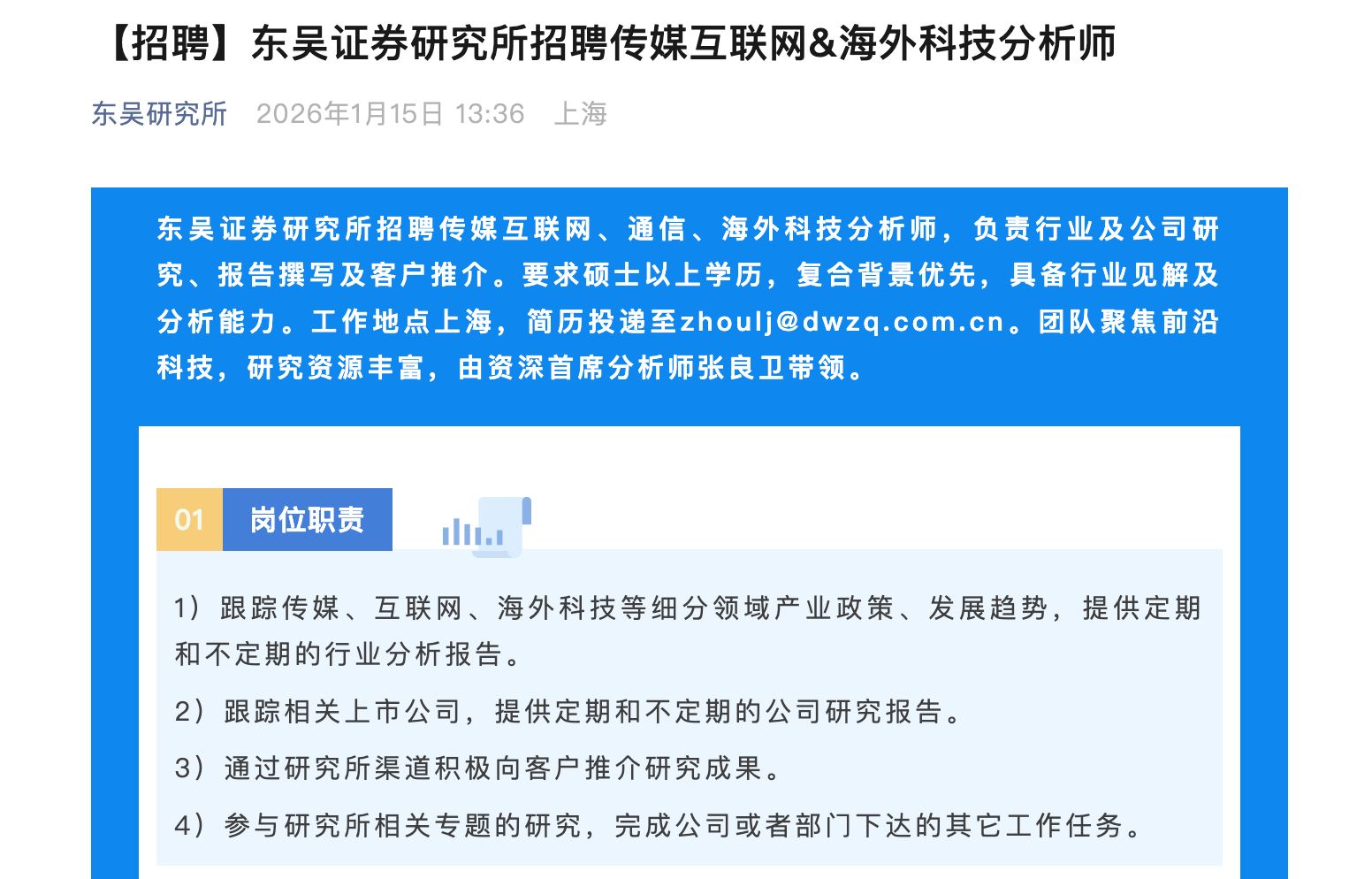
Group 1 - The media sector has experienced a significant resurgence in early 2026, driven by the strong catalyst of the Generative Engine Optimization (GEO) concept, with the media industry index rising by 21.29% in just half a month, making it the top-performing sector in the market [1][2] - The surge in the media sector has led to a "talent war" among brokerage firms, with companies like Dongwu Securities, Guosheng Securities, and Everbright Securities actively recruiting analysts to capitalize on the growing market interest [2][7] - The "New Yi Zhong Tian" combination, consisting of Yidian Tianxia, Zhongwen Online, and Tianlong Group, has seen stock price increases exceeding 40% within the first half of January, with Yidian Tianxia's stock price even doubling [2][8] Group 2 - Dongwu Securities announced plans to recruit analysts specializing in media internet, telecommunications, and overseas technology, led by renowned analyst Zhang Liangwei, who has received multiple accolades for his research [3][6] - The recruitment trend began in late 2025, with major firms like CICC posting job openings for media analysts focused on sub-sectors such as online gaming and advertising [6][7] - High-profile analyst movements have been noted, including Liu Xin joining Tianfeng Securities and Yao Lei moving to Huachuang Securities, reflecting the industry's changing dynamics and the increasing demand for experienced analysts [7][8] Group 3 - The media industry has faced a challenging decade, with significant downturns from 2015 to 2022, but has seen a turnaround starting in 2023, with a notable increase in investment interest due to advancements in AI technology [7][8] - Analysts are now expected to possess a keen sensitivity to technological developments and market trends, solid research capabilities on industry fundamentals, and a refined ability to identify quality investment targets [8]



三夫户外:接受华创证券等投资者调研
Mei Ri Jing Ji Xin Wen· 2026-01-15 12:07
每经头条(nbdtoutiao)——不到20万元,就能买特斯拉了?"廉价版"Model 3或进入中国市场,续航里 程480公里!关于自动驾驶,美国市场也有大调整 每经AI快讯,三夫户外发布公告称,2026年1月14日15:30-16:30,三夫户外接受华创证券等投资者调 研,公司董事会秘书秦亚敏,证券事务代表牛晓敏参与接待,并回答了投资者提出的问题。 (记者 曾健辉) ...
