雷鸟创新

Search documents
CES硬核科技刷屏,广东力量秀出“中国方案”
21世纪经济报道· 2026-01-09 07:53
Core Viewpoint - The CES 2026 showcased significant advancements in technology, particularly highlighting the strong presence and innovation of Guangdong enterprises in the global tech landscape [1][2]. Group 1: Guangdong's Presence at CES - Guangdong had a remarkable representation at CES, with 837 companies from mainland China and 530 from Guangdong, including 370 from Shenzhen, making up 44.2% of the mainland exhibitors [1]. - The event highlighted Guangdong's innovation in various sectors, including smart hardware, AI-integrated products, and robotics, establishing the region as a key player in global tech innovation [1][2]. Group 2: Robotics and AI Innovations - The emergence of embodied intelligent robots was a focal point, with companies like SUTENG showcasing their autonomous delivery robot capable of performing nearly 20 complex tasks [3][5]. - The robotics industry is transitioning from mere demonstrations to practical applications, with companies like ZHONGQING making strides in real-world scenarios such as logistics and public services [5][6]. Group 3: Energy Solutions and Smart Technologies - Energy tech companies presented solutions for smart and decentralized energy management, including products like the Explorer 1500 Ultra and innovative outdoor solar solutions [8][9]. - The integration of AI in energy solutions is aimed at enhancing efficiency and supporting the transition to automated driving technologies [8][9]. Group 4: Globalization and Market Strategy - Guangdong enterprises are evolving from simple product exports to comprehensive global strategies that include technology, branding, and ecosystem development [12][15]. - Companies like TCL and CHUANGXIANG SANWEI are focusing on localizing their operations and building service ecosystems in international markets to enhance brand recognition and customer engagement [12][13]. Group 5: Shifting Market Dynamics - The narrative of Guangdong companies has shifted from being followers to leaders in the global tech arena, with a focus on technological innovation and brand influence [17][19]. - The efficient supply chain in Guangdong is a critical factor enabling rapid product iteration and technological advancements, positioning these companies favorably in the competitive landscape [21].

电子行业双周报(2025、12、26-2026、01、08):1月TV面板价格全面调涨-20260109
Dongguan Securities· 2026-01-09 07:38
Investment Rating - The industry investment rating is not explicitly stated in the provided content, but the electronic sector is performing well, with a ranking of 4th in the Shenwan industry for January [10][11]. Core Insights - The electronic sector has shown a cumulative increase of 6.77% in January, outperforming the CSI 300 index by 4.44 percentage points [10]. - The price of TV panels has increased across various sizes, driven by strong procurement momentum from certain TV brands, with expectations for further price improvements due to upcoming demand from new policies and international events [27]. - The SW electronic sector's PE TTM (excluding negative values) is at 64.05 times, placing it in the 98.43 percentile for the past five years and 98.24 percentile for the past ten years [15]. Summary by Sections Market Review and Valuation - The Shenwan electronic sector has risen by 5.84% over the past two weeks, outperforming the CSI 300 index by 3.79 percentage points, ranking 6th among Shenwan industries [10]. - The sector's performance in January shows a cumulative increase of 6.77%, again outperforming the CSI 300 index by 4.44 percentage points, ranking 4th [10]. Industry News - The Ministry of Industry and Information Technology and other departments have issued an implementation opinion for the "Artificial Intelligence + Manufacturing" initiative, aiming for significant advancements in AI technology and applications by 2027 [20]. - NVIDIA's CEO showcased the new AI platform Rubin at CES, which includes advanced chips and is set to enter full production, with products expected to launch in the second half of 2026 [20]. - The price of LCD TV panels has increased by $1 per unit for various sizes, driven by strong demand and upcoming production cuts from major manufacturers [27]. Company Announcements - Companies like Shengyi Technology and Defu Technology have made significant announcements regarding investments and partnerships to enhance their production capabilities and product offerings [18][21]. Industry Data - Global smartphone shipments reached 323 million units in Q3 2025, marking a year-on-year growth of 2.57% [22]. - In November 2025, China's smartphone shipments totaled 28.75 million units, reflecting a year-on-year increase of 1.98% [22]. - The prices for various sizes of LCD panels in December 2025 were reported, with slight changes in pricing compared to the previous month [23]. Weekly Perspective - The report indicates a positive outlook for TV panel prices due to strong demand and upcoming production adjustments by major manufacturers, suggesting further price increases in the near future [27].
补贴与展会双重加持,智能眼镜迎来“成人礼”
Jin Rong Jie· 2026-01-09 06:34
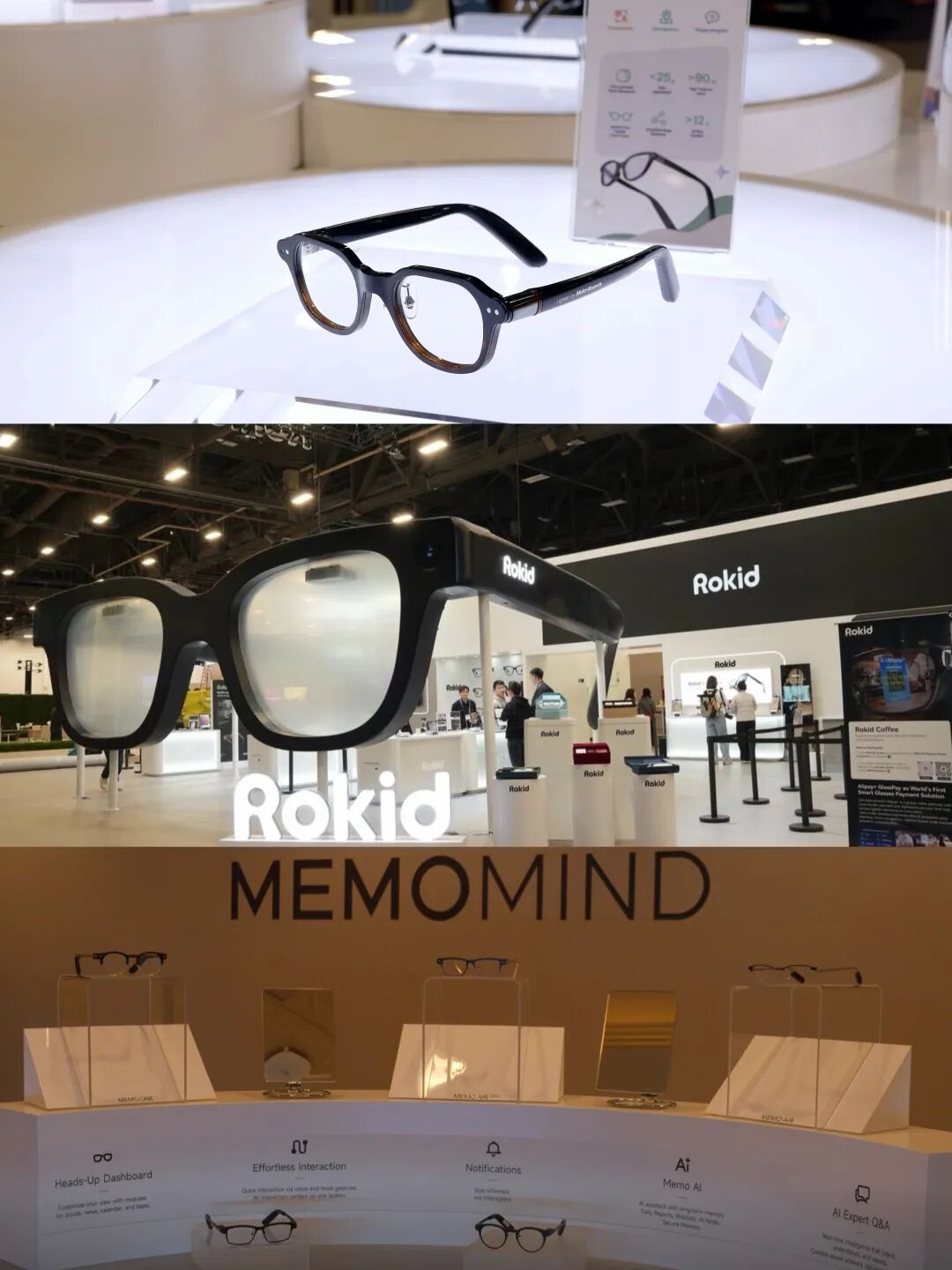
Core Insights - The Chinese government has introduced a subsidy for consumers purchasing smart glasses priced under 6000 yuan, offering a 15% discount, with a maximum of 500 yuan [2] - The CES 2026 event has showcased a significant shift towards AI glasses, with various companies presenting innovative products that enhance user experience [3][4] Policy Support - The new policy, effective from 2026, includes smart glasses in the consumer goods trade-in subsidy program, reflecting government support for the AI terminal industry [2] - This policy change indicates a move from conceptual products to mainstream consumer acceptance of smart glasses [2] Exhibition Highlights - CES 2026 featured 4112 companies, with major players like Nvidia, AMD, and Hisense showcasing their latest AI glasses [3] - The event highlighted AI as a core driver in product development, moving beyond being an additional feature [3] Technological Differentiation - Companies are adopting various technological paths, with some focusing on ultra-lightweight designs while others emphasize functional integration [4] - Innovations include modular designs and advanced interaction technologies, such as Meta's EMG handwriting recognition [4] Practical Applications - The maturity of smart glasses is evident, with many products weighing under 30 grams and offering diverse interaction methods [5] - Companies are exploring accessibility features, such as special subsidies for visually impaired users [6] Market Opportunities - The subsidy policy is expected to lower the entry barrier for consumers, making smart glasses more attractive [6] - Different market segments are emerging, with companies like BleeqUp targeting professional sports and others like MemoMind focusing on everyday use [6] Future Trends - The smart glasses market is shifting from general-purpose devices to specialized solutions tailored for specific scenarios [7] - The integration of AI models is expected to transform smart glasses into proactive assistants, enhancing user experience and driving market growth [7]
CES 2026观察:AI眼镜并没有迎来iPhone时刻
Tai Mei Ti A P P· 2026-01-09 06:23
Core Insights - The CES 2026 highlighted AI glasses as a core topic, but failed to deliver groundbreaking innovations, indicating that the industry is still struggling to transition from niche products to mainstream necessities [1] - Despite promising growth projections, the AI glasses market has not yet crossed the gap from "geek toys" to "essential consumer products," suggesting that the anticipated explosion in demand may be more of an industry fantasy [1] Group 1: Exhibition Highlights - Several manufacturers showcased their innovations at CES, revealing both strengths and limitations in the current AI glasses market [2] Group 2: Company Innovations - Meta introduced the Ray-Ban Display series, featuring a micro-display and improved voice interaction, but faced limitations in field of view and battery life, indicating a focus on incremental innovation rather than breakthrough technology [3] - Thunder Innovation launched the X3 Pro Project eSIM, enabling independent communication and AI interaction, but its weight and eSIM subscription challenges may hinder widespread adoption [4] - XREAL presented the 1S model with advanced spatial computing capabilities, but its high price point and lack of quality AR content limit its market reach [5] - Quark's AI glasses S1 integrated various Alibaba services but struggled with competitive pricing and compatibility issues, reflecting a tension between high specs and market viability [7] - Rokid's lightweight glasses achieved a record low weight of 49 grams and strong sales, but compromised on camera quality and field of view, positioning it as a smart assistant tool rather than a full-fledged device [8] Group 3: Industry Challenges - The AI glasses industry faces three main barriers: technological limitations, unclear use cases, and fragmented ecosystems, which hinder the potential for explosive growth [9][10] - The "impossible triangle" of lightweight design, long battery life, and high performance remains unsolved, with current products often falling short of user expectations [9] - The lack of a unified operating system and collaboration with traditional optical retailers further complicates market development, leading to inconsistent product quality and consumer confusion [10] Group 4: Future Outlook - The AI glasses market is expected to remain in a phase of technological iteration and market education, with significant breakthroughs potentially taking 3-5 years [11] - The development of specialized low-power chips and advancements in optical technology are seen as critical for overcoming current limitations [11] - Price reductions and increased competition from companies like Xiaomi and Quark may drive market growth and improve product affordability [11] - The industry awaits a "killer app" or a revolutionary product that combines technological innovation, practical use cases, and ecosystem compatibility to trigger widespread adoption [12]


CES硬核科技刷屏,广东力量秀出“中国方案”
2 1 Shi Ji Jing Ji Bao Dao· 2026-01-09 06:05
Core Insights - The CES 2023 showcased significant technological innovations, particularly highlighting the strong presence of Guangdong companies, which accounted for a substantial portion of the exhibitors [1][10] - The event emphasized the transition of robotics and AI technologies from experimental stages to practical applications, with Guangdong firms leading this shift [3][4][14] Group 1: Guangdong's Presence at CES - A total of 3,302 companies participated in CES 2023, with 837 from mainland China, 127 from Taiwan, and 98 from Hong Kong; Guangdong alone had over 530 exhibitors, including 370 from Shenzhen, representing 44.2% of mainland China's participation [1] - Guangdong companies showcased a range of innovative products, including smart robots, 3D printing technologies, and AI-integrated devices, reflecting their growing influence in global tech innovation [1][10] Group 2: Robotics and AI Innovations - The event featured significant advancements in embodied intelligent robots, with companies like SUTENG showcasing a delivery robot capable of performing complex tasks autonomously, highlighting the practical applications of AI in logistics and service sectors [3][4] - The robotics industry is moving towards large-scale validation, with companies focusing on real-world productivity rather than just technological demonstrations, indicating a maturation of the sector [4][5] Group 3: Energy Technology and Smart Solutions - Energy technology firms presented solutions for smart and decentralized living, with products like the Explorer 1500 Ultra and Jackery Solar Gazebo, which integrate energy independence into household infrastructure [5][6] - The emergence of intelligent charging networks for autonomous vehicles was also highlighted, showcasing the integration of AI in future transportation solutions [6] Group 4: Globalization and Market Strategy - Guangdong companies are increasingly adopting comprehensive globalization strategies, moving beyond simple product exports to include technology, brand, and ecosystem development [7][10] - Companies like TCL and EcoFlow are focusing on localizing operations and building service ecosystems in international markets to enhance brand recognition and customer engagement [8][9] Group 5: Supply Chain and Innovation - The robust supply chain ecosystem in Guangdong is a critical factor in the rapid iteration and commercialization of innovative products, enabling companies to achieve significant technological breakthroughs [13][14] - The emphasis on R&D investment and the efficiency of the supply chain have strengthened the competitive position of Guangdong firms in the global market [13]
雷军回应小米千万技术大奖;雷鸟创新发布首款eSIM AR眼镜丨智能制造日报
创业邦· 2026-01-09 04:48
Group 1 - Xiaomi's Lei Jun announced the annual technology award, with a total of 154 projects competing this year, and the top award going to the Xuanjie O1 team. Since 2020, Xiaomi has awarded 75 million yuan in total [2] - Xiaomi has committed to investing 100 billion yuan in R&D over the past five years, with actual spending around 105 billion yuan. The company plans to invest 200 billion yuan in the next five years to enhance core technologies such as chips, OS, and AI [2] - The three key points emphasized by Lei Jun include: prioritizing technology, the importance of engineer thinking, and creating a top-tier platform for talented engineers to enhance their sense of achievement and happiness [2] Group 2 - TSMC's 3nm process is in high demand, leading to increased pricing and a temporary halt on new project initiations. The current capacity is fully loaded, and expansion to meet demand is challenging in the short term [2] - Tesla's Shanghai Gigafactory has produced its 5 millionth electric drive system, featuring a three-in-one integrated system that enhances energy efficiency and performance [2] - Raybird Innovation launched the world's first eSIM-enabled AR glasses, allowing independent functionality without a smartphone or WiFi, supporting various applications like real-time AI dialogue and streaming [2]


广东AI硬件全链出海 众擎机器人亮相国际消费类电子产品展
2 1 Shi Ji Jing Ji Bao Dao· 2026-01-09 03:39
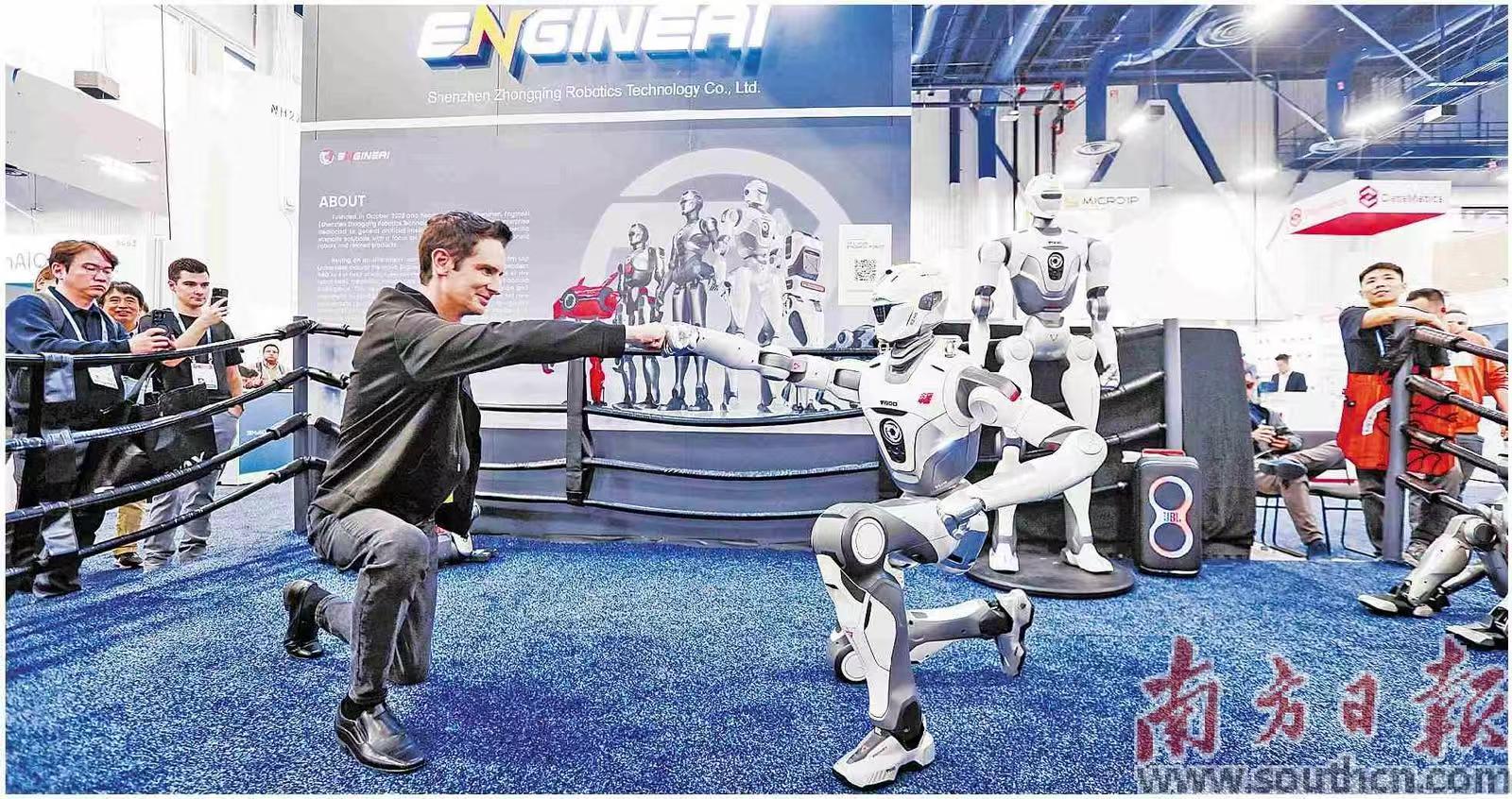
Core Insights - The article highlights the emergence of AI as a foundational element in consumer electronics, with a significant growth forecast for AI technology hardware in 2026 [2][3]. Group 1: Company Highlights - Shenzhen Zhongqing Robot Technology Co., Ltd. showcased its humanoid robot T800 at CES 2026, attracting considerable attention with its interactive capabilities [2][5]. - The T800 robot features advanced technology, including a peak torque of 450N·m, equivalent to the power of a high-end car engine, and a solid-state battery with a 4-5 hour runtime [6][7]. - The company has completed multiple technical validations for the T800, anticipating sales of dozens to hundreds of units in 2026 [7]. Group 2: Industry Trends - The CES 2026 event emphasizes the integration of AI into physical products, marking a shift from conceptualization to practical applications [5][8]. - Guangdong AI hardware companies are moving towards global markets, focusing on real product offerings and collaborative solutions with international partners [4][11]. - The article notes a growing interest from international clients in Chinese robotics technology, indicating a rising global demand for these innovations [11]. Group 3: Supply Chain and Globalization - Guangdong's efficient supply chain, characterized by a "half-hour supply chain" model, allows for rapid response to global customization demands [12][15]. - Companies are not merely exporting products but are engaging in global ecosystem building, enhancing their competitive edge in the AI hardware market [16][17]. - The article mentions that AI is no longer seen as a standalone product but as a core operating system driving various devices, reshaping the competitive landscape [17][18]. Group 4: Future Outlook - The article suggests that the year 2026 will be pivotal for AI hardware, with companies aiming to optimize product matrices and align with global market needs [16][21]. - Guangdong enterprises are positioned to redefine "Chinese innovation" in the global market, leveraging their technological strengths and ecological strategies [21].

毛戈平股东或套现14亿港元,用于改善个人生活和投资;万科:因到龄退休,郁亮辞职;宜家中国回应关店丨邦早报
创业邦· 2026-01-09 00:08
Group 1 - The core viewpoint of the article highlights significant developments in various companies and industries, including IPOs, leadership changes, and market strategies [2][4][15] Group 2 - Zhiyuan AI went public on January 8, 2026, with a goal to become a leading global model enterprise by 2026, as stated by its founder and chief scientist, Tang Jie [2] - Vanke A announced the resignation of Yu Liang due to retirement, effective January 8, 2026, marking a significant leadership change in the company [4] - The founder's family of Maogeping plans to reduce their stake by 3.51%, amounting to approximately 1.41 billion HKD, to improve personal finances and invest in the beauty industry [4][7] Group 3 - Xiaomi's Lei Jun announced a significant investment in R&D, committing 200 billion CNY over the next five years to enhance core technologies, including AI and chips [7] - Multiple car manufacturers are launching promotional activities to counter the impact of new electric vehicle purchase taxes, with Tesla and GAC Group leading the charge [8] - Alphabet Inc. has surpassed Apple in market capitalization, becoming the second-largest company globally, reflecting its strong position in the AI sector [8] Group 4 - JD.com established the "Chameleon Business Unit" to accelerate the commercialization of AI technologies, with new AI products set to launch soon [13] - Alibaba Cloud introduced a multimodal interaction development kit aimed at AI hardware, integrating various foundational models for diverse applications [20] - Ford plans to launch an L3 level driving assistance system by 2028, initially in a new affordable electric pickup truck [21]

直击 CES 2026 谁将成为超级硬件?
Shen Zhen Shang Bao· 2026-01-08 18:05
Group 1: CES 2026 Overview - The International Consumer Electronics Show (CES 2026) is being held in Las Vegas from January 6 to 9, featuring over 4,100 exhibitors and an expected attendance of over 150,000 [1] - CES serves as a key platform for technology giants to launch products and offers insights into future technology trends and industry opportunities [1] Group 2: Smart Glasses as a Hot Category - Smart glasses are highlighted as a popular category at CES 2026, with multiple AI and AR glasses manufacturers showcasing their latest products [2] - Experts predict that by 2026, smart glasses equipped with holographic displays will become mainstream consumer products [2] - Companies like Thunderbird Innovation, INMO, and XGIMI are presenting new smart glasses, including the eSlM smart glasses and Memo One, which features Micro LED dual display technology [2][3] Group 3: Market Projections for Smart Glasses - IDC forecasts that the smart glasses market will reach a significant turning point in 2026, with global shipments expected to exceed 23.687 million units, and China's market projected to surpass 4.915 million units [3] Group 4: Broader Trends in Smart Hardware - Smart hardware, including smart glasses, robots, chips, PCs, and smart home devices, is receiving considerable attention at CES 2026 [4] - Honor showcased the Robot Phone, which integrates AI capabilities and robotics for enhanced user experience [4] - Lenovo's Tech World event featured discussions on the future of enterprise intelligence, with NVIDIA and AMD leaders sharing insights on AI deployment and collaboration [4]



轻量化“内卷”与eSIM加持下,智能眼镜迎来新纪元?
Guo Ji Jin Rong Bao· 2026-01-08 13:24
Core Insights - The smart glasses industry is expected to transition from a niche market to a mainstream one by 2025, with significant growth in market size and product penetration [1] - Global smart glasses sales are projected to surge by 350.82% year-on-year to 13.448 million units in 2025, with the Chinese market seeing a 159.76% increase to 3.286 million units [2] - The introduction of eSIM technology is anticipated to enhance the functionality of smart glasses, allowing them to operate independently from smartphones [7][8] Market Trends - The CES 2026 showcased smart glasses as a focal point, with 38 exhibition booths dedicated to this category, highlighting the growing interest and competition in the market [4] - Lightweight design has become a core competitive factor, with several companies unveiling ultra-light models, such as Rokid's 38.5g AI glasses and MoJie's 25g AR glasses [5][6] - The integration of eSIM technology is seen as a pivotal development, enabling smart glasses to function as independent communication devices, similar to smartwatches [8] Industry Challenges - The smart glasses industry faces challenges in achieving product differentiation, maintaining lightweight designs, and effectively utilizing AI technology to establish themselves as independent smart devices [3][10] - The competition is expected to shift from a chaotic phase to a more structured one, focusing on quality, technology, and ecosystem capabilities [9] - Key challenges include balancing power consumption, size, and functionality, as well as establishing a robust application ecosystem that creates indispensable use cases for smart glasses [10]