NEC

Search documents
authID (AUID) - 2025 Q2 - Earnings Call Transcript
2025-08-14 22:00
Financial Data and Key Metrics Changes - Total revenue for Q2 2025 increased significantly to $1,400,000 compared to $300,000 last year and $300,000 in Q1 2025, driven by the go-live of several contracts signed earlier in 2024 [21][22] - Operating expenses for Q2 were $5,900,000 compared to $3,600,000 a year ago and $4,700,000 last quarter, primarily due to increased headcount investment in sales and R&D [22] - Net loss for the quarter was $4,400,000, with net loss per share at $0.33 compared to $0.34 a year ago and $0.40 last quarter [23] - Adjusted EBITDA loss was $3,400,000 for Q2 compared with a $2,500,000 loss for the same period last year [25] - Annual recurring revenue (ARR) as of Q2 is $5,800,000 compared to $1,100,000 of ARR as of Q2 2024 [25] Business Line Data and Key Metrics Changes - The company launched the IDX platform in late July, aimed at eliminating identity fraud within the supply chain workforce [9] - A major Fortune Global 500 customer in the UK went live with the company's privacy key product after a successful pilot [10] - The partnership with Proof, a large identity fraud platform, is expected to start generating revenue in Q3 2025 [12][14] Market Data and Key Metrics Changes - The identity management market is estimated to reach $61 billion by 2032, with the company now able to participate in the entire market space due to the IDX platform [19] - Remaining Performance Obligation (RPO) as of June 30, 2025, was $13,800,000, a decrease of approximately $100,000 over the prior quarter [23] Company Strategy and Development Direction - The company emphasizes the integration of facial biometrics into identity management strategies to combat fraud [8] - The partnership with NEC aims to demonstrate interoperability of reusable identity across countries without changes to existing systems [11] - The company is focusing on performance-based production-level pilots to showcase capabilities to prospects, which shortens the time to revenue [15] Management's Comments on Operating Environment and Future Outlook - Management expressed confidence in the ability to collect on customer contracts despite a provision for estimated credit loss [22] - The company is optimistic about the growth trajectory and expects to meet its goal of $18 million in bookings for 2025 [30] - Management acknowledged the need for ongoing innovation and improvements to meet customer demands [72] Other Important Information - The company has added 2,200,000 shares from a recent fundraising, with a cash balance of $8,300,000 as of June 30, 2025 [24] - The IDX platform is built on a fast-adopted standard, enhancing the company's visibility and credibility in the market [17] Q&A Session Summary Question: Can you talk about the deferred revenue and its nature? - The deferred revenue of $1,200,000 came from invoices issued based on customer contracts that have not yet been recognized as revenue, and it is recurring in nature [32][34] Question: When will the company start collecting revenue from the Proof partnership? - The company is about to take a customer live shortly, which will allow for revenue recognition once transactions are billed [46][49] Question: What is the status of the Indian contract signed last November? - The company is still ramping up with the Indian contract but has started recognizing revenue as they went live with the customer [55][58] Question: Will the company still collect the $3,300,000 from the Indian contract this year? - The company expects to recognize the full $3,300,000 commitment by the end of the first contract year, despite delays in the go-live [60][64] Question: Can you provide details on the NEC deal and its revenue implications? - Currently, the company cannot disclose specific booking estimates or revenue terms for the NEC deal as they are still finalizing details [65] Question: Is the company comfortable with the $18 million bookings target for the year? - Management confirmed they are still on track to meet the $18 million bookings target for 2025 [67] Question: How is the company managing the transition from pilots to revenue? - The company has shifted to using production-level pilots, which allows for quicker transitions to revenue compared to traditional proof of concept methods [81][84]

华为再诉传音侵权 涉及图像显示专利
Nan Fang Du Shi Bao· 2025-08-07 23:10
Core Viewpoint - Huawei has filed a lawsuit against Transsion Holdings for patent infringement related to high-efficiency video coding (HEVC) technology, marking the fourth such legal action against Transsion by various patent holders in recent times [2][3]. Group 1: Legal Disputes - The lawsuit was filed on June 20, 2023, in the Munich division of the European Patent Court, focusing on a European patent held by Huawei that pertains to image processing technology aimed at optimizing video encoding efficiency [2]. - This is not the first legal confrontation between Huawei and Transsion; in 2019, Huawei sued Transsion over the unauthorized use of a wallpaper design, resulting in a settlement in June 2020 [3]. - Transsion is facing multiple patent challenges as it expands into emerging markets, including a lawsuit from Qualcomm in India regarding four non-standard essential patents [4]. Group 2: Financial Performance and Market Position - Transsion's financial situation is deteriorating, with a reported net profit decline of 69.87% year-on-year in Q1 2025, indicating significant operational challenges [3]. - The company's market share in Africa has decreased by 5 percentage points, facing stiff competition from brands like Xiaomi and Honor, which are experiencing rapid growth [3]. Group 3: Patent Landscape and Competitive Dynamics - The ongoing patent disputes reflect a broader trend in the mobile industry, where patents have become critical tools for competition and negotiation among companies [5]. - Huawei holds over 150,000 valid authorized patents globally, while Transsion has only 1,201 invention patents, highlighting a significant disparity in patent strength [5]. - Experts suggest that companies like Transsion should focus on enhancing innovation, patent analysis, management, and collaboration to navigate the challenges posed by patent litigation [5].



Natural Disaster Management Company Benchmark Report 2024-2025 | NEC, Hexagon, and Nokia Pioneering Disaster Management Solutions
GlobeNewswire News Room· 2025-07-18 14:22
Core Insights - The report titled "Natural Disaster Management - Company Evaluation Report, 2024" provides a comprehensive analysis of the global market for natural disaster management, evaluating over 100 companies and identifying the top 14 as quadrant leaders [1][2]. Industry Overview - Natural disaster management has shifted from reactive to proactive, technology-driven strategies due to increasing climate-related events and urbanization, integrating technologies such as IoT, AI, GIS, and remote sensing [3][4]. - The approach to disaster management encompasses four phases: preparedness, response, recovery, and mitigation, focusing on planning, immediate actions, restoration, and long-term risk reduction [3][4]. Technological Advancements - Data-driven technologies are crucial for enhancing preparedness and response, with real-time monitoring improving situational awareness and AI supporting predictive analytics [4]. - Key trends include integrated multi-hazard early warning systems, personalized risk assessments, and resilient infrastructure development [4]. Competitive Landscape - The 360 Quadrant evaluates companies based on revenue, geographic presence, growth strategies, and sales strategies, with criteria including product footprint by component, application, end user, and communication system [5]. - Key players in the market include NEC, Hexagon, Nokia, Xylem, Esri, and others, each contributing unique technologies and solutions to disaster management [6][7][8][10]. Market Dynamics - The market is driven by the escalating frequency of climate-related disasters, technological advancements in IoT and AI, and increased government initiatives [12]. - Opportunities exist in the expansion of remote sensing technologies and the development of AI-powered predictive analytics [12]. Company Profiles - NEC Corporation is recognized for integrating AI and IoT in disaster management solutions, enhancing collaboration between governments and enterprises [7]. - Hexagon AB excels in geospatial solutions, supporting effective risk assessment and resource allocation [8][9]. - Nokia provides critical communication infrastructure and drone-based solutions for damage assessment, reinforcing its role in advanced disaster management systems [10].


日本“瘦腰令”到中国“控重潮”:我们是在“内卷健康”吗?
GLP1减重宝典· 2025-07-11 04:45
Core Viewpoint - The article discusses China's three-year "Weight Management Year" initiative, which aims to address obesity through innovative and localized strategies, contrasting with Japan's more rigid legislative approach to health management [4][5][10]. Policy Background - Japan's "Metabo" law, initiated in 2008, mandates waist measurements for employees over 40, reflecting a collective governance model due to high healthcare costs associated with metabolic syndrome [5][6]. - In contrast, China's obesity rates are projected to reach 34.3% among adults and over 19% among children by 2025, prompting the need for a more flexible and innovative approach to health management [5][6]. Governance Approach - Japan's model relies on legal enforcement and economic penalties, which, while effective in the short term, has led to high compliance costs and employee resistance [6]. - China's strategy emphasizes "social co-governance" and digital innovation, incorporating local dietary habits and offering incentives like health points for insurance discounts, balancing strict standards with flexible guidance [7][8]. Cultural Factors - Japan effectively integrates traditional fermented foods into health promotion, while China is exploring its cultural wisdom through seasonal health guidelines, though it still has room for improvement in modernizing traditional practices [8][9]. - Shenzhen's pilot program for personalized health solutions using smart technology indicates a move towards precision health management [8]. Industry Dynamics - Japan's weight management industry has developed a comprehensive ecosystem, with significant growth in organic food brands and functional products, driven by government initiatives [9]. - China's health ecosystem is evolving with digital infrastructure, community weight loss groups, and new professions in health management, creating a multi-faceted approach that goes beyond Japan's reliance on corporate regulation [9][10].

高盛:全球 IT 服务观察-第二季度财报前总结我们对行业趋势的观点
Goldman Sachs· 2025-07-11 01:13
Investment Rating - The report assigns a "Buy" rating to several companies including Accenture, IBM, Fujitsu, NEC, and EPAM, while Cognizant and Globant are rated as "Neutral" [28][19][12]. Core Insights - The global IT services industry is facing macroeconomic headwinds that are likely to persist, delaying a broader recovery in discretionary spending until 2026 [1]. - In India, the IT services sector is expected to experience low-single digit revenue growth for FY26, with limited visibility on discretionary demand [2]. - Japan's IT services market remains strong, driven by modernization needs and a tight supply of system engineers, allowing for price increases [3]. - In the US, ongoing uncertainty in IT budgets is causing clients to delay discretionary spending, particularly in sectors like Healthcare and Manufacturing [4]. Summary by Region India - After two rounds of cuts, revenue growth estimates for FY26 have been modestly raised, but growth is expected to remain below FY25 levels [2]. - The sector is projected to see a -0.4% quarter-over-quarter revenue growth for 1QFY26, with a YoY growth of +0.9% [9]. - Companies like Infosys and HCL are expected to raise their revenue growth guidance slightly [9]. Japan - The demand for IT services in Japan is robust, driven by the need to replace legacy systems and improve productivity [3][12]. - Major players like Fujitsu and NEC are well-positioned to benefit from this demand, with forecasts indicating significant profit growth [13][14]. - The financial and public sectors are consistently investing in digital transformation, which is expected to continue [16]. United States - US IT services providers are experiencing muted performance due to uncertainty in IT budgets, with some sectors showing resilience [4][17]. - Companies are reporting stable demand in Financial Services, but there are headwinds in Healthcare and Manufacturing [19]. - Management teams are indicating some signs of demand stabilization, particularly in select verticals [17][20].
Transgene Appoints Seasoned Industry Executive Emmanuelle Quilès to Board of Directors as Independent Director
Globenewswire· 2025-07-09 15:45
Core Points - Transgene has appointed Emmanuelle Quilès as an independent Director to its Board of Directors, succeeding Philippe Archinard, who is retiring [1][3] - Emmanuelle Quilès brings over 25 years of experience in strategic leadership roles within the global pharmaceutical industry, previously serving as Worldwide Vice President at Janssen Global Commercial Strategy Organization [2][5] - The appointment is effective from July 9, 2025, and Quilès will serve the remainder of Archinard's term until the 2026 Annual Shareholders' Meeting [3] Company Overview - Transgene is a biotechnology company focused on designing and developing virus-based immunotherapies for cancer treatment, with a portfolio that includes TG4050, TG4001, BT-001, and TG6050 [8] - The company utilizes its myvac® platform for individualized therapeutic vaccines and the Invir.IO® platform for multifunctional oncolytic viruses [9][10] - Transgene's clinical-stage programs are aimed at providing targeted immunotherapies, with a focus on precision medicine [8][9]

量子产业化,日本下血本了
Hu Xiu· 2025-07-08 01:29
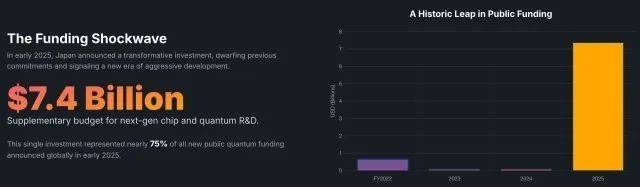
Group 1 - Japan's government has committed $7.4 billion (approximately 1.05 trillion yen) to quantum technology this year, which is more than three times the total investment over the past five years [1][2] - This investment represents a strategic shift driven by deep-seated concerns about historical failures in technology leadership, particularly in the semiconductor industry [3][4] - The Japanese government aims to transition from basic research to industrialization, with a clear goal of making quantum technology a pillar of future economic prosperity and national security [5][10] Group 2 - The investment is seen as a "preventive and high-risk" intervention to avoid being left behind in the global competition for technology leadership [7][9] - The government hopes to stimulate systemic change, encouraging research institutions, large enterprises, and potential startups to engage in the quantum race [8][9] - Japan's approach is characterized by a "collaborative giant ship" model, where the government leads and industrial giants collaborate, forming a powerful alliance [12][14] Group 3 - Major Japanese corporations like Toyota, NEC, and Fujitsu are expected to benefit significantly from government contracts and participation in core research projects [43][44] - The focus on building a self-sufficient supply chain for quantum technology components is a key aspect of Japan's strategy, aiming to avoid reliance on foreign suppliers [20][23] - The mixed quantum-classical computing strategy is seen as a pragmatic approach to leverage existing capabilities while aiming for quick results in various applications [17][18][19] Group 4 - Japan's commitment to quantum technology is likely to provoke responses from other major players, including the U.S. and China, potentially escalating a new round of "quantum arms race" [39][40][42] - The success of Japan's strategy will depend on overcoming challenges such as fostering a vibrant startup ecosystem and effectively translating research into marketable products [25][29][31] - Attracting and retaining top talent in the competitive global landscape is crucial for Japan to realize its quantum ambitions [32][34][38]


银河证券每日晨报-20250704
Yin He Zheng Quan· 2025-07-04 02:08
Group 1: Macro Economic Insights - The U.S. Senate passed the modified "Big Beautiful Act" with a narrow margin, which will increase the deficit to 7% during Trump's term [2][3][4] - The updated version of the fiscal bill is projected to increase the deficit by $4 trillion over the next ten years, with long-term implications potentially raising it to $5.5 trillion if tax cuts are made permanent [3][4] - The long-term debt-to-GDP ratio is expected to rise to 126% by 2034, indicating increasing fiscal pressure [4][7] Group 2: Marine Economy and Communication - The Chinese government has prioritized the development of the marine economy, with policies aimed at enhancing marine industries such as marine electronic information and offshore wind power [9][10] - The domestic marine production value is projected to reach 10.54 trillion yuan in 2024, with a growth rate of 5.9%, indicating significant potential in the marine sector [10] - The global submarine cable market is expected to grow from $21 billion in 2024 to $68 billion by 2032, with a CAGR of approximately 15.8% [10] Group 3: Company-Specific Developments - Kangtai Biological's PCV13 vaccine has received GMP certification from Turkey, marking a significant step in its overseas expansion [15][16] - The company has established partnerships in over ten countries for the registration and commercialization of various vaccines, with overseas revenue expected to grow significantly [16][18] - Midea Group's revenue for Q1 2025 was 127.8 billion yuan, a year-on-year increase of 20.5%, with expectations of maintaining steady growth despite industry headwinds [21][24] Group 4: Industry Trends and Challenges - The home appliance industry is facing a downturn, but Midea Group is expected to maintain growth due to its competitive advantages and high dividend yield [21][24] - The company is adapting to U.S. tariff policies, which have negatively impacted exports, but it is expected to gradually adjust its global production capacity [22][23] - The industrial business, particularly in HVAC and related fields, is showing strong growth potential, supported by strategic acquisitions [23][24]
2nm大厂,伸手要钱
半导体芯闻· 2025-07-02 10:21
Core Insights - Rapidus aims to mass-produce 2nm chips by 2027 and is seeking funding from semiconductor-related companies, including Fujifilm, to support this initiative [1][2] - The company has initiated trial production lines for 2nm chips and plans to report on the trial results to partners on July 18 [1][2] - Rapidus was established in August 2022 with investments from eight Japanese companies, and additional funding efforts are underway to secure a total of 1 trillion yen [2] Funding and Investment - Rapidus is targeting to raise 1 trillion yen, with existing shareholders and potential investors like Honda expressing interest in contributing [2] - The estimated funding requirement for achieving the 2nm chip production goal is approximately 5 trillion yen, with the Japanese government committing around 1.72 trillion yen, leaving a funding gap of over 3 trillion yen [2] Market Context - In the advanced wafer foundry sector, TSMC dominates the market, particularly in securing AI chip orders from Nvidia [3] - There is an increasing demand from U.S. clients for alternative suppliers due to the U.S.-China decoupling, highlighting the strategic importance of Rapidus in the semiconductor supply chain [3]

日本半导体为何难以超越台湾?
半导体行业观察· 2025-06-22 03:23
Core Viewpoint - The article discusses the evolving semiconductor landscape in Japan and Taiwan, highlighting the distinct paths taken by both countries in the semiconductor industry and the implications for future collaboration and competition [5][6]. Group 1: Japan's Semiconductor Strategy - Japan has been actively enhancing its semiconductor capabilities, with initiatives like the JASM wafer fab in Kumamoto and advanced process development by Rapidus in Hokkaido [2]. - The Japanese semiconductor industry has historically prioritized technology, achieving global leadership in semiconductor materials and equipment [6]. - The decline of Japan's semiconductor sector is attributed to its focus on serving internal products rather than developing independent, profit-driven semiconductor businesses [9]. Group 2: Taiwan's Semiconductor Model - Taiwan, led by TSMC, has successfully transformed technology into economic value, establishing a robust foundry model that has become a cornerstone of the global semiconductor supply chain [6]. - The collaboration between Taiwan and Japan in the semiconductor sector is seen as a potential avenue for revitalizing Japan's manufacturing capabilities, with TSMC's involvement in JASM being a key factor [6][8]. Group 3: Comparative Analysis - The article emphasizes the contrasting approaches of Japan and Taiwan, with Japan's semiconductor sector being integrated into larger corporations, limiting innovation and external customer engagement [7][9]. - Taiwan's independent foundry model has allowed for greater innovation and responsiveness to market demands, positioning it favorably against Japan's traditional model [6][8].