
PDVSA

Search documents
后马杜罗时代,委内瑞拉资产重估才刚刚开始!
Hua Er Jie Jian Wen· 2026-01-05 10:22
委内瑞拉总统马杜罗被美国军事行动驱逐后,该国债券市场迎来重估窗口。 据央视新闻,当地时间1月3日,委内瑞拉宪法法院作出裁决,命令委内瑞拉执行副总统罗德里格斯 以"代总统"身份,承担并行使委内瑞拉总统一职所固有的全部职权、义务和权限,以保障国家行政连续 性和国家的全面防御。 这一地缘政治的戏剧性转折直接冲击了金融市场。据追风交易台消息,摩根大通Katherine Marney团队4 日分析认为,委内瑞拉债券周一开盘可能上涨8-10点,后续涨势将取决于美委双边关系的稳定性。该国 拥有超过3000亿桶石油储量,加之特朗普政府明确表示要从干预中获得投资回报,市场参与者热情料将 持续。委内瑞拉目前债务规模约1500亿美元,其中市场债券1020亿美元(包括430亿美元的本金加违约 利息)。 尽管市场自去年8月美军开始在加勒比海集结时就已部分消化政权更迭预期,但特朗普政府选择与现有 查韦斯派政府合作的策略出乎意料,这一框架的持久性将决定委内瑞拉资产的进一步走势。 摩根大通表示,委内瑞拉经济复苏的关键在于石油。该国2025年原油产量徘徊在90万至95万桶之间。据 摩根大通大宗商品团队估计,在政治环境稳定、恢复许可、恢复稀释剂 ...
纽约时报:特朗普为何选定马杜罗的副总统担任委内瑞拉新领导人
美股IPO· 2026-01-05 04:22
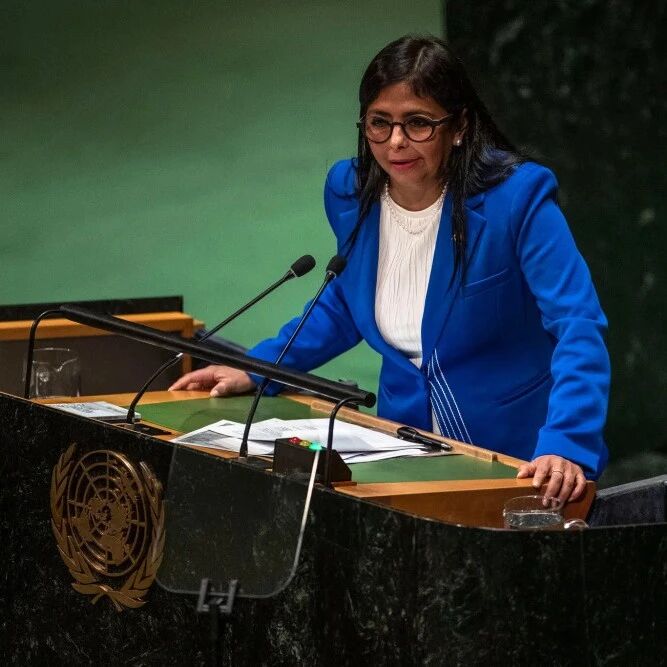
Core Viewpoint - The article discusses the U.S. government's decision to support Venezuelan Vice President Delcy Rodríguez as a more manageable leader compared to Nicolás Maduro, amid escalating tensions and military actions in Venezuela [1][3][4]. Group 1: U.S. Government's Strategy - U.S. officials have identified Delcy Rodríguez as a suitable candidate to replace Maduro, primarily due to her management of Venezuela's crucial oil industry, which has impressed Trump administration officials [7][8]. - The U.S. military conducted a pre-dawn raid in Caracas, capturing Maduro and his wife, which reflects the administration's commitment to military threats against the Maduro regime [5][21]. - Trump has expressed intentions to "control" Venezuela and reclaim U.S. oil interests, marking a significant shift in U.S. foreign policy towards Venezuela [11][12]. Group 2: Delcy Rodríguez's Profile - Rodríguez, who has a background in economic problem-solving, has been credited with stabilizing Venezuela's economy and gradually increasing oil production despite severe U.S. sanctions [16][18]. - She has built alliances with Venezuela's economic elite and foreign investors, positioning herself as a moderate technocrat in contrast to Maduro's more aggressive security officials [18][19]. - Despite her technical approach, Rodríguez has not condemned the oppressive tactics used to maintain Maduro's regime, indicating potential challenges in her governance [18][19]. Group 3: Political Dynamics - The U.S. relationship with Rodríguez's interim government will depend on her adherence to American interests, with the possibility of further military action if she fails to comply [11][15]. - The decision to support Rodríguez over María Corina Machado, a Nobel Peace Prize winner, highlights the complexities of U.S. foreign policy, as Machado has been a vocal critic of Maduro and has sought U.S. support for her political ambitions [12][22][23]. - Machado's recent statements indicate her readiness to lead Venezuela, but Trump has expressed skepticism about her ability to garner sufficient support within the country [23][24].

中远海能(01138)涨3.62% 委内瑞拉地缘风险升温 支撑油运淡季不淡
Xin Lang Cai Jing· 2026-01-05 03:52
Core Viewpoint - The rising geopolitical risks in Venezuela are supporting oil transportation demand during the off-peak season, as indicated by Changjiang Securities' research report [1][2]. Group 1: Company Performance - Zhongyuan Shipping (中远海能) shares have increased by 3.62%, reaching HKD 10.02, with a trading volume of HKD 70.86 million [1][2]. Group 2: Market Dynamics - Venezuela's oil exports are expected to be 700,000 barrels per day in 2024, accounting for 1.8% of global oil exports, primarily to China and the United States [1][2]. - The recent U.S. actions against Venezuela have temporarily halted its oil exports, although there has been no significant damage to the state-owned oil company PDVSA's facilities [1][2]. - The disruption in Venezuelan exports may lead to tighter heavy oil supply in China and the U.S., prompting increased imports of heavy crude oil from Middle Eastern and Latin American countries, thereby raising compliant oil transportation demand [1][2]. Group 3: Long-term Outlook - Venezuela is characterized as a country with high reserves but low production, holding 19% of global oil reserves while contributing only 1.3% to global production [1][2]. - Former President Trump has indicated a strong intervention in Venezuela's oil industry, which could potentially increase the demand for Venezuelan oil along long-distance routes to the Far East, reshaping trade patterns [1][2].
国金证券:短期油价或被“风险溢价+OPEC+控制供给节奏”托住甚至回升
智通财经网· 2026-01-04 22:39
特朗普与马杜罗政府的恩怨由来已久。 特朗普在第一任期就表现出门罗主义倾向,对西半球不够亲美的国家政权在意识形态等方面存在天然的 个人好恶。 2018年马杜罗竞选总统连任后,特朗普率先宣布反对派领袖为委内瑞拉临时总统,导致委美断交。随 后,特朗普对委内瑞拉和马杜罗政府展开了一系列制裁。2020年,美国司法部以"毒品恐怖主义"罪名起 诉马杜罗,悬赏1500万美元。及至第二任期,特朗普进一步加大施压力度,去年9月以来,美国在海上 多次打击委内瑞拉船只,并封锁油轮。 临近中选,打击马杜罗政府有利于巩固和提升基本盘的支持。 多年以来,特朗普致力于塑造马杜罗政府向美国大量输送非法移民和毒品的形象,MAGA群体对此类 叙事尤为买账。另外,美国拉丁裔过往常年支持民主党,2024年大选因通胀等原因倒向共和党,但是过 去一年对特朗普的支持率又快速下降。以古巴裔和委内瑞拉裔为代表的右翼拉丁裔广泛分布在得克萨斯 州、佛罗里达州等地,打击马杜罗政府将提升这部分群体的好感。 智通财经APP获悉,国金证券发布研究报告称,如果美国推动"美企控盘式"的委内瑞拉增产,短期油价 更可能被"风险溢价+OPEC+控制供给节奏"托住甚至回升,而非因增产 ...

委内瑞拉局势如何影响油价
SINOLINK SECURITIES· 2026-01-04 14:59
Group 1: U.S. Involvement in Venezuela - Trump has shown a Monroe Doctrine inclination, favoring ideologically aligned regimes in the Western Hemisphere, particularly against Maduro's government[4] - The best-case scenario for Trump is to establish a pro-U.S. regime in Venezuela, which could help lower oil prices ahead of elections[5] - U.S. intervention is likely to focus on controlling "exportable crude oil" through regulatory and transactional structures rather than direct asset takeover[16] Group 2: Venezuela's Oil Production Potential - Venezuela holds approximately 303 billion barrels of proven oil reserves, accounting for about 17% of the global total, but actual production has plummeted to around 1 million barrels per day, only about 1% of global output[6] - The country’s oil production capabilities are severely hampered by aging infrastructure and international sanctions, requiring an estimated $8 billion investment to restore production to 1990s levels[7] - Venezuela's refining capacity is significantly underutilized, with actual throughput around 300,000 barrels per day, just 20% of its nominal capacity of 1.46 million barrels per day[8] Group 3: Impact on Global Oil Prices - If the U.S. promotes a "U.S. company-controlled" increase in Venezuelan production, short-term oil prices may be supported by "risk premiums" and OPEC+ supply control rather than falling due to production increases[18] - OPEC+ has maintained a production cut of approximately 3.24 million barrels per day, indicating a clear intent to defend prices[18] - Even with potential production recovery in Venezuela, OPEC+ has room to adjust output to mitigate price declines, suggesting a gradual rather than rapid recovery in oil supply[18]
What role could the US play in Venezuela's ‘bust' oil industry?
The Guardian· 2026-01-04 11:56
Core Insights - The Venezuelan oil industry has been significantly underperforming, with Donald Trump asserting that it has been "a total bust" for a long time, and he aims to take control of it with the support of major US oil companies [1] - Venezuela is believed to possess the largest oil reserves globally, estimated at around 300 billion barrels, which could represent about 17% of the world's total reserves [2] - The country's oil production has drastically declined from approximately 3.5 million barrels per day in 1999 to about 1 million barrels per day currently, highlighting severe operational challenges [3][4] US Oil Companies' Involvement - Trump has indicated that large US oil companies, such as Exxon Mobil and ConocoPhillips, could invest billions to repair Venezuela's oil infrastructure, which has suffered from neglect and corruption [5] - While these companies have not yet committed to the investment plans, there is speculation that prior agreements may exist between the US government and these firms [6] - US oil companies could potentially partner with Venezuela's state oil company, PDVSA, to develop oil production in exchange for profit-sharing, given PDVSA's dire financial situation [6] Impact on Venezuela's Oil Customers - Approximately 80% of Venezuela's crude oil is exported to China, which has provided significant financial support to Venezuela, estimated at $105 billion between 2007 and 2016 [8] - Control over Venezuela's oil industry by the US could lead to a shift in repayment dynamics, affecting China's access to low-cost energy [9] - Future oil shipments to China from US companies may be priced closer to market rates, impacting China's energy procurement strategy [11] Market Implications - Experts suggest that the recent developments are unlikely to have an immediate and lasting impact on crude oil prices, although volatility is expected as traders assess the implications of potential changes in US sanctions against Venezuelan oil [12] - A significant recovery in Venezuela's oil production to previous levels could take years and require substantial investment, estimated in the tens of billions of dollars, along with a long-term commitment from Western oil majors [13]
委内瑞拉局势升级,原料端风险发酵
Hua Tai Qi Huo· 2026-01-04 11:37
Report Industry Investment Rating No relevant content provided. Core Views of the Report - As the situation in Venezuela escalates, the risk on the raw material side of asphalt is increasing. If the supply of Venezuelan oil continues to tighten, leading to a rise in the cost center of asphalt refineries, there is room for further rebound in asphalt spot and futures prices [1][12]. - Domestically, with the marginal easing of supply pressure and the stabilization of the spot market, the bottom signal of the asphalt futures market is gradually consolidating. However, the real - world fundamentals are still relatively weak, and the potential upward driver of the market comes from the raw material side [1][26]. - The winter storage demand is gradually being released, and the bottom signal of the spot market is emerging. The supply pressure has eased marginally, and the spot market in the north has stabilized first. The market pressure in the south has also eased recently, and prices are showing signs of a rebound [25]. Summary by Relevant Catalogs Venezuela Situation Continues to Escalate, and the Risk on the Asphalt Raw Material Side Increases - The US sanctions on Venezuela this year have had a repeated impact on the supply and pricing of Venezuelan oil, which has been transmitted to the domestic market. In the first half of the year, the sanctions mainly focused on the economic level, and the changes in oil license permissions had the most significant impact on oil supply and logistics [7][8]. - In the fourth quarter, the US countermeasures against Venezuela expanded from the economic to the military level. The situation in South America further escalated, and the shipping volume of Venezuelan crude oil to Asia decreased significantly. The floating and in - transit inventories of Merey crude oil also increased significantly [8][11]. - If the US blockade of Venezuela continues and Venezuela cannot find effective ways to circumvent it, the supply of Venezuelan crude oil to Asia will tighten, and domestic refineries may increase the procurement of crude oil and fuel oil from other regions, but the raw material cost will rise significantly [12]. Winter Storage Demand is Gradually Released, and the Bottom Signal of the Spot Market Appears - Previously, due to the decline in oil prices and the discount of diluted asphalt, refinery profits improved, and major refineries released low - price resources. Terminal demand was weak, and the spot market was under pressure. Recently, with the release of winter storage demand, the supply pressure has eased marginally, and the spot market in the north has stabilized first [25]. - The market in South China was weaker. Recently, major refineries released more supplies, and the spot price fell continuously. With the increase in raw - material - side sentiment in the futures market, the basis in South China decreased, and the spot - futures arbitrage window opened, stimulating spot - side buying [25]. - After the concentrated release of selling pressure in December, the supply from refineries in South China decreased, and the market pressure eased. Prices have shown signs of a rebound recently [25]. Investment Strategies - Unilateral: Be cautiously bullish. Pay attention to the opportunity to go long on the main BU contract at low prices, and avoid chasing the rise [2]. - Inter - period: Pay attention to the opportunity for positive spreads at low prices (BU2603 - BU2606) [2]. - No strategies are provided for cross - variety, spot - futures, and options [2].
The $60 Billion Question: Is Venezuela Secretly A Bitcoin Superpower?
ZeroHedge· 2026-01-03 19:00
Core Insights - The article discusses the potential control of $60 billion in Bitcoin by Alex Saab for the Maduro regime, highlighting the ongoing financial battle on the blockchain as Maduro faces legal challenges in the U.S. [1][2][51] Group 1: Financial Operations - The Maduro regime systematically looted Venezuela's resources, converting billions in oil revenue and gold reserves into cryptocurrency, primarily Bitcoin [4][24]. - In 2018, Venezuela exported 73.2 tons of gold, valued at approximately $2.7 billion, which was converted into Bitcoin through a network of intermediaries [6][25]. - The conversion of gold proceeds into Bitcoin was facilitated by OTC brokers in Turkey and the UAE, with the Bitcoin moved through mixers and cold wallets to obscure its origin [29][30]. Group 2: Key Figures - Alex Saab is identified as the central figure orchestrating the conversion of Venezuela's gold into cryptocurrency, having built a shadow financial architecture for the regime [5][11]. - David Nicolas Rubio Gonzalez, a key courier in the gold-to-crypto pipeline, was sanctioned by the U.S. Treasury but has not faced criminal charges, raising questions about his potential cooperation with authorities [12][20]. - Saab's dual role as a contractor and informant for U.S. law enforcement complicates the narrative, as he provided information on high-level corruption while building the regime's financial empire [8][46]. Group 3: Implications of Maduro's Capture - With Maduro now in U.S. custody, the focus shifts to whether Saab will cooperate again or if he will retain control over the keys to Venezuela's hidden crypto fortune [9][51]. - The infrastructure established for cryptocurrency transactions may outlast the Maduro regime, posing challenges for recovery of the stolen assets [51][52]. - The article raises critical questions about the whereabouts of key figures like Saab and Gonzalez, and the potential for the $60 billion in Bitcoin to remain inaccessible [53][54].

Oil Prices Open 2026 Higher as Geopolitical Risk Rises
Yahoo Finance· 2026-01-02 03:21
Core Viewpoint - Oil prices are experiencing a slight increase due to ongoing geopolitical tensions, despite having faced significant annual losses in 2025, marking the worst performance since 2020 [1][2]. Group 1: Price Movements - Brent crude oil is trading at $61.03 per barrel, reflecting a 0.30% increase, while U.S. West Texas Intermediate is at $57.59 per barrel, also up by 0.30% [1]. - Both major oil benchmarks fell nearly 20% in 2025, indicating a challenging year for the oil market [2]. Group 2: Geopolitical Factors - Tensions between Ukraine and Russia have escalated, with allegations of drone attacks on civilian and energy infrastructure, contributing to upward pressure on oil prices [3]. - Ukraine's President Zelensky reported over 200 drone attacks targeting power infrastructure, while Russia claimed drone strikes on its energy and industrial facilities [3]. Group 3: U.S. Sanctions Impact - The U.S. has imposed new sanctions on four companies and associated oil tankers involved in Venezuela's oil sector, further constraining oil exports from the country [4]. - These sanctions are forcing Venezuela's state oil company PDVSA to shut down wells in the Orinoco Belt due to limited storage capacity [5].
石油沥青专题:原油端风险发酵,市场底部信号显现
Hua Tai Qi Huo· 2025-12-31 11:44
Report Industry Investment Rating Not provided Core Views - As the situation in South America worsens with the US escalating military actions against Venezuela, the shipment of Venezuelan crude oil to Asia has significantly declined, increasing risks for non-US buyers [1] - With the marginal easing of supply pressure and the stabilization of the spot market, the bottom signal of the asphalt market is gradually strengthening. However, the actual fundamentals remain weak. The potential upward driver of the market comes from the raw material side. If the supply of Venezuelan oil continues to tighten, leading to an increase in the cost center of asphalt refineries, there is room for further rebound in the asphalt spot and futures markets. If the raw material problem is disproven, the asphalt market will face significant resistance next year due to loose fundamentals and weak oil price expectations [1] - For trading strategies, it is recommended to be cautiously bullish on the single-side, focus on the opportunity to go long on the main BU contract at low prices and avoid chasing the rise. For the inter-period spread, pay attention to the opportunity of positive spreads (BU2603 - BU2606) [2] Summary by Related Catalogs US Seizure of Venezuelan Oil Tankers Increases Risks in Asphalt Raw Material Supply - This year, the US sanctions on Venezuela have changed, affecting Venezuelan oil supply and pricing, which has been transmitted to the domestic market. For example, in January, the US froze PDVSA's $7 billion assets in the US; in March, it imposed a 25% secondary tariff on countries importing Venezuelan oil; in May, it revoked the oil exploration and export licenses of some companies; in July, it issued a limited "new general license" to Chevron [7] - In the first half of the year, the US sanctions on Venezuela mainly focused on the economic level, especially the change in oil license permissions, which led to a significant decline in Venezuelan oil exports to Europe and the US, and more resources flowed to Asia. In the second and third quarters, the arrival volume of Venezuelan oil in China increased, the raw material supply became more abundant, and the cost support for the asphalt market weakened [8] - In the fourth quarter, the US actions against Venezuela expanded from the economic to the military level. Since September, the US has carried out a series of military actions, and in December, it seized two Venezuelan oil tankers. As a result, the shipment of Venezuelan crude oil to Asia has significantly declined recently, and the floating storage and in-transit inventory of Merey crude oil have increased significantly. If the US blockade continues, the supply of Venezuelan oil to Asia will tighten, and domestic refineries may face a significant increase in raw material costs [9][11] Winter Storage Demand is Gradually Released, and the Bottom Signal of the Spot Market Appears - Previously, due to the decline in oil prices and the discount of diluted asphalt, refinery profits improved, and major refineries released low-priced resources. However, the terminal demand was weak, putting pressure on the spot market. Recently, with the release of winter storage demand, some refineries have switched to producing residual oil, and the supply pressure in the market has eased marginally. The spot market in the northern region has stabilized first. The escalation of the Venezuelan situation has increased concerns about the raw material side, stimulating the enthusiasm of downstream procurement and warehousing [21] - The South China market has been weaker. Recently, major refineries have released more supply, and the downstream has difficulty digesting it. The spot price has continued to decline, reaching around 2,800 yuan/ton. As the asphalt futures market is affected by the raw material sentiment, the basis in the South China region has decreased, and the spot-futures arbitrage window has opened, stimulating spot buying. After the concentrated release of selling pressure in December, the supply from refineries in the South China region has decreased, and the market pressure has eased [21]