
中通快递

Search documents
消息称中通、极兔等快递公司将在上海区域涨价
Xi Niu Cai Jing· 2025-09-24 06:28
Group 1 - Major express delivery companies in Shanghai, including Jitu Express, Zhongtong Express, YTO Express, and Shentong Express, announced a price increase for all customers starting from September 22, 2025 [2] - The price adjustment aims to implement national policies against "involution" competition, eliminate disruptive low pricing practices, and ensure stable service for customers [2] - Jitu Express and Zhongtong Express confirmed the authenticity of the notification, while YTO Express and Shentong Express have not yet responded [2] Group 2 - Recently, regions such as Hubei, Shandong, and Tianjin have also announced increases in express delivery fees [5] - Several express companies in Heilongjiang, including YTO Express, stated that they will adjust their pricing based on company costs starting from September 20, 2025, to promote rational and healthy competition [5]



机构:无人物流行业迈向全面商业化阶段
Zheng Quan Shi Bao Wang· 2025-09-24 00:47
Core Insights - The logistics industry is experiencing a significant shift towards unmanned delivery solutions due to rising labor costs, with last-mile delivery costs exceeding 30% of total logistics costs [1] Industry Overview - As of September 2025, over 1,900 out of 3,600 districts in China have supported unmanned vehicles on the road, representing more than 50% of the total, with ongoing policy support for expansion [1] - The unmanned logistics sector is transitioning into a fully commercialized phase, following an exploratory period from 2010 to 2016 and a breakthrough phase from 2016 to 2023 [1] Company Developments - Major logistics companies, including SF Express and ZTO Express, are expected to introduce thousands of unmanned delivery vehicles this year, a significant increase from the hundreds introduced last year, indicating a trend towards large-scale deployment [1] - The first application of unmanned logistics vehicles is in the last mile of delivery, where they are replacing human drivers, thereby creating cost-saving opportunities for courier companies [1]

快递涨价“连续剧”更新 上海收件价格上调,商家默默取消运费险
2 1 Shi Ji Jing Ji Bao Dao· 2025-09-23 23:16
Core Viewpoint - The recent price increase in the express delivery sector, initiated by major companies like Jitu, Zhongtong, and Yuantong, reflects a broader trend driven by policy and cost pressures, aiming to curb long-standing low-price competition in the industry [1][3]. Price Increase Details - Five leading express companies have raised the collection prices in Shanghai by 0.2 to 0.4 yuan per order [1]. - Similar price adjustments have occurred in key e-commerce regions such as Zhejiang and Guangdong, indicating a widespread trend [1][3]. - The price hikes primarily target low-priced orders below cost, while personal parcel rates remain unaffected [1]. Cost Pressures and Industry Response - The express delivery industry has been facing rising costs, including increased wages for delivery personnel and higher transportation and packaging expenses [5]. - The average price for express services has decreased by nearly 8% year-on-year, with major companies experiencing a decline in per-order revenue [5]. - Companies are shifting from a volume-driven strategy to a quality-focused approach to maintain profitability [5][6]. Financial Impact on Companies - The price increase is expected to enhance station revenues and improve the income of delivery personnel [4]. - For instance, a single station estimates that a 0.1 yuan increase in per-order revenue could lead to an additional 1.5 million yuan in monthly income [4]. Market Dynamics and Regional Variations - The price increase has not been uniformly adopted across all regions, with core areas like Guangdong and Zhejiang implementing changes while non-core areas maintain previous pricing strategies [6]. - The disparity in e-commerce density affects the pace of price adjustments, with some regions still engaging in price competition to attract customers [6]. Effects on Related Industries - The rise in express delivery costs has led to the cancellation of shipping insurance by some merchants, particularly in the high-return apparel sector, which may impact sales conversion rates [7]. - The cancellation of shipping insurance could also affect reverse logistics, which has been a significant revenue source for express stations [7]. Future Outlook - While the price increases may improve profit margins, the long-term effectiveness in curbing low-price competition remains uncertain, as consumer acceptance of higher prices is crucial [7].


快递涨价“连续剧”更新 上海收件价格上调 商家默默取消运费险
2 1 Shi Ji Jing Ji Bao Dao· 2025-09-23 23:13
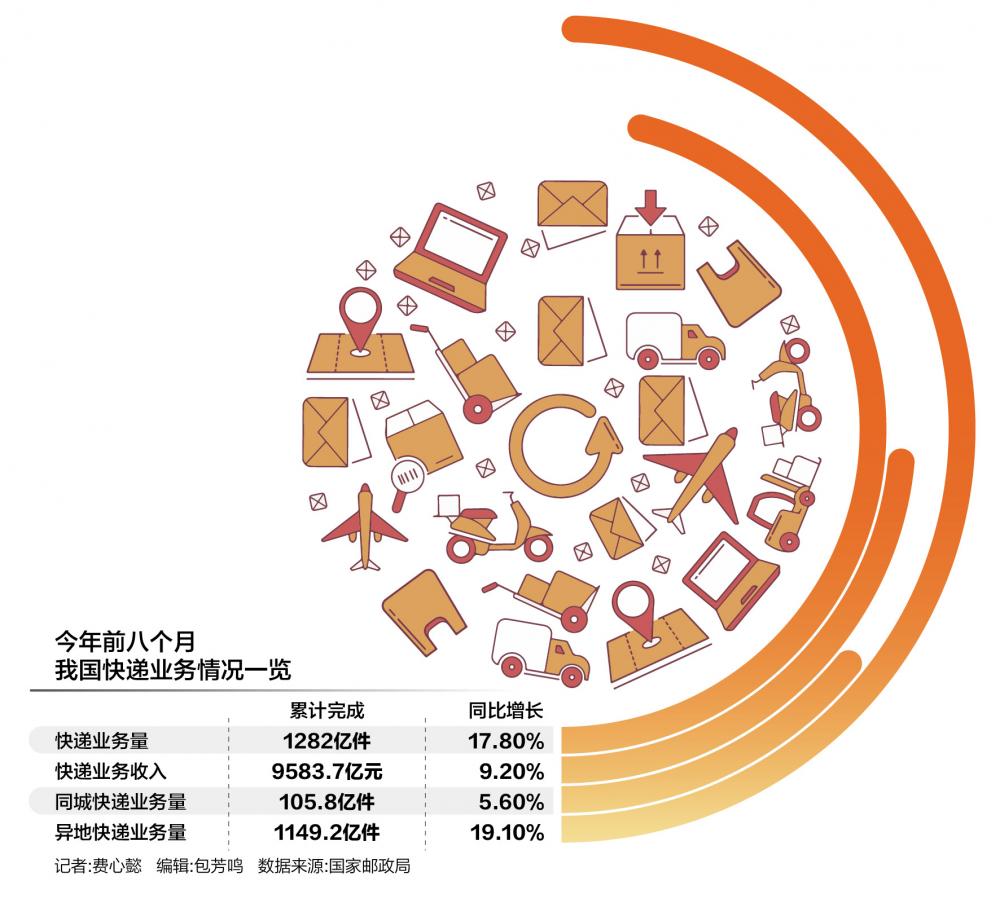
Core Viewpoint - The recent price increase in the express delivery sector, driven by policy and cost pressures, is spreading from core e-commerce areas to broader regions, aiming to curb long-standing low-price competition and improve service quality satisfaction among consumers [1][3][5]. Price Increase Details - On September 22, major express companies including Jitu, Zhongtong, and Yuantong raised the collection prices in Shanghai by 0.2 to 0.4 yuan per order [1]. - Previous price hikes occurred in Yiwu, Zhejiang, and Guangdong, with minimum prices set at 1.2 yuan and 1.4 yuan respectively, indicating a trend towards establishing a price floor to combat low-price competition [3][4]. Financial Impact - The price adjustments are expected to enhance station profitability and courier income, with one franchisee estimating an additional 1.5 million yuan in monthly revenue from a 0.1 yuan increase per order [4]. - The express delivery industry has seen record volumes, with 1,282 billion packages delivered in the first eight months of the year, a 17.8% year-on-year increase, and total revenue reaching 9,583.7 billion yuan, up 9.2% [4]. Competitive Landscape - The express delivery sector is transitioning from a volume-driven strategy to a quality-focused approach due to shrinking profit margins amid fierce competition [5][6]. - Major companies like Zhongtong have adjusted their growth forecasts downward, indicating a shift in focus towards balancing service quality and profitability [6]. Regional Price Variations - Price increases have been more pronounced in e-commerce hubs like Guangdong and Zhejiang, while non-core regions maintain previous pricing strategies, leading to potential market imbalances [6][7]. - Some franchisees in less competitive areas are still offering lower prices to attract customers, which may undermine the overall price increase efforts [6]. Broader Implications - The rise in express delivery costs has led to the cancellation of shipping insurance by some merchants, particularly in the high-return apparel sector, which could impact sales conversion rates [7]. - Experts suggest that while price increases may improve profit margins, the long-term effectiveness in curbing low-price competition will depend on consumer acceptance of higher prices [7].
上海快递涨价,多个站点已收到通知,不影响个人寄件价格
21世纪经济报道· 2025-09-23 12:16
Core Viewpoint - The recent price increase in the express delivery industry, driven by policy and cost pressures, is spreading from core e-commerce areas to broader regions, aiming to curb long-standing low-price competition and improve service quality to retain consumer satisfaction [1][4][10]. Group 1: Price Increase Trends - Major express companies, including Jitu, Zhongtong, and Yuantong, have raised prices in Shanghai by 0.2 to 0.4 yuan per order, reflecting a broader trend initiated in regions like Zhejiang and Guangdong [1]. - The price adjustments primarily target low-priced e-commerce orders below cost, while personal parcel rates remain unaffected [1][4]. - The price increase is expected to enhance station profitability and courier income, with estimates suggesting a potential monthly revenue increase of approximately 1.5 million yuan for some stations [4]. Group 2: Industry Performance Metrics - In the first eight months of the year, the express delivery industry achieved a record volume of 1,282 billion packages, a year-on-year increase of 17.8%, while total revenue reached 958.37 billion yuan, reflecting a decline of 9.2% [2]. - The average price per delivery has decreased significantly, with major companies like Yunda and Yuantong reporting declines in per-package revenue due to intense competition [5]. Group 3: Cost Pressures and Market Dynamics - The express delivery sector faces rising costs, including increased wages for couriers and higher transportation and packaging expenses, leading to financial strain on many franchise operators [5][6]. - The shift from a volume-driven strategy to a quality-focused approach is evident, as companies like Zhongtong adjust their growth forecasts downward to prioritize service quality and profitability [6]. Group 4: Regional Price Variation and Market Response - Price adjustments have been uneven across regions, with core areas like Guangdong and Zhejiang implementing changes while non-core regions maintain existing pricing strategies [9]. - The autonomy of franchise operators in setting prices can lead to variations that undermine the intended effects of price increases, highlighting the need for a balance between headquarters policies and franchisee interests [9]. Group 5: Implications of Price Increases - The rise in delivery fees has led to the cancellation of shipping insurance by some merchants, particularly in high-return sectors like apparel, which may impact sales conversion rates [10]. - The potential reduction in reverse logistics volume due to the cancellation of shipping insurance could affect overall revenue for express stations, as reverse shipments are a significant source of additional income [10].
快递涨价“连续剧”更新!上海收件价格上调,商家默默取消运费险
2 1 Shi Ji Jing Ji Bao Dao· 2025-09-23 11:16
Core Viewpoint - The recent price increases in the express delivery industry, driven by policy and cost pressures, are spreading from core e-commerce areas to a broader range, aiming to curb long-standing low-price competition while the sustainability of these price hikes depends on service quality satisfaction among consumers [1][2][3]. Group 1: Price Increases and Market Dynamics - Major express companies in Shanghai have raised collection prices by 0.2 to 0.4 yuan per order, with similar actions observed in Zhejiang and Guangdong [1]. - The price adjustments primarily target low-priced orders below cost, while personal parcel prices remain unaffected [1][2]. - The price floor management in various regions has effectively curbed vicious low-price competition, leading to a stabilization in single-order revenue [2]. Group 2: Financial Impact on Companies - The price increase is expected to enhance station profitability and courier income, with estimates suggesting an additional 1.5 million yuan in monthly revenue for some stations if single-order income rises by 0.1 yuan [3]. - The express delivery industry has seen a record volume of 1,282 billion packages in the first eight months of the year, with a revenue of 9,583.7 billion yuan, marking a 17.8% and 9.2% year-on-year growth respectively [3]. Group 3: Cost Pressures and Competitive Landscape - The industry faces rising costs, including increased wages for couriers and higher transportation and packaging expenses, leading to some franchisees operating at a loss [4]. - The average price for express services has decreased by nearly 8% year-on-year, with major companies experiencing declines in single-order revenue [4]. Group 4: Regional Variations and Strategic Shifts - Price increases have been more pronounced in e-commerce core regions like Guangdong and Zhejiang, while non-core areas maintain previous pricing strategies [5]. - The ability of franchisees to set prices independently has led to some circumventing the price hikes, indicating a need for balance between headquarters policies and franchisee interests [6]. Group 5: Broader Implications of Price Changes - The rise in express fees has led to the cancellation of freight insurance, particularly affecting high-return sectors like clothing, which may impact sales conversion rates [6]. - The cancellation of freight insurance could also reduce the volume of reverse logistics, which has been a significant revenue source for express stations [6]. Group 6: Future Outlook and Challenges - Experts suggest that while price increases may improve profit margins, the effectiveness in curbing low-price competition remains uncertain, as consumer price sensitivity could affect order volumes [7].
东兴证券:快递反内卷遏制以价换量 通达系单票收入明显回升
智通财经网· 2025-09-23 07:44
Core Viewpoint - The express delivery industry in China is experiencing a slowdown in business volume growth, with a year-on-year increase of 12.3% in August, indicating a shift away from price-driven growth strategies due to anti-involution policies [1][3][4] Group 1: Business Volume and Growth Trends - In August, the total business volume of express delivery companies reached 16.15 billion pieces, with a year-on-year growth of 12.3% [1] - The growth rate of business volume has been gradually declining since March, influenced by a high base from the previous year and diminishing returns from price-driven strategies [1][3] - The growth in same-city delivery volume decreased by 0.8%, while inter-city delivery volume increased by 14.0% [1] Group 2: Company Performance and Pricing - SF Express continues to lead the industry with a growth rate exceeding 30% since April, while the growth rates of other major companies in the Tongda system have declined and are below the industry average [2] - In August, the average revenue per piece for Shentong, YTO, and Yunda increased by 4.6%, 3.4%, and 0.5% respectively [2] - Shentong showed the best performance in August, with a slight decline in volume growth but an increase in revenue per piece by 0.09 yuan [2] Group 3: Impact of Anti-Involution Policies - Recent anti-involution policies have effectively curbed price-driven behaviors in the industry, leading to a more sustainable growth model focused on service quality rather than price competition [3][4] - The upward trend in average revenue per piece is expected to continue, although the rebound may not be as strong as in 2021 due to a less intense price war this year [4] Group 4: Investment Recommendations - The current anti-involution measures are expected to exceed market expectations, positively impacting company profitability and stock prices [5] - Companies to focus on include industry leaders with superior service quality such as Zhongtong Express and YTO Express, as well as Shentong Express, which has shown significant improvement in operational data [5]

央行调整14天期逆回购操作方式,资金面有所改善,债市延续调整
Dong Fang Jin Cheng· 2025-09-23 06:21
1. Report Industry Investment Rating - No relevant information provided 2. Core Viewpoints of the Report - On September 19, the liquidity situation improved, with major repo rates declining; the bond market continued to adjust, with long - term bonds performing weaker; the convertible bond market's main indices followed the decline, and most convertible bond issues fell; yields of U.S. Treasury bonds across various maturities generally rose, and yields of 10 - year government bonds in major European economies generally increased [1] 3. Summary by Relevant Catalogs 3.1 Bond Market News 3.1.1 Domestic News - The central bank adjusted the operation mode of 14 - day reverse repurchase, which released three key signals: strengthening the policy status of the 7 - day reverse repurchase operation rate, promoting the transformation of the monetary policy framework to price - based regulation, and enhancing the flexibility and precision of liquidity regulation [3] - The State Council Executive Meeting discussed and basically approved the "Revised Draft of the Law of the People's Republic of China on Banking Supervision and Administration" to promote the healthy development of the banking industry [3] - In August, foreign investors net - bought domestic stocks and bonds overall, and the foreign exchange market was stable with active trading and balanced supply and demand [4] - The Shanghai, Shenzhen, and Beijing Stock Exchanges issued new regulations to optimize bond repurchase business, aiming to optimize corporate debt structure and resolve credit risks [5] - The inter - bank lending center launched new optimization functions for "North - bound Swap Connect" to meet the risk - management needs of overseas institutions [6] - As of September 21, the issuance scale of securities firms' bonds this year reached 1.23 trillion yuan, with the issuance scale of science and technology innovation bonds exceeding 57 billion yuan; the redemption scale of banks' "Tier 2 and perpetual bonds" reached 729.28 billion yuan [7] 3.1.2 International News - The Bank of Japan maintained the interest rate at 0.5% and announced the start of ETF and J - REIT reduction, with two members proposing a 25bp interest rate hike [8] - Minneapolis Fed President Kashkari supported the Fed's rate - cut decision and predicted two more rate cuts this year, also raising the estimate of the neutral interest rate [9] 3.1.3 Commodity News - On September 19, international crude oil futures prices continued to fall, and international natural gas prices declined; COMEX gold futures rose [10] 3.2 Funding Situation 3.2.1 Open - Market Operations - On September 19, the central bank conducted 354.3 billion yuan of 7 - day reverse repurchase operations, with a net capital injection of 124.3 billion yuan [12] 3.2.2 Funding Rates - On September 19, after the tax - payment period ended, the funding situation improved, and major repo rates declined [13] 3.3 Bond Market Dynamics 3.3.1 Interest - Rate Bonds - **Spot Bond Yield Trends**: On September 19, the bond market continued to adjust, with long - term bonds performing weaker. Yields of 10 - year Treasury bonds and 10 - year CDB bonds increased [16] - **Bond Tendering Situation**: Information on the tendering of 10 - year and 30 - year bonds was provided, including issuance scale, winning yields, and multiples [18] 3.3.2 Credit Bonds - **Secondary - Market Transaction Anomalies**: On September 19, the transaction prices of two industrial bonds deviated by more than 10% [18] - **Credit Bond Events**: Some bonds, such as "H16 Tianjian 2" and "20 Xingfu 01", had events like suspension and debt - repayment plan formulation [19] 3.3.3 Convertible Bonds - **Equity and Convertible Bond Indices**: On September 19, the three major A - share indices and convertible bond market indices all declined, and the convertible bond market's trading volume decreased [20] - **Convertible Bond Tracking**: Some companies' convertible bond issuance was approved, and some bonds had events like suspension, cancellation of issuance, and debt restructuring [22][23] 3.3.4 Overseas Bond Markets - **U.S. Bond Market**: On September 19, yields of most U.S. Treasury bonds rose, and the yield spreads between different maturities changed [24][25] - **European Bond Market**: Yields of 10 - year government bonds in major European economies generally increased [27] - **Price Changes of Chinese - Issued U.S. Dollar Bonds**: Information on the daily price changes of Chinese - issued U.S. dollar bonds as of September 19 was provided, including the top gainers and losers [29]
南京高淳固城湖大闸蟹“上新”!无人车无人机齐上阵,快递行业打响时效保卫战
Yang Zi Wan Bao Wang· 2025-09-22 14:39
"秋风凉蟹脚痒",南京高淳固城湖大闸蟹上市了。9月22日,扬子晚报/紫牛新闻记者从顺丰在高淳举办 的"蟹逅高淳,顺丰领鲜"2025年顺丰助力固城湖大闸蟹领"鲜"全国启动仪式上了解到,顺丰深入产地布 局,10分钟即可将新鲜捕捞的大闸蟹从湖心送达发运场地;同时叠加无人车、无人机等高科技设备助 力,全国 80% 以上的城市可实现"次日达"。 江苏顺丰速运有限公司总经理徐翔介绍,今年计划投入超过400名一线小哥,并设立100个临时揽收点 位,以方便寄递和揽收。同时,顺丰全面升级空中物流网络,增投了 30 架大闸蟹航空全货机,覆盖全 国 90% 以上的城市,依托航空运力运输大闸蟹,全国 80% 以上的城市可实现"次日达"。同时,进一步 打造"宁镇扬"大同城的快速路线,中午 12 点前下单当天就可以送达。此外,顺丰还在资源端持续进行 智能设备的研发投入,提升分拣和包装的效率。此外,顺丰还开放了新加坡、马来西亚、泰国等国际路 线72小时跨国时效,以保障闸蟹的新鲜。 在高淳区固城湖螃蟹城,陈琴春的螃蟹门店已扎根 25 年。谈及自家螃蟹的销售与运输,他向扬子晚报/ 紫牛新闻记者分享了一个惊喜:"最远的客户在新疆,有一次发新疆, ...
快递8月数据点评:反内卷遏制以价换量,通达系单票收入明显回升
Dongxing Securities· 2025-09-22 09:40
Investment Rating - The industry investment rating is "Positive" [4] Core Insights - The report highlights that the national express service companies completed a total of 16.15 billion packages in August, representing a year-on-year growth of 12.3%. However, the growth rate of package volume continues to decline due to the industry's anti-involution measures that suppress the practice of exchanging price for volume [2][11] - The report indicates a significant recovery in single-package revenue for Tongda system companies, with Shentong and YTO showing notable increases in revenue per package [2][26] - The anti-involution policies have effectively curbed the price competition, leading to a shift in focus towards service quality rather than just cost advantages [10][43] Summary by Sections 1. Industry Overview - In August, the total business volume of express service companies reached 16.15 billion packages, with a year-on-year increase of 12.3%. The volume of same-city packages decreased by 0.8%, while intercity packages grew by 14.0% [2][11] - The growth rate of package volume has been gradually declining since March, influenced by a high base from the previous year and diminishing marginal returns from the price-for-volume model [2][11] 2. Package Volume Analysis - The growth rate of package volume has slowed down, with significant differentiation among listed express companies. SF Express has maintained a growth rate above 30% since April, while the Tongda system companies have seen a decline in growth rates [2][11][16] - In terms of pricing, Shentong, YTO, and Yunda saw their single-package revenue increase by 4.6%, 3.4%, and 0.5% respectively in August [2][26] 3. Revenue per Package - The report notes that the average single-package revenue in August slightly increased compared to July, while the year-on-year decline was 7.2%. The revenue per package for Shentong and YTO showed significant recovery, indicating a strategic shift away from low-priced packages [26][30] - Shentong's single-package revenue increased by 0.09 yuan, while YTO's increased by 0.07 yuan, suggesting a deliberate adjustment in sales strategy [2][29] 4. Structural Changes - The report indicates that the industry concentration ratio (CR8) remained stable at 86.9, with a year-on-year increase of 1.7. The market share of the four listed companies reached 50.6%, slightly up from the previous year [36][38] 5. Investment Recommendations - The report suggests focusing on leading companies with superior service quality, such as Zhongtong and YTO, as well as Shentong, which has shown significant improvement in operational data [8][43]