平安银行

Search documents
装修业探索后付费模式
Jing Ji Guan Cha Bao· 2025-12-12 07:47
在支付宝推出装修宝前,一些装修企业已经开始和金融机构合作探索后付费模式。2025年6月,圣都家 装与中信银行推出资金存管业务,名匠装饰、点石家装等家装企业联合平安银行推出家装资金安全保 函。 陈炜说,家装企业重营销、轻服务,差的服务很少被惩罚,爱空间希望通过与家装宝合作建立一个服务 得到奖赏的闭环,倒逼企业提升服务。 后付费模式 (原标题:装修业探索后付费模式) 经济观察报 记者 田国宝 2025年12月上旬,爱空间与支付宝旗下的家装宝签署资金存管合作协议。爱空间创始人陈炜说,2026年 3月起,爱空间的装修业务将全部转为后付费模式。 传统家装行业采取预付费模式,客户与装修公司签订完装修合同,需要支付部分或全部装修款;后付费 模式下,客户不需要预先付款,双方签订合同确定装修金额,业主将金额转入支付宝专户,按照装修节 点验收,确认满意后支付相应款项。 支付宝于2025年7月推出家装宝业务,目前在上海、杭州、贵阳、昆明、重庆、长沙、青岛、南宁等地 与数十家装修企业达成合作协议,爱空间是家装宝在北京合作的首家装修企业。 相比之下,后付费模式将总工程款按施工节点分配,节点验收合格后支付对应比例款项,竣工节点支付 最后 ...


东兴中债1-3年政策性金融债指数成立 规模34亿元
Zhong Guo Jing Ji Wang· 2025-12-12 02:57
基金经理王卉妍2013年7月至2013年10月任职平安银行股份有限公司;2013年12月至2014年7月任职扬州 市现代金融投资集团有限责任公司;2014年9月至2017年5月任职中诚信国际信用评级有限责任公司结构 融资部分析师/项目经理,2017年6月至2024年4月历任国寿安保基金管理有限公司研究部研究员、投资 管理二部研究员、投资经理助理;2024年4月至2025年1月任职国通信托有限责任公司资产管理部投资经 理。2025年2月至2025年3月任职东兴基金管理有限公司混合资产投资部;2025年3月至今任职东兴基金 管理有限公司混合资产投资部基金经理。 ...
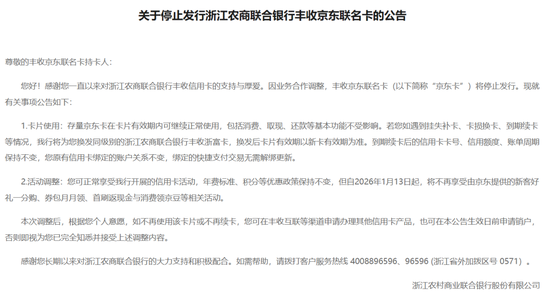
中小银行跟进“停卡潮” 信用卡行业驶入存量竞争新航道
Xin Lang Cai Jing· 2025-12-12 01:24
Core Viewpoint - The credit card market is undergoing significant adjustments, with many banks, especially smaller ones, halting the issuance of co-branded credit cards due to rising costs and risks associated with these products [1][5][6]. Group 1: Market Trends - The trend of halting credit card issuance is not isolated, as it has become a common practice among both national and regional banks throughout the year [1][6]. - Major banks, including China Construction Bank and Postal Savings Bank, have collectively stopped issuing over 100 credit card products since the beginning of 2025, with co-branded cards being a significant portion of these [6][11]. - The total number of credit cards in circulation has decreased by 100 million over the past three years, indicating a shift away from the previous era of aggressive expansion [10][11]. Group 2: Bank Strategies - Banks are transitioning from a focus on quantity to quality in their credit card offerings, prompted by regulatory changes and market dynamics [11][12]. - The recent adjustments include the closure of credit card centers and the integration of credit card functionalities into main banking apps, reflecting a strategic shift towards efficiency and cost reduction [14][15]. - The halting of co-branded cards is seen as a necessary step for banks to concentrate resources on more viable products and improve operational efficiency [8][9]. Group 3: Future Directions - The future of credit card business is expected to focus on three main transformation directions: integrating various service scenarios, upgrading technology for better digital experiences, and deepening customer segmentation to enhance value creation [16].




银行密集挂牌 零售类不良资产“出清潮”来袭
Bei Jing Shang Bao· 2025-12-11 15:39
Core Viewpoint - A wave of retail non-performing asset (NPA) disposals is occurring among banks in China, driven by the need to optimize year-end financial statements, reduce non-performing loan ratios, and release capital space, while also addressing risks accumulated from years of rapid retail business expansion [1][5] Group 1: Asset Disposal Trends - The pace of retail NPA disposals has accelerated as year-end approaches, with multiple banks, including state-owned and regional banks, participating in the process [3][4] - Ping An Bank has announced multiple personal loan transfer projects, including a package involving 308 loans with an outstanding principal and interest of approximately 52.98 million yuan, and two credit card NPA packages totaling around 84.77 million yuan [4][5] - The average overdue days for these NPAs are significantly high, with some exceeding 2,284 days, indicating severe asset quality deterioration [4][6] Group 2: Challenges in NPA Management - Retail NPAs are characterized by small amounts, dispersion, and lack of collateral, leading to high due diligence costs and valuation difficulties for potential buyers [6][7] - Many of these assets have aged significantly, with recovery rates dropping sharply for loans overdue by more than five years, often falling below 4% [7][8] - The complexity of managing these assets, including the need for legal proceedings and the lack of effective collection methods, poses significant challenges for banks [6][7] Group 3: Future Outlook and Strategic Shifts - The current wave of NPA disposals is expected to continue into the first half of next year, with a potential increase in the scale of disposals, particularly among smaller regional banks [8][9] - Banks are increasingly utilizing financial technology, such as big data and AI, to enhance risk management and monitoring of retail clients, aiming for a comprehensive risk management system [8][9] - A strategic shift towards prioritizing risk control over rapid expansion is necessary for banks to balance growth and risk management effectively [9]

平安银行深耕科技金融赛道 从信贷投放到生态赋能全周期护航
Xin Hua Cai Jing· 2025-12-11 11:44
Core Viewpoint - The article highlights the acceleration of policy dividends transforming into robust momentum for the development of the technology innovation industry, emphasizing the importance of financial institutions in supporting the real economy and fostering new productive forces [1]. Group 1: Financial Support for Technology Enterprises - Ping An Bank has deepened its technology finance operations, serving 28,900 technology enterprise clients as of September 2025, a 9.5% increase from the previous year, with a technology loan balance of 297.53 billion yuan, up 6.6% [1]. - The bank provided a 17 million yuan working capital loan to Shenzhen "Yan Yi New Materials," which was later increased to 200 million yuan to support the company's expansion as it ramped up production and faced increased demand for raw materials [2]. - For Shandong Luch New Materials, Ping An Bank offered a comprehensive credit of 30 million yuan and approved a project loan of 175 million yuan to support the company's growth during a critical period [3]. Group 2: Comprehensive Financial Services - Ping An Bank is building a diversified financial service system that aligns with the full lifecycle financing needs of technology enterprises, moving beyond just funding to include supply chain coordination and operational support [4]. - The bank is also focusing on cross-border financing and settlement services to support companies like Luch New Materials as they expand into international markets [4]. - For mature technology enterprises like Zhuhai Jianfan Group, Ping An Bank is providing integrated financial solutions that encompass corporate, retail, and industrial services to meet their complex financial needs [5]. Group 3: Strategic Initiatives and Policy Support - The joint issuance of policies by seven departments aims to strengthen the technology finance system, with 275,400 technology SMEs receiving loan support by the end of Q3 2025, achieving a loan approval rate of 50.3%, an increase of 2.8 percentage points year-on-year [6]. - The "14th Five-Year Plan" emphasizes building a modern industrial system and highlights the importance of technology finance as a strategic task [6]. - Ping An Bank plans to elevate technology finance to a strategic position within the bank, focusing on sectors such as biomedicine, high-end manufacturing, and new materials, to drive innovation and support technology enterprises in overcoming challenges [7].
银行净息差专题报告:负债管理能力成为业绩分化的关键
GUOTAI HAITONG SECURITIES· 2025-12-11 08:03
Investment Rating - The report assigns an "Overweight" rating for the banking sector [7]. Core Insights - The report emphasizes the significant improvement in the cost of liabilities for banks in 2025, with a notable decrease of 28 basis points (bp) in the first half of the year, compared to only 4 bp in the same period last year. This improvement is primarily driven by reductions in deposit and interbank liabilities costs, contributing 19 bp and 7 bp respectively [3][11]. - The net interest margin (NIM) is expected to decline by approximately 5 bp in 2026, with the downward pressure on margins continuing to ease marginally, suggesting that some banks may stabilize their NIMs [2][10]. Summary by Sections 1. Liability Cost Improvement in 2025 - The first half of 2025 saw a significant reduction in the cost of interest-bearing liabilities, with the cost rate dropping to 1.70%, a decrease of 28 bp from 2024. This was supported by improvements in both deposit and interbank liability costs [11]. 2. Liability Side: Deposit Maturity and Repricing Benefits 1) **Term Structure**: The proportion of long-term deposits entering the repricing cycle has increased, with the share of deposits with a remaining maturity of 1-5 years declining by 1.5 percentage points (pct) to 22.6% by the end of Q2 2025. Some banks, such as those in Ningbo and Chongqing, experienced declines exceeding 10 pct [4]. 2) **Price Factors**: Regulatory focus on maintaining reasonable NIM levels has increased, with expectations of further interest rate cuts. The maximum reduction for three-year deposits could exceed 100 bp, indicating substantial room for cost improvement [5]. 3. Asset Side: Yield Pressure Expected to be Better than 2025 1) **Loans**: The repricing pressure on loans is expected to ease, with the five-year Loan Prime Rate (LPR) declining by only 10 bp in 2025, significantly less than the 50 bp drop the previous year [6]. 2) **Debt Replacement**: The shift from high-interest to low-interest debt is anticipated to have a limited impact on net interest margins, estimated to drag down margins by about 4 bp [6]. 3) **Bond Maturity**: The widening gap between new bond issuance rates and existing bond yields is expected to exert downward pressure on investment yields, with an estimated drag of 6 bp on margins from the reallocation of bonds maturing within one year [6]. 4. NIM Projections - The report forecasts a 5 bp decline in NIM for 2026, with the downward trend continuing to converge. The asset yield is expected to decrease by 17 bp, while the cost of liabilities is projected to improve by 13 bp, with deposit costs improving by 17 bp [7][10].




中银证券:锚定“五观”内核 践行中国特色金融文化
Zheng Quan Shi Bao Wang· 2025-12-11 07:07
Core Viewpoint - The 20th Central Committee's Fourth Plenary Session emphasizes the importance of high-quality financial development, with Chinese financial culture becoming an internal driving force for the stability and long-term success of financial institutions [1] Group 1: Cultural Foundation - The company integrates the moral view of honesty and trustworthiness with the governance view of compliance as the foundation of its cultural construction, establishing a system of "assessment constraints + institutional guarantees + full-process control" [2] - Employee management incorporates compliance and integrity into cultural value assessment indicators, linking them directly to performance evaluation, promotions, and awards [2] - The company implements full-process compliance responsibilities in core business areas, ensuring adherence to regulations and ethical standards [2] Group 2: Empowering the Real Economy - The company adheres to the principle of balancing righteousness and profit, focusing on serving the real economy and developing new productive forces [3] - It has established a total scale of 30 billion yuan for a technology innovation fund and has supported various companies in issuing green bonds, with an underwriting scale of 12.4 billion yuan [3] - The company actively participates in the construction of the third pillar of the national pension system and promotes digital transformation [3] Group 3: Risk Management - The company views prudent risk management as essential for high-quality development, optimizing its risk control indicators system centered on net capital and liquidity [4] - It employs a six-step mechanism for risk assessment and management, ensuring a comprehensive risk management platform [4] - The company links risk control effectiveness to performance assessments, promoting a culture where every employee is responsible for risk management [4]

年末将至!银行密集挂牌,零售类不良资产“出清潮”来袭
Bei Jing Shang Bao· 2025-12-11 03:58
Core Viewpoint - A wave of retail non-performing asset (NPA) disposals is occurring among various banks in China, driven by the need to optimize year-end financial statements, reduce non-performing loan ratios, and release capital space, while also addressing risks accumulated from rapid retail business expansion over the past few years [1][5][9] Group 1: Asset Disposal Trends - The pace of retail NPA disposals has accelerated as year-end approaches, with multiple banks, including state-owned and regional banks, participating in the process [3][4] - Ping An Bank has announced multiple personal loan transfer projects, with one involving 308 loans totaling approximately 52.98 million yuan, and others focusing on credit card overdrafts with total amounts reaching 83.8 million yuan and 63.9 million yuan respectively [4][5] - The average overdue days for these assets are significantly high, exceeding 800 days for some, indicating a severe deterioration in asset quality [4][6] Group 2: Challenges in Asset Recovery - Retail NPAs are characterized by small amounts, dispersion, and lack of collateral, leading to high due diligence costs and uncertain recovery rates for buyers [1][7] - Many of these assets have aged significantly, with recovery rates dropping sharply for loans overdue by more than five years, often falling below 4% [7][8] - The complexity of legal issues and the low willingness of debtors to repay further complicate the pricing and recovery of these assets [8][9] Group 3: Future Outlook and Strategic Adjustments - The current wave of disposals is expected to continue into the first half of 2026, with a potential increase in the scale of disposals, particularly among smaller regional banks facing greater pressure [9][10] - Banks are increasingly utilizing financial technology to enhance risk management and monitoring of retail clients, aiming to build a comprehensive risk management system [10] - A strategic shift towards prioritizing risk control over mere growth is necessary for banks to balance expansion with effective risk management [10]

一线观察|拥挤的科技金融战场,从“价格战”到“价值战”还有多远?
Zheng Quan Shi Bao Wang· 2025-12-11 03:20
Core Viewpoint - The technology finance sector in China is experiencing intense price competition, transforming from a "blue ocean" to a "red ocean," with some areas even becoming a "dead sea" [1] Group 1: Industry Overview - As of the end of Q3 2025, 275,400 technology-based SMEs received loan support, with a loan approval rate of 50.3%, an increase of 2.8 percentage points year-on-year [1] - The loan balance for technology SMEs reached 3.56 trillion yuan, a year-on-year growth of 22.3%, outpacing the growth of all loans by 15.8 percentage points [1] Group 2: Competitive Strategies - Five industry experts suggested various strategies to counteract the price war, including developing syndicate loans, offering non-financial services, and creating a comprehensive service system from a "commercial bank + investment bank + ecosystem" perspective [2] - The consensus among the experts is to focus on "rolling value" rather than "rolling price" [2] Group 3: Case Study - Luch New Materials - Luch New Materials has become a leader in the rubber conveyor belt industry, producing the world's largest and longest tubular belts and holding 100 patents [3][4] - The company collaborates with Ping An Bank, which offers competitive advantages in terms of precision and speed in financing [3][4] Group 4: Financial Support Mechanisms - Ping An Bank provided a comprehensive credit line of 300 million yuan to Luch New Materials, simplifying the approval process under its specialized credit policy for high-tech enterprises [4] - In June 2024, the bank approved a project loan of 175 million yuan to support Luch New Materials' expansion, expected to save approximately 3 million yuan in annual financial costs [4] Group 5: Banking Practices - The case of Luch New Materials illustrates key banking practices, including the need for specialized incentive policies, competitive pricing to lower financing costs, and expedited approval processes tailored to technology enterprises [5][6] - The bank's approach emphasizes the importance of aligning internal resources and enhancing the enthusiasm of frontline staff in serving technology firms [5][6] Group 6: Future Outlook - The expectation is for banks to shift from "rolling price" to "rolling value" in technology finance by 2026, focusing on enhancing service quality and efficiency [7]
一线观察|拥挤的科技金融战场,从“价格战”到“价值战”还有多远?
券商中国· 2025-12-11 03:01
Core Viewpoint - The article discusses the shift in the technology finance sector from a "blue ocean" to a "red ocean," highlighting the intensifying price wars and the need for banks to focus on "value" rather than "price" in their services [1][2]. Group 1: Industry Overview - As of Q3 2025, 275,400 technology SMEs received loan support, with a loan approval rate of 50.3%, an increase of 2.8 percentage points year-on-year. The loan balance for these SMEs reached 3.56 trillion yuan, growing by 22.3%, which is 15.8 percentage points higher than the overall loan growth rate [1]. - The technology finance sector is experiencing significant competition, with banks struggling to maintain profitability amidst price wars [1]. Group 2: Case Study of Luch New Materials - Luch New Materials, a leader in the rubber conveyor belt industry, has developed the world's largest and longest tubular conveyor belt and holds 100 patents, showcasing its innovation and market leadership [2]. - The company has a strong international presence, with over 60% of its sales coming from overseas markets, which creates liquidity pressures due to long production and payment cycles [3]. Group 3: Banking Support and Strategies - Ping An Bank has actively supported Luch New Materials by providing a comprehensive credit line of 30 million yuan and a project loan of 175 million yuan, which helps the company reduce financial costs by approximately 3 million yuan annually [3][4]. - The bank's approach includes creating specialized incentive policies, optimizing assessment indicators, and implementing a fast-track approval process for technology enterprises, which enhances service efficiency and competitiveness [4][5][6]. Group 4: Future Outlook - The article anticipates a shift in the banking sector towards focusing on "value" in technology finance by 2026, emphasizing the need for improved risk management, diverse product offerings, and a supportive ecosystem for non-bank institutions [6][7].