同花顺

Search documents
A股“一哥”,3万亿元!
Zhong Guo Zheng Quan Bao· 2025-11-12 04:16
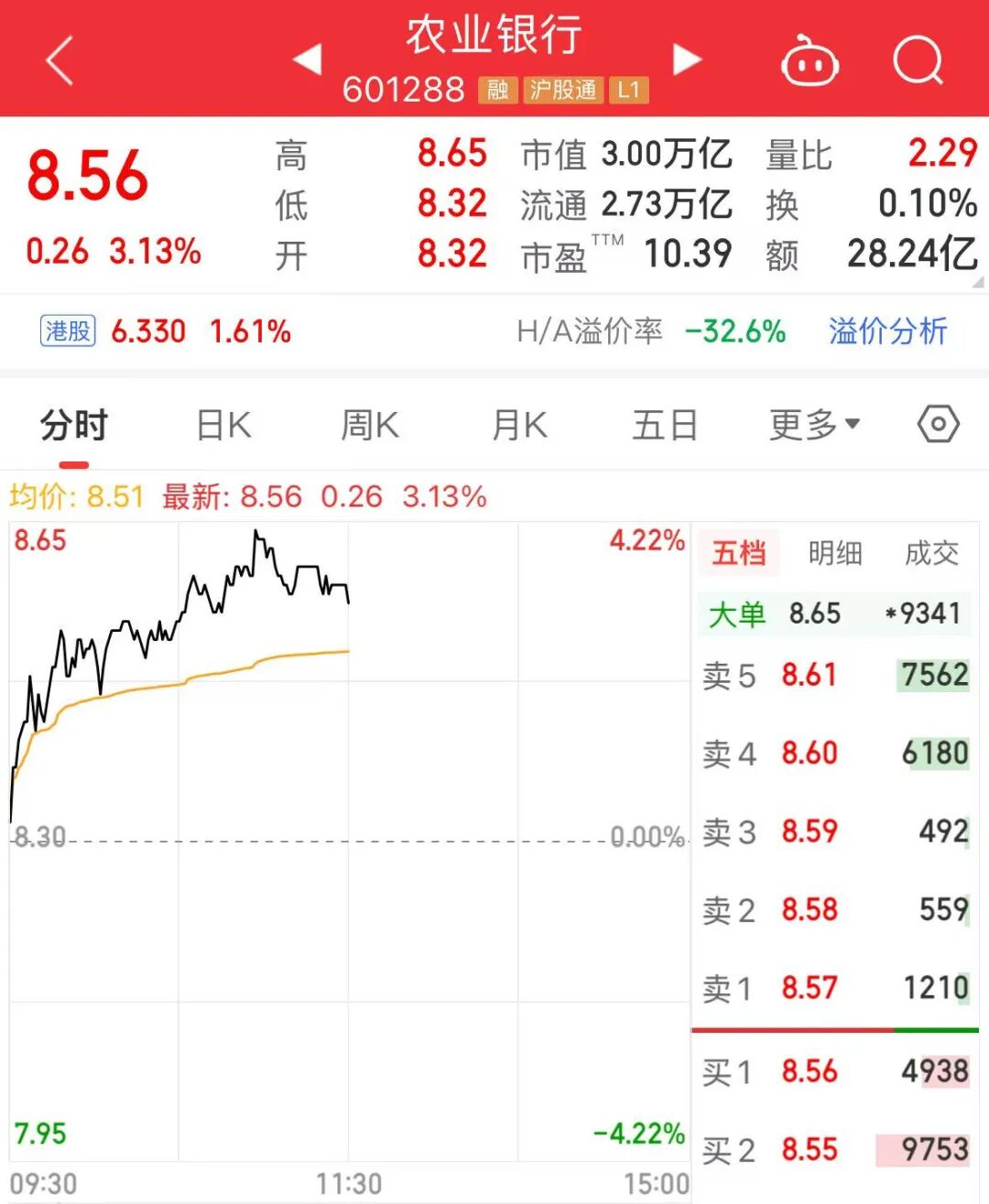
Group 1: Agricultural Bank Performance - Agricultural Bank experienced a 14-day consecutive rise in stock price from September 25 to October 22, breaking the long-standing price-to-book (PB) ratio below 1, now exceeding 1 [1][6] - The stock price increased by 3.13% today, reaching a market capitalization of 3 trillion yuan, making it the largest in A-shares [1][2] - The PB ratio of Agricultural Bank is currently at 1.09, while other major banks like Industrial and Commercial Bank of China (ICBC) and China Construction Bank have PB ratios of 0.773 and 0.737 respectively [6] Group 2: Key Highlights of Agricultural Bank - Agricultural Bank benefits from the potential release of county-level economic growth and has a larger credit growth space compared to peers due to its deep layout in these regions [6][7] - The bank has the highest proportion of personal demand deposits among comparable peers, leading to lower deposit costs and stronger interest margin resilience [6] - Agricultural Bank maintains the lowest non-performing loan ratio among its peers while having a strict recognition of non-performing loans [6][7] - The bank's high provisions strengthen its risk compensation and profit reinvestment capabilities, leading the industry [7] Group 3: Market Trends - The banking sector saw an overall rise today, with Agricultural Bank, Bank of China, and Chongqing Rural Commercial Bank among the top gainers [4][5] - The Shanghai Composite Index fell by 0.24%, while the Shenzhen Component Index and the ChiNext Index dropped by 1.07% and 1.58% respectively [3]


“非赛道选手”的易方达蔡荣成:理解科技创新,找到那些真正能够创造时代价值的企业
聪明投资者· 2025-11-12 03:33
Core Insights - The article emphasizes the importance of avoiding arrogance in technology investments, advocating for a deep understanding of technological innovations and their value creation potential [4][3]. - It highlights the investment philosophy of Cai Rongcheng from E Fund, focusing on identifying companies with strong value creation capabilities and significant revaluation potential within major industry trends [4][5]. Investment Philosophy - Cai Rongcheng believes that successful investment in the technology sector requires a return to fundamentals, understanding the true value of technological innovations, and developing sustainable investment strategies [4][5]. - His approach involves identifying high-quality growth companies with scarcity or shortage in supply, high competitive barriers, and excellent management [7]. Performance Metrics - As of November 7, 2025, Cai Rongcheng manages five funds with a total scale of 66.73 billion, achieving a return of 111.07% since taking over the E Fund Technology Innovation fund on April 21, 2022, with an annualized return of 23.54% and a year-to-date return of 74.46% [5][6]. - The performance of his funds significantly outperformed the market, with the CSI 300 index returning 17.94% and the electronics sector returning 47.96% during the same period [5]. Investment Strategy - Cai Rongcheng employs a cyclical thinking framework to understand industry undervaluation and overvaluation, focusing on supply and demand elasticity to identify investment opportunities and mitigate market risks [7]. - He emphasizes the importance of drawdown control and avoids zero-sum games, seeking elastic returns within a framework that minimizes significant losses [7]. Case Studies - The article discusses successful investments in companies like Baoxin Software and Tonghuashun, which benefited from the AI wave, showcasing Cai's ability to identify and capitalize on growth opportunities [13][15]. - Cai's investment in Huadian Co., which saw an 82.06% increase in stock price, exemplifies his strategy of buying at market bottoms and making timely exits to secure profits [15]. Future Outlook - Cai Rongcheng anticipates that 2025 will mark the beginning of a significant AI revolution, with increasing demand for computing power and the rapid adoption of AI technologies across various industries [26][27]. - He identifies three main sources of alpha assets: companies with core competitiveness in overseas markets, assets that provide stable returns, and industry leaders with strong risk resilience [30][31].

证券IT板块走弱,湘财股份触及跌停
Xin Lang Cai Jing· 2025-11-12 02:43
Group 1 - The securities IT sector is experiencing a downturn, with Xiangcai Co., Ltd. hitting the daily limit down [1] - Other companies such as Lingzhi Software, Great Wisdom, Guiding Compass, Yingshisheng, Tonghuashun, and Jinzhen Co., Ltd. are also seeing declines [1]

2025年中国通用商业大数据服务行业产业链、市场规模、各业务形态代表企业及行业发展趋势研判:应用场景不断拓展,市场规模将将增长至199亿元[图]
Chan Ye Xin Xi Wang· 2025-11-12 01:30
Core Insights - The general commercial big data service industry in China is experiencing rapid growth, driven by the integration of data and industry, as well as the ongoing digital transformation across various sectors [1][4] - The market size for general commercial big data services is projected to reach 17.4 billion yuan in 2024, an increase of 2.5 billion yuan from 2023, and is expected to grow to 19.9 billion yuan in 2025, with a potential of reaching 28.7 billion yuan by 2028 [1][4] Industry Definition and Classification - General commercial big data services are defined as standardized products and services based on enterprise-related data processed through big data technologies, applicable across various business scenarios [3][4] - The services can be categorized into general and specialized commercial big data services, depending on the reusability and applicability of the products or services [2][3] Current Development Status - The rapid development of big data has led to an explosive growth in data volume, providing abundant resources for the general commercial big data service industry [4][6] - The total data production in China is expected to reach 41.06 zettabytes in 2024, a 25% increase from 2023, with new data storage capacity growing by 20.81% to 2.09 zettabytes [6] Industry Chain - The industry chain consists of upstream hardware suppliers (network, computer, and storage devices), midstream service platforms, and downstream applications across various sectors such as government, finance, telecommunications, healthcare, and logistics [4][5] Competitive Landscape - Major players in the general commercial big data service industry include Qichacha, Tonghuashun, and various other companies specializing in different data service types [7][8] - Qichacha, for instance, has over 150 million registered users and reported revenues of 5.18 billion yuan in 2022, with a projected compound annual growth rate of 16.89% through 2024 [7] - Tonghuashun, a pioneer in securities analysis software, reported total revenue of 1.529 billion yuan in 2024, an increase of 416 million yuan from the previous year [8] Development Trends - The future growth of the general commercial big data service industry is expected to be driven by advancements in artificial intelligence, big data mining, and visual analysis technologies, with an expanding range of application scenarios [8][9]



【11日资金路线图】农林牧渔板块净流入逾18亿元居首 龙虎榜机构抢筹多股
Zheng Quan Shi Bao· 2025-11-11 11:26
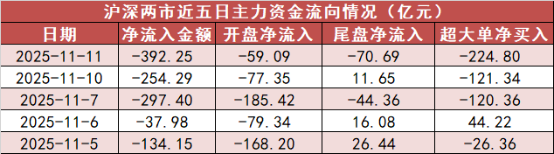
Market Overview - The A-share market experienced an overall decline on November 11, with the Shanghai Composite Index closing at 4002.76 points, down 0.39%, the Shenzhen Component Index at 13289.01 points, down 1.03%, and the ChiNext Index at 3134.32 points, down 1.4% [1] - The total trading volume in the A-share market was 20140.66 billion yuan, a decrease of 1805.65 billion yuan compared to the previous trading day [1] Capital Flow - The main capital in the A-share market saw a net outflow of 392.25 billion yuan, with an opening net outflow of 59.09 billion yuan and a closing net outflow of 70.69 billion yuan [2] - The CSI 300 index had a net outflow of 164.85 billion yuan, while the ChiNext saw a net outflow of 150.26 billion yuan, and the STAR Market recorded a net inflow of 3.62 billion yuan [4] Sector Performance - The agriculture, forestry, animal husbandry, and fishery sector led with a net inflow of 18.27 billion yuan, followed by the food and beverage sector with 12.51 billion yuan [6][7] - The electronics sector experienced the largest net outflow of 267.33 billion yuan, followed by the power equipment sector with 151.54 billion yuan [7] Notable Stocks - Xingsen Technology had the highest net inflow of 4.92 billion yuan among individual stocks [8] - Institutions showed significant interest in stocks such as Sifangda, which saw a net institutional buy of 109.86 million yuan, and Shengong Technology with a net buy of 95.08 million yuan [10][11] Institutional Focus - Recent institutional ratings highlighted stocks like Aofei Data with a target price of 29.78 yuan, indicating a potential upside of 56.57% from its latest closing price [12]
【11日资金路线图】农林牧渔板块净流入逾18亿元居首 龙虎榜机构抢筹多股
证券时报· 2025-11-11 11:24
Market Overview - The A-share market experienced an overall decline on November 11, with the Shanghai Composite Index closing at 4002.76 points, down 0.39%, the Shenzhen Component Index at 13289.01 points, down 1.03%, and the ChiNext Index at 3134.32 points, down 1.4% [1] - The total trading volume in the A-share market was 20140.66 billion yuan, a decrease of 1805.65 billion yuan compared to the previous trading day [1] Capital Flow - The main capital in the A-share market saw a net outflow of 392.25 billion yuan, with an opening net outflow of 59.09 billion yuan and a closing net outflow of 70.69 billion yuan [2] - The CSI 300 index had a net outflow of 164.85 billion yuan, while the ChiNext saw a net outflow of 150.26 billion yuan, and the STAR Market recorded a net inflow of 3.62 billion yuan [4] Sector Performance - Among the primary sectors, the agriculture, forestry, animal husbandry, and fishery industry led with a net inflow of 18.27 billion yuan, followed by food and beverage with 12.51 billion yuan, and banking with 9.00 billion yuan [6][7] - The electronics sector faced the largest net outflow of 267.33 billion yuan, followed by electric power equipment with 151.54 billion yuan, and computer sector with 140.01 billion yuan [7] Individual Stock Highlights - Xingsen Technology had the highest net inflow of 4.92 billion yuan among individual stocks [8] - Institutional investors showed significant interest in several stocks, with Sifangda seeing a net institutional buy of 109.86 million yuan, and Shengkong Technology experiencing a net sell of 602.44 million yuan [10][11] Institutional Focus - Recent institutional ratings highlighted several stocks, including Yuanfei Data with a target price of 29.78 yuan, indicating a potential upside of 56.57% from its latest closing price [13]

新起点下的双向奔赴:“十五五”下金融发展机会暨2026年非银金融行业策略
Guoxin Securities· 2025-11-11 11:02
Group 1: Core Insights - The report anticipates a deeper interaction between macroeconomics and capital markets in 2026, driven by policy guidance and industrial upgrades, leading to structural opportunities in technology innovation and green economy [2] - The capital market's funding structure is expected to become more balanced, with significant inflows into public funds and asset management products as residents shift from savings to investments [2] - The securities industry is poised for a long-term improvement in ROE, with a focus on AI technology applications and cross-border business layouts, potentially increasing ROE from the current 6% to 10% [2] Group 2: Market Dynamics - Insurance companies are shifting from investment-driven strategies to focusing on genuine customer needs, leading to product innovation and value enhancement [2] - The report highlights the importance of the "super central bank" in managing monetary and liquidity cycles, which influences short-term and long-term interest rates [40][68] - The report notes that the current economic environment is characterized by a low interest rate central tendency, providing a loose liquidity foundation for economic transformation [76] Group 3: Financing and Investment Trends - The report indicates that the financing channels for the securities industry will gradually open up, supporting its transformation and upgrade [2] - Non-bank financial institutions are experiencing an increase in deposits as residents seek higher-yielding investment options, indicating a shift in asset allocation [110] - The growth of asset management institutions is highlighted, with a focus on alternative assets like ABS and REITs, which are expected to be good investment directions [116]
同花顺果指数概念下跌1.68%,7股主力资金净流出超亿元
Zheng Quan Shi Bao Wang· 2025-11-11 08:40
Group 1 - The Tonghuashun Fruit Index concept fell by 1.68%, ranking among the top declines in the concept sector, with notable declines in companies such as Lante Optics, Industrial Fulian, and Lens Technology [1] - The leading gainers in the concept sector included Dongshan Precision, Zhuhai Guanyu, and Desay Battery, with increases of 2.53%, 0.43%, and 0.21% respectively [1] - The concept sectors with the highest gains included Cultivated Diamonds at 6.08% and Perovskite Batteries at 2.98%, while sectors like Chinese AI 50 and Internet Insurance saw declines of 1.76% and 1.43% respectively [1] Group 2 - The Tonghuashun Fruit Index concept experienced a net outflow of 3.492 billion yuan, with 15 stocks seeing net outflows, and 7 stocks with outflows exceeding 100 million yuan [1] - Industrial Fulian had the highest net outflow of 1.462 billion yuan, followed by Luxshare Precision, Lingyi Technology, and GoerTek with outflows of 620 million yuan, 453 million yuan, and 450 million yuan respectively [1] - The stocks with the highest net inflows included Dongshan Precision, Xunwei Communication, and Zhongshi Technology, with inflows of 461 million yuan, 8.196 million yuan, and 1.444 million yuan respectively [2]




“十五五”下金融发展机会暨2026年非银金融行业策略:新起点下的双向披荆斩棘
Guoxin Securities· 2025-11-11 07:33
Core Insights - The report emphasizes that the year 2026, marking the beginning of the "14th Five-Year Plan," will witness deeper interactions between the macro economy and capital markets, driven by policy guidance and industrial upgrades, leading to structural opportunities in technology innovation and green economy [2] - The capital market's funding structure is expected to become more balanced, with a shift from savings to investments as residents become more aware of asset allocation, benefiting asset management products like public funds and bank wealth management [2] - The report anticipates a gradual relaxation of refinancing, providing long-term opportunities for the securities industry to enhance ROE from the current average of 6% to 10% by focusing on innovative areas such as AI applications and cross-border business [2] - Insurance companies are shifting from investment-driven strategies to focusing on real customer needs, leading to product innovation and value enhancement in areas like dividend insurance, health insurance, and pension insurance [2] Section Summaries 01 Structure: A New Starting Point - The financial industry is entering a new phase characterized by the dual drive of policy and industrial upgrades, fostering a new ecosystem of mutual engagement between industry and finance [2] 02 Market: A New Balance of Funds - The report highlights a structural shift in capital allocation, with increased investment in asset management products and a steady entry of long-term, low-risk institutional investors like insurance and annuities [2] - The "national team" funds are expected to continue stabilizing the market, allowing for a gradual release of previously restricted activities such as shareholder reductions and refinancing [2] 03 Securities: New Transformation After Financing - The securities industry is poised for a long-term improvement in ROE as financing channels open up, enabling a focus on innovative fields that enhance service efficiency and asset pricing capabilities [2] - The report suggests that the industry will increasingly invest in AI technology and cross-border business, moving away from homogeneous competition [2] 04 Insurance: New Value After Stabilization - Insurance companies are expected to innovate products that meet genuine customer needs, reducing reliance on investment volatility and focusing on protection-oriented businesses [2] - This transition aligns with societal trends such as aging populations and health management needs, leading to steady growth in new business value and embedded value [2]
软件概念股走弱,软件ETF跌超2%
Mei Ri Jing Ji Xin Wen· 2025-11-11 07:01
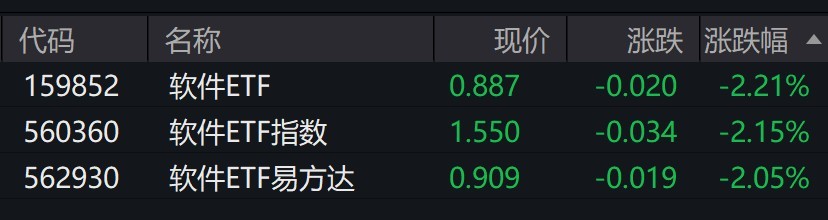
Group 1 - Software concept stocks weakened, with Guiding Compass falling over 7%, and Keda Xunfei, Tonghuashun, Kingsoft Office, and Tuwei Information each dropping over 2% [1] - The software ETF declined by more than 2% due to market influences [1] Group 2 - Institutions indicate that in the context of increasing global technological competition, the autonomy and control of basic software is not only a national security requirement but also a necessary choice for sustainable industrial development [2] - Future basic software companies will face higher technical requirements and stronger competitive pressures, but this also means more market opportunities [2] - With the continuous advancement of domestic substitution and the deepening of financial services in the industrial chain, basic software companies are expected to transition from "following" to "keeping pace" and then to "leading," providing solid underlying technical support for China's new industrialization and high-quality development [2]