智元机器人

Search documents
一图读懂|人形机器人爆发元年!产业链核心标的全梳理
机器人圈· 2025-12-18 10:18
Core Insights - The humanoid robot industry is expected to transition from laboratory experiments to industrialization by 2025, with significant orders already being secured by leading companies like UBTECH, ZhiYuan, and Yushu, including a record order of 250 million yuan by UBTECH in September [1] - The humanoid robot sales in China are projected to exceed 10,000 units this year, representing a year-on-year growth of 125% [1] Group 1: Key Players in the Humanoid Robot Market - The main players in the domestic humanoid robot sector include automotive companies, startups, and tech giants [2] - Notable companies entering the market include UBTECH, Xiaomi, Xiaopeng Motors, and ZhiYuan, with significant product launches and strategic partnerships [3][4] Group 2: Industry Chain and Manufacturing - The manufacturing of humanoid robots can be divided into three main components: "brain" (perception, decision-making, human-machine interaction), "small brain" (cloud motion control), and the physical body [5][6] - Key components in the physical manufacturing include actuators, sensors, batteries, and skin materials [6] Group 3: Notable Companies in the Industry Chain - Companies involved in the "brain" and "small brain" segments include major internet firms like Tesla, Google, and NVIDIA, as well as startups like Youlu Robotics and Qianjue Technology [7] - For physical manufacturing, companies such as UBTECH, Xiaomi, and ZhiYuan are highlighted for their contributions to the development of humanoid robots [9] Group 4: Major Industry Events and Developments - Significant investments and partnerships are being formed, such as the 20.27 billion yuan fundraising by Green Harmonic for new precision transmission devices [11] - Companies like Huazhong University and various tech firms are collaborating on research and development for humanoid robots, indicating a strong focus on innovation in this sector [13][14]






商汤旗下大晓机器人发布具身超级大脑模组A1等 与智元机器人、卧龙电驱等达成合作
Xin Lang Cai Jing· 2025-12-18 09:31
Group 1 - SenseTime's subsidiary, Daxiao Robotics, has launched the ACE embodied research paradigm and the first open-source commercial application of the Kairos 3.0 world model [1] - The Kairos 3.0 model has been adapted to work with several domestic chip manufacturers, including Muxi Co., Biran Technology, and Zhongke Shuguang [1] - Daxiao has established partnerships with various embodied entities such as Zhiyuan Robotics, Galaxy General, and Titan Tiger Robotics, as well as hardware manufacturers like Insta360, Wolong Electric Drive, and Parsini [1]

摸着智元过河,追觅先掏超22亿
3 6 Ke· 2025-12-18 08:19
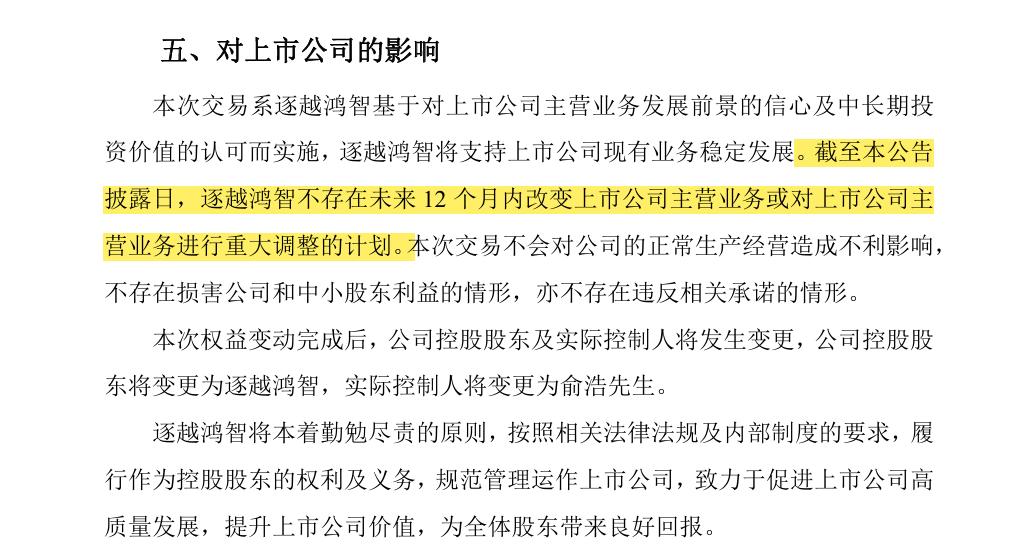
美国同行iRobot刚刚宣布破产,追觅就计划斥资超22亿元买下一家上市公司。按照杉川以近25亿接盘iRobot计算,追觅这笔钱放在对其扫地机等 家电清洁赛道产品的赋能来看,可能并不划算。 12月16日晚间,A股上市企业嘉美包装发布公告,追觅科技创始人俞浩,通过旗下持股平台苏州逐越鸿智,以"协议转让+主动要 约"的组合拳,斥资逾22.82亿元拿下嘉美包装公司控制权。 在这笔收购前,追觅对外的投资出手并不多。 业务边界的扩张,主要内部孵化事业群的模式进行。截至到今年上半年,追觅系有智能清洁事业群、个护事业群、科技机器人事业群、汽车事 业群、大家电事业群等。已布局的产品赛道包括但不限于:家电清洁、运动相机、人形机器人、具身大模型、新能源汽车、3D打印、火锅咖 啡、商业航空等。 不过根据披露的交易公告显示,目前不存在未来12个月内改变上市公司主营业务或对上市公司主营业务进行重大调整的计划。尽管尚未构成实 质性的借壳上市,但是控股股东变更,依然在资本市场受到热捧。 不过,这些公司都是追觅系的孵化业务。嘉美包装这笔交易,可以算是俞浩在原有追觅体系之外的大手笔花销。同时因为嘉美包装是上市公 司,因此这笔交易也被外界猜测为追 ...
东海证券晨会纪要-20251218
Donghai Securities· 2025-12-18 07:27
Group 1: Key Recommendations - Focus on the commercialization progress of embodied intelligent robots, anticipating the establishment of industry standards and ecosystem co-construction [5] - Yushu Technology recently launched a humanoid robot "App Store," facilitating model training and sharing, which is expected to lay the foundation for product ecosystem development [5] - UBTECH has signed a humanoid robot sales contract worth over 50 million yuan, primarily involving the Walker S2 robot, which will be delivered within the year [6] - ZhiYuan Robotics has achieved mass production of its 5000th general-purpose embodied robot, indicating a significant scale-up in production capabilities [6][7] Group 2: Industry Tracking - The establishment of industry standards and evaluation systems is accelerating, which is expected to guide the orderly development of the industry [7] - The "Humanoid Robot Intelligence Grading" standard has been developed, categorizing humanoid robots into five levels (L1-L5), aiding companies in clarifying technological development directions [7][8] - The Beijing Humanoid Robot Innovation Center is building a public service platform for embodied intelligent robots, providing comprehensive services from technology development to industrial application [8] Group 3: U.S. Employment Market Observations - The U.S. non-farm employment data for November 2025 showed an increase of 64,000 jobs, slightly above expectations, but the unemployment rate rose from 4.4% to 4.6%, the highest since October 2021 [11][12] - The increase in the unemployment rate is primarily attributed to a surge in re-employment, with 293,000 re-employed individuals in October and November, contributing significantly to the unemployment figures [12][16] - The labor market is exhibiting signs of "tight balance" vulnerability, with an increase in both immigrant and domestic labor supply, while demand remains weak [12][16] Group 4: Financial News - From January to November 2025, the national general public budget revenue was 200,516 billion yuan, a year-on-year increase of 0.8%, with tax revenue growing by 1.8% [19] - The general public budget expenditure for the same period was 248,538 billion yuan, reflecting a year-on-year increase of 1.4% [19]
机械设备行业周报:关注具身智能机器人商业化进展,期待行业标准与生态共建-20251217
Donghai Securities· 2025-12-17 09:24
Investment Rating - The industry investment rating is "Overweight" indicating that the industry index is expected to outperform the CSI 300 index by 10% or more in the next six months [29]. Core Insights - The report emphasizes the commercialization progress of embodied intelligent robots and the expectation for the standardization system to further improve, promoting the development of the robotics industry [3][4]. - Key developments include the launch of a humanoid robot "App Store" by Yushu Technology, which facilitates model sharing and training, and the signing of a sales contract by UBTECH for humanoid robots worth over 50 million yuan [4][9]. - The establishment of the "Humanoid Robot Intelligence Grading Standard" aims to classify humanoid robots into five levels, providing a framework for technology development and product selection [12][11]. Summary by Sections 1. Robotics Industry Dynamics - Yushu Technology launched a humanoid robot "App Store" to enhance model sharing and ecosystem development [4][9]. - UBTECH signed a contract for the sale of humanoid robots with a total value exceeding 50 million yuan, focusing on the Walker S2 model [4][9]. - ZhiYuan Robotics achieved the mass production of its 5000th general-purpose humanoid robot, indicating a significant scale-up in production capabilities [4][10]. - The report highlights the need for industry standards to address issues like product homogeneity and data sharing challenges [11]. - The establishment of a public service platform for embodied intelligence aims to support technology development and resource sharing [13]. 2. Refrigeration Equipment Industry Tracking - Daikin's acquisition of Chilldyne marks a strategic move into the liquid cooling sector for data centers, enhancing its technological capabilities [14]. - Vertiv's acquisition of PurgeRite for approximately 1 billion USD reflects the industry's trend towards integrating product and service offerings in liquid cooling solutions [15]. - The demand for efficient refrigeration equipment is expected to rise due to the growth of data centers, with a projected 19% CAGR in global data center capacity from 2023 to 2030 [16][18]. 3. Market Review - The report notes that the mechanical equipment sector outperformed the CSI 300 index, with a weekly increase of 1.38%, ranking 4th among 31 sectors [23].
具身智能产业深度研究(七):新一代“蓝领”:人形机器人如何站上工厂流水线
Haitong Securities· 2025-12-17 06:28
Investment Rating - The report does not explicitly state an investment rating for the industry Core Insights - In industrial scenarios, humanoid robots are primarily suited for handling and quality inspection tasks, with a focus on ROI and the potential for expansion into more processes as their generalization capabilities improve [1][10][11] - The market demand for humanoid robots in China's industrial sectors, including automotive manufacturing, electronics manufacturing, and logistics warehousing, is projected to reach 484,000 units by 2035, with a market space exceeding 48 billion yuan [4][12] Summary by Sections 1. Core Insights - Humanoid robots are best suited for handling and quality inspection tasks, gradually expanding into basic assembly tasks as their capabilities develop [3][11] - The commercial viability hinges on achieving a return on investment (ROI) within two years, necessitating a reduction in robot prices to around 100,000 yuan and efficiency improvements to match human performance [3][11] 2. Industrial Manufacturing Flexibility - The demand for flexibility in manufacturing is increasing, with humanoid robots starting from short-chain tasks and gradually taking on more complex tasks [2][16] - Humanoid robots complement industrial robots, adapting to flexible production needs and enhancing operational efficiency [2][17] 3. Market Potential - The total demand for humanoid robots in the industrial sector is expected to reach 484,000 units by 2035, with a market potential of 48.36 billion yuan [4][12] - Collaboration between automotive companies and robotics firms is crucial for the deployment of humanoid robots in industrial settings, with companies like Tesla and XPeng leading the way [4][12]


人形机器人走向大众?宇树科技首发应用商店,行业生态“暗战”浮出水面
Hua Xia Shi Bao· 2025-12-17 04:59
Core Insights - The article discusses the challenges and advancements in the humanoid robot market, particularly focusing on the efforts of companies like Yushu Technology and Zhiyuan Robotics to lower the technical barriers for users [3][9][10] Group 1: Market Demand and User Experience - Many sellers on second-hand platforms are offloading humanoid robots due to high technical barriers, indicating that widespread adoption of humanoid robots in daily life is still a distant goal [3][6] - Yushu Technology has launched its first humanoid robot application store, allowing users without professional knowledge to operate robots, while Zhiyuan Robotics has introduced the "Lingchuang" platform to encourage user participation in robot development [3][6][9] - The current application store from Yushu Technology is in public testing, offering only three actions for its G1 humanoid robot, which reflects the limited initial offerings available to users [5][7] Group 2: Development Platforms and Ecosystem - The development of platforms like Yushu Technology's application store and Zhiyuan Robotics' "Lingchuang" is driven by the market demand for secondary development of humanoid robots [9][10] - The platforms aim to bridge the gap between developers and ordinary users, allowing for easier access to robot programming and customization [9][10] - Experts suggest that the success of these platforms hinges on building a robust ecosystem that combines hardware and software, similar to successful models seen in companies like Apple and NVIDIA [10][11] Group 3: Challenges and Future Outlook - Despite the advancements, the hardware sales of humanoid robots have not reached a critical mass, making the software offerings seem less essential in the current market [11] - The article emphasizes that the primary challenge remains in expanding the user base for humanoid robots, as a larger user base is necessary for a thriving software ecosystem [11]


32万亿中长期定存明年到期,“存款搬家”有望持续|首席资讯日报
首席商业评论· 2025-12-17 04:34
Group 1 - The upcoming maturity of over 170 trillion yuan in household deposits next year indicates a significant increase of nearly 20 trillion yuan compared to this year, with 32 trillion yuan in deposits maturing for terms longer than two years [2] - The successful launch of the Resource 3-04 satellite marks a significant achievement for China's space program, being the 617th flight of the Long March series rockets [3] - China's railway system has set a historical record by sending 4.28 billion passengers from January to November, reflecting a year-on-year growth of 6.6% [4] Group 2 - Huawei has undergone a leadership change with Yu Chengdong appointed as the new chairman of Huawei Terminal Co., replacing Guo Ping [5] - Wedbush Securities predicts that Tesla's market value could reach 3 trillion dollars by the end of 2026, driven by its advancements in artificial intelligence [6][7] - In Beijing, the sales area of new commercial housing from January to November has decreased by 4.6% year-on-year, with residential sales down by 6.9% [8] Group 3 - Singapore welcomed 15.5 million inbound travelers in the first eleven months of the year, with China remaining the largest source market [9] - Maserati's Grecale model has seen a surge in sales following significant price reductions, indicating a strong demand in the luxury car market [10] - New Hope Liuhe's IPO application has expired after six months, with CICC as its sole sponsor [11] Group 4 - In Beijing, the added value of strategic emerging industries and high-tech manufacturing increased by 16.5% and 8.4% respectively from January to November [11] - Zhiyuan Robotics has invested in Chidream Technology, a company focused on the development of companion robots [12] - Hainan Free Trade Port is preparing for its upcoming customs operations, with all necessary measures in place for effective management [13]

最近具身界的一些进展......
具身智能之心· 2025-12-17 03:50
Core Insights - The article discusses the recent developments in the embodiment community, focusing on investment, production, product design, model generalization, and deployment in the robotics industry [1]. Financing - In the second half of the year, apart from a few star companies, the financing amounts for core component companies have increased, and the number of companies has also grown [2]. Production - Several companies have begun pilot projects, with many startups seeking financing backed by orders. Leading humanoid robot companies are exploring the deployment of industrial-grade products [2]. Product Design - The design of core robotic arms is gradually converging, while innovations in structure and size continue in mobile operations and humanoid robots. Companies are also focused on reducing costs, with supply chain management capabilities significantly influencing future competitiveness. Leading embodiment companies are actively investing in component suppliers, and multi-modal robots are slowly appearing in various scenarios [2]. Model Generalization - The optimization approach based on Reinforcement Learning (RL) is enhancing the generalization capabilities of models. Related toolkits are becoming more refined, making real machine deployment increasingly convenient [3]. Deployment - The launch of the S600 by Digua Robotics supports edge-side deployment. Thor is beginning to be applied in humanoid robots and mobile operations, with computing power exceeding 2000T becoming a reference configuration [4]. Community Development - The community is actively planning research reports and welcomes newcomers interested in the embodiment field. Over the past year, the community has completed various segments, including technical route sharing, live broadcasts, Q&A, job opportunities, and competitions, aiming to cultivate more talented individuals in the industry [6]. Educational Resources - The community offers a variety of live roundtable forums and broadcasts covering topics from embodiment, data, to algorithms, gradually sharing insights into the industry and unresolved issues [8]. - For beginners, a comprehensive technical stack and learning routes have been organized to facilitate entry into the field [10]. - For those already engaged in related research, valuable industry systems and project proposals are provided [14]. Job Opportunities - The community has established a job referral mechanism with multiple embodiment companies, allowing members to submit resumes directly to desired companies [16].
150家企业扎堆内卷 人形机器人核心零件卡脖子或比同质化泡沫更致命
Xi Niu Cai Jing· 2025-12-17 00:37
Core Insights - The Chinese humanoid robot industry is experiencing a surge in the number of companies, with over 150 firms currently operating, more than half of which are startups or from other sectors [1][6] - Concerns about a "bubble" in the humanoid robot market have been raised due to the high number of similar products being launched, despite the market's limited size [2][8] - The Ministry of Industry and Information Technology has established a standardization technical committee for humanoid robots, indicating a move towards standardization in the industry [1][4] Market Dynamics - IDC estimates that the commercial sales volume of humanoid robots in China will be around 2,000 units in 2024, with projections of reaching 60,000 units by 2030 [2] - GGII data suggests that approximately 800 humanoid robots will be sold in 2024, with sales exceeding 4,000 units in the first half of 2025 [2] - Despite the rapid growth in the number of companies, the actual market capacity remains limited, leading to a phenomenon of product saturation [2][8] Product Pricing and Competition - The price of humanoid robots has significantly decreased, with some models like the Yushun R1 priced at 30,000 yuan and others like the Songyan Power's Xiaobu Mi robot priced below 10,000 yuan [6] - The competitive landscape is characterized by a proliferation of similar products, which raises concerns about resource wastage and market sustainability [7][8] Core Component Challenges - The humanoid robot industry faces significant challenges related to core components, which are largely dominated by foreign companies [9][10] - Key components such as lead screws, reducers, and various sensors are critical to the functionality of humanoid robots, with domestic companies struggling to produce these at scale [9][10][17] - The market for lead screws in China is estimated to be around 2.57 billion yuan in 2023, with a high concentration of foreign ownership [12][13] Industry Trends and Future Outlook - The current situation reflects a historical pattern where Chinese companies rush into emerging markets without fully understanding their capabilities, leading to a potential bubble [18][19] - Although 2025 is being touted as the "year of mass production" for humanoid robots, significant barriers remain before widespread adoption can occur [20]