洋河股份

Search documents
12月5日深证国企股东回报(970064)指数涨1.95%,成份股电投能源(002128)领涨
Sou Hu Cai Jing· 2025-12-05 11:27
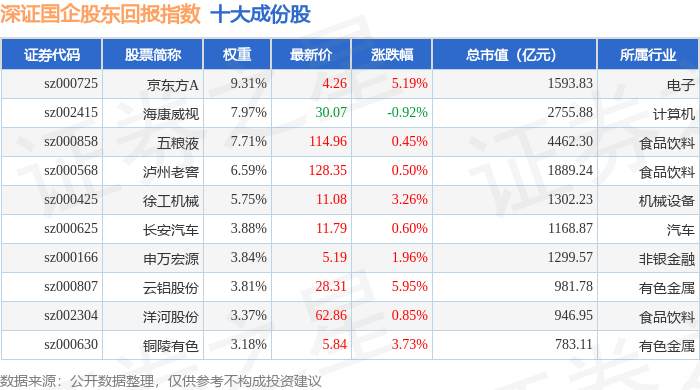
Core Viewpoint - The Shenzhen State-Owned Enterprises Shareholder Return Index (970064) closed at 1668.3 points on December 5, with a 1.95% increase and a trading volume of 32.01 billion yuan, indicating positive market sentiment towards state-owned enterprises [1]. Group 1: Index Performance - The index saw 43 constituent stocks rise, with Electric Power Investment leading at a 6.96% increase, while 6 stocks declined, with China Merchants Shekou leading the decline at 1.91% [1]. - The top ten constituent stocks of the index include BOE Technology Group (9.31% weight, 4.26 yuan, 5.19% increase) and Huatai Securities (3.84% weight, 5.19 yuan, 1.96% increase) [1]. Group 2: Capital Flow - The net inflow of main funds into the index's constituent stocks totaled 1.242 billion yuan, while retail investors experienced a net outflow of 365 million yuan [3]. - Major stocks like BOE Technology Group had a net inflow of 901 million yuan, while other stocks like Tongling Nonferrous Metals saw a net inflow of 205 million yuan [3]. Group 3: Index Adjustments - Recent adjustments to the index included the addition of 10 new stocks and the removal of 10 stocks, reflecting changes in market dynamics [4]. - New additions include Zhongmi Holdings (total market value 7.349 billion yuan) and Gujing Gongjiu (total market value 87.906 billion yuan), while removals include Xinyu Media and Yanghe Brewery [4].






深交所问询百通能源再融资:业绩下滑、蒸汽量价背离、现金流紧张背后风险
2 1 Shi Ji Jing Ji Bao Dao· 2025-12-05 02:49
Core Viewpoint - The company, Baitong Energy, is facing scrutiny from the Shenzhen Stock Exchange regarding its financial performance, with concerns about revenue stability, declining capacity utilization, and increasing management expenses [1] Financial Performance - The company's overall revenue remained stable during the reporting period, with a slight growth expected in 2024, but a decline in performance is anticipated for the first half of 2025 [1] - Steam and electricity prices have fluctuated, leading to a decrease in heating capacity utilization from 82.89% to 64.59%, while the production and sales rate increased from 72.79% to 84.73%, indicating a divergence in trends [1] Management Expenses - Management expenses have risen significantly, attributed to an increase in the number of management personnel and higher average salaries, with year-on-year growth of 43.17% in 2023 and 29.03% in 2024 [2] Cash Flow and Assets - The net cash flow for the first half of 2025 decreased from 395 million yuan at the end of 2024 to approximately 71.16 million yuan, with current assets reducing by about 200 million yuan [1] - The decline in cash flow and current assets is linked to the repayment of 208 million yuan in short-term loans and seasonal production halts by a key customer, leading to reduced accounts receivable and inventory [2] - By the end of September, current assets had rebounded to 589 million yuan, indicating a recovery in the asset structure [2] Regulatory and Compliance Issues - The company is facing two environmental penalties and has issues with obtaining property certificates for buildings on its own land, as well as constructing facilities on leased land [1] - The company asserts that the buildings without property certificates do not involve significant violations, and there are no major obstacles regarding the renewal of leased land and facility relocation [2]
酒价内参12月5日价格发布 青花郎下跌5元
Xin Lang Cai Jing· 2025-12-05 01:36
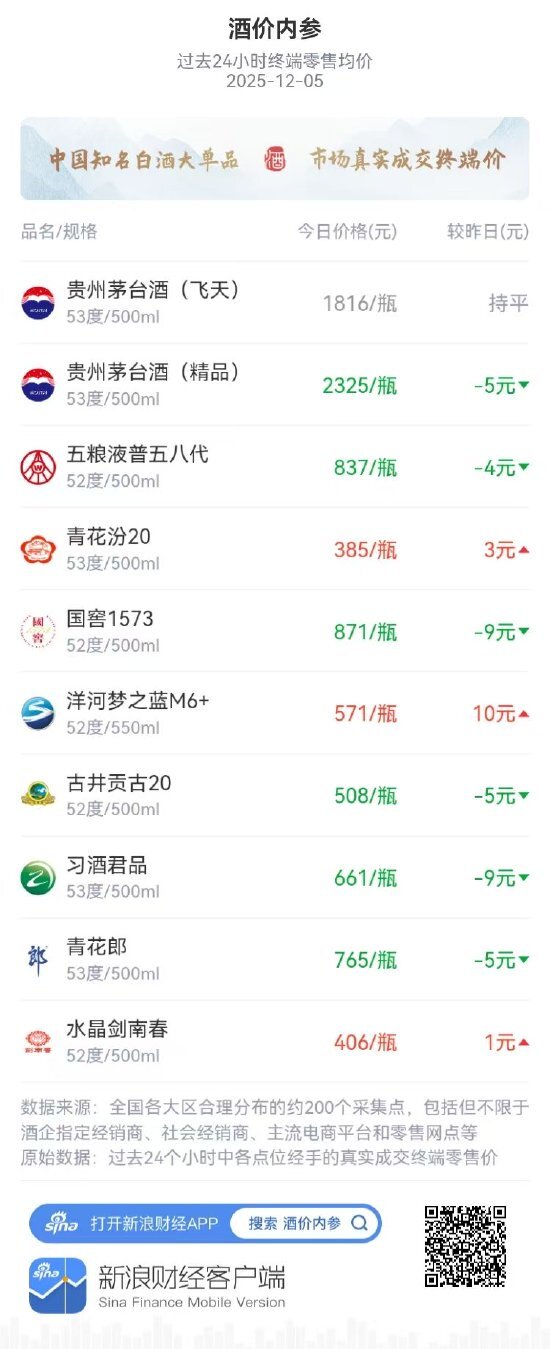
Core Viewpoint - The white liquor market is experiencing a downward trend in retail prices, with the average price of the top ten products decreasing for the second consecutive day, indicating a weak adjustment in the market [1]. Price Trends - The total price for a package of the top ten white liquor products is 9,145 yuan, down 23 yuan from the previous day [1]. - Most products are primarily declining, but some have stabilized or increased in price, such as Yanghe Dream Blue M6+, which rose by 10 yuan per bottle [1]. - Other notable price changes include Qinghua Fen 20 increasing by 3 yuan, and Crystal Jian Nan Chun rising by 1 yuan, while Xijiu Junpin and Guojiao 1573 both fell by 9 yuan [1][3]. Market Analysis - The valuation of Moutai is a central topic of debate, with its current price-to-earnings (PE) ratio at approximately 20 times, which is below its five-year average of 36.35 times [1]. - Historical data shows that Moutai's lowest PE in the past five years was 19.69 times, indicating that the current valuation is relatively low [1]. - Some analysts argue that the fundamental changes in the white liquor industry's business model may have led to a downward adjustment in Moutai's valuation center, despite its high brand value and pricing power [1].

酒价内参12月5日价格发布 习酒君品下跌9元
Xin Lang Cai Jing· 2025-12-05 01:36
Core Viewpoint - The white liquor market is experiencing a downward trend in retail prices, with the average price of the top ten products decreasing for the second consecutive day, indicating a weak adjustment in the market [1]. Price Trends - The total retail price for a package of the top ten white liquor products is 9,145 yuan, down 23 yuan from the previous day [1]. - Most products are primarily experiencing price declines, although some have stabilized or increased slightly [1]. - Notable price movements include: - Yanghe Dream Blue M6+ increased by 10 yuan per bottle - Qinghua Fen 20 rose by 3 yuan per bottle - Crystal Jian Nan Chun saw a minor increase of 1 yuan per bottle - Prices for Xijiu Junpin and Guojiao 1573 fell by 9 yuan per bottle each - Qinghua Lang decreased by 5 yuan per bottle - Gujing Gong Gu 20 and Premium Moutai both dropped by 5 yuan per bottle - Wuliangye Pu 58 generation decreased by 4 yuan per bottle [1][3]. Valuation Analysis - The current price-to-earnings (PE) ratio for Moutai is approximately 20 times, which is below its five-year average of 36.35 times and its ten-year average of over 33 times, indicating a relatively low valuation [1]. - Some analysts argue that the fundamental changes in the white liquor industry's business model may have led to a downward shift in Moutai's valuation center, despite its current PE being higher than historical lows of around 10 times [1]. - Conversely, many believe that Moutai, as a high-end consumer brand, should maintain a valuation premium due to its brand strength and pricing power [1].
酒价内参12月5日价格发布 青花汾20价格回升3元
Xin Lang Cai Jing· 2025-12-05 01:12
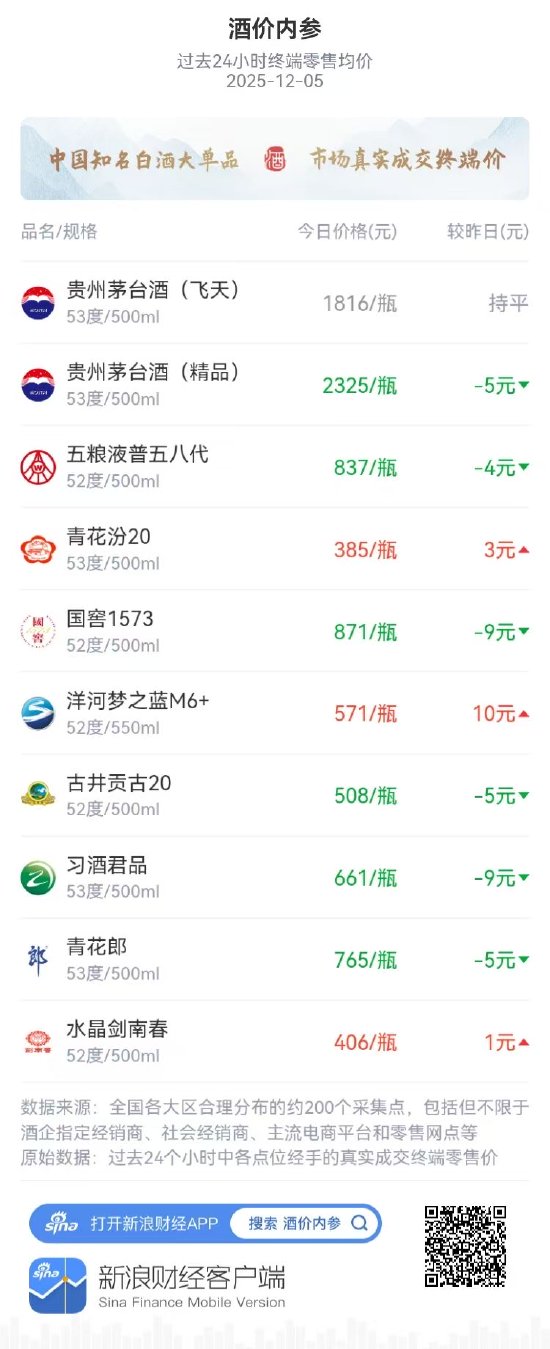
Core Viewpoint - The white liquor market is experiencing a downward trend in retail prices, with the average price of the top ten products decreasing for the second consecutive day, indicating a weak adjustment in the market [1][4]. Price Trends - The total price for a package of the top ten products is 9145 yuan, down 23 yuan from the previous day [1][4]. - Most products are seeing price declines, but some have stabilized or increased, such as: - Yanghe Dream Blue M6+ increased by 10 yuan per bottle - Qinghua Fen 20 rose by 3 yuan per bottle - Shuijing Jian Nan Chun increased by 1 yuan per bottle - Feitian Moutai remained unchanged [1][5]. - Declining products include: - Xijiu Junpin and Guojiao 1573, each down by 9 yuan per bottle - Qinghua Lang down by 5 yuan per bottle - Gujing Gonggu 20 and Jingpin Moutai down by 5 yuan per bottle - Wuliangye Pu 58 down by 4 yuan per bottle [1][5]. Market Analysis - The current valuation of Moutai is approximately 20 times its earnings, which is below its five-year average of 36.35 times and its ten-year average of over 33 times, indicating a relatively low valuation [2][5]. - Some analysts argue that Moutai's valuation may have shifted downward due to fundamental changes in the white liquor industry's business model, despite its high brand equity and pricing power justifying a premium valuation [2][5].



酒价内参12月5日价格发布 市场延续回调洋河梦之蓝M6+逆势领涨
Xin Lang Cai Jing· 2025-12-05 00:47
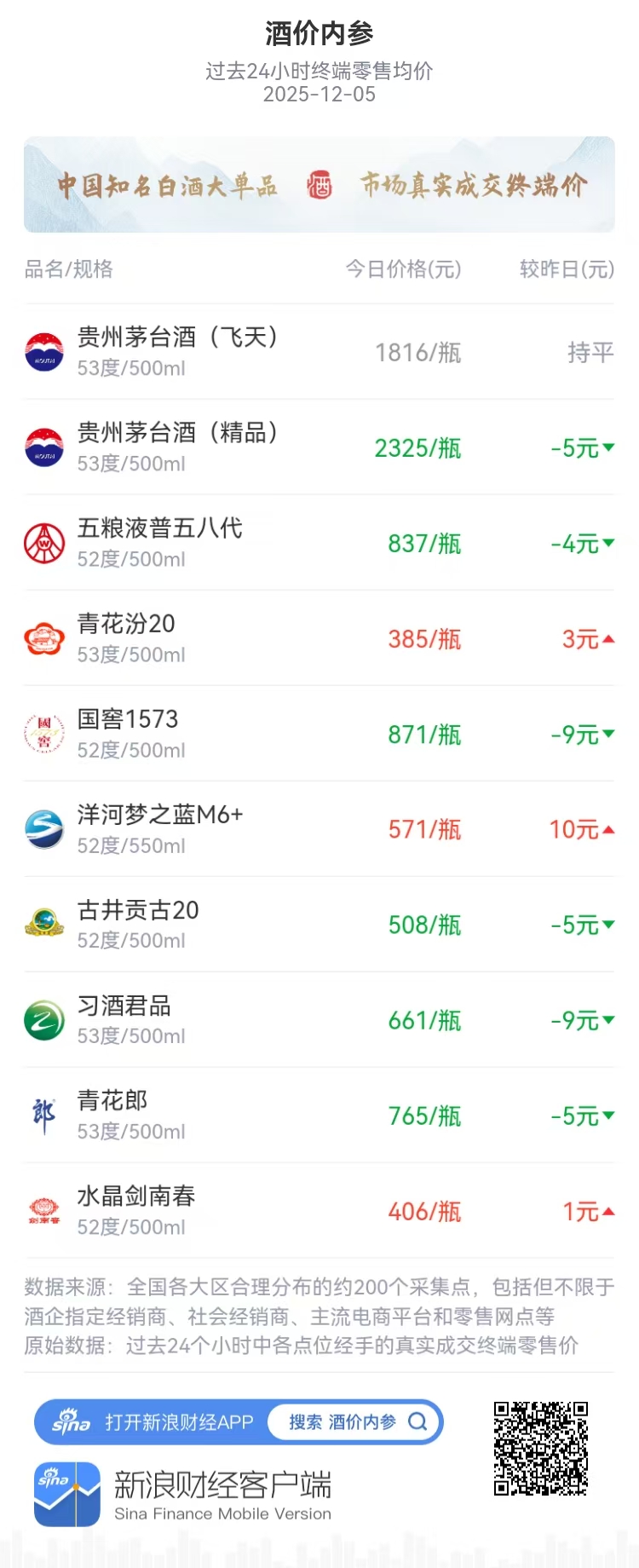
Group 1 - The core viewpoint of the article indicates that the retail prices of the top ten liquor products in the white liquor market continue to decline, with an overall downward trend observed for the second consecutive day [1] - The total price for a packaged set of the top ten products is 9145 yuan, which is a decrease of 23 yuan from the previous day [1] - Most products in the market are experiencing price drops, although some products have shown signs of stabilization and recovery [1] Group 2 - Yanghe Dream Blue M6+ has seen a price increase of 10 yuan per bottle, reversing the previous day's decline [1] - Qinghua Fen 20 has increased by 3 yuan per bottle, while Shuijing Jian Nan Chun has slightly risen by 1 yuan per bottle [1] - Among the declining products, Xijiu Junpin and Guojiao 1573 have each dropped by 9 yuan per bottle, while Qinghua Lang has decreased by 5 yuan per bottle [1][4]
12月4日深证国企股东回报(970064)指数跌0.18%,成份股泸州老窖(000568)领跌
Sou Hu Cai Jing· 2025-12-04 10:24
证券之星消息,12月4日,深证国企股东回报(970064)指数报收于1636.34点,跌0.18%,成交229.34亿 元,换手率0.99%。当日该指数成份股中,上涨的有17家,徐工机械以2.19%的涨幅领涨,下跌的有31 家,泸州老窖以3.76%的跌幅领跌。 深证国企股东回报(970064)指数十大成份股详情如下: | 证券代码 | 股票简称 | 权重 | 最新价 | 涨跌幅 | 总市值(亿元) | | 所属行业 | | --- | --- | --- | --- | --- | --- | --- | --- | | sz000725 | 京东方A | 9.31% | 4.05 | 0.50% | | 1515.26 | 电子 | | sz002415 | 海康威视 | 7.97% | 30.35 | 0.03% | | 2781.54 | 十算机 | | sz000858 | 五粮液 | 7.71% | 114.45 | -0.99% | | 4442.50 | 食品饮料 | | sz000568 | 泸州老窖 | 6.59% | 127.71 | -3.76% | 1 | 1879.82 | 食品饮料 ...

洋河股份大宗交易成交392.68万元
Zheng Quan Shi Bao Wang· 2025-12-04 09:54
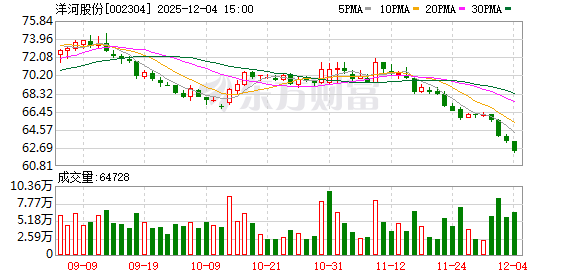
Core Viewpoint - Yanghe Co., Ltd. experienced a block trade on December 4, with a transaction volume of 63,000 shares and a transaction value of 3.9268 million yuan, at a price of 62.33 yuan per share, indicating a stable trading price compared to the closing price of the day [2] Group 1: Trading Activity - The block trade involved an institutional buyer and was executed by CITIC Securities Co., Ltd. Shanghai branch as the seller [2] - The closing price of Yanghe Co., Ltd. on the same day was 62.33 yuan, reflecting a decline of 1.69% [2] - The daily turnover rate was 0.43%, with a total trading volume of 405 million yuan and a net outflow of 73.045 million yuan in main funds [2] Group 2: Stock Performance - Over the past five days, the stock has seen a cumulative decline of 5.65%, with a total net outflow of 278 million yuan [2] - The latest margin financing balance for the stock is 1.506 billion yuan, which has increased by 71.7122 million yuan, representing a growth of 5.00% over the last five days [2] Group 3: Company Background - Jiangsu Yanghe Distillery Co., Ltd. was established on December 27, 2002, with a registered capital of 1.506445074 billion yuan [2]
传统酒企集体“出圈”:跨界是救命稻草还是短期狂欢?
Sou Hu Cai Jing· 2025-12-04 09:32
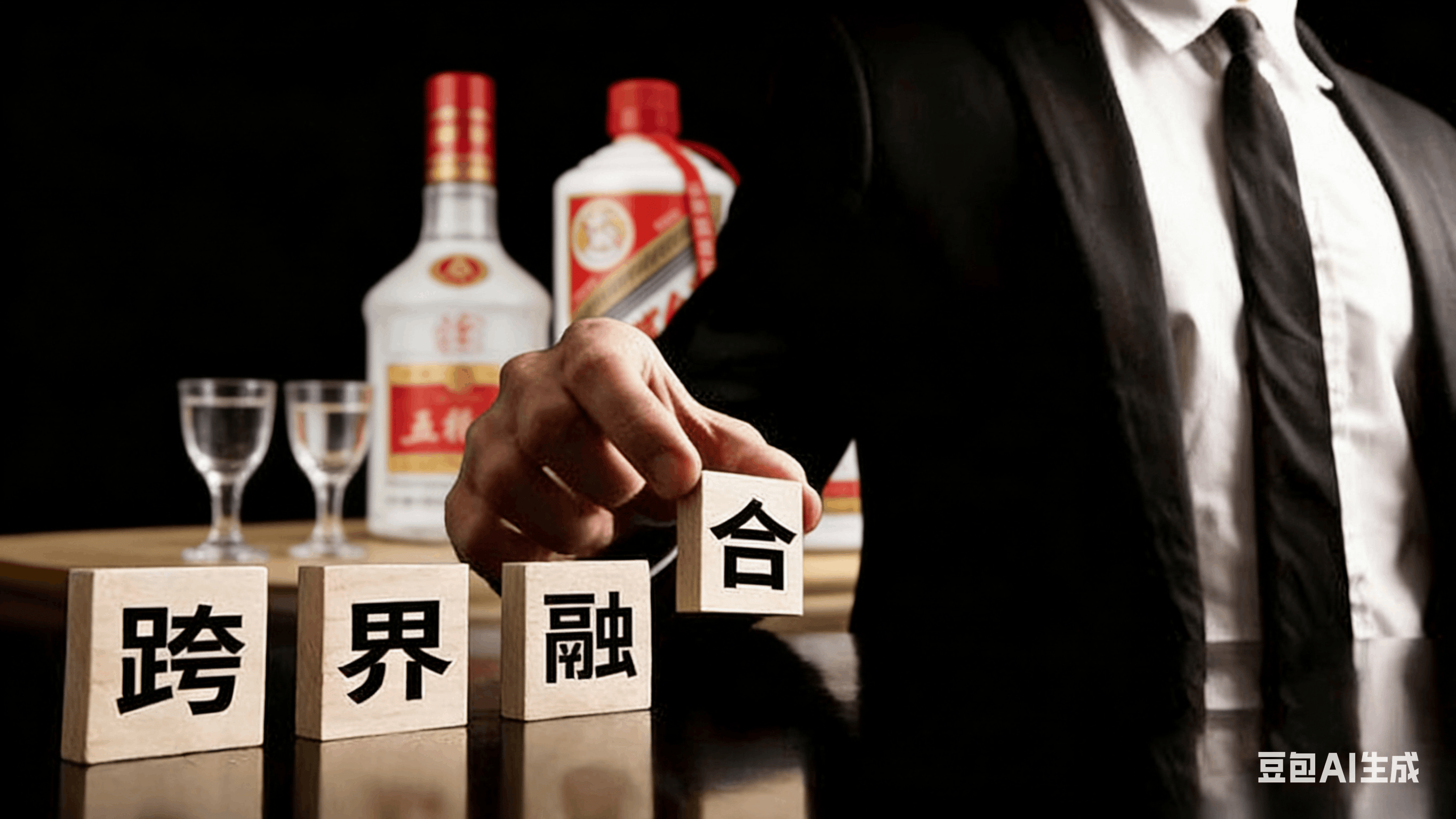
Core Insights - The cross-industry collaborations among liquor companies have become a prominent feature during the industry's deep adjustment phase, driven by policy changes, consumption transformation, and intense competition [2] - The white liquor industry is experiencing a decline in production for the eighth consecutive year, with a 7.2% year-on-year decrease in the first quarter and 60% of companies facing price inversions [2] - The trend of cross-industry collaborations is a strategic choice for liquor companies to break through growth bottlenecks and adapt to younger consumer preferences and diverse consumption scenarios [2] Cross-Category Collaborations - Liquor companies are extending beyond traditional alcoholic beverages to adjacent consumption scenarios, such as Wuliangye's introduction of a Chinese-style craft beer "Wind Fire Wheel" [3] - Zhenjiu Li Du Group has launched a high-end super beer "Bull Market" priced at 88 yuan per bottle, expanding from banquet liquor to everyday leisure drinks [3] - The collaboration between China Resources Beer and Guyue Longshan has produced "Yue Xiao Beer," integrating yellow wine and beer with fruit flavors to cater to young consumers' preferences for light drinking [3] Sports Collaborations - The collaboration of liquor companies with sports is emerging as a new blue ocean, exemplified by Wuliangye's official partnership with FIFA 2026 World Cup [7] - Wuliangye has launched four co-branded products to meet various consumer needs, from high-end collections to everyday drinking [7] - The Jiangsu City Football League has gained popularity, significantly increasing the exposure of brands like Yanghe and Jianshiyuan [7] Cultural IP Collaborations - Cultural IP collaborations are evolving from mere symbolic associations to deeper value resonance, as seen in Yanghe's partnership with the hit film "Fengshen Part Two," achieving 10.1 billion views on Douyin [10] - Moutai's "Walk into Series" cultural products blend Chinese liquor culture with classic elements from different countries, facilitating cultural exchange [10] Channel Collaborations - Channel collaborations are transitioning from simple supply agreements to deep co-creation, with brands like Jiugui and the popular supermarket Pao Donglai achieving immediate sell-out success [12] - Hema's collaboration with Guangliang Wine and Fen Yang Wang has led to top sales in light bottle liquor [12] - Yanghe's exclusive product with JD.com leverages digital supply chains for nationwide distribution, marking a shift towards direct consumer engagement [12] Evolution of Collaboration Models - Recent cross-industry actions by liquor companies show a shift from short-term collaborations to long-term partnerships, focusing on value co-creation rather than just traffic acquisition [15] - The scope of collaboration is expanding from single-point breakthroughs to ecological synergy, with some companies building comprehensive cross-industry ecosystems [15] - The strategic rationale behind these collaborations is to address industry challenges and seek new growth trajectories amid intense competition [15] Changing Consumer Dynamics - The transformation in consumer structure is a core driver of cross-industry collaborations, with the 25-35 age group increasing from 18% in 2020 to 27% in 2024 [16] - Younger consumers prioritize brand culture, design aesthetics, and social attributes, making traditional liquor brands less appealing [16] - The diversification of consumption scenarios is prompting liquor companies to expand product forms beyond traditional business banquets and holiday gifts [16] Challenges of Cross-Industry Collaborations - Cross-industry collaborations are not without risks, including potential brand value conflicts and channel compatibility issues [18] - The traditional cultural heritage of liquor brands may clash with the trendy attributes of some collaboration fields, risking brand integrity [18] - The emergence of product homogeneity poses a challenge, as many companies enter similar collaboration spaces without core innovation [18] Future Outlook - The cross-industry collaboration trend represents a self-reform of the traditional liquor industry amid changing times, injecting innovation into the sector [19] - The future of the liquor industry will ultimately return to core competitiveness in quality and culture, with cross-industry collaborations serving as an extension of these core values [19] - As the excitement around cross-industry collaborations fades, only those companies that achieve quality upgrades and cultural innovation will thrive in the competitive landscape [19]
年轻人集体戒酒,让“老登”酒企的天快塌了
商业洞察· 2025-12-04 09:23
Core Viewpoint - The article discusses the challenges faced by the Chinese liquor industry, particularly focusing on the declining sales and changing consumer preferences among younger generations, highlighting the need for companies to adapt to these shifts in order to survive [5][6][12]. Group 1: Maotai and the Liquor Market - Duan Yongping, a notable investor, expressed strong confidence in Maotai, stating that investing in Maotai does not require consideration of macroeconomic conditions [6][8]. - Despite Maotai's stock price being at a high point, Duan remained unfazed, indicating a lack of comparable alternatives in the market [8]. - Maotai's third-quarter report showed a single-digit revenue growth, with the wholesale price of its flagship product dropping below 1700 yuan, marking a historical low [8][10]. Group 2: Overall Liquor Industry Performance - The third quarter of this year saw A-share liquor companies report their worst performance in a decade, with total revenue down 18.42% year-on-year and net profit declining by 22.03% [10][15]. - The average inventory turnover days for the liquor industry reached 900 days, indicating significant overstock issues [18]. - The decline in sales is attributed to reduced business banquets and a shift towards more practical gifting, alongside a growing disinterest in liquor among younger consumers [20][23]. Group 3: Young Consumers and Changing Preferences - Young consumers are increasingly favoring casual drinking settings over traditional formal occasions, with family gatherings and friend meet-ups becoming the most common consumption scenarios for liquor [23]. - Liquor companies are attempting to appeal to younger audiences by diversifying their product offerings, such as launching lower-alcohol beverages and engaging in cross-industry collaborations [26][28]. - The shift in consumer behavior indicates that liquor must transition from being a "social currency" to a "consumer product" to resonate with younger generations [30][62]. Group 4: Beer Industry Insights - The beer industry is experiencing a decline in production, with last year's output at only about 70% of its peak a decade ago, and revenue down by 5.7% [31][33]. - Despite the overall decline, some beer companies are achieving growth by focusing on high-end products, with premium beer sales significantly outpacing regular offerings [37]. - The shift in purchasing channels, particularly the rise of instant retail, has allowed many Chinese beer companies to better connect with younger consumers [41]. Group 5: Wine Market Challenges - The domestic wine market has seen a drastic reduction in production, with output down over 77% from its peak in 2015 [55]. - The wine industry is struggling to maintain relevance, as it is perceived as overly formal and difficult for average consumers to appreciate [58]. - Wine companies are now attempting to reposition their products in more casual settings to attract younger drinkers, moving away from traditional high-end contexts [60][62].