
台达

Search documents
电力出海持续升温
傅里叶的猫· 2025-11-05 04:02
Group 1 - The core topic of the articles revolves around the increasing discussions on electricity shortages in the U.S. and the potential for power export, which is expected to create significant value for companies in the industry [1] - Companies mentioned, such as Jinpan and Igor, have recently performed well, indicating a positive market response to the electricity shortage narrative [1] - The article highlights that the electricity shortage in the U.S. is anticipated to be a main theme in the future, providing considerable value increments for companies within the supply chain [1] Group 2 - Delta's HVDC solutions and the related supply chain companies are discussed, emphasizing the exploration of value in power export and the U.S. electricity system [2] - The acquisition of Power Distribution by Eaton, which marks the arrival of the liquid cooling 2.0 era, is analyzed, suggesting a shift in technology and market dynamics [2] - The article mentions ongoing discussions and data regarding AI-related companies in the context of power export within a dedicated community platform [2]

飞龙股份:目前公司在服务器液冷领域已与HP项目、台达、金运等40多家行业领先企业建立了紧密的合作关系
Mei Ri Jing Ji Xin Wen· 2025-11-05 00:48
Group 1 - The company has established close partnerships with over 40 leading enterprises in the server liquid cooling sector, including HP, Delta, and others [2] - The company confirmed that Super Fusion is an important client in the liquid cooling server field [2]


伊顿收购宝德--SST导入液冷方案?
傅里叶的猫· 2025-11-04 14:02
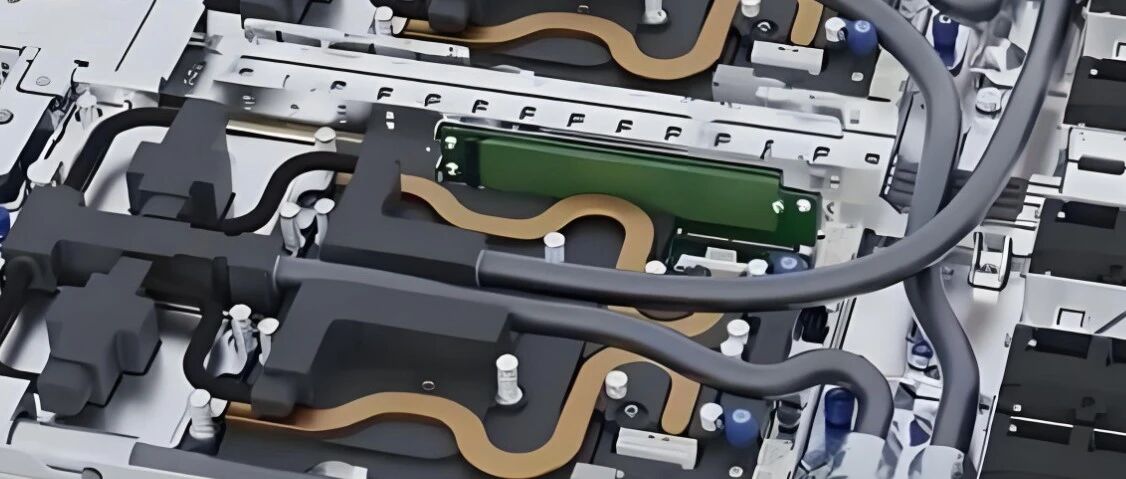
Core Viewpoint - Eaton announced the acquisition of Boyd's thermal management business for $9.5 billion, reflecting a significant shift in the competitive landscape of AI data center infrastructure, with a valuation premium of 22.5 times [1] Group 1: Company Overview - Eaton, founded in 1911 and listed on the NYSE in 1923, is a global intelligent power management company with projected sales of $24.9 billion in 2024 and operations in over 170 countries, employing more than 92,000 people [2] - The company focuses on improving quality of life and environmental quality through reliable, efficient, safe, and sustainable power management technologies, with applications in critical infrastructure such as data centers, power grids, and transportation [2] - Eaton has over 150 patents and has been recognized as one of Fortune's "World's Most Admired Companies" for seven consecutive years [2] Group 2: Transaction Details - The acquisition addresses two structural changes in AI data centers: the upgrade of technology architecture and the merging of traditional separated zones, requiring a shift from decentralized supply to system collaboration [3] - Eaton's strengths lie in the backend infrastructure (gray area), while Boyd excels in the IT equipment end (white area), making their combination a perfect fit for the industry's demand for "white-gray integration" [5] Group 3: Strategic Value of the Acquisition - The proliferation of 800V DC architecture has made complete power chain solutions a competitive necessity, allowing Eaton to move beyond high-voltage distribution to a full chain capability covering power access, distribution, chip power, and heat dissipation [6] - Boyd's strategic position within NVIDIA's ecosystem enhances Eaton's market access, enabling cross-selling opportunities and collaborative design for next-generation AI servers [7] - Boyd's projected revenue of $1.5 billion from liquid cooling in 2026 represents 12% of the current global liquid cooling market, positioning Eaton to capitalize on market growth [8]
超级周期,资金持续流入赛道
3 6 Ke· 2025-11-04 11:24
Core Insights - The main issue facing AI development is not the availability of chips but rather the lack of sufficient electricity to support GPU operations [10][12][28] Group 1: AI and Power Demand - The rapid growth of AI is leading to an increased demand for electricity, particularly in data centers, which is expected to push North America's power demand into a new growth cycle [13][17] - Microsoft CEO Satya Nadella highlighted that the AI industry is currently facing a power shortage rather than a chip surplus [10][12] - OpenAI has urged the U.S. government to significantly increase investments in power infrastructure, suggesting a target of adding 100 GW of power capacity annually [14] Group 2: Market Reactions and Trends - The A-share market has seen a surge in electric grid equipment stocks, driven by the growing demand for power due to AI and controlled nuclear fusion themes [2][7] - The only electric grid equipment ETF (159326) has attracted over 527 million in investments over the past 20 days, reaching a historical high in size [3][25] - The electric grid equipment ETF has seen a year-to-date increase of 29.7%, indicating strong market interest [25] Group 3: Future Projections - The global nuclear fusion market is projected to exceed $40 trillion by 2050, indicating significant future investment opportunities [9] - Data centers are expected to account for 8.1% of total U.S. electricity consumption by 2030, up from 4.2% in 2024 [17] - The U.S. power grid has seen limited growth in capacity, primarily from renewable sources, while traditional power sources are declining [20] Group 4: Technological Innovations - Companies like NVIDIA are pushing for innovations in data center power infrastructure, such as transitioning to 800V direct current systems to improve efficiency [21] - Solid-state transformers (SST) are being highlighted as a solution to meet the increasing power demands of AI data centers [21][22] - Domestic companies are also making strides in the global market, with significant growth in transformer exports from China [23]



中富电路:今年四季度台达等客户将陆续导入批量订单
Ge Long Hui A P P· 2025-11-04 10:25
Core Viewpoint - Zhongfu Circuit (300814.SZ) has initiated the commissioning and debugging of its Thailand project, expected to start capacity release gradually in 2025, with current production in bulk and passing audits from multiple overseas clients [1] Group 1 - The Thailand project is set to begin commissioning and debugging by the end of 2024 [1] - Production capacity is expected to be gradually released starting in 2025 [1] - The project is currently in bulk production and has passed audits from several overseas clients [1] Group 2 - Clients in various sectors, including industrial control and communications, are covered [1] - Delta and other clients are expected to start placing bulk orders in the fourth quarter of this year [1]

台达的HVDC方案和产业链公司
傅里叶的猫· 2025-11-02 14:01
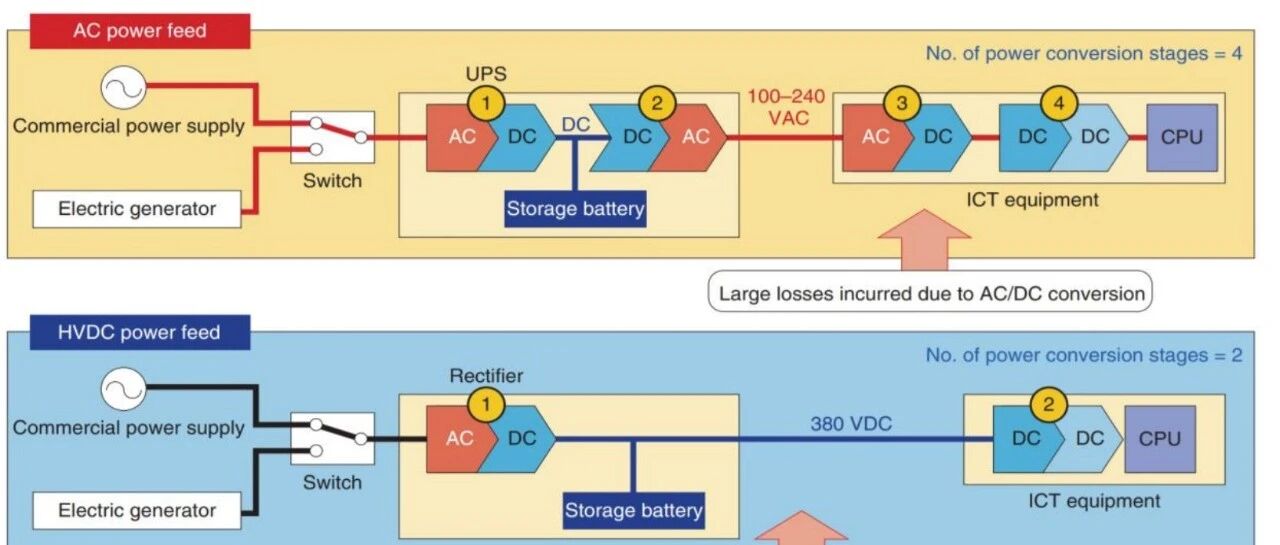
Core Insights - The article discusses the increasing importance of high-voltage direct current (HVDC) technology in data centers, particularly in the context of NVIDIA's 800V HVDC architecture, which aims to address power efficiency and component space issues in AI server designs [9][11]. Group 1: NVIDIA's HVDC Technology - NVIDIA's 800V HVDC architecture is designed to improve energy efficiency by reducing the number of AC/DC conversion steps, potentially increasing end-to-end power efficiency by up to 5% [11]. - The architecture aims to lower maintenance costs by 70% due to reduced PSU failures and lower labor costs for component maintenance [11]. - The expected power capacity of NVIDIA's Rubin Ultra NV576 cabinet is projected to exceed 600kW by 2027, significantly higher than traditional server cabinets [9]. Group 2: Market Potential and Growth - Bernstein estimates that the total addressable market (TAM) for NVIDIA's AI server power components will exceed $8 billion by 2027, doubling from $4 billion in 2025 [4]. - The power component share in NVIDIA's VR200 series is expected to be 2-3 times that of the GB200 NV72 series, driven by increased GPU thermal design power (TDP) [3]. - The VR Ultra series, utilizing the 800V HVDC technology, is anticipated to have a power component share 7-8 times that of the GB200 series, reflecting the growing demand for high-density GPU configurations [3]. Group 3: Delta's HVDC Solutions - Delta's 800V HVDC solution aligns with NVIDIA's approach, focusing on a single-step conversion from medium-voltage AC to high-voltage DC, which replaces traditional multi-stage conversion processes [13]. - Delta plans to implement its HVDC solutions in three phases, starting with a transitional 50V server solution and progressing to native 800V servers [15][16]. - The final phase aims to utilize solid-state transformers (SST) for AC-DC conversion, enhancing efficiency to over 92% and significantly reducing operational costs [16]. Group 4: Competitive Landscape - Key players in the HVDC market include Delta, Lite On/Flex Power, and others, with Delta aiming to double its AI power component revenue by 2025 compared to competitors [20]. - Companies like LITE-ON and Flex Power are also focusing on AI server power solutions, with specific revenue targets and product developments in the HVDC space [20][21]. - The competitive landscape is characterized by ongoing collaborations and technological advancements aimed at enhancing power efficiency and reducing costs in data center operations [20][21].

中富电路20251029
2025-10-30 01:56
Summary of Zhongfu Circuit Conference Call Company Overview - Zhongfu Circuit focuses on communication and data center businesses, which are expected to account for nearly 50% of revenue by 2025, driven by the high pricing and profitability of the AI industry. The company is currently facing capacity constraints but has a strong order situation [2][4][16]. Investment and Production Capacity - Since its IPO in 2021, Zhongfu Circuit has invested approximately 400 million yuan in domestic and Thai factories, focusing on HDI thick copper boards and high-end AI power-related products, which are expected to gradually start production and yield benefits [2][5][6]. - The domestic factory is operating at nearly full capacity, while the Thai factory has a lower utilization rate but is expected to see significant increases in the fourth quarter [3][16]. Business Segmentation and Performance - The company’s product segments include: - Communication and data center: ~50% - Industrial products: ~20% - Automotive electronics: ~20% - Consumer electronics: ~10% [4][7]. - Overall performance in the first three quarters of 2025 showed a growth of approximately 3-4%, primarily benefiting from the AI industry's high pricing and profitability [4]. Technological Advancements - The introduction of NVIDIA's 800V DC power architecture is a significant advantage for Zhongfu Circuit, with collaborations on nearly all front-end solutions. This architecture is expected to enhance the value of PCB boards significantly starting in 2026 [2][9][10]. - The transition from 480V AC to 800V DC will introduce new power levels and modularization, which will increase the value of HVDC products [10]. High-End Product Strategy - Currently, high-end products account for about 30-40% of revenue, with a goal to increase the market share of embedded components and advanced power supplies, targeting over 50% in the future [12][11]. - The company aims to develop 16×16 layer to 30 layer HBI products, with average prices exceeding 10,000 yuan [12]. Competitive Positioning - Zhongfu Circuit maintains a leading position in advanced packaging through collaborations with top chip companies and is actively seeking customer opportunities in traditional PCB sectors [13]. - The company plans to supply high-end products from both its He Shan and Thai factories, with significant orders from major global clients [14]. Future Outlook - The company anticipates that high-end PCB capacity is not yet oversaturated, with ongoing demand, particularly in overseas markets [22]. - The automotive sector is expected to see good growth next year, but the company will focus on high-margin products with technological barriers, avoiding low-margin projects [23]. Cost and Pricing Dynamics - The rise in copper foil prices affects mid-to-low-end products but not high-end products, leading to a strategy of increasing high-end product share while reducing competition in lower-tier products [25]. - The company expects a turning point in profit margins to occur soon, potentially in the fourth quarter or early next year, focusing on high-end products to drive profitability [26]. Conclusion - Zhongfu Circuit is strategically positioned to capitalize on the growth of the AI industry and advanced power solutions, with significant investments in production capacity and a clear focus on high-end product development. The company is well-prepared to meet increasing demand while navigating challenges in capacity and market dynamics.
闻泰科技20251027
2025-10-27 15:22
Summary of Wentech Technology Conference Call Company Overview - **Company**: Wentech Technology - **Industry**: Semiconductor, specifically focusing on power semiconductors and AI technologies Key Points and Arguments Financial Performance - In Q3 2025, Wentech Technology reported total revenue of 44.27 billion yuan, with Anshi Semiconductor contributing 43 billion yuan and ODM business revenue at approximately 1 billion yuan [2][3] - Net profit attributable to the listed company reached 10.4 billion yuan, marking a year-on-year increase of over 270% [3] - Anshi Semiconductor's Q3 revenue was 44 billion yuan, a 12.2% increase year-on-year, with a net profit of 7.24 billion yuan, setting a record for single-quarter revenue [2][3] Market Share and Product Performance - Anshi Semiconductor holds a global market share of approximately 5%, with over 15% in diodes and transistors, and some segments nearing 30% [5] - The company aims for a market share of 5%-10% across all product categories, with most mature products exceeding 10% [5] - Significant growth in the automotive sector, with a year-on-year increase of over 26%, and IPC servers and industrial equipment also showing notable growth [3] Strategic Focus - Wentech Technology continues to prioritize the automotive sector, with 80%-90% of products meeting automotive standards [6] - The company is also focusing on industrial and consumer electronics to quickly validate new products [6] - In China, the strategy includes expanding industrial, consumer electronics, and automotive customer bases, while in Europe, the focus is on industrial and automotive clients [6] Technological Advancements - The new power supply architecture from NVIDIA has increased demand for power semiconductors, prompting Wentech to develop next-generation MOS products and wide bandgap technologies like silicon carbide (SiC) and gallium nitride (GaN) [7] - AI technology is crucial in data center development, with AI computing accounting for about 10% of capital expenditures in data centers [7] - Wentech has supplied high-voltage SiC and GaN products, as well as medium and low-voltage protection devices and MOS products, and is conducting sample tests [7] Production and Supply Chain - Wentech operates two main wafer fabs in Hamburg and Manchester, producing 8-inch wafers with an annual capacity of approximately 1.2 million pieces, and a 12-inch fab in China with a monthly capacity of 30,000 pieces [12] - The 12-inch fab is currently not operating at full capacity due to customer transition processes [13] - The company is ensuring stable operations and customer order continuity despite challenges from the US BIS list and export restrictions from the Chinese Ministry of Commerce [10][11] Challenges and Responses - The US BIS listing has restricted Anshi's global assets, impacting management rights and export capabilities [10] - Wentech is prioritizing operational stability and customer order continuity, ensuring domestic delivery routes remain open [10][11] - The company is adjusting business processes to stabilize the supply chain amid export control measures [15] Future Outlook - Wentech plans to continue expanding its presence in the AI data center market, with expectations of annual growth rates close to or exceeding 30% [7] - The company is actively promoting high-voltage and analog products to increase their share in data centers and servers [7] - Wentech has invested $200 million in Hamburg to build production lines for new technologies, expected to be operational by the end of 2025 [9] Market Demand - The demand for data center-related products is significant, with AI PCs and servers contributing approximately 6%-7% to revenue, and industrial and power equipment accounting for about 20% [24] - The overseas market shows strong demand, particularly from clients like Delta, which primarily serves global cloud service markets [25] Sales and Distribution - Anshi Semiconductor's sales are approximately 40% direct and over 50% through agents or distributors, with a global supplier network [16] This summary encapsulates the key insights from the conference call, highlighting Wentech Technology's financial performance, market strategies, technological advancements, and responses to industry challenges.

美信科技:目前公司产品还没有应用在SST固态变压器架构中
Mei Ri Jing Ji Xin Wen· 2025-10-24 04:38
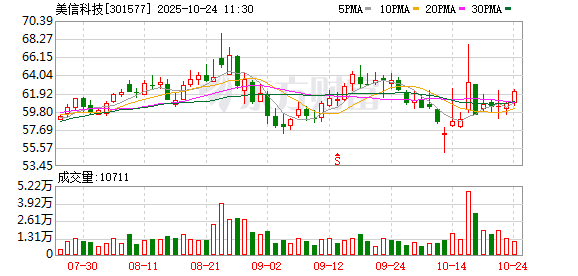
Group 1 - The core viewpoint of the article is that Meixin Technology (美信科技) has the capability to support HVDC (High Voltage Direct Current) systems with its power transformers, ensuring stable operation of these systems [2] - Meixin Technology's signal magnetic components have extensive applications in the communication field, providing technical support and experience for their use in HVDC systems [2] - Currently, Meixin Technology's products have not been applied in the SST (Solid State Transformer) architecture [2]
AI电源行业专家交流
2025-10-21 15:00
Summary of SST System Industry Conference Call Industry Overview - The conference focused on the SST (Solid State Transformer) system industry, discussing its cost structure, market trends, and competitive landscape in both domestic and overseas markets [1][2][3]. Key Points and Arguments Cost Structure of SST Systems - The cost composition of SST systems includes rectifier modules (40%-50%), high-frequency transformers (approximately 25%), control and distribution (15%), energy storage (11%), and structural cooling (8%) [1][2]. - Current single watt cost of SST systems is around 5 RMB, with total system costs reaching 8-10 million RMB. By 2028, costs are expected to drop to below 1 RMB per watt, with total system costs around 2 million RMB, but large-scale application is anticipated only by 2030 [1][4]. Price Trends and Market Dynamics - There is a significant price disparity between domestic and overseas SST systems, particularly in North America, where prices are expected to remain around 4-5 RMB per watt until 2027-2028, with limited reduction [5]. - Domestic market competition is intense, with expectations that prices could fall below 1 RMB per watt by 2030 [5]. Technical Standards and Design Differences - North America tends to adopt higher input voltage SST systems (35 kV or 20 kV), which enhances renewable energy integration efficiency but also increases costs. Differences in design standards between North America and China contribute to cost variations [6][8]. - Domestic companies can enter the SST supply chain by exporting components like high-frequency transformers and rectifier modules, capturing growth opportunities despite slower rack power increases compared to North America [9]. Market Opportunities and Challenges - Companies like Jinpan and Sungrow, which have comprehensive system integration capabilities, are better positioned to enter the SST supply chain [3][16]. - The domestic market's ability to reduce SST product prices significantly is attributed to lower value differences compared to overseas products, reflecting market maturity and demand [23]. Future Prospects - The SMT (Solid State Transformer) AC-DC hybrid system market is expected to grow faster than the data center market due to lower energy continuity and stability requirements, making it more cost-sensitive [24]. - The demand for silicon carbide (SiC) in charging stations and data centers is increasing, but the complex production process may lead to supply constraints and price increases [26]. Additional Important Insights - The integration capabilities of domestic companies lag behind those of leading overseas firms like Delta, Schneider, and Eaton, which have dedicated departments for each segment of the SST system [22]. - The competitive landscape in the HVDC (High Voltage Direct Current) sector shows that traditional power distribution companies in China have advantages, but emerging electronic companies are rapidly advancing [18]. This summary encapsulates the critical insights from the SST system industry conference call, highlighting the cost structures, market dynamics, technical standards, and future prospects within the industry.