航天科技集团

Search documents
商业航天:卫星互联加速,天地一体化可期
2025-09-22 01:00
Summary of Key Points from the Conference Call Industry Overview - The conference call focuses on the **commercial aerospace industry**, particularly the development of **satellite internet** in China, which is benefiting from policy implementation and prioritizing low Earth orbit (LEO) communication satellites for special and government uses [1][3][6]. Core Insights and Arguments - **Development Trends**: The launch speed of satellites in the commercial aerospace sector is primarily driven by LEO communication satellites, with a focus on integrating communication, navigation, remote sensing, and computing satellites by 2025 [3][5]. - **Comparison with SpaceX**: China's satellite internet development is benchmarked against SpaceX's Starlink project, which has achieved cost control through rocket reusability and has entered a profitable phase. In contrast, China's rocket reusability technology is still maturing, leading to higher costs and fewer launches [4][10]. - **Market Opportunities**: Downstream applications such as communication and navigation present significant growth potential, with increasing attention on mobile direct connection chips and related operators [5][12]. - **Challenges in Commercialization**: The commercialization of satellite internet in China faces challenges, including the slow issuance of commercial licenses and insufficient satellite numbers capable of mobile direct connections [8][9]. Important but Overlooked Content - **Government and Commercial Collaboration**: The collaboration between government and commercial entities in building satellite internet infrastructure is expected to become a norm, with companies like China Xingwang and Blue Arrow Aerospace leading the charge [12][26]. - **Technological Developments**: The establishment of the **Satellite Innovation Research Institute** by the Aerospace Science and Technology Group aims to promote integrated intelligent applications in space and ground communication [2][26]. - **Future Focus Areas**: The next few years will see a focus on accelerating the integration of LEO and geostationary satellites, advancing rocket reusability technology, and ensuring the successful deployment of downstream applications [6][14]. Financial and Market Data - **Starlink's Revenue**: In 2023, Starlink generated $4.178 billion in revenue, with residential users contributing the majority of income [11]. - **Investment Opportunities**: The commercial aerospace sector is expected to see significant investment opportunities in satellite applications, particularly in urban digitalization and high-precision spatial data services [13][20]. Conclusion - The commercial aerospace industry in China is at a pivotal point, with significant advancements in satellite internet technology and applications. However, challenges remain in terms of technology maturity and market readiness, necessitating ongoing investment and innovation to realize the full potential of this sector [1][6][8].
隆盛科技(300680):机器人、商业航天双轮驱动 谐波、灵巧手、传感器全面布局卡位
Xin Lang Cai Jing· 2025-09-01 10:47
Core Viewpoint - The company is positioned as a leader in EGR and core components for new energy drive motors, with a three-pronged growth strategy focusing on EGR, new energy and precision components, and aerospace robotics [1] Group 1: Business Segments - The company has established a strong presence in EGR, serving major clients such as BYD, Chery, and Geely [1] - In the robotics sector, the company is developing harmonic reducers, tactile sensors, and dexterous hands, with a focus on advanced designs and lightweight products [2] - The harmonic reducer production capacity is expected to reach 70,000 units by Q1 2026, leveraging superior design and materials [1][2] - The company has made a strategic investment in a technology firm to develop high-performance tactile sensors, which have received international recognition [1][2] Group 2: Electric Motor Components - The electric motor components business is transitioning to semi-assembly, enhancing product value and competitiveness [2] - The company has successfully launched its first rotor and stator semi-assembly product in June 2025, following a project agreement with a major client [2][3] Group 3: New Product Launches - The new Wanjie M7 model is set to launch in September 2025, expected to significantly contribute to the company's revenue growth [2] Group 4: Strategic Partnerships and Investments - The company plans to invest approximately 200 million yuan in a new lightweight component production base in Chongqing, focusing on electric vehicle parts [3] - A strategic partnership with Galaxy Aerospace has been established to develop key precision components for commercial aerospace applications, with significant growth in project volume expected [3] Group 5: Financial Projections - Revenue forecasts for 2025-2027 are projected at 3.238 billion, 4.233 billion, and 5.342 billion yuan, with year-on-year growth rates of 35.1%, 30.7%, and 26.2% respectively [4] - Net profit estimates for the same period are 311 million, 419 million, and 513 million yuan, with growth rates of 38.4%, 34.9%, and 22.4% respectively [4]


军工行业周报:我国载人月球探测工程研制工作取得新-20250818
Tai Ping Yang Zheng Quan· 2025-08-18 09:47
Investment Rating - The industry is rated positively, with expectations of overall returns exceeding the CSI 300 Index by more than 5% in the next six months [38]. Core Viewpoints - China's defense budget has maintained a growth rate of around 7%, with defense spending accounting for less than 1.5% of GDP, which is below the average level of major military powers. There is significant room for growth in defense spending, which is expected to outpace GDP growth in the long term. The year 2025 is anticipated to mark a turning point for the industry, moving away from a period of stagnation towards a comprehensive recovery. As orders normalize and are gradually released, the military industry sector may enter a phase of performance improvement and valuation enhancement, referred to as the "Davis Double-Trigger" stage. It is recommended to focus on leading companies in advanced fighter jets, low-altitude economy, domestic large aircraft, satellite internet, and deep-sea technology, which have favorable competitive landscapes and high technological barriers [4][10]. Summary by Sections Industry Viewpoints - China's defense budget growth has been around 7%, with spending as a percentage of GDP below 1.5%, indicating potential for significant growth. The military sector is expected to recover in 2025, with a return to normal order levels leading to improved performance and valuations [4][10]. Market Performance - In the past week, the CSI 300 Index rose by 2.13%, while the aerospace and defense index fell by 2.13%. For the month, the CSI 300 Index increased by 4.60%, and the aerospace and defense index rose by 9.03% [11]. Industry News - Significant advancements in China's manned lunar exploration program were reported, including successful tests of the Long March 10 series rockets, which are crucial for future manned lunar missions. This marks an important technical foundation for the lunar exploration tasks [3][17][18]. Company Tracking - *ST Chengchang reported a revenue of 201.21 million yuan for the first half of 2025, a year-on-year increase of 180.16%, with a net profit of 56.63 million yuan, marking a significant turnaround [24]. - Aerospace Universe achieved a revenue of 207.02 million yuan, a 23.44% increase year-on-year, with a net profit of 34.70 million yuan, up 52.00% [25]. - Zhenlei Technology reported a revenue of 204.87 million yuan, a 73.64% increase year-on-year, with a net profit of 62.32 million yuan, reflecting a substantial growth [28].
商业航天行业更新:低轨卫星发射提速,可回收火箭推动降本增效
2025-08-05 03:16
Summary of Commercial Aerospace Industry Conference Call Industry Overview - The commercial aerospace industry is undergoing significant changes, particularly in the low-cost launch vehicle sector, which is driving down transportation costs and promoting large-scale satellite manufacturing [1][3][4] - The industry is expected to see increased investor interest as leading companies like Zhongke Aerospace, Blue Arrow Aerospace, and Galaxy Aerospace are projected to go public by 2026 [1][5][6] Key Developments - Blue Arrow Aerospace's Zhuque-3 rocket has reduced the cost of transporting payloads to below 20,000 yuan per kilogram, compared to over 50,000 yuan with the Long March series rockets [3][4] - The satellite internet sector is anticipated to experience a cyclical market driven by financing from Yuanxin G60 and upcoming IPOs of leading companies [1][7] - Huawei plans to conduct tests for direct satellite connectivity on its flagship smartphones by the second half of 2025, indicating a trend towards integrating this technology into consumer devices [1][9] Market Performance - Despite significant changes in the industry, the capital market has not yet fully reflected these developments. However, the expected IPOs of several commercial aerospace companies could enhance market performance [5][6] - The commercial aerospace sector has lagged behind the military sector in terms of stock performance, with the Wande Commercial Aerospace Index showing less than 10% growth compared to the 13.6% increase in the military sector [11] Future Trends - The development of liquid reusable rockets is seen as a key direction for reducing launch costs and improving efficiency. Several private companies are planning to conduct tests or launches of these rockets [1][10][12] - The Starlink project has deployed 7,556 satellites, achieving a total communication capacity of 500TB and covering 3 million users, indicating the competitive landscape in satellite internet services [3][17] Competitive Landscape - The gap between China and the US in the commercial aerospace sector is widening, with the US achieving a year-on-year launch growth rate of 30%-40% due to the maturity of the Falcon 9 rocket, while China's annual launch numbers remain around 60 [3][14] - The Chinese government is increasing its focus on the aerospace sector, with expectations for a significant rise in commercial launch activities in the coming years [15][16] Investment Opportunities - The commercial aerospace sector is currently viewed as having good investment opportunities despite being relatively stagnant compared to other sectors. Factors such as information, logic, catalysts, and trading conditions are favorable for potential investments [11] Key Players and Technologies - The low-orbit satellite communication industry involves several key players, including satellite manufacturers and launch service providers. Core companies include various state-owned enterprises and listed companies like Zhenlei Technology and Fudan Microelectronics [25][26] - The development of mobile direct low-orbit satellite technology is progressing, with major Chinese companies like Huawei and ZTE actively participating in this field [23][24]
9月上海,一场关于“工业芯”的深度对话即将展开
半导体芯闻· 2025-08-01 10:30
Core Viewpoint - The article emphasizes the significance of the China International Industry Fair as a platform for showcasing advancements in manufacturing and technology, particularly focusing on the integration of computing power and industrial applications [1][20][21]. Group 1: Event Overview - The "Industrial Computing Power 'Chip' Engine Technology Seminar" will be held on September 23, focusing on the potential applications of chips in industrial scenarios and the evolution of computing power [1][5]. - The seminar aims to connect technological innovation, industry demand, and market opportunities, featuring participation from industry experts, scholars, and corporate representatives [5][9]. Group 2: Industry Context - The global landscape is undergoing a technological revolution, with computing power becoming a core productivity driver in the digital age, transforming production methods and industry structures [5][23]. - The industrial sector is experiencing unprecedented digitalization, networking, and intelligence transformation, which imposes high standards on foundational computing power [5][9]. Group 3: Seminar Agenda - The seminar will cover various topics, including: - Storage root technology for data storage in Chinese manufacturing [6]. - Industrial big data from governance to value realization [7]. - Predictive maintenance 2.0 focusing on fault warning and lifespan calculations [7]. - The role of FPGA chips in the "Robot+" era [7]. - Accelerating IIOT solution implementation [7]. - A roundtable forum for discussion [7]. Group 4: Participant Composition - The seminar will feature prominent companies such as Huawei, ZTE, and BYD, alongside international industrial giants like Siemens and Bosch, highlighting the event's professional and international caliber [9][10]. - The diverse participation from various industry organizations and enterprises underscores the strategic importance of industrial computing power across different sectors [10].






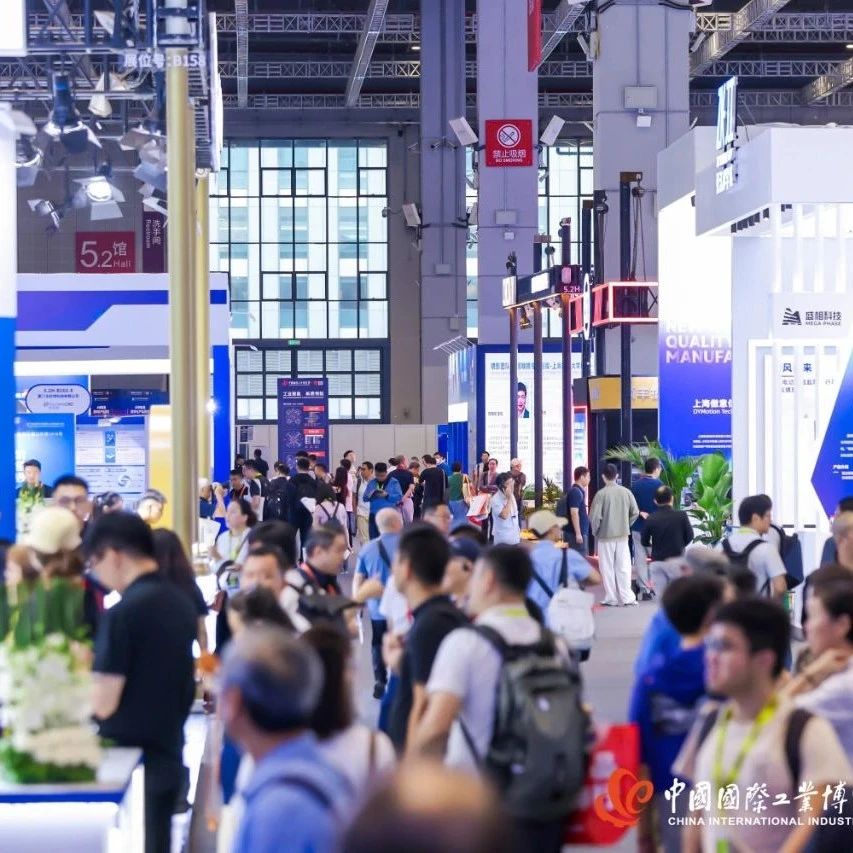
9月上海,一场关于“工业芯”的深度对话即将展开
半导体行业观察· 2025-07-27 03:17
Core Viewpoint - The article emphasizes the significance of the China International Industry Fair as a platform for showcasing advancements in manufacturing and technology, particularly focusing on the integration of computing power and industrial applications [1][10]. Group 1: Event Overview - The "Industrial Computing Power 'Chip' Engine Technology Seminar" will be held at the China International Industry Fair, focusing on the potential applications of chips in industrial scenarios and the evolution of computing power [1][3]. - The seminar aims to connect technological innovation, industry demand, and market opportunities, reflecting the growing importance of specialized computing power in the industrial sector [1][3]. Group 2: Industry Context - The global shift towards industrial internet is driving a transformation in production methods and organizational models, with computing power becoming a core productivity driver in the digital age [3]. - Traditional computing architectures are struggling to meet the stringent requirements of real-time, reliability, and security in industrial settings, highlighting the need for dedicated computing power chip systems [3]. Group 3: Seminar Agenda - The seminar will cover various topics, including: - Storage root technology for data storage in Chinese manufacturing [4]. - Industrial big data from governance to value realization [5]. - Predictive maintenance 2.0 focusing on fault prediction and lifespan calculations [5]. - The role of FPGA chips in the "Robot+" era [5]. - Accelerating IIOT solution implementation [5]. - A roundtable forum for discussion [5]. Group 4: Participant Composition - The seminar will feature prominent companies such as Huawei, ZTE, and BYD, alongside international industrial giants like Siemens and Bosch, indicating a high level of expertise and international collaboration [7]. - The diverse participation from various industry organizations and enterprises underscores the strategic importance of industrial computing power across different sectors [7]. Group 5: Fair Significance - The China International Industry Fair, established in 1999, is the only national industrial exhibition in China and has become a significant platform for showcasing advanced manufacturing and emerging industries [10]. - The upcoming 2024 fair will feature over 28,000 square meters of exhibition space, attracting more than 200,000 professional visitors and over 2,600 leading companies, reaffirming its status as a global industrial exhibition leader [10]. Group 6: Future Outlook - The integration of computing power is reshaping the foundational logic of the industrial sector, with chips being the driving force behind this technological wave [13]. - The seminar represents a pivotal moment for stakeholders in the Chinese manufacturing sector to engage in discussions that will shape the future of industrial intelligence [13].
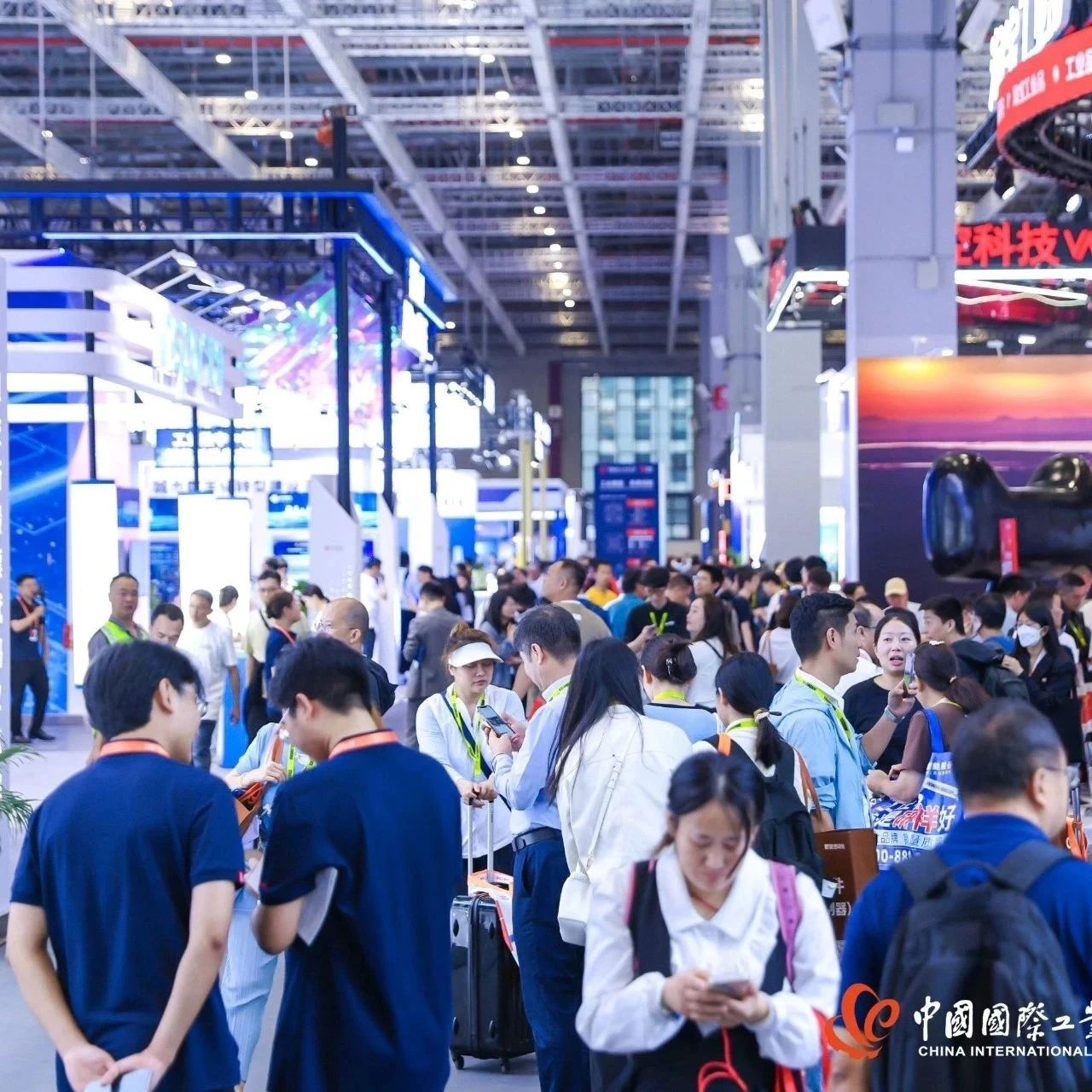
国防军工弱势盘整,长城军工下挫7%!512810持续溢价,吸金势头又起?机构继续看多!
Xin Lang Ji Jin· 2025-07-10 05:28
Group 1 - The defense and military industry sector is experiencing adjustments, with the defense military ETF (512810) showing fluctuations, including a drop of over 1% before narrowing its losses [1] - The ETF has seen significant inflows, with over 1.68 billion yuan invested in the past 10 days, indicating strong bullish sentiment despite recent declines [1] - Among the 80 constituent stocks of the ETF, most have declined, with notable drops including Changcheng Military Industry down nearly 7% and Guorui Technology down over 3% [1] Group 2 - Analysts suggest that the upcoming mid-year report season may bring uncertainty regarding the performance of previously high-profile stocks, leading to potential short-term differentiation [3] - Huafu Securities maintains a bullish outlook on the sector, while Zhonghang Securities believes the defense military industry is in a state with ample upward potential and limited downside risk [3] - Zhejiang Merchants Securities highlights three main investment themes for the defense military sector by 2025: military trade, new domains and qualities, and restructuring [3] Group 3 - The defense military ETF (512810) has undergone a share split, reducing the trading threshold from approximately 120 yuan to around 60 yuan, making it more accessible for investors [4]


如果马斯克被驱逐,北京凉水河会飘来火箭图纸吗?
Guan Cha Zhe Wang· 2025-07-03 00:38
Group 1 - SpaceX is a leading aerospace company founded by Elon Musk, known for its Falcon and Starship rockets [4][5] - The company has not disclosed detailed designs of its products and prefers to protect its core technologies as trade secrets rather than patents [7] - The U.S. aerospace industry is experiencing a transformation, with other companies like Blue Origin and Rocket Lab emerging as competitors to SpaceX [10][12] Group 2 - The Chinese aerospace industry is advancing rapidly, with companies like Landspace and the China Aerospace Science and Technology Corporation making significant progress in rocket development [15][17] - Recent developments indicate that China is close to achieving parity with global aerospace technology, reducing the need to rely on foreign expertise [19] - The potential for a talent migration from the U.S. aerospace sector due to political instability may not significantly benefit China, as the country is not actively seeking to absorb these resources [19]

产教融合 “订单式”协同培养打开毕业生就业新通道
Yang Shi Xin Wen· 2025-06-15 01:46
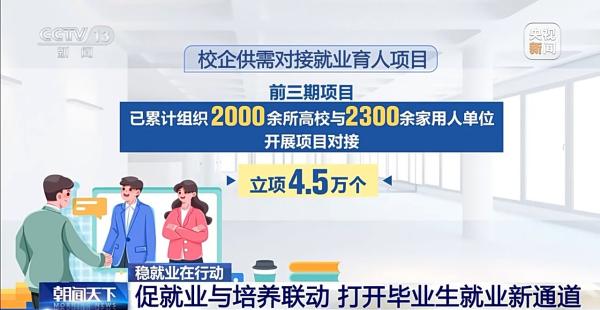
Group 1 - The "100-day sprint" action for the employment of 2025 college graduates is currently being implemented nationwide, with the Ministry of Education coordinating a new round of school-enterprise supply-demand matching employment education projects, involving 1,771 colleges and 13,000 cooperative projects [1] - Since 2021, the Ministry of Education has initiated the school-enterprise supply-demand matching employment education project, facilitating collaboration between colleges and employers to enhance the training and recruitment of innovative, composite, and application-oriented talents, with over 2,000 colleges and 2,300 employers participating in the first three phases, resulting in 45,000 projects [2] - In March of this year, the Ministry of Education began soliciting projects in the "artificial intelligence application" field to help colleges improve students' job awareness, practical experience, and employment capabilities, with 347 companies providing 11,000 cooperative projects [4] Group 2 - The implementation of the supply-demand matching employment education project focuses on "discipline optimization + targeted talent cultivation," creating an "order-based" school-enterprise collaborative training mechanism to achieve precise matching of talent supply and demand [5] - The "Elite Class" program co-established by Xi'an Jiaotong University and ZTE Corporation has successfully trained nearly 500 graduates over five years, addressing the mismatch between graduates' skills and employer requirements through a comprehensive "training-internship-employment" model [7] - Xi'an Jiaotong University has partnered with major companies like Huawei and Baidu to establish 26 "Elite Classes" in fields such as big data and artificial intelligence, training over 1,600 students with the help of industry experts [7] Group 3 - In Sichuan, a key province for the photovoltaic industry, colleges and enterprises are collaborating to create integrated training scenarios that accelerate the transformation of research results into productive forces, focusing on cultivating urgently needed technical innovation talents [10] - The "order class" model at Southwest Petroleum University allows students to engage in early internships and learn cutting-edge photovoltaic technology, with over 50% of the professional courses developed in deep collaboration with enterprises [12] - The "order class" has trained over 600 students in the past three years, with 12 out of 47 technical improvement projects completed by students being applied in production lines, demonstrating effective conversion of educational outcomes into industrial applications [14]
专家解读丨央企领航氢能新赛道,打造能源革命新图景
国家能源局· 2025-05-31 08:38
Core Viewpoint - The article emphasizes the pivotal role of state-owned enterprises (SOEs) in leading the hydrogen energy sector, highlighting their contributions to the energy revolution and the strategic importance of hydrogen in China's energy landscape [2][8]. Group 1: National Strategy - The hydrogen industry is entering a critical phase of large-scale development, with over 60 countries announcing hydrogen strategies. China has included hydrogen in its Energy Law, with 22 provinces incorporating it into government work reports. The "Medium- and Long-term Planning for Hydrogen Industry Development (2021-2035)" sets a target of 100,000 to 200,000 tons of renewable hydrogen production by 2025 [3]. - SOEs are central to implementing national strategies, with projects like "wind-solar hydrogen + hydrogen-based fuel synthesis" by the National Energy Group in Inner Mongolia and Ningxia, and a million-kilowatt wind-solar hydrogen project by State Power Investment Corporation in Jilin [3]. Group 2: SOE Responsibilities - The report highlights the importance of technological breakthroughs across the entire hydrogen value chain, with SOEs demonstrating strong capabilities in equipment autonomy and technological integration. For instance, the Aerospace Science and Technology Corporation developed a 5 tons/day hydrogen expansion liquefaction system with 100% domestic components [4]. - The China Petroleum and Chemical Corporation initiated a hydrogen pipeline demonstration project, laying the groundwork for cross-regional hydrogen distribution. Additionally, various hydrogen-powered vehicles and systems have been developed, showcasing the innovation capabilities of SOEs [4]. Group 3: Scene Implementation - In 2024, hydrogen energy will see widespread pilot projects in industrial, transportation, and power sectors, with SOEs leading innovation. For example, Baowu Steel's hydrogen-based blast furnace project significantly reduces CO2 emissions in metallurgy [5]. - The National Energy Group's renewable hydrogen coupling with coal-based ammonia project aims to reduce CO2 emissions by 200,000 tons annually, providing a reference for carbon transition in the coal chemical industry [5]. Group 4: Global Perspective - China's hydrogen industry is shifting from technology importation to equipment exportation, with successful international projects such as the world's longest liquid hydrogen maritime transport demonstration by China National Offshore Oil Corporation [6]. - The State Grid is leading the development of international standards for fuel cell systems, enhancing China's influence in the global hydrogen sector [7]. Group 5: Future Challenges - The "China Hydrogen Development Report (2025)" serves as both a report card on industry progress and a task list for SOEs. The focus will be on expanding renewable hydrogen production capacity and overcoming technological challenges in electrolysis and fuel cells [8]. - By 2025, with ongoing policy support and technological advancements, SOEs are expected to play a crucial role in achieving large-scale hydrogen development, contributing to national energy security and global climate governance [8].