OPPO

Search documents
测评7个手机智能体:点一杯奶茶,意味着交付40%高敏权限
2 1 Shi Ji Jing Ji Bao Dao· 2026-02-24 00:23
Core Insights - The rise of intelligent agents signifies a shift from machines merely chatting to machines performing tasks on behalf of users, with a notable focus on local deployment rather than cloud-based solutions [1][2] - The increasing integration of intelligent agents into personal devices raises concerns about privacy and the extent of permissions required for their operation [2][19] Group 1: Intelligent Agent Development - Intelligent agents like Doubao are being embedded in smartphones, allowing them to perform various tasks such as ordering food and playing games [3][4] - A significant number of permissions are required for these agents, with many devices exceeding 100 system permissions, which is notably higher than typical applications [5][6] Group 2: Permission and Privacy Concerns - Approximately 40% of the permissions requested by mobile intelligent agents are classified as high-sensitivity, including access to precise location and reading messages [7][10] - The use of accessibility permissions allows intelligent agents to bypass standard security measures, raising concerns about potential misuse and privacy violations [10][12] Group 3: Security Measures and User Awareness - Companies like Doubao and OPPO have begun to publish AI privacy and security white papers, focusing on user awareness and control over sensitive operations [24][25] - The need for transparent usage guidelines and the importance of logging AI operations have been emphasized to ensure accountability and traceability [25][29] Group 4: Data Handling and Cloud Risks - The process of data transmission to the cloud remains controversial, with concerns about sensitive information being exposed during this process [29][30] - Current intelligent agents struggle with effectively identifying and protecting sensitive information, highlighting a gap in privacy protection capabilities [30][32]



万字详解智能体2.0:手机里的“互联互通”新战场
2 1 Shi Ji Jing Ji Bao Dao· 2026-02-24 00:10
Core Insights - The AI industry is shifting focus towards edge-based intelligent agents, with significant developments in both domestic and international markets [1][2][3] - ByteDance's Doubao and other intelligent agents are gaining traction, operating across various personal devices and applications, but face challenges related to privacy and operational capabilities [2][3][5] - The industry consensus is that the future of intelligent agents will depend on their ability to connect multiple personal devices and services, reshaping the ecosystem [2][3] Group 1: Market Developments - OpenClaw has gained popularity in Silicon Valley, while Doubao is embedded in smartphones in China, with high demand reflected in the second-hand market [1] - The user base for intelligent agents among six major Chinese smartphone manufacturers grew by 65 million in one year, reaching a total of 535 million users [3] - OPPO, Vivo, and Honor are leading the charge in the domestic market, with OPPO's Xiaobu Assistant achieving 160 million monthly active users by June 2025 [3] Group 2: Technical Challenges - Current intelligent agents are struggling with task execution, often only able to perform basic functions like opening apps rather than completing complex tasks [7][8] - A recent evaluation of seven intelligent agents revealed a success rate of only 20% for completing tasks, with many tasks failing or being interrupted [5][7] - The technology behind these agents is still in its infancy, with most operating at a basic level and lacking the ability to handle complex, multi-step tasks effectively [8][10] Group 3: Privacy and Security Concerns - Intelligent agents require extensive permissions, often exceeding 100, raising concerns about privacy and potential misuse of sensitive data [17][18] - The use of high-sensitivity permissions, such as accessing location and reading messages, poses significant risks to user privacy [19][20] - The reliance on cloud processing for data handling introduces vulnerabilities, as sensitive information may be exposed during transmission [27][28] Group 4: Industry Dynamics - A ceasefire agreement has been reached between ByteDance and several app developers, allowing for normal login procedures while limiting AI operations [35] - The competitive landscape is marked by tensions between smartphone manufacturers and app developers, with concerns over the implications of intelligent agents on existing business models [30][31] - The future of intelligent agents hinges on establishing a viable revenue-sharing model and addressing the concerns of both hardware manufacturers and app developers [31][32]



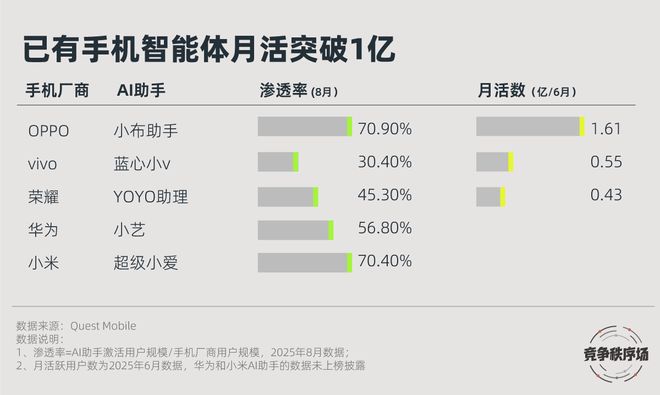
从“猎奇”到“信赖”:折叠屏手机用户发展洞察报告
艾瑞咨询· 2026-02-20 00:04
本报告利用定量问卷调研、专家访谈及桌面研究多种研究方法,综合分析了折叠屏手机行业的发展现状、市 场竞争格局、用户行为及需求,预测产品未来趋势。报告指出,全球折叠屏手机市场持续增长,尤其是中国 市场表现突出,技术进步和产业链完善推动了产品形态的多样化。在竞争格局方面,中国成为全球折叠屏手 机的主要增长引擎,市场份额呈现集中趋势,华为以较高的份额持续引领行业。用户对折叠屏手机购买意愿 不断提高,对产品功能和体验有更高要求。展望未来,折叠屏手机产品将实现从小众市场向大众市场过渡, 市场需求持续增长,硬件优化创新和软件协同生态构建和智能交互体验的提升将是关键发展方向。随着消费 者对折叠屏手机认可度提升,购买意愿增强,折叠屏手机消费将逐步实现从"猎奇尝鲜"到"信赖常用"的转 变。 全球智能手机市场已全面进入存量竞争 2014年-2017年期间,智能手机市场仍处于增量发展阶段,全球出货量由12.4亿部增长至14.6亿部的 峰值。自2017年起,市场进入存量竞争阶段,年均出货量下降约2.52%,至2024年全球智能手机出 货量已降至12.2亿部。 折叠屏手机 丨洞察 报告 摘要: 折叠屏手机成为突破市场增长瓶颈的战略方向 ...

FINE2026火热招展!机器人轻量化/热管理,数据中心液冷、固态电池、AI芯片热管理......
DT新材料· 2026-02-18 16:04
Core Viewpoint - The 2026 Future Industries New Materials Expo (FINE 2026) aims to lead global innovation in new materials, emphasizing their critical role in the transformation of high-tech industries and future economic development [1][2]. Group 1: Event Overview - FINE 2026 will take place from June 10 to June 12, 2026, at the Shanghai New International Expo Center, featuring a total exhibition area of 50,000 square meters and over 300 strategic and cutting-edge technology reports [2][18]. - The expo will focus on popular innovations applicable to various industries, including artificial intelligence, aerospace, smart vehicles, and renewable energy, while addressing five common needs in future industries: advanced semiconductors, advanced batteries, lightweight functionalization, low-carbon sustainability, and thermal management [2][10]. Group 2: Historical Context and Participation - The previous editions of the expo, including the 2025 International Carbon Materials Expo and the 2025 Thermal Management Expo, achieved record attendance with over 35,000 professional visitors from 27 countries and regions, showcasing more than 500 exhibitors [7][36]. - The event is expected to attract over 100,000 professional visitors, including representatives from major companies such as BYD, Huawei, and Xiaomi, as well as over 5,000 industry investors [37][36]. Group 3: Thematic Focus and Special Features - FINE 2026 will feature seven specialized thematic exhibition areas, including advanced semiconductors, AI chips, thermal management, and sustainable materials, aiming to present a comprehensive chain of innovation from components to cutting-edge technologies [13][15]. - The expo will host over 30 forums with more than 300 renowned experts discussing trends in technology, investment strategies, and advanced manufacturing techniques related to new materials [22][24]. Group 4: Strategic Importance - The event is positioned as a critical opportunity for companies to connect with industry funds, government parks, and project resources, facilitating the integration of technological and industrial innovation in the new materials sector [2][10]. - The timing of the expo in June is highlighted as a strategic window for seizing business opportunities in the second half of the year, leveraging Shanghai's advantages as a major international exhibition platform [10].

从瓷器到手机:广货们的时髦秘诀
2 1 Shi Ji Jing Ji Bao Dao· 2026-02-17 23:02
同样,在服装这样的传统领域,广货的美学还在不断迭代。广东服装产业基础雄厚、集群优势明显、供应能力突出,在小单快反、跨境电商等 方面具有全国领先优势;拥有29个纺织服装产业集群,专业市场数量位居全国第一,服装人才聚集,全省有53所服装院校,约15万名设计师, 还形成了多个知名的特色产业集群和区域品牌。2025年,广东组织实施"穿粤时尚潮服荟"专项行动,推动纺织服装产业提质升级。现在,广东 的服装设计师们正在持续挖掘岭南文化元素,并将岭南美学借助服装这一最直接的形式加以展现。粤绣、广彩、醒狮等传统岭南元素融入现代 服饰,既保留了民族特色,又让世界多增加了一个认识中国和了解广东的渠道。因此我们看到,美学内涵与文化认同,是广货能够行天下、打 造独属于广货"金字招牌"的重要支撑。 此外,大疆无人机的科技灵动,华为智能终端的简约便捷,广汽新能源汽车的绿色环保……这些广东智造优品,通过将技术创新与设计美学融 合,讲好"科技+美学"的故事。谈到广货的"美学",手机这样的"掌上美学"自然不能错过。广东是我国最重要的智能手机产业集聚区,也是全 球主要的智能手机生产制造基地和创新高地。过去的手机,最重要的通讯功能;而现在的手机,则 ...
AI扩张引爆全球内存危机
Xin Lang Cai Jing· 2026-02-17 05:54
包括埃隆·马斯克和蒂姆·库克(Tim Cook),越来越多科技行业领袖发出警示:一场全球性的芯片危机正 在逼近。内存芯片供应趋紧,已开始侵蚀企业利润、打乱既定规划,并抬高从笔记本电脑、智能手机到 汽车、数据中心在内几乎所有科技产品的价格。而这场"内存荒"只会愈演愈烈。 自2026年初以来,特斯拉、苹果等十余家大型企业相继表态,动态随机存取内存(DRAM)的短缺将制约 产能。作为几乎所有科技产品的核心部件,内存供应的收紧牵一发而动全身。库克直言,这将压缩 iPhone的利润空间。美光科技(Micron Technology Inc.)称这一瓶颈"前所未有"。马斯克则点明问题的棘 手程度:特斯拉可能不得不自行兴建内存芯片工厂。 "我们只有两条路:要么撞上芯片之墙,要么自己建厂,"他在1月下旬如此表示。 这场挤压的根源,在于AI数据中心的狂飙扩张。Alphabet Inc.与OpenAI等公司,为运行聊天机器人和各 类应用,正采购数百万枚搭载大容量内存的英伟达AI加速器,吞噬了越来越多的内存产能。消费电子 生产商只能艰难争抢三星电子(Samsung Electronics Co.)和美光(Micron)等企业日益减 ...

春晚张杰《驭风歌》背后的马,是Seedance 2.0做的!
量子位· 2026-02-17 03:58
Core Viewpoint - The article highlights the significant advancements in AI technology showcased during the Spring Festival Gala, particularly focusing on the capabilities of the Seedance 2.0 model and its integration with various AI applications in performance and interaction [2][42]. Group 1: AI Technology in Performance - The performance of "Yufeng Song" by Zhang Jie featured a background video created using the Seedance 2.0 model, which successfully interpreted and animated traditional Chinese ink painting styles, a task that many foreign models struggled with [4][5]. - Seedance 2.0 was utilized in multiple performances, including the creative dance show "He Huashen," where it demonstrated micro-control capabilities to create detailed visual effects [7][10]. - The model's ability to follow physical and biomechanical principles allowed for realistic animations of galloping horses, showcasing its advanced command-following and multi-modal material reference capabilities [8][10]. Group 2: Video Quality Enhancement - The collaboration with the Volcano Engine video cloud team enabled the enhancement of video quality to meet the Spring Festival Gala's high standards, utilizing super-resolution algorithms to upscale 720P to 8K and frame interpolation to increase frame rates from 24 to 50 FPS [15][17]. - The integration of 4D Gaussian splashing technology allowed for the creation of immersive visual experiences, where virtual dancers interacted seamlessly with real stage lighting [20][22]. Group 3: AI Interaction and User Engagement - The Spring Festival Gala introduced AI-driven interactive features through the Doubao app, allowing users to generate personalized avatars and greetings, marking a shift from traditional transactional interactions to more complex, computationally intensive engagements [28][30]. - The Ark platform played a crucial role in managing the high traffic during the event, utilizing a federated system to optimize resource allocation and ensure rapid response times for user requests [31][29]. Group 4: Broader Implications and Industry Impact - The article emphasizes the widespread adoption of Doubao's AI models across various industries, including automotive, mobile, and robotics, highlighting its robust partnerships with major companies [40][41]. - The successful implementation of AI technologies during the Spring Festival Gala serves as a demonstration of their practical value and potential for real-world applications, reinforcing the notion that effective AI solutions can deliver tangible benefits [43][44].

春晚点燃机器人租赁热潮 除夕当天京东“机器人租赁”搜索量环比增长3倍
Zhong Jin Zai Xian· 2026-02-17 03:37
Core Viewpoint - The rise of rental services for advanced technology, particularly smart robots and drones, has become a significant trend during the Chinese New Year, driven by consumer demand for low-cost, innovative experiences [1][4]. Group 1: Rental Market Growth - On New Year's Eve, the search volume for "robot rental" on JD.com increased threefold, indicating a surge in interest [1]. - From February 9 to the present, JD.com's self-operated rental orders in the 3C digital category rose by 130%, showcasing a strong demand for rental services [1]. - Categories such as drones and action cameras saw a 200% increase in order volume, while gaming laptops experienced a tenfold increase [1]. Group 2: Popular Rental Products - Smart robots and robotic dogs have become the top rental choices during the Spring Festival, serving various roles in family and social settings [4]. - Popular rental models include the Yushu Go2-Pro and Yushu U1 humanoid robot, with daily rental prices starting as low as 78 yuan [4]. - Photography equipment rentals, such as the DJI Neo2 and Insta360 GO Ultra, are in high demand for capturing festive moments, with daily rentals starting at 16 yuan [4]. Group 3: Diverse Rental Offerings - Users are also renting gaming laptops, 3D printers, smartphones, and smart glasses, enhancing their holiday experiences [6][7]. - Gaming laptops like the ROG Gun God 9 are available for daily rental starting at 82 yuan, catering to young people returning home [6]. - High-end smartphones and smart glasses are offered at competitive rental prices, enhancing social interactions during the holiday [7]. Group 4: Service Features - JD.com's rental service provides official product guarantees, no deposit rentals, free pick-up and delivery, and insurance, ensuring a hassle-free experience for users [10]. - Ongoing promotional activities include rewards and opportunities for zero-cost rentals, encouraging more consumers to try out these services [12].



非洲零关税大礼包来了!中国消费者钱包要鼓起来了?
Sou Hu Cai Jing· 2026-02-16 11:01
Core Viewpoint - China's zero-tariff policy for 53 African countries is expected to significantly impact the pricing of imported goods in local supermarkets, leading to lower prices for various products [1]. Group 1: Price Reductions on African Goods - The price of Kenyan avocados is projected to drop by 40%, from 20 yuan to 12 yuan each [3]. - Ethiopian Yirgacheffe coffee prices will decrease by 30%, saving consumers approximately 8 yuan per cup [3]. - South African Cabernet Sauvignon will see a 25% price reduction, making it competitive with mid-range French wines [3]. Group 2: Logistics and Supply Chain Improvements - The new "Africa Special Line" of the China-Europe Railway allows cashews from Mozambique to reach Chongqing in just 18 days [3]. - Cross-border e-commerce enables Rwandan chili sauce to be delivered to consumers' tables within 7 days after ordering [3]. - The upgraded "fresh goods channel" at Guangzhou Baiyun Airport allows Tanzanian seafood to clear customs within 3 hours [3]. Group 3: Impact on Manufacturing Costs - The zero-tariff policy on cobalt from the Democratic Republic of Congo is expected to reduce the cost of electric vehicle batteries by 5%, potentially saving consumers 7,500 yuan on a 150,000 yuan electric car [5]. - The removal of tariffs on bauxite from Guinea will lower the cost of domestic smartphone casings by 12%, intensifying price competition among brands like Xiaomi and OPPO [5]. Group 4: Market Dynamics and Consumer Behavior - African consumers are increasingly purchasing Chinese mobile phones and agricultural machinery, with Transsion mobile sales in Nigeria surging by 200% and Lovol harvesters becoming popular in Zambia [7]. - The formula for calculating future prices of African goods post-tariff removal is original price multiplied by (1 - tariff rate), exemplified by a 300 yuan South African diamond chocolate saving 45 yuan after the 15% tariff is eliminated [7]. Group 5: Global Trade Implications - The zero-tariff initiative is viewed by some Western media as "economic colonialism," yet African farmers benefit from increased income due to China's tariff exemptions, contrasting with the 25% "fair trade tax" imposed by European buyers [9]. - The initiative highlights the complexities of global trade dynamics, where savings for consumers in one region may challenge protectionist policies in another [9].

存储芯片,走向失控
半导体行业观察· 2026-02-16 01:58
Core Viewpoint - A global storage crisis is emerging, driven by a significant shortage of memory chips, particularly DRAM, which is impacting profits across various sectors, including consumer electronics and automotive industries [2][3][4]. Group 1: Causes of the Crisis - The shortage of DRAM is primarily attributed to the increasing demand from artificial intelligence data centers, which require high bandwidth memory (HBM) for processing large datasets [3][6]. - Companies like Alphabet Inc. and OpenAI are purchasing millions of memory chips for AI applications, leading to a competitive squeeze on supply for consumer electronics manufacturers [4][5]. - The price of DRAM has surged dramatically, with some prices increasing by 75% from December to January, reminiscent of hyperinflation [4][23]. Group 2: Impact on Companies - Major semiconductor manufacturers, including SK Hynix, Samsung, and Micron, control over 90% of global memory chip production and are experiencing record valuations due to the demand surge [4][5]. - The shift in production focus from traditional DRAM to HBM has resulted in reduced availability of standard memory chips for consumer electronics, affecting companies like Apple and Tesla [2][5]. - The memory crisis is causing significant disruptions in product release schedules, with companies like Sony considering delays for their next-generation gaming consoles [19][23]. Group 3: Market Predictions - TrendForce predicts that DRAM and NAND flash prices will rise by 90% to 95% and 55% to 60%, respectively, in the first quarter alone [4][6]. - The demand for HBM is expected to grow by 70% year-on-year by 2026, indicating a long-term shift in the memory market dynamics [6][22]. - The supply-demand imbalance is projected to persist throughout the year, with potential declines in smartphone shipments and increased prices for low-end devices [23][19].