洽洽食品

Search documents
泰国小学生迷上河南辣条,中国零食卷去东南亚
创业邦· 2025-05-02 00:56
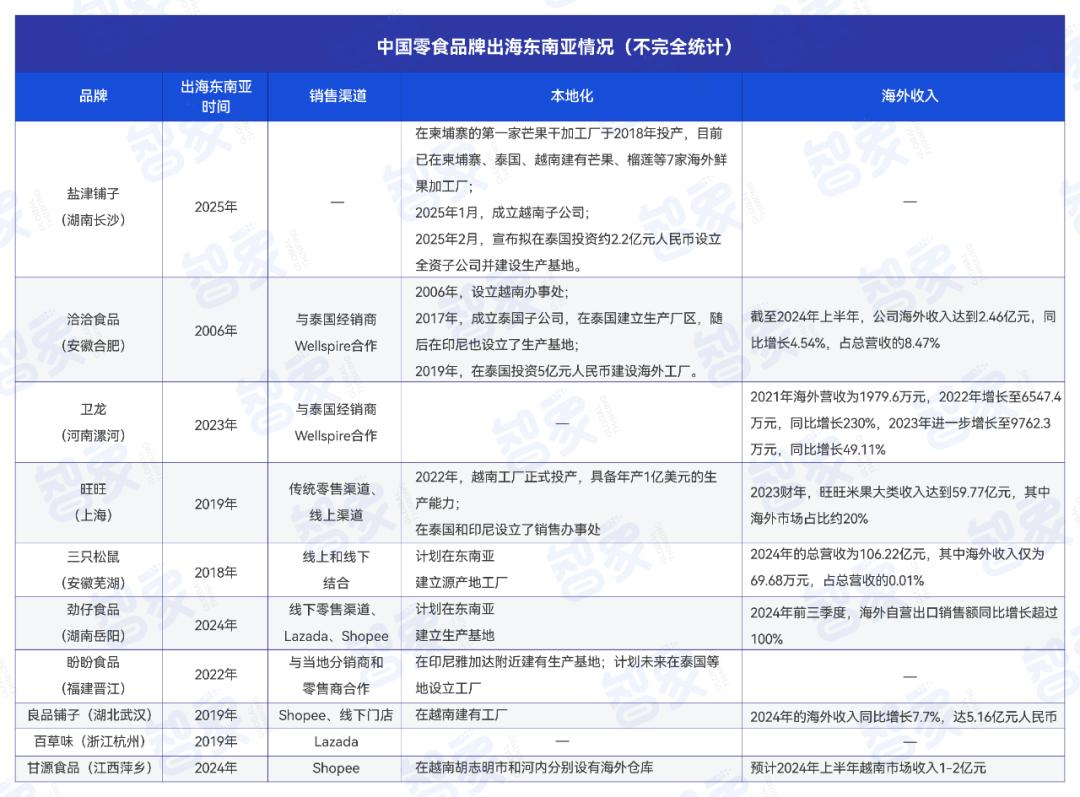
Core Viewpoint - The article discusses the increasing trend of Chinese snack brands expanding into Southeast Asia, highlighting the significant growth potential in this market and the strategies employed by various companies to establish their presence [4][8][12]. Group 1: Market Growth and Opportunities - Wangwang's overseas business saw a double-digit growth in fiscal year 2023, with revenue from the rice snack category reaching 5.977 billion yuan, and overseas markets accounting for about 20% of total revenue [4]. - The Southeast Asian snack market is projected to reach $13.1 billion by 2029, with a compound annual growth rate (CAGR) of 10.60% [6]. - Companies like Qiaqia Foods and Jinzhai Foods have successfully established operations in Southeast Asia, with Qiaqia's Thailand subsidiary contributing 400 million yuan in revenue in 2023 [5][6]. Group 2: Market Entry Strategies - Chinese snack brands are increasingly adopting proactive strategies for overseas expansion, particularly in Southeast Asia, where cultural similarities and large Chinese populations present favorable conditions [12][14]. - Different entry strategies are employed based on the characteristics of each Southeast Asian market, with brands targeting either mature markets like Thailand and Singapore or emerging markets like Vietnam and Indonesia [15][23]. - The article emphasizes the importance of localizing products and marketing strategies to cater to the unique preferences of Southeast Asian consumers [45][46]. Group 3: Distribution Channels - The choice of distribution channels is critical for success in Southeast Asia, with brands like Xu Fu Ji and Aice leveraging innovative channel strategies to penetrate local markets [19][22]. - Traditional retail channels, such as community stores, play a significant role in Indonesia, where a large portion of snack consumption occurs outside modern retail environments [26][27]. - The article highlights the need for brands to adapt their channel strategies to the specific retail landscape of each country, such as focusing on convenience stores in Thailand and schools in Indonesia [24][30]. Group 4: Compliance and Localization - Compliance with local regulations is a major hurdle for Chinese snack brands entering Southeast Asian markets, with specific requirements for product certification and labeling [44]. - Localization of products is essential, with brands like Xu Fu Ji and Panpan introducing flavors and products tailored to local tastes, such as durian-flavored candies [45][46]. - Establishing local supply chains is also crucial for reducing costs and improving efficiency, as seen with brands like Salted Fish and Qiaqia, which have set up production facilities in Southeast Asia [46][47]. Group 5: Competitive Landscape - The competitive landscape in Southeast Asia is characterized by the dominance of established Japanese snack brands, which have historically occupied the market [17]. - New entrants face challenges in differentiating their products and gaining market share, particularly in a market where local preferences may not align with traditional Chinese snack offerings [17][49]. - The article suggests that successful brands will be those that can effectively navigate the complexities of local consumer behavior and preferences while maintaining a strong brand identity [49].


中国零食上市公司“盈利王”:去年净赚11亿元,领先洽洽、三只松鼠
Sou Hu Cai Jing· 2025-04-30 12:36
Industry Overview - The market size of China's snack food industry reached 933 billion yuan in 2024, with a per capita annual consumption of 662.5 yuan, significantly lower than developed countries like the US (7578.7 yuan), UK (6543.9 yuan), and Japan (3524.6 yuan), indicating substantial growth potential [1] - The market is expected to grow to 1.14 trillion yuan by 2029, with a compound annual growth rate (CAGR) of 4.1% [1] Company Performance - Many listed companies in the snack sector have reported declines in both revenue and net profit in the past year, including major players like Liangpinpuzi, Juewei Food, and Zhou Hei Ya [3] - The "three giants" of marinated snacks have seen a reduction of over 5,000 stores due to declining performance, with Zhou Hei Ya reducing its stores by 785 to 3,031, and Huang Shang Huang by 837 to 3,660 [3] Leading Companies - Weidong Meiwai emerged as the "profit king" among snack companies, achieving a net profit of 1.068 billion yuan in the last year, a year-on-year increase of 21.37%, and revenue of 6.266 billion yuan, up 28.6% [5] - Three Squirrels is the only company to surpass 10 billion yuan in revenue, reporting 10.622 billion yuan, a 49.3% increase, and a net profit of 408 million yuan, up 85.51% [7] - The company has expanded its product range significantly and plans to enter the bulk snack market through acquisitions [7] Financial Summary of Major Snack Companies - Three Squirrels: Revenue 106.22 billion yuan, Net Profit 4.08 billion yuan [8] - Liangpinpuzi: Revenue 71.59 billion yuan, Net Profit 0.46 billion yuan [8] - Juewei Food: Revenue 62.57 billion yuan, Net Profit 2.12 billion yuan [8] - Weidong Meiwai: Revenue 62.66 billion yuan, Net Profit 1.068 billion yuan [8] - Other companies like Salted Fish and Good Idea also reported varied performance, with some experiencing significant declines [8]


新单品成长助零食企业去年增收,多家公司计划大笔分红
Cai Jing Wang· 2025-04-30 08:33
Core Insights - The snack industry has seen significant revenue growth, driven by new product launches and channel restructuring, including social e-commerce and discount stores [1][2] - Despite revenue growth, snack companies are facing challenges in maintaining profitability, with fluctuating sales expenses and gross margins [1][8] Revenue Growth Drivers - Major snack companies reported substantial revenue figures for 2024, with Three Squirrels leading at 10.622 billion, followed by other companies like Liangpinpuzi and Qiaqia Foods [2] - New product development has been highlighted as a key contributor to revenue, with Three Squirrels launching over 20 new products that achieved significant sales [3][4] Channel Expansion - The restructuring of sales channels has provided new opportunities for snack companies, with a focus on e-commerce and discount stores [5][6] - Three Squirrels reported an 81.73% increase in revenue from Douyin, indicating the effectiveness of digital marketing strategies [4] International Market Growth - Companies are increasingly targeting international markets, particularly Southeast Asia, to expand their growth potential [6][7] - Qiaqia Foods and other companies have reported significant growth in overseas sales, with Qiaqia's overseas revenue increasing by approximately 90% [6] Profitability Challenges - Many snack companies have experienced rising sales expenses, with increases ranging from 15.55% to 50.92%, primarily due to higher advertising costs [8][9] - Gross margins have shown volatility, with some companies reporting declines due to rising raw material costs and competitive pricing strategies [10] Dividend Distribution - Several companies have announced substantial cash dividends, reflecting confidence in their operational performance and future growth [11][12] - The total cash dividends and share buybacks for some companies represent a significant portion of their net profits, indicating a strong commitment to returning value to shareholders [11]


洽洽食品(002557) - 洽洽食品股份有限公司关于高级管理人员辞职的公告
2025-04-30 03:54
根据《上市公司自律监管指引第 1 号——主板上市公司规范运作》及《公司 章程》的相关规定,杨煜坤先生的辞职报告自送达董事会之日起生效,截至本公 告披露日,杨煜坤先生未直接持有公司股份。 公司董事会对杨煜坤先生任职期间所做的工作及对公司发展做出的贡献表 示衷心的感谢! 特此公告。 洽洽食品股份有限公司董事会 证券代码:002557 证券简称:洽洽食品 公告编号:2025-039 债券代码:128135 债券简称:洽洽转债 洽洽食品股份有限公司 关于高级管理人员辞职的公告 本公司及董事会全体成员保证信息披露内容的真实、准确和完 整,没有虚假记载、误导性陈述或重大遗漏。 洽洽食品股份有限公司(以下简称"公司")董事会收到公司副总经理杨煜 坤先生的辞职报告。杨煜坤先生因个人原因辞去公司副总经理职务,辞职后不再 担任公司及公司控股子公司任何职务。杨煜坤先生所负责的相关工作已进行了交 接,其离职不会影响公司正常的生产经营。 二〇二五年四月三十日 1 ...
泰国小学生迷上河南辣条,中国零食卷去东南亚
3 6 Ke· 2025-04-30 02:40
Group 1 - Wangwang invested RMB 138 million in a business jet to facilitate management's domestic and international travel, with a focus on expanding overseas operations [1] - In the fiscal year 2023, Wangwang's overseas business grew by double digits, with snack revenue reaching RMB 5.977 billion, accounting for approximately 20% of total revenue [1] - Southeast Asia has become a primary target for Chinese snack brands due to its large population and cultural similarities, with many brands already establishing a presence in the region [2][5] Group 2 - Companies like Qiaqia, Jinzhai, and Panpan have successfully penetrated the Southeast Asian market, with Qiaqia's Thailand subsidiary contributing RMB 400 million in revenue and nearly RMB 90 million in net profit in 2023 [2] - The Southeast Asian snack market is projected to reach USD 13.1 billion by 2029, with a compound annual growth rate of 10.60% [3] Group 3 - Salted snacks and other unique Chinese products are gaining traction in Southeast Asia, with brands like Yanjin and Qiaqia focusing on local market education to introduce their products [11][12] - The entry strategies of Chinese snack brands vary by country, with some targeting mature markets like Thailand and Singapore, while others focus on emerging markets like Vietnam and Indonesia [11] Group 4 - The retail landscape in Southeast Asia is diverse, with traditional community stores still dominating in Indonesia, where 80% of consumption occurs outside modern retail channels [17] - Successful market entry often relies on innovative channel strategies, as demonstrated by the ice cream brand Aice, which focused on community stores rather than traditional retail [14] Group 5 - Compliance with local regulations is crucial for market entry, with specific requirements for product certification and labeling in countries like Thailand and Indonesia [27] - Localization of products and supply chains is essential for success, with brands adapting flavors and ingredients to meet local preferences [28][31]


康师傅、李锦记、统一、旺旺、东鹏饮料、王老吉、洽洽确认出席 FBIF2025 食品出海晚宴
FBIF食品饮料创新· 2025-04-30 01:55
5月9日晚,我们将第一次举办食品出海晚宴,主题是 《 VENTURE FORWARD 》 。 很欣喜看到越来越多中国食品品牌开始布局出海,着手开拓海外市场,我们也同样关注到,如何克服文 化差异、市场壁垒、法律合规等多重挑战,成功实现国际化,是许多品牌需要面对的重大课题。 我们非常荣幸地邀请到: 康师傅、李锦记、统一、旺旺、东鹏饮料、王老吉、洽洽、三全、卫龙等 36家 拥有丰富出海经验的食 品品牌; 三得利、味之素、麒麟、明治、卡乐比、伊藤、好侍、养乐多、英斗等 9家 日本国际品牌; 出海渠道方面,邀请到美国、英国、法国、澳大利亚、新西兰、日本、韩国、马来西亚、柬埔寨、新加 坡、阿联酋、沙特、土耳其、伊拉克、加拿大等 15国28家 重要分销商、零售商和电商平台; 盒马、叮咚买菜、复星商社、鲜生活、陕西全意、广州欧深、甘肃千里丝路、甘肃亚盛好食邦等 8家 出海供应链; 中国品牌 张曜东 ,海外发展事业部(亚太中心)副总处长, 旺旺集团 预留 双汇 预留 圣农 吴昊 ,副总裁-全球品类与创新平台, 李 锦记控股 马恩多 ,品牌创始人, 阿麦斯及贝欧宝 ,董事长, 金多多 王凯旭 ,副总裁, 三全食品 范涛 ,CMO ...
食品饮料周报:政治局会议定调积极,看好饮料旺季催化-20250429
Tianfeng Securities· 2025-04-29 08:46
Investment Rating - The industry rating is "Outperform" (maintained rating) [5] Core Viewpoints - The report highlights a positive outlook for the beverage sector, driven by the upcoming peak season and supportive macroeconomic policies from the central government [2][12] - The report emphasizes the potential for valuation recovery in the liquor sector, particularly in light of the recent political bureau meeting that indicated a more proactive fiscal and monetary policy [2][12] Summary by Sections Market Performance Review - For the week of April 21 to April 25, the food and beverage sector declined by 1.36%, while the Shanghai Composite Index rose by 0.38%. Notable performances included snacks (+4.50%) and soft drinks (+2.21%), while categories like beer (-0.72%) and health products (-1.28%) saw declines [1][19] Weekly Perspective Updates - **Liquor Sector**: The liquor sector saw a decline of 1.75%, attributed to the off-peak consumption period and inventory adjustments. However, the upcoming May Day holiday is expected to boost demand for banquet scenarios, aiding in inventory reduction [2][12] - **Beer and Beverage Sector**: The beer sector decreased by 0.72%, but companies like Zhujiang Brewery saw a 5.7% increase in stock price due to better-than-expected Q1 performance. The report anticipates improved demand as the weather warms and consumption policies are implemented [3][13] - **Consumer Goods Sector**: The report identifies opportunities in the snack sector, with a focus on companies that have shown resilience and potential for growth. The upcoming sales season for soft drinks is also highlighted as a catalyst for growth [3][14] Investment Recommendations - **Liquor Sector**: Recommended stocks include strong alpha leaders like Moutai and Shanxi Fenjiu, as well as cyclical stocks like Luzhou Laojiao and Jiugui Liquor [4][18] - **Consumer Goods**: The report recommends focusing on snacks and dairy products, with specific mentions of companies like Ganyuan Foods and Yuyuan Foods, which are expected to benefit from low base effects in Q2 [4][18] Sector and Individual Stock Performance - The report provides detailed performance metrics for various sectors, indicating that the snack and soft drink sectors are currently outperforming others, while the liquor sector is under pressure [19][22]





洽洽食品(002557):25Q1经营触底 期待盈利修复
Xin Lang Cai Jing· 2025-04-29 02:43
Core Viewpoint - The company reported a revenue of 7.13 billion yuan for 2024, a year-on-year increase of 4.8%, and a net profit attributable to shareholders of 850 million yuan, up 5.9% year-on-year. However, in Q1 2025, revenue dropped to 1.57 billion yuan, a year-on-year decrease of 13.8%, and net profit fell to 80 million yuan, down 67.9% year-on-year due to factors such as pre-holiday inventory buildup, weak market demand, intensified industry competition, and fluctuations in raw material prices [1]. Revenue and Profit Analysis - In 2024, the company's revenue from sunflower seeds, nuts, and other businesses reached 4.38 billion yuan (+2.6%), 1.92 billion yuan (+9.7%), and 830 million yuan (+5.6%) respectively. The overall performance of the seed category remained stable, with contributions from key products [2]. - The company achieved revenue of 2.27 billion yuan (+3.9%) in the southern region, 2.12 billion yuan (+9.5%) in the eastern region, and 1.34 billion yuan (-3.3%) in the northern region for 2024. E-commerce and international markets also showed growth, with revenue from e-commerce reaching 780 million yuan (+8.9%) and international markets at 50 million yuan (-20.6%) [2]. Cost and Profitability - The gross profit margin for 2024 was 28.8%, an increase of 2.0 percentage points year-on-year, while Q1 2025 saw a gross profit margin of 19.5%, a decrease of 11.0 percentage points year-on-year, primarily due to raw material cost pressures [3]. - The sales expense ratio for 2024 was 10.0%, up 0.9 percentage points year-on-year, while Q1 2025 was 10.6%, down 1.8 percentage points year-on-year. The management expense ratio for 2024 was 4.3%, up 0.1 percentage points year-on-year, and 4.6% in Q1 2025, up 0.9 percentage points year-on-year [3]. Strategic Initiatives - The company is focusing on expanding its distribution channels, particularly in underdeveloped markets, and exploring partnerships with core cities. It is also enhancing its upstream raw material control and expects a decrease in raw material prices in the new procurement season [4]. - The company is implementing various strategies to address short-term pressures, including product promotions and expanding its product range, which is expected to help navigate through the operational cycle [4]. Profit Forecast and Investment Recommendation - The projected net profits for 2025, 2026, and 2027 are 720 million yuan, 840 million yuan, and 920 million yuan respectively, with corresponding EPS of 1.42 yuan, 1.65 yuan, and 1.81 yuan. The company is expected to accelerate its operations as consumer demand recovers [4].
洽洽食品(002557):短期业绩承压 或逐步改善
Xin Lang Cai Jing· 2025-04-29 02:43
Core Viewpoint - The company experienced a revenue increase of 4.8% year-on-year in 2024, reaching 7.13 billion yuan, while net profit rose by 5.8% to 850 million yuan, indicating stable growth despite challenges in Q1 2025 due to intensified competition and the timing of the Spring Festival [1][4]. Financial Performance - In Q1 2025, the company reported a revenue of 1.57 billion yuan, a decline of 13.8% year-on-year, with net profit dropping by 67.9% to 77.24 million yuan [1]. - The company's core products, sunflower seeds and nuts, achieved revenues of 4.38 billion yuan and 1.92 billion yuan respectively in 2024, reflecting growth rates of 2.6% and 9.7% [1]. Market Segmentation - Revenue from distribution and other channels was 5.67 billion yuan, down 1.4%, while direct sales (including snacks, e-commerce, and key accounts) surged by 38.3% to 1.46 billion yuan in 2024 [1]. - The Eastern region, e-commerce, and overseas markets outperformed the overall company growth, with revenues of 2.12 billion yuan, 780 million yuan, and 570 million yuan respectively, showing year-on-year growth of 9.5%, 8.9%, and 10.3% [2]. Cost and Margin Analysis - The company's gross margin for 2024 was 28.8%, with a decline to 19.5% in Q1 2025, reflecting a year-on-year change of +2.0 and -11.0 percentage points respectively [3]. - The gross margins for sunflower seeds and nuts in 2024 were 29.7% and 27.2%, with year-on-year changes of +4.5 and -4.4 percentage points [3]. Profitability Metrics - The net profit margin for 2024 was 11.9%, decreasing to 4.9% in Q1 2025, with year-on-year changes of +0.1 and -8.3 percentage points respectively [4]. - The company anticipates gradual improvement in performance post-Q1 2025, with projected net profits of 756 million yuan, 919 million yuan, and 990 million yuan for 2025-2027, reflecting year-on-year growth rates of -10.97%, 21.50%, and 7.79% [4].
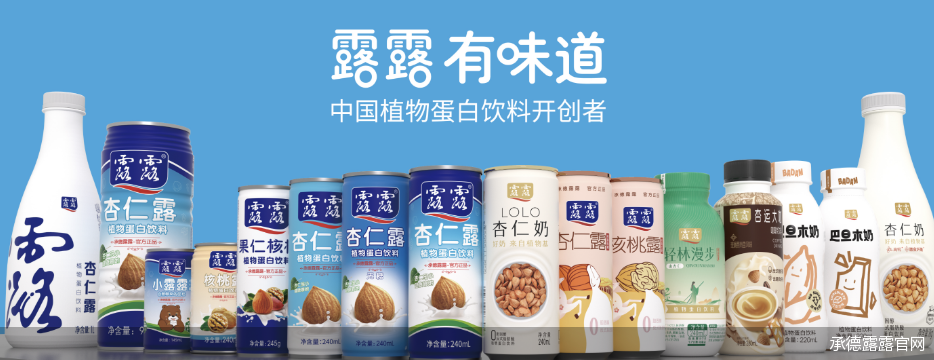
植物蛋白饮料“四巨头”,财报里的烦恼各不同
Bei Jing Shang Bao· 2025-04-28 14:41
Core Insights - The plant protein beverage market is experiencing intensified competition, leading to a "stronger differentiation" pattern among major companies [1][6] - Traditional plant protein beverages are facing challenges due to low daily consumption penetration and significant seasonal sales fluctuations [1][6] Company Performance - Yangyuan Beverage reported a revenue of approximately 6.058 billion yuan, a decrease of 1.69% year-on-year, but a net profit of about 1.722 billion yuan, an increase of 17.35% [3][4] - Weiweijia's revenue was approximately 3.656 billion yuan, down 9.4% year-on-year, while net profit increased by 96.26% to about 411 million yuan [3][4] - Chengde Lulux achieved a revenue of approximately 3.287 billion yuan, an increase of 11.26%, with a net profit of about 666 million yuan, up 4.41% [3][4] - Huanlejia's revenue was approximately 1.855 billion yuan, down 3.53%, and net profit decreased by 47.06% to about 147 million yuan [3][5] Market Trends - The plant protein beverage industry has seen significant growth, with market size reaching 142.8 billion yuan in 2023, reflecting a compound annual growth rate of 9.8% [6][9] - The market is characterized by a concentration of major players, with the top five companies holding only 58% of the market share, indicating structural opportunities [8][9] - There is a growing demand for healthier products with low sugar, high fiber, and organic certifications, which presents growth potential for the industry [9] Competitive Landscape - The industry is witnessing increased competition from new entrants and product homogeneity, necessitating diversified strategies for differentiation [8][9] - Major companies like Yangyuan Beverage and Chengde Lulux maintain significant market shares due to their established brands and distribution channels [8][9] - Analysts emphasize the importance of functional and refined operations to adapt to changing consumer preferences and market dynamics [6][9]