
地平线

Search documents
特斯联全新研究成果聚焦3D场景理解,获IEEE T-PAMI收录
IPO早知道· 2025-05-13 01:55
Core Insights - The article discusses a new research achievement by Dr. Shao Ling and his team at Tesiun, introducing a framework called Laser for efficient language-guided segmentation, enhancing 3D scene understanding in real-time semantic parsing applications [2]. Group 1: Applications in Autonomous Driving and Robotics - The Laser framework is particularly beneficial for autonomous vehicles and mobile robots, enabling them to quickly understand the 3D structure and semantic information of their surroundings for safe navigation and decision-making. The training time for Laser is only 11 minutes, compared to 158 minutes for traditional methods, allowing for rapid construction of 3D semantic maps. Additionally, the low-rank attention mechanism accurately identifies fine-grained features like road edges and lane markings, reducing misjudgments caused by ambiguous boundaries [2]. Group 2: Applications in Augmented Reality (AR) and Virtual Reality (VR) - In AR and VR, the framework ensures precise overlay of virtual objects onto real scenes, requiring a deep understanding of 3D spatial semantics. It aligns virtual objects with real scene annotations (e.g., walls, tables) from different perspectives, preventing visual discrepancies. The framework can also distinguish between similar colored objects, enhancing the rational placement of virtual items. When combined with 3D Gaussian rendering technology, it enables real-time semantic AR effects [4]. Group 3: Applications in Urban Planning and Architectural Modeling - In urban digital modeling, the framework supports semantic labeling of buildings, vegetation, and public facilities to assist planning decisions. It allows for open vocabulary segmentation of rare objects (e.g., ancient architectural decorations, special signs), enriching the coverage of data annotations. Furthermore, using Laser, 3D models with semantics can be generated from multi-view images without the need for manual annotation [5].


汽车业加速供应链重构
Jing Ji Ri Bao· 2025-05-12 21:58
Core Insights - The automotive supply chain is crucial, with suppliers playing a significant role in providing key components and participating in R&D and design processes, thus being referred to as the foundation of the automotive industry [1] - The transformation towards electric and intelligent vehicles is reshaping the supply chain, elevating China's position in the global automotive supply chain and making it a source of innovation [1][5] Group 1: Electric Vehicle Supply Chain - Tesla's success in China is attributed to its collaboration with over 400 local suppliers, which has enhanced quality, efficiency, and cost control, allowing for lower prices compared to the U.S. market [2] - The price difference for Tesla's Model 3 and Model Y between China and the U.S. is significant, with the Model 3 priced at approximately 22.99 million RMB in China versus about 28.86 million RMB in the U.S., a difference of nearly 60,000 RMB [2] - The rise of Chinese automotive supply chain companies is driven by the shift from traditional fuel vehicles to electric and intelligent vehicles, creating new opportunities and value [5][6] Group 2: Technological Advancements - BMW has integrated DeepSeek technology into its vehicles, enhancing the human-machine interaction experience, marking a significant step in its localization strategy in China [3] - The collaboration between automotive companies and tech firms is crucial for innovation, with AI being a key area of focus for enhancing vehicle capabilities [3][6] - The cost of components like LiDAR has drastically decreased from 80,000 USD a decade ago to below 200 USD today, showcasing the impact of technological advancements and economies of scale [6] Group 3: Industry Challenges - Despite the growth, challenges remain, including product homogenization and intense competition leading to pressure on profitability [8] - The supply chain for raw materials, batteries, and core components faces risks due to concentrated global resources, which may lead to supply shortages [8] - The automotive chip industry is characterized by high risk and uncertainty, with increasing software complexity and safety concerns posing additional challenges [8]
关税调整对汽车的影响及受益标的
2025-05-12 15:16
Summary of Conference Call Records Industry Overview - The conference call discusses the impact of tariff adjustments on the automotive industry, particularly focusing on the effects of U.S. tariffs on Chinese goods, including automobiles and parts. The overall impact on Chinese parts manufacturers is relatively small due to their strategic production placements in North America and Mexico [1][3][6]. Key Companies and Recommendations - **Preferred Stocks in Hong Kong**: - Xpeng Motors, Li Auto, and Xiaomi Motors are highlighted, with Xpeng Motors being the top pick [1][4]. - **Preferred Stocks in A-shares**: - Desay SV and Boteli are recommended [1][5]. - **Fuyao Glass**: - Projected revenue for 2025 is approximately 8.835 billion yuan, with a price-to-earnings ratio of 17 times, maintaining a growth rate of 15-21% due to increased global market share and automotive glass upgrades [1][7]. - **New Spring Co.**: - Expected profit for 2025 is between 1.3 to 1.35 billion yuan, with a current valuation of about 16 times, benefiting from localized production in Mexico to avoid tariff risks [1][8]. Tariff Impact and Market Sentiment - The tariff situation has improved for the automotive parts sector, with Tesla and Huawei entering a phase of increased orders and production in Q2, which is expected to enhance market sentiment and lead to technological upgrades [1][9]. - The easing of U.S.-China trade tensions is seen as beneficial for the automotive industry, alleviating previous negative sentiments and fears of price wars [2]. Robotics Industry Outlook - 2025 is identified as a pivotal year for the robotics industry, with expectations for technological recovery and the introduction of autonomous taxi services driving growth. Key companies to watch include Top Group, Sanhua, and Beite [1][9][11]. - The development of smart robotics is being accelerated through collaborations, such as Huawei's partnership with UBTECH, and Xiaomi's advancements in robotics [9][10]. Future Trends and Innovations - The Tesla supply chain is anticipated to experience a rebound, while Huawei and Xiaomi's supply chains are noted for their smart advantages. Key technological focuses include dexterous hands and lightweight materials, with companies like Zhaoming and Xingyu benefiting from these trends [1][10]. - The robotics sector is expected to see a significant increase in production rates, particularly in smart connected vehicles, with potential breakthroughs in domestic production [11]. Conclusion - The automotive and robotics industries are poised for growth in 2025, driven by strategic adaptations to tariff challenges, technological advancements, and improved market sentiment. Key players and recommended stocks are positioned to capitalize on these trends.
港股周报(2025.05.06-2025.05.09):南向资金加码美团等低估值龙头,关注港股龙头公司下周财报披露-20250512
Tianfeng Securities· 2025-05-12 08:46
Investment Rating - The report assigns a "Buy" rating for stocks, indicating an expected relative return of over 20% within six months [30] Core Insights - Southbound funds have increased their investments in undervalued leading companies such as Meituan, with a net purchase of 6.7716 billion yuan in the past week, contributing to a total net purchase of 575.518 billion yuan year-to-date, which is 77.35% of the total net purchase for 2024 [1] - The report highlights that major internet companies are currently at relatively low valuations, with projected P/E ratios for 2025 as follows: Alibaba (12), Tencent (17), Meituan (11), Baidu (9), Pinduoduo (8), JD.com (7), Kuaishou (6), and Xiaomi (28) [1][20] Summary by Sections Company Financials and News - Meituan has seen significant investment from southbound funds, with a net purchase of 6.371 billion yuan [25] - The report notes the upcoming earnings announcements from major companies such as Tencent, Alibaba, and JD.com, which are expected to provide insights into future product cycles and strategies [4] - The IPO of Hu Shang A Yi on the Hong Kong Stock Exchange was successful, with a closing price of 158.4 HKD, representing a 40.03% increase from its opening price [3][10] Market Overview - The Hang Seng Index closed at 22,867.74 points, reflecting a weekly increase of approximately 1.61% [13] - The report emphasizes the importance of monitoring the upcoming earnings reports and AI product iterations, which could influence investment expectations and valuations in the Chinese market [4] Industry Trends - The report discusses the advancements in AI, particularly the launch of the VPP model by Xingdong Jiyuan, which utilizes vast amounts of internet video data for generating video content and executing physical actions [2] - In the smart driving sector, there is a trend towards the standardization of laser radar among major manufacturers, with a focus on companies like Xiaopeng and Xiaomi [2] - The report also highlights the growth potential in the new tea beverage market, as evidenced by the successful IPO of Hu Shang A Yi and the upcoming IPO of Green Tea Group, which plans to raise over 1.2 billion HKD [3][10]
AI 终端落地场景丰富,产业链迎高增机遇
2025-05-12 01:48
Summary of Key Points from Conference Call Records Industry Overview - The conference call discusses the **AI-driven consumer electronics industry**, focusing on the impact of AI applications on traditional smart devices such as smartphones and PCs, as well as emerging technologies like AI glasses and smart driving solutions [1][2][3]. Core Insights and Arguments - **AI Applications Driving Hardware Upgrades**: The integration of AI is leading to significant upgrades in core components of traditional smart devices, including processors, storage, and cameras. Major brands like Apple and Lenovo are expected to see substantial performance improvements [1][3]. - **Market Potential for New Smart Hardware**: The market for new smart hardware, particularly AI glasses, is projected to grow significantly, with sales expected to exceed ten million units. Meta is anticipated to launch AR glasses in the second half of the year, which will further stimulate market growth [1][8][11]. - **Transformations in Smartphone and PC Supply Chains**: The smartphone and PC supply chains are undergoing notable changes, with innovations in camera technology (e.g., periscope lenses) and cooling solutions becoming prevalent. The introduction of foldable screen technology is expected to be a key growth driver, particularly with Apple's upcoming foldable devices [1][5][7][9]. - **Increased Demand for Storage and Battery Performance**: AI smartphones and PCs will require enhanced storage and battery capabilities, leading to upgrades across the supply chain from battery cells to storage modules. This is expected to improve the profitability of related suppliers [1][10]. Additional Important Content - **Investment Opportunities in Consumer Electronics**: The current low valuation of the consumer electronics sector presents significant investment opportunities, especially as major companies report strong earnings and growth trends for the upcoming quarters [2]. - **Focus on Specific Sub-sectors**: Three key sub-sectors are highlighted for investment: traditional smart terminals (smartphones and PCs), new smart hardware (AI glasses), and smart driving technologies [3][4]. - **Smart Driving Sector Growth**: The smart driving sector is experiencing rapid advancements, with increased demand for high-performance camera modules and LiDAR technology. The number of cameras in advanced driving assistance systems (ADAS) is expected to rise significantly [4][13]. - **Emerging Technologies in Smart Driving**: The demand for high-speed connectors and advanced driving chips is increasing, with domestic companies like Lianxin and Luxshare actively participating in the automotive electronics market [15][16]. - **Key Companies to Watch**: Investors are advised to focus on companies with strong valuations and growth potential, including major players in the supply chain such as Luxshare, Lens Technology, and Gree Electric, as well as innovative firms in niche markets [17][18]. This summary encapsulates the essential insights and trends discussed in the conference call, providing a comprehensive overview of the current state and future potential of the AI-driven consumer electronics industry.

构建共生共融的汽车产业生态
Jing Ji Ri Bao· 2025-05-11 21:58
Core Insights - The 21st Shanghai International Automobile Industry Exhibition showcased nearly a thousand companies from 26 countries, highlighting the technological advancements and innovations in the global automotive industry, with multinational companies increasing their investment in the Chinese market [1] Industry Developments - China's automotive industry has maintained its position as the world's largest in terms of production and sales for 16 consecutive years, and has led in new energy vehicle production for 10 years, indicating a structural leap in competitiveness [2] - A complete industrial chain has been established in China, covering battery materials, chip design, and automotive large models, fostering a highly active innovation ecosystem [2] - Collaborations between companies, such as Continental optimizing driver assistance systems for complex Chinese road conditions, demonstrate the deep integration within the automotive supply chain [2] Strategic Implications - The shift from "R&D in China for China" to "R&D in China for global empowerment" signifies a transformation in China's role in the supply chain from a cost center to a value creation center [2] - The automotive industry is undergoing profound changes with technology integration and boundary reconstruction, necessitating collaborative innovation and resource optimization [2][3] Future Outlook - To enhance competitiveness, the automotive industry in China must focus on collaborative innovation and technical exchanges, addressing challenges such as brand recognition and talent shortages in international markets [3] - The industry should transition from merely selling products to building ecosystems and from short-term profit motives to long-term sustainable development [3] - The potential of the Chinese market remains to be fully explored, and a collaborative approach is essential for the global supply chain to resonate with China [3]
一汽奔腾启动新一轮增资 全速迈进智电转型“新征程”
Cai Jing Wang· 2025-05-09 12:52
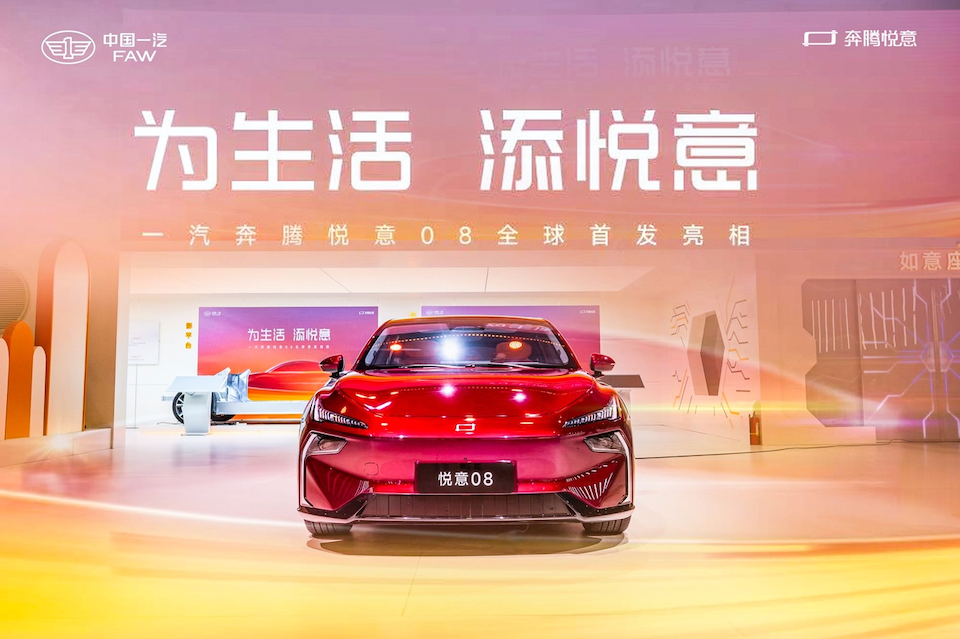
Core Viewpoint - FAW Bestune is initiating a new round of capital increase to attract strategic investors, aiming to enhance its resources and support for the transition to new energy vehicles [1][10] Group 1: Capital Increase and Strategic Partnerships - FAW Bestune is targeting local investment firms, upstream and downstream enterprises, and strategic partners of FAW Group to introduce diverse resources for its new energy transition [1][10] - The capital increase is seen as a crucial step for accelerating the company's transformation towards smart electrification, leveraging strategic capital and technological innovation [1][10] Group 2: Sales Growth and Market Performance - Since the launch of its shareholding reform in 2023, FAW Bestune has seen significant sales growth, with total sales surpassing 120,000 units in 2023, a year-on-year increase of 59.4% [3][6] - The company aims to achieve a record sales figure of 151,000 units in 2024, marking its best performance in a decade [3] - In Q1 of the current year, FAW Bestune reported sales of 38,939 units, reflecting a year-on-year growth of 47.4% [3] Group 3: Technological Advancements - Over the past three years, FAW Bestune has invested over 10 billion yuan to develop the "Yueyi" series, establishing a comprehensive technological framework that includes platforms, powertrains, and intelligent driving systems [7] - The company has formed technology alliances with leading firms such as Huawei and CATL to enhance its technological capabilities and create a sustainable ecosystem [7][9] Group 4: Product and Service Innovations - FAW Bestune has developed a diverse product matrix that includes pure electric, hybrid, and range-extended vehicles, catering to various consumer needs [9] - The introduction of a lifetime warranty policy for vehicles and key components aims to build consumer trust and reduce ownership costs, enhancing customer relationships [9] Group 5: Strategic Direction and Future Outlook - The company is pursuing a differentiated path for traditional automakers' transformation through a combination of mechanism reform, capital openness, and ecosystem collaboration [10][11] - With the support of FAW Group and new strategic investors, FAW Bestune is positioned to further enhance its production capacity and accelerate the implementation of smart electrification technologies [11]
杀疯了!汽车供应链惊现“合作潮”
Zhong Guo Qi Che Bao Wang· 2025-05-09 02:04
Group 1 - The automotive supply chain is experiencing a surge in joint ventures and collaborations, breaking traditional boundaries and fostering a new wave of partnerships [2][3] - Recent collaborations include partnerships between major players such as Visteon and ByteDance's Volcano Engine, Bosch and Horizon, and others, focusing on innovative solutions in smart cockpits and autonomous driving [3][4] - The launch of the first fully autonomous iVISION smart headlight by a consortium of Chinese companies marks a significant advancement in domestic supply chain capabilities, expected to accelerate market penetration by 35% [3] Group 2 - The automotive supply chain is facing intense competition and pressures, leading companies to embrace collaboration as a key strategy to overcome challenges and reduce costs [5][6] - Global trade issues and tariff challenges are prompting companies to explore cooperative strategies to enhance their market positions and operational efficiencies [5][6] - Collaborations are seen as essential for expanding into international markets, allowing domestic companies to leverage foreign expertise and distribution channels while foreign firms benefit from local market insights [9] Group 3 - Future collaborations in the automotive supply chain are anticipated to deepen and broaden, enabling companies to share risks, reduce investments, and achieve synergies [8] - Joint procurement and shared production facilities are expected to lead to significant cost savings, enhancing competitiveness for both vehicle manufacturers and parts suppliers [8] - The shift towards collaborative models is viewed as a necessary evolution in the industry, moving away from competitive pressures to a more cooperative framework that benefits all stakeholders [9]

智能驾驶系列电话会议——芯片
2025-05-08 15:31
Summary of Conference Call on Intelligent Driving Chips Industry Overview - The domestic mid-tier intelligent driving chip market is primarily dominated by Horizon Robotics' Journey 6 series, which strikes a balance between performance and price, making it widely adopted by mainstream OEMs. Qualcomm and NVIDIA solutions are used less frequently [1][2] - The high-end market is mainly led by NVIDIA's Orin series chips, but Horizon has introduced a full-stack high-end solution, HSD, based on G6P, gaining some market share due to cost advantages and superior performance [1][2] - Qualcomm's 8,775 chip is positioned for the mid-to-low-end market, expected to be deployed in the second half of 2025, but OEMs show limited willingness to adopt it due to the challenges of simultaneous development of cockpit and intelligent driving systems [1][5] Key Insights - The domestic vehicle chip design sector has largely achieved independence, but the production side still relies on foreign foundries, limiting the localization rate of mid-tier and high-end chips. The future trend is to enhance design independence and seek more production collaborations [1][6] - NIO is making the fastest progress in self-developed chips, having implemented its self-developed ZAM chip in the ET9 model, improving computing power utilization and reducing costs, although it faces challenges in capacity and R&D costs [1][7] Market Dynamics - The domestic vehicle chip market can be segmented into low, mid, and high tiers. The low tier includes basic L2 functions, while the mid-tier has expanded to high-speed NOA, which has become mainstream following BYD's intelligent driving strategy [2] - The pricing trend for mainstream vehicle chips is generally declining, with low-tier chips around $20, mid-tier chips like Horizon's 6M at approximately $70, and high-end chips like NVIDIA's Orin X exceeding $300 [3][17] Competitive Landscape - The low-tier market is primarily led by Horizon, Mobileye, and Bosch, with Horizon's share expected to increase. The mid-tier market is dominated by the Journey 6 series, which is projected to capture a significant portion of the domestic OEM market in the next two years [18] - In the high-end market, NVIDIA still holds the largest share, with a small portion allocated to Qualcomm's 8,650 and Horizon's HSD solution [18] Self-Developed Chips - NIO is the fastest in self-development, with its ZAM chip already in use, while other companies like XPeng and Li Auto are at different stages of development. The advantages of self-developed chips include better software-hardware coupling and cost savings [7][9] - However, self-developed chips face disadvantages such as limited manufacturing capacity and high R&D costs, which could lead to higher costs compared to externally sourced chips if sales volumes are insufficient [8][9] Future Trends - The trend towards self-developed chips is not expected to be prevalent among traditional automakers like Geely and Chery due to their complex R&D systems and high investment risks. In contrast, emerging companies like NIO and XPeng are more inclined to pursue self-development as it aligns with their brand identity [9][10] - The integration of cockpit and intelligent driving functions is currently less common due to high performance requirements and rapid iteration speeds, with a trend towards separating these functions until higher-performance chips become available [15] Geopolitical and Regulatory Impact - Geopolitical factors and tariffs have limited effects on the vehicle chip industry, with few restrictions on chip exports from China to other countries, except the U.S. Companies like Horizon face slow overseas expansion due to insufficient data accumulation and mass production experience [20]
维海德(301318) - 2025年5月8日投资者关系活动记录表
2025-05-08 10:02
Business Performance - In Q1 2025, the company achieved a revenue of 193.07 million yuan, a year-on-year increase of 66.06% [1] - Net profit attributable to shareholders reached 42.31 million yuan, up 92.94% year-on-year [1] - Net profit excluding non-recurring gains and losses was 37.16 million yuan, reflecting a 107.86% increase compared to the previous year [1] Market Expansion and Strategy - The company plans to enhance market channel construction, expand its product matrix, and improve operational capabilities in 2025 [1] - Focus on strengthening local marketing teams and optimizing channel management to boost global market influence and brand recognition [1][2] Profitability and Cost Control - The company aims to deepen its core business, integrate the supply chain, and upgrade technology to maintain or enhance profitability [3] - Cost control measures include strict budget execution, optimizing procurement processes, lean management, and incorporating cost control into performance assessments [4] Research and Development - R&D expenses for 2024 were 97.25 million yuan, a 2.24% increase year-on-year [4] - The company implemented a dual-track strategy of "technology iteration and innovation breakthroughs" in its product development [4] - Significant advancements include a leap in imaging precision from 8 million to 48 million pixels and the development of AI-enhanced technologies [5] Accounts Receivable Management - Measures to enhance collection efficiency include optimizing project selection, strengthening accounts receivable management, and linking sales team commissions to collections [6] - The company currently does not face significant bad debt risks [6] Organizational and Financial Health - The company has a robust organizational structure and talent management strategy to support long-term development [7] - Financially, the company is in a strong position with good cash flow [7] Future Growth and Acquisitions - The revenue growth target for the next three years is detailed in the company's incentive plan disclosed on August 29, 2024 [7] - The company is open to potential acquisitions to accelerate expansion, focusing on upstream and downstream product opportunities [7] Global Operations and Supply Chain - The company is steadily advancing its global layout as per its established plan [8] - To maintain high gross margins, the company will innovate products, optimize customer structure, and explore high-value markets [8] - Supply chain optimization will involve smart equipment upgrades and digital system integration [8]