
小红书

Search documents
没想到,音频大模型开源最彻底的,居然是小红书
机器之心· 2025-09-17 09:37
Core Viewpoint - The article highlights the recent surge in open-source AI models in the audio domain, particularly by domestic companies in China, with a focus on the advancements made by Xiaohongshu in developing high-quality audio models and fostering an open-source community [1][4][22]. Summary by Sections Open Source Trends - In recent months, open-source has become a focal point in the AI community, especially among domestic tech companies, with 33 and 31 models being open-sourced in July and August respectively [1]. - The majority of these open-source efforts are concentrated in text, image, video, reasoning, and world models, while audio generation remains a smaller segment [1][2]. Xiaohongshu's Contributions - Xiaohongshu has maintained a steady rhythm of open-sourcing audio technologies since last year, releasing models like FireRedTTS for text-to-speech (TTS) and FireRedASR for automatic speech recognition (ASR), achieving state-of-the-art (SOTA) results [3][4]. - The open-sourcing of high-quality audio models enhances Xiaohongshu's technical influence and signals a long-term strategic commitment to open-source development [4][22]. Technical Achievements - Xiaohongshu's FireRedTTS model allows for flexible voice synthesis, enabling the imitation of various speaking styles with minimal training [6][9]. - FireRedASR has achieved a character error rate (CER) of 3.05%, outperforming other closed-source models [7][8]. - The new FireRedTTS-2 model addresses existing challenges in voice synthesis, providing superior solutions for long dialogue synthesis and achieving industry-leading performance in audio scene modeling [9][11]. Ecosystem Development - Xiaohongshu aims to build a comprehensive open-source community around audio models, covering TTS, ASR, and voice dialogue systems, thereby lowering industry entry barriers and fostering innovation [22][23]. - The introduction of FireRedChat, a fully open-source duplex voice dialogue system, represents a significant advancement, providing a complete solution for developers to create their own voice assistants [17][22]. Future Plans - Xiaohongshu plans to release additional models, including FireRedMusic and FireRedASR-2, to further enhance its audio technology stack and support a broader range of applications [22][26]. - The company is committed to establishing itself as a leader in the open-source audio domain, with a focus on creating industrial-grade, commercially viable models [23][26]. Industry Impact - The article emphasizes that open-source initiatives are reshaping the AI landscape, making advanced capabilities accessible to a wider audience and fostering a collaborative environment for innovation [25][26].


共建赴新机!鸿蒙开启智能未来新篇章
Sou Hu Cai Jing· 2025-09-17 08:20
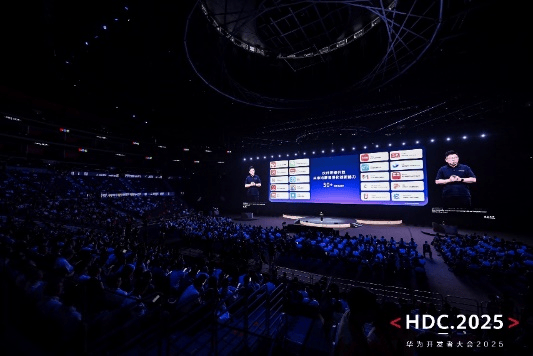
Core Insights - HarmonyOS is becoming a core force in the domestic operating system ecosystem through its all-scenario strategy, promoting the widespread adoption of native applications and building a safer, smarter, and more open operating system [1][2] Group 1: Ecosystem Development - The "HarmonyOS Innovation Scenario Co-creation" competition attracted outstanding developers from various fields, highlighting the collaborative nature of Harmony's development [1][2] - Over 30 ecosystem partners have joined the co-creation of scenario-based solutions, with more than 50 co-creation capabilities established across key technology areas such as frameworks, media, tools, and security [1][7] - Notable technological achievements include: - Xiaohongshu's REDPlayer, which reduces startup time and offers high extensibility for developers [1][9] - Feishu's Harmony text renderer, supporting over 20 styles while ensuring smooth scrolling in complex scenarios [1][9] - Zhihu's intelligent pre-rendering service framework, significantly reducing page refresh delays and enhancing user experience [1][11] Group 2: Developer Engagement - Huawei encourages both enterprise partners and independent developers to participate in co-creation, offering opportunities for technical influence, honor awards, and technical support [6][12] - The co-creation process involves submitting technical proposals, evaluation by Huawei, and subsequent collaboration on scenario technology [12][13] Group 3: Technical Solutions - Five recommended co-created scenario capabilities include: - JD's Taro on HarmonyOS framework, enabling rapid development of high-performance Harmony applications [8] - Kuaishou's QuickTransformer, a high-performance serialization and deserialization solution [10] - Huolala's PageSpy, a cross-platform debugging tool for various project types [10] - Zhihu's intelligent pre-rendering service, which reduces page load time from 1600ms to 300ms, an 81% decrease [11]
高德“扫街”一周后,本地生活竞争格局变了吗?
3 6 Ke· 2025-09-17 07:11
Core Insights - The local lifestyle market in China is becoming increasingly competitive, with major players like Alibaba, Meituan, Douyin, and Xiaohongshu vying for user engagement and decision-making entry points [3][15][24] - Alibaba's launch of the "Gaode Street Ranking" aims to capture a share of the local lifestyle service market, which has surpassed 35 trillion yuan in 2024, with over 60% attributed to in-store services [3][15] - Dazhong Dianping has established a strong competitive moat through its extensive user-generated content, including over 500 million reviews, which enhances its credibility and user trust [5][7][12] Local Lifestyle Market Dynamics - The local lifestyle service market in China is projected to exceed 35 trillion yuan in 2024, with in-store services accounting for over 21 trillion yuan [3] - The competition for user decision-making entry points is intensifying, with Gaode's new ranking system directly targeting Dazhong Dianping's core market [3][15] - Dazhong Dianping's long-standing presence and user-generated content have created a significant barrier to entry for new competitors [5][12] User Decision-Making and Trust - Dazhong Dianping's unique flow distribution mechanism, based on user ratings and reviews, allows high-rated businesses to gain more visibility, creating a self-reinforcing cycle [8] - Users find Dazhong Dianping's extensive review system valuable for making informed decisions, despite concerns about fake reviews [11][12] - Gaode's Street Ranking, while based on real user data, lacks the depth of user reviews and may not fully meet the diverse needs of users [11][14] Competitive Landscape - Gaode's Street Ranking is seen as a supplementary tool rather than a replacement for Dazhong Dianping, as it primarily helps users discover new businesses rather than providing comprehensive decision-making support [14] - Douyin and Xiaohongshu are leveraging their content-driven platforms to capture user attention and drive traffic to local businesses, creating a new competitive dynamic [15][17] - Douyin's "Heartbeat List" and Xiaohongshu's "Xiaohong Card" initiatives aim to enhance user engagement and streamline the decision-making process, but both face challenges in providing comprehensive information compared to Dazhong Dianping [19][22][24]



小红书被查,商业化与合规的博弈
3 6 Ke· 2025-09-17 03:47
Core Insights - Xiaohongshu is projected to achieve a 200% increase in profit by 2025, reaching $3 billion, up from $1 billion last year, with its valuation rising by 19% to $31 billion in three months [1][3] - The platform is facing scrutiny from the National Cyberspace Administration for violating content management regulations, particularly regarding the promotion of celebrity-related content [1][3] - The incident highlights the challenges Xiaohongshu faces in balancing aggressive commercialization with compliance, especially as it approaches its IPO [3][19] User Engagement and Market Position - Xiaohongshu boasts 350 million monthly active users, who view it as a source for news, entertainment, and community sharing [4] - Despite its large user base, the platform struggles with effective monetization, as users often transition to professional booking platforms for travel decisions rather than completing transactions on Xiaohongshu [7][8] Commercialization Efforts - The platform has attempted various strategies to enhance its commercial viability, including launching a group buying feature and collaborating with travel agencies, but these efforts have not significantly impacted market share [6][7] - Xiaohongshu's e-commerce initiatives have also faced challenges, including a failed partnership with Taobao and a shift to an internal transaction model [8][10][11] - Advertising and marketing contribute approximately 70%-80% of Xiaohongshu's revenue, with its e-commerce gross merchandise volume (GMV) exceeding 400 billion [11][14] Content Strategy and Regulatory Challenges - The platform's shift towards celebrity content has raised concerns about its core value proposition, which is based on user-generated content (UGC) and community sharing [15][18] - The focus on high-profile celebrity content may undermine the platform's original mission of fostering a diverse and authentic community, leading to potential regulatory repercussions [15][19] - The recent regulatory scrutiny serves as a reminder for the industry to reflect on the balance between short-term gains and long-term community value [21]

美团:价格战给中小商户造成实际收入减少不止15%|首席资讯日报
首席商业评论· 2025-09-17 03:46
Group 1 - Meituan reports that the price war has led to a reduction of over 15% in actual income for small and medium-sized merchants, which may weaken their operational capacity and livelihood in the long term [1] - Anthropic's CEO urges U.S. chip manufacturers to prioritize domestic customers, highlighting the need for support from U.S. officials and legislators [2] - Xiaohongshu has launched the "Xiaohong Card," which offers users various benefits such as discounts and exclusive event participation across selected stores nationwide [3] Group 2 - Anta Sports has dismissed 74 employees for serious misconduct, with 46 individuals referred to judicial authorities, including high-level executives, as part of its anti-corruption efforts [4] - The per capita disposable income of rural residents in China is projected to reach 23,119 yuan in 2024, indicating a steady growth in farmers' income during the 14th Five-Year Plan period [5] - Tencent is reportedly promoting its first bond issuance in four years, seeking to issue offshore RMB-denominated notes with initial guidance rates of 2.6%, 3%, and 3.6% for 5-year, 10-year, and 30-year maturities, respectively [6] Group 3 - Yealink has stated that it has no plans to enter the consumer Bluetooth headset market, focusing instead on technology development and product iteration in the business Bluetooth headset sector [7] - Douyin's vice president discusses the emergence of "ByteDance departure posts" on social media, revealing that many authors have never worked at ByteDance and are linked to training institutions selling courses [8] - The "Three Sheep" live streaming team has resumed broadcasts, with one host attracting over 100,000 viewers online, indicating a potential resurgence in audience engagement [9] Group 4 - China has built over 100 million acres of high-standard farmland, with the contribution rate of agricultural technology progress reaching 63.2% during the 14th Five-Year Plan period [10] - OpenAI has released GPT-5-Codex, a new model optimized for agent programming, available across various platforms including CLI, IDE extensions, and GitHub [11] - Recent rumors about multiple gold material merchants in Shui Bei going bankrupt have been deemed exaggerated and untrue by the Shenzhen Gold Jewelry Association, which confirms that many businesses are still operating normally [12]


上线“买手橱窗”,小红书电商加速跑,和抖音电商踏入同一条河流?
Mei Ri Jing Ji Xin Wen· 2025-09-16 15:49
Core Insights - Xiaohongshu is accelerating its e-commerce strategy by launching the "Buyer Window," a 24-hour boutique store for creators with over 1,000 followers to showcase products [1][3][4] - The platform aims to increase distribution users, enhance creator income, and boost product exposure and sales for merchants [1][5] - The number of live-streaming buyers has increased 1.7 times year-on-year, with sales exceeding 10 million yuan in 1.6 times more live-streaming rooms compared to last year [1][3] E-commerce Strategy - Xiaohongshu's e-commerce business is evolving with a clearer development path, focusing on the role of buyers and creators as key connectors between products and users [2][3] - The platform defines its e-commerce as "lifestyle e-commerce," emphasizing not just good products but also a desirable lifestyle [3][6] - The number of creators acting as both promoters and buyers has increased 2.1 times this year, with their income tripling compared to last year [3][4] Features and Support - The "Buyer Window" allows users to share their curated selections through private messages or group chats, enhancing user engagement [4][6] - Xiaohongshu is encouraging more creators to become buyers by offering various operational methods and support policies, including exclusive commission reductions for new buyers [4][6] - The platform has launched a "Million Commission Waiver Plan," exempting the first 1 million yuan in transaction fees for merchants over the next year, retaining only 0.6% for payment processing [6] Market Positioning - Analysts view the "Buyer Window" as a landmark in Xiaohongshu's transition towards e-commerce, indicating a comprehensive embrace of the e-commerce model [5][6] - Xiaohongshu differentiates itself from competitors like Douyin and Kuaishou by focusing on vertical content and community attributes rather than entertainment-driven sales [6][7] - The platform is working to enhance its product offerings and ensure quality control, which are critical challenges for its e-commerce strategy [7][8]
小红书切入金融赛道:从种草到增长的无限可能
第一财经· 2025-09-16 13:30
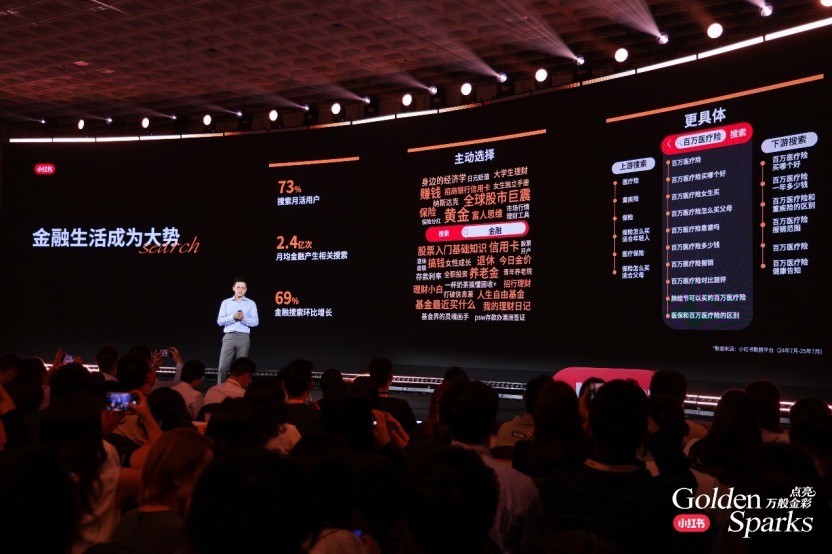
Core Insights - The article highlights the transformation of Xiaohongshu from a lifestyle community focused on beauty and travel to a significant player in the financial sector, attracting attention from financial institutions [1][12] Financial Institutions' New Growth Opportunities - Financial institutions are actively seeking new growth drivers due to slowing revenue growth, declining retail investor numbers, and decreasing new insurance policy values [4] - Traditional advertising methods are losing effectiveness among younger users, who prefer engaging with content in social communities rather than conventional marketing [4][5] User Engagement and Content Growth - Xiaohongshu has over 350 million monthly active users, with a significant portion being post-90s and even younger generations, who actively share their real-life experiences and seek financial information [5][12] - Financial-related searches on Xiaohongshu increased by 142% and reading volume surged by 229% in the first eight months of the year, indicating a growing demand for financial information [5][12] Trust and Relatability in Financial Services - Trust is crucial in the insurance industry, and Xiaohongshu provides a platform where insurance is presented through relatable stories rather than complex contracts, making it more accessible to younger audiences [9][12] - The platform has seen a growth in its core insurance audience to 34 million, with a lead generation rate increasing from 40% to 55% [9] Innovative Marketing Strategies - Banks are focusing on integrating financial services into everyday consumption scenarios to better connect with users [9][10] - Securities services are being presented in a more approachable manner, breaking down complex investment concepts into relatable content like "investment diaries" [9][10] Financial Content Integration - Xiaohongshu's financialization is a natural result of user demand, with financial content seamlessly integrating into lifestyle topics such as travel and food [12][13] - The platform has seen a significant increase in financial-related content, with a 73% growth in monthly active users searching for financial topics [12][13] Conclusion on Financial Engagement - Xiaohongshu is becoming a new main stage for financial brands to engage with younger users, emphasizing the importance of trust and relatable content in driving user engagement and conversion [13]

火爆!平均月薪超6万元,这类人才火了!岗位量同比增长超10倍,大厂疯抢
Mei Ri Jing Ji Xin Wen· 2025-09-16 13:08
Core Insights - The competition for AI talent has intensified, evolving into a strategic arms race for major companies, crucial for future survival and development [1][11] - The demand for AI talent surged significantly, with new job postings in the AI sector increasing over tenfold year-on-year from January to July 2025 [2][10] - The average monthly salary for new AI positions reached 61,475 yuan, marking a 4.33% increase compared to the same period in 2024 [2][5] Talent Demand and Supply - The report indicates a strong demand for algorithm-related talent, particularly in "search algorithms," where the talent supply-demand ratio is 0.39, meaning five positions compete for two candidates [9][10] - The AI job market is characterized by a shift from broad talent acquisition to precise matching, reflecting strategic investments in future technological barriers and commercial value [1][11] Salary Trends - Microsoft leads in average monthly salary for new AI positions at 90,345 yuan, followed by Alibaba's subsidiary Pingtouge at 89,760 yuan [5][8] - The top 20 companies hiring for AI roles show a mix of internet giants and emerging vertical players, with significant salary offerings across the board [2][5] Non-Technical Roles - Non-technical positions in the AI sector have also seen a substantial increase, with new postings growing 7.74 times compared to the previous year, focusing on product, operations, and design roles [10][11] - The average tenure for AI-related positions is notably lower than other sectors, with 62.99% of AI talent planning to switch jobs within a year [10][11] Employer Reputation - The top three companies in the "desirable AI employers" ranking are ByteDance, Tencent, and JD.com, indicating a strong employer brand among major tech firms [10][11] - The overall employer reputation remains a significant factor in attracting AI talent, with many leading companies maintaining a competitive edge in the job market [11]





小红书切入金融赛道:从种草到增长的无限可能
Di Yi Cai Jing· 2025-09-16 13:00
Core Insights - The article highlights the transformation of Xiaohongshu from a lifestyle community focused on beauty and travel into a significant platform for financial services, attracting attention from financial institutions [1][12] - Financial institutions are exploring new growth engines due to slowing revenue growth, declining retail investor numbers, and a challenging low-interest-rate environment [3][12] Financial Institutions' New Growth Opportunities - Financial institutions are actively seeking new growth drivers as traditional revenue streams face challenges, with banks experiencing slowed income growth and insurance new business values declining [3] - The younger generation, particularly Gen Z, prefers engaging with financial information through social media and community platforms rather than traditional advertising [3][5] - Xiaohongshu has over 350 million monthly active users, with a significant portion being post-90s and even younger users, indicating a shift in how financial information is consumed [3][4] User Engagement and Content Growth - There has been a substantial increase in demand for financial information on Xiaohongshu, with finance-related search volume growing by 142% and reading volume by 229% in the first eight months of the year [4] - Authentic user-generated content on Xiaohongshu, such as personal finance guides, is proving to be more persuasive than traditional advertisements [5][11] - The platform has developed a replicable model for the financial industry, covering key areas like insurance, banking, and funds, effectively converting user engagement into growth [6][10] Trust and Relationship Building - Trust is crucial in the insurance sector, and Xiaohongshu facilitates this by transforming complex insurance products into relatable stories shared by users [8] - The platform has seen a significant increase in its core insurance user base, with retention rates improving and return on investment (ROI) for certain products reaching over 20 [8][10] - Financial services are being integrated into everyday life, with banks and securities firms adapting their strategies to engage users in relatable contexts [9][10] Financial Content Integration - Xiaohongshu's financial content has seen over 80% growth since July 2024, with millions of views on finance-related posts, indicating a robust interest in financial topics [11] - The platform allows financial brands to connect with younger users in a more meaningful way, moving from traditional advertising to genuine interactions based on shared experiences [12] - The shift in financial marketing emphasizes storytelling and emotional connection, positioning Xiaohongshu as a vital space for financial brands to engage with the new generation of consumers [12]
脉脉高聘报告:今年以来AI人才供需两旺 平台上相关岗位量同比增长超10倍
Zheng Quan Shi Bao Wang· 2025-09-16 11:59
Group 1 - The core viewpoint of the report indicates a significant surge in AI job openings since 2025, with a pivotal turning point in February, leading to six consecutive months of double-digit growth in new job postings [1] - By the end of July, over 1,000 companies on the platform had posted 72,000 AI-related positions, showcasing a competitive landscape between large tech firms and specialized AI companies [1] - The average monthly salary for new AI positions reached 61,475 yuan from January to July 2025, reflecting a 4.33% increase compared to the same period in 2024 [1] Group 2 - Algorithm-related positions dominate the AI recruitment landscape, with over half of the top 20 hot job postings being closely related to algorithms [2] - The "large model algorithm" ranks first in the hot job postings with a recruitment index of 94.16, while "search algorithm" is identified as the most scarce talent position in the AI field, with a talent supply-demand ratio of only 0.39 [2] - Non-technical positions in the AI sector have also seen rapid growth, with new non-technical job postings increasing 7.74 times from January to July 2025 compared to the same period in 2024, with product, operations, and design being the three main areas of demand [2]