
英维克

Search documents
中航光电:买入评级-中国领先的液冷产品制造商
2025-09-28 14:57
Jonhon (002179 CH) Equity Research Summary Company Overview - **Company**: Jonhon - **Industry**: Aerospace & Defence - **Market Cap**: CNY 87,739 million (USD 12,336 million) [6][15] Key Financial Highlights - **2Q25 Revenue**: CNY 6,345 million, up 22.4% year-on-year (y-o-y) [3] - **2Q25 Net Profit**: CNY 797 million, down 13.1% y-o-y [3] - **1H25 Revenue**: CNY 11,183 million, up 21.6% y-o-y [27] - **1H25 Net Profit**: CNY 1,437 million, down 13.9% y-o-y [27] - **Gross Margin**: 31.77% in 2Q25, down 6.70 percentage points y-o-y [26] Revenue and Profitability Outlook - **Earnings Estimates**: 2025 and 2026 earnings estimates lowered by 14.4% and 8.2% respectively due to slower-than-expected defence business growth [5][28] - **2027 Net Profit Estimate**: Expected to increase by 13.6% y-o-y [29] - **Target Price**: Maintained at RMB 50.00, implying a 20.7% upside from current levels [5][33] Business Segments Defence Business - **Defence Orders**: Slower growth anticipated; expected to pick up in 4Q25 driven by the 15th Five-Year Plan [11] - **Emerging Military Demand**: New opportunities in unmanned aircraft, robotics, deep-water equipment, and satellites [3] Civilian Business - **EV Connector Business**: Over 50% revenue growth in 1H25, expected to reach close to RMB 5 billion in 2025 [19] - **Liquid Cooling Products**: Revenue increased 27.1% y-o-y to RMB 956 million in 1H25; expected to grow significantly in 2026-27 [22][20] Competitive Positioning - **Liquid Cooling Market**: Jonhon's liquid cooling revenue for civilian applications is estimated to be more than three times that of Envicool in 2024 [4] - **Market Share**: Jonhon holds over 90% market share in fluid connectors among domestic brands in China [23] Valuation Metrics - **PE Ratio**: 21.7x for 2026e, below historical PE of 28x, indicating undervaluation [31] - **Dividend Yield**: Expected to increase from 1.9% in 2025 to 2.6% in 2027 [7] Risks and Challenges - **Defence Demand**: Weaker-than-expected demand could negatively impact earnings [40] - **Raw Material Prices**: Price hikes in materials like gold, silver, and copper affecting margins [26] - **EV Market Dynamics**: A weaker-than-expected EV upcycle could adversely affect Jonhon's earnings [40] Conclusion - Jonhon is positioned for growth in both its civilian and defence segments, with strong potential in liquid cooling products and EV connectors. However, challenges in defence orders and raw material costs present risks that need to be monitored closely. The current valuation suggests potential upside, making it a candidate for a "Buy" rating.

通信行业点评:液冷技术再突破,IDC热管理“变纪元”开启
Minsheng Securities· 2025-09-28 07:29
Investment Rating - The report maintains a "Recommended" rating for Invec, Gaolan Co., and a "Cautious Recommendation" for Kexin New Source [4]. Core Insights - Microsoft's breakthrough in liquid cooling technology, specifically in-chip microfluidic cooling, significantly enhances heat removal efficiency by 2-3 times compared to traditional methods, allowing for stable high-frequency operation of chips and reducing peak temperature by 65% [2][3]. - The introduction of this technology is expected to reshape the IDC liquid cooling landscape, potentially leading to a "second impact" on the industry as more chip servers may come with built-in liquid cooling systems [2]. - The global electricity demand for data centers is projected to double from approximately 460 TWh in 2024 to over 1000 TWh by 2030, indicating a substantial increase in infrastructure energy consumption [3]. Summary by Sections Liquid Cooling Technology - Microsoft's new liquid cooling method utilizes microfluidic technology, which involves etching micron-level channels on the back of chips to directly cool heat sources, improving operational efficiency and sustainability [2]. - The potential for a 20%-30% improvement in Power Usage Effectiveness (PUE) could lead to significant reductions in data center operational costs [2]. Market Opportunities - The report highlights the growing need for advanced cooling solutions as AI development continues to drive demand for higher computing power, positioning liquid cooling as a critical technology to address power constraints [3]. - Companies to watch include Invec, Gaolan Co., and Kexin New Source, which are expected to benefit from these advancements in cooling technology [3]. Financial Projections - The report provides earnings per share (EPS) forecasts for key companies, with Invec projected to have an EPS of 0.61 in 2024, while Gaolan Co. is expected to recover from a loss to an EPS of 0.09 in 2025 [4].

阿里云千亿AI投资引爆市场,这些核心龙头站上风口!
Sou Hu Cai Jing· 2025-09-28 06:04
Core Insights - Alibaba announced a significant investment of 380 billion yuan in AI infrastructure, aiming to increase the energy efficiency of its global data centers by tenfold by 2032 compared to 2022 [1] Group 1: Core Partners in Computing Infrastructure - The computing infrastructure is the most direct beneficiary of Alibaba Cloud's investments, providing essential hardware and environmental support for AI computing [3] Group 2: Key Components and Technology Suppliers - Efficient operation of data centers relies on critical technologies and components, including: - **Optical Modules**: Core suppliers include Guoxun Technology and Zhongji Xuchuang, the latter being a global leader in optical modules [4] - **Network Equipment**: Ruijie Networks is a key supplier of switches for Alibaba Cloud data centers, holding a significant market share [4] - **Liquid Cooling**: Invek is a leader in precision temperature control for data centers, providing liquid cooling systems, while Gaolan Co. focuses on liquid cooling solutions [4] Group 3: Industry Applications and Ecosystem Partners - Various companies are integrating Alibaba Cloud's cloud computing and AI capabilities with specific industry scenarios to drive technology implementation, including: - **Data Port**: Considered Alibaba Cloud's core IDC supplier, closely tied to Alibaba Cloud's business [5] - **Inspur Information**: A leading domestic AI server provider and a core supplier of servers for Alibaba Cloud, particularly in the AI server sector [5] - **Hangzhou Steel**: Collaborating with Alibaba Group to invest 15.8 billion yuan in a cloud computing data center project in Zhejiang [5] - **Runjian Co.**: Partnering with Alibaba Cloud to co-build the "China-ASEAN Intelligent Computing Cloud" project, responsible for providing computing servers [5] - **Hengsheng Electronics**: A fintech leader and part of the Alibaba ecosystem, collaborating with Alibaba Cloud to develop financial-grade large model solutions [5] - **Shiji Information**: A leading company in hotel information technology, maintaining a long-term strategic partnership with Alibaba Cloud [5] - **Qianfang Technology**: Alibaba is a shareholder, and both companies are deeply collaborating on the "City Brain" smart transportation project [7]

阿里上调资本开支,2032年AIDC功耗将增长10倍,看好国产AI提速发展 | 投研报告
Zhong Guo Neng Yuan Wang· 2025-09-28 03:14
Core Insights - The article highlights significant advancements in AI infrastructure and capabilities by major companies, particularly Alibaba, which is increasing its capital expenditure in AI and enhancing its data center efficiency [2][4]. Group 1: AI Infrastructure Developments - Alibaba has announced the launch of the磐久AI Infra2.0128 card super-node AI server, which supports multiple AI chips and integrates self-developed CIPU2.0 chips and high-performance network cards, achieving up to Pb/s scale-up bandwidth and ultra-low latency [3]. - The new high-performance network HPN8.0 has been introduced, featuring an integrated training and inference architecture, with storage network bandwidth increased to 800Gbps and GPU interconnect bandwidth reaching 6.4Tbps, enabling efficient interconnection for large-scale AI training [3]. Group 2: AI Model Enhancements - Alibaba has released seven new large models, including the flagship Qwen3-Max, which boasts a pre-training data volume of 36T and over one trillion parameters, outperforming competitors like GPT-5 and Claude Opus 4 [4]. - The next-generation model architecture Qwen3-Next has been introduced, which significantly reduces training costs by over 90% compared to denser models while enhancing long-text reasoning throughput by more than ten times [4]. Group 3: Industry Outlook - The ongoing investment in AI infrastructure and model development is expected to benefit the domestic computing power industry chain, with a positive outlook on the development of domestic AI large models and applications [2][5]. - Companies such as ZTE, Invec, and Unisplendour are highlighted as potential investment targets within the computing power sector [6].

阿里的磐久超节点和供应链
傅里叶的猫· 2025-09-27 10:14
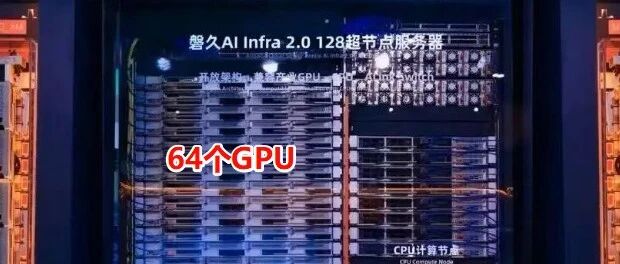
Core Viewpoint - The article provides a detailed comparison of Alibaba's super node with NVIDIA's NVL72 and Huawei's CM384, focusing on GPU count, interconnect technology, power consumption, and ecosystem compatibility. Group 1: GPU Count - Alibaba's super node, known as "Panjun," utilizes a configuration of 128 GPUs, with each of the 16 computing nodes containing 4 self-developed GPUs, totaling 16 x 4 x 2 = 128 GPUs [4] - In contrast, Huawei's CM384 includes 384 Ascend 910C chips, while NVIDIA's NVL72 consists of 72 GPUs [7] Group 2: Interconnect Technology - NVIDIA's NVL72 employs a cable tray interconnect method using NVLink proprietary protocol [8] - Huawei's CM384 also uses cable connections between multiple racks [10] - Alibaba's super node features an orthogonal interconnect without a backplane, allowing for direct connections between computing and switch nodes, reducing signal transmission loss [12][14] Group 3: Power and Optical Connections - NVIDIA's NVL72 uses copper for scale-up connections, while Huawei's CM384 employs optical interconnects, leading to higher costs and power consumption [15] - Alibaba's super node uses electrical interconnects for internal scale-up, with some connections made via PCB and copper cables, while optical interconnects are used between two ALink switches [18][19] Group 4: Parameter Comparison - Key performance metrics show that NVIDIA's GB200 NVL72 has a BF16 dense TFLOPS of 2,500, while Huawei's CM384 has 780, indicating a significant performance gap [21] - The HBM capacity for NVIDIA's GB200 is 192 GB compared to Huawei's 128 GB, and the scale-up bandwidth for NVIDIA is 7,200 Gb/s while Huawei's is 2,800 Gb/s [21] Group 5: Ecosystem Compatibility - Alibaba claims compatibility with multiple GPU/ASICs, provided they support the ALink protocol, which may pose challenges as major manufacturers are reluctant to adopt proprietary protocols [23] - Alibaba's GPUs are compatible with CUDA, providing a competitive advantage in the current market [24] Group 6: Supply Chain Insights - In the AI and general server integration market, Inspur holds a 33%-35% market share, while Huawei's share is 23% [33] - For liquid cooling, Haikang and Invec are key players, each holding 30%-40% of the market [35] - In the PCB sector, the number of layers has increased to 24-30, with low-loss materials making up over 60% of the composition, significantly increasing the value of single-card PCBs [36]
深股通席位本周龙虎榜净卖出29股
Zheng Quan Shi Bao Wang· 2025-09-26 15:28
Group 1 - A total of 51 stocks appeared on the weekly "Dragon and Tiger List," with 22 showing net purchases from the Shenzhen Stock Connect [1] - The top three stocks with the highest net purchases were Luxshare Precision, Heertai, and Yingweike, with net purchases of 1358.73 million, 753.55 million, and 243.88 million respectively [1] - The average increase of stocks with net purchases from Shenzhen Stock Connect was 4.79%, outperforming the Shanghai Composite Index, which rose by 0.21% [1] Group 2 - The stock with the largest increase was Beihua Co., which saw a cumulative price increase of 27.20% during the week [1] - There were 29 stocks with net sales, with the highest net sales recorded for Northern Huachuang and Huagong Technology, amounting to 445.97 million and 262.66 million respectively [2] - The stocks with the highest net sales included several companies, with significant amounts indicating potential selling pressure [2]
A股收评:创业板指跌2.6%,算力硬件、光刻机板块回调
Nan Fang Du Shi Bao· 2025-09-26 09:31
Market Overview - The three major A-share indices collectively declined on the 26th, with the Shanghai Composite Index down by 0.65%, the Shenzhen Component down by 1.76%, and the ChiNext Index down by 2.6% [2] - The total trading volume in the Shanghai, Shenzhen, and Beijing markets was 21,661 billion yuan, a decrease of 2,257 billion yuan compared to the previous day [2] - Over 3,400 stocks in the market experienced declines [2] Sector Performance - The wind power equipment, chemical fiber, agricultural chemical products, soybean, textile manufacturing, and military equipment sectors saw the largest gains [2] - Conversely, the gaming, computing hardware, photolithography, and consumer electronics sectors experienced significant pullbacks [2] Notable Stock Movements - Stocks related to computing hardware, such as copper cable high-speed connections, CPO, and liquid-cooled servers, collectively weakened, with companies like Zhongheng Electric, Lianang Micro, and Qingshan Paper hitting the daily limit down [2] - Several technology stocks, including Inspur Information and Industrial Fulian, also faced declines [2] - In the gaming sector, individual stocks like G-bits hit the daily limit down, while Kunlun Wanwei, Xinghui Entertainment, and Sanqi Interactive Entertainment saw significant drops [2] Strong Performers - The wind power equipment sector performed strongly, with Weili Transmission hitting the daily limit up, and companies like Jixin Technology and Mingyang Smart Energy also performing well [2] - The chemical fiber sector was active, with Shunma Co., Sanfangxiang hitting the daily limit up, and companies like Xin Fengming, Xinxiang Chemical Fiber, and Tongkun Co. showing notable gains [2]


缩量回调,节前扔不扔?
格隆汇APP· 2025-09-26 09:27
作者 | 哥吉拉 数据支持 | 勾股大数 据(www.gogudata.com) 三大指数集体回调,截止收盘,沪指跌 0.65% ,深证成指跌 1.76% ,创业板指跌 2.60% 。 沪深两市成交额超过 2.1 万亿,较昨日缩量逾 2000 亿。 日历效应正在演绎,临近节前,本周市场分歧加剧,成交量相对上周暗淡,但波动幅度却不断加大。 节假日海外市场走势、新关税、三季度末基金调仓等因素,为节后 A 股走势带来了不确定性。 这个时候,该避避风头了吗? 科技股全线回调 01 金属铜概念股逆势走强,精艺股份三连板,江西铜业、铜陵有色跟涨。 消息面上,中国有色金属工业协会铜业分会表示坚决反对铜冶炼行业 "内卷式"竞争。同日全球第二大铜矿 - 印尼 格拉斯伯格矿区因泥石流事故宣布"不可抗力"而停产。作为全球第二大铜矿, Grasberg 矿山的突然停产立即引 发市场对供应中断的担忧。 风电股反复走强,吉鑫科技 2 连板,明阳智能、威力传动涨停,日月股份触及涨停。 | | | 风电概念股涨幅 | | | --- | --- | --- | --- | | 序号 | 代码 | 名称 | 涨跌幅 √ | | 1 | 300 ...

民生证券:互联网大厂云出海元年开启 海内外AI需求双轮驱动
智通财经网· 2025-09-26 07:24
Core Insights - Major domestic internet companies are launching cloud overseas strategies and utilizing debt financing to support these initiatives [1] - Alibaba Cloud plans to invest over 380 billion RMB in the next three years for cloud and AI hardware infrastructure, exceeding the total investment of the past decade [1] - Tencent Cloud has embraced internationalization, achieving high double-digit growth in international business over the past three years, with a doubling of overseas customer scale [2] Group 1: Cloud Overseas Strategies - Domestic internet giants are releasing cloud overseas strategic plans and leveraging debt financing to establish a foundation for these initiatives [1] - Alibaba Cloud aims to create a global cloud computing network covering China, Japan, South Korea, Southeast Asia, the Middle East, Europe, and the Americas, with a unified technical architecture and service platform [1] - Tencent Cloud has completed multiple product and function upgrades to adapt to the global technology ecosystem, with over 90% of internet companies and 95% of leading gaming companies choosing Tencent Cloud for their overseas ventures [2] Group 2: AI and Cloud Integration - The demand for AI overseas from internet giants is driving rapid expansion, with Tencent integrating models, computing power, and data across various sectors [2] - Alibaba is accelerating the deployment of AI applications to support numerous AI application enterprises [2] - ByteDance's overseas AI product matrix includes various fields such as chatbots, education, and emotional companionship, while Baidu is advancing its AI applications like Robotaxi and AI cameras [2][3] Group 3: Market Demand - There is a clear demand for AI and cloud solutions from Chinese enterprises, including industry leaders like BYD and Midea, as well as emerging unicorns like miHoYo [3] - The overseas market is experiencing significant growth in demand for localized AI applications, providing new business opportunities for internet giants [3] Group 4: Investment Recommendations - Suggested stocks include Alibaba Group-W (09988), Tencent Holdings (00700), and Baidu Group-SW (09888) in the cloud platform sector [4] - For computing power leasing, recommended stocks are Hongjing Technology (301396.SZ), Xiechuang Data (300857.SZ), and Youfang Technology (688159.SH) [4] - In the optical communication sector, notable companies include Dekeli (688205.SH), Shijia Photon (688313.SH), and Guangku Technology (300620.SZ) [5]


液冷专题20250924
2025-09-26 02:29
Summary of Liquid Cooling Industry Conference Call Industry Overview - The global liquid cooling market is expected to reach 100 billion RMB by 2026 and potentially 200 billion RMB by 2028, driven by accelerated shipments of A4 chips to 200 billion RMB, indicating significant growth potential in the coming years [2][3] - The liquid cooling technology is rapidly evolving, with trends such as microchannel design and chip-integrated microfluidic cooling becoming prominent, leading to increased demand for customized products like liquid cooling plates and CDU (Cooling Distribution Units) [2][5][6] Key Players - InnoTek is positioned as a leading domestic player in the liquid cooling sector, benefiting from large orders from Meta and its technological advantages, which are expected to help maintain its leading position [2][4][12] - Other domestic companies are actively entering the global liquid cooling market through OEM partnerships, indicating a competitive landscape [4] Market Dynamics - The liquid cooling market is in a high-growth phase, with a projected market size of approximately 10 billion RMB in 2024 and a penetration rate of less than 10%. The market is expected to grow tenfold in the next two to three years and potentially twentyfold in three to four years [3] - Major manufacturers like Meta are expected to start large-scale adoption of liquid cooling solutions by early 2026, which will drive demand for cabinet-level liquid cooling solutions [9][10] Industry Value Chain - The liquid cooling industry value chain includes critical components such as liquid cooling plates, CDU, piping, and connectors. Liquid cooling plates and CDU account for approximately 30% to 40% of the total value, while connectors represent about 10% [7] - High technical barriers exist in the connector segment, which requires ensuring leak-proof performance during multiple insertions and removals [7] Domestic Opportunities - Domestic companies have significant opportunities in the global ASIC supply chain, especially as NVIDIA is more willing to introduce new suppliers due to existing suppliers facing capacity issues [8] - If domestic companies capture 20% of the global market, they could generate revenues of 40 billion RMB and profits of 8 billion RMB; capturing 40% could lead to revenues of 80 billion RMB and profits of 16 billion RMB, with a potential market capitalization increase of 500 billion RMB [8] Future Growth Drivers - The domestic liquid cooling industry is expected to see a significant increase in market share, with various segments such as switches and optical module connectors gradually adopting liquid cooling technology [11] - Companies like InnoTek and Eaton Electronics have secured orders, with noticeable revenue growth anticipated by Q4 2025 [11] Company-Specific Insights - Dingtong Technology is expected to benefit from increased penetration of IO liquid cooling connectors and rising demand for internal connectors in cabinets, projecting high revenue and gross margin growth in 2026 and 2027 [17] - Dingtong's growth logic revolves around the transition from air cooling to liquid cooling in AI data centers, significantly increasing the value of their connectors [14] - Yidong Electronics has recently expanded into GPU liquid cooling plate business, generating stable revenue with optimistic projections for future orders [18][19] Conclusion - The liquid cooling industry is poised for rapid growth, driven by technological advancements and increasing adoption by major tech companies. Key players like InnoTek, Dingtong Technology, and Yidong Electronics are well-positioned to capitalize on these trends, with significant revenue and market share growth expected in the coming years [2][12][18]
