东方雨虹

Search documents
李卫国再创业十年的底气何来?东方雨虹以绝对决心定标2026
Sou Hu Cai Jing· 2026-02-12 02:21
Core Viewpoint - In 2026, the company faces a clear dichotomy between success and failure, as articulated by Chairman Li Weiguo, who emphasizes a strong commitment to the company's development and outlines ambitious targets for growth in the waterproofing and mortar sectors [1][3]. Industry Analysis - The real estate growth era is ending, shifting focus to renovation demands, which currently account for about 50% of residential needs and are expected to rise to 70% by 2030 [3]. - The price wars among waterproofing and coating companies have subsided, but profitability recovery requires proactive measures [3]. Company Strategy - The company is moving away from a high accounts receivable model reliant on large clients, adopting a balanced development approach between retail and engineering channels [3]. - Actions include activating idle real estate and stock assets, divesting non-core businesses, and reducing financial leverage to stabilize the core team and mitigate risks [3][4]. Operational Initiatives - The company has set specific annual targets: 1 billion square meters of waterproofing membrane and over 20 million tons of mortar sales by 2026, with actionable steps to achieve these goals [5]. - Production capacity is being enhanced, with the launch of a high-performance industrial coating project and successful production lines in Saudi Arabia [5][6]. Market Expansion - The company has secured nearly 700 million yuan in orders and established strategic partnerships to broaden retail channels [6]. - Internationally, the company has won high-end projects in Cambodia and formed strategic collaborations in Indonesia and Vietnam, expanding its global footprint [6]. Cultural Commitment - The company emphasizes a culture of unwavering determination, translating the concept of "absolute commitment" into actionable strategies and collective efforts across all levels [4][7].



周期专场-节后投资主线解读
2026-02-11 15:40
Summary of Key Points from Conference Call Records Industry Overview Commercial Aerospace - Shanghai Port Bay's perovskite technology in collaboration with Dongfang Risen is expected to benefit from the SpaceX supply chain. The increase in satellite launches will boost the demand for solar wings, positively impacting related companies [1][3]. Refractory Materials - Companies like Zhongsen Technology, Luyang Energy, and Zhonggang Nairuo are performing well through business extensions and are considered important targets for investment as the sector begins to rally [1][3]. AI+ Sector - Companies such as China National Materials, Honghe Technology, Feilihua, and China Jushi are benefiting from LDK demand, leading to significant profit increases. Attention is drawn to upstream raw materials like high-end electronic fabrics [1][3]. Construction and Building Materials - New business models in the construction and building materials industry focus on increasing market share and revenue scale, with a clear supply clearing and gradual industry improvement. Sanjias Tree's beautiful countryside business and community stores are rapidly developing, while Yuhong enhances competitiveness through service model innovation [1][4]. Real Estate Market Insights Recent Data and Trends - Recent data indicates a positive trend in the real estate market, particularly in first and second-tier cities where second-hand housing transaction volume has increased year-on-year, and price indices have turned positive. The listing volume has decreased, with demand driven by school district housing improving transaction structure. The new housing market is expected to rebound post-holiday due to supply constraints [1][5]. Investment Strategy - The current rally in real estate stocks is characterized by a mix of speculative and long-term capital, suggesting a more sustainable upward trend. The second quarter may present an opportunity to increase real estate positions, with recommended stocks including China Merchants Shekou, New City Holdings, Jindi Group, and Wo Ai Wo Jia [1][6][8]. Transportation and Logistics Sector Investment Themes - The transportation and logistics sector has four main investment themes: 1. Domestic express logistics is entering a critical consolidation phase, with a focus on leading companies like ZTO Express and YTO Express [2][9]. 2. Cross-border e-commerce and the Belt and Road Initiative, with key companies including SF Holding and JD Logistics [2][9]. 3. Platform transportation through internet platforms like Didi and Cao Cao Mobility, which are expected to enhance profits with the realization of autonomous driving and new energy vehicle replacements [2][10]. 4. Large cycle sectors, including aviation and shipping, are anticipated to see profit growth due to tight supply and recovering demand. Companies like China Merchants Energy and COSCO Shipping are recommended, with significant profit elasticity expected from VLCC operations [2][10]. Additional Considerations - The real estate market's upward speed is not expected to be as rapid as in previous cycles, with a potential long-term upward trend following policy implementation. The core cities' housing prices may stabilize by the end of the year, with real estate stocks likely leading the fundamental bottom by 2 to 3 quarters [1][8]. - Long-term capital movements should be closely monitored to adjust investment strategies accordingly [1][7].
财政"万亿级"弹药就位!基建复苏打响估值修复战,建材ETF(159745)锁仓顺周期龙头
Sou Hu Cai Jing· 2026-02-11 09:28
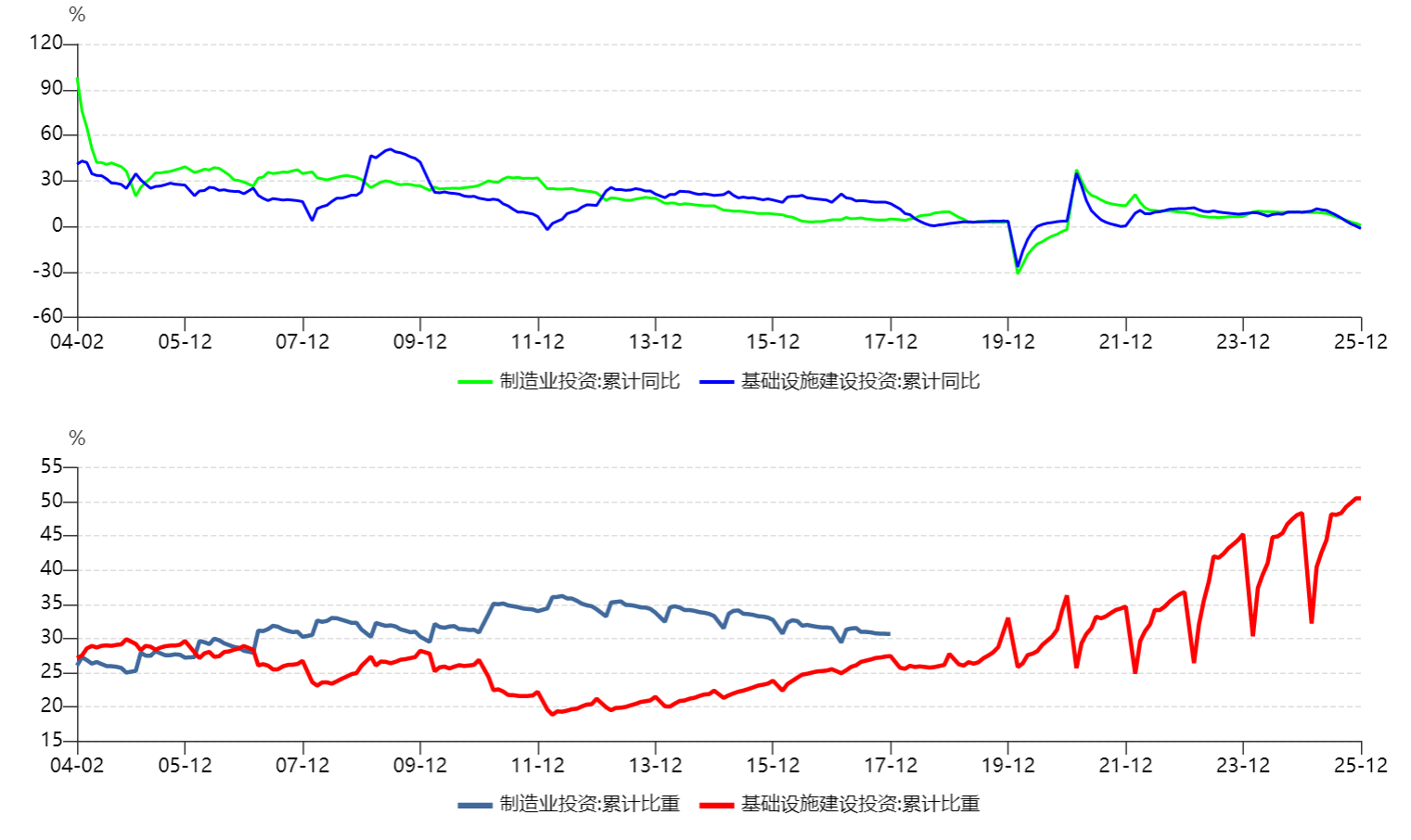
Core Viewpoint - Current infrastructure investment is becoming a crucial support for the economy, with fiscal policies continuously strengthening, leading to a configuration window driven by infrastructure recovery in the building materials sector [1] Group 1: Infrastructure Investment Dynamics - The "14th Five-Year Plan" is entering its final year, accelerating the implementation of major engineering projects, which is providing solid support for the improvement of the industry fundamentals through the demand pull of infrastructure [1] - Since the second half of 2024, active fiscal policies have significantly increased, with the pace of special bond issuance accelerating and the launch of ultra-long special government bonds injecting ample funds into infrastructure investment [1] - Infrastructure investment has a clear policy orientation and planning, unlike the endogenous fluctuations of real estate investment, with 2025 being a key year for the transition between the "14th" and "15th" Five-Year Plans [1][4] Group 2: Investment Trends and Performance - Despite a year-on-year decline in cumulative infrastructure construction investment to -1.48% in December, the cumulative proportion of infrastructure investment remained high at 50.49% in December 2025, reflecting its significant position in fixed asset investment [1][4] - Key areas for current infrastructure investment include urban agglomerations, metropolitan areas, and the connectivity of infrastructure along the "Belt and Road" [4] - Major infrastructure projects are expected to drive demand for cement, pipes, waterproof materials, and other building materials, with a focus on water conservancy and disaster prevention projects [4][5] Group 3: Building Materials Sector Outlook - The building materials industry is currently in a low operating state after inventory destocking, and the concentrated release of infrastructure demand is expected to trigger price elasticity [5] - The profitability transmission from infrastructure recovery is anticipated to drive the development of the building materials sector, with a notable improvement in gross profit margins due to supply-side discipline and cost pressure relief [6] - The building materials sector is characterized by "valuation repair + profit improvement," with the risk of a cliff-like decline in demand eliminated by infrastructure support, leading to a systematic uplift in valuation [8] Group 4: Investment Vehicles and Strategies - The building materials ETF (159745) tracks the CSI All-Share Building Materials Index, covering leading enterprises across the entire industry chain, providing an efficient tool for investors to layout in the building materials sector [8][9] - The top ten holdings in the ETF reflect a high concentration in leading companies across various segments of the building materials industry, accounting for over 60% of the total holdings [9] - The building materials sector is highlighted as a core cyclical investment, with low valuations and high dividends, making it attractive for investors during market shifts towards cyclical stocks [12]



目标10亿㎡+2000万吨!东方雨虹董事长李卫国撂“死命令”:2026没有回旋余地!
Zhong Guo Zhi Liang Xin Wen Wang· 2026-02-11 08:53
Core Viewpoint - In 2026, Oriental Yuhong aims for a clear distinction between success and failure, setting ambitious targets for waterproof membrane shipments and mortar sales, reflecting a strategic assessment of its organizational development [1] Group 1: Strategic Goals - The company has set a target of achieving an annual shipment of 1 billion square meters of waterproof membranes and over 20 million tons of mortar sales by 2026 [1] - The chairman emphasizes the need for a long-term commitment to deepen competitive advantages and become an industry giant [1] Group 2: Operational Adjustments - Oriental Yuhong plans to activate idle real estate and stock assets while divesting non-core businesses to focus resources on key areas like waterproofing and mortar [1] - The controlling shareholder intends to reduce their stake by no more than 3% to fulfill employee stock ownership commitments and repay pledges, aiming to stabilize the core team and reduce financial leverage [1] Group 3: Market Expansion and Innovation - The company is targeting a market size in the hundreds of billions, with a focus on collaborative development of coatings and mortar, and actively exploring overseas markets [2] - New product launches and strategic partnerships are underway, including a nearly 700 million yuan order and collaborations to expand retail channels [4] Group 4: Production Capacity and Performance - The production capacity for high-performance industrial coatings is nearing completion, with significant progress in the Saudi factory's production lines [3] - A record daily shipment of 4.43 million square meters was achieved, marking an 11.6% increase compared to historical peaks, supporting the annual targets [3] Group 5: Product Development and Certifications - The company has introduced new fireproof coatings and enhanced waterproof membranes that meet the latest national standards, expanding its product matrix [4] - The GardMem series has received North American UPC and cUPC certifications, further supporting overseas market growth [4]
地产政策暖风+建材周期拐点,建材ETF(159745)近1周规模增长2.42亿元居可比基金第一
Xin Lang Cai Jing· 2026-02-11 08:37
Core Viewpoint - The construction materials sector is experiencing positive momentum, with significant increases in the performance of key stocks and ETFs, driven by favorable government policies and market dynamics [1][2]. Group 1: Market Performance - As of February 11, 2026, the CSI All Share Construction Materials Index rose by 0.85%, with notable gains from companies such as Qihang Group (up 4.03%) and Conch Cement (up 2.46%) [1]. - The Construction Materials ETF (159745) increased by 0.54%, closing at 0.74 yuan, and has seen a cumulative rise of 2.35% over the past week [1]. - The ETF recorded a turnover rate of 6.28% and a trading volume of 142 million yuan, with an average daily trading volume of 253 million yuan over the past week, ranking first among comparable funds [1]. Group 2: Fund Flows and Leverage - The Construction Materials ETF experienced a net outflow of 39.68 million yuan recently, but over the past five trading days, it attracted a total of 474 million yuan in net inflows, averaging 9.47 million yuan per day [1]. - Leverage funds are increasingly being allocated to the sector, with a net purchase of 1.17 million yuan in financing on the previous trading day and a total financing balance of 37.40 million yuan [1]. Group 3: Industry Outlook - According to Huafu Securities, the central economic work conference emphasized stabilizing the real estate market, which is expected to positively impact the construction materials sector through policies aimed at inventory reduction and supply optimization [1]. - China Galaxy's report highlights that the renovation of existing homes and urban renewal will be key drivers for demand in the construction materials sector, with leading companies expanding their retail operations [2]. Group 4: ETF Performance Metrics - The Construction Materials ETF has achieved a net value increase of 28.66% over the past two years, ranking first among comparable funds [2]. - The ETF's highest monthly return since inception was 24.25%, with an average monthly return of 6.65% [2]. - As of February 6, 2026, the ETF's Sharpe ratio was 1.29, indicating strong risk-adjusted returns [3]. Group 5: Fee Structure and Tracking Accuracy - The management fee for the Construction Materials ETF is 0.50%, and the custody fee is 0.10% [4]. - The ETF has the highest tracking accuracy among comparable funds, with a tracking error of 0.065% over the past six months [4]. - The top ten weighted stocks in the CSI All Share Construction Materials Index account for 61.6% of the index, with companies like Conch Cement and Dongfang Yuhong being the most significant [4].
跨越短周期扰动,拥抱长周期拐点!借道建材ETF(159745) 捕获"量增价稳"甜蜜期
Sou Hu Cai Jing· 2026-02-11 07:02
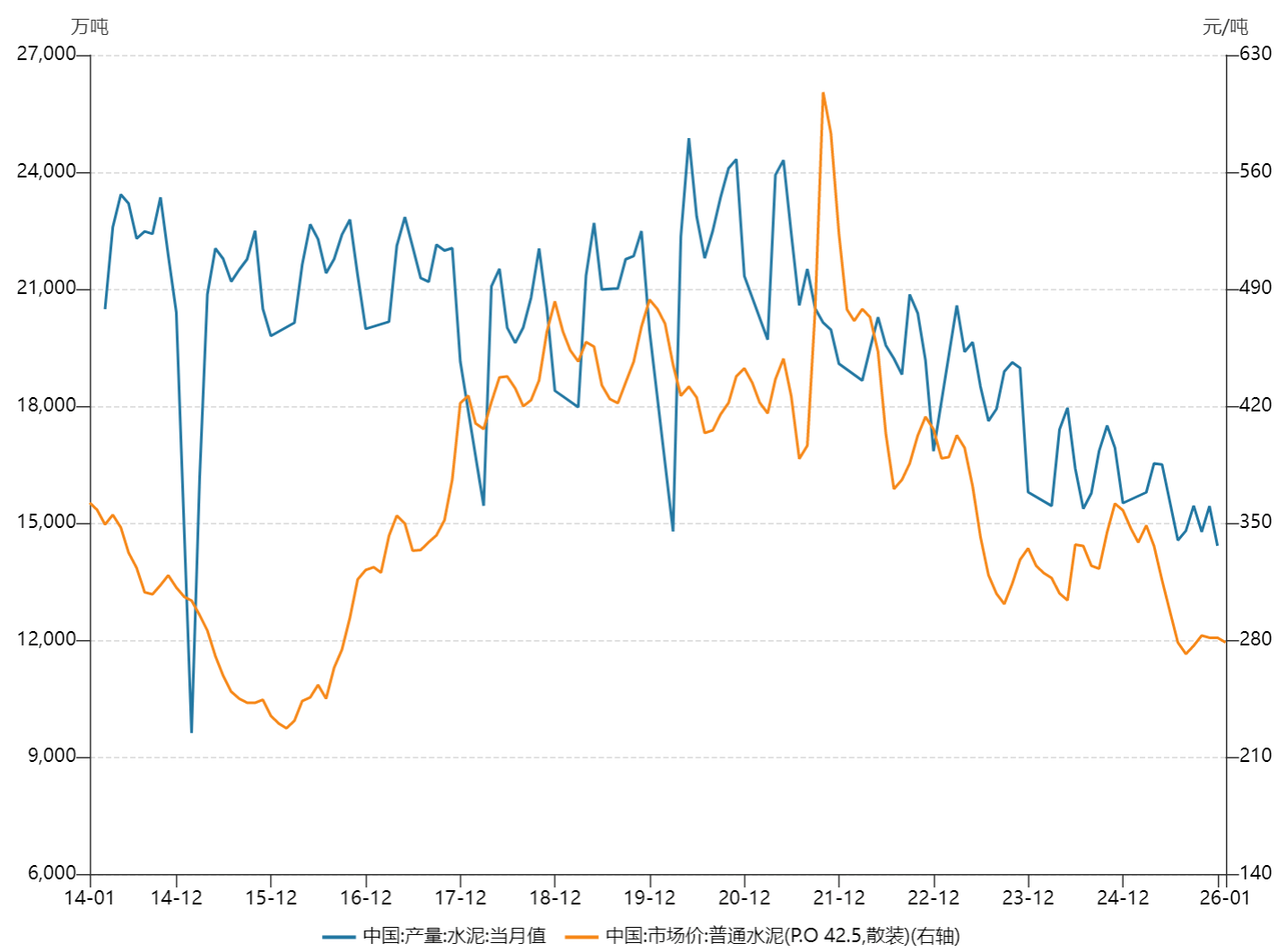
Group 1: Industry Overview - The building materials industry is a typical early-cycle sector, with its recovery often leading macroeconomic recovery confirmations. Current infrastructure investment and marginal improvements in real estate completions are driving demand, while raw material costs remain manageable, suggesting a potential "volume increase and price stability" period for the industry [1] - The cement industry is facing short-term challenges due to cold weather, which can lead to reduced production. Extreme low temperatures increase energy costs and affect equipment safety, while logistics are hindered by snow, leading to physical supply constraints [2][5] - The implementation of strict "peak-shifting production" policies in the cement industry, particularly in northern regions, results in production halts of 4-5 months during winter, with limits on production capacity exceeding 60% during the heating season [2][5] Group 2: Long-term Trends - The supply-side reform 2.0 and market restructuring are expected to benefit the building materials sector. The previous supply-side reforms from 2016-2018 reduced excess capacity, while the current market-driven clearing process is more thorough, leading to a significant increase in industry concentration [6] - The building materials industry is transitioning from "incremental competition" to "stock game," with capacity utilization rates recovering from lows, while capital expenditures remain restrained. This combination suggests stronger price elasticity and longer profit sustainability during the next upturn [6] - The inventory cycle has adjusted over three years, with both cement clinker inventory ratios and finished product inventories in the renovation and building materials sector at historically low levels, indicating that demand improvements will quickly translate to price increases [6] Group 3: Financial Metrics - The median debt-to-asset ratio for the renovation and building materials sector was 48.7% in Q3 2025, significantly lower than the real estate development sector's 72.3%, indicating stronger debt resilience and financial flexibility for building materials companies [7][10] - The financial structure of renovation and building materials companies is characterized by "light assets and low debt," providing a safety net and risk protection during economic cycles [10] Group 4: Investment Opportunities - The building materials sector has numerous sub-sectors (cement, glass, fiberglass, pipes, waterproofing, coatings), making individual stock research complex. Investing in the Building Materials ETF (159745) allows for effective risk diversification and captures overall valuation recovery in the sector [10][12] - The ETF tracks the CSI All Share Building Materials Index, covering leading companies across the entire industry chain, reflecting both cyclical elasticity and growth attributes of renovation materials, making it a convenient tool for investors looking to capitalize on cyclical trends [12] - The top ten holdings in the ETF include leading companies across various segments, indicating a concentrated representation of the industry [12]
周期股全线走强,新材料ETF华夏(516710)上涨1.77%,中材科技涨停
Mei Ri Jing Ji Xin Wen· 2026-02-11 06:09
Group 1 - The core viewpoint of the article highlights the strong performance of cyclical stocks, particularly in the new materials sector, with the New Materials ETF Huaxia (516710) rising by 1.77% and key stocks like China National Materials and China Jushi hitting the daily limit [1] - Zhejiang Longsheng has raised prices for certain disperse dyes, with a recent cumulative increase of 5000 yuan per ton as of February 8 [1] - A total of 94 pesticide varieties, including glyphosate, will see an export VAT rebate starting April 1, 2026, which may impact the agricultural chemicals market [1] Group 2 - Japanese company Nitto Denko plans to launch next-generation T-type glass fiber cloth for AI chips by 2028, aimed at enhancing heat deformation resistance [1] - Huatai Securities noted that leading companies in the fiberglass sector, such as Guangyuan New Materials and International Composites, have significantly raised prices for electronic fabrics, indicating a tightening supply from high-end products to standard products [1] - The New Materials 50 ETF (516710) closely tracks the CSI New Materials Theme Index, which includes 50 listed companies involved in advanced steel, non-ferrous metals, chemicals, and inorganic non-metallic materials, reflecting the overall performance of the new materials sector [1]


建材周专题2026W6:电子布上涨加速,关注水泥板块政策催化
Changjiang Securities· 2026-02-11 00:27
Investment Rating - The industry investment rating is "Positive" and maintained [7] Core Views - The report highlights the accelerating price increase of electronic fabrics and emphasizes the policy-driven opportunities in the cement sector [2][3] - The cement sector is showing clear signs of bottoming out after four consecutive years of demand decline and price competition, with significant losses reported among mid-tier and lower-tier companies [4] - The report identifies three main lines for 2026: the stock chain, the African chain, and the AI chain, suggesting a shift in demand dynamics and growth opportunities [6] Summary by Sections Cement Sector - Cement shipments have decreased month-on-month, with an average shipment rate of approximately 24% in key regions, down about 8 percentage points [5][18] - The average price of cement is reported at 346.61 yuan/ton, reflecting a month-on-month decrease of 3.23 yuan/ton and a year-on-year decrease of 53.06 yuan/ton [19] - The report anticipates a potential increase in industry capacity utilization by 10-15 percentage points starting in 2026 due to production constraints and policy enforcement [4] Glass Sector - The domestic float glass market is experiencing a slowdown in demand, with overall inventory pressure remaining significant, and production capacity is reported at 208 lines with a daily melting capacity of 148,935 tons [27] - The average price of glass is 63.18 yuan/weight box, with a slight month-on-month increase of 0.06 yuan/weight box, but a year-on-year decrease of 12.01 yuan/weight box [30] Electronic Fabrics - The report notes a dual prosperity in electronic fabrics, with AI electronic fabrics benefiting from high demand and price increases due to supply shortages [3] - Ordinary electronic fabrics are also expected to see continued price increases due to weaving machine bottlenecks, with significant price hikes noted in February [3] Future Outlook - The report suggests focusing on the stock chain, which is expected to drive demand back to historical highs, particularly in the renovation market, which currently accounts for about 50% of demand [6] - The African chain is highlighted as an undervalued growth opportunity, with companies like Keda Manufacturing and Huaxin Cement positioned for growth in the African market [6]
建材行业周报:关注春节后的涨价预期与地产催化
GUOTAI HAITONG SECURITIES· 2026-02-10 13:30
Investment Rating - The report assigns an "Accumulate" rating for the building materials industry [5] Core Insights - The report emphasizes the expectation of price increases post-Spring Festival and the potential catalyst from the real estate sector. It highlights that the consumption building materials sector may begin to show fundamentals independent of real estate from 2025-2026, with a focus on the resilience of the real estate market after the Spring Festival [2][7] - The report recommends leading companies in the consumption building materials sector that have independent growth logic and sufficient dividend valuation support, particularly in the waterproof materials sub-sector [5][7] Summary by Sections Building Materials Industry Investment Strategy - The consumption building materials sector is anticipated to benefit from potential macroeconomic improvements, with a focus on the resilience of the real estate market post-Spring Festival. The report highlights the importance of observing second-hand housing transactions for signs of market recovery [7] - Recommended companies include Oriental Yuhong, Beixin Building Materials, Weixing New Materials, and others that are expected to perform well due to their growth strategies and market positions [7] Market Review - From February 2 to February 6, 2026, the building materials sector increased by 0.70%, with specific segments like glass manufacturing rising by 5.32% [10] - The report notes significant individual stock movements, with companies like Hanjian Heshan and Jinjing Technology showing notable weekly gains [17] Cement Industry - The national cement market price decreased by 1% week-on-week, with significant price drops in regions like Henan and Hubei. The average shipment rate for cement companies fell by approximately 8 percentage points [24][25] - The report anticipates a stabilization in cement prices as the market enters a holiday period, with a focus on the execution of production restrictions in 2026 [7][24] Glass Industry - The average price of domestic float glass increased to 1154.49 RMB/ton, reflecting a week-on-week rise of 9.69 RMB/ton. However, demand is expected to weaken as downstream processing plants shut down for the holiday [42] - The report recommends leading companies in the glass sector, including Fuyao Glass and Xinyi Glass, due to their strong market positions and dividend yields [42][43] Fiberglass Industry - The report indicates that the fiberglass market is experiencing price increases, particularly in the electronic yarn segment, driven by tight supply and steady demand [55] - Recommended companies in this sector include China Jushi and Zhongcai Technology, which are expected to benefit from structural demand upgrades [55]



超半数装修建材股下跌 *ST亚振股价下跌4.97%
Bei Jing Shang Bao· 2026-02-10 11:20
Core Viewpoint - The renovation and building materials sector experienced a slight decline, closing at 18513.73 points with a drop of 0.2%, influenced by varying performances among individual stocks in the sector [1] Group 1: Stock Performance - *ST Yazhen led the decline in the renovation and building materials sector, closing at 42.46 yuan per share with a drop of 4.97% [1] - Jianlang Hardware followed with a closing price of 25.02 yuan per share, down 3.55%, ranking second in the sector's decline [1] - Dongfang Yuhong closed at 17.70 yuan per share, down 3.17%, ranking third in the sector's decline [1] - In contrast, Dinggu Jichuang led the gains, closing at 25.72 yuan per share with an increase of 20.02% [1] - Yabo Co. closed at 2.16 yuan per share, up 10.20%, ranking second in the sector's gains [1] - *ST Songfa closed at 89.67 yuan per share, up 5.00%, ranking third in the sector's gains [1] Group 2: Market Outlook - Huafu Securities' report indicates that the Central Economic Work Conference emphasized stabilizing the real estate market, implementing city-specific policies to control increments, reduce inventory, and improve supply [1] - The report also highlights the encouragement of acquiring existing residential properties for affordable housing and the reform of the housing provident fund system to promote the construction of "good houses" [1] - With the acceleration of supply-side reform expectations, the building materials capacity cycle is anticipated to reach a turning point [1]