东风股份

Search documents
福田超5万辆登顶!重汽进前二 东风/五菱争前三 2026年1月商用车销量榜出炉 | 头条
第一商用车网· 2026-02-13 07:05
Core Viewpoint - The commercial vehicle market in China has shown a continuous growth trend, achieving an "8 consecutive increases" from June 2025 to January 2026, with January 2026 sales reaching 358,700 units, a year-on-year increase of 23% [2][15]. Market Performance - In January 2026, the commercial vehicle market sold 358,700 units, which is a 16% decrease from December 2025 but a 23% increase year-on-year, marking an expansion in growth rate compared to the previous month [2][5]. - The sales figure for January 2026 is the highest in the past five years, significantly surpassing January 2023 by nearly 180,000 units and ranking second in the last decade, only behind January 2021 [4][15]. Company Rankings - In January 2026, 12 companies sold over 10,000 units, with Foton leading the market with 55,000 units sold, followed by China National Heavy Duty Truck with 40,600 units, and Dongfeng with 34,800 units [6][8]. - The top ten companies accounted for 78.6% of the market share, with the top five companies holding over 50% of the total market share [11][13]. Year-on-Year Growth - The majority of leading companies experienced significant year-on-year growth, with SAIC-GM-Wuling showing a remarkable increase of 487%, while China National Heavy Duty Truck and Dongfeng grew by 35% and 57%, respectively [9][11]. - Foton and Jiefang also saw year-on-year increases of 10% and 19%, respectively, while Jianghuai's growth was lower than the market average at 9% [9][11]. Competitive Landscape - The competition among companies is intensifying, with notable changes in rankings compared to the previous month. For instance, SAIC-GM-Wuling and Jiefang improved their positions significantly, while some companies dropped out of the top ten [13][15]. - The market dynamics indicate a highly competitive environment, with small differences in sales figures among several companies, highlighting the fierce competition in the commercial vehicle sector [13].



港股将迎来“央国企高端新能源第一股” 岚图完成上市前置监管审批
Sou Hu Cai Jing· 2026-02-13 01:16
Core Viewpoint - Lantu Automotive has completed all pre-listing regulatory approvals and is set to officially list on the Hong Kong Stock Exchange on March 19, 2026, marking it as the first high-end new energy brand from a central state-owned enterprise to go public in Hong Kong [1][2]. Group 1: Listing and Regulatory Approval - Lantu Automotive initiated its listing process in August 2025 and submitted its application in October 2025, receiving approval from multiple regulatory bodies within four months, showcasing efficient governance and operational capabilities [1][2]. - The successful completion of the listing process reflects strong support from regulatory authorities for high-quality new energy enterprises aiming for international development [1]. Group 2: Sales and Financial Performance - From 2023 to 2025, Lantu Automotive's sales are projected to grow from 50,285 units to 150,169 units, achieving a compound annual growth rate (CAGR) of 73%, significantly outpacing industry averages [3]. - Revenue is expected to increase from 12.75 billion yuan to 34.86 billion yuan, with a CAGR of 65.4%, and the company aims to achieve a net profit of 1.02 billion yuan in 2025, marking its first annual profit [3]. - The gross margin is stable at 20.9%, positioning Lantu among the industry leaders [3]. Group 3: Technological Innovation - Lantu Automotive emphasizes core technology autonomy as a strategic foundation for development, with a focus on innovation in key areas such as platform architecture and smart technology [4]. - As of December 31, 2025, Lantu holds 1,874 granted patents and has 5,405 patents pending, with a patent growth rate leading among new energy vehicle companies [4]. - The company has developed the world's first native intelligent electric architecture compatible with multiple power modes and the first mass-produced centralized SOA electronic and electrical architecture in China [4]. Group 4: Advanced Technology and Smart Solutions - Lantu has launched the 800V Lanhai intelligent hybrid technology, achieving a pure electric range of 360-410 kilometers and a comprehensive range exceeding 1,400 kilometers, with ultra-fast charging capabilities [6]. - The company has made significant advancements in smart cockpit and autonomous driving technologies, with L3 conditional autonomous driving currently undergoing real-world testing [6]. - Lantu has completed 110,000 kilometers of actual road testing and 900,000 kilometers of simulation testing, moving towards mass production [6].
中国证券报-国务院国资委:央企要积极扩大算力有效投资
Zhong Guo Zheng Quan Bao· 2026-02-13 01:13
国务院国资委2月12日消息,国务院国资委10日召开的中央企业"AI+"专项行动深化部署会提出,中央 企业要强化投资牵引,积极扩大算力有效投资,推进"算力+电力"协同发展,提升全链条数据治理能 力,不断夯实人工智能产业基础底座。 持续攻关"大模型"技术 会议表示,要牢牢把握人工智能技术和产业发展趋势,以制定和实施"十五五"规划为契机,找准中央企 业发展人工智能的定位、优势,构建科学有效的产业协作、经营管理机制,进一步发挥战略支撑和示范 带动作用,切实当好智算基础设施的供给者、人工智能赋能千行百业的推动者、产业体系化布局的组织 者,更好服务党和国家工作大局。 会议提出,中央企业要进一步增强发展人工智能产业的责任感和紧迫感,主动顺应全球技术变革和产业 变革大势,牢牢把握人工智能发展新机遇,切实扛起服务国家战略、带动产业升级的使命担当,为推动 我国人工智能产业高质量发展贡献更大力量;要强化自主创新,着力突破关键核心技术,持续攻关"大 模型"技术,推动更多自主创新成果从样品变成产品、形成产业;强化场景培育,加强人工智能与主责 主业、产业需求的精准对接,在高适配、高价值、高可靠上下更大功夫,推动人工智能规模化落地应 用; ...
国务院国资委:央企要积极扩大算力有效投资 不断夯实人工智能产业基础底座
Zhong Guo Zheng Quan Bao· 2026-02-12 23:26
近年来,国务院国资委坚决贯彻落实党中央、国务院决策部署,全力推进中央企业"AI+"专项行动。 中央企业聚焦能源、制造、通信等重点行业,联合头部企业打造了超1000个应用场景,中国一汽、东风 公司、中国长安汽车试点智能机器人"进厂",汽车制造场景提升装配效率30%。 中央企业牵头11个行业可信数据空间建设,建设交通、能源、绿色、金融4个数据产业共同体。2025年7 月,国务院国资委上线发布国资央企人工智能开源"焕新社区"。自发布以来,"焕新社区"用户规模实现 10倍增长,面向社会免费开放国产智算芯片2200卡、汇聚模型4700余个、数据集1200个,助力产业生态 繁荣。 (文章来源:中国证券报) 会议提出,中央企业要进一步增强发展人工智能产业的责任感和紧迫感,主动顺应全球技术变革和产业 变革大势,牢牢把握人工智能发展新机遇,切实扛起服务国家战略、带动产业升级的使命担当,为推动 我国人工智能产业高质量发展贡献更大力量;要强化自主创新,着力突破关键核心技术,持续攻关"大 模型"技术,推动更多自主创新成果从样品变成产品、形成产业;强化场景培育,加强人工智能与主责 主业、产业需求的精准对接,在高适配、高价值、高可靠上下 ...
完成全部前置监管审批 岚图汽车冲刺港股“央国企高端新能源第一股”
Xin Lang Cai Jing· 2026-02-12 15:08
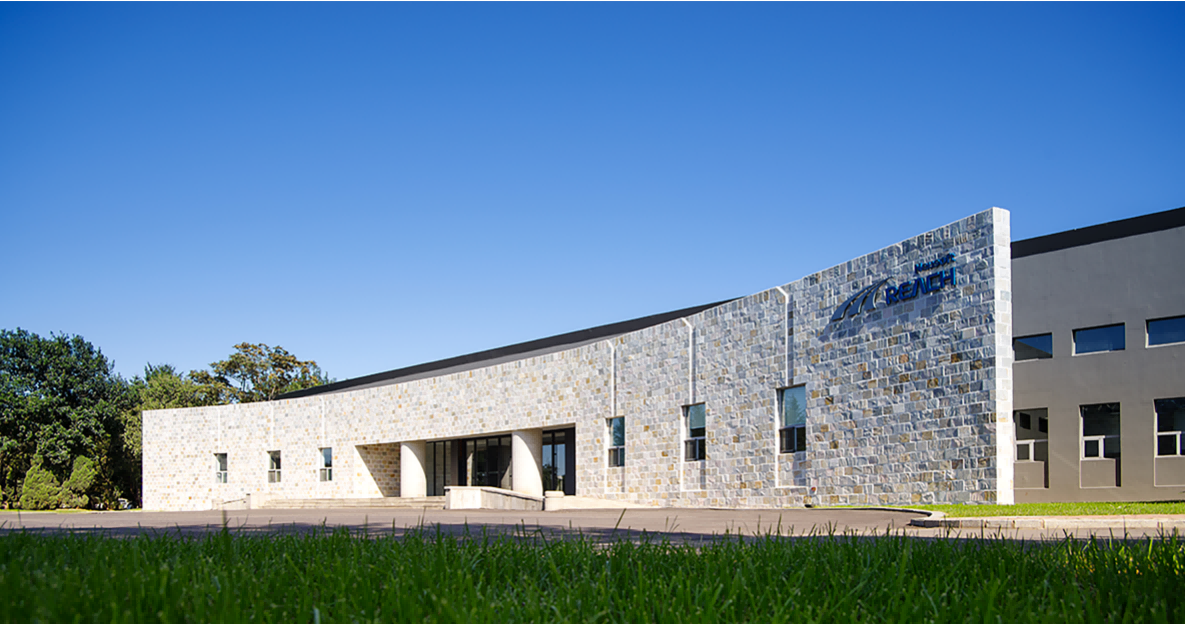
Group 1 - Lantu Automotive has completed all preliminary compliance preparations for its Hong Kong IPO in just four months, aiming to set a new example for high-end new energy brands from central state-owned enterprises [1] - The company has received principal approval from the Hong Kong Stock Exchange for its listing, marking the completion of all regulatory approval processes [1] - Lantu Automotive is expected to become the first high-end new energy brand from a central state-owned enterprise to list on the Hong Kong capital market [1] Group 2 - As a high-end smart new energy brand under Dongfeng Motor, Lantu Automotive has developed a complete product matrix, including flagship models such as Lantu Dreamer, Lantu Taishan, and Lantu Zhaiguang L [3] - The company has achieved significant sales growth, with a projected cumulative delivery of over 150,000 new vehicles by 2025, representing a year-on-year increase of 87% [3] - Lantu Automotive plans to launch four new models in 2026, all equipped with L3-level intelligent driving hardware, including the Lantu Taishan Ultra and Lantu Taishan Black Warrior [3] Group 3 - The upcoming listing on the Hong Kong capital market is expected to broaden Lantu Automotive's financing channels and optimize its capital structure [4] - The funds raised will support technology research and development, capacity expansion, and global layout, aiding the company in entering a new stage of high-quality development [4]
东风汽车总经理冯长军:自研芯片、半固态电池即将量产“上车”
Zhong Guo Jing Ying Bao· 2026-02-12 15:04
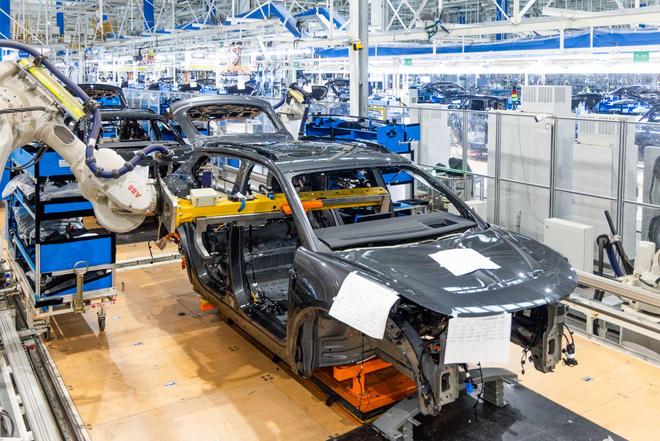
Core Viewpoint - Dongfeng Motor Corporation emphasizes the importance of innovation driven by consumer needs and usage scenarios, aiming for differentiated competition and value creation in the automotive industry [2][10]. Group 1: Technological Advancements - Dongfeng is leading the development of the DF30 chip, which has overcome the 40nm automotive process bottleneck and is set for mass production in 2026 after successful winter testing [4]. - The company is also developing a semi-solid-state battery with an energy density of 350Wh/kg, expected to be integrated into vehicles by 2026, allowing for a driving range exceeding 1000 kilometers [4][9]. - Dongfeng's self-developed chips have reached a domestic production rate of 67%, with plans for further advancements in IGBT and silicon carbide power semiconductors [8]. Group 2: Smart Manufacturing and Production Efficiency - The Dongfeng Lantu smart manufacturing base utilizes 935 industrial robots, achieving a production efficiency increase of 50% and enabling customized vehicle configurations with rapid delivery times [5]. - The factory is powered by green energy, with 45,000 solar panels generating 22 million kWh annually, covering 50%-75% of its electricity needs [7]. Group 3: Environmental Commitment and Sustainability - Dongfeng is committed to green development, focusing on creating green products and manufacturing processes, which has led to a reduction of over 160,000 tons of carbon emissions by the end of 2025 [7]. - The company aims to achieve significant sales milestones by 2025, targeting over 1.5 million units for its self-owned brands and over 1 million units for new energy vehicles [7]. Group 4: Systematic Innovation and Future Outlook - Dongfeng's "Tianyuan Intelligent" technology brand is designed to enhance its autonomous vehicles through a comprehensive architecture that includes a large model and electronic frameworks [9]. - The company has been recognized for its innovation, holding over 28,300 valid patents, and aims to transition its research and development results into market-ready products by 2026 [9][10].

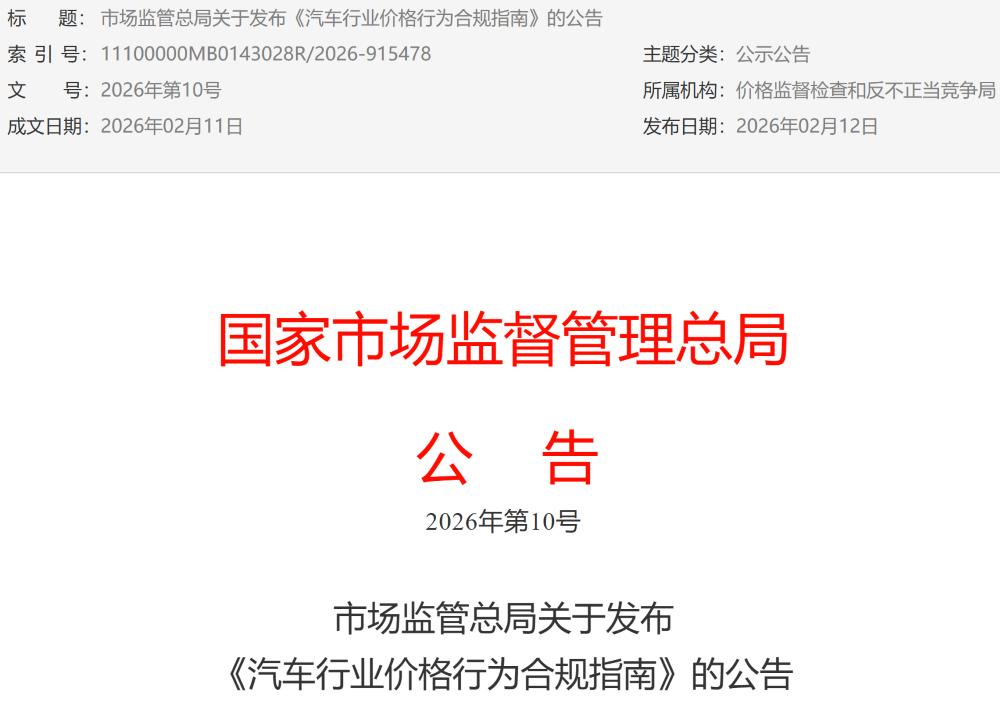
禁止亏本卖车,车圈反内卷新规出炉,价格战乱象大整治
3 6 Ke· 2026-02-12 11:25
Core Viewpoint - The release of the "Guidelines for Compliance with Pricing Behavior in the Automotive Industry" by the State Administration for Market Regulation aims to standardize pricing behavior in the automotive sector, ensuring fair competition and protecting consumer rights while promoting high-quality industry development [3][24]. Group 1: Pricing Guidelines for Automotive Manufacturers - Automotive manufacturers must base pricing on production costs and market demand, prohibiting loss-leading sales aimed at eliminating competitors or monopolizing the market [5][6]. - Manufacturers are not allowed to significantly raise prices without justifiable reasons, even when there is a severe supply-demand imbalance in the automotive supply chain [6]. - The guidelines require manufacturers to clearly inform consumers about the terms and costs associated with "pay-to-unlock" features, including any free trial periods [6][13]. Group 2: Pricing Guidelines for Automotive Dealers - Automotive dealers are required to display clear pricing, including vehicle name, price, unit of measurement, model, manufacturer, and key specifications [13][18]. - Dealers must publicly disclose promotional rules, activity duration, and applicable scope, ensuring transparency in discounts and promotional offers [13][18]. - Similar to manufacturers, dealers are prohibited from loss-leading sales except during inventory clearance [14][18]. Group 3: Supplier Payment Terms and Industry Practices - A survey by the China Automotive Industry Association indicates that most of the 17 key automotive companies have reduced payment terms to within 60 days, with an average of 54 days, which is a reduction of about 10 days compared to the previous year [20][21]. - 15 companies have adopted cash or bank acceptance bills for payments, with some companies allowing early payment requests for cash-strapped small and medium enterprises [20][21]. - The guidelines are part of a broader effort to ensure compliance with the revised "Regulations on Payment of Funds to Small and Medium Enterprises" by the State Council, promoting timely payments to suppliers [21][24].
东风汽车股份有限公司铸造工厂原厂长、党总支书记张斌接受纪律审查和监察调查
Mei Ri Jing Ji Xin Wen· 2026-02-12 10:11
Core Viewpoint - Dongfeng Motor Corporation's former casting plant director and party secretary, Zhang Bin, is under investigation for serious violations of discipline and law, as reported by the Central Commission for Discipline Inspection and the Hubei Provincial Commission for Discipline Inspection [1] Group 1 - The investigation is being conducted by the discipline inspection commission of Dongfeng Motor Corporation and the supervisory commission of Chongyang County, Hubei Province [1]
中汽协:17家车企中多数账期已低于60天,少数趁机“勒索”供应商
Jing Ji Guan Cha Wang· 2026-02-12 09:20
Core Insights - The China Automotive Industry Association (CAAM) released a report indicating that most of the 17 key automotive enterprises have reduced their payment terms to within 60 days, with an average payment term of approximately 54 days, which is a reduction of about 10 days compared to the previous year [2] - The revised "Regulations on Payment for Small and Medium-sized Enterprises" will take effect in June 2025, mandating large enterprises to pay small and medium-sized enterprises within 60 days of delivery [2] - The report highlights that the average accounts payable turnover days for domestic listed automotive companies in 2024 is 182 days, significantly higher than that of German (40.5 days) and American (60.5 days) automotive companies, causing financial strain on upstream enterprises [2] Group 1 - The CAAM's survey shows that all key automotive enterprises are prioritizing the implementation of payment term commitments, with many forming special task forces and establishing long-term mechanisms for commitment fulfillment [3] - The survey indicates that 15 out of 17 key automotive enterprises use cash or bank acceptance bills for payments, with 5 companies having a cash payment ratio exceeding 50% and 2 companies exceeding 70% [3] - 14 out of the 17 key enterprises are implementing additional preferential policies for small and medium-sized enterprises, ensuring that the payment process from delivery to payment does not exceed 60 days [3] Group 2 - There are still issues in the payment processes of some automotive enterprises, such as discrepancies in the starting point for payment terms, which can lead to extended payment periods despite nominally adhering to the 60-day term [4] - The CAAM emphasizes the need for continuous efforts to address these issues, as the management of the payment process is not sufficiently standardized [4]

对话独角兽 | 东软睿驰助力汽车产业智能化发展:聚焦软件自研,联动生态协同
Di Yi Cai Jing· 2026-02-12 09:19
与之形成反差的是,作为汽车核心的汽车操作系统的国产化进程却相对滞后。根据中国汽车工业协会与赛迪顾问联合数据,2024年国内车用操作系统市场 中,国产操作系统占比不足15%,并且主要集中在后装市场与低阶前装车型,高端前装市场依然由外资品牌所主导。 汽车行业智能化转型推动基础软件需求激增,汽车操作系统作为连接硬件与应用的关键环节,适配多芯片、多场景成为产业核心需求。 长久以来,中国汽车产业位居全球产销量前列,据中国汽车工业协会数据,2025年汽车出口达709.8万辆,同比增长21.1%,其中新能源汽车出口261.5万 辆,同比增长1倍,产业规模与国际竞争力持续提升。 作为长期深耕新能源与智能网联汽车核心技术研发的企业,东软睿驰致力于为车企智能化创新升级提供高效、可靠的产品方案。目前由其自主研发的汽车基 础软件与整车操作系统NeuSAR已累计装车数千万套,成为推动中国智能汽车产业转型升级的重要力量,同时也成为推进汽车操作系统国产化替代的重要实 践样本。 打破生态壁垒,锚定产业适配核心需求 汽车行业智能化转型推动基础软件需求激增,汽车操作系统作为连接硬件与应用的关键环节,适配多芯片、多场景成为产业核心需求。但国内汽车 ...