
凯赛生物

Search documents
央视报道:我国生物制造产业规模达1.1万亿元!
合成生物学与绿色生物制造· 2025-12-22 02:40
Core Viewpoint - During the "14th Five-Year Plan" period, China's bio-manufacturing industry has experienced significant growth, becoming a crucial force for optimizing and upgrading the economic structure, with a total scale reaching 1.1 trillion yuan [2][3]. Industry Overview - The bio-manufacturing industry in China has steadily expanded, achieving a total scale of 1.1 trillion yuan, with bio-fermentation products accounting for over 70% of global production [3][4]. - The annual output value of sub-sectors such as food additives and biopharmaceuticals exceeds 400 billion yuan, establishing bio-manufacturing as a new economic growth point [3][4]. Technological Innovation - China's bio-manufacturing sector holds over 20% of global patent applications, with the establishment of several national key laboratories and industrial innovation platforms [4]. - New instruments such as domestic high-throughput gene sequencers and large-scale fermentation tanks have been successfully industrialized [4]. Industrial Cluster Development - Regions like Beijing and Tianjin have emerged as innovation hubs for bio-manufacturing, while provinces such as Shandong, Heilongjiang, and Henan have developed into major manufacturing bases for bulk bio-fermentation products [5]. - The "14th Five-Year Plan" has fostered the growth of numerous backbone enterprises with annual revenues exceeding 10 billion yuan, along with the emergence of several national-level manufacturing champions and specialized "little giant" enterprises [5]. Policy and Recognition - The Ministry of Industry and Information Technology (MIIT) has released a list of 35 landmark bio-manufacturing products, with companies like New Hope Liuhe, Blue Crystal Microbiology, and Huaxi Biological among the applicants [6][8].


上海培育产业新增长点“十五五”剑指万亿 计划打造一批具有全球影响力的智能终端品牌
Jie Fang Ri Bao· 2025-12-21 02:04
上海是全国低空经济领跑者,金山区华东无人机基地是全国首批"民用无人驾驶航空试验区",全国 50%以上的eVTOL(电动垂直起降飞行器)头部企业已选择上海。闵行区组建低空经济产业联盟,集聚 上海交通大学、华东师范大学,以及中航机载、航天氢能等"国家队",还有整机头部企业、配套企业 等,全区低空经济协同发展格局初步形成。近期,时的科技的E20全尺寸工程样机完成风洞测试与地面 滑行试验,沃兰特航空"VB-2X"验证机完成首飞。这两家闵行区内企业今年以来签约订单总额逾150亿 美元。另外,杨浦区提出打造低空经济产业创新高地和商业应用高地,已实现"三个首次",即首条中心 城区无人机低空物流配送航线、首条跨越高架线航线、首条高校配送航线。据了解,"十五五"期间,上 海要在低空经济技术创新、装备研制、商业示范方面发力,预计到"十五五"末产业规模达1000亿元。 商业航天包括商业火箭、商业卫星、终端设备、运营服务等环节。闵行区正持续推进上海市商业航 天商业火箭特色集聚区建设,围绕链主,精准引进可复用火箭发动机、低成本卫星载荷、激光通信终端 等上下游优质项目。"十五五"期间,上海将全面推动商业航天产业链强链、补链、延链,如加大 ...

生物制造产业化提速 上市公司竞逐万亿元蓝海
Zheng Quan Ri Bao Wang· 2025-12-19 14:01
Core Insights - The biomanufacturing industry in China has reached a total scale of 1.1 trillion yuan, with bioproducts accounting for over 70% of global production [1] - Biomanufacturing is recognized as a strategic emerging industry that can drive new economic growth and foster innovation across pharmaceuticals, chemicals, and fuels [1] Industry Development - Biomanufacturing utilizes industrial biotechnology, including genetic engineering and synthetic biology, to process and convert materials through microorganisms, enzymes, or cells, with applications in pharmaceuticals, new materials, renewable energy, ecological protection, and modern agriculture [2] - The Chinese government has implemented multiple policies to support the development of the biomanufacturing industry, aiming to cultivate over 20 pilot platforms by 2027, serving more than 200 enterprises and incubating over 400 products [2] - Local governments are actively creating high-end biomanufacturing clusters, with regions like Beijing, Shanghai, Guangdong, and Zhejiang introducing supportive policies and establishing specialized funds for industry development [2] Innovation and Collaboration - The synergy of policy, capital, and technological innovation is providing strong support for the industrialization of biomanufacturing, creating a resilient and dynamic industry ecosystem [3] - Numerous listed companies are entering the biomanufacturing sector to capitalize on market opportunities, with strategic collaborations being formed, such as the partnership between Lude Biological Environmental Technology Co., Ltd. and Zhejiang Hanghua New Materials Technology Co., Ltd. [3][4] Market Applications - In the field of medical health, Wuhan Heyuan Biotechnology Co., Ltd. has developed several pharmaceutical products using rice endosperm cell bioreactors, with one of its innovative drugs being recognized as a landmark biomanufacturing product for 2024 [4] - Shanghai Kaysai Biotechnology Co., Ltd. is focusing on new bio-based materials, developing bio-based polyamide composite materials that are competitive with metals in strength while significantly reducing carbon emissions compared to traditional petroleum-based products [4] - The biomanufacturing industry is expected to see significant breakthroughs in replacing fossil raw materials in various sectors, including chemical materials, aviation fuels, and textile fibers, driven by increasing environmental awareness and technological advancements [4][5]
华安证券:化工行业反内卷推动周期复苏 国产替代引领成长主线
智通财经网· 2025-12-17 04:08
Core Viewpoint - The report from Huazhong Securities highlights the peak of domestic silicon production capacity, the exit of overseas manufacturers, and the potential recovery of the polyester chain's prosperity due to concentrated production capacity in the polyester filament sector [1][3]. Group 1: Industry Trends - Domestic silicon production capacity has reached its peak, while leading companies are driving industry recovery as overseas manufacturers continue to exit [1][3]. - The PTA production capacity expansion is nearing its end, leading to a concentration in polyester filament production capacity, which is expected to improve the prosperity of the polyester chain [1][3]. - The price of caprolactam has dropped to a low point, prompting the industry to initiate self-driven anti-involution measures [3]. - The raw material price index has rebounded after hitting a bottom, with frequent safety incidents causing significant risks to the global supply chain of key pesticides [3]. - The price of spandex has remained below the cost line, leading to widespread industry losses, but a slowdown in new capacity releases may optimize the supply structure and drive price recovery [3]. - The vitamin market is expected to see significant price increases in 2024 due to a tightening global supply [3]. Group 2: Investment Opportunities - The report emphasizes two main investment themes: anti-involution and domestic substitution, particularly in the context of global macroeconomic uncertainties and a slowdown in chemical capital expenditures [2][4]. - The biobased materials sector is receiving strong support from national policies, with companies accelerating technological breakthroughs and industrialization [4][6]. - The lubricating oil additive sector is witnessing rapid technological advancements among domestic companies, with several high-end products achieving international certification [4][6]. - The electronic ceramics market is seeing strong demand driven by AI and automotive sectors, with domestic manufacturers making breakthroughs in MLCC production [4][6]. - The exit of 3M from the fluorinated liquids market is reshaping the competitive landscape, with domestic manufacturers expected to increase their market share [4][6]. - The explosive growth of AI servers is driving demand for electronic-grade polyphenylene ether, with domestic manufacturers achieving technological breakthroughs and entering key supply chains [4][6].

光稳定剂多家企业联合提价,黄磷、烧碱、涤纶短纤价差扩大 | 投研报告
Zhong Guo Neng Yuan Wang· 2025-12-17 04:03
Industry Overview - The chemical sector experienced a decline of 2.19% from December 8 to December 12, 2025, ranking 26th among all sectors, underperforming the Shanghai Composite Index by 1.85 percentage points and the ChiNext Index by 4.93 percentage points [1] - The chemical industry is expected to continue its trend of divergence in 2025, with recommendations to focus on synthetic biology, pesticides, chromatography media, sweeteners, vitamins, light hydrocarbon chemicals, COC polymers, and MDI [1] Synthetic Biology - The arrival of a pivotal moment in synthetic biology is anticipated, driven by the adjustment of energy structures, which may disrupt fossil-based materials and favor low-energy products [1] - Traditional chemical companies are expected to compete based on energy consumption and carbon tax costs, with successful firms leveraging green energy alternatives and integrated advantages to reduce costs [1] - The demand for bio-based materials is projected to surge, leading to potential profitability and valuation increases, with a focus on leading companies like Kasei Bio and Huaheng Bio [1] Refrigerants - The implementation of quota policies is expected to usher in a high-growth cycle for third-generation refrigerants, with supply entering a "quota + continuous reduction" phase starting in 2024 [2] - The demand for refrigerants is anticipated to grow steadily due to the development of heat pumps, cold chain markets, and the expansion of the air conditioning market in Southeast Asia [2] - Companies with high quota shares, such as Juhua Co., Sanmei Co., Haohua Technology, and Yonghe Co., are expected to benefit significantly from this trend [2] Electronic Specialty Gases - Electronic specialty gases are critical to the electronics industry, characterized by high technical barriers and added value [3] - The rapid upgrade of the wafer manufacturing industry in China is creating a mismatch with the fragmented and insufficient domestic high-end electronic specialty gas market, presenting significant domestic substitution opportunities [3] - Demand is driven by the semiconductor, display panel, and photovoltaic sectors, with companies like Jinhong Gas, Huate Gas, and China Shipbuilding Gas poised to capitalize on this trend [3] Light Hydrocarbon Chemicals - The trend towards light raw materials in the global olefin industry is notable, with a shift from heavy naphtha to lighter low-carbon alkanes like ethane and propane [4] - Light hydrocarbon chemicals are characterized by low carbon emissions, low energy consumption, and low water usage, aligning with global carbon neutrality goals [4] - Companies in the light hydrocarbon sector, particularly satellite chemicals, are expected to see a revaluation of their worth [4] COC Polymers - The industrialization of COC (Cyclic Olefin Copolymer) is accelerating in China, driven by domestic companies achieving breakthroughs and the shift of downstream industries to domestic sources [5] - COC materials are increasingly used in high-end applications, with a focus on companies like Akolai that are positioned to break through market bottlenecks [5] Potash Fertilizers - Potash fertilizer prices are expected to rebound as the industry enters a destocking cycle, with supply constraints due to Canpotex withdrawing new quotes and Nutrien announcing production cuts [6] - The demand for potash fertilizers is likely to increase as farmers' planting intentions rise, driven by higher prices for wheat and corn [6] - Companies such as Yara International, Salt Lake Potash, and Zangge Mining are highlighted as key players in the potash sector [6] MDI Market - The MDI (Methylene Diphenyl Diisocyanate) market is characterized by oligopoly, with demand steadily increasing due to the expansion of polyurethane applications [7] - The market is dominated by five major companies, which account for 90.85% of global MDI production capacity [7] - Despite current price pressures, the MDI supply landscape is expected to improve, with companies like Wanhua Chemical positioned to benefit from future demand recovery [7] Chemical Price Tracking - The top five price increases this week include caustic soda (16.92%), aluminum fluoride (12.72%), and nitric acid (7.69%) [8] - The top five price decreases include NYMEX natural gas (-12.76%) and ethylene glycol (-4.88%) [8] Supply Side Tracking - This week, 170 chemical companies reported changes in production capacity, with 7 new repairs and 7 restarts noted [9]
化工行业2026年度投资策略:周期破晓,关注反内卷政策与国产替代两大主线
Huaan Securities· 2025-12-17 02:53
Investment Strategy Overview - The report emphasizes two main investment themes for the chemical industry: anti-involution policies and domestic substitution, which are expected to drive recovery and growth in the sector [4][5][6] Anti-Involution and Cycle Recovery - The report suggests that the chemical industry is at a turning point, with anti-involution measures leading to a recovery in the cycle. Key areas include the peak of new capacity in organic silicon, the end of PTA capacity expansion, and a rebound in prices for certain chemicals due to supply chain disruptions [4][5] - The China Chemical Product Price Index (CCPI) has decreased significantly, dropping to 3865 points by November 30, 2025, down 16.37% from early 2024 and 10.71% from the beginning of 2025 [4][20] Domestic Substitution as a Growth Driver - Domestic substitution is highlighted as a key growth driver, with significant support from national policies for bio-based materials and advancements in technology leading to a more robust domestic supply chain [4][6] - The report identifies several companies positioned to benefit from these trends, including KaiSai Bio and RuiFeng New Materials, which are making strides in bio-based materials and lubricant additives, respectively [5][6] Market Dynamics and Price Recovery - The report notes that while the chemical market is experiencing a downturn, certain segments are expected to see price recovery due to improved supply-demand dynamics and reduced capacity expansion [4][22] - Specific chemical products have shown varied price movements, with some experiencing significant declines while others are stabilizing or recovering [22] Manufacturing Sector Recovery - The manufacturing sector is showing signs of recovery, which is anticipated to support the chemical industry. The report mentions that the real estate market is stabilizing, and automotive production has increased, indicating a potential uptick in demand for chemical products [25][33] Capital Expenditure Trends - Capital expenditure growth in the chemical industry is slowing, with a notable decline in new projects. The report indicates that the total construction in progress for the chemical sector was 327.57 billion yuan in Q3 2025, down 17.64% year-on-year [34][39] Inventory and Consumption Trends - High inventory levels in the chemical sector are being addressed as consumer demand begins to recover. The report suggests that the inventory-to-revenue ratio for the basic chemical industry was 0.62 in Q3 2025, indicating a slight increase from the previous year [41][42] Profitability and Financial Performance - The report highlights a recovery in profitability for the chemical industry, with gross margins and return on equity (ROE) showing improvement in Q3 2025 compared to previous periods [56][60] - Specific sub-sectors, such as agrochemicals and fluorochemicals, have demonstrated significant profit growth, with some exceeding 100% year-on-year increases [55][56]


山东淄博父子带队冲击IPO,为比亚迪供货,年入16亿
3 6 Ke· 2025-12-16 10:28
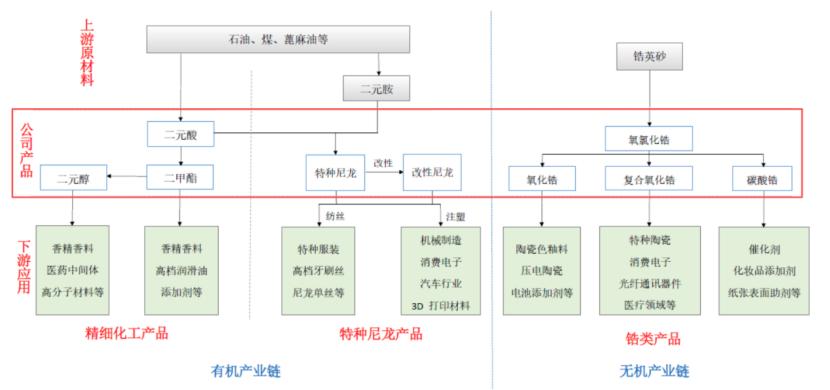
Core Viewpoint - The recent IPO developments of multiple companies on the Shanghai Stock Exchange, including Changyu Group, indicate a growing interest in the chemical new materials sector, particularly in zirconium products and specialty nylon [2][3]. Company Overview - Changyu Group, established in April 2019 and headquartered in Zibo, Shandong Province, focuses on the research, production, and sales of zirconium products, specialty nylon products, and fine chemical products [3][4]. - The company is controlled by Liu Qiyong and Liu Ce, who hold 53.20% of the shares, with Liu Qiyong serving as the chairman and general manager [4]. Financial Performance - The company's revenue for the years 2022, 2023, 2024, and the first half of 2025 was 1.669 billion, 1.608 billion, 1.638 billion, and 896 million respectively, with net profits of 260 million, 196 million, 215 million, and 114 million [8]. - In the first nine months of 2025, Changyu Group reported a revenue of 1.321 billion, an increase of 8.49% year-on-year, and a net profit of 179 million, up 14.78% year-on-year [8]. Product Segmentation - Zirconium products accounted for 76.17%, 72.43%, 70.85%, and 69.78% of the company's main business revenue during the reporting periods, making it the primary source of income [10]. - Specialty nylon products contributed approximately 14% to 20% of the revenue in recent years, with sales volumes increasing steadily [10][11]. Market Position - Changyu Group holds a market share of approximately 30% in the zirconium market, making it a leading player in the industry [19][25]. - The global zirconium market is projected to reach $750 million by 2030, while the specialty nylon market is expected to grow to $3.337 billion by 2025, indicating strong growth potential for Changyu Group [21][23]. Competitive Landscape - The zirconium products industry is characterized by a concentration of private enterprises, with Changyu Group competing against major players like Dongfang Zirconium and Sanxiang New Materials [25]. - In the specialty nylon sector, competition includes international giants such as DuPont and Arkema, which dominate the high-end new materials market [25]. Research and Development - As of June 2025, Changyu Group employed 1,163 people, with 112 dedicated to research and development, representing 9.63% of the workforce [18]. - The company's R&D expenses for the reporting periods were 55.28 million, 50.03 million, 52.31 million, and 27.05 million, with R&D expense ratios of 3.31%, 3.11%, 3.19%, and 3.02% respectively [18].

研判2025!中国热塑性聚酰胺行业产业链图谱、发展现状、细分市场、企业布局及未来发展趋势分析:多领域需求共振发力,行业规模有望突破266亿元[图]
Chan Ye Xin Xi Wang· 2025-12-16 01:04
Core Insights - The thermoplastic polyamide (PA) industry in China is experiencing simultaneous scale expansion and structural upgrades, with a focus on high-performance applications and recycling technology [1][11] - PA6 is entering a rational growth cycle, with capacity expansion and downstream demand creating a positive interaction, while PA66 is facing challenges in supply-demand balance after overcoming key raw material issues [1][11] - The industry is expected to focus on high-temperature, bio-based, and other high-end products, while consolidating raw material independence and promoting integrated supply chains [1][11] Industry Overview - Thermoplastic polyamide, commonly known as nylon, is a versatile engineering plastic with excellent mechanical properties and adaptability for various industrial applications [2][3] - The industry is characterized by a shift from large-scale manufacturing to breakthroughs in core technologies and high-value downstream applications [5][11] Market Dynamics - The overall market for thermoplastic composites in China is projected to reach approximately 64 billion yuan by 2024, with PA materials holding about 38% market share [11] - The PA6 segment has seen capacity grow from approximately 5.4 million tons to 7.858 million tons from 2020 to 2024, with a compound annual growth rate (CAGR) of 10% [11][12] - PA66 production capacity is expected to increase from 560,000 tons to 1.27 million tons during the same period, with a CAGR of 23.2% [12] Key Players - Major companies in the thermoplastic polyamide sector include Wanhua Chemical, Shenyang Chemical, and Jinhai Technology, among others [2] - Foreign companies like BASF maintain a strong presence in high-end markets, while domestic firms are accelerating their competitive positioning through technological advancements [14] Future Trends - The industry is expected to advance in three main directions: technological upgrades, supply chain collaboration, and application expansion [15] - There is a growing emphasis on high-performance and sustainable products, with a focus on bio-based polyamides and recycling technologies [15][16] - New application areas are emerging, particularly in the automotive sector, electronics, and low-altitude economy, which will drive demand for customized and functional products [17][18]





特种尼龙:打破海外垄断,中国高端新材料的下一个百亿赛道
材料汇· 2025-12-15 15:26
Core Viewpoint - Specialty nylon, as a high-performance polyamide material system beyond general nylon (PA6, PA66), is a key direction for the new materials industry towards high-end, functional, and green development. It overcomes the limitations of conventional nylon in heat resistance, water absorption, and transparency through molecular structure design and synthesis process innovation, leading to various subcategories widely used in advanced manufacturing fields such as automotive electrification, electronics, new energy equipment, and aerospace [1][2]. Group 1: Overview of Specialty Nylon - Specialty nylon refers to polyamide materials excluding general nylons (PA6 and PA66), including long-chain polyamides, high-temperature polyamides, transparent polyamides, and bio-based polyamides (PA56), with long-chain nylon and high-temperature nylon dominating the market [5][6]. - The global specialty nylon market is currently dominated by international giants such as Arkema, Evonik, and DuPont, with significant technological barriers in key monomers, polymerization processes, and high-end grades [1][10]. Group 2: Market Supply and Demand - The global production capacity of specialty nylon is approximately 600,000 tons per year, with major producers including Arkema, DuPont, DSM, and others. DSM uniquely masters the industrialization of hexamethylenediamine, producing PA4T, while other companies primarily focus on PA6T products [10][11]. - In China, domestic production of long-chain polyamides has gained a significant market share, with several companies planning to expand production capacity, expected to reach 150,000 tons in the next five years [14][13]. Group 3: Long-Chain Polyamides - Long-chain nylon typically refers to nylon materials with more than ten methylene groups in the molecular chain, offering high toughness and low water absorption, with applications in automotive, electronics, and military sectors [16][20]. - The global production capacity of long-chain polyamides is around 270,000 tons per year, with a projected market sales revenue of $2.846 billion in 2024, expected to reach $3.64 billion by 2031, reflecting a CAGR of 3.6% [21][23]. Group 4: High-Temperature Polyamides - High-temperature polyamides can operate at temperatures up to 150°C, with a global production capacity of approximately 335,000 tons per year. They are widely used in electronics, automotive, and mechanical manufacturing [26][32]. - The production of high-temperature nylon involves complex synthesis processes, with the two-step method of high-temperature high-pressure solution polymerization followed by solid-phase post-polymerization being the mainstream industrial process [28][31].


看好全球供给反内卷大周期,看好全球AI需求大周期——2026年化工策略报告:化工进入击球区:-20251212



Guohai Securities· 2025-12-12 11:36
Core Insights - The chemical industry is entering a favorable phase driven by demand, value, and supply dynamics [5][6][7] - Global supply constraints and the exit of European capacities are expected to enhance the market environment for the chemical sector [7] Demand Drivers - Key opportunities identified in various sectors include: - Gas turbine upstream: companies like Zhenhua Co., Yingliu Co., Longda Co., and Wanze Co. [5] - Refrigerants and fluorinated liquids: companies such as Juhua Co., New Zhoubang, and Runhe Materials [5] - Energy storage supply chain: including Chuanheng Co., Xingfa Group, Yuntianhua, Batian Co., and others [5] - Semiconductor materials: companies like Yanggu Huatai, Wanrun Co., Dinglong Co., and others [5] Value Drivers - Potential for increased dividend yields in sectors such as: - Coal chemical: Hualu Hengsheng, Luxi Chemical, and Baofeng Energy [6] - Oil refining: Hengli Petrochemical, Satellite Chemical, and Sinopec [6] - Phosphate fertilizers: Yuntianhua, Yuntu Holdings, and others [6] Supply Drivers - Domestic anti-involution policies and the exit of European production capacities are expected to support the chemical industry: - PTA and polyester filament: companies like Xin Fengming and Tongkun Co. [7] - Tire manufacturing: including Sailun Tire, Zhongce Rubber, and others [7] Key Companies and Profit Forecasts - Selected companies with profit forecasts include: - Zhenhua Co. (Net profit forecast for 2025: 6.04 billion, PE: 21.8) [8] - Yingliu Co. (Net profit forecast for 2025: 4.08 billion, PE: 42.7) [8] - Longda Co. (Net profit forecast for 2025: 1.06 billion, PE: 34.9) [8] - Wanze Co. (Net profit forecast for 2025: 2.37 billion, PE: 32.9) [8] - Juhua Co. (Net profit forecast for 2025: 48.14 billion, PE: 24.4) [8] Industry Cycle Insights - The chemical industry is expected to enter a new cycle, with demand recovery and supply-side reforms driving growth [14][21] - The chemical price index has shown signs of recovery, indicating a potential upturn in the market [20][21]