华为技术有限公司

Search documents
回眸2025年,看见中国汽车业的向上力量
Bei Jing Ri Bao Ke Hu Duan· 2026-01-18 00:25
Core Insights - In 2025, China's automotive industry achieved record production and sales figures, with 34.53 million vehicles produced and 34.40 million sold, marking year-on-year growth of 10.4% and 9.4% respectively, showcasing resilience and vitality in the sector [1] - The year marked a significant shift in the market, with new energy vehicles (NEVs) surpassing 50% of domestic new car sales, indicating their transition from niche products to mainstream market leaders [2][3] - The automotive export volume exceeded 7 million units, with NEV exports reaching 2.615 million units, reflecting a robust growth trajectory and the establishment of overseas markets as new growth drivers [2][11] New Energy Vehicles (NEVs) as Market Leaders - NEVs accounted for 50.8% of domestic new car sales in 2025, with production and sales reaching 16.626 million and 16.49 million units respectively, representing year-on-year growth of 29% and 28.2% [3] - The competitive landscape has shifted, with domestic brands capturing nearly 70% of the passenger car market share, marking a significant reversal against joint venture brands [3][4] Technological and Policy Support - The growth of NEVs is attributed to supportive policies, technological advancements, and a well-structured supply chain, with over 11.5 million vehicles replaced under the trade-in policy, contributing to a sales boost of over 1.6 trillion yuan [5] - Innovations in technology have led to improved vehicle performance, with average electric vehicle ranges reaching around 500 kilometers and significant reductions in battery costs and charging times [6] Smart Driving Developments - The approval of the first L3-level conditional autonomous driving vehicles in December 2025 marks a pivotal moment in China's autonomous driving sector, transitioning from technology validation to mass production [7][9] - The penetration rate of vehicles equipped with L2-level driving assistance features reached 64% in the first three quarters of 2025, driven by decreasing costs and increased availability in lower-priced models [9] Global Expansion and Localization - China's automotive exports reached 7.098 million units in 2025, with a year-on-year increase of 21.1%, highlighting the importance of overseas markets for growth [11] - Localization efforts are intensifying, with over 20 Chinese automotive brands establishing manufacturing facilities in Thailand and Brazil, enhancing local production capabilities and supply chain integration [12] Market Competition Restructuring - The introduction of compliance guidelines aims to curb price wars and establish a more orderly competitive environment, shifting focus from price competition to quality and service [13][15] - The automotive industry is transitioning from a phase of scale expansion to one of quality enhancement, necessitating a comprehensive approach to governance and market regulation [15][16]

【回眸二〇二五】看见中国汽车业的向上力量
Jing Ji Ri Bao· 2026-01-17 23:13
Core Insights - In 2025, China's automotive industry demonstrated resilience and growth, achieving record production and sales figures, with production reaching 34.53 million vehicles and sales at 34.40 million, marking year-on-year increases of 10.4% and 9.4% respectively [1] - The year marked a significant shift in the market, with new energy vehicles (NEVs) accounting for over 50% of domestic new car sales, indicating a transition from niche to mainstream [2] - The automotive export sector also thrived, with exports surpassing 7 million vehicles, driven by technological innovation and a robust supply chain [10] New Energy Vehicles - NEVs achieved a domestic sales share of 50.8%, with production and sales figures of 16.63 million and 16.49 million respectively, reflecting year-on-year growth of 29% and 28.2% [2] - The competitive landscape shifted dramatically, with domestic brands capturing nearly 70% of the passenger car market, reversing the dominance of joint ventures [2][3] Technological Advancements - The automotive industry is undergoing a transformation driven by electrification and intelligent technology, with significant advancements in product performance and consumer acceptance [4][5] - Innovations in battery technology have led to a 30% reduction in battery costs and a 40% increase in lifespan, enhancing the competitiveness of Chinese automotive products [5] Intelligent Driving - The approval of L3-level conditional autonomous driving vehicles marks a pivotal moment in China's autonomous driving sector, transitioning from technical validation to mass production [6] - The penetration rate of vehicles equipped with Level 2 autonomous driving features reached 64%, with a year-on-year growth of 21.2% in the first three quarters of 2025 [8] Export Growth and Localization - China's automotive exports reached 7.1 million units in 2025, with NEV exports doubling to 2.615 million units, showcasing the global competitiveness of Chinese automotive products [10] - Localization strategies are being implemented, with over 20 Chinese automotive brands establishing manufacturing facilities in Thailand and other regions to enhance local production capabilities [11] Market Competition Dynamics - The introduction of compliance guidelines aims to curb price wars and establish a more orderly competitive environment, shifting the focus from price competition to quality and service [12] - The automotive industry is transitioning from a focus on volume to an emphasis on quality, with a profit margin of only 4.4% in the first eleven months of 2025, below the manufacturing industry average [12][13]
看见中国汽车业的向上力量
Jing Ji Ri Bao· 2026-01-17 21:59
Core Insights - In 2025, China's automotive industry achieved record production and sales figures, with 34.53 million vehicles produced and 34.40 million sold, marking year-on-year growth of 10.4% and 9.4% respectively, showcasing resilience and vitality in the sector [1] - The year marked a significant shift in the market, with new energy vehicles (NEVs) accounting for over 50% of domestic new car sales, indicating a transition from niche to mainstream [2][3] - The automotive export volume exceeded 7 million units, with NEV exports reaching 2.615 million units, reflecting a robust international market presence [11] New Energy Vehicles (NEVs) as Market Leaders - NEVs accounted for 50.8% of new car sales in 2025, with production and sales figures of 16.626 million and 16.49 million respectively, representing year-on-year growth of 29% and 28.2% [3] - The competitive landscape has shifted, with domestic brands capturing nearly 70% of the passenger car market share, reversing the dominance of joint venture brands [3][4] Technological Advancements and Policy Support - The growth of NEVs is attributed to supportive policies, technological innovations, and a robust supply chain, with over 11.5 million vehicles exchanged under the trade-in program, contributing to over 1.6 trillion yuan in new car sales [5] - Significant advancements in battery technology have led to a 30% reduction in battery costs and a 40% increase in battery lifespan, enhancing product competitiveness [6] Smart Driving Developments - The approval of the first L3-level conditional autonomous driving vehicles marks a pivotal moment in China's smart driving sector, transitioning from technology validation to mass production [7] - The penetration rate of L2-level vehicles with combined auxiliary driving functions reached 64% in the first three quarters of 2025, driven by decreasing costs and increased accessibility [9] Global Expansion and Localization - China's automotive exports reached 7.098 million units in 2025, with a 21.1% year-on-year increase, highlighting the importance of overseas markets as growth drivers [11] - Localization efforts are intensifying, with over 20 Chinese automotive brands establishing manufacturing facilities in Thailand and Brazil, enhancing local production capabilities [12] Market Competition and Regulation - The introduction of compliance guidelines aims to curb price wars and establish a more orderly competitive environment, shifting focus from price competition to quality and service [13] - The automotive industry is transitioning from a phase of scale expansion to one of quality enhancement, necessitating a comprehensive approach to regulate competition and promote sustainable growth [15]
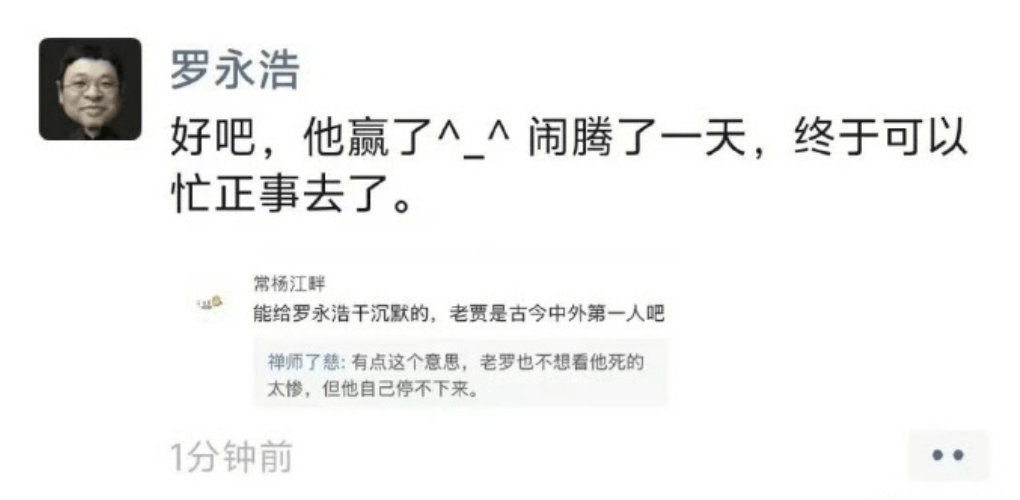
贾国龙与罗永浩微博均被禁言,罗永浩:他赢了;OpenAI 致信投资者:马斯克将发表「离谱言论」;抖音宣布加强治理摆拍视频 | 极客早知道
Sou Hu Cai Jing· 2026-01-17 01:57
Group 1: Corporate Conflicts - The conflict between Jia Guolong and Luo Yonghao escalated, with both parties being banned from Weibo after a series of accusations and responses regarding defamation and personal attacks [1][2][6] Group 2: Apple Trade-In Program - Apple China updated its Trade In program, expanding the list of eligible Huawei and Xiaomi devices for trade-in, with maximum trade-in values for Huawei's Mate X5 reaching RMB 2850 and various other models listed with specific trade-in values [2][3] Group 3: AI Developments - Demis Hassabis, CEO of Google DeepMind, stated that the gap between Chinese and Western AI models may only be a few months, contradicting previous beliefs about a larger disparity [4][5][6] - OpenAI warned investors about potential provocative statements from Elon Musk as their ongoing legal disputes heat up, with OpenAI's valuation reportedly reaching $500 billion [6] Group 4: Meta's Strategic Shift - Meta announced it will cease independent sales of Horizon Workrooms and related services by February 2026, following significant layoffs in its Reality Labs division, indicating a shift in focus away from the metaverse [7][8] Group 5: NIO's AI Initiatives - NIO established an AI Technology Committee to enhance its AI capabilities across various business functions, aiming for a 40%-50% growth in 2026 while maintaining a startup mentality [10] Group 6: Apple Smart Glasses and Foldable Phone - Apple is expected to launch its first smart glasses in Q2 2024, designed as lightweight accessories reliant on iPhone for processing tasks, while also planning to release its first foldable phone, the iPhone Fold, in September 2024 [11][12][15] Group 7: Kilo for Slack Launch - Kilo for Slack was launched as a new AI coding product, integrating with Slack to enhance workflow efficiency, utilizing the Chinese model M2.1 for its operations [16] Group 8: Trump Mobile Company Investigation - U.S. lawmakers are investigating Trump Mobile Company for alleged deceptive practices regarding its T1 phone, which has not yet been delivered despite accepting pre-orders [18]


9点1氪:贾国龙罗永浩微博被禁言,罗永浩朋友圈最新发声;李湘多平台账号被禁止关注;特朗普拿到诺贝尔和平奖奖章
36氪· 2026-01-17 01:12
Group 1 - The article discusses the recent conflict between Luo Yonghao and Jia Guolong, highlighting that both their accounts on Weibo have been silenced, indicating a crackdown on online disputes [3][4] - Jia Guolong issued a public response to accusations made by Luo Yonghao, emphasizing that his company, Xibei, has operated legally and has not engaged in any illicit activities [3][4] - Luo Yonghao's latest post suggests he is moving on from the dispute, indicating a shift in focus to other matters [4] Group 2 - The article mentions that the public relations vice president of Xibei, Song Xuan, has resigned, citing personal development reasons and the pressure he faced during the recent events [6][7] - Ctrip has been repeatedly interviewed by local market regulators regarding alleged monopolistic practices, indicating ongoing scrutiny of its business operations [8] - The article notes that some Moutai direct stores are now allowing eligible businesses to purchase their products at a lower price without mandatory bundling, reflecting a change in sales strategy [9] Group 3 - Several smartphone manufacturers, including Xiaomi and OPPO, have lowered their annual shipment forecasts due to rising supply chain costs, with Xiaomi and OPPO reducing their orders by over 20% [10] - The article highlights that Porsche's global delivery volume is expected to decline by 10% in 2025, attributed to supply shortages caused by EU regulations [14] - The article reports that Gree Electric plans to distribute over 5.58 billion yuan in cash dividends to shareholders, reflecting its financial performance [12]

2025年中国汽车出行云行业发展背景、市场规模、部署模式、企业格局及未来趋势研判:行业显现出强劲扩张态势,市场规模达140.4亿元[图]
Chan Ye Xin Xi Wang· 2026-01-17 01:02
Core Insights - The automotive cloud industry is rapidly evolving, driven by technological advancements, user demands, and market competition, with a significant focus on "smart driving equality" [1][4] - The integration of cloud computing with smart mobility is expected to create substantial growth opportunities, with the market projected to reach 12.21 billion yuan in 2024 and 14.04 billion yuan in 2025, reflecting a 15% year-on-year growth [1][8] Industry Overview - Automotive cloud serves as a digital foundation for the entire smart vehicle industry chain, leveraging cloud computing to enhance the digital transformation across R&D, production, sales, and usage [2][3] - The industry is characterized by a four-dimensional collaborative ecosystem involving vehicles, cloud, roads, and people, facilitating a comprehensive upgrade of the automotive sector [2] Development Background - The acceleration of automotive intelligence is evident, particularly in the new energy vehicle sector, where the installation rate of L2-level and above assisted driving functions is expected to reach 87% by October 2025 [4][5] - The Chinese government is actively promoting the "vehicle-road-cloud integration" strategy, which aims to enhance the safety, energy efficiency, and comfort of intelligent connected vehicle systems [5][6] Market Status - The Chinese automotive cloud market is experiencing robust growth, with a projected market size of 12.21 billion yuan in 2024 and 14.04 billion yuan in 2025, driven by AI models, smart vehicle intelligence, and supportive policies [8][10] - Public cloud services are expected to account for 65.3% of the market in 2024, while private cloud services will represent 34.7%, indicating a diverse deployment strategy among automotive companies [8][9] Customer Distribution - The customer base for automotive cloud services is extensive, covering key segments of the smart vehicle industry, including OEMs, parts suppliers, autonomous driving technology providers, and mobility service suppliers [9] - In 2024, OEMs and parts suppliers are expected to represent 43.2% and 27.6% of the customer distribution, respectively, highlighting their reliance on cloud services for core applications [9] Market Landscape - The market is dominated by a multi-supplier strategy, with leading players maintaining significant market shares due to their resource availability and technological advantages [10] - In the public cloud infrastructure sector, the top five service providers are expected to hold a combined market share of 86.9%, while the top five in the private cloud sector will account for 60% [10] Future Trends - The automotive cloud industry is anticipated to continue its growth trajectory, with expectations of surpassing 20 billion yuan by 2028, driven by the increasing demand for smart and connected vehicles [10] - Global expansion is expected as Chinese automotive companies increase their international presence, leading to a rise in demand for localized cloud services [10] - The industry will likely shift towards a hybrid architecture, optimizing computing resources and ensuring compliance with local data regulations [10]

2025年新能源拖拉机行业词条报告
Tou Bao Yan Jiu Yuan· 2026-01-16 12:56
2025年 新能源拖拉机行业词条报告 头豹分类/制造业/专用设备制造业/农、林、牧、渔专用机械 制造/拖拉机制造 Copyright © 2025 头豹 智电沃野——从动力革新到智能作业的农机新生态构建 头豹词条报告 系列 梁霄同 · 头豹分析师 梁 2025-12-26 未经平台授权,禁止转载 行业分类: 制造业/拖拉机制造 摘要 新能源拖拉机采用新型动力系统,以电力等驱动,应用场景广泛。行业特征为关联产业多、政策驱动强、智能化渗透深。2019-2024年,行业规模由0.25亿增至25.18亿,年 复合增长率151.82%,预计2025-2029年将增至93.97亿。历史增长得益于顶层设计推动需求扩张,如政策鼓励、环保标准升级,以及技术突破促使供给扩张,如动力电池、 智能驾驶技术进步。未来,供给侧结构性改革、固态电池应用及农村居民收入提升、双碳战略推进,将持续推动行业规模扩张。 行业定义 新能源拖拉机是指采用新型动力系统,完全或主要依靠电力、混合动力等新型能源驱动,以取代传统柴油内燃机的拖拉机。新能源拖拉机作 为自走式动力机械,可用于牵引、推动、携带和/或驱动配套机具开展作业,核心应用场景涵盖农业(种植业) ...
农发行与华为公司签订战略合作协议
Zheng Quan Shi Bao Wang· 2026-01-16 11:03
人民财讯1月16日电,1月16日,中国农业发展银行(简称"农发行")与华为技术有限公司(简称"华为公 司")在广东深圳签订战略合作协议,并就进一步深化合作开展会谈。 ...
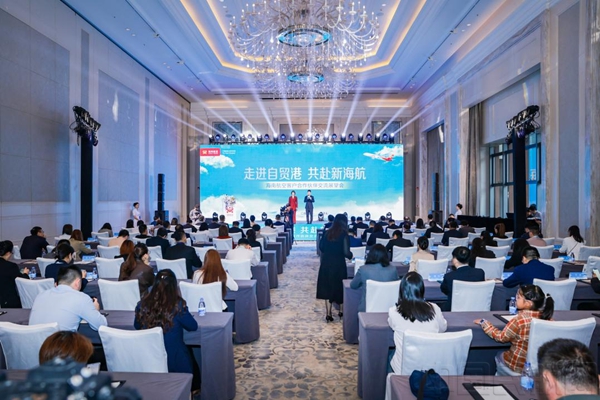
海南航空合作伙伴交流展望会成功举办 携手赋能自贸港新篇章
Zhong Guo Min Hang Wang· 2026-01-16 04:57
Core Insights - The event titled "Entering the Free Trade Port, Embracing New Hainan Airlines" was held on January 15, 2026, in Haikou, gathering nearly a hundred representatives from over 30 enterprises, including Huawei and Alibaba, to discuss cooperation opportunities and development prospects [1][4]. Group 1: Event Overview - The event featured discussions on free trade port policies, promotion of Hainan Airlines' core products and international route network, and cultural experiences, showcasing the airline's achievements in safety, service innovation, green development, and international expansion [4]. - Hainan Airlines aims to act as a "bridge" for the construction of the free trade port, emphasizing the importance of collaboration with partners to seize historical opportunities for development [4][5]. Group 2: Strategic Partnerships - During the event, Hainan Airlines signed major customer cooperation agreements with Wuhan Tianhe Airport and Beijing University of Science and Technology, reflecting its commitment to customer-centric service and market expansion [4][5]. - The agreements signify Hainan Airlines' efforts to enhance aviation network collaboration and deepen industry-academia integration, expanding the breadth and depth of hub construction and school-enterprise cooperation [4]. Group 3: Future Directions - Hainan Airlines plans to maintain an open posture, leveraging quality products and reliable services to collaborate with more partners in seizing opportunities presented by the free trade port [5][6]. - The airline is focused on enhancing its service matrix to support the construction of the free trade port, aiming to provide an exceptional travel experience for global passengers [6].

深圳“技客”故事|黄佳杰:从“00后”专科生到云计算“世界冠军”
Sou Hu Cai Jing· 2026-01-15 11:16
Core Viewpoint - Huang Jiajie, a representative from Shenzhen City Vocational College, won the gold medal in the cloud computing category at the 47th World Skills Competition, marking a significant achievement for the Chinese team in this event [1][4]. Group 1: Competition Overview - The cloud computing project at the World Skills Competition is unique as it provides real-time scoring, adding pressure to competitors [4]. - Huang faced high-level competition from engineers at major companies like Samsung and Google, as well as students from prestigious universities [4]. - Despite challenges, including unexpected changes in the competition format, Huang demonstrated strong adaptability and strategic planning, leading to his success [4][6]. Group 2: Training and Preparation - Huang trained for over five years, dedicating more than 11 hours daily to practice, focusing on various aspects of cloud computing [9]. - His training included participation in multiple competitions, which helped him build the necessary skills to compete at the national level [9][10]. - The collaboration between his school and leading tech companies provided him with a solid foundation in cloud computing, including obtaining top-level certifications [10]. Group 3: Personal Growth and Future Aspirations - After winning the championship, Huang chose to return to his alma mater as a teacher, aiming to pass on his knowledge and experience to future generations [13][14]. - He emphasizes the importance of continuous learning in the rapidly evolving field of cloud computing and encourages young people to stay updated with new technologies [15]. - Huang's commitment to education is reflected in his students' success, as they achieved gold in a provincial competition, showcasing the impact of his mentorship [14].