宝马

Search documents
从疯狂开店到主动关店:车企渠道“瘦身”求生
经济观察报· 2026-02-08 06:36
不仅是新势力车企,随着中国汽车市场发生结构性转变,传统 车企的渠道也在持续调整,呈现出全新的发展态势。一场覆盖 全行业的渠道变革已然上演。 作者:周菊 封图:图虫创意 近日,理想汽车对销售渠道进行调整,计划在2026年上半年关闭约100家效益较低的零售门店, 部分一二线城市商超核心地段的门店也在其中。尽管理想汽车回应称,仅会调整关闭少量低效门 店,"关闭100家门店"系不实信息,但新势力车企调整缩减销售渠道已成为一个显著的行业现 象。 除了理想汽车,特斯拉、小鹏及蔚来等企业也有类似的渠道收缩举动。2025年,蔚来整合旗下三 个品牌的渠道和服务,乐道和萤火虫的车辆在蔚来NIOHouse展示销售,并关闭了部分商超门店; 广汽融合旗下埃安和昊铂两个新能源品牌的渠道;特斯拉减少了一线城市商超体验店数量,在传统 汽车商圈增设更多传统4S店形态的销售网点;小鹏早在2023年就推进"木星计划",关闭经营不 善、效率低下的直营门店,扩大授权经销商规模。"这标志着新势力已经从'跑马圈地'进入'精耕细 作'期。这个变化的核心是商业逻辑变了,以前烧钱换流量,现在必须算细账。高昂租金换不来销 量就是浪费,车企开始回归商业本质,砍掉低 ...



车企渠道大变革:从“狂飙圈地”到“退守精耕”
Jing Ji Guan Cha Wang· 2026-02-06 16:30
有企业缩减渠道,也有企业在"逆势"扩张。例如,零跑汽车在近两个月内新增开业门店85家;小米汽车持续增加门店数量,1月新增9家,2月计划再增6家; 鸿蒙智行更是不得不进行渠道扩张,随着销量增长和车型增加,现有门店难以满足展示需求。有消息称,目前智界和尚界正在加速构建独立的销售网络,两 个品牌已召开了面向经销商的招商大会,且享界也在筹划单独建网。 传统车企大量关店 近日,理想汽车对销售渠道进行调整,计划在2026年上半年关闭约100家效益较低的零售门店,部分一二线城市商超核心地段的门店也在其中。尽管理想汽 车回应称,仅会调整关闭少量低效门店,"关闭100家门店"系不实信息,但新势力车企调整缩减销售渠道已成为一个显著的行业现象。 除了理想汽车,特斯拉、小鹏及蔚来等企业也有类似的渠道收缩举动。2025年,蔚来整合旗下三个品牌的渠道和服务,乐道和萤火虫的车辆在蔚来 NIOHouse展示销售,并关闭了部分商超门店;广汽融合旗下埃安和昊铂两个新能源品牌的渠道;特斯拉减少了一线城市商超体验店数量,在传统汽车商圈 增设更多传统4S店形态的销售网点;小鹏早在2023年就推进"木星计划",关闭经营不善、效率低下的直营门店,扩大授权 ...

Stellantis减记拖累欧洲汽车股
Ge Long Hui A P P· 2026-02-06 09:54
格隆汇2月6日|欧洲汽车股全线走低,此前Stellantis表示将进行220亿欧元的减记,此举是其重整战略 以摆脱汽车股的一部分。在米兰上市的Stellantis股价暴跌23%,这将是该股自2021年公司成立以来的最 差单日表现。瑞典的沃尔沃汽车和法国的雷诺均下跌约4%,德国的大众汽车下跌2.1%。高端和豪华汽 车制造商也受到冲击,保时捷股价下跌超过3%,法拉利、宝马和梅赛德斯-奔驰均下跌。在美国盘前交 易中,福特汽车和通用汽车股价几无变动;这两家公司去年都披露了各自电动汽车业务存在数以十亿美 元计的费用。 ...
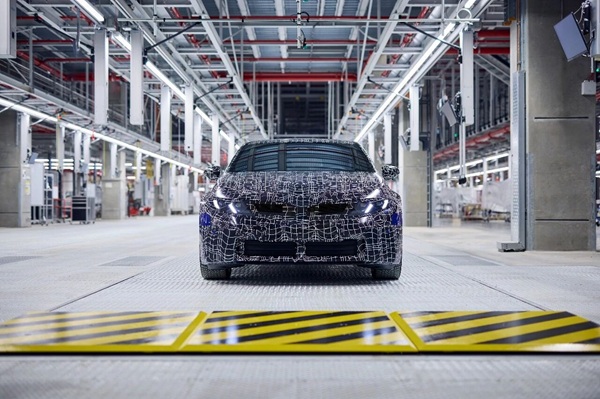
新世代宝马 i3 预生产启动,慕尼黑工厂掌舵,纯电与燃油 3 系分道扬镳
Zhong Guo Qi Che Bao Wang· 2026-02-06 08:03
市场布局与车型矩阵上,NA0 i3将与NA5 iX3保持一致,率先在欧洲市场上市,后续逐步拓展至全 球其他地区。车型版本方面,预生产车型疑似为i3 50 xDrive,该版本也将作为首发车型推出,后续还 将补充低配的 i3 40 版本,以及高配性能版i3 M60。更令人关注的是,宝马已明确表示,纯电M3代号为 ZA0,将搭载四电机动力系统,成为新世代架构下的性能旗舰。 对于燃油车爱好者而言,下一代燃油版3系(G50代)的消息同样关键。宝马透露,G50 3系的设计 语言将与NA0 i3高度趋同,但由于二者底盘架构不同,在细节设计和空间表现上仍会存在明显差异。 G50燃油3系计划于2026年正式发布,与新世代纯电i3形成"同宗不同源"的产品布局。 从官方公布的预生产车型图片中,可捕捉到新世代i3的核心设计线索:前大灯组采用与NA5 iX3同 源的设计语言,彰显新世代架构的家族辨识度;前唇则打造了专属设计,形成差异化特征;同时亮相的 还有一款全新轮毂,样式神似宝马M8的经典设计,运动属性拉满。车漆方面,预生产车型采用类似波 尔蒂芒蓝的配色,但结合宝马产品迭代规律,全新车型大概率会推出专属的全新车漆,为消费者提供新 ...
先导智能结束招股 孖展认购额达43.5亿港元 超购9.1倍
Zhi Tong Cai Jing· 2026-02-06 05:58
Group 1 - The core viewpoint of the news is that Xian Dao Intelligent, a leading supplier of lithium battery intelligent equipment, is conducting an IPO to raise up to HKD 4.29 billion, with significant oversubscription indicating strong market interest [1][2] - Xian Dao Intelligent plans to issue 93.616 million H-shares, with 10% available for public offering at a maximum price of HKD 45.8 per share, and the expected listing date is February 11 [1] - The company has attracted 10 cornerstone investors, including Oaktree and Pinpoint, with a total subscription amount of USD 275 million [1] Group 2 - According to Frost & Sullivan, the global new energy intelligent equipment market is expected to account for approximately 15% of the global intelligent equipment market by 2024, with Xian Dao Intelligent being the second-largest supplier in this sector, holding a market share of 2.9% [2] - Xian Dao Intelligent is recognized as the largest supplier of lithium battery intelligent equipment globally, with a market share of 15.5%, and also the largest in China with a market share of 19.0% [2] - The company's customer base includes leading firms in the lithium battery sector such as CATL, Tesla, Volkswagen, BMW, and BYD, indicating a strong position in the market [2]

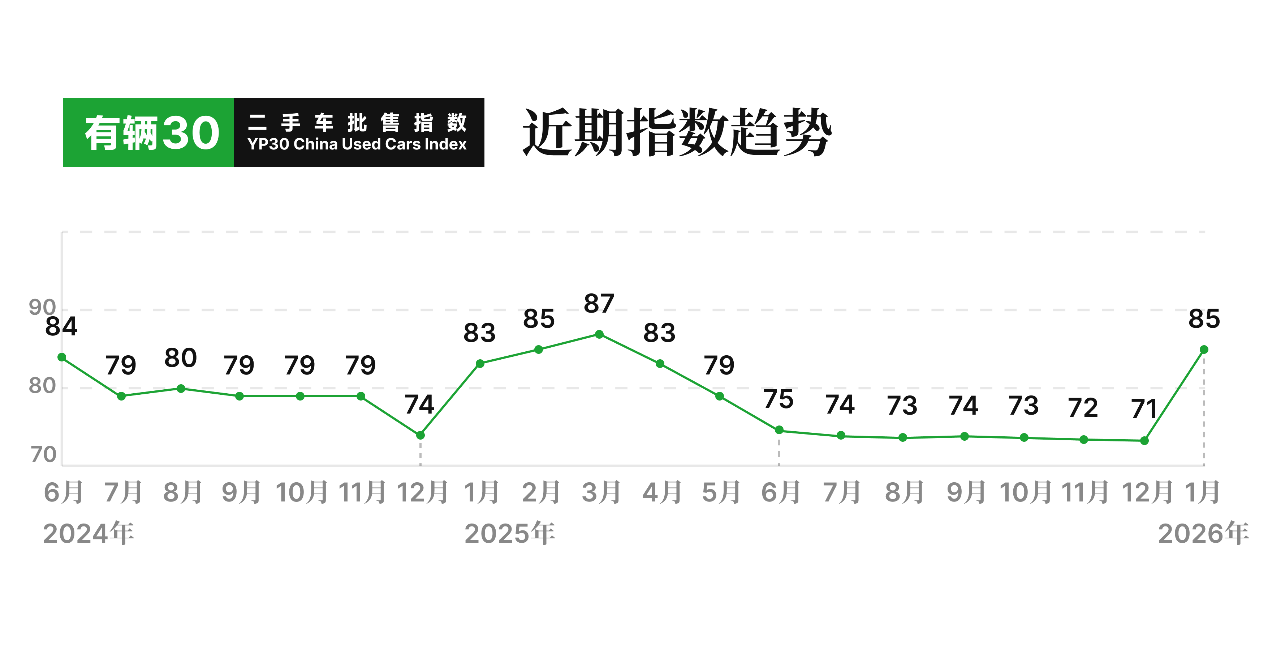
有辆30指数2026年首月大涨近20%,折射春节前二手车需求强劲
Zhong Guo Qi Che Bao Wang· 2026-02-06 05:51
Core Insights - The "Youliang 30 Used Car Wholesale Index" recorded a significant increase of 19.7% month-on-month in January 2026, reaching 85 points, driven by strong demand in the automotive consumption market before the Spring Festival, marking the largest monthly increase since its inception [1] - The index now includes a complete list of 30 benchmark models, enhancing its transparency and market reference value, providing a clearer and more credible quantitative framework for observing the dynamics of the Chinese used car market [1][2] Index Composition - The 30 benchmark models represent high liquidity and typical market indicators across various segments, covering brands from China, the US, Germany, and Japan, aimed at reflecting the overall trends in the Chinese used car market [2] - Notable models include Chinese brands like Great Wall Haval H6 and BYD Song, German brands like Volkswagen Golf and BMW 3 Series, Japanese brands like Honda CR-V and Toyota RAV4, and American brands like Tesla Model Y and Buick GL8 [2] Market Trends - The index data for January 2026 reveals a profound structural adjustment beneath the overall market prosperity, with mid-to-large vehicles experiencing a price increase of 27.1% year-on-year, significantly higher than the average market increase of 11.1% for compact cars [4] - Chinese brands led the market with a year-on-year price increase of 36.9%, reflecting advancements in technology, product strength, and market recognition, while German brands maintained a robust 34.6% increase [7] - In contrast, Korean and French brands faced declines of 9.0% and 13.8% respectively, indicating challenges in market share and brand influence [7] Vehicle Type Dynamics - The market has seen a notable shift in demand, with MPV prices soaring by 35.7%, becoming the fastest-growing category, while traditional SUV prices saw a modest increase of 3.2% and sedans increased by 18.6% [10] Circulation and Transactions - The liquidity of used car sources in China continues to rise, with total used car transactions in 2026 surpassing 20 million units, reaching 20.108 million, a year-on-year increase of 2.52%, and an increasing proportion of interprovincial transactions [13] - The "Youliang 30 Index" provides innovative analysis on interprovincial circulation, with Sichuan province entering the top 5 in interprovincial procurement in January 2026 [13] Index Value and Macro Significance - The "Youliang 30 Index" serves as a quantifiable and traceable "data dashboard" for industry governance and market fluctuation assessment, helping relevant departments gauge the true structure of the current consumption market and consumer confidence levels [22] - The index's monthly data series creates a dynamic price map, allowing for scientific measurement and analysis of the impact of policies like "trade-in" on the circulation segment [22] - The transparency and standardization of the "Youliang 30 Index" respond to national requirements for market data element commercialization and the establishment of a high-standard market system, facilitating the transition of the used car industry from a traditional "experience-driven" model to a "data-driven" modernized development phase [22]
今日新闻丨蔚来实现盈利!比亚迪发布新品牌“领汇汽车”!问界M6、比亚迪宋Ultra EV、阿维塔06GT公布!
电动车公社· 2026-02-05 15:43
Core Viewpoint - NIO has announced its first quarterly profit, projecting adjusted operating profit for Q4 2025 to be approximately 700 million RMB (about 100 million USD), marking a significant turnaround from a loss of 5.5436 billion RMB in Q4 2024 [2][3]. Financial Performance - NIO's adjusted operating profit (non-GAAP) for Q4 2025 is expected to reach around 700 million RMB (approximately 100 million USD), while GAAP operating profit is projected to be between 200 million RMB (about 29 million USD) and 700 million RMB [2]. - This marks the first time NIO has achieved quarterly adjusted operating profit since its inception [2]. - The anticipated profit is attributed to continuous sales growth, an optimized product mix improving vehicle margins, and ongoing cost reduction efforts [2]. Industry Developments - BYD has launched its fifth sub-brand, "Linghui Auto," targeting the B-end operation market with vehicles based on existing platforms [4][6]. - SAIC-GM-Wuling reported global sales of 105,792 units in January, indicating a strong performance in both domestic and international markets [10]. - The new BMW i5 has been launched with prices ranging from 368,000 to 458,000 RMB, featuring upgrades in comfort and technology [11][14]. - New models such as the AITO M6, BYD Song Ultra EV, and Avita 06 GT are set to be released, highlighting the competitive landscape in the automotive market for 2026 [15][19].



车长五米四,新能源车还能再大点吗?
远川研究所· 2026-02-05 13:13
Core Viewpoint - The article discusses the trend of larger SUVs in the Chinese automotive market, highlighting the shift towards three-row SUVs that cater to family needs and the growing consumer preference for spacious vehicles [5][10][30]. Group 1: Market Trends - The introduction of the Tesla Model YL and the success of large three-row SUVs have significantly impacted Tesla's delivery volumes, indicating a strong consumer preference for larger vehicles [5][7]. - The trend of larger vehicles is evident, with new models like the Denza N9 and N8L showcasing lengths exceeding 5 meters, which aligns with the growing demand for spacious SUVs [7][10]. - The market share of mid-to-large SUVs has seen a notable increase, with mid-large SUVs maintaining a market share of 3%-4% since September 2022, while large SUVs remain below 2% [12][13]. Group 2: Consumer Preferences - The demand for larger SUVs is driven by family-oriented needs, where consumers prioritize space and comfort for both daily use and family outings [26][30]. - The average vehicle ownership in China is projected to reach 52.9 vehicles per 100 households by 2025, indicating a strong market for family-sized vehicles [28]. - The article emphasizes that the preference for larger vehicles is not unique to China, as similar trends are observed globally, particularly in the U.S. and Europe [33]. Group 3: Technological Factors - The increase in vehicle size is attributed to the design of electric vehicles, which require more space for battery placement, leading to wider and longer vehicle dimensions [20][21]. - Advances in battery technology have allowed for larger battery capacities in SUVs, with many new models featuring batteries exceeding 80 kWh, enhancing their range and appeal [23][24]. - The integration of battery technology into vehicle design has improved the overall space within the cabin, allowing for more comfortable seating arrangements and features [30].


日本1月进口EV销量增68%,比亚迪增至3.4倍
日经中文网· 2026-02-05 07:55
Group 1 - The increase in EV subsidies has significantly boosted sales, with Tesla's Model Y benefiting from this trend [2][4] - In January, Japan's imported car sales (excluding domestic manufacturers) decreased by 12% year-on-year, totaling 13,019 units, while pure electric vehicle (EV) sales rose by 68% to 2,041 units, marking a recovery after a month [2] - Tesla's sales in Japan, categorized under "others," reached 1,086 units, increasing 3.4 times, driven by the new subsidy policy effective from January 1 [4] Group 2 - The Japanese government increased the EV subsidy for Tesla's Model 3 and Model Y (with some exceptions) to 1.27 million yen (approximately 56,190 yuan), an increase of 400,000 yen (approximately 17,698 yuan) [4] - BYD's sales in Japan also surged to 180 units, a 3.4-fold increase, with strong sales of the SUV "Sea Lion 7" and growing orders for the plug-in hybrid "Sea Lion 6" [4] - Overall, imported car sales in Japan experienced a negative growth for the first time in 12 months, with significant declines in major German brands such as Mercedes-Benz, Volkswagen, and BMW [4]
后续车市销量展望
数说新能源· 2026-02-05 04:47
Core Viewpoint - The article discusses the sales performance and market dynamics of the new energy vehicle (NEV) sector in January 2026, highlighting a slowdown in sales due to various factors including consumer behavior and regulatory impacts [5][10]. Group 1: January Sales Analysis - January 2026 passenger car sales are expected to be around 1.7 to 1.75 million units, falling short of market expectations [5]. - The NEV penetration rate in January is projected to be approximately 10 percentage points higher than the same period last year, but shows a decline compared to December [5]. - Consumer sentiment is characterized by a "buy new, not old" mentality, leading to delayed purchasing decisions [5]. Group 2: Market Structure Characteristics - In January, high-end luxury fuel vehicles and economy fuel vehicles under 100,000 yuan performed relatively well, while NEVs impacted fuel vehicles in the same price range [5]. - February sales are expected to decline by about 30% compared to January due to the Spring Festival holiday [5]. - March is anticipated to recover to January's sales levels, with an estimated 30% increase from February [5]. Group 3: Pricing and Regulatory Trends - The pricing strategy for new vehicles in 2026 is focused on "adding features, stabilizing prices, or slight increases," rather than price reductions [6]. - Regulatory measures are tightening, impacting marketing, safety, and pricing practices within the industry [6]. - The regulatory environment is expected to shift the industry focus from rapid iteration and price wars to product quality, brand reputation, and long-term value [6]. Group 4: New Product Launches and Future Outlook - Major automakers like BYD and Geely are set to launch a series of new models in the first half of 2026, with a focus on high voltage, long range, and enhanced smart features [9][10]. - The overall sales growth for 2026 is projected to slow down to single digits, influenced by high base figures and stable subsidy policies [10]. - The industry is expected to see a more stable monthly sales model, reducing the volatility seen in previous years [8][10].