迪士尼

Search documents
旅游,正在成为2025年最难做的生意?
Feng Huang Wang Cai Jing· 2025-10-03 13:46
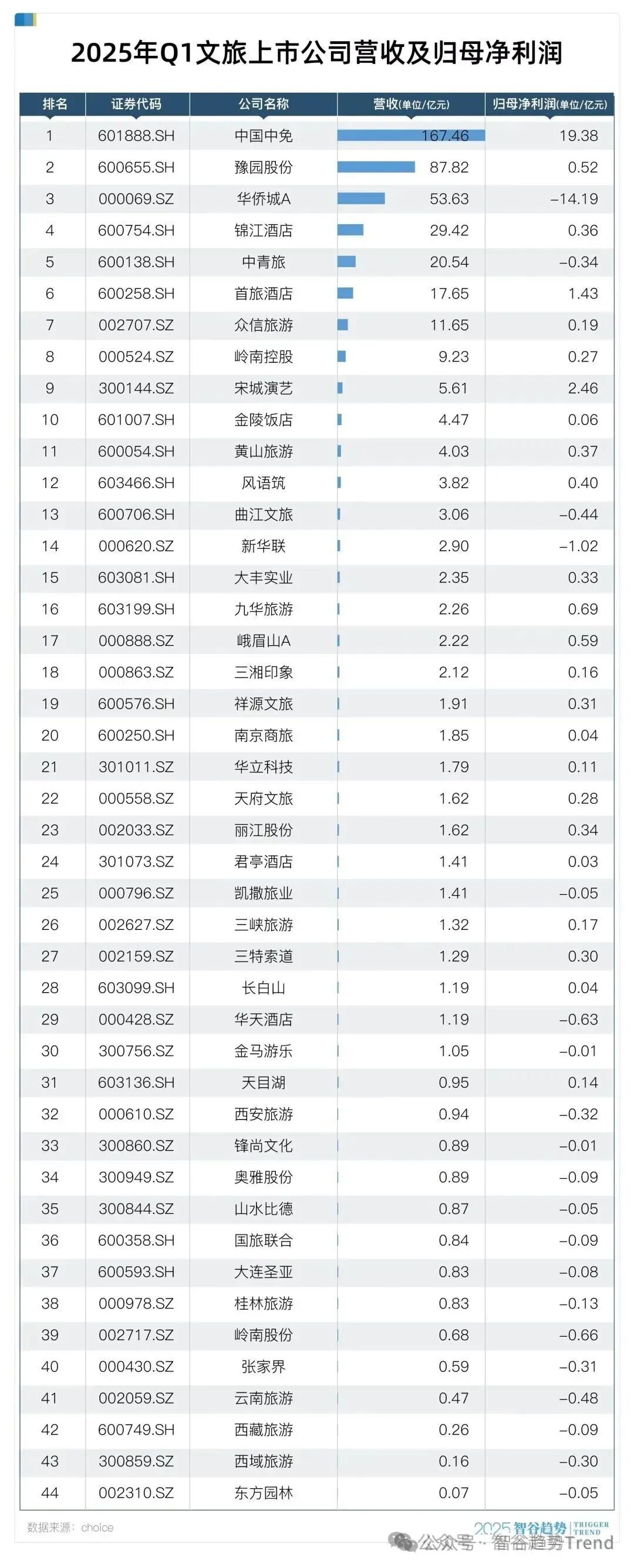
Core Insights - The tourism industry is facing significant challenges, with the recent bankruptcy of Qinghai Tourism Investment Group and its subsidiaries highlighting the difficulties within the sector [1] - Despite an increase in domestic travel and spending, many tourism companies are struggling financially, indicating a disconnect between rising visitor numbers and profitability [4][11] Group 1: Company Performance - Qinghai Tourism Investment Group, once aiming for substantial growth, has declared bankruptcy, losing 480 million in registered capital and facing over 323 million in enforced execution [1][6] - In Q1 2025, 25 out of 44 listed tourism companies reported negative revenue growth, accounting for 56.8% of the total [1] - Major airlines like China Southern Airlines, China Eastern Airlines, and Air China reported significant losses in Q1 2025, with losses of 747 million, 995 million, and 2.044 billion respectively [3] Group 2: Market Dynamics - The tourism market is experiencing a paradox where visitor numbers and spending are increasing, yet many companies are not profiting, raising questions about where the money is going [4][11] - Online travel platforms such as Ctrip and Tongcheng are thriving, with Ctrip reporting a net profit of approximately 4.3 billion and a net profit margin of 31.16% in Q1 2025 [11] - The number of A-level scenic spots has increased by 3,000 from 2019 to 2023, yet average income has decreased by nearly 40%, indicating oversupply in the market [11] Group 3: Industry Trends - The tourism industry is transitioning into a 2.0 era, where experiential offerings are becoming more important than traditional attractions [20][21] - Successful attractions like Jiuhua Mountain and Disney are focusing on enhancing visitor experience, which is crucial for profitability in the current market [14][17] - The shift towards experience-driven tourism is leading to the decline of many traditional tourism platforms that fail to adapt, as seen with Qinghai Tourism Investment Group [22][23]


旅游,正在成为2025年最难做的生意?
凤凰网财经· 2025-10-03 13:44
Core Viewpoint - The tourism industry, once seen as a promising sector, is now facing significant challenges, with many companies struggling financially despite an increase in tourist numbers and spending [2][5][6]. Group 1: Company Performance - Qinghai Tourism Investment Group and its subsidiaries have filed for bankruptcy, highlighting the struggles within the tourism sector [2]. - Among 44 listed tourism companies, 25 reported negative revenue growth in Q1 2025, accounting for 56.8% of the total [2]. - Major airlines like China Southern Airlines, China Eastern Airlines, and Air China reported significant losses in Q1 2025, with losses of 0.747 billion, 0.995 billion, and 2.044 billion respectively [4]. Group 2: Market Dynamics - Despite a 20.6% increase in domestic travel and a 15.2% rise in spending in the first half of 2025, the tourism industry is struggling to convert this growth into profitability [5][6]. - Online travel platforms like Ctrip and Tongcheng have seen substantial profits, with Ctrip reporting a net profit of approximately 4.3 billion in Q1 2025, reflecting a net profit margin of 31.16% [17]. - The increase in the number of A-level scenic spots and travel agencies has led to a decline in average income, with the average profit for travel agencies dropping to 66,500 [20]. Group 3: Industry Trends - The tourism industry is transitioning from a focus on scarce resources to an emphasis on customer experience, marking the shift to a 2.0 era [30][33]. - Successful attractions like Jiuhua Mountain and Disney have thrived by enhancing visitor immersion and emotional value, contrasting with struggling traditional scenic spots [23][28]. - The current competitive landscape indicates that only those who can effectively engage tourists will succeed, while many tourism platforms may face bankruptcy due to poor business models and operational inefficiencies [36][39].

超越迪士尼和万代,泡泡玛特玩具收入跃居全球第二
Guan Cha Zhe Wang· 2025-09-28 10:11
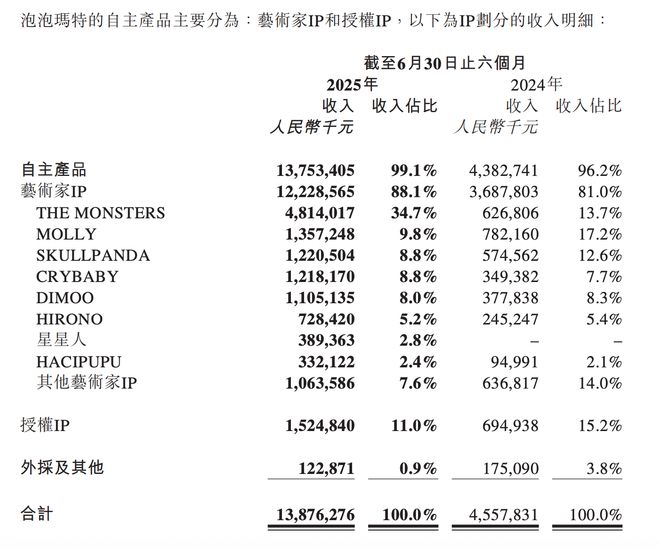
Core Viewpoint - In the first half of 2025, China's Pop Mart has surpassed Disney and Bandai Namco in toy revenue, becoming the second-largest toy company globally, only behind LEGO, with a revenue of 138.76 billion RMB, marking a significant growth in the industry landscape [1][5]. Revenue Performance - Pop Mart achieved a revenue of 138.8 billion RMB in the first half of 2025, representing a year-on-year growth of 204.4%, while adjusted net profit reached 47.1 billion RMB, up 362.8% [1]. - The core IP "THE MONSTERS," represented by Labubu, contributed 48.1 billion RMB in revenue, accounting for 34.7% of total revenue [3]. - The plush toy category saw revenue of 61.4 billion RMB, a staggering increase of 1276.2%, surpassing the figure for figurines for the first time [3]. Comparison with Competitors - Disney's consumer products division reported a revenue of 138.6 billion RMB in the first half of 2025, with a growth of approximately 3.5%, while Bandai Namco's toy revenue is estimated at 134.4 billion RMB [5]. - Pop Mart, Disney, and Bandai Namco are closely matched in toy revenue, with only a few hundred million RMB separating them [5]. IP Strategy and Market Position - Pop Mart's success is attributed to its unique approach, leveraging its own IPs without relying on traditional media narratives, unlike Disney and Bandai Namco, which depend on strong content ecosystems [7][9]. - Pop Mart's IPs, including THE MONSTERS, MOLLY, SKULLPANDA, CRYBABY, and DIMOO, all generated over 10 billion RMB in revenue, indicating a robust portfolio [9]. - The recent opening of Pop Mart's city park in Beijing signifies a strategic move to enhance IP value through physical experiences [10]. Future Outlook - Despite Pop Mart's rapid growth, traditional giants like Disney and Bandai Namco still hold advantages in IP diversity and global reach, leaving the future competitive landscape uncertain [12].

收购狂魔父子携手出击 马斯克盟友要买下半个好莱坞
Xin Lang Ke Ji· 2025-09-19 09:50
Core Viewpoint - The Ellison family, led by Larry Ellison and his son David, is aggressively pursuing acquisitions in Hollywood, aiming to create a massive media empire that includes major studios and networks like Paramount, Warner Bros, CNN, CBS, HBO, and TNT [1][20][27]. Group 1: Recent Acquisitions - The Ellison family has recently completed the acquisition of Paramount, marking a significant expansion into Hollywood [16][25]. - David Ellison's company, Skydance, has merged with Paramount, gaining control over one of the "Big Five" studios in Hollywood [10][16]. Group 2: Future Acquisition Plans - David Ellison is reportedly preparing a bid to acquire Warner Bros Discovery, which includes assets like HBO and CNN, positioning the family to control a substantial portion of Hollywood [20][24]. - Warner Bros Discovery is facing challenges, including a lack of profitability in its streaming business and significant debt, making it a prime target for acquisition [21][25]. Group 3: Financial Context - Oracle's stock surge, driven by increased demand for cloud infrastructure due to AI, has significantly boosted Larry Ellison's wealth, enabling him to support these acquisitions financially [3][5]. - Larry Ellison's personal wealth has fluctuated, recently surpassing $400 billion, which provides a strong financial backing for the family's acquisition ambitions [3][5]. Group 4: Industry Dynamics - The media landscape is undergoing significant consolidation, with several traditional studios being acquired by larger entities, indicating a trend towards fewer, more powerful media conglomerates [25][27]. - If the Ellison family successfully acquires Warner Bros, they will control two of the "Big Five" studios, creating a formidable competitor to Netflix and Disney in the streaming market [25][27]. Group 5: Influence and Power - The Ellison family is positioned to control major media outlets, potentially shaping public opinion and media narratives in the U.S., similar to the Murdoch family [27][28]. - The acquisition strategy reflects a broader trend of wealthy individuals and families seeking to consolidate media power and influence [27].

94 岁富豪终结继承战!邓文迪女儿成赢家,33亿“踢走”三子女?
水皮More· 2025-09-10 09:23
Core Viewpoint - The Murdoch family has undergone a significant restructuring of its trust, with the eldest son Lachlan and the two daughters of Wendi Deng becoming the primary beneficiaries, while the eldest daughter Prudence, second daughter Elizabeth, and youngest son James have been excluded from the new trust but compensated with $1.1 billion each, totaling $3.3 billion for the three [1][9][10]. Group 1: Background and Trust Restructuring - Rupert Murdoch, at 94 years old, has established a new family trust, favoring his eldest son Lachlan and Wendi Deng's daughters, while excluding his other three children [1][9]. - The previous trust, created in 1999, granted equal control to four children, but Murdoch's recent actions indicate a desire to consolidate power with Lachlan [4][5]. - The restructuring is seen as a response to differing political views among the children, with Lachlan aligned with conservative values, while the others are more moderate [5][6]. Group 2: Legal Battles and Financial Implications - Murdoch's attempts to modify the irrevocable trust were met with legal challenges, ultimately being rejected by the court, which deemed the actions as lacking integrity [7][8]. - The financial compensation for the excluded children will be funded through the sale of shares held in Fox Corporation and News Corp, with Lachlan gaining significant control over the media empire [9][10]. - The new trust will hold 36% of the voting shares in Fox and 33% in News Corp, solidifying Lachlan's position as the dominant figure in the family business [9][10]. Group 3: Family Dynamics and Historical Context - The Murdoch family has a complex history of marriages and children, with Rupert having been married five times and fathering six children, which has influenced the current trust dynamics [2][4]. - Lachlan's journey to becoming the favored successor involved navigating family politics and demonstrating loyalty to his father, contrasting with the experiences of his siblings [17][18]. - The family has experienced internal conflicts over the years, with various children vying for control and recognition within the media empire [11][12][14].

2025年AI玩具行业概览:多元场景渗透,儿童启蒙、成人悦己、老年陪护下的AI玩具市场新生态
Tou Bao Yan Jiu Yuan· 2025-09-03 12:31
Investment Rating - The report indicates a high investment interest in the AI toy industry, with a significant increase in financing events since 2024, marking it as a new capital pursuit area for investors [3][5]. Core Insights - The AI toy market is expected to grow rapidly, driven by technological advancements, policy support, and increased consumer demand. The market is projected to reach a scale of 79.78 billion yuan by 2030, with a compound annual growth rate (CAGR) of 48.3% from 2024 to 2030 [5][20]. - The market penetration rate for AI toys in China is anticipated to rise steadily from 5% in 2023 to over 30% by 2030, influenced by technological development and changing consumer needs [13][19]. Summary by Sections Market Overview - The AI toy market is diversifying its application scenarios, expanding from children's entertainment to adult companionship and elderly care, addressing various age groups and specific needs [6]. - The market is segmented into basic, mid-range, and high-end products, with high-end toys holding a larger market share in terms of sales value, while basic toys dominate in sales volume [16]. Market Size and Growth - The Chinese AI toy market is experiencing rapid growth, with a projected market size of 75.1 billion yuan in 2024, increasing to 797.8 billion yuan by 2030 [20]. - The growth is attributed to technological advancements, policy support, and significant capital investment, with 96 investment institutions entering the sector [5][20]. Competitive Landscape - The global AI toy market features four main types of participants: technology giants, traditional toy companies, IP resource crossovers, and emerging competitors. In China, technology giants and emerging players dominate the market [22][26]. - Major players include OpenAI, Mattel, Disney, and emerging companies like FoloToy, each employing different strategies to capture market share [28][29]. Future Trends - The AI toy industry is expected to integrate more with new technologies such as AIGC and the metaverse, leading to the emergence of new business models like Toy as a Service (TaaS) [5][20]. - The report highlights the potential for deep integration within the industry, with traditional toy manufacturers acquiring technology capabilities to enhance their product offerings [5][20].
“任性”特朗普:关税谈判、和美联储开撕、自己狂炒币!
Sou Hu Cai Jing· 2025-08-27 06:01
美联储"权力的游戏" 印度头铁,莫迪无视特朗普 美国总统特朗普25日以涉嫌住房抵押贷款欺诈为由解雇美联储理事莉萨·库克,这一被媒体称为"史无前 例"的做法引发争议。 当地时间8月26日,库克的律师阿贝·洛厄尔宣布,将对特朗普解雇库克的行为提起诉讼。 特朗普称已准备好进行法律斗争,心中已有接替库克的合适人选。他还直言,美联储需要100%光明磊 落的人。 关税纷争不断。 有外媒报道,特朗普近几周曾至少四次尝试与印度总理莫迪通电话,但莫迪拒绝与他交谈。 据悉,莫迪对美国向印度加征关税,以及特朗普有关印度是"死亡经济体"等言论感到不满。莫迪拒绝与 特朗普通话,既源于"深切的愤怒",也出于"谨慎的考量"。 此前,莫迪曾表示,印度"将成为世界第三大经济体",呼吁民众都来购买并推广本土产品。印媒报道 说,这是莫迪对特朗普此前宣布将对印度商品加征关税并称印度是"死亡经济体"的间接回应。 关于特朗普的各种新闻满天飞,其和美联储之间的"权力的游戏"也长期霸占各大新闻媒体的头版头条。 加密货币的"甜蜜期" 近日,特朗普媒体与科技集团、Yorkville Acquisition以及Crypto.com宣布达成业务合并协议,将成立一 ...
消费焕新延续,液冷赋能数据中心,折叠屏或打开成长空间
Tebon Securities· 2025-08-25 09:21
Consumer Trends - The new consumption sector continues to gain momentum, with A-shares experiencing a valuation increase driven by emotional consumption, channel innovation, and brand expansion overseas[4] - In the first half of 2025, the domestic smartphone shipment volume was 20.63 million units, a year-on-year decline of 6.4% but a quarter-on-quarter increase of 7.6%[28] - The global IP toy market is expected to exceed 400 billion yuan by 2025, with China's market growing at a compound annual growth rate (CAGR) of 11.90% from 2019 to 2023, significantly higher than the global rate of 9.30%[8] High-end Manufacturing - Liquid cooling technology is identified as a key solution for data centers to address energy consumption issues, potentially reducing Power Usage Effectiveness (PUE) to below 1.1[4] - The energy consumption of AI data centers is projected to reach 77.7 TWh in 2025, doubling from 2023, with a CAGR of 44.8% from 2022 to 2027[16] - Liquid cooling solutions can achieve energy savings of over 20%-30%, providing both economic and environmental benefits[18] Hard Technology - The penetration rate of foldable smartphones is expected to rise from 1.6% in 2025 to over 3% by 2027, driven by Apple's entry into the market and ongoing price reductions[31] - The total cost of foldable smartphones is significantly higher than non-foldable models, with display/touch modules and lenses seeing increases of 177% and 28% respectively[38] - In 2025, foldable smartphone shipments are projected to reach 19.8 million units, maintaining the same penetration rate as 2024[31]
东北证券:情绪消费驱动潮玩 Z世代主导新格局
Zhi Tong Cai Jing· 2025-08-25 07:09
Core Insights - The rise of emotional consumption and the "millet economy" are key drivers, with the Gen Z demographic leading to over 500 million participants in the pan-second dimension market by 2024, and a market size of approximately 600 billion yuan, including a millet economy worth over 150 billion yuan [1] - The trend in the collectible toy market is expected to reach 110 billion yuan by 2027, with a competitive landscape characterized by "one strong and many strong" players, where Pop Mart leads the industry, while foreign brands like Lego and Bandai hold significant market shares [1] Market Segmentation - In the toy segment, blind boxes, building toys, and card games are leading the growth of the collectible toy industry, with blind boxes driven by unknown stimuli and IP value, targeting a consumer base that is 75% female and primarily Gen Z, with a projected market size of 58 billion yuan by 2025 [1][2] - Building toys are designed for all age groups, activating both parent-child and adult scenarios, with a market size expected to reach 64 billion yuan by 2028, led by domestic brand Blokus [1][2] - Card games focus on a younger demographic (ages 8-15) and are dependent on parental spending, with a projected market size of 44.6 billion yuan by 2029, where Card Game occupies a leading position [1][2] Competitive Landscape - Leading companies such as Pop Mart, Blokus, and Card Game are driving industry development through differentiated competition, with Pop Mart focusing on IP incubation and blind box mechanisms, Blokus targeting children's educational scenarios, and Card Game emphasizing children's social interaction [3] - Pop Mart maintains strong channel control primarily through direct sales, while Blokus is shifting from online direct sales to a dealer-centric model, and Card Game is also focusing on a dealer model but is experiencing channel contraction [3] - Financially, Pop Mart is enhancing its brand premium with a projected gross margin of 66.8% and an adjusted net profit margin of 26.1% in 2024, while Blokus has improved its inventory turnover days from 137 to 46, achieving a turnaround in adjusted net profit margin from -107.9% to 26.1% [3] International Insights - Successful overseas companies demonstrate that a multi-faceted business ecosystem centered around IP is crucial, with Disney leveraging its IP across films, parks, and merchandise, Bandai focusing on vertical IP and high-precision models, and Sanrio expanding its "cute economy" through light asset character licensing [4]

门店开进曼哈顿最大购物中心,泡泡玛特美洲营收激增11倍
Di Yi Cai Jing Zi Xun· 2025-08-21 14:38
Core Viewpoint - The article highlights the impressive growth and performance of Pop Mart, a leading player in the "new consumption" sector in China, particularly in the overseas market, showcasing its strong IP innovation and market expansion strategies [9][10][12]. Financial Performance - In the first half of 2025, Pop Mart reported revenue of 13.88 billion RMB, a year-on-year increase of 204%, and an adjusted net profit of 4.71 billion RMB, up 362.8% [10]. - The revenue from the Greater China region was 8.28 billion RMB, growing by 135.2%, while the Americas saw a staggering revenue increase of 1142%, reaching 2.26 billion RMB [10][12]. - The company's stock price has surged by 250% year-to-date, reflecting strong investor confidence [9]. Market Expansion - Pop Mart's North American market focus has led to the opening of 19 new stores, bringing the total to 41, with offline revenue increasing by 744.3% to 840 million RMB [14]. - The company has implemented a free shipping policy for orders over 29.9 USD, enhancing its online sales, which now account for 40% of total revenue [14]. IP Innovation - Pop Mart's success is attributed to its strong IP innovation capabilities, with key IPs like LABUBU generating 4.81 billion RMB in revenue, accounting for 34.7% of total sales [12]. - The company faces the challenge of sustaining revenue growth from its existing top IPs while developing new ones to maintain its market position [16]. Valuation and Market Outlook - Despite impressive growth, Pop Mart's valuation exceeds a 100x PE ratio, raising concerns about sustainability if future EPS growth does not meet expectations [16]. - Analysts suggest that the longevity of individual IPs will be crucial for maintaining high valuations, with the potential for significant market growth compared to established brands like Sanrio and LEGO [17][18].