微软

Search documents
微软AI CEO苏莱曼:未来5-10年,一家公司需砸千亿美元备战AI竞赛
Sou Hu Cai Jing· 2025-12-26 09:39
Core Insights - Microsoft AI CEO Mustafa Suleyman warns that companies aiming to lead in the AI race will face extremely high investment costs, potentially reaching hundreds of billions of dollars over the next 5 to 10 years [1][3] - The required investments will cover infrastructure, hardware, and specialized talent costs, giving large, established companies a structural advantage [1] - The pressure on costs arises not only from computing power and hardware but also from the fierce competition for human capital, particularly AI researchers, data scientists, and engineers, whose salaries are rapidly increasing [3] Industry Context - Microsoft is described as a "modern construction company," with hundreds of thousands of employees working to build AI capabilities with gigawatt-level CPU and accelerator computing power [3] - Alongside talent acquisition, Microsoft, like other major tech companies, is accelerating the development of AGI (Artificial General Intelligence) and superintelligence, which are recognized as having significant strategic importance despite their staggering costs [3]



别被华尔街“轮动牛市”噪音带偏 Mag7“领涨神话”仍是美股主线
智通财经网· 2025-12-26 09:01
Core Viewpoint - Wall Street analysts predict that 2026 will be characterized as a "rotation bull market," with institutional investors believing that the current rotation will not last long, and that the "Magnificent Seven" tech giants will significantly outperform other sectors, leading the S&P 500 and Nasdaq 100 to new highs [1][2]. Group 1: Market Trends and Predictions - The S&P 500 index is expected to close 2025 at a historical high, paving the way for further gains in 2026 [1]. - The market leadership has shifted from AI-related tech and growth stocks to undervalued sectors such as value, healthcare, and materials [1]. - The S&P 500 index has seen a cumulative increase of approximately $30 trillion over the past three years, largely driven by major tech giants and companies investing in AI infrastructure [3]. Group 2: The Magnificent Seven - The "Magnificent Seven" (Mag 7) includes Apple, Microsoft, Google, Tesla, Nvidia, Amazon, and Meta Platforms, which collectively account for about 35% of the S&P 500 and are viewed as key drivers of market performance [4]. - Analysts expect the Mag 7 to achieve a profit growth of approximately 22.7% in 2026, compared to 12.5% for the remaining 493 companies in the S&P 500 [15]. Group 3: AI Infrastructure and Investment Themes - AI infrastructure and the Mag 7 theme remain central to market dynamics, with companies driving long-term value expansion [3]. - The ongoing AI investment narrative is expected to continue as a strong theme throughout 2026, despite some market rotation towards other sectors [2][9]. - The market is currently experiencing a capital reallocation, shifting focus from growth to value and from tech to non-tech sectors [6]. Group 4: Economic Indicators and Market Sentiment - The S&P 500's overall profit estimates have been revised upward, with analysts not anticipating significant risks of a downturn due to a dovish Federal Reserve outlook [14]. - The potential for a "melt-up" phase exists, which could lead to a larger market peak, supported by strong earnings from the Mag 7 [15]. - The current market environment is not seen as an extreme bubble compared to the internet bubble of the early 2000s, with tech valuations being more reasonable [17][18].
AI设备及耗材系列深度报告(一):PCB迎AI升级浪潮,设备与耗材迎黄金机遇
Huachuang Securities· 2025-12-26 06:17
Investment Rating - The report maintains a "Strong Buy" rating for Ding Tai Gao Ke and Zhong Tu Gao Xin, and a "Buy" rating for Da Zu Suo Kong and Ying Nuo Ji Guo [4] Core Insights - The report highlights the strong demand for AI infrastructure driving a new expansion cycle in the PCB industry, with significant investments from global tech giants [15] - The PCB equipment sector is experiencing accelerated upgrades, presenting opportunities for domestic manufacturers due to rising precision and complexity requirements [10][11] - The report emphasizes the importance of core consumables like drilling needles, which are expected to see significant growth in both volume and price due to AI-driven demand [9] Industry Overview - The PCB industry is projected to grow from $73.57 billion in 2024 to $96.4 billion by 2029, with a CAGR of 5.6% [15][22] - The global PCB market is expected to see a revenue increase of 7.6% and a production increase of 7.8% in 2025, driven by AI infrastructure investments [15] - The demand for high-layer and HDI boards is expected to grow significantly, with 18-layer and above boards projected to see a 40.2% increase in market value in 2024 [18][22] Key Companies and Their Forecasts - Ding Tai Gao Ke is expected to achieve an EPS of 0.99 yuan in 2025, with a PE ratio of 141.99, maintaining a "Strong Buy" rating [4] - Zhong Tu Gao Xin is forecasted to have an EPS of 0.51 yuan in 2025, with a PE ratio of 57.05, also rated as "Strong Buy" [4] - Da Zu Suo Kong is projected to have an EPS of 1.77 yuan in 2025, with a PE ratio of 68.67, rated as "Buy" [4] - Ying Nuo Ji Guo is expected to achieve an EPS of 0.30 yuan in 2025, with a PE ratio of 152.09, rated as "Buy" [4] Market Trends - The report identifies a shift towards high-end PCB products driven by AI applications, with increasing requirements for precision and complexity in manufacturing processes [10][11] - The demand for PCB drilling equipment is expected to grow from $1.47 billion in 2024 to $2.40 billion by 2029, with a CAGR of 10.3% [35] - The exposure equipment market is projected to grow from $1.20 billion in 2024 to $1.94 billion by 2029, with a CAGR of 10% [43] Competitive Landscape - Domestic manufacturers are gaining market share in high-end PCB equipment, with companies like Da Zu Suo Kong and Xin Qi Wei Zhuang making significant strides against foreign competitors [11][42] - The report notes that the competitive landscape for drilling needles is favorable for domestic firms, with Ding Tai Gao Ke leading the global market share [9][18]


离谱:256G内存比RTX5090还贵,你要为AI买单吗?
机器之心· 2025-12-26 03:06
Core Viewpoint - The article highlights the significant price increases in computer components, particularly memory, driven by the demand from AI applications, leading to a structural shortage in the market [5][6]. Group 1: Memory Price Surge - The price of high-end GPU RTX 5090 has reached an official starting price of $1999, potentially exceeding $3000 in the market, while a single 256GB DDR5 memory stick is now priced between $3500 and $5000 [3]. - The current memory price surge is attributed to AI's demand for computing power, which has led to a structural shortage in the memory market [5]. - OpenAI has secured a deal with Samsung and SK Hynix for up to 900,000 DRAM wafers per month, representing 40% of global DRAM monthly production, which has significantly reduced the capacity available for consumer markets [5]. Group 2: Impact on Technology Companies - Major tech companies like Microsoft and Google are struggling to secure memory supplies, with reports of procurement executives being dismissed due to failures in securing long-term supply agreements [8]. - Microsoft executives faced difficulties in negotiations with SK Hynix regarding supply terms, leading to heightened tensions during discussions [8]. - Google has been unable to secure additional capacity for its TPU needs, resulting in significant supply chain risks and personnel changes within its procurement team [8]. Group 3: Broader Market Implications - The demand for larger memory capacities is increasing as the concept of "AI PCs" emerges, with 32GB or 64GB becoming the new standard for running large models [6]. - The price increases are not limited to memory; hard drive prices have also surged, and the GPU market is experiencing extreme price inflation, with second-hand RTX 4090 cards priced around 20,000 [6]. - The memory price hikes are affecting not only consumers but also tech companies, with reports of layoffs due to supply chain issues [6][9]. Group 4: Innovations in Memory Technology - Groq, an AI chip startup, has developed a chip design that integrates SRAM directly, achieving a memory bandwidth of 80TB/s, which is over 20 times that of traditional HBM solutions [11]. - The acquisition of Groq by NVIDIA may be a strategic move to mitigate the impact of rising DRAM prices and explore new memory technology paths [12]. - There are differing opinions on the feasibility of using SRAM as the main memory, given its high cost and integration challenges with existing chip designs [14].
马斯克宣战,太空可见,把AI超算涂成这样,微软破防了
3 6 Ke· 2025-12-26 02:34
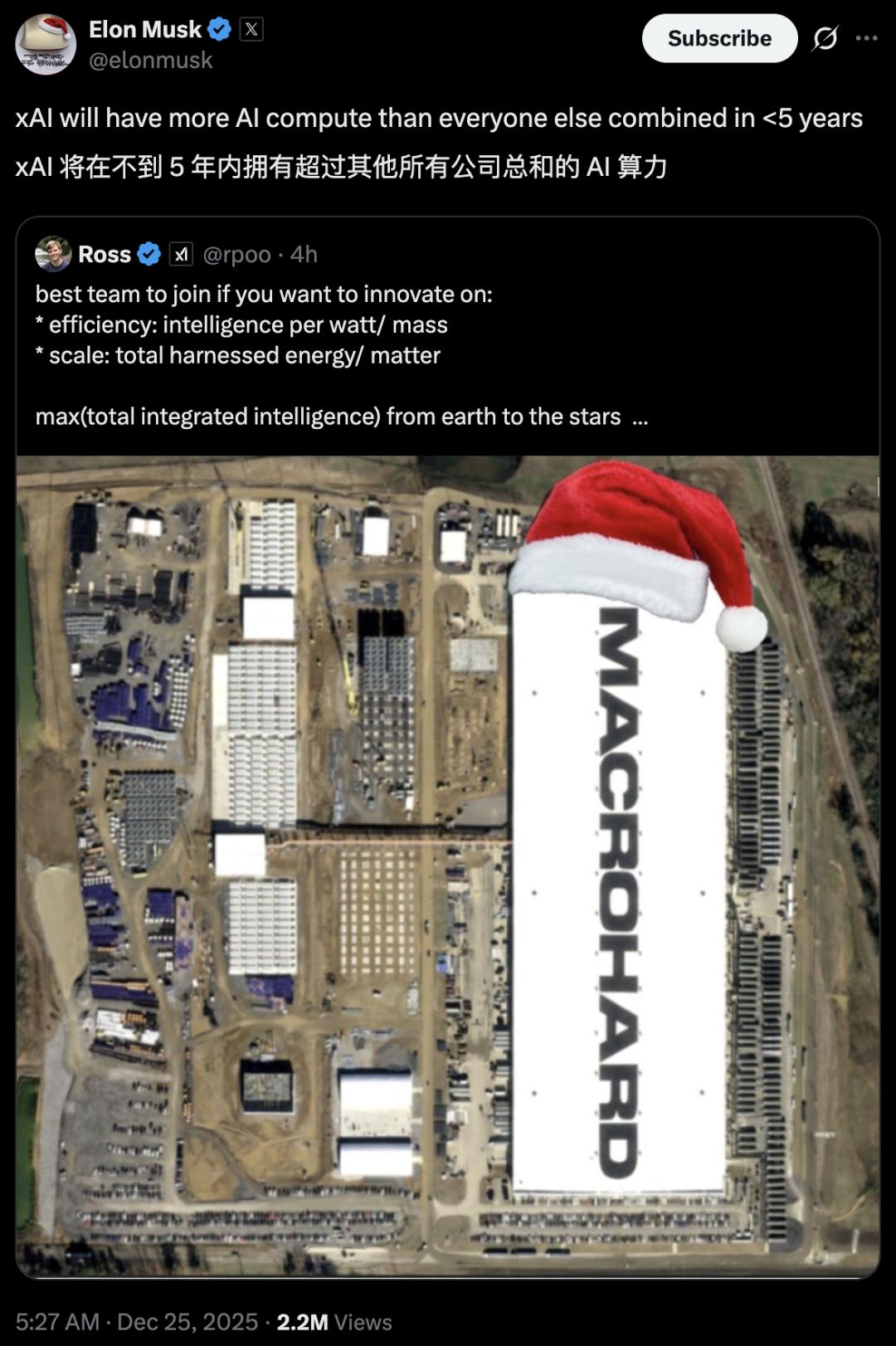
Core Viewpoint - Elon Musk has declared that xAI will possess more AI computing power than all other companies combined within five years, positioning xAI against major competitors like Google, OpenAI, and Microsoft [1][3]. Group 1: xAI's Infrastructure and Strategy - xAI's Colossus supercomputing center in Memphis is one of the largest commercial AI supercomputing centers globally, emphasizing a "hardcore" approach to AI development [5][9]. - The first phase, Colossus 1, was rapidly constructed to ensure xAI could compete, while Colossus 2 represents a more advanced engineering project aimed at long-term scalability [9][10]. - Colossus 2's construction is notably fast, with significant infrastructure completed in just six months, compared to competitors that typically require 15 months [10]. Group 2: Power Supply and Energy Strategy - xAI has strategically acquired a decommissioned power plant in Mississippi to circumvent regulatory hurdles in Tennessee, allowing for a temporary operation of gas turbines to supply power [13][15]. - Solaris Energy Infrastructure will provide over 1.1GW of power to meet the projected 1.7GW demand for Colossus 2, effectively creating an independent energy network for xAI [15][16]. Group 3: Financial Aspects and Funding - xAI is seeking $40 billion in new funding, with a valuation approaching $200 billion, despite its current revenue being minimal compared to its capital expenditures [19][16]. - The company is leveraging investments from Middle Eastern sovereign wealth funds, indicating strong financial backing for its ambitious plans [18][22]. Group 4: Company Culture and Workforce - xAI promotes a high-pressure work environment, with a culture that emphasizes extreme dedication, which has led to both attrition and the retention of passionate talent [23][24]. - The company is focusing on unique paths in AI development, such as emotional intelligence and interaction, rather than traditional programming skills [27][29]. Group 5: Future Outlook and Challenges - Musk has indicated that the next 2-3 years are critical for xAI to secure a leading position in the AI race, with significant investments required for expansion [30][31]. - The financial model of xAI raises concerns about sustainability, as training costs far exceed current revenue streams, potentially leading to market vulnerabilities [36].
用AI代码替换Windows里每一行C/C++,微软回应了
3 6 Ke· 2025-12-26 00:46
Core Viewpoint - Microsoft has denied plans to rewrite Windows 11 using AI and Rust, contrary to statements made by an internal engineer suggesting a complete overhaul of the codebase by 2030 [1][5][10]. Group 1: Microsoft’s AI and Rust Strategy - The initial claim by engineer Galen Hunt suggested that one engineer could rewrite one million lines of code in a month using AI and Rust, aiming to eliminate C/C++ from Microsoft's codebase [5][10]. - This statement sparked significant public concern, with many questioning the feasibility and safety of such an approach, citing the potential risks associated with rewriting a legacy system with millions of lines of code [6][8]. - Hunt later clarified that his comments were misinterpreted and that the project was merely a research initiative, not an official strategy for Windows 11 [3][10]. Group 2: Concerns Over Legacy Code - Critics highlighted the complexity and historical burden of Windows' code, which has evolved over decades, making a complete rewrite a daunting task fraught with potential issues [26][28]. - The existing C/C++ code is known to harbor numerous bugs, and transitioning to Rust could introduce new challenges in identifying and resolving these issues [6][8][28]. - Microsoft has acknowledged that approximately 70% of security vulnerabilities in Windows are attributed to C/C++ code, which has driven interest in Rust as a safer alternative [15][16][22]. Group 3: AI's Role in Development - Microsoft has been vocal about its commitment to integrating AI into its development processes, with CEO Satya Nadella stating that around 30% of the code is already AI-generated, and this figure is expected to rise significantly by 2030 [35][37]. - The potential for AI to act as a bridge in transitioning from C/C++ to Rust could reduce the barriers associated with learning and implementing new programming languages [31][32]. - However, the current capabilities of AI are still not sufficient to fully automate the complex task of rewriting core system components, indicating that the technology is not yet ready for such a significant shift [32][33]. Group 4: Future Implications for Microsoft - The incident has prompted Microsoft to reconsider its pace in becoming an "AI-native enterprise," balancing innovation with caution to avoid potential pitfalls [39][40]. - The company may need to adopt a more measured approach, planning carefully to ensure that technological advancements do not lead to operational failures [41].

AI豪赌进入深水区:扎克伯格一边砸钱,一边开始勒紧Meta的钱袋子
Xin Lang Cai Jing· 2025-12-25 12:40
Core Insights - Mark Zuckerberg is making significant investments in artificial intelligence (AI) for 2025, but may tighten Meta's budget as costs for data centers and top AI researchers rise [1][5] - Meta raised $27 billion through the largest private credit deal in Wall Street history to fund its Hyperion supercomputer, but investor sentiment has soured as Meta's stock price has dropped 15.8% from its record high [1][5] - Analysts express concerns over Meta's reliance on advertising revenue compared to other tech giants like Alphabet and Amazon, which have cloud computing businesses [2][5] Financial Performance - Meta's spending growth in Q3 outpaced revenue growth, raising concerns about future profitability as depreciation costs from data centers begin to impact the income statement [1][5] - The Reality Labs division, which includes the metaverse, reported a loss of $4.4 billion last quarter, prompting significant budget cuts and a shift in focus towards more profitable projects [2][6] Strategic Shifts - Meta is reallocating investments from the metaverse to AI glasses and wearable devices, reflecting a strategic pivot in its Reality Labs portfolio [3][6] - The company aims to explore new AI revenue models through its Meta AI assistant and Messenger Bots, with over 1 billion monthly active users reported [6][7] Future Developments - Meta's Superintelligence Labs, led by Alexandr Wang, is under pressure as the latest Llama 4 model has not met user expectations, with new models like Mango and Avocado expected to launch in spring [7] - Analysts suggest that Meta could distribute its AI models through cloud service providers like Amazon and Microsoft, potentially creating a new revenue stream [4][7]
微软谷歌开启“抢芯”模式,派员工常驻韩国,拿不到三星、SK海力士芯片就会被解雇
Hua Er Jie Jian Wen· 2025-12-25 11:27
Group 1 - The global supply of AI chips is tightening, prompting tech giants like Microsoft and Google to send procurement executives to South Korea to secure contracts for critical components such as HBM and DRAM [1][2] - Microsoft procurement executives recently left a negotiation in frustration due to supply constraints, while Google has laid off procurement staff for failing to secure long-term agreements, highlighting supply chain risks [1][2] - The competition for AI chip supplies is reshaping talent strategies, with tech companies relocating key procurement roles from Silicon Valley to semiconductor manufacturing hubs like South Korea for better supplier engagement [1][3] Group 2 - Major tech companies are establishing a permanent presence in South Korea to negotiate long-term supply agreements for memory products essential for AI applications, including HBM and DRAM [2] - SK Hynix and Samsung dominate the global HBM and LPDDR markets, with their production capacity fully booked for the upcoming year, leading to a highly concentrated supply situation [2] - The demand for high-performance memory is driven by the increasing computational needs of AI technologies, making stable supply a strategic priority for tech firms [2][3] Group 3 - Tech giants are shifting their procurement strategies to Asia, moving key memory procurement positions to be closer to semiconductor manufacturers, enhancing supply chain control [3] - Google is actively recruiting for global memory product manager positions to develop procurement strategies for data center-level memory, while Meta seeks procurement managers with technical collaboration skills [3] - The new roles require candidates to have engineering backgrounds and technical understanding, aiming to strengthen supply chain resilience in a competitive market [3]

“让Windows Phone回来!”网友向微软请愿:重启曾经的第三大OS
3 6 Ke· 2025-12-25 11:27
Core Viewpoint - The article discusses a petition on Change.org titled "Bring Back Windows Phone," which calls for Microsoft to revive the Windows Phone platform, indicating that there is still a small group of users interested in its return despite its previous failure in the market [1][2][5]. Group 1: Petition Details - The petition was initiated by a user from Greece, Σπύρος Κ, and has garnered nearly 500 participants, reflecting ongoing interest in the Windows Phone concept [5]. - The core demand of the petitioners is not to recreate the old system but to reimagine Windows Phone using modern hardware and services like Microsoft 365 and Copilot [5][7]. - The petition envisions a new Windows Phone that incorporates a modern interface and better developer support, suggesting that there is still a market for a third mobile ecosystem focused on simplicity and efficiency [5][7]. Group 2: Reasons for Previous Failure - The article outlines that Windows Phone's failure can be attributed to several factors, including Microsoft's acquisition of Nokia in 2014, which was intended to boost Windows Phone's market presence but ultimately did not yield the expected results [6][8][9]. - A significant issue was the lack of a robust application ecosystem, as many mainstream apps were either absent or poorly updated, leading to a diminished user experience [10][11][12]. - The article emphasizes that the completeness of the application ecosystem and the economic model for developers were critical factors in determining the platform's success or failure [13]. Group 3: Current Market Context - As of now, Microsoft has no official plans to re-enter the mobile operating system market, despite some observers suggesting that a dedicated mobile platform could be beneficial for the company [19][20]. - The current focus of Microsoft is on cloud and AI strategies, which raises questions about the absence of a mobile platform as a key entry point in the AI era [20]. - The article notes that some users believe the conditions for a potential return of Windows Phone are maturing, suggesting that a third competitor in the smartphone market could positively impact the competitive landscape [21].

AI算力投资新主轴! 2025年市场真金白银选出AI交易大赢家:存储、光互连与TPU
Zhi Tong Cai Jing· 2025-12-25 09:13
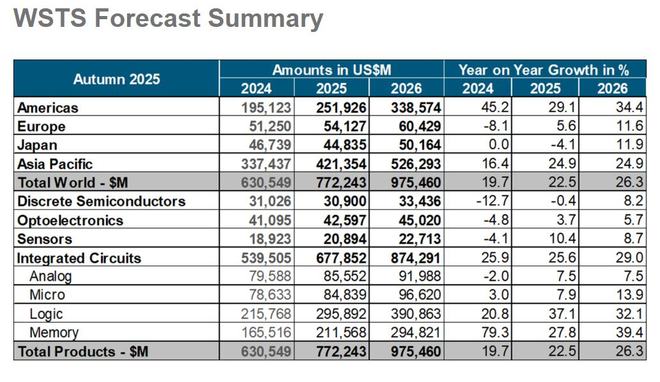
Core Insights - Nvidia has been a major player in the AI computing infrastructure sector, but five other tech stocks focused on AI data centers have shown even more remarkable growth in 2025 [1][2] - The AI infrastructure spending by major tech companies like Amazon, Microsoft, Google, and Meta is projected to reach approximately $380 billion in 2025, with a potential 50% increase in 2026 [3] - The semiconductor market is expected to see significant growth, with a projected total value of $772.2 billion in 2025 and $975.5 billion in 2026, driven by AI infrastructure demands [7][6] Group 1: AI Computing Stocks - Lumentum is highlighted as a key winner in the AI computing supply chain, with its stock price increasing nearly 400% in 2025, driven by demand for optical components in AI data centers [1][11] - Western Digital's stock has surged nearly 300% in 2025, as AI data centers require massive storage solutions for large datasets [14][15] - Micron Technology, as a major U.S. memory chip manufacturer, is benefiting from the AI infrastructure boom, with its stock price rising approximately 240% in 2025 [17][20] Group 2: Market Trends and Projections - Analysts predict that the semiconductor industry will experience a "super cycle," with significant growth in AI chip, storage, and optical interconnect sectors [4][5] - The global AI infrastructure investment wave is expected to reach $3 trillion to $4 trillion by 2030, indicating a long-term growth trajectory for AI-related investments [5][19] - The demand for high-performance storage solutions, particularly HBM and SSDs, is expected to continue to rise, with Micron and other storage companies positioned to benefit significantly [18][21] Group 3: Company-Specific Developments - Celestica, a key player in manufacturing high-performance network switches for AI data centers, has seen its stock rise over 230% in 2025 [27][28] - Seagate's stock has increased by 231% in 2025, driven by the growing demand for HDDs and SSDs in AI data centers [23][25] - The competitive landscape between Google and OpenAI in the AI computing space is expected to benefit companies like Lumentum and Western Digital, as both companies require advanced storage and optical interconnect solutions [10][12]