
荣耀

Search documents
豆包和OpenAI,都在押注同一个未来
Tai Mei Ti A P P· 2025-12-04 01:00
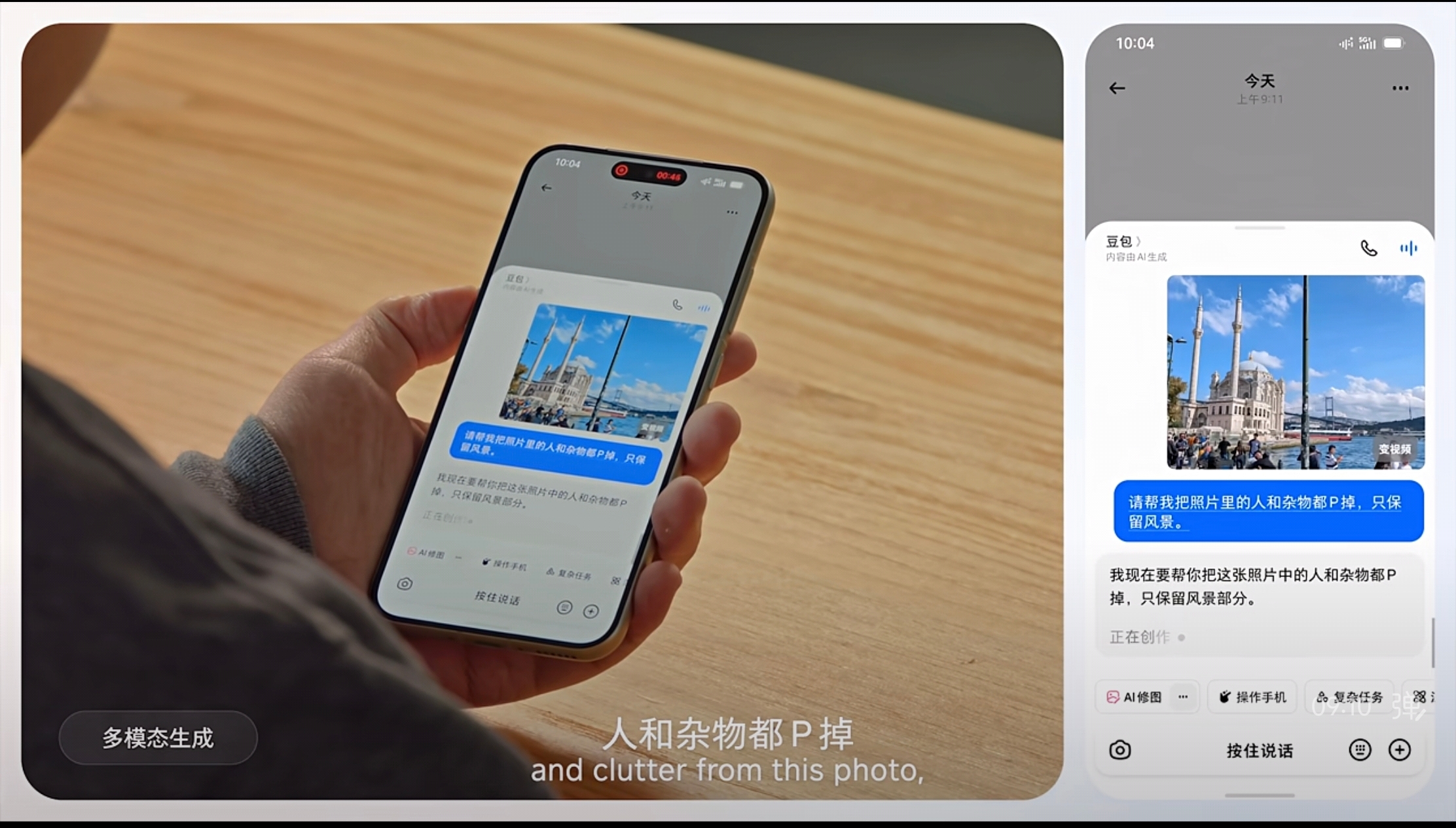
Core Insights - The article discusses the launch of Doubao Mobile Assistant, which allows users to perform complex tasks through voice commands, potentially transforming the mobile internet landscape [3][4][5] - Doubao's strategy involves collaborating with smartphone manufacturers to gain access to system-level permissions, enabling it to operate across applications and redefine user interaction with mobile devices [4][9][12] Group 1: Product Launch and Features - Doubao Mobile Assistant was released on December 1, with a retail price of 3499 yuan, quickly selling out and reselling for 3999 to 4999 yuan on secondary markets [3] - The assistant can perform tasks such as price comparison, booking restaurants, and even opening a car trunk, showcasing its ability to streamline user interactions [4][5] Group 2: Market Impact and User Behavior - The introduction of Doubao Mobile Assistant may lead to a significant shift in user behavior, as reliance on traditional apps like Taobao and Meituan could diminish, turning them into tools invoked by AI [5][7] - Users have reported issues with the assistant, such as restrictions when logging into WeChat, indicating potential challenges in its integration with existing applications [3][8] Group 3: Competitive Landscape - The article highlights the competitive dynamics in the AI and mobile sectors, with major players like Apple and Google also enhancing their AI capabilities within their operating systems [10][11] - Doubao's approach to penetrate the operating system level poses a threat to existing app ecosystems, as it could disrupt the flow of user traffic and advertising revenue [7][8] Group 4: Future Outlook - The integration of AI into mobile devices is seen as a potential "iPhone moment," with the possibility of redefining mobile interaction and creating new business models [9][12] - The outcome of this competition remains uncertain, as it could lead to either the evolution of existing devices or the emergence of entirely new AI-centric hardware [12]


豆包“搅动”手机助手江湖:AI接管手机动了谁的奶酪?
Bei Ke Cai Jing· 2025-12-04 00:53
Core Viewpoint - The launch of the Doubao mobile assistant has sparked significant interest and concern regarding user privacy and the implications of AI integration in mobile devices, particularly in terms of system-level permissions and potential risks associated with data security [1][2][9]. Group 1: Product Launch and Market Reaction - On December 1, ByteDance's Doubao team released a technical preview of the Doubao mobile assistant, which led to a surge in interest in the "AI mobile concept," causing ZTE's stock to hit the daily limit up on the same day [1]. - However, ZTE's stock experienced declines of 1.73% and 4.84% on December 2 and 3, respectively, following user feedback about operational issues with the assistant [1]. - Users reported problems such as WeChat crashing and login failures when using the Doubao assistant, prompting concerns about the assistant's impact on app functionality [1]. Group 2: Privacy Concerns and Permissions - The Doubao mobile assistant has raised questions about user privacy, particularly due to its system-level permissions that allow it to read screen content, including sensitive information like bank details and chat logs [1][8]. - The Doubao team stated that the assistant requires user consent to access these permissions and does not store any screen content on the cloud [2][9]. - Experts have warned that if users rely heavily on AI assistants, it could lead to a significant reduction in the value of app user entry points and advertising revenue, potentially disrupting the current internet business model [2]. Group 3: Industry Context and Competitors - Other major smartphone manufacturers, including Huawei, Xiaomi, and OPPO, have also been developing AI assistants, indicating a competitive landscape where Doubao is not the first mover [4][5]. - The Doubao assistant is designed to perform complex tasks across applications, surpassing the capabilities of existing mobile assistants, which often require user intervention for complex operations [5][6]. - Analysts suggest that while established brands may not adopt third-party AI solutions, smaller manufacturers might find partnerships with AI companies like ByteDance to be a practical choice [6]. Group 4: Technical Aspects and Future Implications - The Doubao assistant utilizes high-level system permissions, such as "INJECT_EVENTS," which allows it to perform seamless cross-application operations, enhancing user experience [7][8]. - The reliance on screen reading capabilities raises concerns about data privacy, as the assistant must access personal information to function effectively [8]. - The current state of AI assistants is still evolving, with many limitations, and the industry is in an exploratory phase regarding the integration of AI into mobile interactions [6].


8点1氪:12306回应“取消靠窗选座”;张雪峰回应被点名“使用污言秽语”;马航MH370客机残骸搜寻将重启
36氪· 2025-12-04 00:36
Group 1 - 12306 has optimized its ticket selection interface to avoid misunderstandings regarding window seats, clarifying that A and F seats are still window-side but may not be directly in front of a window [2] - The search for the wreckage of Malaysia Airlines flight MH370 will resume on December 30, 2023, after being lost since March 8, 2014, with 239 people on board [4] - The Industrial and Commercial Bank of China has raised the minimum deposit for its 3-year large-denomination certificates of deposit to 1 million yuan, with an interest rate of 1.55% [7][8] Group 2 - Cambodia will implement a visa-free policy for Chinese citizens from June 15 to October 15, 2026, allowing a 14-day stay without a visa [9] - The French fashion brand Etam has announced the closure of its online stores in China, indicating a potential exit from the market [10] - The Chinese tablet market saw Huawei leading with a 31% market share in Q3 2025, while Apple's iPad market share dropped to 23% [10]

万名主播带货465亿元
Sou Hu Cai Jing· 2025-12-04 00:26
Core Insights - Live streaming e-commerce has become a major consumption battlefield, with significant participation and sales figures reported during the "2025 Shenzhen Live E-commerce Month" event [4][5][9] - Shenzhen's strong supply chain and industry advantages have propelled the growth of live streaming e-commerce, enhancing the competitiveness of traditional industries and promoting new sectors [5][6][10] Group 1: Event Overview - The "2025 Shenzhen Live E-commerce Month" concluded with over 10,000 participating hosts, more than 700,000 live streams, and over 118 million products showcased, attracting over 5.1 billion views and generating over 46.5 billion yuan in online retail sales [4] - Major platforms such as Douyin, Taobao, Kuaishou, and AliExpress (Spain) participated in the event, showcasing a wide range of products from various industries [5] Group 2: Industry Impact - The event highlighted the integration of traditional industries like 3C electronics, fashion, and jewelry with live streaming, resulting in significant sales figures, including nearly 1 billion yuan in the jewelry sector [5][6] - Local brands in Shenzhen, such as "Daoxiang Restaurant" and "Kasi Dairy," achieved substantial sales through innovative live streaming strategies, indicating a shift in consumer engagement [6] Group 3: Cross-Border E-commerce - Shenzhen is recognized as a hub for cross-border e-commerce, with an import and export volume reaching 372 billion yuan in 2024, accounting for nearly 40% of the national total [7][8] - The establishment of the "Bay Area Cross-Border Alliance" aims to enhance resource integration and support Shenzhen brands in expanding internationally through live streaming [7] Group 4: Digital Transformation - Live streaming e-commerce has rapidly evolved, with over 2.3 million live streams conducted in the first eight months of the year, resulting in 18 billion views and 1 billion items sold online [9] - The growth of live streaming e-commerce is supported by Shenzhen's robust fashion and electronics industries, as well as its early advantages in cross-border e-commerce [10]

8点1氪:12306回应“取消靠窗选座”;张雪峰回应被点名“使用污言秽语”;马航MH370客机残骸搜寻将重启
3 6 Ke· 2025-12-04 00:12
Group 1 - Industrial and Commercial Bank of China (ICBC) has raised the minimum deposit for its 3-year large-denomination certificates of deposit to 1 million yuan, with an annual interest rate of 1.55% [5] - Wanda Group has made its first buyback of a Wanda Plaza after selling over 40 plazas, indicating a strategic shift in its asset management [5] - The storage industry is experiencing significant price increases, leading to predictions of rising prices for smartphones and computers, with manufacturers caught off guard [4] Group 2 - Dell founder Michael Dell and his wife have donated $6.25 billion to establish investment accounts for American children, aiming to provide a financial foundation for 25 million children [8] - The French fashion brand Etam has announced the closure of its online stores in China, indicating a potential exit from the market due to business adjustments [7] - Huawei has regained the top position in China's tablet market with a 31% market share, while Apple's iPad has seen a significant decline in market share to 23% [7]
从“猎奇”到“信赖”:折叠屏手机用户发展洞察报告
艾瑞咨询· 2025-12-04 00:05
Group 1 - The core viewpoint of the report highlights the continuous growth of the global foldable smartphone market, particularly in China, driven by technological advancements and an improved supply chain, leading to product diversification [1][4][5] - The report indicates that the foldable smartphone market is transitioning from a niche to a mainstream market, with increasing consumer acceptance and willingness to purchase [1][43][47] - Huawei is identified as a leading player in the foldable smartphone market, significantly increasing its market share from 35.0% in Q1 2023 to 75.0% in Q1 2025, showcasing its dominant position [18] Group 2 - The global smartphone market has entered a phase of stock competition since 2017, with annual shipment volumes declining by approximately 2.52%, projected to reach 1.22 billion units by 2024 [2] - The foldable smartphone segment is seen as a strategic direction to break through the stagnation in market growth, with expected high shipment growth from 2022 to 2024 [5][15] - The foldable smartphone industry chain includes upstream raw material supply, midstream design and manufacturing, and downstream sales, with major players like Huawei and Samsung leading the charge [7] Group 3 - The Chinese foldable smartphone industry has matured, achieving international advanced standards in technology, and creating a virtuous cycle of technology, cost, and market [8][9] - The report outlines the diverse product forms in the foldable smartphone market, with Huawei leading in innovative designs such as tri-fold and wide-fold models [11] - The user demographics indicate a strong preference for foldable smartphones among high-education users, with over 75% of users holding a bachelor's degree or higher [20] Group 4 - The primary reasons for purchasing foldable smartphones include a stronger sense of technology and future, with 44.7% of users citing this as a key factor [24] - Users show a willingness to spend, with 28.4% budgeting between 8,000 to 10,000 yuan for their next foldable smartphone [24] - Huawei leads in brand recognition and user satisfaction, with a significant market share and positive user feedback on its products [26][30] Group 5 - The report notes that foldable smartphones are perceived as carriers of innovation and multifunctional devices, with varying perceptions between male and female consumers [34] - Social interaction and entertainment are the primary use cases for foldable smartphones, indicating a need for further exploration of productivity applications [36] - Users express concerns regarding hardware durability and software experience, highlighting areas for improvement in future models [39] Group 6 - Over 90% of consumers are considering purchasing a foldable smartphone for their next device, focusing on reliability, battery life, and hardware specifications [41] - The transition from "niche novelty" to "mainstream utility" is emphasized, driven by advancements in hardware technology and software ecosystems [43][45] - The report concludes that foldable smartphones are moving towards becoming reliable, everyday devices, with a significant percentage of users willing to switch to foldable models in the future [47]

工程样机变“抢手货” 二手市场溢价上千元 “豆包AI手机”开启下一轮范式迁移?
Shen Zhen Shang Bao· 2025-12-03 23:01
Core Insights - The Nubia M153, also known as the "Doubao AI Phone," has faced login issues with WeChat, prompting users to switch devices for access, and has temporarily disabled WeChat functionalities [1][3] - The phone was launched on December 1 and quickly sold out, with resale prices on second-hand platforms rising significantly, indicating high consumer interest despite being a technical preview model [2][3] - User feedback on the AI capabilities of the phone has been mixed, with some praising its intelligent features while others criticize its performance and express concerns over privacy [3][5] Group 1: Product Launch and Market Response - The Nubia M153 was officially released on December 1, quickly selling out on the ZTE mall, with a limited initial stock of 30,000 units [2] - The phone features a 6.78-inch screen and is powered by the Snapdragon 8 Gen 2 processor, with its standout feature being the integrated Doubao AI system [2] - The initial retail price was set at 3,499 yuan for the 16GB+512GB configuration, and it is marketed primarily to industry professionals rather than general consumers [2] Group 2: User Experience and Privacy Concerns - User experiences have varied, with some users impressed by the AI's capabilities, while others report slow performance and long processing times for tasks [3][5] - Privacy concerns have been raised, particularly regarding the AI's ability to capture user interactions, leading to questions about data security and user consent [3][5] - The Doubao team has responded to privacy concerns by stating that permissions are disclosed in their privacy policy and that user authorization is required for operations [3] Group 3: Industry Context and Future Implications - The challenges faced by the Doubao AI Phone reflect broader issues in the AI smartphone market, particularly regarding the integration of AI with existing app ecosystems [5][6] - Industry experts suggest that a lack of standardized protocols complicates the interaction between AI assistants and mobile applications, potentially leading to regulatory conflicts [5] - The collaboration between ByteDance and ZTE represents a strategic approach to creating an AI ecosystem rather than partnering with a single hardware manufacturer, aligning with emerging trends in the smartphone industry [5][6]
"智能憨憨"引发AI玩具热行业同质化严重智能化不足
Zheng Quan Shi Bao· 2025-12-03 22:40
Core Insights - The launch of Huawei's "Smart Hanhai" AI toy at a price of 399 yuan has sparked a new wave of interest in the AI toy market, with high demand leading to sellouts and significant pre-order volumes [1][2] - Major companies are increasingly entering the AI toy sector, with products like UBTECH's "Youzai" priced at 519 yuan and collaborations between Honor and Aofei Entertainment to develop AI interactive toys [2][5] - The AI toy market in China is projected to grow significantly, with estimates suggesting a market size of approximately 246 billion yuan in 2024, increasing to 290 billion yuan in 2025, and potentially exceeding 1 trillion yuan by 2030 [2][5] Market Trends - The popularity of AI toys is rising, with increased foot traffic in retail locations and a growing number of stores selling AI toys, although many products face challenges such as high return rates and severe product homogeneity [1][3] - Retailers report that while online sales are strong, the "Smart Hanhai" effect has not significantly boosted their sales, indicating a reliance on online channels for AI toy sales [1][3] Industry Challenges - The AI toy market is plagued by issues of product homogeneity, with many toys using similar models and features, leading to consumer dissatisfaction and high return rates, which can reach up to 40% initially [3][4] - The cost of AI toy components is relatively low, with core chip solutions costing around 20 yuan, contributing to the lack of differentiation among products [3][4] Future Outlook - The AI toy sector is expected to undergo a significant transformation within the next five years, with a predicted "boom and bust" cycle, where the initial growth phase will be followed by a market consolidation phase [5][6] - Companies that can innovate and create unique offerings, particularly in niche markets such as early education and elderly care, are likely to survive, while those lacking core competencies may exit the market [5][6]
“智能憨憨”引发AI玩具热 行业同质化严重智能化不足
Zheng Quan Shi Bao· 2025-12-03 22:19
Core Insights - The launch of Huawei's "Smart Hanhai" AI emotional companion robot at a price of 399 yuan has sparked a new wave of interest in AI toys, with high demand leading to sellouts and significant pre-order numbers [1][2] - The AI toy market is experiencing increased attention from major manufacturers, with several companies, including UBTECH and JD.com, entering the space with their own products [2][3] - Despite the growing market, the AI toy industry faces challenges such as product homogeneity and high return rates, which hinder its development [4][5] Market Trends - The AI toy market is projected to grow significantly, with estimates suggesting a market size of approximately 246 billion yuan in 2024, increasing to 290 billion yuan by 2025, and potentially exceeding 1 trillion yuan by 2030 with a compound annual growth rate of over 50% [3] - The popularity of AI toys is leading to increased foot traffic in retail locations, particularly in Shenzhen's Huaqiangbei, where many stores are now prominently displaying AI plush toys [2] Industry Challenges - The AI toy sector is plagued by severe product homogeneity, with many toys utilizing similar models and features, leading to consumer dissatisfaction and high return rates, which can reach up to 40% initially [4][5] - The lack of unique intellectual property and reliance on generic models contribute to the perception that many AI toys do not meet consumer expectations, resulting in a high rate of returns [5] Future Outlook - The AI toy market is expected to undergo a "shakeout" phase within the next five years, where companies lacking unique offerings or comprehensive capabilities may exit the market [6] - Key players likely to survive include major consumer electronics companies, content-driven brands like LEGO and Disney, and specialized service providers focusing on niche markets [6][7]

“智能憨憨”引发AI玩具热行业同质化严重智能化不足
Zheng Quan Shi Bao· 2025-12-03 17:38
Core Insights - The launch of Huawei's "Smart Hanhai" AI toy at a price of 399 yuan has sparked a new wave of interest in the AI toy market, with high demand leading to sellouts and significant pre-order volumes [1][2] - The AI toy market is experiencing growth, with major companies entering the space, indicating a shift in focus from traditional consumer electronics to innovative products [2][3] - Despite the excitement, the industry faces challenges such as product homogenization and high return rates, which hinder its development [4][5] Market Trends - The AI toy market is projected to grow significantly, with estimates suggesting a market size of approximately 246 billion yuan in 2024, increasing to 290 billion yuan in 2025, and potentially exceeding 1 trillion yuan by 2030 with a compound annual growth rate of over 50% [3] - Major companies like UBTECH and JD.com are launching their own AI toys, indicating a competitive landscape where traditional electronics firms are diversifying their product offerings [2][3] Industry Challenges - The AI toy sector is plagued by severe product homogenization, with many toys utilizing similar models and features, leading to consumer dissatisfaction and high return rates, which can reach up to 40% initially [4][5] - The lack of unique intellectual property and reliance on generic models contribute to the perception that many AI toys do not meet consumer expectations, resulting in a high rate of returns [5][6] Future Outlook - The AI toy market is expected to undergo a "shakeout" phase within the next five years, where companies lacking unique offerings or comprehensive capabilities may exit the market [6][7] - Experts predict that the market will eventually be dominated by three types of players: major consumer electronics companies, content-driven firms like LEGO and Disney, and specialized service providers focusing on niche markets [6][7]