华润啤酒

Search documents
上海市政府与华润集团在沪签署战略合作协议!陈吉宁龚正会见王祥明王崔军
Di Yi Cai Jing· 2025-08-18 11:51
Group 1 - Shanghai Municipal Government and China Resources (Group) Co., Ltd. signed a strategic cooperation agreement on August 18 [1][2] - The agreement aims to leverage Shanghai's technological innovation, industrial agglomeration, and business environment alongside China Resources' diversified industry advantages and expertise in state-owned capital investment [2] - The cooperation will focus on multiple sectors including integrated circuits, pharmaceuticals and healthcare, energy services, urban construction and operation, industrial finance, and technology and emerging industries [2] Group 2 - The partnership seeks to achieve complementary advantages between central and local governments, promoting mutual benefits and high-quality development [2] - The collaboration aims to assist China Resources in becoming a globally competitive world-class enterprise while helping Shanghai establish itself as a modern international metropolis with global influence [2]

华润啤酒从原料供应端赋能“国麦振兴”
Zheng Quan Ri Bao· 2025-08-18 11:40
Core Viewpoint - The "National Barley Revitalization" project initiated by China Resources Beer aims to address the challenges faced by the domestic barley industry, including cost pressures and supply chain resilience, by establishing standardized cultivation and processing practices [2][3]. Group 1: Project Overview - The project involves collaboration among experts to create a comprehensive standardization process covering barley seed cultivation, irrigation, pesticide application, malting, and brewing [2]. - The project has shown significant results in Hohhot, leading to the successful launch of "Keng 14" beer, which is brewed entirely from domestically sourced barley [2]. Group 2: Economic and Social Impact - The project has created economic value and increased local farmers' income, contributing to the local economy [2]. - The integration of barley beer tasting into tourism and dining experiences is planned to enhance local cultural and tourism consumption [3]. Group 3: Industry and Environmental Benefits - The project has improved the quality of malt produced, with a yearly increase in the premium malt rate due to standardized cultivation and quality orders [3]. - The initiative promotes a sustainable supply chain, reducing water and energy consumption while lowering carbon emissions across the industry [4][5]. Group 4: Broader Implications - The "National Barley Revitalization" project is seen as a key measure to overcome industry bottlenecks and exemplifies corporate social responsibility aligned with national strategies [3]. - The project integrates ESG principles throughout the entire barley supply chain, from seed cultivation to beer production [3][5].

“一麦觉醒”背后的产业突围:华润啤酒加仓国麦,供应链韧性再升级
Hua Xia Shi Bao· 2025-08-18 08:32
Core Viewpoint - The article highlights the transformation of the domestic barley industry in China, driven by China Resources Beer’s "National Barley Revitalization" project, which aims to reduce reliance on imported barley and enhance the quality and production of domestic barley for the brewing industry [2][3][4]. Group 1: Industry Transformation - The "National Barley Revitalization" strategy initiated by China Resources Beer in 2021 has led to significant changes in the domestic barley landscape, moving from a reliance on nearly 90% imported barley to a growing domestic production [2][3]. - The project has resulted in a notable increase in the planting area of domestic barley, driven by an order-based agricultural model and collaborative efforts among industry peers [3][4]. - The quality of domestic barley has improved significantly, addressing previous issues such as high protein content and inconsistent quality, which hindered its use in brewing [7][8]. Group 2: Economic and Social Impact - The initiative aligns with national goals for rural revitalization, contributing to farmer income and promoting sustainable agricultural practices [6][9]. - The establishment of standardized planting bases covering over 16,000 acres has been a key achievement, enhancing the quality of domestic barley and supporting the overall development of the beer industry [10][11]. - The launch of the "ESG China National Barley Practice Base" signifies a commitment to integrating ESG principles with agricultural modernization, providing a model for industry development [9][10]. Group 3: Future Outlook - China Resources Beer plans to maintain a stable procurement ratio of around 10% for domestic barley, with expectations for gradual increases as quality continues to improve [8]. - The company emphasizes the importance of domestic barley as a reliable alternative to imported barley, especially in light of global supply chain uncertainties [6][8]. - The successful launch of high-end products like "Keng Fourteen," made entirely from domestic barley, challenges the perception that domestic barley cannot produce quality beer, marking a significant milestone for the industry [7][8].
侯孝海告别华润啤酒,“啤白战略”留悬念
Sou Hu Cai Jing· 2025-08-18 05:11
Core Viewpoint - The resignation of Hou Xiaohai as Chairman of China Resources Beer marks a significant leadership change, with potential implications for the company's strategic direction and performance in a competitive market [1][9]. Group 1: Leadership Transition - Hou Xiaohai resigned to focus on personal matters, confirming no disagreements with the board [1][3]. - Zhao Chunwu, the current Executive Director and President, will temporarily assume the responsibilities of the Chairman until a suitable successor is appointed [3][10]. - Hou has been a pivotal figure in the company for over two decades, contributing to its growth and strategic initiatives [3][4]. Group 2: Company Performance Under Hou - Under Hou's leadership from 2016 to 2021, the company saw significant revenue growth, with operating income increasing from HKD 29.732 billion to HKD 33.387 billion and net profit rising from HKD 1.098 billion to HKD 4.587 billion [4]. - However, in 2024, the company faced challenges, reporting a revenue of HKD 41.332 billion (up 1.3%) and a net profit of HKD 3.758 billion (down 18.1%), marking the first decline in both metrics since 2017 [5]. Group 3: Strategic Initiatives - Hou initiated a "4+4" brand matrix to enhance product offerings and drive premiumization in the beer segment [4]. - The company closed 36 breweries to reduce operational costs, resulting in a workforce reduction of over 50% from 58,200 employees in 2016 to approximately 26,000 by the end of 2024 [4]. - The company expanded into the white liquor market, acquiring stakes in Shandong Jingzhi and Anhui Jinzongzi, and completed a significant acquisition of 55.19% of Jinsha Liquor for HKD 12.3 billion [6][8]. Group 4: Challenges in White Liquor Segment - The acquisitions in the white liquor sector have not yielded expected results, with Jinsha Liquor's revenue dropping from HKD 3.641 billion in 2021 to HKD 1.574 billion in 2024 [8]. - The company acknowledged that the white liquor business is still in the integration phase and requires time to realize synergies and improve performance [8]. Group 5: Market Reactions and Future Outlook - Following Hou's resignation, speculation arose regarding his future, with rumors of potential roles in other companies, though he stated he would not pursue such opportunities [9][10]. - The board reassured that Hou's departure would not disrupt operations, and the search for a new chairman is underway [10]. - The company faces critical questions about its ability to navigate the competitive beverage market and the effectiveness of its dual strategy in the future [11].
重庆啤酒(600132):二季度吨价压力增大,税率波动拖累盈利能力
Guoxin Securities· 2025-08-18 05:10
Investment Rating - The investment rating for the company is "Outperform the Market" [5][9]. Core Views - The company reported a slight decline in revenue and net profit for the first half of 2025, with total revenue at 8.84 billion yuan, down 0.2% year-on-year, and net profit at 860 million yuan, down 4.0% year-on-year [1][7]. - The pressure on beer prices has increased, particularly in the second quarter of 2025, leading to a decline in profitability despite a slight improvement in gross margin due to cost benefits [2][8]. - The company is expected to face ongoing price pressures, with future improvements dependent on the recovery of consumer spending and the introduction of new products [3][9]. Revenue and Profitability Summary - In the first half of 2025, beer sales volume increased by 1.9% year-on-year, but the average price per ton decreased by 1.1%, primarily due to increased promotional efforts [1][7]. - The gross margin for the beer business was 51.3%, an increase of 0.8 percentage points year-on-year, while the net profit margin decreased by 0.4 percentage points due to a rise in the effective tax rate [2][8]. - The company has adjusted its revenue forecasts for 2025-2027, now expecting revenues of 14.73 billion, 15.03 billion, and 15.35 billion yuan respectively, with corresponding net profits of 1.26 billion, 1.31 billion, and 1.35 billion yuan [3][9]. Financial Projections - The earnings per share (EPS) for 2025 is projected to be 2.61 yuan, with a price-to-earnings (PE) ratio of 21 times [4][9]. - The company maintains a high dividend payout ratio, reflecting its commitment to shareholder returns [3][9].

智通港股沽空统计|8月18日
智通财经网· 2025-08-18 00:27
Core Insights - The article highlights the top short-selling stocks in the market, focusing on their short-selling ratios, amounts, and deviation values [1][2][3] Short-Selling Ratios - The top three stocks by short-selling ratio are: - China Resources Beer-R (80291) at 100.00% - Bank of China Hong Kong-R (82388) at 88.69% - Kuaishou-WR (81024) at 80.08% [1][2] Short-Selling Amounts - The leading stocks by short-selling amount are: - Alibaba-SW (09988) with a short-selling amount of 2.949 billion - Tencent Holdings (00700) with 2.711 billion - Meituan-W (03690) with 2.333 billion [1][3] Deviation Values - The stocks with the highest deviation values are: - China Resources Beer-R (80291) at 51.62% - Kuaishou-WR (81024) at 43.86% - Bank of China Hong Kong-R (82388) at 39.84% [1][2][3]




2025年第33周:酒行业周度市场观察
艾瑞咨询· 2025-08-18 00:05
Core Insights - The article discusses the evolving landscape of the liquor industry, highlighting the cross-industry expansion of traditional liquor brands into the craft beer market, the growth of the bottled liquor segment, and the emergence of new retail channels for liquor sales [2][3][5][8]. Industry Environment - Major liquor brands from Sichuan are entering the craft beer market, leveraging their existing brand and distribution advantages. This move is seen as a strategy to attract younger consumers and expand consumption scenarios [3][4]. - The bottled liquor market has surpassed 150 billion yuan, with expectations to exceed 200 billion yuan by 2025. Competition is intensifying as brands launch new products priced under 60 yuan [5]. - Black Ge Consulting identified nine key insights into the liquor industry, including the rise of local brands and the trend towards lower alcohol content products, emphasizing the need for brands to adapt to changing consumer preferences [5]. - High-end liquor brands are encouraged to adopt strategies from luxury brands like Hermes and Ferrari, focusing on scarcity and emotional resonance rather than just price competition [6][7]. New Retail Channels - New retail formats such as Sam's Club and Hema are reshaping liquor sales, offering competitive pricing and direct sourcing, which is attracting consumers and providing new growth channels for liquor companies [8]. - The recent adjustments to the "ban on alcohol" policy have led to a gradual recovery in dining consumption, particularly in regions like Henan, although high-end dining remains sluggish [9]. - Despite a seasonal slowdown, liquor companies are actively transforming their strategies to focus on consumer engagement and experience, moving from a channel-driven approach to a user-driven model [10]. Craft Beer Market - The craft beer segment is rapidly growing, with over 13,584 related enterprises in China as of July 2023, indicating a vibrant competitive landscape [11]. - Traditional liquor brands are launching lower-alcohol products to appeal to younger consumers, although challenges remain in maintaining flavor and quality [12]. Digital Transformation - The liquor industry is leveraging digital assets for growth, with companies reporting significant increases in sales and inventory turnover through innovative digital strategies [13]. Brand Dynamics - The Guojian brand is focusing on national expansion, emphasizing quality and cultural elements to enhance its market presence [14]. - The Swan Lake winery has successfully marketed its zodiac wines, achieving significant sales figures despite industry challenges [15]. - Changyu's innovative marketing strategies in sports events have successfully engaged consumers and enhanced brand visibility [16]. - The Fenjiu brand is exploring new consumer experiences through immersive cultural events, aiming to connect with younger audiences [17]. Market Challenges - Budweiser APAC reported a 24.4% drop in net profit, primarily due to a sluggish Chinese market and increased competition in both the low and high-end segments [20]. - The liquor industry is undergoing a significant transformation, with companies needing to adapt to changing consumer demands and market dynamics to remain competitive [21][22].






行业周报:进入业绩披露期,关注绩优股表现-20250817
KAIYUAN SECURITIES· 2025-08-17 11:44
Investment Rating - The investment rating for the food and beverage industry is "Positive" (maintained) [1] Core Insights - The food and beverage index increased by 0.5% from August 11 to August 15, ranking 18th among 28 sectors, underperforming the CSI 300 by approximately 1.9 percentage points. The sub-sectors of seasoning and fermented products (+2.2%), baked goods (+1.5%), and health products (+1.3%) performed relatively well [10][12] - The report highlights that the liquor industry remains a core component of the food and beverage sector, with varying performances among companies. Kweichow Moutai showed stable mid-year results, maintaining its strong brand and market position. Other companies like Zhenjiu Lidu experienced a decline but are focusing on product innovation and channel optimization for future recovery [10][11] - The overall liquor industry is in an adjustment phase, with expectations for a fundamental low point to appear in the second half of the year. Some quality liquor companies are seen to have a high safety margin from a valuation perspective, suggesting opportunities for low-position investments in the second half [10][11] - The beer sector is facing pressure due to intensified market competition and product downgrading, although companies like Zhujiang Beer and Yanjing U8 are performing well in their respective regions. China Resources Beer, as a leading player, is expected to benefit from industry recovery in the long term [11] - The snack food sector is showing strong growth potential, with new consumption-related companies likely to become market leaders again in the second half of the year. Recommended companies for investment include Salted Fish Pulp, Ximai Food, Dongpeng Beverage, and Wancheng Group, with notable beneficiaries being Weilong Delicious [10][11] Summary by Sections Market Performance - The food and beverage index increased by 0.5%, ranking 18th out of 28 sectors, and underperformed the CSI 300 by about 1.9 percentage points. The leading sub-sectors were seasoning and fermented products (+2.2%), baked goods (+1.5%), and health products (+1.3%) [10][12] Upstream Data - On August 5, the GDT auction price for whole milk powder was $4,012 per ton, a year-on-year increase of 23.1%. However, domestic fresh milk prices were 3.0 yuan per kilogram, down 5.9% year-on-year [14][16] Liquor Industry News - Kweichow Moutai announced an investment of approximately 774 million yuan for infrastructure improvements. Additionally, Shede Liquor is set to launch a new low-alcohol product, "Shede Zizai," on August 30, focusing on high flavor and low alcohol content [37][38] Recommended Companies - Recommended companies for investment include Kweichow Moutai, Shanxi Fenjiu, Ximai Food, Wancheng Group, and Bai Run Co. [4]

打造“国麦粮仓”,华润啤酒建立标准化种植基地达1.6万余亩
Sou Hu Cai Jing· 2025-08-17 07:19
Core Viewpoint - The event "ESG China·Guomai (China Resources Beer) Action" highlights the integration of ESG principles in the beer industry, emphasizing the importance of domestic barley cultivation and the "Guomai Revitalization" strategy initiated by China Resources Beer to enhance the industry chain and support rural revitalization [2][10]. Group 1: ESG and Industry Development - China Resources Beer has established over 16,000 acres of standardized planting bases to optimize the quality of domestic barley, contributing to the integration of the entire industry chain from planting to brewing [2]. - The "Guomai Revitalization" strategy aligns with the State-owned Assets Supervision and Administration Commission's directive to enhance control over the industry chain, providing a replicable model for high-quality industry development [2][10]. - The event served as a platform to promote the integration of ESG principles with agricultural industrialization, marking the establishment of the "ESG China·Guomai Practice Base" as a demonstration platform [10]. Group 2: Product and Market Impact - The new product "Keng Shisi" is made from 100% domestic malt, sourced from the specially cultivated Keng barley variety, ensuring high quality and excellent extraction rates for brewing [4]. - The launch of "Keng Shisi" is seen as a four-win outcome: boosting confidence in domestic barley development, adapting to diverse beer product structures, responding to national rural revitalization initiatives, and enhancing the social responsibility image of leading enterprises [8]. - The collaboration between China Resources Beer and Hulunbuir Agricultural Reclamation Group aims to transform traditional agriculture into a modern, branded industry, positioning Hulunbuir as a national "Guomai Granary" [10].

“汉超”揭幕战引爆车谷狂欢夜, 四万多球迷嗨翻足球盛宴
Chang Jiang Ri Bao· 2025-08-17 00:23
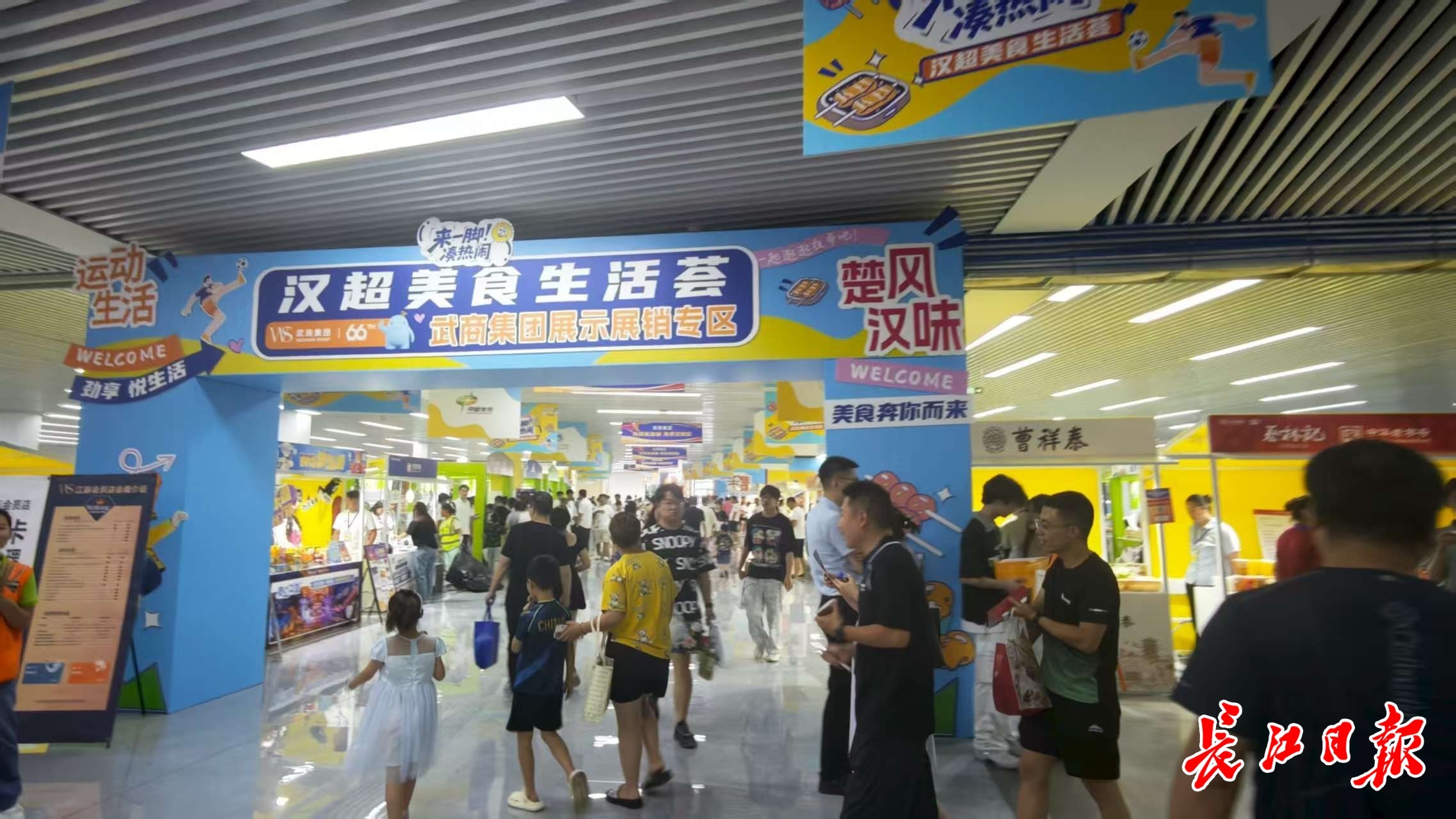
Group 1 - The 2025 Wuhan Urban Football Super League (referred to as "Han Super") opening match took place at Wuhan Sports Center, attracting over 40,000 fans [1] - The atmosphere was vibrant, with fans arriving two hours before the match, creating a lively environment filled with cheers and drumbeats [1] - Families, including three generations of fans, attended the event, highlighting the significance of the match for local supporters [3] Group 2 - The event featured a food and lifestyle fair, with long queues at various food stalls, indicating high consumer engagement [4] - Popular food items included handmade burgers and grilled meat, with sales reaching over 100 and 200 cups of juice sold within an hour, respectively [4] - The automotive exhibition area attracted many visitors, showcasing discounted vehicles, with some models having price reductions of over 10,000 yuan [4] Group 3 - The event included interactive activities for children, enhancing the family-friendly atmosphere [5] - A million yuan worth of consumer coupons were distributed, generating excitement among attendees as they participated in the promotions [7] - Beer sales reportedly quadrupled compared to regular weekends, indicating a significant increase in demand during the event [7] Group 4 - The opening ceremony featured a musical performance, creating a festive atmosphere as players entered the field amidst a sea of flashing mobile lights [9] - The combination of food aromas, engine sounds, and fan cheers contributed to a unique celebratory experience for the city [9]