吉利汽车

Search documents
极氪销量目标仅完成81%再战年销70万 电池存热失控隐患主动召回3.8万辆车
Chang Jiang Shang Bao· 2026-02-12 00:05
Core Viewpoint - Zeekr has initiated its first-ever recall, affecting 38,277 units of the Zeekr 001 WE model due to potential safety hazards related to high-voltage battery components [1][3][4] Group 1: Recall Details - The recall involves vehicles produced between July 8, 2021, and March 18, 2024, due to manufacturing consistency issues in high-voltage battery components, which may lead to increased internal resistance and potential thermal runaway [1][3] - Zeekr will provide free battery assembly replacements for affected vehicles and implement a cloud-based early warning system to alert users of potential issues [3][4] Group 2: Sales Performance and Targets - In 2025, Zeekr's sales target was set at 320,000 units, but the actual sales reached 574,600 units, achieving approximately 81% of the target, with a year-on-year growth of 13.21% [2][10] - For 2026, the sales target for Zeekr is set at 300,000 units, while the Lynk brand aims for 400,000 units, totaling 700,000 units [2][10] Group 3: Legal and Financial Context - The recall is linked to a legal dispute between Geely and A123 Systems, with Geely seeking compensation of 2.314 billion yuan due to quality issues with battery cells supplied by A123 [5][6] - A settlement agreement was reached, with A123 expected to pay Geely 608 million yuan for costs incurred up to December 31, 2025 [6] Group 4: Corporate Strategy - Zeekr is a joint investment by Geely Auto and Geely Holding Group, and in 2022, it exceeded its delivery target by delivering 71,900 units [7] - The company aims to enhance operational efficiency and resource utilization through the integration of Zeekr as a wholly-owned subsidiary of Geely, following a privatization transaction completed in December 2025 [11][12][13]

亏光600亿家底,福特老板去麦当劳兼职
汽车商业评论· 2026-02-11 23:06
Core Viewpoint - Ford's CEO Jim Farley is transitioning to McDonald's, highlighting his extensive experience in balancing innovation and operational excellence, which is expected to benefit McDonald's growth [4][5][7]. Financial Performance - Ford reported a net loss of $8.2 billion (approximately 56.6 billion yuan) for 2025, marking its worst annual loss since the 2008 financial crisis, primarily due to $19.5 billion in electric vehicle-related asset write-downs [9]. - The adjusted earnings per share for Q4 2025 was only $0.13, falling short of market expectations by 32%, with EBIT dropping over 50% to $1 billion [9]. - Cumulative losses in Ford's electric vehicle business exceeded $16 billion since 2022, with projected losses of $5.1 billion in 2024 and $4.8 billion in 2025 for the "Model e" division [9][11]. Supply Chain Challenges - A fire at a key aluminum supplier's plant caused significant production delays and increased costs, leading to an estimated loss of $2 billion in the second half of 2025 and an additional $1 billion in 2026 [11]. - Ford faced $2 billion in tariffs in 2025 due to changes in import relief policies, impacting its Q4 EBIT significantly [11]. Market Position and Strategy - Despite financial challenges, Ford's core business showed improvement, with 2025 revenues reaching a record $187.3 billion, a 1% increase year-over-year, driven by strong demand for high-margin gasoline-powered trucks and SUVs [13]. - Ford's adjusted EBIT for 2026 is projected to be between $8 billion and $10 billion, with free cash flow expected to rise to $5 billion to $6 billion [13]. Strategic Adjustments - To address the electric vehicle business's losses, Ford announced a significant reduction in its EV plans, including halting production of the F-150 Lightning and canceling new electric truck factory plans [18][20]. - Ford is shifting focus from large EVs in North America to smaller, more profitable electric vehicles in Europe and plans to collaborate with Renault on developing small EVs [20][21]. - A new subsidiary, Ford Energy, will be established with a $1.5 billion investment to produce storage batteries, leveraging licensed technology from China [21].



不止于百辆车队:解码曹操出行Robotaxi的商业雄心
Di Yi Cai Jing Zi Xun· 2026-02-11 16:57
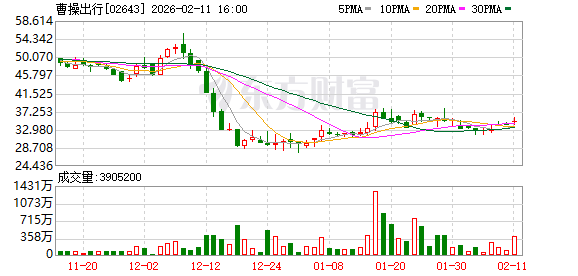
Core Insights - The company has achieved a significant milestone in the commercialization of Robotaxi services, deploying a fleet of 100 vehicles in Hangzhou's Binjiang District, supported by a "green intelligent passage island" for operations, marking a substantial step in the autonomous driving sector [1][2] Group 1: Business Model and Competitive Advantage - The company has developed a unique business model that integrates "intelligent customized vehicles, intelligent driving technology, and intelligent operations," creating a closed-loop barrier that is difficult for pure technology or platform companies to replicate [2][4] - The company holds a leading position in the domestic market with over 37,000 customized vehicles across 31 cities by June 30, 2025, achieving a 36.4% reduction in total cost of ownership (TCO) compared to typical electric vehicles [4][5] - The company has established a mature operational network across 163 cities, completing over 1.9 billion rides, which provides a strong foundation for the rapid deployment of Robotaxi services [5][6] Group 2: Technological Advancements - The company has partnered with Qianli Zhijia to enhance its autonomous driving technology, accelerating the commercialization of intelligent driving applications [4][5] - The implementation of low-orbit satellite communication technology through a partnership with Time Space Dao Yu has improved the safety standards of the Robotaxi fleet, ensuring continuous connectivity and high-precision positioning [5][6] Group 3: Financial Performance and Market Recognition - The company reported a revenue of 9.456 billion yuan in the first half of 2025, a 53.5% year-on-year increase, with a gross margin of 8.4%, reflecting improved profitability [12][14] - Major brokerage firms, including Citigroup and CICC, have issued positive reports on the company's Robotaxi business, setting a target price of 70 HKD, indicating strong market confidence in its growth potential [7][8] Group 4: Future Outlook and Strategic Goals - The company aims to establish five major operational centers globally over the next decade, targeting 100 cities and a total transaction volume of 100 billion yuan [8][11] - The company is positioned to benefit from the current favorable conditions in the Robotaxi industry, including policy support, technological advancements, and increased capital investment, which are expected to drive significant growth [9][11]
新飞度遭“疯抢”背后:1月车市燃油车销量回暖
Mei Ri Jing Ji Xin Wen· 2026-02-11 14:01
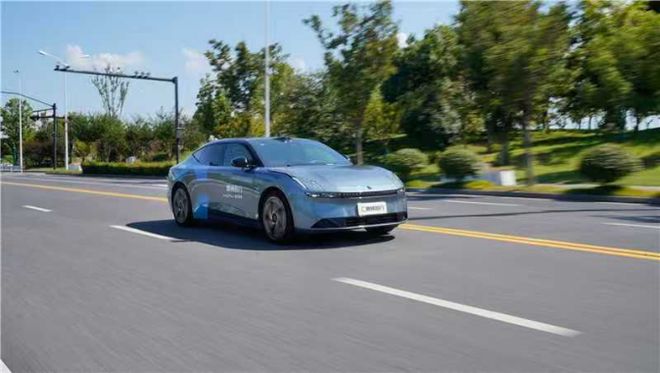
Core Viewpoint - The domestic automotive market is witnessing a shift as fuel vehicles are increasingly adopting intelligent features to compete with electric vehicles, driven by consumer demand for smart driving capabilities and the rising market share of electric vehicles [1][10]. Group 1: Market Trends - Consumers are showing a preference for fuel vehicles equipped with advanced intelligent configurations, leading to a notable change in purchasing behavior [1]. - Sales personnel from a dealership reported a shift in customer interest, with fewer customers exclusively seeking electric models [3]. - The new Honda Fit, priced at 66,800 yuan, sold out its initial 3,000 units within 20 days, indicating strong demand for competitively priced fuel vehicles [4][5]. Group 2: Pricing Strategies - The resurgence of fuel vehicles is significantly driven by aggressive pricing strategies, with many models seeing price reductions of around 30% to 40% [7][9]. - The average discount for fuel vehicles in January reached 23.7%, a year-on-year increase of 1.8 percentage points, with 10 models experiencing price cuts [9]. Group 3: Intelligent Features - Fuel vehicles are increasingly incorporating advanced technologies such as driver assistance systems and smart cockpit features, aiming to shed the perception of being less intelligent than electric vehicles [10][11]. - Major automakers, including Volkswagen and Geely, are implementing the "oil-electric intelligence" strategy, showcasing that fuel vehicles can also be equipped with smart features [10]. Group 4: Sales Performance - In January 2026, fuel vehicle sales showed a significant increase, with SAIC Group selling 242,000 units, a year-on-year growth of 19.19% [12]. - Geely's fuel vehicle sales reached 134,400 units, with the "China Star" series contributing over 100,000 units to this figure [12]. - The market share of the top five fuel vehicle brands increased from 29% in 2020 to 37% in 2025, indicating a strengthening position for leading brands in the fuel vehicle segment [13].
1月车市销量同比下降3.2% 新能源汽车仅增长0.1%
Jing Ji Guan Cha Wang· 2026-02-11 13:44
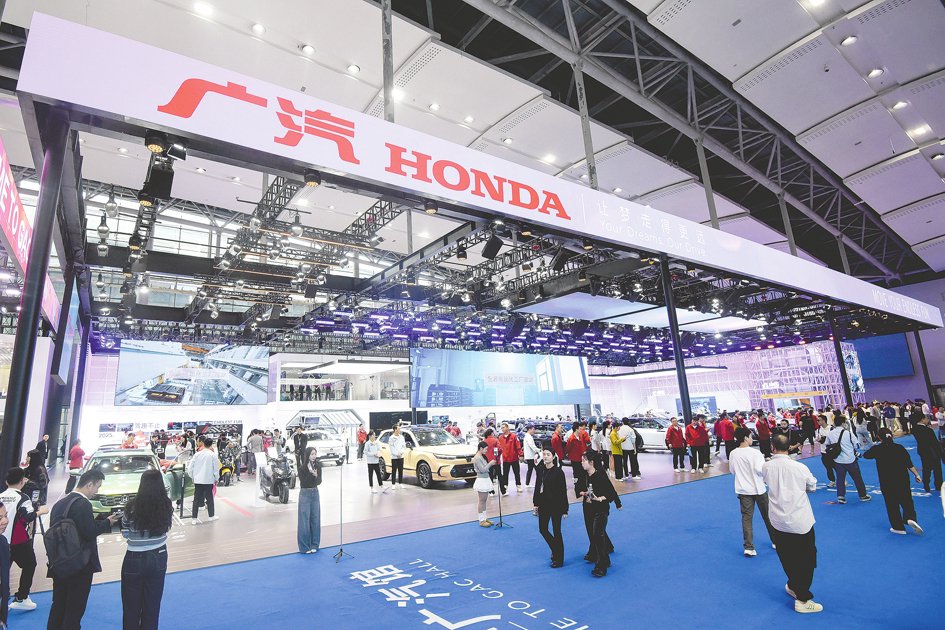
Industry Overview - In January 2026, China's automotive sales reached 2.346 million units, a month-on-month decline of 28.3% and a year-on-year decrease of 3.2% [2] - Passenger car sales totaled 1.988 million units, with a month-on-month drop of 30.2% and a year-on-year decline of 6.8% [2] - New energy vehicle (NEV) sales were 945,000 units, showing a slight year-on-year growth of 0.1%, but the growth rate has significantly slowed compared to previous years [2] New Energy Vehicles - NEVs accounted for only 40.3% of total new car sales in January [2] - Among NEV categories, production and sales of three types showed varying degrees of decline compared to the previous month, while pure electric vehicles experienced slight growth [2] - The decline in NEV sales is attributed to changes in tax policies, with the exemption being reduced to half starting January 1, 2026, increasing purchase costs [2] Commercial Vehicles - The commercial vehicle market performed well, with production and sales reaching 388,000 and 359,000 units respectively, marking year-on-year increases of 29.9% and 23.5% [3] - Truck production and sales saw rapid growth across all categories, while bus production slightly increased and sales slightly decreased [3] Exports - In January, vehicle exports continued to show strong growth, totaling 681,000 units, a year-on-year increase of 44.9% [3] - NEV exports were particularly notable, with 302,000 units exported, representing a year-on-year growth of 100% [3] Market Share and Brand Performance - Chinese brand passenger car sales fell to 1.329 million units, a year-on-year decrease of 8.9%, resulting in a market share of 66.9%, down 1.5 percentage points from the previous year [3] - Among major foreign brands, five key brands experienced double-digit declines compared to the previous month, while American brands saw double-digit growth year-on-year [3] Company Performance - The top ten automotive companies sold 1.962 million units in January, accounting for 83.6% of total automotive sales [4] - Companies such as SAIC Motor, Geely, Dongfeng, GAC Group, and Great Wall Motors reported varying degrees of sales growth compared to the previous year [4] Future Outlook - The China Automotive Industry Association anticipates a stabilization in market demand due to a series of government policies aimed at supporting consumer and business needs [4] - Policies related to vehicle scrappage and trade-in programs are expected to be implemented smoothly, further stimulating market activity [4]
挺进极寒禁区,中国新能源车企的「北极远征」
36氪· 2026-02-11 13:35
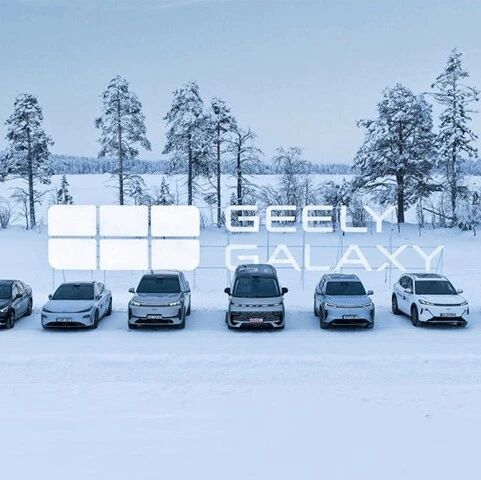
Core Viewpoint - The article emphasizes that Geely Galaxy has successfully completed a comprehensive winter testing journey in extreme conditions, showcasing its engineering capabilities and readiness for global markets, particularly in harsh environments [1][10][27]. Group 1: Winter Testing Significance - Geely Galaxy's winter testing is the first of its kind in the automotive industry, involving a full range of vehicle types and powertrains, including electric, hybrid, and hydrogen vehicles [1]. - The testing aims to determine whether Chinese electric vehicles can reliably perform in the world's most challenging environments, rather than just measuring their ability to withstand low temperatures [1][10]. - The extreme conditions of the Nordic winter serve as a "variable amplifier," testing the vehicle's systems under multiple simultaneous challenges, which cannot be replicated in domestic testing environments [6][10]. Group 2: Engineering and Testing Methodology - The article critiques the automotive industry's trend of prioritizing front-end technology narratives over essential backend engineering capabilities, leading to insufficient real-world testing [5][10]. - Geely's approach combines virtual simulations with real-world testing, focusing on the most complex scenarios to ensure safety and reliability [19]. - The company has established a global testing network, with plans to create 16 testing bases worldwide, enhancing its ability to develop and validate products across various conditions [15][26]. Group 3: Market Strategy and Growth - Geely Galaxy's sales reached 1,235,807 units in 2025, marking a 150% year-on-year increase, with continued momentum into 2026 [12]. - The growth is attributed to a diverse product lineup and a strong foundation in reliability, safety, and consistency, rather than relying on a single blockbuster model [13][21]. - Geely's strategy emphasizes building a global brand through engineering excellence, with a focus on long-term reliability and performance in various markets [22][27].
华润电力1月发电量同比增近3成 丘钛科技1月摄像模组出货量增约22%
Xin Lang Cai Jing· 2026-02-11 12:28
Company News - Q Technology (01478.HK) reported a total sales volume of camera modules of 44.071 million units in January, representing a year-on-year increase of 22.8%. Fingerprint recognition module sales reached 19.741 million units, up 18.4% year-on-year, driven by increased overseas customer demand and a growing market share in the IoT and smart automotive sectors [2] - China Resources Power (00836.HK) achieved a sales volume of 23.78879 million megawatt-hours in January, a year-on-year increase of 28.4%. The sales from wind power plants increased by 7.2%, while solar power plant sales surged by 72.3% year-on-year [2] - NetEase-S (09999.HK) projected net revenue of approximately 112.626 billion yuan for 2025, a year-on-year growth of 6.96%, with net profit expected to be around 33.76 billion yuan, up 13.68% [2] - NetEase Cloud Music (09899.HK) anticipates revenue of about 7.759 billion yuan in 2025, with an expected profit of approximately 2.746 billion yuan, reflecting a significant year-on-year growth of 75.4%. The gross margin is expected to reach 35.7%, an increase from 33.7% in 2024, attributed to business scale growth, enhanced monetization capabilities, prudent cost management, and operational leverage [2] - Huitian Group (00806.HK) expects to achieve a consolidated profit attributable to shareholders of approximately 660 million HKD for the fiscal year 2025, a substantial increase from 31 million HKD in the previous year [2] Biotech Developments - Reborn Bio-B (06938.HK) entered into an exclusive global licensing agreement with Madrigal for several siRNA assets, receiving an upfront payment of 60 million USD, with potential cumulative payments of up to 4.4 billion USD upon achieving certain development, regulatory, and commercialization milestones, in addition to potential royalties on net sales [3] - Fuhong Hanlin (02696.HK) completed the first patient dosing in a Phase 1b/2 clinical study of HLX43 in combination with HLX07 or Hansizhuang® for patients with advanced or metastatic colorectal cancer in China [3] - Heng Rui Medicine (01276.HK) announced that its injection of Rukang Trastuzumab has been included in the list of breakthrough therapies, with global sales of similar products expected to reach approximately 6.557 billion USD in 2024 [3] - Saint Bella (02508.HK) made significant progress in its global strategic expansion plan, aiming to extend its reach to the eastern United States, the UK, France, Thailand, and Australia [3] - China National Biotech Group (08247.HK) signed a strategic cooperation agreement with Xiaoshou Medical to jointly promote the enhancement of quality medical resources and grassroots medical service capabilities [3] Buyback Activities - Geely Automobile (00175.HK) repurchased 1.201 million shares at a cost of 20.3042 million HKD, with repurchase prices ranging from 16.67 to 17.08 HKD [4] - Bairong Cloud-W (06608.HK) repurchased 1.66 million shares for 18.9051 million HKD, with share prices between 11.11 and 11.43 HKD [5] - Kingsoft (03888.HK) repurchased 355,200 shares at a cost of 9.9963 million HKD, with repurchase prices ranging from 27.9 HKD to 28.2 HKD [5]



Factbox-EU tariffs on imports of China-made EVs
Yahoo Finance· 2026-02-11 11:53
Group 1 - The European Commission has imposed additional duties on imported electric vehicles from China starting in 2024, but allows carmakers to negotiate tariff exemptions for specific models [1] - Volkswagen's Cupra brand received approval for its Tavascan SUV coupe to be exempt from import tariffs in exchange for a minimum price and annual quota model [1][8] - Chinese automakers are seeking similar tariff exemption deals for their electric vehicle models intended for the European market [2] Group 2 - The EU has reduced proposed final tariffs on China-made Tesla cars and slightly adjusted rates for other manufacturers following submissions during its anti-subsidy investigation [2] - The additional tariffs are in addition to the EU's standard 10% import duty on cars [2] - Specific countervailing duties have been set for various Chinese automakers, with rates such as 18.8% for Geely Group and 17% for BYD Auto [3][4]




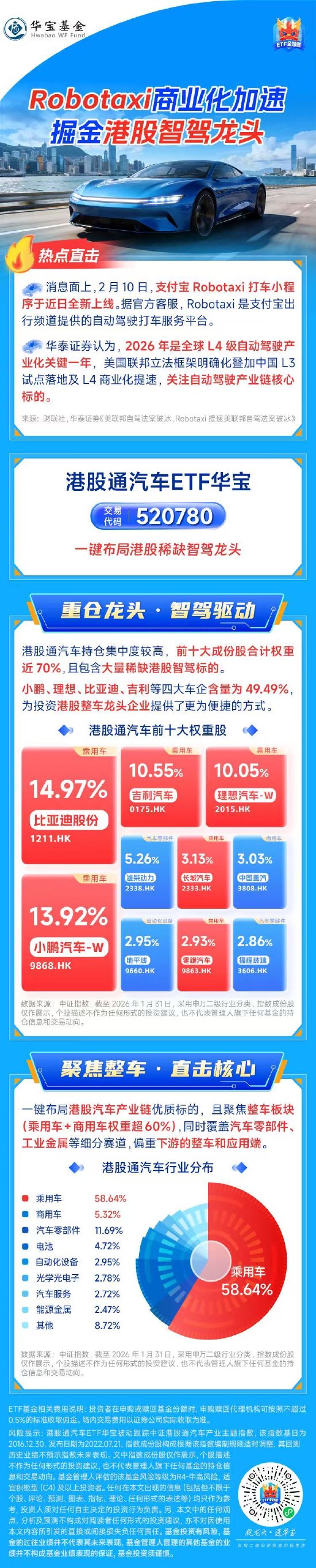
港股通汽车ETF华宝(520780):Robotaxi商业化加速,掘金港股智驾龙头
Xin Lang Cai Jing· 2026-02-11 11:40
Group 1 - The core viewpoint of the news is the launch of the Robotaxi service by Alipay, which is an autonomous driving ride-hailing platform [1][8] - Huatai Securities believes that 2026 will be a critical year for the global L4 autonomous driving industry, with the clarification of the U.S. federal legislative framework and the acceleration of L4 commercialization in China [1][2] - The report emphasizes the importance of focusing on key players in the autonomous driving industry chain [1][2] Group 2 - The Hong Kong Stock Connect automotive ETF has a high concentration of holdings, with the top ten constituent stocks accounting for nearly 70% of the total weight [3][4] - Major companies such as XPeng, Li Auto, BYD, and Geely make up 49.49% of the ETF's holdings, providing a convenient way to invest in leading automotive companies in Hong Kong [4][8] - The ETF focuses on high-quality targets in the automotive industry chain, with over 60% weight in the complete vehicle sector, covering both passenger and commercial vehicles [4][9]
曹操出行Robotaxi车队规模突破百辆 开启无人化与规模化运营验证
Zhong Guo Jing Ying Bao· 2026-02-11 11:09
Group 1 - The core point of the article is that Cao Cao Mobility has deployed a fleet of 100 Robotaxi vehicles in Hangzhou, marking the transition to large-scale operational verification of its autonomous driving services [2] - The deployment is supported by the world's first "green intelligent traffic island," aimed at facilitating the shift from human-driven to unmanned operations [2] - Cao Cao Mobility has outlined a clear "three-step" strategy, currently in the second phase, focusing on transitioning from a safety driver to unmanned operations and exploring a mixed operation model [2] Group 2 - The company aims to validate service reliability and improve fulfillment processes and passenger experience as the fleet size increases [2] - To support large-scale automated operations, the "green intelligent traffic island" features functions such as automatic battery swapping, cleaning, vehicle interior organization, intelligent scheduling, and automatic settlement [2] - In addition to domestic expansion, Cao Cao Mobility is actively pursuing international cooperation, having signed a memorandum of understanding with the Abu Dhabi Investment Office (ADIO) to establish a local office and promote autonomous driving technology trials [3] Group 3 - The company is collaborating with Geely and related partners to develop a fully customized Robotaxi model with pre-installed autonomous driving components, which is expected to be unveiled this year [3] - The plan includes a target of deploying a total of 100,000 units by 2030 [3]