iRobot

Search documents
AI时代怎么做硬件出海,沈劲谈中国公司:该轮到我们定义品类了
创业邦· 2026-02-15 10:57
Core Viewpoint - The article discusses the evolution of Chinese consumer electronics from a phase of following global leaders to a phase of leading and defining new product categories, particularly in the context of AI and emerging technologies [5][14][36]. Group 1: Transition Phases in Chinese Consumer Electronics - The evolution of Chinese consumer electronics can be categorized into three phases: following, catching up, and leading. The "following" phase involved benchmarking against leaders and offering high cost-performance products, while the "catching up" phase focused on single-point innovations and high-end breakthroughs [10][12]. - The leading phase is characterized by a reconstruction of product paradigms and the discovery of new usage scenarios, with the expectation that 2025 will mark the year when China leads in smart cleaning technology [14][19]. Group 2: New Product Categories and Innovations - The article highlights the emergence of two new product categories: Ambient AI terminals and personal AI supercomputing centers. Ambient AI terminals focus on passive interaction and context establishment, while personal AI supercomputing centers emphasize offline intelligence and privacy protection [21][25]. - OpenAI's upcoming AI hardware is expected to fill specific gaps rather than replace smartphones, aligning with the identified market needs [25]. Group 3: Factors for Successful Category Definition - The ability to define product categories is broken down into five dimensions: trend recognition, scene selection, technology integration, experience closure, and scalability. Chinese companies have made significant progress in these areas, particularly in understanding overseas markets [27][29]. - The article emphasizes the importance of deeply understanding the lifestyles and values of different generations, such as Gen Z and Alpha, to successfully define and market new products [29][32]. Group 4: Historical Context and Future Outlook - The historical context of Chinese companies' evolution in consumer electronics is discussed, noting that past successes were often built on following established leaders. The current environment presents a "definer's dividend," where Chinese companies are positioned to lead in new categories [35][36]. - The article concludes with a call for entrepreneurs to strive for category definition, suggesting that the process of naming and defining new products is collaborative and iterative [42][43].


扫地机器人“鼻祖”谢幕,中国品牌占据C位
Qi Lu Wan Bao· 2026-02-13 11:30
Core Viewpoint - The global smart cleaning industry is undergoing a historic transformation, with Chinese brands dominating the market following the decline of iRobot, the pioneer of robotic vacuum cleaners [1][6]. Group 1: Market Dynamics - iRobot, once holding over 80% market share at its peak, has seen its share plummet to 7.9% by Q3 2025, with total liabilities reaching $508 million and cash flow nearly depleted [1]. - Chinese brands such as Ecovacs, Roborock, and others have captured over 65% of the global market share, with significant presence in various regions, including the U.S. and Europe [2][6]. - The online sales revenue of China's robotic vacuum industry reached 16.6 billion yuan in the first ten months of 2025, marking a 17% year-on-year increase [2]. Group 2: Technological Advancements - The industry has evolved from basic cleaning functions to incorporating AI and embodied intelligence, allowing products to understand complex user intentions [3][4]. - Innovations such as the "active water roller" technology have addressed core cleaning issues, with the market for these products expected to exceed 80% share by 2026 [3]. Group 3: Cross-Industry Expansion - Chinese brands are transitioning from single cleaning device manufacturers to comprehensive smart ecosystem enterprises, with companies like Roborock and Ecovacs expanding into various home appliance categories [4][5]. - Roborock plans to launch a range of smart home products, including air conditioners and refrigerators, while Ecovacs is diversifying into window cleaning robots and air purifiers [5]. Group 4: Competitive Landscape - The entry of cross-industry players, such as DJI with its ROMO robotic vacuum, intensifies competition, indicating a shift from traditional home appliance logic to robotic logic [5][6]. - The ongoing competition is characterized by technological innovation and global capabilities, with Chinese brands leading in R&D investment and market adaptability [6].


石头科技20260205
2026-02-10 03:24
Summary of Stone Technology Conference Call Company Overview - **Company**: Stone Technology (石头科技) - **Industry**: Robotic Cleaning Devices Key Points Financial Performance - **2025 Profitability**: The net profit from the overseas market for robotic vacuum cleaners is stable, with profit margins of approximately 20% in Europe and Asia-Pacific, and around 5% in the US, contributing an estimated net profit of 2 billion RMB for the year [2][8] - **Domestic Market Losses**: The domestic market faced a loss of 100 million RMB due to intensified competition and self-subsidy measures, marking the first loss in a decade [2][4] - **New Business Losses**: The washing machine business is expected to incur losses of 500-600 million RMB, the floor washing machine business 200 million RMB, and the lawn mower business 100 million RMB, with new businesses being the main financial drag [2][8] Strategic Adjustments for 2026 - **Cost-Cutting Measures**: Stone Technology plans to reduce losses from new businesses by 700 million RMB through the closure of the washing machine division, cessation of self-subsidies for floor washing machines, and timely delivery of lawn mower orders [2][7] - **Revenue Projections**: The revenue from floor washing machines is expected to reach 5 billion RMB in 2026, with 30% from overseas sales, potentially achieving a profit margin close to 10% [2][11] Market Expansion Strategies - **US Market Penetration**: The company is expanding its presence in the US market through Costco and Target, utilizing a streamlined SKU strategy and competitive pricing to drive rapid growth [2][28] - **European Market Promotion**: Increased marketing efforts in Europe, including a partnership with Real Madrid, aim to enhance brand recognition and drive sales growth [3][29] Competitive Landscape - **Comparison with Competitors**: Stone Technology's strategy contrasts with competitors like Ecovacs, which focuses on a simplified product strategy to reduce costs. Stone Technology emphasizes adding features without significantly raising prices, which affects short-term profitability [15][17] - **Product Strategy**: The introduction of low-cost cylindrical vacuum robots aims to counter competition while maintaining the integrity of existing product lines [15][20] Future Outlook - **Profitability Forecast for 2026**: The company anticipates a total profit of approximately 2.4 billion RMB in 2026, with a valuation of only 16 times earnings, indicating a positive outlook [35] - **Emerging Product Categories**: The washing machine segment is projected to generate over 2 billion RMB in sales in 2025, with expectations to reach 4-5 billion RMB in 2026, and the lawn mower business is expected to break even [33] Challenges and Risks - **Domestic Market Concerns**: The company does not foresee long-term losses in the domestic market, provided it maintains market share without initiating price wars [18][19] - **Product Limitations**: The cylindrical vacuum robot is not expected to become the sole mainstream solution due to its limitations, with other models like flat mops and dual-disc designs continuing to evolve [20] Conclusion - Stone Technology is navigating a challenging market landscape with strategic adjustments aimed at reducing losses and enhancing profitability. The focus on overseas expansion, product innovation, and brand promotion positions the company for potential growth in the coming years.
未知机构:申万宏源家电扫地机1月数据更新1月扫地机线上数据由于受以-20260210
未知机构· 2026-02-10 01:50
Summary of Key Points from the Conference Call Industry Overview - The conference call focuses on the vacuum cleaner industry, specifically the performance of various brands in January, including Stone Technology, Ecovacs, Yunji, and Chasing. - The data indicates a significant impact from the trade-in policy and pre-Spring Festival consumption, leading to a year-on-year increase in sales. Core Insights and Arguments - **Sales Growth**: In January, online sales of vacuum cleaners increased by 7.9% year-on-year, with sales volume up by 4.5% and average price down by 1% [1] - **Market Share**: The online market share for Stone Technology, Ecovacs, Yunji, and Chasing in January was 31.0%, 29.1%, 11.0%, and 11.6% respectively, with Stone's share increasing by 8.0% year-on-year [1] - **Sales Performance**: Stone Technology's sales in the US market reached $62 million in December, while in Germany, it led with $66 million, marking a 171% year-on-year increase [2] - **Product Leadership**: The best-selling product in January was the Stone P20 Ultra Plus, maintaining the highest market share since its launch in August, with a price advantage over Ecovacs' T80s series [2] - **Competitive Landscape**: The industry shows a clear head effect, with Stone Technology enhancing its leading position, while non-listed companies face ongoing pressure. Yunji is in a Pre-IPO stage, focusing on profit demands, and Chasing is diversifying its product categories but prioritizing profit maintenance [2][3] Additional Important Insights - **Product Strategy**: Stone's P20 series is noted for its high cost-performance ratio, contributing significantly to its market share growth. The company has also launched a new roller-type product that is now in the sales cycle [3] - **Market Challenges**: Yunji's new products, despite covering advanced features, have not met market expectations since their launch in August, leading to a decline in market share [3] - **Chasing's Strategy**: Chasing faces noticeable pressure on sales share, with its new products not yet showing significant impact due to a scattered focus across multiple categories [3]
2025年出生的机器人已经“淤”了
虎嗅APP· 2026-02-07 03:24
以下文章来源于AGI接口 ,作者宋思杭 AGI接口 . AI卷起的财富风暴。 | | 泡沫究竟有多大? | | --- | --- | | 出品|虎嗅科技组 | | | 作者|宋思杭、陈伊凡 | | | 编辑|苗正卿 | | | 头图|视觉中国 | | "AI硬件100"是虎嗅科技组推出针对AI硬件、具身智能等新兴赛道的创新栏目,这是本系列的第「01」篇文 章 泡沫已现。 近期,有多个具身智能赛道相关投资人、创业者在过去半年明确告诉虎嗅:大部分具身智能整机厂商正面 临"订单饥渴"——在B、C两端,真实的市场需求或已经不足以消化2025年年内生产出的机器人了。 一个更深层的隐患是,众多在2025年拿到投资的知名具身智能项目、部分已经发展至行业中腰部体量的具 身智能公司,正在面临"商业模式"困局:在订单不足的情况下,公司并不具备健康的"现金流造血能力"。 一位知名投资人向虎嗅直言:"目前,具身智能行业,真正在买单的,是投资机构、投资入股的互联网大 厂,简言之现在不存在ToB或者ToC,本质上是ToLP。"该投资人进一步表示,除了宇树、智元等少数头部 公司探索出了较为成熟的商业化模式,绝大部分公司2026年的存活逻 ...

追觅创始人“豪言不断”!下一个马斯克,还是下一个贾跃亭?
Sou Hu Cai Jing· 2026-02-04 16:36
Core Viewpoint - The CEO of Chasing Technology, Yu Hao, has made bold predictions about the future of Tesla and the ambitions of his own company, positioning himself as a controversial figure in the tech industry [2][5][23] Group 1: Company Ambitions and Predictions - Yu Hao predicts that in 20 years, Tesla will face significant challenges similar to those of iRobot, which went bankrupt in 2025 [5] - He aims for Chasing Technology to become the world's first trillion-dollar company ecosystem, claiming that competitors like Musk and Huang Renxun will not surpass a valuation of 8-10 trillion [7][8] - The company plans to launch a high-end smartphone and has ambitious goals in the automotive sector, including a luxury electric vehicle to rival Bugatti by 2027 [19][20] Group 2: Financial Performance and Market Position - Chasing Technology's revenue is projected to reach 15 billion yuan in 2024, with significant growth expected in 2025, where it has already surpassed its previous year's total by mid-year [15] - The company holds a 12% market share in the global robotic vacuum market, ranking third behind competitors like Roborock and Ecovacs [15] - Despite rapid growth, the Chinese robotic vacuum market is showing signs of decline, with retail sales dropping by approximately 7% from 2021 to 2024 [17] Group 3: Challenges and Consumer Feedback - Chasing Technology faces over 4,200 complaints on consumer platforms, primarily related to after-sales service and product quality [17][18] - The company is under pressure to find new growth avenues as the market for its core products becomes increasingly competitive [19][22] - Yu Hao's aggressive expansion into various sectors, including automotive and smart home devices, raises questions about the sustainability of such rapid diversification [22]

第一波人形机器人倒闭潮,来了
芯世相· 2026-02-03 08:37
Core Viewpoint - The humanoid robot industry is experiencing a dual reality in 2025, with significant financing and market activity on one side, while many companies face collapse due to operational and financial challenges on the other [4][10]. Group 1: Industry Overview - In 2025, the humanoid robot sector saw 57 billion yuan in financing, with nearly 30 companies preparing for IPOs, while over 100 companies are struggling, leading to a stark divide between the leading and lagging firms [4][14]. - The industry is undergoing a brutal elimination process, with many once-prominent companies failing to transition from concept to production, revealing a gap between technological enthusiasm and commercial viability [4][9]. Group 2: Company Failures - K-Scale Labs, a notable startup, collapsed just before mass production due to cash flow issues, highlighting the challenges faced by U.S. companies lacking a complete local supply chain [5][10]. - Rethink Robotics, a pioneer in collaborative robots, faced its second closure in 2025 after failing to meet market expectations, demonstrating the risks of rushed product launches [6][10]. - The closure of Embodied, which produced a social robot for children, underscores the vulnerabilities of cloud-dependent models, as the company's failure rendered its product useless [8][10]. - iRobot, known for its Roomba, filed for bankruptcy in December 2025, attributed to prolonged financial struggles and competition from lower-priced alternatives [8][10]. Group 3: Common Causes of Failure - The primary reasons for company failures include funding shortages, commercialization failures, product homogeneity, and insufficient technological reserves [10][11]. - Funding shortages are critical, as many companies, like K-Scale Labs and iRobot, faced insurmountable debts and cash flow issues leading to their demise [10][11]. - Over 50% of humanoid robot orders are primarily for public relations and data collection rather than genuine productivity, indicating a failure in commercial viability [11][12]. - Product homogeneity has led to a competitive landscape where many companies produce similar offerings, diluting their market differentiation [12][13]. Group 4: Future Outlook - The humanoid robot industry is expected to see a significant shift in 2026, with a focus on industrial applications rather than academic research, as companies seek to establish reliable commercial orders [14][15]. - Predictions for global humanoid robot shipments in 2026 vary, with estimates ranging from 30,000 to over 50,000 units, depending on technological advancements [15]. - Surviving companies must differentiate their products, establish real commercial cycles, maintain funding capabilities, and leverage data to enhance AI models [15][16].

护城河也会干涸,如果没有“再投资能力”
雪球· 2026-01-31 04:21
Core Concept - The article discusses the concept of "economic moats" as defined by Morningstar, emphasizing the importance of a company's ability to generate excess returns over a long period [6][7][8]. Group 1: Economic Moat Definition and Characteristics - Economic moats are defined as a company's ability to maintain excess returns, with a wider moat indicating a slower decline into mediocrity [8]. - Morningstar categorizes economic moats into three types: Wide Moat, Narrow Moat, and No Moat, with specific quantitative definitions and characteristics for each [10]. - A company with a Wide Moat is expected to sustain excess returns for at least 20 years, while a Narrow Moat can maintain excess returns for at least 10 years [9][10]. Group 2: Importance of Valuation - Valuation is crucial in assessing moat companies, with Morningstar advocating for a dynamic valuation standard based on the certainty of a company's business model [17][18]. - Different levels of uncertainty in a company's valuation require varying degrees of discount for buying and premium for selling [20]. - The article highlights that a more nuanced approach to valuation, based on business models, is more aligned with market realities than a blanket tolerance for good companies [21]. Group 3: ETF and Performance Comparison - Morningstar's moat investment philosophy is encapsulated in the VanEck Morningstar Wide Moat ETF (MOAT), which has been in existence since 2012 [22]. - As of the end of 2025, the MOAT ETF underperformed the S&P 500 index, primarily due to the recent market dynamics dominated by a few large-cap stocks [23][25]. - Despite underperforming the S&P 500, the MOAT ETF still showed better performance compared to an equal-weighted S&P 500 index [25]. Group 4: Evolution of Moat Concept - The article references Pat Dorsey, who expanded on the moat concept after leaving Morningstar, introducing categories like Legacy Moat and Reinvestment Moat [27][28]. - Legacy Moat companies have strong competitive advantages but limited growth opportunities, while Reinvestment Moat companies can reinvest profits into high-return opportunities [28]. - The article also discusses the emergence of Capital Light Compounders, which leverage network effects for growth with minimal capital investment [29].

扛不住!又一家割草机器人开始破产清算,行业洗牌加剧,突围之路在何方?
机器人大讲堂· 2026-01-28 10:24
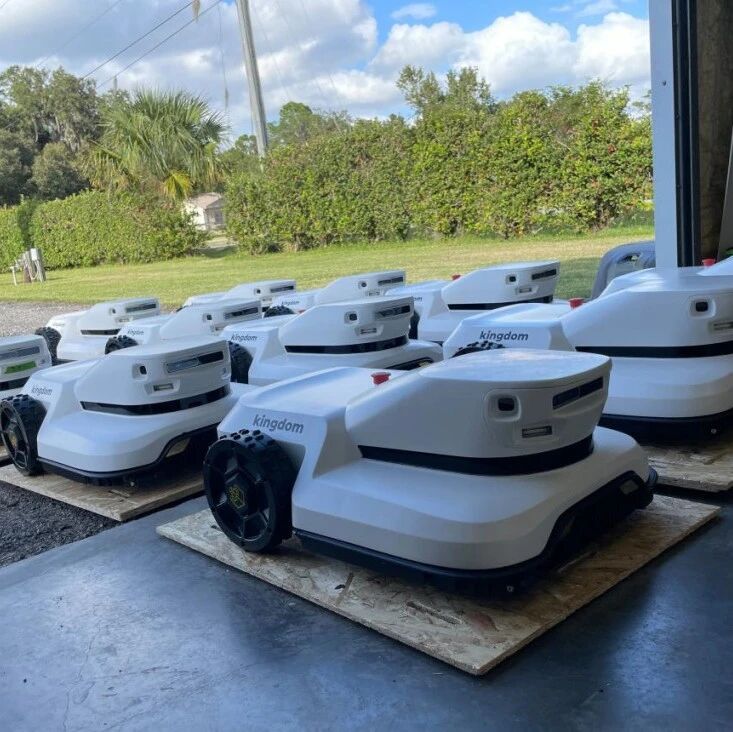
在智能硬件出海的热潮中,割草机器人一度被视为继扫地机器人之后的下一个 "蓝海"与"风口"。然而,近期一 系列企业的退场事件,却为这个高速增长的赛道蒙上了一层阴影。 1 月 23 日,英国商用割草机器人厂商 Kingdom Technologies 正式宣布进入清算程序,其 CEO 在声明中坦 言,技术成熟周期与市场、融资环境的不匹配,加上激烈的市场竞争,导致企业未能筹集到持续运营的资金, 最终无奈退场。 " 在充满挑战的融资环境和日益激烈的市场竞争下,我们未能筹集到继续运营所需的资金。 " 这并非个例, 2025 年四季度,全球家用机器人巨头 iRobot 正式关停旗下割草机器人业务, 引发行业震动 ; 此前,国内割草机器人公司森合创新创始人李畅在社交平台发布公开信称,虽全力推进 R1 产品交付,但 受团队意外重组、制造难题以及资金限制等因素影响,公司已无力维持运营。 从英国商用割草机器人厂商 Kingdom Technologies 的清算,到全球巨头 iRobot 关停相关业务,再到中国 企业森合创新,行业洗牌的信号已愈发清晰。一面是市场规模的持续扩大与资本的争相涌入,另一面则是企业 接连倒闭、黯然离场, ...
第一波人形机器人倒闭潮,来了
虎嗅APP· 2026-01-27 14:17
Core Insights - The humanoid robot industry faced a harsh elimination race in 2025, with notable companies collapsing and the gap between leading and lagging firms widening significantly [4][5][11] - The industry is transitioning from a phase of hype and funding to one focused on actual production and commercial viability, highlighting the need for sustainable business models [9][12] Industry Overview - In 2025, the humanoid robot sector saw 610 financing events, nearly tripling from the previous year, with total funding exceeding 57 billion yuan, indicating a stark divide between top-tier and struggling companies [16] - The customer base shifted from academic institutions to industrial enterprises, reflecting a growing recognition of humanoid robots in production settings [16] Company Failures - K-Scale Labs, a once-prominent startup, collapsed just before mass production due to cash flow issues, revealing the challenges faced by many startups in the U.S. lacking a robust local supply chain [6][11] - Rethink Robotics, a pioneer in collaborative robots, faced its second closure in 2025 after failing to meet market demands, illustrating the rapid pace of technological evolution and competition [7][13] - iRobot, known for its Roomba, filed for bankruptcy in December 2025, struggling against low-cost competitors and regulatory hurdles, marking a significant decline for a once-leading company [8][11] Key Challenges - Many humanoid robot companies are experiencing funding shortages, with a lack of follow-up financing leading to operational difficulties [11] - Over 50% of humanoid robot orders are primarily for public relations and data collection rather than genuine productivity enhancement, indicating a failure in commercial viability [12] - Product homogeneity has intensified competition, with many companies producing similar low-barrier products, making it difficult to establish a competitive edge [12][13] Future Outlook - The survival of companies in the humanoid robot sector will depend on securing continuous funding and achieving repeat orders in industrial applications [16][17] - Companies must differentiate themselves, establish real commercial cycles, and leverage data to enhance AI capabilities to thrive in the evolving market [17] - The industry is expected to see a significant increase in humanoid robot shipments in 2026, contingent on technological advancements [16]