关键矿产战略

Search documents
资讯早班车-2026-02-25-20260225
Bao Cheng Qi Huo· 2026-02-25 01:50
1. Report Industry Investment Rating There is no information about the report industry investment rating in the provided content. 2. Core Viewpoints of the Report - The economy shows a mixed picture, with some indicators experiencing decline while others are on the rise. For example, GDP growth rate has decreased, but social financing scale has increased [1]. - The commodity market is active, with significant capital inflow on the first trading day after the Spring Festival, especially in gold, silver, copper, and lithium carbonate [2]. - The stock market has different performances, with A - shares having a good start in the Year of the Horse, while the Hong Kong stock market has declined [29]. - The bond market is relatively strong, with most interest - rate bond yields falling and some bond prices rising or falling [19]. 3. Summary by Directory 3.1 Macro Data Overview - GDP growth rate in Q4 2025 was 4.5%, down from 4.8% in the previous quarter and 5.4% in the same period last year [1]. - In January 2026, the manufacturing PMI was 49.3%, slightly up from 49.0% in the previous month; the non - manufacturing PMI: business activity was 49.4%, down from 50.1% in the previous month [1]. - Social financing scale in January 2026 was 7220.8 billion yuan, a significant increase from 817.8 billion yuan in the previous month [1]. - M0, M1, and M2 growth rates in January 2026 were 2.7%, 4.9%, and 9.0% respectively, with M0 and M1 growth rates decreasing compared to the previous month, while M2 growth rate increased [1]. - CPI in January 2026 was 0.2% year - on - year, the same as the previous month; PPI was - 1.4% year - on - year, an improvement from - 2.1% in the previous month [1]. 3.2 Commodity Investment Reference 3.2.1 Comprehensive - The 1 - year LPR is 3.0% and the 5 - year LPR is 3.5%, remaining unchanged for 9 consecutive months. Policy interest rates and LPR quotes are likely to remain stable in the short term [2]. - On February 24, the commodity futures market had a net capital inflow of nearly 45 billion yuan, with significant inflows into gold, silver, copper, and lithium carbonate [2]. - The Shanghai Gold Exchange adjusted the margin ratios and price limits for some contracts starting from February 24 [2]. - The US has started to levy a 10% global tariff and is preparing to raise it to 15%. It is also considering additional tariffs on six industries [3]. 3.2.2 Metals - The Ministry of Commerce included 20 Japanese entities in the export control list and 20 in the watch list to prevent Japan's "remilitarization" and nuclear - possession attempts [5]. - In December 2025, the global refined copper market had a surplus of 173,000 tons [6]. - As of February 24, 2026, the持仓 of the world's largest gold ETF, SPDR Gold Trust, increased by 7.72 tons to 1094.19 tons [6]. - Many countries are implementing strategies for key mineral reserves, which may lead to a shift in commodity policies [6]. 3.2.3 Coal, Coke, Steel, and Minerals - The Trump administration plans to use an AI project to set reference prices for key minerals in a global metal trading group [7]. 3.2.4 Energy and Chemicals - Domestic refined oil prices have increased for the third time this year. On February 24, gasoline and diesel prices were raised by 175 yuan/ton and 170 yuan/ton respectively [9]. - Venezuela will increase its crude oil exports starting from March, especially to India [9]. - The CEO of Occidental Petroleum said that US oil production can remain stable when oil prices are between $60 - 65 per barrel [9]. 3.2.5 Agricultural Products - ICE cocoa fell below $3000/ton, reaching its lowest level since March 2024 [11]. - The US Department of Agriculture predicts that US beef exports will decrease by 6% and imports will increase by 3% in 2026 compared to 2025 [11]. - India's soybean meal exports in January 2026 increased to 132,440 tons [11]. - Malaysia's palm oil exports from February 1 - 15 decreased by 11.2% [11]. 3.3 Financial News Compilation 3.3.1 Open Market - On February 24, the central bank conducted 526 billion yuan of 7 - day reverse repurchase operations, with a net withdrawal of 926.4 billion yuan as 1452.4 billion yuan of reverse repurchases matured [13]. - The central bank will conduct 600 billion yuan of MLF operations in February, with an additional 300 billion yuan compared to the maturity amount, marking the 12th consecutive month of increased renewal [13]. 3.3.2 Important News - The US has started to levy a 10% global tariff and is considering raising it to 15%, as well as additional tariffs on six industries. China is closely monitoring and may adjust counter - measures [14]. - Panama's government took over two container terminals operated by CK Hutchison. China will safeguard the legitimate rights and interests of the enterprise [15]. - The State Council meeting deployed post - Spring Festival government work, including promoting the development of the silver - haired economy and pension services [15]. - The Spring Festival holiday had record - high domestic tourism numbers and spending [15]. - The consumer goods trade - in program in 2026 has benefited 30.532 million people and driven sales of 204.54 billion yuan [16]. - The Spring Festival travel season had a record - high travel volume, with an 8.2% year - on - year increase [16]. - The real estate market in core cities may experience a "small spring" recovery after the holiday [16]. - The LPR has remained unchanged for 9 consecutive months, and policy interest rates are likely to remain stable in the short term [16]. - The public fund issuance market was active on the first trading day after the Spring Festival [17]. 3.3.3 Bond Market Summary - On the first trading day after the Spring Festival, the inter - bank bond market was relatively strong, with most interest - rate bond yields falling and treasury bond futures rising [19]. - The inter - bank market funds were slightly tightened, with the weighted average interest rates of DR001, DR007, and DR014 rising [20]. - In the exchange bond market, some bonds rose and some fell, and the Wande real - estate bond 30 index and high - yield urban investment bond index rose [20]. - The CSI Convertible Bond Index and Wande Convertible Bond Equal - Weighted Index rose [21]. - Most money market interest rates rose [21]. - Shibor short - term varieties mostly rose [22]. - Bank - to - bank repurchase fixed - rate bonds rose across the board [22]. - The winning bid yields and multiples of some financial bonds and treasury bonds were announced [23]. - European bond yields fell collectively, and US bond yields showed mixed trends [23][24]. 3.3.4 Foreign Exchange Market - The on - shore RMB against the US dollar rose 265 points to 6.8849 at the 16:30 close, and the central parity rate was depreciated by 16 points [25]. - The US dollar index rose 0.17%, and most non - US currencies fell [25]. 3.3.5 Research Report Highlights - Xingzheng Fixed - Income believes that the Chinese - funded US - dollar bond market is volatile, and it is recommended to prioritize the coupon strategy and use hedging tools [26]. - CITIC Securities believes that the recent fluctuations in US tariff policies may have limited impact on China's exports in 2026 [27]. 3.4 Stock Market News - A - shares had a good start in the Year of the Horse, with the Shanghai Composite Index rising 0.87%, the Shenzhen Component Index rising 1.36%, and the ChiNext Index rising 0.99%. Resource - related stocks rose, while some sectors such as film and AI application stocks declined [29]. - The Hong Kong stock market fell, with the Hang Seng Index down 1.82%, the Hang Seng Tech Index down 2.13%, and the Hang Seng China Enterprises Index down 2.06%. Some sectors such as large - scale technology stocks and financial stocks declined, while some sectors such as AI application and oil and gas stocks rose [29].
继“金库计划”后,摩科瑞与刚果(金)合资企业启动出口铜钴
Sou Hu Wang· 2026-02-06 03:47
Group 1 - Gécamines SA, controlling approximately 500,000 tons of cathode copper and significant cobalt resources, has formed a joint venture with Mercuria, which has received $1 billion in funding from both Mercuria and the U.S. government [1] - The joint venture has commenced operations, exporting copper and cobalt products to Saudi Arabia and the UAE [1] - The U.S. has initiated a $12 billion strategic critical mineral reserve project called "Project Vault," with Mercuria collaborating with two other U.S. commodity traders to procure raw materials [1] Group 2 - The Democratic Republic of the Congo (DRC) is the world's second-largest copper producer and has the richest cobalt resources globally, with Chinese companies dominating the mining and processing sectors [2] - The DRC has proposed to open mining and infrastructure projects in exchange for U.S. support to quell rebel actions in the eastern region, backed by Rwanda [2] - The U.S. government supports the transaction to divert critical mineral supplies from strategic competitors like China, ensuring stable and reliable metal sources for the U.S. and its allies [2]
内外齐发力,特朗普正全力推进其关键矿产战略
Bei Jing Ri Bao Ke Hu Duan· 2026-01-31 23:49
Group 1 - The Trump administration has acquired a 10% stake in a U.S. rare earth company and provided up to $1.3 billion in priority secured loans, indicating a strategic focus on critical minerals [1][6] - The U.S. aims to enhance domestic production capabilities and create a self-sufficient rare earth supply chain through significant investments in local companies [1][6] - The administration is also working to build an international coalition to exclude China from the critical minerals supply chain, leveraging G7 and other multilateral mechanisms [1][7] Group 2 - The U.S. is responding to China's dominance in the critical minerals supply chain by restructuring its market and industry ecosystem to reduce reliance on Chinese imports [3][10] - A presidential proclamation has been signed to classify dependence on foreign critical minerals as a national security threat, initiating a 180-day negotiation window for trade agreements with global suppliers [3][5] - The U.S. plans to implement a price floor mechanism during negotiations to protect the interests of American and allied mining sectors [3][5] Group 3 - The U.S. has invested in at least six critical mineral companies since last year, indicating a trend of government intervention in the sector to bolster domestic production [6][12] - The U.S. Treasury Secretary convened a meeting with G7 and allied nations to discuss the security of critical mineral supply chains, aiming to translate plans into actionable policies [7][9] - The upcoming ministerial meeting is intended to further coordinate policies and strengthen the so-called "friend-shoring" of critical mineral supply chains [7][9] Group 4 - The U.S. has a 100% net import dependency on 12 critical minerals, with over 50% dependency on 29 others, highlighting the urgent need to revitalize domestic production capabilities [10][12] - The establishment of a "Critical Minerals Production Alliance" aims to enhance U.S. processing capabilities and create an independent supply chain outside of China [12][16] - The strategic value of critical minerals has been elevated, with the U.S. seeking to gain leverage in the geopolitical landscape by reducing vulnerabilities in its supply chains [14][16]

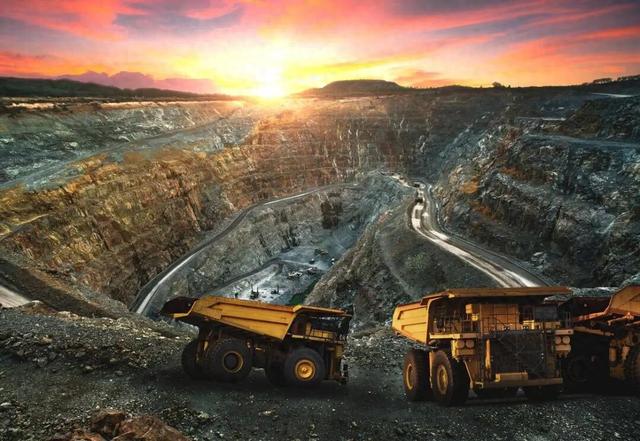
特朗普政府将入股美国稀土公司,持股10%涉资16亿美元
Hua Er Jie Jian Wen· 2026-01-26 08:05
Core Insights - The Trump administration is set to announce a $1.6 billion debt and equity investment plan to acquire a 10% stake in USA Rare Earth, marking a significant move to boost domestic production of critical minerals [1][3] - USA Rare Earth will also receive an additional $1 billion in private investment to support the development of domestic mining and magnet manufacturing facilities [1] - The investment includes 16.1 million shares and 17.6 million warrants priced at $17.17 per share, aligning with the company's recent stock price [2] Company Developments - USA Rare Earth is collaborating with Texas Mineral Resources to develop a mine in Sierra Blanca, Texas, expected to commence production in 2028 [2] - The company has a magnet manufacturing facility in Stillwater, Oklahoma, which is anticipated to start operations later this year [2] - The investment is part of a broader strategy by the Trump administration to enhance domestic production of lithium, rare earths, and other critical minerals essential for defense and technology sectors [4] Strategic Initiatives - This transaction represents the latest effort by the Trump administration to enter the critical minerals sector, following previous investments in MP Materials, Lithium Americas, and Trilogy Metals [3] - A senior official from the Trump administration indicated plans for more "historic deals" with the U.S. mining sector to increase the production of key minerals [4]
Sibanye旗下芬兰Keliber锂项目有望按计划于一季度完工
Wen Hua Cai Jing· 2026-01-21 08:02
Group 1 - Sibanye Stillwater has completed a multidisciplinary assessment of the Keliber lithium project in Finland, which is considered the most advanced integrated lithium project in Europe [2] - The Keliber project aims to produce approximately 15,000 tons of battery-grade lithium hydroxide (LiOH) annually over an 18-year period [2] - The project has been designated as a strategic project by the EU, aligning with the EU's Critical Raw Materials Act (CRMA) [2] Group 2 - The construction phase is expected to be completed by the first quarter of 2026, with total capital investment estimated at approximately €783 million [2] - Sibanye and its strategic partner, Finnish Minerals Group, have agreed that a phased approach to the Keliber project is the best way forward given current market conditions [4] - This phased approach aims to reduce project start-up risks by ensuring operational readiness in mining and beneficiation before refining plant commissioning [5] Group 3 - Finnish Minerals Group is preparing to participate in the project according to its 20% equity stake to secure additional financing needed during the start-up phase [6] - The CEO of Sibanye Stillwater emphasized that the phased acceleration plan ensures responsible advancement of the Keliber project while balancing market realities and stakeholder interests [6] - Significant investments have been made during the price cycle to complete the construction phase of the Keliber project, ensuring regional supply for the EU battery value chain [6]


NAB澳洲国民银行预计澳储行将在2月和5月加息 “救火CEO”携1600万天价薪酬功成身退 赌场巨头SGR巨震之后期待向阳而生
Sou Hu Cai Jing· 2025-12-17 11:31
Group 1: Economic Outlook and Interest Rates - NAB predicts that the Reserve Bank of Australia (RBA) will raise interest rates in February and May 2026, marking it as the second major bank to forecast rate hikes in 2026 [1] - NAB's Chief Economist, Sally Auld, indicates that the local economy is currently at trend growth levels, with private sector demand stronger than RBA's expectations [1][2] - NAB's business survey shows an increase in capacity utilization across various industries, with companies reporting reduced pressure on profit margins in recent months [1] Group 2: Star Entertainment's Leadership Changes - Steve McCann, the "turnaround CEO" of Star Entertainment, will leave the company after earning approximately AUD 16 million in less than two years, which included a high sign-on bonus and performance incentives [3] - Under McCann's leadership, Star managed to retain its casino operating license and improve relationships with lenders, selling key assets to stabilize the company [3][4] - The new chairman, Bruce Mathieson Jnr, will take over McCann's executive role until a successor is found, and Star's stock has rebounded by 19% following recent changes in leadership and major shareholder adjustments [5] Group 3: Radiopharm Theranostics' Clinical Trial Success - Radiopharm Theranostics' stock surged by over 61% after positive interim results from a clinical trial of RAD 101, where 92% of patients reached the primary endpoint [5] - The CEO, Riccardo Canevari, stated that the combination of RAD 101 PET imaging with standard MRI could significantly change disease management for brain metastases patients [5] Group 4: Currency and Commodity Market Insights - UBS forecasts that the divergence in monetary policy between Australia and the U.S. will support a significant appreciation of the Australian dollar, potentially reaching USD 0.69 in the next three months [7][11] - Historical data shows that during previous policy divergence periods, the Australian dollar appreciated between 10% to 40% [8] - The current economic indicators suggest that Australia is performing better than the U.S. in terms of growth, inflation, and labor market metrics, which could further support the Australian dollar [9] Group 5: Fortescue's Acquisition Strategy - Fortescue announced a 50% premium acquisition of the remaining 64% stake in Alta Copper, valuing the deal at approximately CAD 139 million, to secure long-term copper supply [13][14] - Analysts view this acquisition as a low-risk, low-cost move that aligns with Fortescue's strategic focus on key minerals [14] Group 6: Flagship Minerals' Project Development - Flagship Minerals is advancing its Pantanillo gold project in Chile, recently attracting strategic investment from Shandong Xinhai Mining, which enhances the project's engineering capabilities [17][18] - The project is transitioning from resource definition to engineering decision-making, with plans to upgrade resource estimates and conduct metallurgical testing [25][28] - The company aims to enter the preliminary feasibility study phase by late 2026, with a focus on resource upgrades and environmental assessments [34][35]
UK announces critical minerals strategy to cut import reliance
Yahoo Finance· 2025-11-24 15:23
Core Points - The UK Government has introduced a critical minerals strategy to reduce reliance on imported minerals, aiming for 10% domestic production and 20% recycling by 2035 [1][2] - The strategy includes a funding boost of up to £50 million for critical minerals projects, addressing the UK's heavy dependence on foreign sources, particularly from China [2][5] - Lithium is a primary focus, with a target of at least 50,000 tonnes of domestic production within the next decade, as demand is projected to increase by 1,100% by 2035 [2][3] Domestic Production and Recycling - The strategy aims to cap import exposure, ensuring that no more than 60% of any single critical mineral is sourced from one country [1] - The government has already invested over £165 million in UK critical minerals companies to enhance domestic production and recycling efforts [4] National Security and Economic Impact - The strategy is framed as essential for national security, as critical minerals are vital for technologies like electric vehicles and wind turbines [3][5] - The government plans to explore stockpiling options and continue participation in NATO's Critical Mineral Stockpiling project to further secure supply chains [6]
美国关键矿产清单重磅更新!铜、白银、铀入选引关注
Jin Shi Shu Ju· 2025-11-07 02:02
Group 1 - The Trump administration has added 10 minerals to its critical minerals list, bringing the total to 60, which includes copper and metallurgical coal, essential for electric vehicles, power grids, and data centers [2] - The updated list will guide federal investment and project permitting decisions, shaping a broader mineral strategy aimed at reducing import dependence and enhancing domestic mining [2][3] - The inclusion of uranium, boron, lead, phosphates, potash, rhenium, silicon, and silver reflects a comprehensive approach to securing materials necessary for defense, manufacturing, and clean energy technologies [3] Group 2 - Strengthening domestic production is seen as a way to mitigate potential supply shocks and export restrictions from competitors, with officials emphasizing the importance of reducing reliance on foreign sources [3] - The agricultural value of potash and phosphates is highlighted, as they are crucial for crop growth, with the U.S. relying heavily on imports for potash [4] - The profitability of U.S. copper mining is under scrutiny, as domestic mines have lower ore grades compared to international operations, leading to higher costs and lower profits [5][6] Group 3 - The inclusion of metallurgical coal aligns with the administration's support for fossil fuels, amidst challenges faced by U.S. metallurgical coal mines due to supply and export dynamics [7] - The National Mining Association is advocating for further expansion of the critical minerals list to ensure access to domestic resources when needed [8]

美国政府扩大美国关键矿产清单,将铜、冶金煤纳入其中
Wen Hua Cai Jing· 2025-11-07 01:37
Group 1 - The Trump administration has released a new list of critical minerals essential for the U.S. economy and national security, which includes copper and metallurgical coal [1] - The list aims to guide federal investment and permitting decisions, helping to develop a broader mineral strategy to reduce reliance on imports [1] - The Department of the Interior emphasizes that critical minerals are vital for national security, economic stability, and supply chain resilience, supporting key industries and technological innovation [1] Group 2 - Freeport-McMoRan is the largest copper producer in the U.S., operating seven copper mines and controlling one of the two smelters in the country [1] - The company has indicated that if copper is designated as a critical mineral, it could receive over $500 million in tax credits related to the Inflation Reduction Act of 2022 [1] - However, the average copper grade in Freeport's U.S. mines is lower than in other regions, leading to increased costs and making the U.S. the company's least profitable area [2]
摩根大通“美国优先”基金启动,第一笔钱投向“锑”
Hua Er Jie Jian Wen· 2025-10-28 03:53
Core Insights - JPMorgan Chase has made a strategic investment of $75 million in Perpetua Resources, marking the first deployment of its $10 billion strategic investment fund aimed at supporting critical sectors in the U.S. [1][2] - The investment focuses on antimony mining, a key mineral used in military applications, semiconductors, and battery manufacturing, highlighting its importance in the supply chain [1][2]. - The investment is characterized as a commercial decision, despite its strategic implications, with CEO Jamie Dimon emphasizing that all investment decisions will be based on commercial returns [1][2]. Investment Details - JPMorgan acquired shares at a closing price of $23.30 per share on Nasdaq, along with warrants to purchase nearly 1.2 million additional shares within three years [2]. - Perpetua Resources currently has a market capitalization of approximately $2.5 billion [2]. - Agnico Eagle Mines, a Canadian gold producer, also invested $180 million in Perpetua, indicating strong market confidence in the project's commercial viability [1][3]. Strategic Fund Overview - JPMorgan announced a plan to invest up to $10 billion in equity investments in companies within critical security sectors in the U.S. [2]. - Doug Petno, co-head of JPMorgan's commercial and investment banking division, stated that the investment supports a company crucial to national security and resilience [2]. - The fund's commercial nature is intended to reassure the market that investment decisions will prioritize strict commercial return considerations over purely strategic motives [2]. Collaborative Efforts - The partnership with Agnico Eagle Mines enhances the credibility of the investment, leveraging their financial strength and industry experience [3]. - JPMorgan's investment banking division acted as an advisor to Perpetua in this transaction, showcasing the bank's integrated financial services capabilities in critical industry capital operations [3].