国家自主贡献(NDC)

Search documents
能源强国、新NDC……速览2025年碳中和十大关键词
2 1 Shi Ji Jing Ji Bao Dao· 2026-01-28 09:49
Group 1 - The core viewpoint of the articles emphasizes China's commitment to accelerating a comprehensive green transformation in its economy and society, with a focus on achieving carbon neutrality by 2035 [1][4][5] - The 20th Central Committee of the Communist Party of China has set "accelerating comprehensive green transformation" as a core task for the 14th Five-Year Plan, highlighting the importance of ecological security and green development [4][5] - Key mechanisms for carbon neutrality have made significant progress, including the expansion of the national carbon market to cover steel, cement, and aluminum industries, and the establishment of national zero-carbon parks [1][6][11][13] Group 2 - China's new round of Nationally Determined Contributions (NDC) aims for a 7%-10% reduction in greenhouse gas emissions by 2035, with non-fossil energy consumption reaching over 30% of total energy consumption [6][10] - The national unified resource and environmental market is being developed to enhance market efficiency and promote the marketization of resource and environmental factors [7][8] - The total electricity consumption in China surpassed 10 trillion kilowatt-hours in 2025, marking a significant milestone and reflecting the resilience and vitality of the economy [9][10] Group 3 - The energy power strategy emphasizes energy security, green transformation, and technological self-reliance, with a focus on seven key tasks for energy work in 2026 [10][11] - The first batch of national zero-carbon parks has been established, with 52 parks across various regions, focusing on low-energy, low-pollution, and high-value-added industries [11][12] - The national carbon market has expanded to include three major high-energy-consuming industries, significantly increasing the coverage of carbon emissions [13][15] Group 4 - The issuance of green certificates reached nearly 3 billion in 2025, with international recognition from the RE100 initiative, enhancing the credibility and market demand for Chinese green certificates [16][17] - Twelve new CCER methodologies were implemented in 2025, focusing on key areas for voluntary emission reductions, which is expected to activate the voluntary carbon market [18][19] - The COP30 conference resulted in a commitment from wealthy nations to double funding for climate change adaptation by 2035, although the omission of fossil fuel references in the final text raised concerns [20][21]


2025从NDC和全球碳市场角度:如何看待光伏行业的未来趋势
Sou Hu Cai Jing· 2025-12-30 03:20
Group 1 - The core viewpoint of the report emphasizes that the future of the photovoltaic (PV) industry is significantly influenced by Nationally Determined Contributions (NDCs) and the global carbon market, indicating a shift in growth logic [1][2] - The long-term growth of the PV industry is primarily driven by global climate action, particularly through ambitious NDCs submitted by major economies like China and the EU, which provide sustained policy support and market space for renewable energy [2][3] - Despite short-term concerns about overcapacity, the long-term demand based on NDC commitments remains solid, with China's annual new PV installation capacity expected to stay high [2][3] Group 2 - The report highlights that the deepening of electricity market reforms presents significant opportunities for the PV industry, as market mechanisms can effectively guide the integration of PV with storage, grid, and demand-side resources, optimizing the economic and reliability aspects of the power system [3][4] - The transition to a market-oriented environment will enhance the environmental value of green electricity, with the ongoing development of the global carbon market facilitating economic returns from low-carbon attributes [3][4] Group 3 - Technological innovation is identified as the key driver for market differentiation and healthy industry clearing, with a shift from scale expansion to a focus on improving conversion efficiency and reducing system costs [4][6] - The report notes that N-type silicon battery technologies are rapidly replacing traditional P-type batteries, while perovskite/silicon tandem battery technologies are seen as potential leaders for the next generation of industry transformation [4][6] Group 4 - From a global perspective, the report indicates that once the share of wind and solar power in the system exceeds a critical threshold (15%-20%), the shape and investment focus of the power system will change, necessitating significant upgrades and interconnections in the grid [5][6] - The future growth of the PV industry will be closely tied to the construction of new power systems, with increased investments in grid infrastructure and cross-regional carbon market mechanisms creating conditions for broader PV adoption and value realization [5][6] Group 5 - Overall, the future development of the PV industry transcends mere manufacturing cost competition, embedding itself within the larger narratives of global climate governance, power system transformation, carbon pricing mechanisms, and ongoing technological revolutions [6][9] - The industry's competitiveness will increasingly depend on technological leadership, system integration capabilities, and the ability to capitalize on channels for realizing green value [6][9]

专访|刘振民:望美国重返《巴黎协定》,须关注单边措施对能源转型危害
Sou Hu Cai Jing· 2025-11-24 01:39
Core Viewpoint - The 30th United Nations Climate Change Conference (COP30) concluded in Belem, Brazil, amidst significant political pressure and global expectations, focusing on key issues such as funding, energy transition, trade, and international cooperation [1][3]. Group 1: U.S. Absence and Its Impact - The absence of the U.S. federal government at COP30 marked a historic moment, raising concerns about the future of global climate governance [3][6]. - The lack of U.S. representation has created challenges in funding negotiations and political coordination among developed countries, particularly affecting financial commitments to developing nations [7][20]. - Despite the absence of federal representatives, many local government and business leaders from the U.S. attended, indicating a division in U.S. domestic opinion on climate change [8][9]. Group 2: Energy Transition and NDCs - The conference emphasized the importance of energy transition, with over 120 countries submitting new Nationally Determined Contributions (NDCs) ahead of the 2035 deadline [12][15]. - China advocates for maintaining the UAE consensus on energy transition, opposing new, separate roadmaps that do not consider renewable energy development [13][14]. - China's ambitious targets include a reduction of greenhouse gas emissions by 7%-10% from peak levels by 2035 and increasing non-fossil energy consumption to over 30% [15][16]. Group 3: Trade Issues and Funding Challenges - Development countries united in opposition to unilateral trade measures proposed by developed nations, particularly the EU's Carbon Border Adjustment Mechanism (CBAM) [17][18]. - Funding remains a critical issue, with developing countries urgently needing financial support to address climate change, as mandated by the Paris Agreement [20]. - The COP30 outcomes included a commitment to double adaptation funding by 2025 and at least triple it by 2035, urging developed nations to fulfill their financial obligations [20][21].
COP30进入下半场,“贝伦一揽子计划”成谈判焦点
2 1 Shi Ji Jing Ji Bao Dao· 2025-11-19 11:46
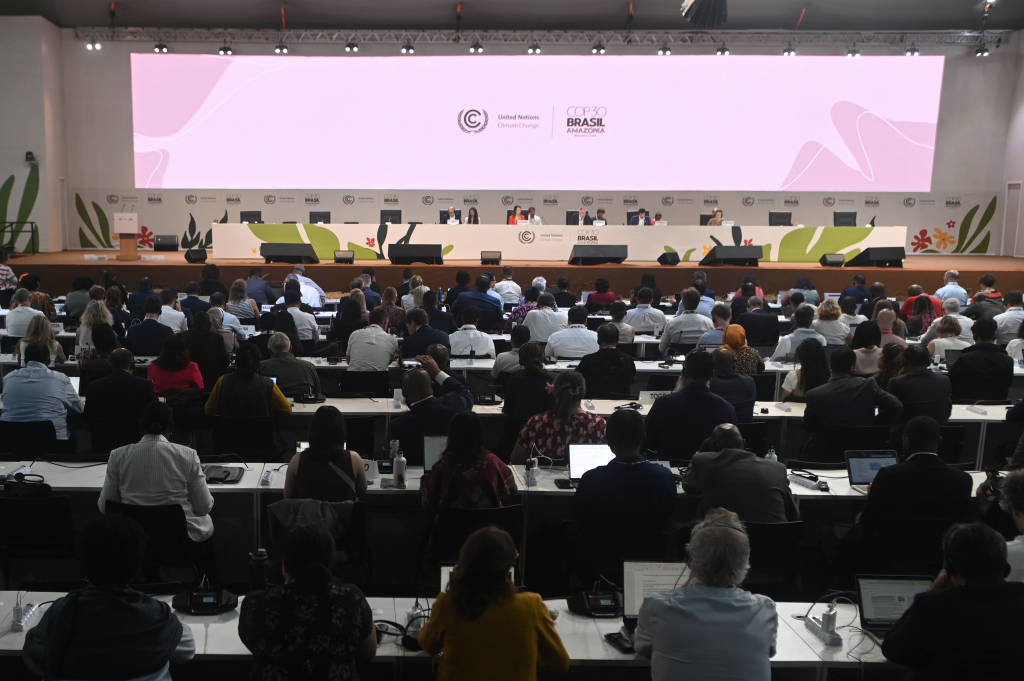
Core Points - The "Belém Package" has become the focal point of the second half of the COP30 negotiations, with expectations for its completion this week [1][9][10] - The negotiations have faced challenges, particularly regarding climate financing, with significant disagreements remaining unresolved [1][3][11] - The first week of negotiations saw slow progress, with a focus on multilateral cooperation and commitments from various countries [5][6] Group 1: Negotiation Progress - The COP30 negotiations are entering a critical phase, with the first week marked by slow progress, particularly in funding discussions [3][5] - The United States has announced its withdrawal from the Paris Agreement and is absent from key negotiations, while the EU has set a target to reduce greenhouse gas emissions by 90% by 2040 [3][4] - The establishment of the "Open Coalition on Compliance Carbon Markets" aims to create a global compliance carbon market network [3][4] Group 2: Climate Financing - The UNFCCC has highlighted the need for increased climate financing, with calls for developed countries to double their adaptation funding by 2023 compared to 2019 levels [10][11] - Despite commitments from various nations, the overall climate financing remains insufficient and inequitable, with a significant gap in adaptation funding [10][11] - The COP30 has seen a rise in new Nationally Determined Contributions (NDCs), with 113 parties submitting 86 contributions, but the global climate ambition still falls short of the 1.5°C target [4][11] Group 3: China's Role - China has actively participated in COP30, showcasing its climate action initiatives and promoting international cooperation [6][7][8] - The "China Corner" at COP30 has highlighted China's contributions to climate adaptation and technology innovation, emphasizing its leadership in global climate governance [6][8] - Chinese enterprises have shared their green practices, enhancing international understanding of China's sustainable development path [7][8]
为全球碳市场探路,中国、欧盟和巴西发起成立碳市场开放联盟
2 1 Shi Ji Jing Ji Bao Dao· 2025-11-12 09:33
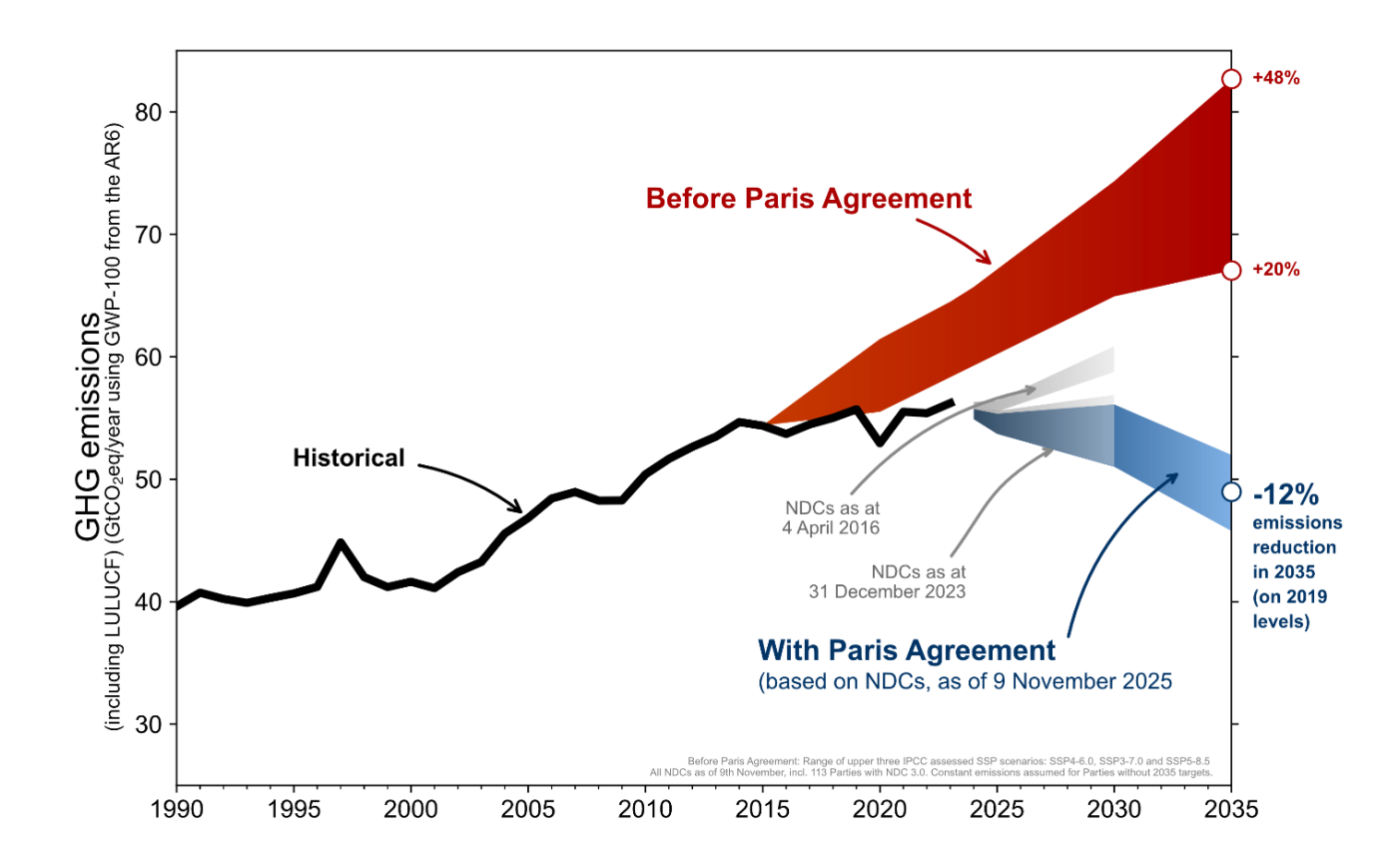
Core Viewpoint - The COP30 conference is making significant progress in climate negotiations, coinciding with the 10th anniversary of the Paris Agreement, focusing on "accelerating implementation" of climate actions [1] Group 1: Carbon Market Developments - China, the EU, and Brazil have established the "Open Coalition on Compliance Carbon Markets" to enhance international cooperation in carbon markets, including 11 countries and regions [2] - The coalition aims to create a framework for coordinating national carbon pricing mechanisms and emission trading systems, promoting a transparent and credible global compliance carbon market [2][3] - The establishment of this coalition is seen as an extension of the outcomes from COP29, which laid the institutional groundwork for its operation [3] Group 2: Financial Goals and Funding - The Brazilian government's financing roadmap, "From Baku to Belem," serves as a reference framework for negotiations, targeting a goal of $1.3 trillion [1] - Discussions are ongoing regarding funding gaps for adaptation and "loss and damage," with a focus on quantifiable indicators and transparency mechanisms [1] Group 3: Emission Reduction Projections - The UNFCCC reports indicate that global greenhouse gas emissions are projected to decrease by 12% by 2035 compared to 2019 levels, although significant gaps remain in achieving the 1.5°C target [5][8] - The NDC comprehensive report includes contributions from 113 parties, highlighting the need for enhanced ambition and systematic execution of climate commitments [5][8] Group 4: China's Role and Contributions - China is committed to sharing its experiences in carbon market design and management, emphasizing the importance of tailored approaches based on national circumstances [3] - The country has signed 55 climate cooperation memorandums with 43 developing countries, showcasing its commitment to South-South cooperation in climate action [9] - China's proactive stance in climate negotiations is underscored by its recent NDC announcement, reflecting its commitment to green and low-carbon transformation [6][9] Group 5: Renewable Energy and Environmental Progress - The past decade has seen a doubling of global renewable energy capacity and a fourfold increase in forest protection funding, although challenges such as insufficient grid investment and rising building emissions persist [6] - The environmental planning institute's assessment indicates that China's carbon market has effectively reduced carbon intensity in the power sector, achieving a cumulative reduction of 357 million tons of emissions [4]
推动全球气候治理进入新阶段——联合国气候变化贝伦大会前瞻
Xin Hua She· 2025-11-11 06:17
Core Points - The COP30 conference is taking place in Belem, Brazil, marking the 10th anniversary of the Paris Agreement, with a focus on new Nationally Determined Contributions (NDCs) [1][2] - The conference aims to foster international cooperation to address climate change and is seen as a potential turning point in global climate governance [1][5] NDC Submission and Progress - The new round of NDCs is expected to be a focal point of the Belem conference, but progress has been slow, with less than one-third of parties submitting updated contributions that include 2035 reduction targets [2][4] - Current commitments, if fully implemented, are projected to lead to a global temperature increase of 2.3 to 2.5 degrees Celsius, exceeding the Paris Agreement's 2 degrees Celsius target [4] Financing and Equity Issues - A key agenda item is bridging the gap between developed and developing countries regarding emissions reduction and funding, with a target of providing $1.3 trillion annually to developing nations by 2035 [6][8] - Developed countries are urged to raise $300 billion annually, while developing countries need a fair climate justice framework post-COP30 [6][8] South-South Cooperation - The conference highlights South-South cooperation, with Brazil inviting multiple countries to collaborate on protecting the Amazon rainforest and promoting renewable energy in impoverished regions [9][11] - China's contributions to climate change efforts, particularly in South-South cooperation, are expected to be a significant focus, with China having signed numerous cooperation agreements with developing countries [11][12] Multilateralism and Global Leadership - Multilateralism is emphasized as a priority for the conference, with South-South cooperation seen as a vital practice of multilateralism [12] - The role of China as a key leader in global climate governance and a supporter of multilateralism is highlighted [12]
特稿丨推动全球气候治理进入新阶段——联合国气候变化贝伦大会前瞻
Xin Hua She· 2025-11-10 17:09
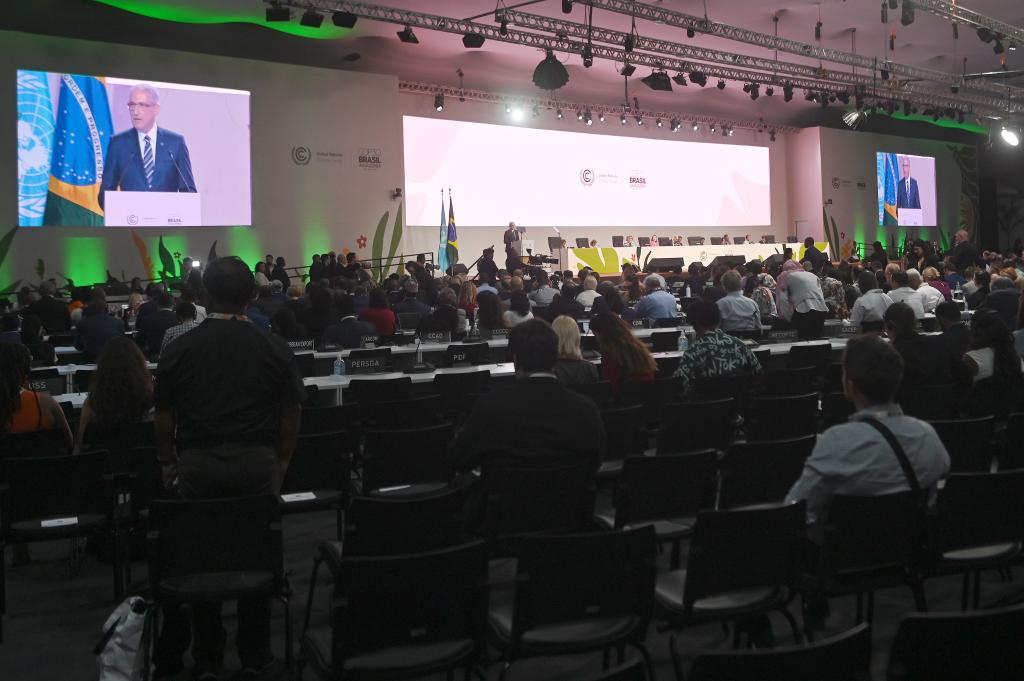
Core Points - The COP30 conference is taking place in Belem, Brazil, from November 10 to 21, marking the 10th anniversary of the Paris Agreement and aiming to advance global climate governance [1][2] - The focus of the conference is on the new round of Nationally Determined Contributions (NDCs), with a significant concern regarding the slow progress of countries in submitting ambitious targets [2][3] - The conference aims to bridge the gap between developed and developing countries regarding emissions reduction and funding, emphasizing the need for a clear and credible path to achieve climate financing goals [4][5] Group 1: Nationally Determined Contributions (NDCs) - The new round of NDCs is expected to be a focal point of the Belem conference, with less than one-third of parties to the Paris Agreement having submitted updated contributions that include 2035 reduction targets as of September 30 [2] - A report indicates that even if current NDC commitments are fully implemented, global warming is projected to reach 2.3 to 2.5 degrees Celsius this century, exceeding the 2 degrees Celsius target set by the Paris Agreement [2] Group 2: Climate Financing - The conference will address the critical issue of financing, with a target of providing $1.3 trillion annually to developing countries by 2035, and developed countries are expected to raise $300 billion annually [4] - Brazilian President Lula emphasized the need for a governance mechanism within the UN framework to ensure the effective implementation of climate commitments and to discuss penalties for non-compliance [4] Group 3: South-South Cooperation - The conference highlights South-South cooperation, with Brazil inviting multiple countries to participate in protecting the Amazon rainforest and promoting renewable energy development in impoverished regions [6][7] - China's contributions to climate change efforts, particularly in South-South cooperation, are expected to be a significant focus, with China having submitted its 2035 NDC goals and signed numerous cooperation agreements with developing countries [6][7]
美国30年来首次缺席国际气候谈判,COP30如何研判“交卷年”?
Di Yi Cai Jing· 2025-11-10 12:29
Core Points - The absence of the U.S. at COP30 marks the first time since 1995 that the country has not sent senior officials to a COP meeting, which raises concerns about global climate cooperation [1][5] - COP30 is crucial as it aims to assess collective progress on climate actions and convert the scientific consensus on the 1.5°C target into practical measures [3][4] - The conference will focus on submitting new Nationally Determined Contributions (NDCs) from countries, which outline their emission reduction targets and specific measures [3][4] Group 1 - The global temperature is on track to exceed the 1.5°C limit set by the Paris Agreement, necessitating a 60% reduction in global emissions by 2030 to stay within this target [3][4] - The current NDCs are projected to achieve only about 10% of the required emission reductions, highlighting a significant gap in climate action [3][4] - The NRDC reports that since the Paris Agreement, clean energy has created 36.2 million jobs, surpassing employment in fossil fuel sectors [4] Group 2 - COP30 aims to mobilize $1.3 trillion annually for climate financing, with a focus on supporting countries in adapting to climate change [6][8] - The conference will also review the "Baku to Belem $1.3 trillion roadmap report," which outlines five priority areas for resource mobilization [7] - The U.S. withdrawal from the Paris Agreement has created a funding gap of $100 billion to $150 billion in the climate financing roadmap, complicating efforts to meet climate goals [8]
到2040年将温室气体排放量减少90%!COP30前欧盟减排目标出炉
Di Yi Cai Jing· 2025-11-07 08:18
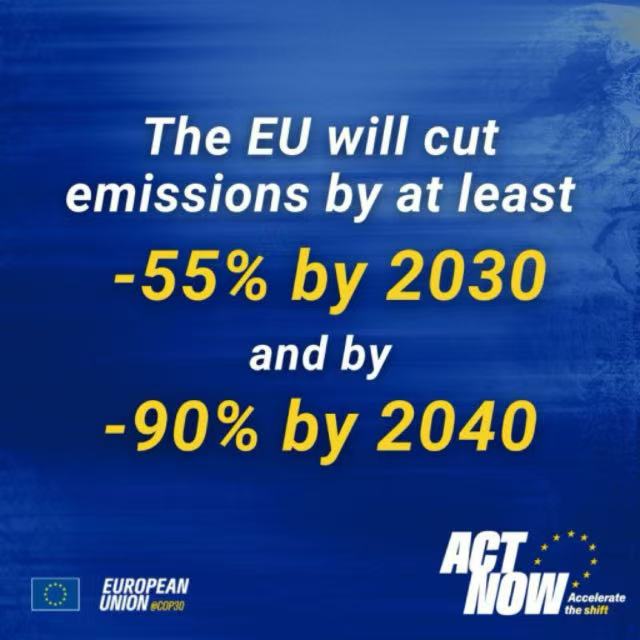
Group 1 - The EU has established a legally binding target to reduce greenhouse gas net emissions by 90% by 2040, including 85% domestic reductions and up to 5% from international carbon credits [1][4] - The new Nationally Determined Contribution (NDC) targets set by the EU aim for a reduction of net emissions by 66.25% to 72.5% from 1990 levels by 2035 [1][4] - The EU's decision comes ahead of the COP30 conference, marking a significant milestone in its climate policy [5] Group 2 - The EU's internal decision-making process has been complex, influenced by geopolitical issues, but there is a strong commitment to environmental concerns [6] - The EU Council has introduced measures allowing member states to purchase international carbon credits to meet up to 5% of their reduction targets starting in 2036 [6] - In 2024, the EU and its member states plan to contribute €31.7 billion towards climate financing for developing countries, alongside an additional €11 billion from private sources [6] Group 3 - The global clean energy sector is experiencing significant cost reductions, with solar project costs dropping by 41% and onshore wind costs being 53% lower than fossil fuel generation from 2010 to 2024 [7] - The sustainable cooling market is valued at $600 billion, with potential earnings of $8 trillion for developing countries by 2050 [7] - However, tariffs and standards remain obstacles, with average tariffs on solar and wind components in developed economies at 1.9% and as high as 7.1% in Africa [7]
COP30前夕中方发声:应制定1.3万亿美元融资路线图
2 1 Shi Ji Jing Ji Bao Dao· 2025-10-29 09:47
Core Points - The Ministry of Ecology and Environment of China held a press conference to release the "2025 Annual Report on China's Policies and Actions to Address Climate Change," highlighting China's significant contributions in climate mitigation, adaptation, carbon markets, and global climate governance [2][3] Group 1: Climate Change Policy and Actions - The report outlines China's commitment to achieving its 2035 Nationally Determined Contributions (NDC) in line with the Paris Agreement, emphasizing the need for both domestic efforts and a favorable international environment [2] - The report expresses dissatisfaction from developing countries regarding the COP29's target of $300 billion per year by 2035, stating it lacks strength and does not adequately reflect the funding obligations of developed countries [2] - The report calls for COP30 to make progress on establishing a financing roadmap of $1.3 trillion and a funding roadmap of at least $300 billion from developed countries [2] Group 2: New Energy System Development - China's new energy system construction has made significant progress, with the share of new energy installations expected to exceed 45.8% by June 2025, and the proportion of renewable energy transmitted through ultra-high voltage direct current exceeding 50% [3] - By June 2025, the cumulative installed capacity of pumped storage will exceed 61 million kilowatts, and the installed capacity of new energy storage projects will reach 94.91 million kilowatts [3] Group 3: Multilateral Cooperation and Climate Governance - The report emphasizes the importance of multilateralism in addressing global climate change, urging all parties to maintain confidence in international cooperation and to send a strong political signal against unilateralism and protectionism [4] - It stresses the need for developed countries to recognize the efforts of developing countries and to respond to their specific challenges, which is essential for the success of COP30 [5] - The report advocates for a balanced approach to negotiations on mitigation, adaptation, finance, technology, and capacity building, highlighting the necessity for developed countries to fulfill their obligations under the Paris Agreement [5]