小而美

Search documents
内存涨价压垮「小而美」:与小米缠斗17年的魅族,倒在了2026年
3 6 Ke· 2026-02-27 02:29
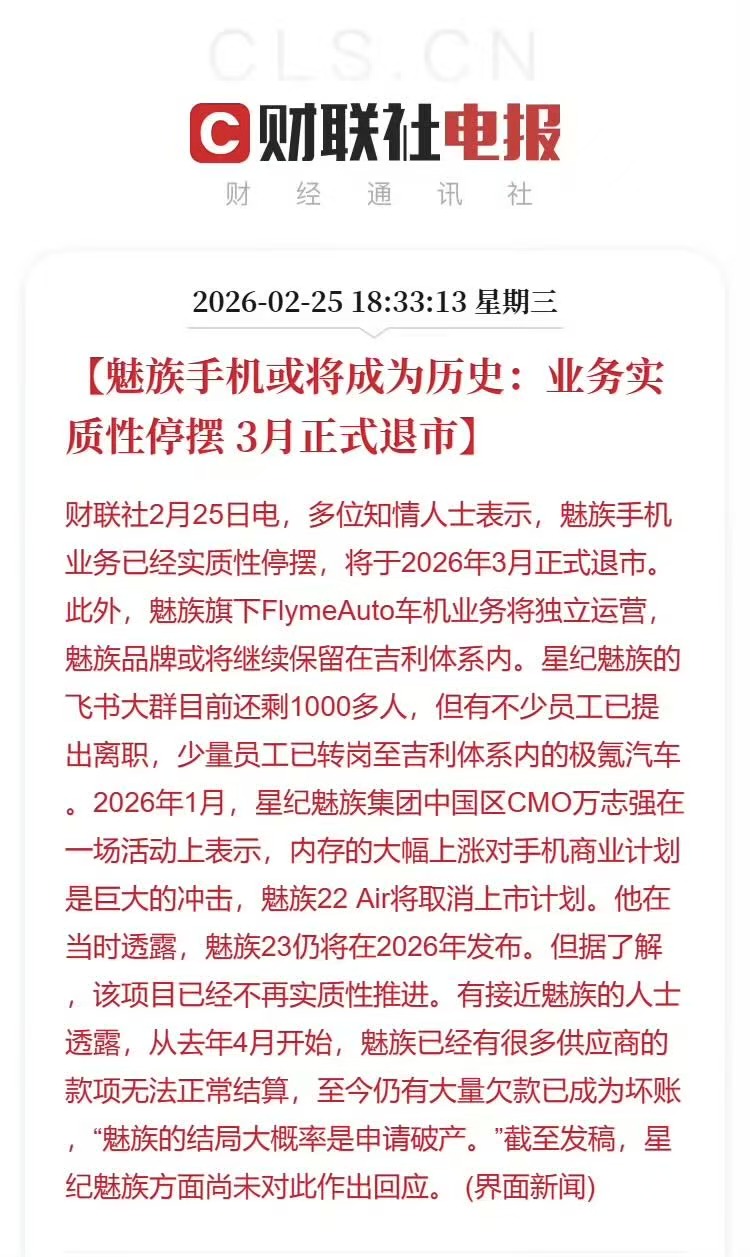
谁能想到,第一个被内存涨价压垮的手机品牌是魅族。 2026年2月25日,智通财经发布消息称魅族手机业务已实质性停摆,将于3月正式退市。而魅族旗下的Flyme Auto车机业务将独立运营,"魅族"品牌继续保留 在吉利体系内,但线下售后撤销,全部转寄修。不过,魅族内部人士也放出消息,网传的"魅族手机退市"有真有假,还没到官宣的时候。 (图源:智通财经) 实际上,魅族在今年1月举行的魅友活动上已经剧透了手机业务的压力。这场会议展示了一款"胎死腹中"的新机——魅族22 Air,受供应链压力,这款机型最 终并不会上市。而魅友们翘首以待的旗舰系列魅族23,这个项目也基本停摆。 (图源:魅族) 如今的魅族,销量常年进不了榜单前五,旗舰新品一拖再拖,几乎已经没有多少普通消费者将其列入购机的考虑范围内。但魅族自2009年推出首款智能手机 魅族M8以来,整整十七年时间,靠着创新和"小而美"的特色俘获了不少忠实粉丝。 梦始M8,魅族只做最特别的手机 2009年,智能手机还没真正普及,安卓生态还在早期,iPhone 3GS才刚起步,国产品牌几乎全在做山寨机。在这样的背景下,魅族没有选择跟风市场的选 择,而是打造了一款正儿八经的智能手 ...

凤玲制衣闯出稳就业、促共富的“出彩之路”
Xin Lang Cai Jing· 2026-02-23 21:44
(来源:中华工商时报) 转自:中华工商时报 专注之道: 在"工装"细分领域扎下深根 20世纪90年代,中国服装产业浪潮奔涌,众多企业追逐时尚与外贸东风。1996年,凤玲制衣悄然诞生, 却选择了一条看似传统甚至枯燥的赛道——职业工装。创始人刘万凤,这位从中国第一代打工者中走出 来的女性创业者,凭借对市场的敏锐洞察,看到了企事业单位规范化、形象化建设背后稳定而长期的需 求。 "真诚、求实、创新",这六个字从创业初期就被确立为企业的发展原则。在那个"订单为王"的年代,凤 玲制衣却坚持走自主品牌之路,注册"凤铭"商标,将质量视为生命线。公司先后通过ISO9001质量管理 体系、ISO14001环境管理体系等权威认证,引进专业的服装设计、打版CAD系统,确保从面料选择到 裁剪缝制,每一道工序都严谨可控。 正是这份近乎执拗的专注与坚守,让凤玲制衣在激烈的市场竞争中赢得了口碑。30余年来,公司的客户 名单越拉越长,从地方国企到央企子公司,从公共交通到能源烟草,从医药连锁到新兴农业品牌。每一 套工装,都不仅是产品,更是对企业文化、行业特性和员工需求的深度理解与呈现。凤玲制衣用专业和 诚信,在工装这个细分领域扎下了难以撼动的深 ...

小盘风格延续涨势,关注中证2000ETF易方达(159532)等产品投资机会
Sou Hu Cai Jing· 2025-12-25 05:30
Group 1 - The market showed volatility with nearly 3,300 stocks rising, and small-cap stocks continued their upward trend. The CSI 2000 index rose by 0.9%, the ChiNext Mid 200 index by 0.7%, the CSI 1000 index by 0.6%, the Sci-Tech 100 index by 0.4%, and the CSI 500 index by 0.3% [1] - The CSI 2000 index serves as a core benchmark for small and micro-cap growth stocks in the A-share market, focusing on high-quality small and medium-sized enterprises at the tail end of the market capitalization spectrum. It is an investment tool for identifying "small but beautiful" targets and investing in niche champions within specific sectors [1] - The CSI 2000 index is characterized by its "specialized, refined, distinctive, and innovative" attributes, playing a crucial role in promoting manufacturing upgrades and nurturing new productive forces [1] Group 2 - The CSI 2000 index's rolling price-to-earnings (P/E) ratio is reported at 45.8 times, reflecting its valuation since inception [3] - The index has shown a rise of 0.9% at midday, with a rolling P/E ratio of 153.6 times reported for 2023 [4] - The index comprises 200 stocks from the mid-cap segment of the ChiNext market, representing the overall performance of mid-cap companies, with over 40% of its composition from the information technology sector. The midday increase was 0.7%, with a rolling P/E ratio of 103.8 times for 2023 [6]

两场音乐会里的人文经济学(人民时评)
Ren Min Ri Bao· 2025-10-16 22:07
Core Insights - The article emphasizes the rise of "small and beautiful" cultural events, such as local music concerts, which are becoming increasingly popular in both large cities and small towns, making culture accessible to more people [1][2][3] Group 1: Cultural and Economic Integration - The integration of culture and economy is highlighted as essential, with a focus on finding effective ways to merge the two, suggesting that smaller, community-oriented events can have significant impacts [1][3] - "Small and beautiful" events are characterized by low operational costs and low barriers to audience participation, allowing for regular hosting and fostering a sense of belonging among community members [1][2] Group 2: Audience Engagement and Experience - The interactive nature of these events, where audiences can participate by singing along or choosing songs, enhances emotional connections and community bonding [2] - The settings for these events, such as parks and riversides, create a harmonious blend of music and nature, enriching the overall experience [2] Group 3: New Cultural Practices - Across the country, various "small and beautiful" cultural practices are emerging, such as community art galleries and multifunctional coffee shops, which cater to local cultural needs [2] - The article suggests that understanding and addressing personalized cultural demands can unlock significant potential for economic growth and cultural enrichment [2][3]
金融街证券总裁银国宏:找准差异化优势,打造“小而美、轻而稳”的券商
Zhong Guo Ji Jin Bao· 2025-09-27 02:14
Core Viewpoint - Financial Street Securities, formerly known as Hengtai Securities, has undergone a rebranding and strategic transformation to adapt to the evolving capital market landscape, emphasizing a "small but beautiful, light but stable" brokerage model [1][4][10]. Group 1: Company Transformation - The rebranding from Hengtai Securities to Financial Street Securities marks a new development phase, supported by new shareholders and strategic resources [1][4]. - The company aims to leverage the advantages of its parent company, Beijing Financial Street Investment Group, to enhance its capabilities in serving the real economy and capital markets [4][5]. - Financial Street Securities plans to focus on a collaborative approach within the group, enhancing its unique competitive edge in the industry [5][10]. Group 2: Strategic Focus - The company will prioritize capital replenishment, light capital transformation, and establishing differentiated competitive advantages in niche markets [10][11]. - Wealth management will be a key area of focus, with efforts to improve market positioning and service capabilities for both retail and institutional clients [10][14]. - The company is committed to enhancing its research capabilities and building a robust ETF ecosystem to support its investment strategies [15][18]. Group 3: Operational Improvements - Financial Street Securities is restructuring its branch management to improve efficiency and regional advantages, establishing a three-tier management structure [13][14]. - The company has set ambitious goals for its brokerage business, aiming to enhance trading volume and market share over the next five years [14]. - A focus on compliance and risk management is emphasized to ensure sustainable growth and protect investor interests [6][9]. Group 4: Research and Development - The establishment of a specialized research institute aims to enhance the company's research output and support its asset management and investment strategies [17][18]. - The research team is developing models for asset allocation and industry rotation, with initial results showing promise in the market [17][18]. - Financial Street Securities is committed to building a comprehensive research framework that aligns with market-leading ETF research platforms [18].


“主理人”塌房,“一人公司”还香吗?
Hu Xiu· 2025-09-24 12:33
Group 1 - The rise of "one-person companies" reflects a shift from the traditional "big is better" business paradigm, driven by digital tools and AI, allowing individuals to connect with global markets at low costs [1][2][3] - "One-person companies" are becoming a significant force in the digital economy, as evidenced by successful independent creators like Eric Barone, whose game "Stardew Valley" sold over 41 million copies [2][3] - The concept of "one-person companies" emphasizes a value-oriented approach, where entrepreneurs prioritize lifestyle and personal fulfillment over traditional growth metrics [3][4] Group 2 - The emergence of "non-scale economies" challenges the long-held belief that larger companies have inherent advantages, as new technologies enable small teams to compete effectively [5][6] - Automation and AI are reshaping job security, prompting individuals to adopt entrepreneurial roles rather than remain in traditional employment [6][7] - The number of "non-employer businesses" in the U.S. reached approximately 29.8 million in 2022, generating $1.7 trillion in revenue, indicating a growing trend towards smaller, flexible business models [7][8] Group 3 - The "small is beautiful" philosophy, as articulated by E.F. Schumacher, critiques the blind pursuit of growth and advocates for sustainable, human-centered economic practices [10][11] - Japanese "century-old shops" exemplify the success of small businesses that prioritize community and sustainability over scale, with a significant percentage being small enterprises [10][11] - The rise of "one-person companies" poses a challenge to large corporations, which must reconsider their structures and decision-making processes in light of increasing competition from agile small businesses [11][12] Group 4 - Large companies are beginning to adopt the flexibility and innovation associated with "one-person companies" by fostering internal entrepreneurial initiatives [12][13] - Examples include Google's "20% time" policy and Adobe's "Kickbox" program, which encourage employees to pursue independent projects, leading to significant innovations [13][14] - The concept of "one-person companies" is not only relevant for individual entrepreneurs but also offers insights for large organizations seeking to maintain agility in uncertain times [15][16] Group 5 - The trend of "one-person companies" is gaining traction in Japan, where entrepreneurs are opting for minimal organizational structures and leveraging outsourcing to enhance productivity [16][17] - This shift reflects a broader economic transformation, where small, agile entities are becoming vital components of the business ecosystem, especially in the context of Japan's aging population and market saturation [17][18] - The return of the "small is beautiful" narrative signifies a collective reevaluation of growth and success, with increasing recognition of the value of sustainable, community-oriented businesses [18][19] Group 6 - The term "主理人" (principal) has gained popularity in China, representing brand founders who emphasize personal branding and product philosophy, but it has also faced criticism for leading to inflated pricing and superficial marketing [20][21] - The backlash against the "principal" concept highlights a broader skepticism towards the commercialization of personal branding, as consumers seek authenticity and value [21][22] - The challenges faced by "one-person companies" in the U.S. reflect a global trend, where individuals are attempting to navigate unstable employment by branding themselves as entrepreneurs, often overlooking systemic issues [22][23] Group 7 - The philosophy of "one-person companies" can mask the underlying instability of gig employment, as individuals are encouraged to take on all responsibilities without the support typically provided by traditional employment [23][24] - This shift towards self-marketing and individual branding can lead to significant emotional labor and stress, as individuals strive to maintain their personal brands in a competitive environment [24][25] - The future of "one-person companies" will depend on the interplay between technological advancements and institutional responses, necessitating a reevaluation of social safety nets and labor protections [25]
大家提前做好准备:因为大家都没钱,社会上或许已经发生了4大变化
Sou Hu Cai Jing· 2025-09-20 02:15
Group 1 - The core viewpoint of the article highlights a significant shift in consumer behavior towards frugality and cost-saving measures in response to economic pressures, indicating a societal transformation in spending habits and values [1][2][8] Group 2 - Change 1: Consumption downgrade is becoming mainstream, with a 187% increase in searches for affordable alternatives and a 203% rise in discussions around saving money, reflecting a shift from luxury to practicality in consumer choices [3][4] - Change 2: Social relationships are becoming more streamlined, with a 17.3% decrease in average interaction with friends, while interaction with close friends has increased by 25.6%, indicating a focus on deeper connections amidst economic constraints [4][5] - Change 3: Career choices are shifting towards stability, with a 32% increase in applications for traditional stable jobs like civil service and a 215% rise in searches for side jobs, reflecting a preference for security over high-risk opportunities [6][7] - Change 4: There is a return to simpler living philosophies, with a 175% increase in discussions around minimalism and essentialism, suggesting a reevaluation of life’s true meaning beyond material possessions [7][8]

“窝囊旅游”消费变谨慎,市场转向下酒店业谋自救丨夏游季
2 1 Shi Ji Jing Ji Bao Dao· 2025-08-13 07:21
Core Insights - The tourism market is experiencing a trend of "staycation tourism," characterized by high frequency and low spending, leading to challenges for the hotel industry [1] - Average revenue per available room (RevPAR) for Chinese hotels decreased by 8% year-on-year during the first week of July 2023, primarily due to declining occupancy rates [1] - Despite the drop in occupancy and revenue, large hotel chains continue to expand, with new room openings in the tens of thousands [1] Group 1: Market Dynamics - High-end hotels are facing pressure to transform as many properties are being sold off without interest, indicating a significant market shift [2] - Consumer behavior has changed, with many now making purchasing decisions based on emotional connections, leading to lower spending per visit [2] - Non-accommodation revenue for hotels is projected to rise from 15% to 22% by 2024, with fitness facilities becoming a new growth area [2] Group 2: Innovative Strategies - Hotels are adopting new marketing strategies, such as live-streaming fitness classes and creating specialized fitness memberships to attract customers [3] - The focus has shifted from scale to operational efficiency, with an emphasis on high cost-performance ratios and long-term strategies [4] - Hotels are encouraged to focus on unique local resources and avoid homogenization, enhancing their market positioning through micro-innovations and personalized services [5] Group 3: Consumer Trends - The younger generation, particularly Gen Z, is driving demand for emotional value and unique experiences in hospitality [5] - Key factors for hotel success include quiet environments, reliable Wi-Fi, comfortable bedding, quality shower facilities, and diverse breakfast options [5]
“窝囊旅游”消费变谨慎,市场转向下酒店业谋自救
2 1 Shi Ji Jing Ji Bao Dao· 2025-08-13 07:14
Core Insights - Consumers are increasingly sensitive to hotel prices, leading to a shift towards "low-cost travel" during the summer season, which has resulted in a decline in average room revenue and occupancy rates in the hotel industry [1][2] - The number of star-rated hotels in China is projected to decrease by nearly 500 by the end of 2024, despite large chain hotels continuing to expand their room offerings [1] - High-end hotels are facing pressure to transform their business models, with many adopting innovative strategies to attract customers and increase non-accommodation revenue [2][4] Industry Trends - The average room revenue for hotels in China fell by 8% year-on-year during the first week of July 2023, primarily due to declining occupancy rates [1] - High-end hotels are experimenting with new offerings, such as fitness and wellness packages, to attract customers and increase revenue from non-accommodation sources, which is expected to rise from 15% to 22% by 2024 [2][4] - The hotel industry is shifting from a focus on scale to an emphasis on operational efficiency and effectiveness, with a growing importance placed on value for money [4] Consumer Behavior - Consumers are now making purchasing decisions based on emotional connections, leading to a decline in average spending per visit, as seen in various tourist destinations [2][5] - The rise of "special forces tourism," where consumers opt for experiences without overnight stays, reflects changing travel planning behaviors [2] - Younger consumers, particularly from Generation Z, are driving demand for unique and emotionally resonant experiences, prompting hotels to innovate and differentiate their offerings [5] Marketing Strategies - Hotels are leveraging social media platforms like Douyin (TikTok) to engage with potential customers through live-streaming fitness classes and other interactive content [3] - Innovative marketing strategies, such as targeting specific demographics like night runners, are being employed to enhance customer engagement and drive revenue [3] - The focus on creating a unique and recognizable market position is becoming essential for hotels to avoid homogenization and meet diverse consumer needs [5]
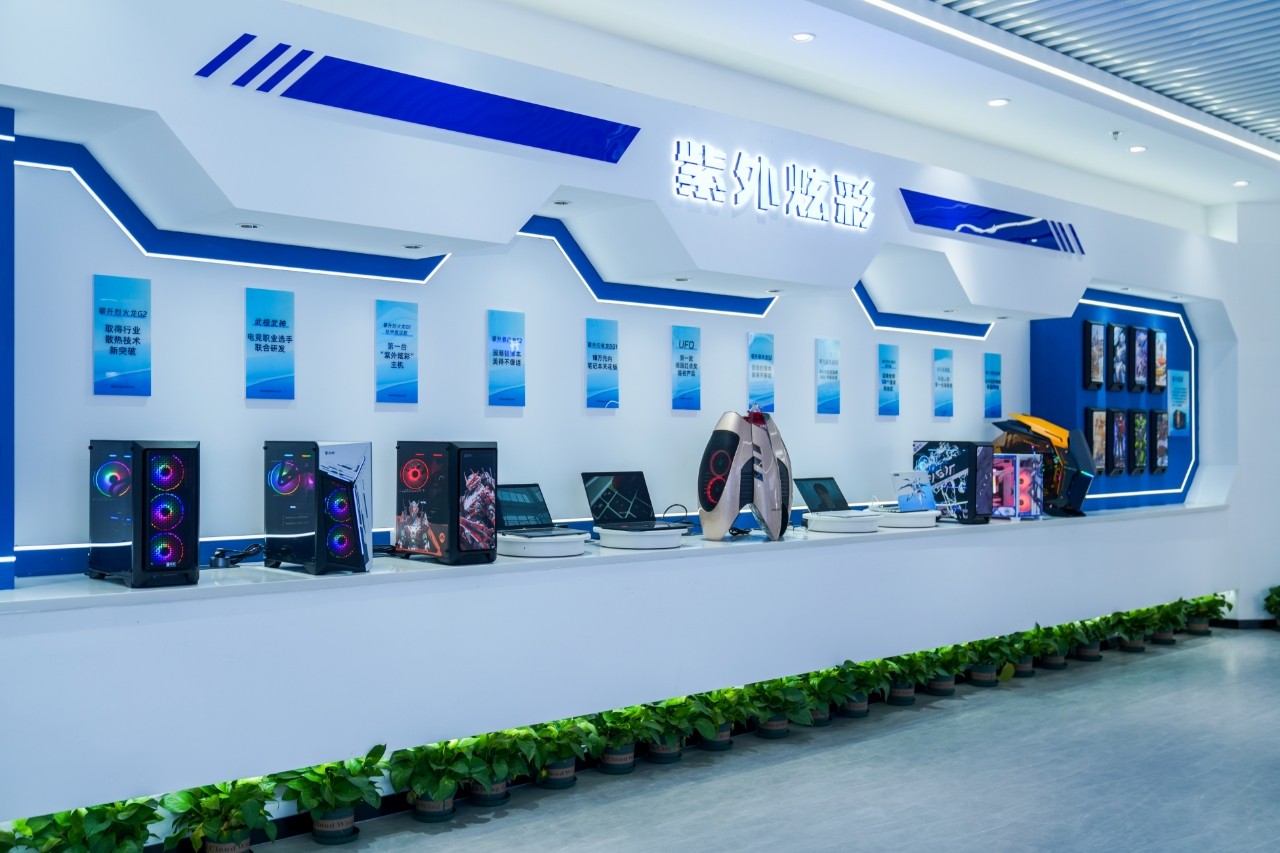
华中跨境新势力:武汉产业带如何用“小而美”撕开全球市场?丨最前线
3 6 Ke· 2025-06-18 12:25
Core Insights - The central theme of the articles highlights the rise of the central China region, particularly Wuhan, in the cross-border e-commerce landscape, traditionally dominated by South China [1][2]. Industry Overview - The optical electronic information industry in Wuhan is projected to reach a scale of 756.6 billion yuan in 2024, with a year-on-year growth of 11.7% [1]. - The electronic information manufacturing sector within this industry is expected to generate a value of 404.5 billion yuan, marking an 8% increase, which is the highest growth rate among all industrial sectors in the city [1]. Company Strategies - Wuhan-based companies are adopting a "small but beautiful" strategy in the highly homogeneous consumer electronics market, focusing on differentiation and niche markets [2]. - PanSheng Technology specializes in high-performance custom PCs, targeting student demographics and emphasizing performance commitments to build trust, resulting in a 93.9% compound monthly growth rate in Q1 2025 [2]. - NIIMBOT, a portable label printer company, transitioned from being an agent to a brand, leveraging early market experience to understand user needs, achieving a GMV growth rate of 36% to 100% since 2020 [4]. - Feisheng Technology (DeXun Electronics) has shortened product iteration cycles by 30% through agile responsiveness to user feedback, launching new brands on Amazon with significant sales success [5]. Market Trends - The rise of Wuhan's cross-border e-commerce reflects a shift in China's manufacturing export strategy, moving from scale to value and from OEM advantages to brand strength [5]. - The core competitive advantage is increasingly seen as brand power, which requires long-term commitment to understanding consumer needs and rapid supply chain responsiveness [5].