年轻化

Search documents
保乐力加2026财年半年业绩营收、利润双降;贵州茅台在毕节成立销售公司丨酒业早参
Mei Ri Jing Ji Xin Wen· 2026-02-25 01:12
NO.1保乐力加半年业绩营收、利润双降 近日,保乐力加发布2026财年半年报显示,报告期内集团营收52.6亿欧元,同比下降14.9%。2025年下 半年的有机利润下降7.5%。在2026财年第一季度(7月至9月),集团销售额下滑7.6%,而在此前,其 2025财年全年营收已录得3%的降幅。从产品看,旗下马爹利干邑与哈瓦纳俱乐部朗姆酒均出现两位数 跌幅。从区域看,中国市场上半年有机销售额大幅下降28%,主要受宏观经济调整和高端干邑(马爹 利)渠道库存调整的影响。 点评:保乐力加2026财年半年报营收与利润双降,中国市场销售额大跌28%,凸显海外烈酒在华深度调 整。核心受高端干邑渠道去库存、消费需求走弱拖累,叠加连续下滑,印证全球烈酒行业承压。对公司 而言,短期盈利与渠道修复压力加大,需加速库存出清与本土化调整。 NO.22026年春节养生露酒成酒类市场大黑马 据中国酒业协会官方微信,2026年春节,养生露酒成为酒类市场最大黑马,线上规模同比增长。产品方 面,新一代养生露酒"去药化"成效显著,青梅、玫瑰、枸杞等风味成为主流,口感柔和,更易被年轻消 费者接受。劲酒、椰岛鹿龟酒等头部品牌推出春节限定小瓶装,适配家庭小 ...

从“历史经典产业”到“传统优势民生产业”,新五年酿酒产业提质发展
Soochow Securities· 2026-02-24 00:45
证券研究报告·行业跟踪周报·食品饮料 食品饮料行业跟踪周报 从"历史经典产业"到"传统优势民生产业" , 新五年酿酒产业提质发展 增持(维持) [Table_Tag] [投资要点 Table_Summary] 2026 年 02 月 22 日 证券分析师 苏铖 执业证书:S0600524120010 such@dwzq.com.cn 证券分析师 孙瑜 执业证书:S0600523120002 suny@dwzq.com.cn 行业走势 -10% -7% -4% -1% 2% 5% 8% 11% 14% 17% 20% 2025/2/24 2025/6/22 2025/10/18 2026/2/13 食品饮料 沪深300 2026-02-10 东吴证券研究所 1 / 9 请务必阅读正文之后的免责声明部分 ◼ 从"历史经典"到"优势民生"产业,再度定调酿酒产业重要地位,鼓 励高质量发展。继 2025 年 10 月工信部发布《关于推动历史经典产业高 质量发展的指导意见(2026—2030 年)(征求意见稿)》,近期工信部、 人社部、市场监管总局再度印发《酿酒产业提质升级指导意见(2026— 2030 年)》,明确定调 ...



食品饮料行业跟踪周报从“历史经典产业”到“传统优势民生产业”新五年酿酒产业提质发展
Soochow Securities· 2026-02-23 00:30
证券研究报告·行业跟踪周报·食品饮料 食品饮料行业跟踪周报 从"历史经典产业"到"传统优势民生产业" , 新五年酿酒产业提质发展 增持(维持) [Table_Tag] [投资要点 Table_Summary] 2026 年 02 月 22 日 证券分析师 苏铖 执业证书:S0600524120010 such@dwzq.com.cn 证券分析师 孙瑜 执业证书:S0600523120002 suny@dwzq.com.cn 行业走势 -10% -7% -4% -1% 2% 5% 8% 11% 14% 17% 20% 2025/2/24 2025/6/22 2025/10/18 2026/2/13 食品饮料 沪深300 相关研究 《AI 营销:新风口剑指千亿,服务商 乘势而进》 2026-02-11 《渠道变革大时代,优质连锁零售业 态蓬勃发展》 2026-02-10 东吴证券研究所 1 / 9 请务必阅读正文之后的免责声明部分 ◼ 从"历史经典"到"优势民生"产业,再度定调酿酒产业重要地位,鼓 励高质量发展。继 2025 年 10 月工信部发布《关于推动历史经典产业高 质量发展的指导意见(2026—2030 ...
隐身幕后三年 史玉柱这次真的要放权“90后”了 2026年能否再造一个“新巨人”?
Mei Ri Jing Ji Xin Wen· 2026-02-08 21:54
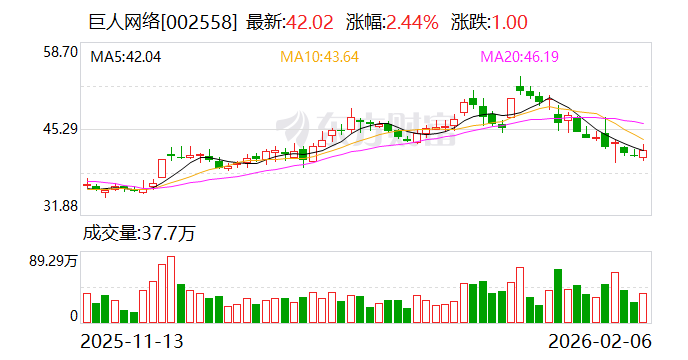
Core Viewpoint - Giant Network is shifting its core strategy towards youth and emerging IPs, marking a significant change in leadership and direction under Chairman Shi Yuzhu [2][4]. Group 1: Leadership Changes - Shi Yuzhu appointed young executives Wang Xinyu and Zhao Jianfeng to lead key IP sectors, indicating a focus on innovation and youth [2]. - CEO Liu Wei highlighted the success of a young team that created a game with over 100 billion online views and daily active users exceeding 10 million, showcasing a new direction for the company [4]. Group 2: Market Position and Challenges - As of early February 2023, Giant Network's market value reached approximately 81.3 billion yuan, recovering from a significant decline of nearly 90% from 2018 to 2022 [4]. - The gaming industry is entering a phase of intense competition characterized by "stock game + innovation breakthrough," with major players like Tencent and NetEase dominating the market [5]. Group 3: Product Development and Strategy - The success of the game "Supernatural Action Group," set to launch in 2025, is attributed to a return to core gaming principles and organizational restructuring under Shi Yuzhu [6][7]. - The company aims to enhance game quality by focusing on player experience rather than data metrics, a shift from previous practices that led to mediocrity [7]. Group 4: Financial Performance - "Supernatural Action Group" has achieved significant milestones, including a consistent presence in the iOS top 20 and a daily active user count exceeding 1 million [8]. - The revenue for 2023 and 2024 is projected to stabilize around 2.9 billion yuan, with a notable increase in net profit for the first three quarters of 2025 [10]. Group 5: Future Outlook and Challenges - The company is attempting to "de-Shi Yuzhu" by empowering younger teams while maintaining a focus on game quality and innovation [11][12]. - The integration of AI technology into game development is seen as crucial, with ongoing efforts to create AI-driven gaming experiences [12]. - The future success of Giant Network hinges on its ability to produce more hit products and maintain a competitive edge in a rapidly evolving market [14].

4541.8亿美妆护肤全景扫描:从规模竞争到技术竞争
FBeauty未来迹· 2026-02-07 10:54
Core Viewpoint - The beauty and skincare industry is undergoing a transformation where consumers are redefining what is worth spending on, shifting from impulsive buying to more rational decision-making focused on efficacy and long-term value [3][4]. Market Overview - By 2025, the beauty and skincare market is projected to reach a sales volume of 454.18 billion yuan, with a year-on-year growth of 9.7%, driven by both volume and price increases [5]. - The market growth is characterized by structural price changes, with a notable increase in the average transaction price due to a rise in the share of functional and mid-to-high-end products [8]. Consumer Behavior - Consumers are increasingly focused on efficacy, experience, and certainty of value, leading to a multi-tiered market with diverse price segments and consumer needs [4][8]. - The low-price segment (0-300 yuan) accounts for 74.1% of the beauty market, while the skincare market sees 56.3% in the same range, with the sub-100 yuan segment experiencing the fastest growth at 20.6% year-on-year [8]. Brand Dynamics - Leading brands are shifting from scale expansion to product innovation, with high-end anti-aging products becoming a significant growth driver, resulting in increased market concentration and share [11][12]. - Mid-tier brands face pressure but can achieve growth through targeted strategies, such as focusing on specific consumer needs like sensitive skin repair or anti-aging for younger demographics [14]. Anti-Aging Market Insights - The anti-aging market is entering a new phase driven by precise technology and widespread demand, with sales expected to reach 129.83 billion yuan in 2025, reflecting a year-on-year growth of 26.3% [15][17]. - Facial anti-aging products dominate the market, with facial care sets and serums leading in sales, emphasizing the importance of ingredient efficacy [19]. Product Trends - The demand for anti-aging products is increasingly focused on core functions such as hydration, wrinkle reduction, and skin repair, indicating a blend of basic skincare and anti-aging needs [24]. - New product innovations in the anti-aging segment are centered around collagen enhancement and multi-functional benefits, with brands like L'Oréal and Estée Lauder leading the way [28][29]. Makeup Market Trends - The makeup market is seeing a shift towards natural beauty and health-focused aesthetics, with sales growth of 15.8% year-on-year, reflecting changing consumer preferences [30]. - The demand for lightweight, hydrating makeup products is rising, with cushion foundations experiencing significant growth, indicating a balance between efficiency and effectiveness [35]. Marketing and Consumer Engagement - Social media platforms are becoming crucial for trend amplification, with discussions around natural beauty and individual expression reshaping consumer decision-making [43][44]. - The beauty and skincare industry is moving towards a competitive landscape focused on technology credibility, efficacy perception, and user understanding, indicating a shift from price-based competition to value-driven strategies [44].

古越龙山:公司高度关注并已系统评估了青花醉系列因与黄仁勋先生关联引发热销所带来的品牌价值提升
Zheng Quan Ri Bao Wang· 2026-02-06 12:41
Core Viewpoint - The company has recognized the significant brand value enhancement resulting from the popularity of the Qinghua Zui series, linked to Mr. Huang Renxun, which has successfully penetrated the high-end consumer market of technology elites [1] Group 1: Brand Strategy - The event has greatly increased the recognition and reputation of the Qinghua Zui series and the company's brand among high-net-worth individuals and younger consumers [1] - This situation validates the effectiveness of the company's high-end and youth-oriented strategy [1] Group 2: Cultural Integration - The interaction between Huangjiu culture and the technology sector has created a new connotation for the brand, promoting effective cross-border communication [1] - The company aims to leverage this brand momentum to deepen collaboration with Shaoxing Cultural Tourism, progressing steadily if conditions allow [1] Group 3: Future Plans - The company will continue to focus on high-end and youth-oriented development, utilizing diverse scenarios to promote Huangjiu culture to a broader audience [1] - There is an emphasis on enhancing brand influence through various collaborative efforts [1]

“火爆”品牌开启数字新纪元:数字人IP引领白酒行业创新变革
Zhong Guo Shi Pin Wang· 2026-02-03 10:49
Core Insights - The "Fire Explosion" brand is entering a new phase of digital and IP transformation, significantly impacting the liquor industry and the broader consumer market [1] Group 1: Brand and Cultural Integration - The "Fire Explosion" brand leverages trendy beverage culture to express lifestyle and individuality, creating a brand ecosystem that integrates technology, culture, and interaction through digital IP characters [2] - The brand aims to deepen emotional connections with consumers by merging traditional liquor culture with modern technological experiences, thus broadening its consumer base and promoting the integration of traditional culture with contemporary consumption [2] Group 2: Transformation from Product to IP - The brand's exploration represents a new path for the liquor industry, transitioning from product-driven to IP-driven strategies, enhancing brand value through cultural output and emotional resonance [3] - The "Fire Explosion IP National Dealer Store Interactive Tour" will engage consumers in brand storytelling and social media sharing, creating a strong user-generated content effect and providing a model for experiential marketing in the liquor sector [3] Group 3: Industry Ecosystem Upgrade - The brand plans to use digital IP as a lever for ongoing strategic development, including city tours, cross-industry collaborations, and content co-creation to build a comprehensive brand ecosystem [4] - By opening up the IP cooperation ecosystem, the brand aims to shift the industry from product competition to ecological competition, injecting new energy into the sector through digitalization, IP development, and youth engagement [4]

千亿之后,史玉柱又行了
商业洞察· 2026-01-31 09:22
Core Viewpoint - Giant Network has successfully returned to the "billion-dollar club" with a market value exceeding 100 billion yuan, driven by the strong performance of its new game "Supernatural Action Group" and the return of founder Shi Yuzhu [2][3][4]. Group 1: Company Performance - Giant Network's revenue in Q3 2022 reached 1.706 billion yuan, a year-on-year increase of 115.63%, with a net profit of 640 million yuan, up 81.19% [3]. - The company's stock price has fluctuated significantly, with a peak of over 40 yuan in September 2022, reflecting high investor expectations [2]. - In 2023 and 2024, the company achieved revenues of 2.924 billion yuan and 2.923 billion yuan, respectively, with net profits of 1.086 billion yuan and 1.425 billion yuan [11]. Group 2: Game Development Strategy - The game "Supernatural Action Group" has gained popularity, reaching over 1 million concurrent users and ranking in the top 20 on various app stores [3][4]. - The game focuses on "gameplay" rather than traditional data-driven strategies, emphasizing user engagement and iterative development [4][5]. - Shi Yuzhu's return has reinvigorated the company's focus on game quality, with a shift towards player experience over revenue metrics [9][11]. Group 3: Organizational Changes - The company has undergone significant restructuring, reducing management layers and promoting a culture of innovation and responsiveness to player feedback [14][15]. - Young talent has been prioritized in leadership roles, with a focus on creating a more dynamic and responsive organizational structure [16][17]. - Shi Yuzhu has emphasized the importance of a "youthful" approach to game development, encouraging younger team members to take on leadership responsibilities [17]. Group 4: AI Integration - AI has been identified as a critical area for future growth, with plans to integrate AI tools into game development and operations [19][22]. - The company has begun building an AI tool platform to enhance product development, including models for dialogue, art generation, and voice synthesis [23]. - AI is being utilized to create more dynamic and engaging gameplay experiences, such as real-time NPC interactions that mimic human behavior [23].

千亿之后,史玉柱又行了
创业家· 2026-01-30 10:18
Core Viewpoint - Giant Network has successfully returned to the "billion-dollar club" with a market value exceeding 100 billion yuan, driven by the success of its new game "Supernatural Action Group" which has significantly boosted revenue and profit [5][15]. Group 1: Company Performance - In 2022, Giant Network's revenue was 20.38 billion yuan, down from 37.80 billion yuan in 2018, while net profit decreased from 10.78 billion yuan to 8.51 billion yuan [12]. - The launch of "Supernatural Action Group" led to a revenue increase of 115.63% year-on-year in Q3 2022, reaching 17.06 billion yuan, with a net profit of 6.4 billion yuan, up 81.19% [5][15]. - In 2023, the company achieved revenues of 29.24 billion yuan and 29.23 billion yuan in 2024, with net profits of 10.86 billion yuan and 14.25 billion yuan respectively [15]. Group 2: Product Development and Strategy - The game "Supernatural Action Group" has a high female user ratio of 60%-70% and has successfully engaged users through community-driven content and frequent updates [7]. - The company has shifted its operational strategy to focus on refining core gameplay rather than solely relying on user acquisition, emphasizing the importance of player experience [7][19]. - The development of "Supernatural Action Group" involved a process of continuous testing and modification, reflecting a shift towards a more player-centric approach in game design [7][19]. Group 3: Leadership and Organizational Changes - Founder Shi Yuzhu's return in 2022 has been pivotal in revitalizing the company, emphasizing the importance of game quality over financial metrics [6][12]. - The company has undergone significant structural changes, reducing management layers and promoting a culture of innovation and youthfulness within the team [17][20]. - The leadership has been increasingly composed of younger individuals, with a focus on empowering them to take charge of game development and strategy [20]. Group 4: AI Integration - AI has been identified as a critical area for future growth, with plans to integrate AI into game development and operations to enhance player engagement and optimize gameplay [22][24]. - The company has begun building an AI tools platform to support various aspects of game development, including player interaction and game design [24]. - AI is expected to play a significant role in personalizing player experiences and improving operational efficiency within the gaming ecosystem [24].

千亿之后,史玉柱又行了
36氪· 2026-01-28 13:35
Core Viewpoint - The article discusses the resurgence of Giant Network, highlighting its return to the "billion-dollar club" and the significant impact of the game "Supernatural Action Group" on its financial performance and market perception [3][4]. Financial Performance - In the third quarter of the previous year, Giant Network achieved revenue of 1.706 billion yuan, a year-on-year increase of 115.63%, with a net profit of 640 million yuan, up 81.19% year-on-year [4]. - The company’s revenue for 2023 and 2024 is projected to be 2.924 billion yuan and 2.923 billion yuan, respectively, with net profits of 1.086 billion yuan and 1.425 billion yuan [16]. Game Development Strategy - The success of "Supernatural Action Group" is attributed to a focus on "gameplay" rather than data-driven approaches, with a strategy of iterative development and user feedback [8][9]. - The game has a high female user ratio of 60% to 70%, and its marketing strategy includes engaging users in content creation and community interaction [8]. Leadership and Management Changes - The return of founder Shi Yuzhu is seen as a pivotal factor in revitalizing the company, emphasizing a shift back to prioritizing game quality over financial metrics [12][13]. - The company has undergone significant management restructuring, reducing layers of hierarchy and promoting a culture of innovation and responsiveness to player feedback [19][20]. Youthful Management and Future Direction - There is a clear trend towards younger leadership within the company, with key positions filled by individuals born in the 1980s and 1990s, reflecting a commitment to innovation and understanding of modern gaming trends [21][22]. - Shi Yuzhu aims to empower younger teams while gradually stepping back from day-to-day operations, fostering a culture that prioritizes youthful perspectives in game development [23]. AI Integration in Gaming - The integration of AI is highlighted as a critical factor for future growth, with plans to embed AI across all aspects of game development and operations [25][28]. - AI is being utilized to enhance gameplay experiences, such as creating dynamic NPCs that interact with players in real-time, thus improving engagement and satisfaction [29].