生态产业

Search documents
河南淅川:特色产业绘就新图景
Zhong Guo Jing Ji Wang· 2026-01-26 15:29
Core Insights - The article highlights the successful development of the mushroom industry in Meichi Village, Xichuan County, which has become a significant source of income for local farmers, with one farmer reporting earnings of over 40,000 yuan last year [1] - Xichuan County emphasizes ecological and green development, promoting the cultivation of various specialty crops and establishing a robust agricultural industry chain [2] - The county has formed a strong agricultural cluster with over 23,000 acres of fruit trees, 100,000 acres of medicinal herbs, and 45 million bags of edible mushrooms, contributing to both economic growth and environmental protection [3] Group 1 - The mushroom industry in Meichi Village has stabilized at over 10 million mushroom sticks, providing employment for over 300 villagers with an average monthly income increase of over 1,000 yuan [1] - The local government supports the industry by providing technology, subsidies, and market access, ensuring a comprehensive assistance program for farmers [1] - The integration of various agricultural products, including soft-seeded pomegranates and red sweet potatoes, showcases the county's strategy of developing distinctive local industries [2] Group 2 - Xichuan County has cultivated 24 agricultural leading enterprises and nearly 2,000 farmer cooperatives, establishing a "village collective + cooperative + farmer" benefit linkage mechanism [2] - The county has built 1.1 million acres of standardized agricultural bases and certified 66 products as pollution-free, organic, or green, reinforcing the quality of its agricultural output [2] - The integration of online and offline sales channels has effectively addressed market access issues, allowing local products to reach consumers nationwide [2][3]
写在南水北调中线工程通水十一周年之际 渠首三问
He Nan Ri Bao· 2025-12-09 23:49
Core Viewpoint - The South-to-North Water Diversion Project has significantly improved the living conditions of over 114 million people along its route, transforming the ecological landscape and promoting sustainable development in the region [7][12][18]. Group 1: Water Management and Ecological Protection - The Danjiangkou Reservoir has been operational since December 12, 2014, benefiting 35 million people in Henan province by alleviating water scarcity issues [7]. - Over 12.5 billion yuan has been invested in building 14 sewage treatment plants and 175 rural small sewage treatment facilities, ensuring water quality through systematic governance and intelligent monitoring [8][9]. - The ecological restoration efforts have led to a forest coverage rate of 61.7% in the region, with successful wetland restoration recognized by the United Nations [9][10]. Group 2: Economic Transformation and Development - The shift to ecological agriculture has allowed local farmers to increase their income, with one village reporting a collective income of 260,000 yuan from apricot and plum production by 2025 [12][13]. - The transition from chemical production to automotive parts manufacturing has created a new economic identity for the region, with a market share of 20% in the automotive parts sector [13][14]. - Ecotourism has flourished, with local residents establishing over 100 homestays, generating an average annual income of over 100,000 yuan per household [14][15]. Group 3: Community Welfare and Employment - The local government has implemented various initiatives to enhance community welfare, including free public transport and vocational training programs that have benefited over 27,000 individuals since 2025 [16][17]. - The South-to-North Water Diversion Project has improved the living environment, making "clear water and green mountains" a norm, thus enhancing the quality of life for residents [17][18]. - The commitment to ecological civilization has been emphasized by the provincial government, aligning with the long-term goals of the South-to-North Water Diversion Project [18].

绿水青山间的振兴答卷——河北青龙点亮北方山区乡村新未来
Zhong Guo Jing Ji Wang· 2025-12-06 03:14
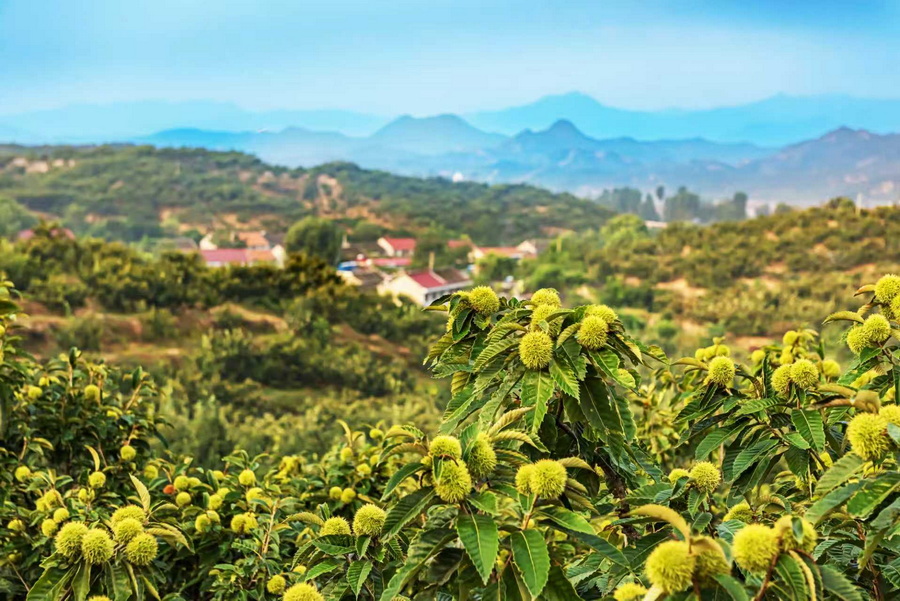
Core Viewpoint - The transformation of Qinglong Manchu Autonomous County in Hebei Province from a resource-poor area to a thriving ecological and economic model exemplifies the principle that "lucid waters and lush mountains are invaluable assets" through practical efforts in rural revitalization and sustainable development [1][15]. Ecological and Industrial Development - Qinglong County, characterized by its mountainous terrain, has leveraged its natural resources, particularly high-quality chestnuts, to drive ecological restoration and industrial upgrades, expanding chestnut planting areas to over 1 million acres and increasing vegetation coverage to 74.83% [4][6]. - The county has implemented a "company + cooperative + farmer" model to enhance technical support for chestnut cultivation, leading to a shift towards large-scale and standardized farming practices [4][6]. Agricultural Innovation and E-commerce - The establishment of a logistics system and e-commerce initiatives has significantly improved the distribution of local agricultural products, reducing logistics costs and enabling farmers to sell directly to consumers [8][10]. - Qinglong has developed a regional public brand "Satisfactory Qinglong," which has gained recognition and facilitated the sale of various agricultural products, including chestnuts, both domestically and internationally [9][10]. Tourism and Cultural Integration - The county has integrated cultural and tourism resources, transforming traditional sites into popular tourist destinations, thereby enhancing local economic activity and community engagement [11][14]. - Initiatives such as the "Red Education + Ecological Experience" route and the establishment of ethnic minority-themed accommodations have attracted significant tourist traffic, contributing to local income [12][14]. Economic Impact - The dual focus on logistics and branding has resulted in nearly 4,000 e-commerce entities in the county, with over 15,000 individuals employed in this sector, leading to an average income increase of nearly 2,000 yuan per person [10]. - The county's e-commerce transaction volume reached 2.006 billion yuan in the first eight months of 2025, reflecting a year-on-year growth of 13.91% [10].
湖北丹江口:“一库清水”滋养百亿水产业
Zhong Guo Xin Wen Wang· 2025-10-27 06:32
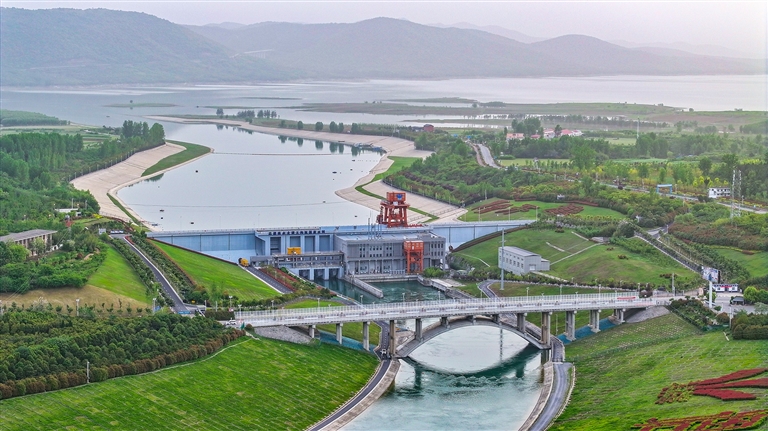
Core Insights - The article highlights the development of a billion-level water industry cluster in Danjiangkou, leveraging the high-quality water from the Danjiangkou Reservoir, which is a key water source for the South-to-North Water Diversion Project [1][2]. Industry Overview - Danjiangkou Reservoir, the largest artificial freshwater lake in Asia, has a water area of 1,050 square kilometers and a storage capacity of 33.9 billion cubic meters, providing a unique natural advantage for the water industry [2]. - The region has established a complete industrial chain from beverage production to packaging design and marketing, attracting well-known companies such as Nongfu Spring, Beijing Yiqing, Yanjing Beer, and China Resources C'est Bon [4]. Production and Economic Impact - The Wudang Mountain Water Beverage Company aims to achieve an annual output value of 1 billion yuan by operating at full capacity in the fourth quarter [1]. - The annual production of water beverage products in Danjiangkou is projected to reach nearly 5 million tons by 2024, with products distributed not only in Hubei but also in northern provinces like Beijing, Tianjin, and Hebei [4]. Environmental Management - The region has implemented strict environmental management systems, including the "River Chief System" and "Lake Chief System," to protect the water quality and ecosystem [2]. - Over 1 million acres of ecological restoration projects have been completed, and extensive monitoring systems are in place to ensure water quality and prevent pollution [4].

省政协举行“加快促进民族乡村实现全面振兴”月度协商座谈会
Liao Ning Ri Bao· 2025-10-16 01:05
Core Viewpoint - The meeting focused on accelerating the comprehensive revitalization of ethnic villages, emphasizing the importance of this initiative for promoting national unity and high-quality development [1][2] Group 1: Key Suggestions and Initiatives - Suggestions included accelerating urban-rural integration, strengthening rural talent development, empowering ethnic village industries through culture, and developing ecological industries based on unique resources [1] - Emphasis on enhancing infrastructure to support rural tourism and improving agricultural technology promotion effectiveness [1] Group 2: Responsibilities and Strategic Focus - The need to understand and implement Xi Jinping's important discourse on rural revitalization, enhancing the sense of responsibility and urgency in promoting ethnic village revitalization [1] - Focus on key tasks such as cultivating new agricultural business entities, developing rural characteristic industries, and strengthening agricultural technology innovation [2] Group 3: Collaborative Efforts - The meeting highlighted the role of the Political Consultative Conference in leveraging its talent and intelligence to address issues like food security, talent bottlenecks, and ecological livability [2] - Continuous research and precise policy recommendations are essential for contributing to the comprehensive revitalization of rural areas [2]
秦岭脚下,这笔“生态账”越算越值!
Xin Hua Wang· 2025-09-21 13:59
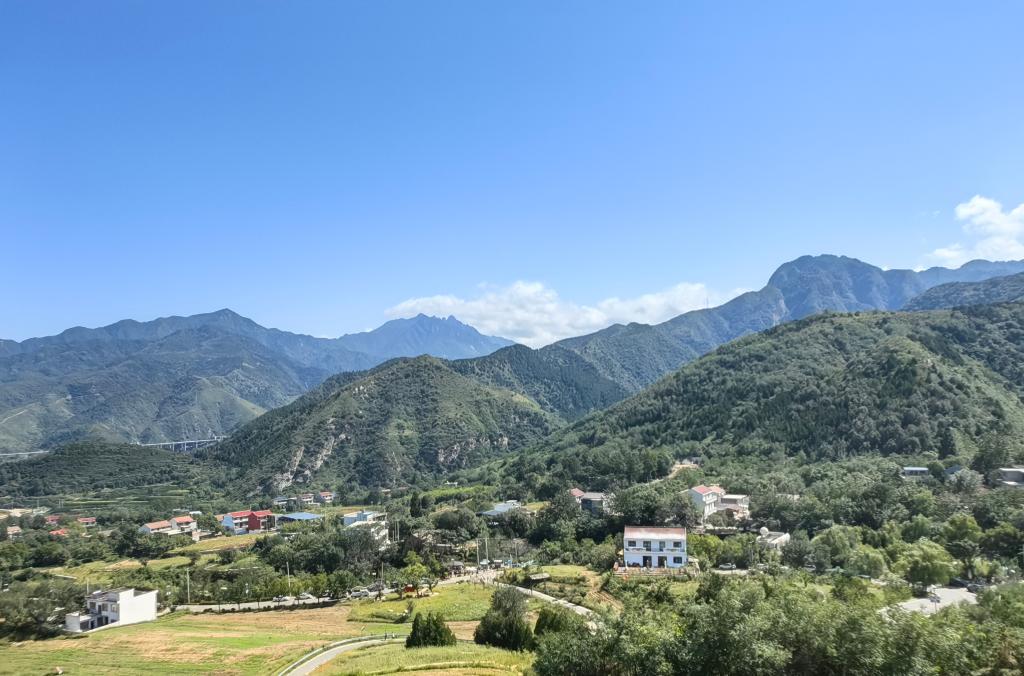
Core Insights - The article highlights the successful transformation of rural areas in Xi'an's Lantian County, focusing on eco-tourism and sustainable practices as key drivers of local economic growth [1][10]. Group 1: Eco-Tourism Development - The village of Qingping has seen a significant increase in eco-tourism, with local resident Fang Yi earning over 100,000 yuan in just three months from his newly established guesthouse [3][5]. - The guesthouse emphasizes environmental sustainability, with strict adherence to waste management practices to preserve the natural beauty that attracts tourists [3][6]. Group 2: Cultural and Ecological Integration - Lantian County's Wangchuan Town combines cultural heritage with ecological preservation, rejecting large-scale investments that could harm the environment in favor of developing local cultural and ecological industries [6][10]. - The integration of cultural elements, such as the legacy of poet Wang Wei, enhances the attractiveness of the area, leading to increased sales of local products like walnuts and chestnuts [6][10]. Group 3: Ecological Protection Efforts - The county has implemented a comprehensive ecological protection strategy, utilizing drones and a network of forest rangers to monitor and maintain the health of its ecosystems [7][10]. - The forest coverage in Lantian County has improved significantly, rising to 57.43%, indicating successful ecological management and restoration efforts [7][10].
生态工程也是富民工程
Ren Min Ri Bao· 2025-09-18 22:32
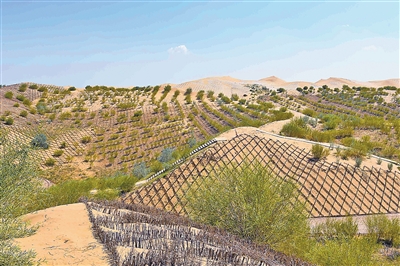
Core Insights - The article highlights the successful ecological restoration and economic development in the Kubuqi Desert, driven by innovative governance models and integrated projects that combine road construction with desertification control efforts [1][3]. Group 1: Ecological Restoration - The Kubuqi Desert, covering an area of 14,100 square kilometers, has seen significant ecological improvements, with over 6,000 square kilometers treated since the "14th Five-Year Plan," achieving a governance rate of 40% [1]. - The integration of various methods such as road management, photovoltaic technology, and engineering solutions has been pivotal in restoring ecological resources and developing the local economy [1][3]. Group 2: Infrastructure Development - The newly constructed 16.8-kilometer sand-crossing road, opened in May, exemplifies the "road management for desertification control" approach, facilitating both community access and the introduction of ecological industries [3]. - Over 4,000 kilometers of sand-crossing roads have been built, aiding in the management of over 4 million acres of desert land, creating a governance pattern that combines road infrastructure with desertification control [3][4]. Group 3: Technological Advancements - The use of high-capacity drones for aerial seeding has significantly increased efficiency and reduced costs compared to traditional methods, with approximately 130,000 acres seeded this year [6]. - The city has adopted various advanced technologies, including water-injection planting and biodegradable containers, to enhance desert management efforts [6]. Group 4: Economic Impact - The local population has benefited economically from the ecological restoration, with families in the region reporting annual incomes between 150,000 to 200,000 yuan, largely from tourism and agricultural activities [8]. - The development of over 500 family forest (grass) farms has resulted in a total ecological coverage of over 2 million acres, contributing to both ecological and economic benefits [8][9]. Group 5: Future Outlook - The city aims to continue its integrated management approach to desertification, water, and land, with a projected total output value of the forestry and grass industry reaching 7.5 billion yuan by 2024 [9].
白沙新高峰村:为生态让路 向幸福迁徙
Hai Nan Ri Bao· 2025-08-13 01:02
Core Insights - The article discusses the transformation of Xinfeng Village in Hainan, which has implemented a comprehensive relocation strategy to promote eco-friendly tourism and agricultural integration, leading to significant economic benefits for the local community [2][3]. Group 1: Economic Development - Xinfeng Village has upgraded its industry by launching the Baisha Dayuan Hotel, which offers comprehensive tourism services to visitors of the surrounding rainforest national park [2]. - The village's collective annual income has surpassed 1 million yuan, driven by the development of the under-forest mushroom cultivation industry [2][3]. - In 2024, the collective sales revenue from mushroom cultivation is projected to reach 1.0557 million yuan, with profits of 400,000 yuan, marking a significant milestone for the village's economy [3]. Group 2: Ecological Restoration - The relocation of the village is not just a geographical shift but also a restoration of the ecological system, with 7,600 acres of core rainforest being returned to nature [3]. - The innovative model of "land exchange + relocation" has facilitated the reforestation of the relocated area using native tree species, contributing to the recovery of previously fragmented rainforest corridors [3]. Group 3: Community Engagement - The village has adopted a collaborative model involving government, enterprises, village collectives, and farmers to invest in mushroom cultivation, creating a full-chain cooperation mechanism [3]. - The Baisha Dayuan project is expected to create over 30 job opportunities for local farmers annually, increasing their income by more than 1.5 million yuan [3]. Group 4: Future Plans - Xinfeng Village aims to continue prioritizing ecological and green development, extending the mushroom industry chain, and exploring the realization of ecological product value [4].
土药材成了金饭碗(家乡的山水能生金)
Ren Min Ri Bao· 2025-08-07 22:40
Core Insights - The article highlights the transformation of Longshan County's economy through the cultivation of traditional Chinese medicinal herbs, which has become a "green bank" for local residents, enhancing their income and restoring the ecological environment [2][4]. Industry Development - Longshan County has over 300 herbal planting cooperatives, with annual output value exceeding 1 billion yuan from the processing of herbs like Huangbai, Baihe, and Jinyinhua into over 60 products, including traditional Chinese medicine, health products, and cosmetics [2][4]. - The county has established a stable planting area of 100,000 mu for Baihe, yielding an annual production of 100,000 tons [5]. Technological Advancements - Longshan County collaborates with various agricultural research institutions to improve the quality of Baihe through molecular breeding and organic farming practices, resulting in a 30% increase in yield [6]. - The contribution of technology to the herbal industry’s output value exceeds 50%, with the establishment of three expert workstations and five industry-university-research demonstration bases [6][8]. Economic Impact - The local economy has shifted from traditional farming to eco-friendly herbal cultivation, with Huangbai being likened to a "fixed deposit" for villagers, providing substantial income [4][6]. - The county has developed a tighter profit-sharing mechanism among enterprises, cooperatives, and farmers, enhancing the overall economic structure [7][8]. Infrastructure and Processing - Modern processing facilities have replaced traditional methods, improving efficiency and safety in the storage of medicinal herbs [7]. - Longshan County is preparing to build new standardized processing plants to extend the industry chain and increase value [8].

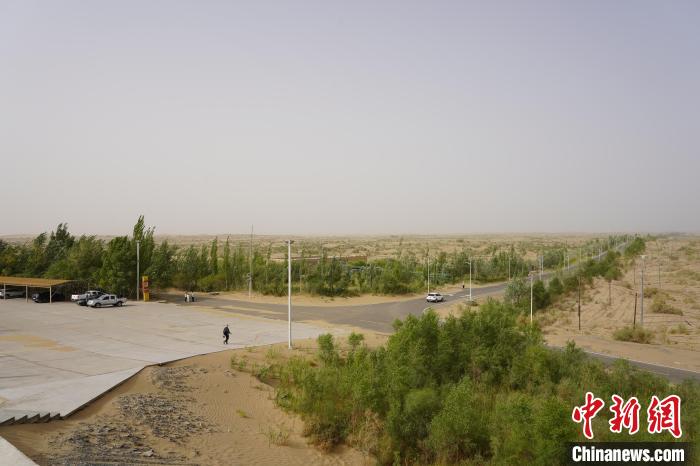
新疆且末治沙:实现“绿进沙退” 迈向“人沙和谐”
Zhong Guo Xin Wen Wang· 2025-06-24 07:43
Core Viewpoint - The article highlights the successful transformation of Qiemu County in Xinjiang from a desertification crisis to a thriving ecological environment, achieving the goal of "green advancing, sand retreating" and moving towards "harmony between humans and sand" [1][5]. Group 1: Historical Context and Challenges - Qiemu County is located in the heart of the Taklamakan Desert, facing severe sandstorm and drought conditions, historically suffering from significant sand encroachment [3]. - The ancient city of Qiemu was buried by sand multiple times, with the yellow sand advancing towards the county seat at a rate of 5-10 meters per year in the late 20th century [3]. Group 2: Initiatives and Achievements - In 1998, Qiemu County established the first county-level windbreak and sand-fixing station in Xinjiang, marking the beginning of organized efforts to combat desertification [3]. - Over 27 years, more than one million people have voluntarily participated in afforestation efforts, showcasing a community-driven approach to ecological restoration [4]. Group 3: Ecological and Economic Impact - The area has transformed into a 23-kilometer long ecological corridor, significantly improving local climate and living conditions, with a marked decrease in dust storm days and an increase in annual rainfall [5]. - Qiemu County has received multiple accolades, including being named a national comprehensive demonstration area for sand control and a model county for greening [5]. Group 4: Sustainable Development Strategies - The county promotes ecological industry to support ecological projects, attracting social capital through favorable policies for water use, forest property rights, and national afforestation subsidies [5]. - The establishment of Qiemu National Desert Park is part of ongoing efforts to explore economic development through desert tourism [5].