
科技—产业—金融良性循环

Search documents
今年创投怎么干?政府工作报告“划重点”“定指南”!信息量很大、含金量十足
证券时报· 2026-03-06 06:09
Core Viewpoint - The 2026 government work report emphasizes the importance of venture capital and angel investment, marking a significant recognition of the strategic value of the venture capital industry by the state [1][3]. Group 1: Development Guidelines for Venture Capital - The report outlines four clear guidelines for the development of the venture capital industry: effectively utilizing the National Venture Capital Guidance Fund, vigorously developing venture capital and angel investment, encouraging government investment funds to act as patient capital, and promoting the growth of more startups into leading technology enterprises [3][4]. Group 2: Institutional Support for Venture Capital Ecosystem - The report provides comprehensive support for improving the venture capital ecosystem, including expanding exit channels for private equity and venture capital funds and implementing a "green channel" mechanism for financing and mergers in key technology sectors [4][5]. Group 3: Shift in Investment Focus - There is a notable shift in focus from traditional equity investment to venture capital, with an unprecedented emphasis on early-stage and small investments in hard technology, indicating a strategic direction that prioritizes long-term value and innovation [5][6]. Group 4: National Venture Capital Guidance Fund - The National Venture Capital Guidance Fund, launched in December 2022, is designed to operate with a 20-year lifespan and aims to inject significant capital into the venture capital industry, enhancing industry confidence and providing substantial funding opportunities for market-oriented general partners (GPs) [7][8]. Group 5: Structural Changes in Venture Capital - The venture capital industry is undergoing a structural transformation, evolving from a policy support tool to a core engine for promoting new productive forces and technological self-reliance, aligning with national strategies and industrial planning [6][9].


我市上线《电子手册》,帮助资金供需两端精准对接
Nan Jing Ri Bao· 2026-02-28 02:32
Core Viewpoint - Nanjing is implementing a series of financial policies to enhance the synergy between fiscal and financial measures, aiming to support the real economy and stimulate market vitality through a comprehensive approach to policy integration [1][2]. Group 1: Financial Policy Tools - The city has developed a "Fiscal + Financial" policy electronic manual that outlines 60 policy products to help enterprises access financial support easily [1]. - The fiscal department is focusing on a more proactive fiscal policy by 2026, integrating various tools such as investment, loans, guarantees, and insurance to empower the real economy [1][2]. Group 2: Investment Empowerment - Nanjing is creating a "4+N" industrial fund to support technology, industry, and talent, facilitating industrial cultivation and the transformation of technological achievements [1]. - The city aims to enhance the effectiveness of investment tools to strengthen supply chains and promote technological advancements [1]. Group 3: Loan Support - The city is implementing loan interest subsidies in collaboration with national and provincial levels, reducing the effective loan interest rate for enterprises significantly, for example, from 2.9% to 0.9% after subsidies [1]. - In 2025, the city plans to allocate 80 million yuan for loan interest subsidies, which is expected to mobilize 17.4 billion yuan in social financing [1]. Group 4: Guarantee and Insurance - The city is enhancing credit guarantees for small and micro enterprises, providing upfront guarantee fee subsidies and backend risk compensation [2]. - The upgraded "Ningke Loan" product will support more technology enterprises by extending the loan period from 1 year to 3 years, with an expected allocation of over 48 million yuan for guarantee fee subsidies in 2025, leveraging a financing scale of approximately 26.794 billion yuan [2]. Group 5: Policy Accessibility - The electronic manual categorizes policies into four types: loans, guarantees, insurance, and investment, and organizes them by central, provincial, and municipal levels, facilitating easy access for enterprises [2]. - The manual is available on the "Ningqi Tong" platform, allowing for precise and quick connections between funding supply and demand [2]. Group 6: Future Initiatives - The fiscal department plans to promote financial policies across various sectors, including departments, parks, and enterprises, to inject new momentum into Nanjing's economic and social development [3].
三四板制度型对接成效凸显 多层次资本市场塔基贯通
Zheng Quan Ri Bao· 2026-02-11 16:12
Core Insights - The integration of the New Third Board and regional equity markets has created a clear "fast track" for specialized and innovative enterprises to go public, effectively supporting national strategies and regional economic development [1][2] Group 1: Green Channel Mechanism - By the end of 2025, the National Equities Exchange and Quotations (NEEQ) has signed green channel regulatory cooperation memorandums with 33 regional equity markets [1] - In 2025, NEEQ opened green channels for seven regional markets, resulting in 101 enterprises from these markets applying through the green channel, which accounted for over 30% of the total applications for the year [1] - The efficiency of the green channel has been validated, with average review cycles for green channel enterprises significantly shorter than the overall level, leading to a substantial increase in listing efficiency [1] Group 2: Impact on Enterprises - Listing on the New Third Board allows enterprises to "pre-study" the strict requirements of public companies, enhancing their governance structure and innovation capabilities [2] - The deepening integration of the third and fourth boards is a significant breakthrough in the construction of a multi-level capital market, systematically incorporating regional enterprise cultivation into a unified national system [2] Group 3: Future Development - Recommendations for future development include transitioning from "channel construction" to "ecological empowerment" and innovating financial tools such as equity incentives [3] - NEEQ plans to further implement the "14th Five-Year Plan" to enhance the unified national market and optimize regional economic layouts, while continuing to leverage the advantages of the third and fourth board integration [3]
证券公司学习宣传贯彻党的二十届四中全会精神丨中银证券党委书记、董事长周权:践行金融报国使命,走好特色发展之路
Zhong Guo Zheng Quan Bao· 2026-02-10 04:47
Core Viewpoint - The article emphasizes the importance of the 20th National Congress of the Communist Party of China in guiding the financial reform and development in the new era, highlighting the role of the securities industry as a key player in serving the real economy and protecting investors' interests [1]. Group 1: Company Development Strategy - Since the 14th Five-Year Plan, the company has focused on party leadership and practical actions to promote steady development, aiming to explore differentiated and specialized development paths during the 15th Five-Year Plan period [2][3]. - The company integrates party leadership into its governance structure, establishing a modern financial enterprise governance mechanism that ensures transparency and effective checks and balances [3]. - The company aims to enhance its financial services by targeting key areas such as technology innovation and industrial upgrading, aligning its operations with national strategies [3][6]. Group 2: Financial Services and Innovation - The company is committed to providing comprehensive financial support to technology enterprises throughout their lifecycle, utilizing a collaborative approach that combines commercial banking, investment banking, and research [4]. - By 2025, the company ranks second in equity underwriting and maintains a leading position in bond underwriting, showcasing its growing professional capabilities [4]. - The company is focused on creating a differentiated competitive advantage in wealth management by transitioning from product sales to personalized advisory services, leveraging big data technology [9]. Group 3: Risk Management and Compliance - The company prioritizes compliance and risk management as foundational elements for stable business development, implementing advanced technologies for risk identification and management [11]. - A comprehensive risk management system is in place, ensuring that risk control measures are integrated into all business processes [11]. - The company promotes a culture of compliance through continuous training and awareness programs, enhancing the overall compliance consciousness among employees [11]. Group 4: Employee Engagement and Corporate Culture - The company fosters an innovative atmosphere by encouraging employees to embrace industry changes and explore new product and service developments [12]. - A strong emphasis is placed on practical performance and accountability in employee selection and evaluation, aiming to build a motivated workforce [12]. - The company actively engages in cultural activities to enhance employee cohesion and sense of belonging, contributing to a positive organizational environment [12].

活跃创投生态,攀登“紫金山巅”
Xin Hua Ri Bao· 2026-02-09 21:46
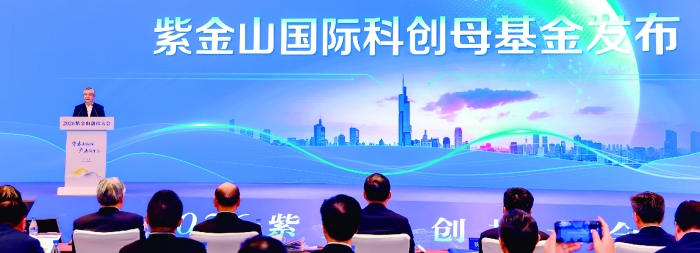
Core Insights - Jiangsu is a critical battleground for venture capital institutions, highlighted during the 2026 Zijin Mountain Venture Capital Conference, which gathered over 500 representatives from various sectors to discuss new trends in capital empowering technological innovation [1][2] - The conference showcased Jiangsu's leadership in equity investment, with the province leading the nation in the number of investment cases and exceeding 100 billion yuan in investment amounts [2] Investment Landscape - Jiangsu's equity investment case count ranks first nationally, with investment amounts surpassing 100 billion yuan, and cities like Suzhou, Nanjing, and Wuxi making it into the top ten for investment activity [2] - The conference resulted in the unveiling and signing of funds totaling over 70 billion yuan, including two major funds from China National New, and several funds specifically targeting artificial intelligence and early-stage startups [2][3] Fund Structure and Strategy - The newly established Zijin Mountain International Innovation Mother Fund has a total scale of 10 billion yuan, aiming to leverage social capital and support various stages of investment from concept validation to mergers and acquisitions [3][4] - The fund's investment strategy includes a long-term duration of up to 20 years, designed to match the needs of long-cycle industry cultivation [3] Policy Innovations - Jiangsu has introduced a unique policy framework that allows for significant loss tolerance in venture capital investments, with the concept validation fund having no upper limit on loss tolerance, encouraging risk-taking in early-stage investments [4][5] - This policy shift aims to transition investment decisions from a focus on short-term financial returns to long-term industrial development, fostering a more supportive environment for innovative projects [5] Ecosystem Development - The establishment of the Zijin Mountain International Innovation Fund District aims to create a vibrant ecosystem for technology-driven enterprises, with a goal of gathering various funds and facilitating over 3,000 projects by 2030 [6][7] - The district will implement a "1+2" functional layout, promoting resource sharing and collaborative development across multiple areas, with a focus on enhancing the scale and internationalization of the fund ecosystem [7]
南京紫金山科创带升级焕新 构建“科技—产业—金融”良性循环
Shang Hai Zheng Quan Bao· 2026-02-09 18:21
Core Insights - The 2026 Zijinshan Venture Capital Conference in Nanjing marks a significant step in supporting the construction of the Zijinshan Innovation Belt, with a focus on high-level circulation of technology, industry, and finance [2][3] - The conference aims to establish Nanjing as a "fund-friendly city," encouraging various venture capital institutions to invest directly in the region, with a total fund scale exceeding 70 billion yuan announced during the event [2][4] Group 1: Fund Development and Policy Initiatives - The "Zijinshan International Sci-Tech Fund District" is designed to integrate policy support, capital empowerment, industry-finance collaboration, and talent aggregation, aiming to create a comprehensive international sci-tech fund district [3][4] - The district's layout includes a "1+2" functional structure, with Jianye District as the fund aggregation area and Jiangning and Qixia Districts as investment empowerment areas, promoting resource sharing and coordinated development [4][5] - The goal is to gather over 600 billion yuan in various funds by 2030, targeting more than 3,000 projects in Nanjing and exceeding 75 billion yuan in equity investment [4][5] Group 2: Financial Ecosystem and Market Initiatives - Nanjing has established a market-oriented mother fund with a total scale of 10 billion yuan to enhance the city's fund contribution capacity and support the development of a modern industrial system [6][7] - The mother fund will optimize investment rules, allowing for significant contributions to various fund types, particularly in high-tech sectors like biomedicine and artificial intelligence [7][8] - The conference also launched additional provincial funds, including a 10 billion yuan fund focused on modern service industry innovation and a sci-tech relay fund, both aimed at enhancing investment in key sectors [8][9] Group 3: Financial Services and Innovation - Nanjing has initiated the establishment of 23 sci-tech financial service stations to support local enterprises, facilitating over 300 billion yuan in financing [8][9] - The city is focusing on creating a robust financial service network for sci-tech enterprises, integrating digital finance and technology to enhance the financial ecosystem [9] - The ongoing development of the national-level sci-tech financial reform pilot zone in Nanjing aims to deepen reforms and enhance the efficiency of financial support for innovation [9]
我市知识产权质押融资去年累计登记金额125亿元,惠及企业超千家
Nan Jing Ri Bao· 2026-02-09 02:50
Core Insights - Intellectual property (IP) is becoming a key financing tool for technology companies in Nanjing, transforming previously dormant assets into valuable capital [1][2][3] - The city has established a comprehensive financial service system that integrates technology, industry, and finance, facilitating the transition of IP from mere legal assets to tangible financial resources [1][3][6] Group 1: Financing through Intellectual Property - Several technology companies have successfully utilized IP pledges to secure funding, such as a software company that obtained 10 million yuan through trademark rights to accelerate AI development [1][3] - Nanjing's IP pledge financing has seen significant growth, with a cumulative registration amount of 12.5 billion yuan by 2025, benefiting over 1,000 enterprises [1][3] - The city has implemented policies to encourage financial institutions to support IP pledge financing, resulting in 1,422 registered pledges and 1,196 enterprises benefiting from this financing model by 2025 [3][6] Group 2: Impact on Technology Companies - Companies like Jiangsu Environmental Technology Co. have leveraged IP pledges to overcome funding gaps, increasing their loan amounts from 3 million yuan in 2023 to 8 million yuan in 2025 as they expanded production capacity [2][3] - Nanjing's software companies are enhancing their innovation capabilities and revenue growth through IP financing, with significant investments in AI and cloud services [3][5] - The establishment of a digital IP financial service platform has facilitated collaboration between companies and financial institutions, enabling efficient access to funding based on the value of their IP [5][6] Group 3: Broader Economic Implications - The ripple effect of IP pledge financing is contributing to the overall upgrade of industries in Nanjing, with significant financing activity in sectors such as scientific research, manufacturing, and information technology [7][8] - By 2025, the scientific research and technical services sector accounted for 569 pledges worth over 4.57 billion yuan, while manufacturing and information technology sectors also showed strong financing activity [7][8] - The focus on small and medium-sized tech enterprises through IP financing is fostering innovation and improving management capabilities, ultimately driving a virtuous cycle between technology, industry, and finance [8][9]
【微聚焦】全省首投AIC基金成功运作,赋能芯片领军企业落子市北
Xin Lang Cai Jing· 2026-02-03 12:52
Core Insights - The first AIC (Asset Investment Company) private equity fund in Qingdao, named Qingdao Ronghui Xinkai Qihang, has successfully completed its first project investment and is now in a stable operational phase [1][3] - This fund, with a total scale of 220 million yuan, focuses on the semiconductor and new generation information technology sectors, aligning with Qingdao's "10+1" innovative industrial system [1][3] Investment Focus - The fund's initial investment targets the domestic smart cockpit chip project, led by the industry leader, Xinqing Technology, which has core technological advantages in smart cockpit and smart driving chip R&D [2][4] - Xinqing Technology has registered a subsidiary in Qingdao, focusing on chip-related scientific research and technical services, filling a gap in high-end automotive chip R&D and sales in the Shibei District [4][5] Operational Efficiency - The fund achieved a rapid operational timeline, completing the entire process from cooperation intention to project investment in just four months, showcasing the "Qingdao speed" and strong collaboration between government and financial institutions [1][3] - The successful operation of the fund is attributed to the collaborative efforts of local government and financial entities, providing a "one-stop" service to ensure quick startup and operation of Xinqing Technology [5]
宏观杠杆率持续上升 结构优化成调控关键
Zhong Guo Jing Ying Bao· 2026-01-30 04:35
Core Viewpoint - The macro leverage ratio in China is projected to rise to 302.4% by the end of 2025, indicating a significant increase in debt levels relative to nominal GDP, necessitating structural optimization of leverage to support economic growth effectively [1][2]. Summary by Sections Macro Leverage Ratio Trends - The macro leverage ratio increased by 0.1 percentage points from 302.3% at the end of Q3 2025 to 302.4% at the end of Q4 2025. For the entire year, it rose by 11.7 percentage points, driven by low debt growth in the household and corporate sectors, while government debt expanded significantly [2]. - By the end of 2025, the debt balances of non-financial enterprises, households, and government sectors grew by 7.8%, 0.5%, and 17.0% respectively, leading to a total debt balance increase of 8.2%, while nominal GDP only grew by 4.0% [2]. Sectoral Contributions to Leverage Ratio - The rise in the macro leverage ratio was primarily driven by the corporate and government sectors, while the household sector continued to reduce its leverage. Factors such as the adjustment in the real estate market and slow income growth led households to decrease debt and increase savings [3]. - Government investment projects and a recovering corporate financing demand, supported by proactive fiscal policies, contributed to the increase in debt levels in the corporate and government sectors [3]. Future Outlook and Policy Recommendations - The monetary policy in 2026 is expected to maintain a moderately loose stance, which may lead to continued growth in corporate and government debt, putting upward pressure on the macro leverage ratio. However, this could be offset by an increase in nominal GDP growth [4]. - Recommendations for optimizing leverage structure include supporting financing for private SMEs and technology firms, while controlling the debt expansion of state-owned enterprises. This approach aims to stabilize the leverage ratio in the household sector and promote sustainable economic growth [5][6]. - The government is encouraged to increase fiscal spending in social welfare areas, which could enhance consumer spending potential. For instance, a 1% interest subsidy on household loans could reduce interest burdens significantly and stimulate consumption growth [6].
向新向优,激活中国经济高质量发展新引擎
Xin Lang Cai Jing· 2026-01-30 03:09
Group 1 - In 2025, China's economy is characterized by resilience and a strong performance, with a notable increase in R&D investment intensity surpassing 2.8%, exceeding the OECD average [1] - The global innovation index ranking has historically entered the top ten, reflecting the deepening implementation of the innovation-driven strategy and the transformation of economic momentum [1] - The continuous increase in R&D investment intensity indicates further optimization of innovation resource allocation across society, supporting advancements in fields like artificial intelligence and quantum information [1] Group 2 - The deep integration of technological and industrial innovation is driving significant changes, with a 9.3% increase in the value added of the digital product manufacturing industry in 2025 [2] - The domestic sales of new energy vehicles have surpassed 50%, marking a milestone in green consumption and showcasing China's competitive advantage in the green low-carbon sector [2] - The rapid growth of emerging industries alongside the intelligent and green upgrades of traditional industries illustrates a dual narrative of "renewal of stock" and "rise of increment" in China's industrial system [2] Group 3 - It is crucial to consolidate and expand technological innovation advantages during the 14th Five-Year Plan period, focusing on existing strengths in digital and green economies while exploring new sectors like commercial aerospace and humanoid robots [3] - Strengthening the role of enterprises in innovation and enhancing the integration of education and industry will facilitate smoother flow of talent, technology, and capital, injecting new momentum into the real economy [3] - The current global technological competition emphasizes that innovation is key to development, and China's path of "moving towards new" relies on innovation-driven strategies to enhance overall productivity and core competitiveness [3]