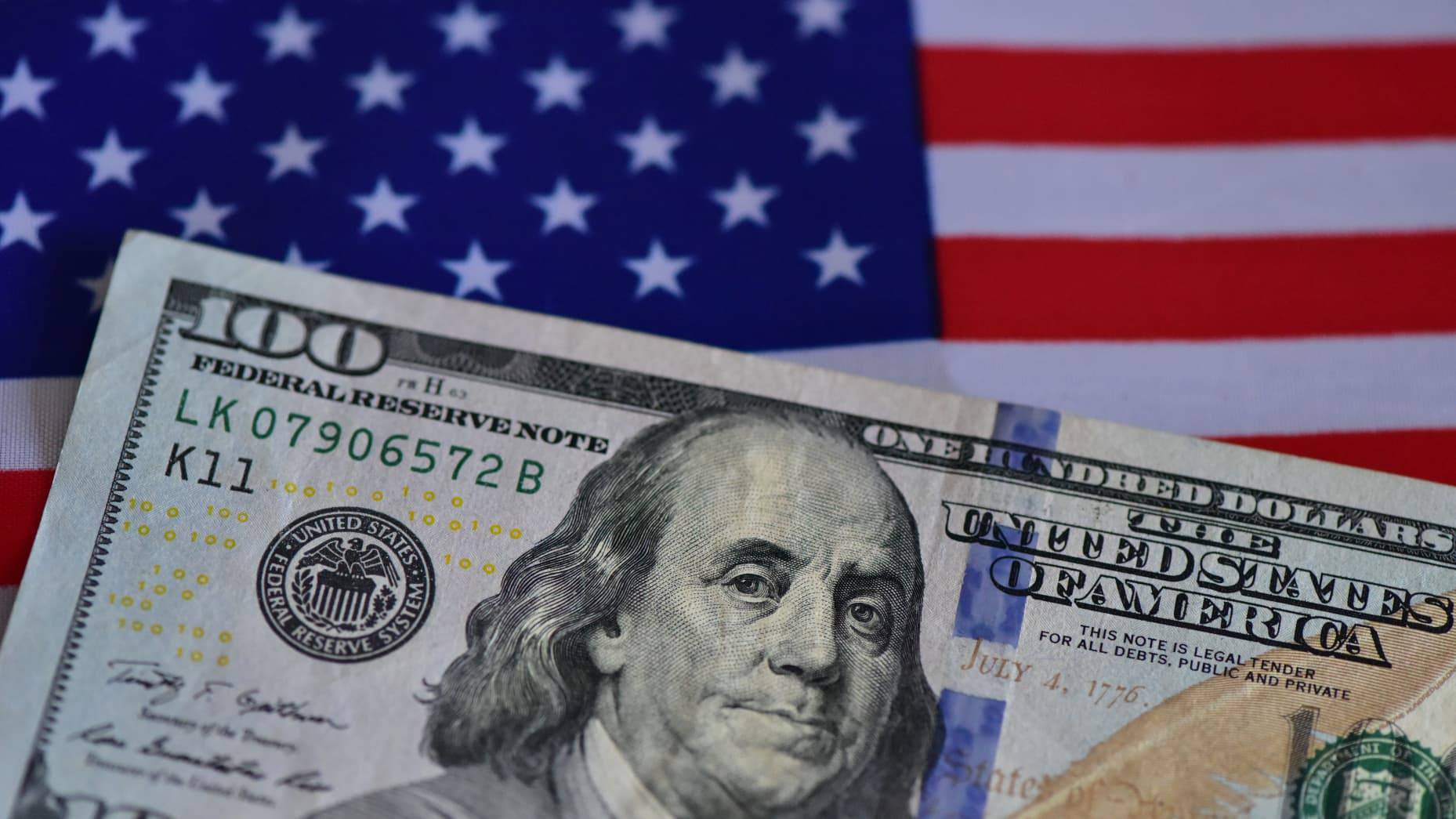
美元避险地位

Search documents
德银顶级策略师再次硬刚贝森特!美元将不再是“安全牌”?
Xin Lang Cai Jing· 2026-02-12 14:27
Core Viewpoint - Deutsche Bank's global forex strategist George Saravelos challenges the myth of the US dollar as a safe-haven asset, suggesting that its strong position is under threat due to increasing risks in the US stock market and a decoupling from the S&P 500 index [1][4]. Group 1: Dollar's Safe-Haven Status - Saravelos argues that the relationship between the dollar index and the S&P 500 indicates that the dollar has not rebounded as expected during risk-averse periods [1][4]. - He highlights that the dollar and the S&P 500 have decoupled over the past year, questioning the traditional view of the dollar's role as a safe haven [1][4]. Group 2: Risks in the US Stock Market - The US stock market is perceived as increasingly dangerous, primarily due to over-concentration in the artificial intelligence sector and concerns about "self-cannibalization" within industries [5]. - Saravelos notes that if negative sentiment in the stock market originates domestically, the dollar could decline alongside the stock market, similar to the 2002 internet bubble [2][5]. Group 3: Investment Strategy and Currency Outlook - The key factor for forex hedging decisions is the historical correlation between the dollar and US equities; a decline in the dollar's attractiveness as a hedging tool could lead investors to reduce their dollar positions [2][5]. - Deutsche Bank has maintained a bearish outlook on the dollar, citing a decline in the US's exceptionalism regarding interest rate differentials, growth prospects, and safe-haven reputation [2][5]. - In the current environment, currencies benefiting from moderate global growth dynamics, such as the Australian dollar, Scandinavian currencies, and emerging market currencies, are viewed as more attractive [2][5].

白银抢尽风头,能否撼动黄金地位?
Jin Shi Shu Ju· 2025-12-11 08:18
Core Viewpoint - Record leasing rates and tariff concerns have led to unprecedented trading volumes, prompting investors to increase their allocation in precious metals for portfolio diversification, while adjusting the ratio of silver to gold [1] Group 1: Silver vs. Gold Performance - Over the past 12 months, silver prices surged by 92%, while gold saw a rise of approximately 56% [2] - Silver reached a 13-year high of over $35 per ounce in early June and has now approached a historical peak of nearly $63 [2] - The strong performance of silver has reignited discussions about whether it can become a reliable alternative to gold [6][7] Group 2: Investment Demand and Market Dynamics - Investment demand for silver has significantly increased, with exchange-traded product (ETP) holdings rising by about 18% as of November 6 [2][3] - The net supply-demand balance for silver is at its tightest level on record, with ETF demand increasingly impacting this imbalance [3] - The U.S. government's designation of silver as a critical mineral has added uncertainty, as details on subsequent actions are still awaited [4] Group 3: Economic Factors Influencing Precious Metals - Lower interest rates, particularly following a recent 25 basis point cut by the Federal Reserve, are expected to benefit precious metal prices [5][6] - The correlation between the Federal Reserve's easing policies and the demand for both gold and silver suggests that silver may also gain from these conditions [5][6] - The industrial demand for silver, driven by sectors such as solar energy and electric vehicles, is contributing to its strong market performance [7] Group 4: Long-term Perspectives on Silver - Silver has historically been viewed as a substitute for gold, but its recent performance has outpaced that of gold [7] - The structural supply gap in the silver market, which has persisted for five years, shows little sign of resolution, further enhancing its appeal to investors [7] - Despite silver's rising profile, reserve asset managers have not yet recognized it as a viable long-term holding, indicating a potential barrier to its acceptance as a true alternative to gold [7]
白银抢尽风头,能否撼动黄金地位?
Jin Shi Shu Ju· 2025-12-11 08:16
Core Viewpoint - Record leasing rates and tariff concerns have led to unprecedented trading volumes, prompting investors to increase their allocation in precious metals for portfolio diversification, while adjusting the ratio between silver and gold [1] Group 1: Silver's Performance - Over the past 12 months, silver prices have surged by 92%, compared to a 56% increase in gold prices [2] - Silver reached a 13-year high of over $35 per ounce in early June and has now approached a historical peak of nearly $63 [2] - The CEO of the Silver Institute noted that 2025 is expected to be a dramatic year for the silver market, with record prices and unprecedented liquidity tightness [2] Group 2: Investment Demand - Investment demand for silver has significantly increased, with ETP holdings rising by approximately 18% as of November 6 [2][3] - The net supply-demand balance for silver is currently at its tightest level on record, with ETF demand increasingly impacting this imbalance [3] - The decision to classify silver as a critical mineral by the U.S. government has added uncertainty, as details on subsequent actions are still awaited [4] Group 3: Economic Factors - Lower interest rates, following a recent 25 basis point cut by the Federal Reserve, have been beneficial for precious metal prices, including silver [5][6] - The correlation between the Federal Reserve's easing policies and the demand for silver is significant, with industrial demand also playing a crucial role [7] Group 4: Silver as an Alternative to Gold - The rapid rise of silver relative to gold has reignited discussions about whether silver is becoming a reliable substitute for gold [7] - Silver's strong performance is attributed to rising industrial demand and a structural supply gap that has persisted for five years [7][8] - While silver is increasingly viewed as an alternative to gold, reserve asset managers historically have not considered silver worthy of long-term holdings [8]
DLS MARKETS:美联储鸽派基调延续,加拿大央行警示美元避险地位动摇
Sou Hu Cai Jing· 2025-09-24 03:57
Core Viewpoint - The US dollar is experiencing weakness due to ongoing expectations of interest rate cuts, with the Federal Reserve's dovish stance contributing to a lack of bullish momentum [1][3][4]. Group 1: Federal Reserve Insights - Federal Reserve officials, including Cleveland Fed President Loretta Mester, express concerns about persistent inflation pressures and the challenges of balancing inflation control with employment support [3]. - Fed Chair Jerome Powell describes the current economic situation as "challenging," emphasizing the risks of either too rapid or too slow policy adjustments [3]. - The market is closely monitoring the upcoming August Personal Consumption Expenditures (PCE) price index, which is expected to show some easing of inflation pressures [3]. Group 2: Dollar's Safe-Haven Status - Canadian central bank Governor Tiff Macklem highlights concerns over the independence of the Federal Reserve, which is diminishing the dollar's appeal as a safe-haven asset [4]. - Historical trends indicate that during periods of market turmoil, investors typically seek refuge in dollar assets, but this pattern is changing, with the dollar's safe-haven value potentially weakening [4]. - Macklem notes that the dollar depreciated by approximately 10% during significant shifts in US trade policy, while gold prices surged by 40% during the same period [4]. Group 3: Political Influences - The Trump administration has criticized the Federal Reserve for its slow pace of interest rate cuts, leading to tensions regarding the independence of the central bank [5]. - Legal challenges regarding the potential removal of Fed Governor Lisa Cook are ongoing, reflecting the political pressures faced by the Federal Reserve [5].

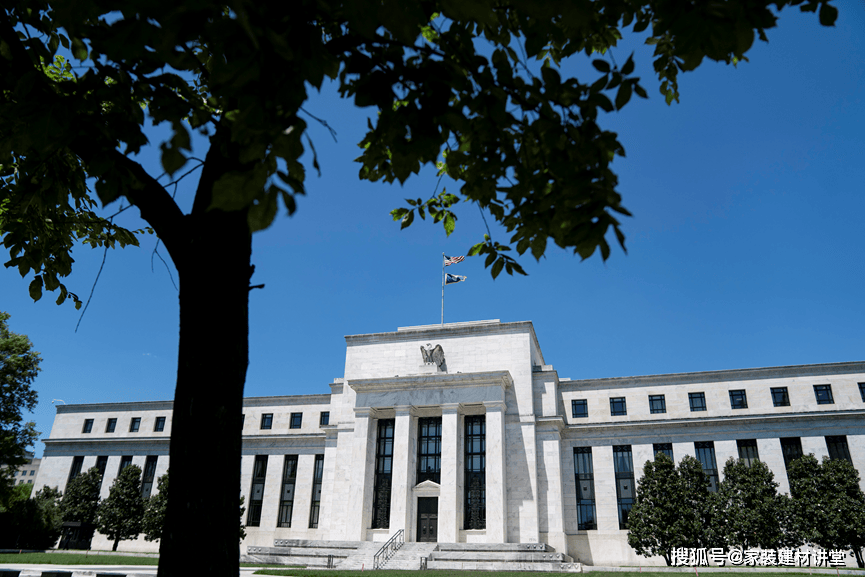
加拿大央行行长:关税政策冲击市场信心 美元避险地位受损
Zhi Tong Cai Jing· 2025-09-24 02:19
Core Viewpoint - The Bank of Canada's Governor Tiff Macklem expressed concerns that U.S. trade policies under President Trump may undermine the dollar's status as a global safe asset, leading to a potential decline in the U.S.'s dominance in global capital flows [1][2]. Group 1: Impact of U.S. Trade Policies - Macklem indicated that the imposition of new tariffs by the U.S. has weakened global confidence, contrary to expectations that tariffs would support the dollar's value [1][2]. - The dollar has depreciated by approximately 10% against other major currencies since the beginning of the year, raising questions about its role as a safe-haven currency [1][2]. Group 2: Financial Stability Risks - Macklem warned that changes in trade patterns, international capital flows, unsustainable U.S. fiscal deficits, and ongoing trade imbalances could increase risks to financial stability [2]. - The shift towards protectionism in the U.S. is disrupting supply chains, raising prices, and potentially leading to a prolonged economic downturn for Canada and the global economy [2]. Group 3: Recommendations for Canada - Macklem urged the Canadian government and businesses to implement measures beyond monetary policy to mitigate the impact of tariffs, emphasizing the need for increased investment, productivity, and market expansion [2]. - Suggested actions include enhancing interprovincial trade, exploring new overseas markets, and reducing regulatory uncertainty to attract investors [2].
当美元不再“避险”,各国央行正转向欧债
Hua Er Jie Jian Wen· 2025-07-16 10:25
Group 1 - The core viewpoint of the articles highlights a significant increase in the allocation of eurozone government bonds by official institutions, with their subscription rate rising from 16% last year to 20% this year [1][2] - Concerns over the dollar's status as a safe-haven currency have emerged due to fluctuating U.S. trade policies and criticism of the Federal Reserve, leading to a 9% decline in the dollar and a 12% increase in the euro [1][2] - The relative political stability, lower budget deficits, and inflation levels in Europe make eurozone bonds more attractive to central banks [1][2] Group 2 - Barclays' analysis indicates that official institutions, including central banks and sovereign wealth funds, have significantly increased their subscriptions to eurozone government bonds, with notable demand from Asian institutions [2] - The issuance of bonds through syndication has raised over €200 billion (approximately $232.4 billion) for eurozone governments last year, making it a crucial financing channel [2] - Despite the rising demand for eurozone bonds, industry experts caution that it is too early to determine if central banks are meaningfully adjusting their currency allocations due to ongoing focus on U.S. dollar assets [3]
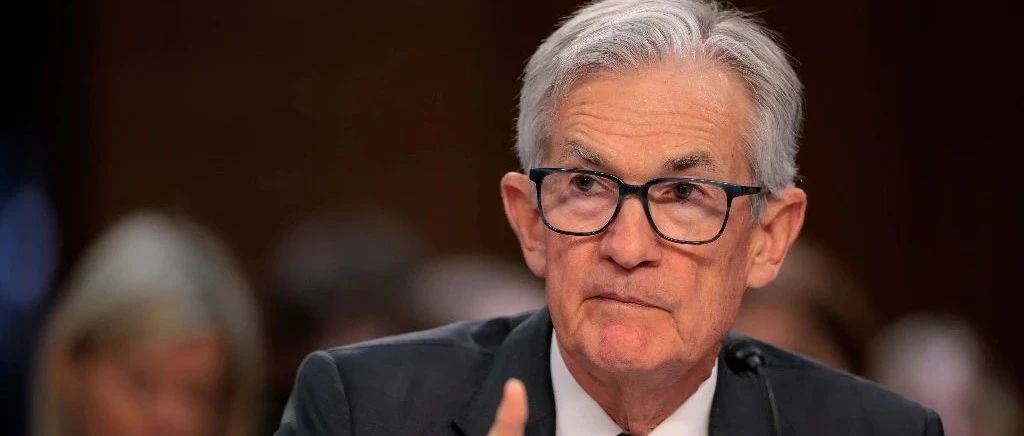
鲍威尔重磅表态:不排除提前降息可能,但6月7月数据很重要
华尔街见闻· 2025-06-25 00:01
Core Viewpoint - The Federal Reserve Chairman Jerome Powell did not rule out the possibility of a rate cut in July but indicated that it is more likely to wait until at least September to assess the impact of tariffs on inflation [1][4][6]. Group 1: Interest Rate Decisions - Powell emphasized that many paths are possible regarding interest rates, suggesting that inflation may not be as strong as anticipated, which could lead to an earlier rate cut [1][3]. - He stated that if inflation pressures are indeed controlled, the Fed would act quickly to cut rates, but he refrained from specifying a particular meeting for such a decision [7][22]. - Powell noted that the majority of FOMC members believe a rate cut later this year is appropriate, but the economic outlook remains uncertain [9][10]. Group 2: Tariff Impact on Inflation - Powell reiterated that tariffs are expected to have a significant impact on prices during June, July, and August, and if the expected impact does not materialize, it would serve as a lesson for the Fed [2][5]. - He mentioned that at least some of the tariff costs will be borne by consumers over time, indicating a shift in who absorbs these costs [25]. - Powell maintained an open attitude towards the possibility that the impact of tariffs on inflation could be less than expected, which would have substantial implications for monetary policy [1][11]. Group 3: Economic Outlook - Powell indicated that the labor market shows no signs of weakness, and as long as the economy remains strong, there is no urgency to cut rates [22][23]. - He expressed concerns about the sustainability of the federal budget and debt growth, warning that prolonged inaction could lead to more severe consequences [61][62]. - Powell projected that the U.S. economy would slow down this year, partly due to immigration issues, and he expressed skepticism about the immediate productivity benefits of AI [31][32]. Group 4: Financial Stability and Regulation - Powell highlighted that while the commercial real estate (CRE) situation is improving, it remains a risk that needs monitoring [47][49]. - He noted that the Fed is on track with its balance sheet reduction and has room to continue this process for some time [56][57]. - Powell stated that the Fed's independence is crucial for maintaining credibility in controlling inflation, emphasizing that political factors should not influence monetary policy decisions [50][53].
美元、美债还能避险吗?这场以伊冲突给出答案
Hua Er Jie Jian Wen· 2025-06-13 08:10
Core Viewpoint - The recent geopolitical crisis has put the traditional safe-haven status of the US dollar and US Treasuries to the test, with increasing skepticism about their reliability as safe assets [1][12]. Group 1: Market Reactions - Following Israel's airstrikes on Iranian targets, US Treasuries showed only a slight increase, and the dollar initially dropped instead of rising as expected for safe-haven assets [2][12]. - The volatility in the market was evident as the VIX index surged, global stock markets faced pressure, and oil prices spiked, while gold, another safe-haven asset, saw a strong rebound [1][6]. Group 2: Structural Issues with the Dollar - The dollar index has fallen approximately 8% this year, reflecting a loss of investor confidence in the US economic growth outlook due to various structural issues, including trade policies and fiscal deficits [13][14]. - Analysts suggest that the dollar's safe-haven status is being diluted by the US government's trade policies and challenges to the rule of law, leading to questions about its reliability [13][14]. Group 3: Shift in Investment Trends - There is a notable shift in capital flows away from US Treasuries towards hard assets like oil and metals, indicating a loss of confidence in sovereign debt as a risk-free haven [12][14]. - The current geopolitical tensions have led to a typical cross-asset reaction, with energy and gold prices rising sharply, while bond demand remains low [11][12].
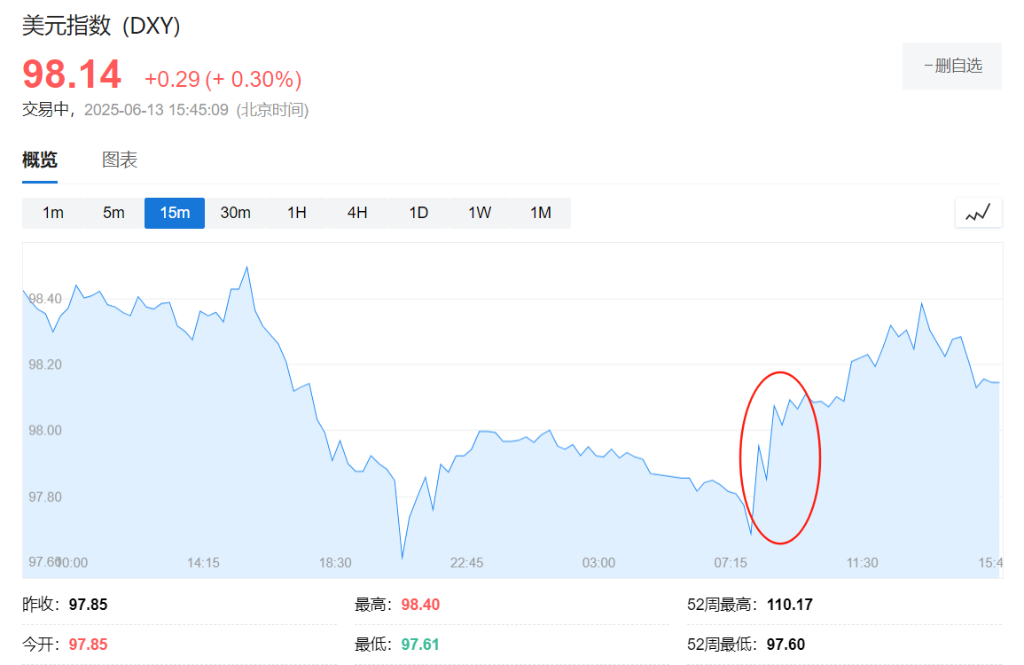
以色列袭击伊朗后,美元的避险地位面临关键考验
news flash· 2025-06-13 05:47
Core Viewpoint - The article discusses the challenges facing the US dollar's status as a safe-haven currency amid geopolitical tensions, particularly following Israel's attacks on Iran, which have led to fluctuations in the dollar's value and raised questions about its stability as a crisis refuge [1]. Group 1: Dollar's Performance - The dollar initially declined after news of Israeli airstrikes on Iranian targets but later rebounded against most major currencies [1]. - The rise in WTI crude oil futures by 10% may have contributed to the stabilization of the dollar, as the US is the world's largest oil producer [1]. - Concerns over tariff increases and a deteriorating economic outlook for the US led to the dollar index dropping to its lowest point in three years [1]. Group 2: Safe-Haven Status - The "safe haven" label for the dollar and assets like the yen relies on three pillars: economic stability, liquidity, and credibility [1]. - The current weakness of the dollar is revealing cracks in these three pillars, raising doubts about its reliability as a safe-haven currency [1].
就业推动的反弹后美元下跌;美中会谈成为焦点
Sou Hu Cai Jing· 2025-06-10 08:14
Group 1 - The US dollar fell against most major currencies due to cautious sentiment ahead of key US-China trade negotiations, despite optimism from a better-than-expected US employment report [2] - China is facing deflation and trade uncertainties, which are dampening sentiment among US businesses and consumers, prompting investors to reassess the dollar's safe-haven status [2] - In May, China's exports to the US plummeted by 34.5% year-on-year, marking the largest decline since the COVID-19 pandemic began in February 2020 [3] Group 2 - The Japanese yen fell approximately 0.3% to 144.43 against the dollar, as Japan considers repurchasing some long-term government bonds to control rising yields [4] - The Australian and New Zealand dollars rose by 0.3% and 0.5% respectively, as markets reacted to the European Central Bank's monetary policy outlook [6] - The upcoming US inflation report for May is expected to be a focal point for investors and Federal Reserve policymakers, as they seek evidence of the economic impact of trade restrictions [8] Group 3 - Federal Reserve officials have indicated they are not in a hurry to cut interest rates, with signs of economic resilience potentially reinforcing their stance [9] - Market expectations suggest that the central bank may lower borrowing costs by 25 basis points, with the earliest action anticipated in October [9] - Analysts note that May marks the first month where the impact of the 10% tariffs on imports outside the USMCA is expected to be evident, requiring several months of inflation data to assess the tariffs' effects [9]