财政脆弱性

Search documents
沪铜产业日报-20251203
Rui Da Qi Huo· 2025-12-03 10:40
1. Report Industry Investment Rating - No information provided 2. Core View of the Report - The Shanghai copper main contract shows a volatile trend, with decreasing open interest, spot discount, and strengthening basis. In the fundamental raw material segment, copper concentrate processing fees remain in the negative range, and the continuous tight supply of raw materials still supports copper prices. On the supply side, after the previous concentrated maintenance, smelting capacity may be released again, but the tight supply of raw materials will limit the capacity to some extent, so the domestic refined copper supply will only increase slightly. On the demand side, the impact of the off - season for consumption is gradually emerging, and the relatively high copper prices will suppress downstream consumption. In this context, downstream purchasing sentiment may be more cautious. In terms of inventory, the overall social inventory remains at a medium - low level, but there may be some inventory accumulation due to the off - season. In terms of consumption, the year - end rush of domestic power infrastructure and the year - end sales push of the new energy vehicle industry support the demand to some extent. In the options market, the call - put ratio of at - the - money options is 1.27, up 0.0683 month - on - month, indicating a bullish sentiment in the options market with a slight decline in implied volatility. Technically, on the 60 - minute MACD, the two lines are above the 0 axis and the green bars are contracting. The overall view is to conduct light - position volatile trading and pay attention to controlling the rhythm and trading risks [2]. 3. Summary by Relevant Catalogs 3.1 Futures Market - The closing price of the Shanghai copper futures main contract is 89,210 yuan/ton, up 290 yuan; the LME 3 - month copper price is 11,253 US dollars/ton, down 10 US dollars; the open interest of the main contract is 223,984 lots, down 1,622 lots; the net position of the top 20 futures holders is - 34,929 lots, down 7,914 lots; the LME copper inventory is 161,800 tons, up 2,375 tons; the SHFE cathode copper inventory is 97,930 tons, down 12,673 tons; the SHFE cathode copper warrant is 28,969 tons, down 2,856 tons [2]. 3.2 Spot Market - The SMM 1 copper spot price is 88,980 yuan/ton, up 320 yuan; the Yangtze River Non - Ferrous Market 1 copper spot price is 89,085 yuan/ton, up 325 yuan; the Shanghai electrolytic copper CIF (bill of lading) price is 48.50 US dollars/ton, unchanged; the Yangshan copper average premium is 39 US dollars/ton, unchanged; the basis of the CU main contract is - 230 yuan/ton, up 30 yuan; the LME copper cash - 3 months spread is 69.18 US dollars/ton, up 0.08 US dollars; the monthly import volume of copper ore and concentrates is 245.15 million tons, down 13.56 million tons; the weekly TC of domestic copper smelters is - 42.75 US dollars/kiloton, down 0.43 US dollars [2]. 3.3 Upstream Situation - The price of copper concentrate in Jiangxi is 79,020 yuan/metal ton, down 440 yuan; the price of copper concentrate in Yunnan is 79,720 yuan/metal ton, down 440 yuan; the weekly processing fee for blister copper in the south is 1,300 yuan/ton, unchanged; the weekly processing fee for blister copper in the north is 900 yuan/ton, unchanged [2]. 3.4 Industry Situation - The monthly output of refined copper is 120.40 million tons, down 6.20 million tons; the monthly import volume of unwrought copper and copper products is 440,000 tons, down 50,000 tons; the weekly social copper inventory is 41.82 million tons, up 0.43 million tons; the price of 1 bright copper wire in Shanghai is 60,840 yuan/ton, down 350 yuan; the ex - factory price of 98% sulfuric acid of Jiangxi Copper is 870 yuan/ton, unchanged; the price of 2 copper (94 - 96%) in Shanghai is 74,550 yuan/ton, down 150 yuan [2]. 3.5 Downstream and Application - The monthly output of copper products is 200.40 million tons, down 22.80 million tons; the cumulative monthly investment in power grid infrastructure is 4,824 billion yuan, up 445.93 billion yuan; the cumulative monthly real estate development investment is 73,562.70 billion yuan, up 5,856.99 billion yuan; the monthly output of integrated circuits is 4,177,000 million pieces, down 194,236.10 million pieces [2]. 3.6 Options Situation - The 20 - day historical volatility of Shanghai copper is 10.96%, down 0.03%; the 40 - day historical volatility is 18.20%, down 0.09%; the at - the - money implied volatility is 17.45%, down 0.0114; the call - put ratio of at - the - money options is 1.27, up 0.0683 [2]. 3.7 Industry News - The National Development and Reform Commission Director Zheng Shanjie said in a signed article that the "15th Five - Year Plan" will prioritize the construction of a modern industrial system, focusing on optimizing traditional industries and developing emerging and future industries, and accelerating the development of strategic emerging industry clusters such as new energy, new materials, aerospace, and low - altitude economy; US President Trump plans to announce the next Fed Chair nominee in early 2026, and it is reported that he has "pre - selected" White House National Economic Council Director Hassett; the OECD predicts that the global economic growth rate will be 3.2% and 2.9% in the next two years, with the US economy growing 2% and 1.7% and the eurozone economy growing 1.3% and 1.2%; the UNCTAD predicts that the global economic growth will slow to 2.6% in 2025, lower than 2.9% in 2024, and emphasizes the impact of financial market volatility on global trade [2].
钢材&铁矿石日报:现实格局弱稳,钢矿震荡运行-20251203
Bao Cheng Qi Huo· 2025-12-03 09:49
1. Report Industry Investment Rating - No information provided regarding the report industry investment rating 2. Core Viewpoints of the Report - The main contract price of rebar oscillated with a 0% daily increase, and the shift of positions was completed. With an upcoming major meeting, optimistic expectations provided support for steel prices. However, the fundamentals of rebar did not improve under the situation of weak supply and demand. Steel prices were prone to pressure in the off - season. It is expected that steel prices will continue to oscillate, and attention should be paid to demand performance [5]. - The main contract price of hot - rolled coil oscillated with a 0.18% daily decline, and the shift of positions was almost completed. Benefiting from the warming market sentiment, the futures price of hot - rolled coil rose oscillatingly. However, the supply pressure remained, demand weakened, the fundamentals did not improve, and the upward driving force was not strong. It is expected that the trend will continue to oscillate, and attention should be paid to the production situation of steel mills [5]. - The main contract price of iron ore oscillated with a 0.19% daily decline. Short - term positive factors supported the ore price to return to a high level. However, the demand for iron ore continued to decline while the supply remained high. The fundamentals of the ore market were weak, and the upward driving force was not strong. It is expected that the ore price will maintain a high - level oscillation, and attention should be paid to the performance of steel products [5]. 3. Summary by Relevant Catalogs 3.1 Industry Dynamics - The OECD predicted that the global economic growth rates for this year and next year would be 3.2% and 2.9% respectively. The US economic growth rate would decline from 2.8% in 2024 to 2.0% in 2025 and further to 1.7% in 2026. The eurozone economy was expected to grow by 1.3% and 1.2% in 2025 and 2026 respectively. The impact of US tariffs on the global economy was becoming more apparent [7]. - As of December 3, among 14 car companies that released their new - energy vehicle sales data for November 2025, BYD, SAIC Group, and Geely Auto ranked in the top three in terms of monthly sales, with 480,200, 209,400, and 187,800 vehicles respectively. 11 car companies achieved year - on - year growth, and 11 also achieved month - on - month growth [8]. - On December 3, the first shipment of iron ore from the Simandou project, carrying 200,000 tons of high - grade iron ore, set sail for China. The project would gradually reach a total production capacity of 120 million tons per year [9]. 3.2 Spot Market - The spot prices of rebar in Shanghai, Tianjin, and the national average were 3,270, 3,220, and 3,331 respectively. The spot prices of hot - rolled coil in Shanghai, Tianjin, and the national average were 3,310, 3,240, and 3,333 respectively. The price of Tangshan billet was 2,990, and the price of Zhangjiagang heavy scrap was 2,080. The spread between hot - rolled coil and rebar was 40, and the spread between rebar and scrap was 1,190 [10]. - The price of 61.5% PB powder at Shandong ports was 797, and the price of Tangshan iron concentrate was 803. The sea freight from Australia was 12.24, and from Brazil was 25.30. The SGX swap price was 107.40, and the Platts index was 107.80 [10]. 3.3 Futures Market - The closing price of the rebar futures active contract was 3,169 with a 0.00% change, the highest price was 3,174, the lowest was 3,154, the trading volume was 750,667, the volume difference was 246,495, the open interest was 1,297,106, and the open - interest difference was 516,952 [12]. - The closing price of the hot - rolled coil futures active contract was 3,319 with a - 0.18% change, the highest price was 3,329, the lowest was 3,311, the trading volume was 234,619, the volume difference was - 14,970, the open interest was 542,502, and the open - interest difference was - 87,895 [12]. - The closing price of the iron ore futures active contract was 799.5 with a - 0.19% change, the highest price was 803.5, the lowest was 794.0, the trading volume was 169,490, the volume difference was 25,635, the open interest was 334,841, and the open - interest difference was - 23,770 [12]. 3.4 Relevant Charts - The report presented various charts related to steel and iron ore inventories, including weekly changes in rebar and hot - rolled coil inventories, total rebar and hot - rolled coil inventories (steel mills + social inventory), national 45 - port iron ore inventories, 247 steel mills' iron ore inventories, and domestic mine iron concentrate inventories [14][19][21]. - Charts about steel mill production were also included, such as the blast furnace operating rate and capacity utilization rate of 247 sample steel mills, the proportion of profitable steel mills among 247 steel mills, the operating rate of 87 independent electric furnaces, and the profit - loss situation of 75 building materials independent electric arc furnace steel mills [29][32]. 3.5 Market Outlook - For rebar, supply and demand weakened. The weekly output of rebar decreased by 18,800 tons, but the profit of short - process steel mills improved. Demand also weakened, with weekly apparent demand slightly decreasing. It is expected that steel prices will continue to oscillate, and attention should be paid to demand performance [38]. - For hot - rolled coil, the supply - demand pattern was weak, and inventory reduction was limited. The weekly output increased by 30,000 tons, and the inventory level was high. Demand weakened, with weekly apparent demand decreasing by 42,000 tons. It is expected that the price will continue to oscillate, and attention should be paid to steel mill production [38]. - For iron ore, the supply - demand pattern remained weak. The terminal consumption of ore continued to decline, and the profitability of steel mills did not improve. Domestic port arrivals decreased, while overseas shipments increased. It is expected that the ore price will maintain a high - level oscillation, and attention should be paid to the performance of steel products [39].
离岸人民币迈向14个月高位
Xin Hua Cai Jing· 2025-12-03 05:41
Core Points - Trump hinted at Hasset as the next Federal Reserve Chair, impacting the dollar index negatively [1] - The OECD forecasts global economic growth rates of 3.2% and 2.9% for the next two years, consistent with previous predictions [1][2] - The Chinese yuan has appreciated against the dollar, with the onshore yuan breaking the 7.07 mark and offshore yuan reaching a 14-month high [1] Group 1 - Trump's announcement regarding the next Federal Reserve Chair could influence market expectations and the dollar's performance [1] - The OECD's economic outlook indicates resilience in the global economy but highlights risks such as trade barriers and fiscal vulnerabilities [1][2] - The Chinese yuan's trading volume increased by 12.6% in November, although the average daily trading volume remains below October levels [2] Group 2 - The OECD predicts that developed economies will end the current rate-cutting cycle by the end of 2026, with the Fed expected to lower rates only twice before maintaining a range of 3.25% to 3.5% throughout 2027 [2] - Market conditions are expected to become more variable following the December FOMC meeting, influenced by weak U.S. employment data and speculation about the next Fed Chair [2] - The Australian and New Zealand Bank anticipates a moderate appreciation of the yuan against the dollar, projecting it to reach around 6.95 by the end of 2026 [2]
全球经济显现韧性 美国关税影响进一步显现
Xin Hua Wang· 2025-12-03 02:22
Group 1 - The OECD's latest economic outlook report forecasts global economic growth rates of 3.2% for 2024 and 2.9% for 2025, consistent with previous predictions made in September 2023 [1] - The report highlights that while global economic resilience has exceeded expectations this year, risks such as trade barriers, AI bubble, and fiscal vulnerabilities remain [1] - The report anticipates that U.S. economic growth will decline from 2.8% in 2024 to 2.0% in 2025, further slowing to 1.7% in 2026, influenced by tariffs, slowing private consumption, and federal government shutdowns [1] Group 2 - The report indicates that the expansionary macroeconomic policies, positive market expectations for new technologies, and growth in trade and investment driven by AI are supporting global demand [1] - It warns that potential risks to the global economy are accumulating, including the escalation of trade protectionism, overvaluation of assets based on optimistic AI development expectations, and fiscal vulnerabilities hindering economic growth [1] - The report emphasizes that the impact of U.S. tariffs on the global economy is becoming more evident, affecting spending choices, corporate costs, and consumer prices, with these effects being particularly pronounced in the U.S. [1] Group 3 - The report identifies risks facing the U.S. economy, such as demand pressure, persistent inflation, a weak labor market, and significant deficits [2] - It shows that the total value of imported goods subject to tariffs has significantly decreased compared to non-tariffed imports, indicating that tariffs are suppressing overall U.S. demand, with trade volumes expected to remain under pressure [2] - The report stresses the need for countries to work towards easing trade tensions, reducing policy uncertainty, curbing inflation, addressing financial risks, and advancing reforms to enhance productivity [2]
广发早知道:汇总版-20251203
Guang Fa Qi Huo· 2025-12-03 01:43
1. Report Industry Investment Ratings - No industry - wide investment ratings are provided in the report. 2. Core Views of the Report - The report comprehensively analyzes various sectors including financial derivatives, precious metals, shipping, and multiple commodities, presenting market conditions, influencing factors, and future outlooks for each. It suggests different trading strategies based on the characteristics of each sector, such as short - term trading, long - term investment, and arbitrage opportunities [1] 3. Summary by Directory Financial Derivatives Financial Futures - **Stock Index Futures**: A - share market declined with reduced trading volume on Tuesday. Major indices and four major stock index futures contracts all fell. There are preparations for commercial real - estate REITs and new regulations on infrastructure REITs. A - share market trading volume decreased, and there was a net capital withdrawal. Short - term strategies include lightly selling December put options and gradually building long - spread positions on dips [2][3][4] - **Treasury Futures**: Treasury futures closed down across the board, with bond yields generally rising. The central bank's bond - buying scale was less than expected, and the bond market sentiment was weak. Although there was a net capital withdrawal in the open market, the inter - bank funds were still relatively loose. It is recommended to reduce left - side operations, temporarily wait and see, and pay attention to the implementation of the bond - fund redemption fee new regulations. Also, consider the positive - spread strategy for the 2603 contract [5][6] Precious Metals - **Gold, Silver, Platinum, Palladium**: Global central banks' expectations of monetary easing have decreased. Gold weakened, while silver continued to rise due to tight inventory. Platinum was dragged down by gold, and palladium rose due to industrial support. In the long - term, the bull market in precious metals is expected to continue, but there are short - term fluctuations. Different trading strategies are recommended for each metal [7][9][10] Shipping Index (European Line) - The SCFIS European line index and related routes' indices declined. The global container shipping capacity increased year - on - year, and the demand in the eurozone and the US showed different trends. The futures market is expected to be volatile in the short term [11][12] Commodity Futures Non - ferrous Metals - **Copper**: The US manufacturing PMI was lower than expected, and the spot premium stabilized. There are concerns about potential supply shortages, and copper prices are expected to remain high in the long - term. Short - term trading should focus on December interest - rate cut expectations. It is recommended to take profits on rallies and pay attention to support levels [12][13][16] - **Alumina**: The visible inventory continued to increase, and the market supply was still abundant. The price is expected to remain in a bottom - range oscillation, and the main contract's reference range has shifted downwards [17][18][19] - **Aluminum**: Driven by both macro and micro factors, the aluminum price is expected to remain strong in the short - term. It is necessary to pay attention to the Fed's monetary policy and domestic inventory reduction [19][20][21] - **Aluminum Alloy**: The supply of scrap aluminum is tight, and the demand maintains resilience. The price is expected to have strong short - term performance, and an arbitrage strategy can be considered [21][22][24] - **Zinc**: The supply reduction expectation provides support, but the spot trading is dull. The price is expected to oscillate, and attention should be paid to the TC inflection point and refined - zinc inventory changes [24][25][27] - **Tin**: There are disturbances on the supply side, and the tin price is oscillating at a high level. It is recommended to hold existing long positions and buy on dips, while paying attention to macro changes [27][29][31] - **Nickel**: The price is oscillating within a range, and the upward driving force is limited due to fundamental pressure. It is expected to oscillate in the short - term, and attention should be paid to macro expectations and Indonesian industrial policies [31][32][33] - **Stainless Steel**: The price oscillated slightly higher, but the fundamental pressure has not improved significantly. It is expected to oscillate weakly in the short - term, and attention should be paid to steel mills' production - cut implementation and nickel - iron prices [33][34][36] - **Lithium Carbonate**: The price is oscillating, and market differences may increase in the future. It is recommended to wait and see, as the market faces issues such as large - scale factory resumption and off - season demand [37][38][40] - **Polysilicon**: The futures price opened lower and fell. The supply is expected to exceed demand in December, and it is recommended to wait and see in the futures market and take profit on put options [40][41][42] - **Industrial Silicon**: The demand is poor, and the futures price oscillated downwards. It is expected to oscillate at a low level, and the price range is estimated [43][44][44] Ferrous Metals - **Steel**: Steel mills are reducing production. The steel price is expected to oscillate within a range, and a long - rebar and short - iron - ore arbitrage strategy can be considered [45][46][47] - **Iron Ore**: The shipping volume increased, the arrival volume decreased, and the port inventory increased. The iron - ore price is expected to oscillate strongly, and the operating range is given [48][50][51] - **Coking Coal**: The price of domestic coking coal decreased, and the price of Mongolian coal stabilized. The futures price rebounded after an oversold situation. It is recommended to view it as an oscillation and consider an inverse - spread strategy [52][53][55] - **Coke**: The first - round price cut in December has been implemented, and the port trading price has declined. The futures price is expected to oscillate, and an inverse - spread strategy is recommended [56][57][58] Agricultural Products - **Meal**: The market lacks guidance, and both domestic and international markets are mainly oscillating. It is recommended to continue to pay attention to China's soybean - purchasing trends [59][60][61] - **Pigs**: The spot price pressure remains, and the month - to - month inverse - spread position can be held. The pig price is expected to oscillate weakly [63][64][64] - **Corn**: The spot price shows a differentiated trend, and the futures price is oscillating. It is necessary to pay attention to the rhythm of corn supply [65][66][66] - **Sugar**: The raw - sugar price is in a bearish pattern, and the domestic sugar price is oscillating at the bottom. It is recommended to maintain a bottom - oscillation mindset [67][68][70] - **Cotton**: The US cotton price is oscillating at the bottom, and the domestic cotton price is oscillating within a range. It is necessary to wait for the global agricultural supply - demand forecast report [70][71][72] - **Eggs**: The egg price is stable with a slight increase, but the pressure is still high. The futures price is expected to oscillate at the bottom [73][74][74] - **Oils and Fats**: The Malaysian palm - oil price rose, and the domestic palm - oil price followed suit. The domestic soybean - oil price is oscillating narrowly. Different outlooks and strategies are provided for each [75][76][77] - **Jujubes**: The price in the production area has weakened, and the futures price is oscillating weakly. It is necessary to pay attention to the terminal consumption during the peak season [78][79][79] - **Apples**: The demand for stored apples is average, and the sales are slow. The market situation is relatively stable [80][80][80] Energy and Chemicals - **PX**: The medium - term supply - demand expectation has improved, and the short - term oil price is strong. The short - term support for PX is relatively strong, and attention should be paid to the pressure around 7000 [80][81][81] - **PTA**: The supply - demand pattern is strong in the near - term and weak in the long - term. The rebound space for PTA is limited. It is recommended to view it as a high - level oscillation and consider a low - level positive - spread strategy [82][83][83] - **Short - Fiber**: The supply - demand expectation is weak, and the processing fee is mainly compressed. The price follows the raw - material fluctuations, and the processing fee should be shorted on rallies [84][85][85] - **Bottle - Chip**: The supply - demand situation in December remains loose. The price follows the raw - material fluctuations, and the processing fee is expected to be compressed. It is recommended to short the processing fee [86][87][87] - **Ethylene Glycol**: Due to expected device maintenance, the inventory - building amplitude in December will narrow, but the supply - demand pattern remains loose. It is expected to oscillate within a range [88][88][88] - **Pure Benzene**: The port inventory is increasing, the supply - demand is weak, and the price is under pressure. It is recommended to short on rebounds [89][90][90] - **Styrene**: The supply - demand is in a tight - balance state, and the profit has improved, but the upward space is limited. It is recommended to view it as a wide - range oscillation [91][92][92] - **LLDPE**: The overall trading is weak, and the spot price has little change. It is expected to oscillate within a range [93][93][94] - **PP**: There are many unexpected device maintenance events, and the downward space is limited. It is recommended to wait and see [94][94][94] - **Methanol**: The spot price is strong, and the trading is acceptable. It is recommended to short the 05MTO spread [95][95][95] - **Caustic Soda**: The supply - demand still has pressure, and the price is expected to run weakly [95][96][96] - **PVC**: The short - term futures price has rebounded, but the supply - demand contradiction has not improved. The price is expected to remain weak at the bottom [98][98][98] - **Soda Ash and Glass**: Soda - ash production has rebounded after a decline, and the futures price is oscillating. The glass sales have declined, and the spot price has fallen. Different strategies are recommended for each [99][100][101] - **Natural Rubber**: The overseas raw - material price has stopped rising and started to fall, and the rubber price is mainly oscillating. It is recommended to wait and see [102][104][104] - **Synthetic Rubber**: Driven by butadiene export news, the BR price has risen strongly. It is expected to oscillate in the short - term, and attention should be paid to the pressure around 10800 [104][106][106]
经合组织:全球经济显现韧性
Qi Huo Ri Bao Wang· 2025-12-02 20:08
Core Viewpoint - The OECD's latest economic outlook report forecasts global economic growth rates of 3.2% for this year and 2.9% for next year, consistent with predictions made in September [1] Group 1: Economic Growth - The global economy has shown resilience that exceeds expectations this year [1] - The growth rates for the next two years remain unchanged from previous forecasts [1] Group 2: Risks - The report highlights several risks facing the global economy, including trade barriers, an artificial intelligence bubble, and fiscal vulnerabilities [1]
【环球财经】经合组织维持今明两年全球经济增速预期
Xin Hua She· 2025-12-02 12:33
Core Viewpoint - The OECD's latest economic outlook report forecasts global economic growth rates of 3.2% for this year and 2.9% for next year, consistent with predictions made in September [1] Group 1: Economic Growth Drivers - Expansionary macroeconomic policies, positive market expectations for new technologies, and growth in trade and investment driven by artificial intelligence are supporting global demand [1] Group 2: Potential Risks - The report warns of accumulating potential risks to the global economy, including the escalation of trade protectionism that could severely damage global supply chains and output [1] - Overvaluation of assets based on optimistic expectations surrounding artificial intelligence development may lead to sudden corrections [1] - Fiscal vulnerabilities in various countries could hinder economic growth [1]
经合组织:全球经济显现韧性 美国关税影响进一步显现
Xin Hua Wang· 2025-12-02 10:41
Group 1 - The OECD's latest economic outlook report forecasts global economic growth rates of 3.2% for 2024 and 2.9% for 2025, consistent with previous predictions made in September 2023 [1] - The report highlights that the resilience of the global economy has exceeded expectations this year, but risks such as trade barriers, AI bubble, and fiscal vulnerabilities remain [1] - The report anticipates that U.S. economic growth will decline from 2.8% in 2024 to 2.0% in 2025, and further slow to 1.7% in 2026, influenced by tariffs, slowing private consumption, and federal government shutdowns [1] Group 2 - The report indicates that the expansionary macroeconomic policies, positive market expectations for new technologies, and growth in trade and investment driven by AI are supporting global demand [1] - It warns that potential risks to the global economy are accumulating, including the escalation of trade protectionism, overvaluation of assets based on optimistic AI development expectations, and fiscal vulnerabilities hindering economic growth [1] - The report emphasizes that the impact of U.S. tariffs on the global economy is becoming more evident, affecting spending choices, corporate costs, and consumer prices [1] Group 3 - The report identifies risks facing the U.S. economy, such as demand pressure, persistent inflation, a weak labor market, and significant deficits [2] - It shows that the total value of imported goods subject to tariffs has significantly decreased compared to non-tariffed imports, indicating that tariffs are suppressing overall U.S. demand [2] - The report stresses the urgency of reducing the substantial deficit, as the current fiscal policy path in the U.S. is unsustainable [2] Group 4 - The OECD calls for countries to work towards easing trade tensions, reducing policy uncertainty, curbing inflation, addressing financial risks, and promoting reforms to enhance productivity [2] - OECD Secretary-General Mathias Cormann states that constructive dialogue among countries is key to sustainably alleviating trade tensions and improving global economic prospects [2] - An open and smoothly functioning global market is essential for improving living standards and promoting economic growth [2]
经合组织:全球经济显现韧性 美国关税影响进一步显现
Xin Hua Wang· 2025-12-02 10:21
Group 1 - The OECD forecasts global economic growth rates of 3.2% for 2024 and 2.9% for 2025, consistent with previous predictions made in September 2023 [1] - The report highlights that the resilience of the global economy has exceeded expectations this year, but risks such as trade barriers, AI bubbles, and fiscal vulnerabilities remain [1] - The US economy is projected to slow down from a growth rate of 2.8% in 2024 to 2.0% in 2025, and further to 1.7% in 2026, influenced by tariffs, slowing private consumption, and federal government shutdowns [1] Group 2 - The report indicates that the value of imported goods subject to tariffs in the US has significantly decreased compared to non-tariffed imports, suggesting that tariffs are suppressing overall demand [2] - It is expected that household consumption growth in the US will continue to slow due to a cooling job market and rising consumer prices from tariffs, potentially leading to more persistent inflation [2] - The OECD emphasizes the need for countries to alleviate trade tensions, reduce policy uncertainty, and address inflation to improve the global economic outlook [2]
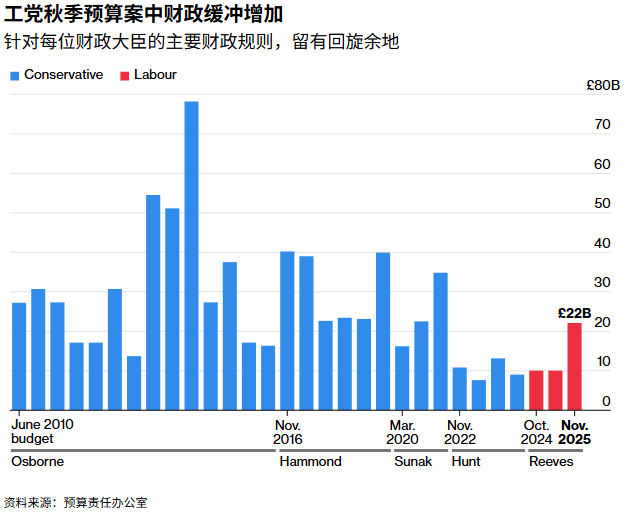
英镑反弹恐近尾声!大摩警告:英国预算案行情或是“最后欢呼”
Zhi Tong Cai Jing· 2025-11-27 08:23
Group 1 - Morgan Stanley has closed its bullish stance on the British pound, indicating that the currency may have reached its last favorable catalyst recently [1] - Following the UK budget announcement, the pound briefly rebounded against the dollar, but this upward trend is likely to fade [1][4] - The attractiveness of the pound against the dollar has diminished, with its correlation to the stock market dropping to zero and a lack of positive local drivers in the short term [1] Group 2 - The pound rose above 1.32 against the dollar after the budget announcement, signaling a more restrained government borrowing approach [4] - Morgan Stanley suggests that if the Bank of England implements sufficient rate cuts, it could alleviate negative factors affecting the pound, potentially creating more fiscal space [4] - Jefferies also anticipates that the pound's upward momentum is unlikely to persist, citing ongoing fiscal vulnerabilities as a reason for further potential weakness [4]