金税四期

Search documents
读懂2025国家账本:个税收入为何增?民生投入如何发力?
Sou Hu Cai Jing· 2026-02-11 12:15
Core Viewpoint - The Ministry of Finance has released the fiscal revenue and expenditure data for 2025, indicating a stable overall fiscal revenue with significant changes in key areas of public concern, particularly in personal income tax and corporate income tax growth [1][3]. Revenue Summary - Total fiscal revenue for 2025 is projected at 21.6 trillion yuan, a decrease of 1.7% from 2024, with tax revenue increasing by 0.8% [3]. - Personal income tax revenue reached 1.6187 trillion yuan, reflecting an 11.5% year-on-year growth, while corporate income tax revenue was 4.1304 trillion yuan, showing a 1% increase [1][4]. - The increase in personal income tax is attributed to the implementation of the "Golden Tax Phase IV" and a record high in A-share trading volumes, which boosted property income tax [5]. Expenditure Summary - Total general public budget expenditure for 2025 is estimated at 28.7395 trillion yuan, representing a 1% increase from the previous year [7]. - Key areas of expenditure include social security and employment (up 6.7%), education (up 3.2%), health (up 5.7%), and science and technology (up 4.8%) [7][8]. - The government has maintained or increased spending in essential areas despite economic pressures, indicating a commitment to social welfare [8]. Social Welfare Initiatives - In 2025, approximately 100 billion yuan is allocated for childcare subsidies, benefiting over 30 million infants, marking a significant investment in human capital [9]. - There is a recognized need for further improvement in social spending, with current broad social security expenditures at nearly 10% of GDP, compared to 18%-30% in developed countries [9][10]. - Recommendations for enhancing social welfare include increasing tax deductions for childcare and elder care to alleviate financial burdens on families [9].


境外补税来真的了!不少人炒美股被倒查
Xin Lang Cai Jing· 2026-02-10 12:40
Core Viewpoint - The article discusses the increasing scrutiny on overseas income taxation in China, particularly targeting high-net-worth individuals, as part of efforts to optimize tax revenue structures and enhance compliance with international tax standards [5][21]. Group 1: Tax Revenue and Growth - In 2025, total tax revenue is projected to reach 17,636.3 billion, reflecting a modest increase of 0.8% [2][17]. - Individual income tax (IIT) is expected to grow significantly, with a projected increase of 11.5%, outpacing other tax categories such as value-added tax and corporate income tax [3][18]. - Forecasts indicate that fiscal revenue growth will remain slow in 2026, with a fiscal deficit rate likely to stay around 4% [4][20]. Group 2: Overseas Income Tax Management - Strengthening tax management on overseas income for high-net-worth individuals is seen as a crucial path for optimizing tax sources [5][21]. - The Common Reporting Standard (CRS) is becoming increasingly effective, facilitating information exchange among over 120 countries to combat tax evasion [6][22]. - Although the U.S. is not a CRS participant, there exists a tax information exchange mechanism between China and the U.S., which is expected to improve data alignment by 2026 [7][23]. Group 3: Tax Compliance and Enforcement - Starting in late 2024, many investors will receive notifications from tax authorities urging them to self-report overseas income, with a focus on the last three years [8][24]. - The tax recovery period for overseas income has been extended, potentially reaching back to 2017 for cases of intentional tax evasion [9][25]. - Taxpayers are advised to proactively address their tax obligations to avoid penalties, as the law allows for significant fines for tax evasion [10][26]. Group 4: Tax Filing Guidelines - Chinese tax residents must report overseas income between March 1 and June 30 of the following year, covering various income types such as wages and capital gains [11][27]. - Specific guidelines for tax filing include a flat 20% tax on dividends from 2022 to 2024, and only realized gains from stock sales are subject to taxation [11][27]. - Late filings incur an 18% annual penalty starting from the end of the tax reporting period [11][27]. Group 5: Conclusion and Strategic Planning - The global trend towards financial account information exchange means that overseas income will eventually be subject to scrutiny, making early compliance advantageous [14][30]. - Taxpayers are encouraged to explore legal tax benefits and understand bilateral tax agreements to avoid double taxation [14][30].
境外补税来真的了!不少人正被倒查
Xin Lang Cai Jing· 2026-02-10 11:03
Core Viewpoint - The focus on taxing overseas income is expected to become a key area of tax administration in China, with significant implications for high-net-worth individuals and investors [1][17]. Group 1: Tax Revenue and Growth - In 2025, China's fiscal revenue growth is projected to be sluggish, with total tax revenue reaching 17.6363 trillion yuan, a mere increase of 0.8% [3][19]. - Individual income tax (IIT) has surged by 11.5%, significantly outpacing other tax categories such as value-added tax and corporate income tax [4][19]. - The increase in IIT is largely attributed to the collection of taxes on overseas income, highlighting the importance of this revenue stream [4][20]. Group 2: Tax Compliance and Enforcement - Starting in the second half of 2024, tax authorities will intensify scrutiny of overseas income, with notifications sent to taxpayers urging self-assessment and compliance [9][22]. - The retrospective period for tax collection has been extended, potentially reaching back to 2017 for cases of tax evasion, while unintentional underreporting may be limited to three years [11][24]. - The implementation of the Common Reporting Standard (CRS) facilitates international information exchange, enhancing the ability of tax authorities to track overseas income [7][21]. Group 3: Tax Filing Guidelines - Chinese tax residents must declare overseas income between March 1 and June 30 of the following year, including various income types such as wages, capital gains, and dividends [25]. - Specific guidelines for tax filing include a flat 20% tax on dividends from 2022 to 2024, with provisions for previously withheld taxes [12][25]. - Taxpayers are advised to utilize the individual income tax app for corrections or to file directly with tax authorities [13][27]. Group 4: Strategic Tax Planning - In light of increasing scrutiny, taxpayers are encouraged to proactively address their tax obligations rather than delay, as penalties and interest can accumulate [14][28]. - Understanding bilateral tax agreements can help avoid double taxation and optimize tax liabilities [14][28]. - Long-term tax planning and compliance are emphasized as essential strategies for sustainable investment [15][29].
小餐馆“假装营收少”的日子结束了
第一财经· 2026-02-06 02:49
Core Viewpoint - The article discusses the impact of new tax regulations on the restaurant industry, particularly focusing on small and medium-sized restaurants that are now facing increased scrutiny and compliance requirements due to the "Internet Platform Enterprises Tax Information Reporting Regulations" implemented in 2025 [8][9][10]. Group 1: Tax Regulations and Compliance - The new tax regulation requires platforms to report merchants' real transaction data to tax authorities, affecting not only large companies but also small restaurants that previously operated in a gray area regarding tax compliance [8][9]. - The regulation has created a "survival line" of 5 million yuan in annual revenue, where exceeding this threshold forces restaurants to transition from small-scale to general taxpayers, significantly increasing their tax burden [10][11]. - The tax rate for small-scale taxpayers is 3%, while general taxpayers face a rate of 6%, with additional implications for cash flow and profit margins [10][11]. Group 2: Impact on Small Restaurants - Small restaurants, often run by individuals with limited financial literacy, have historically underreported income and avoided tax compliance, but the new regulations are forcing them to adapt [9][10]. - Many small restaurants are now scrambling to obtain business licenses and adjust their reporting practices to avoid being classified as general taxpayers, which would increase their tax liabilities [12][13]. - The article highlights the anxiety among restaurant owners as they navigate the new tax landscape, with some resorting to strategies like underreporting income to stay below the revenue threshold [11][12]. Group 3: Industry Adaptation and Future Outlook - The article suggests that the new regulations may ultimately lead to a healthier restaurant industry by eliminating unfair competition driven by tax evasion and underreporting [25][26]. - As restaurants become more compliant, the reliance on platforms like Meituan and Douyin for sales data will increase, making it harder for businesses to manipulate their reported income [16][18]. - The shift towards compliance is expected to phase out practices like "brushing orders" and low-priced meal packages that have contributed to unhealthy competition in the industry [25][26].

融资、审计前必看!重庆哪些代账公司能帮你把“内账”做成“漂亮账”?
Sou Hu Cai Jing· 2026-01-22 03:21
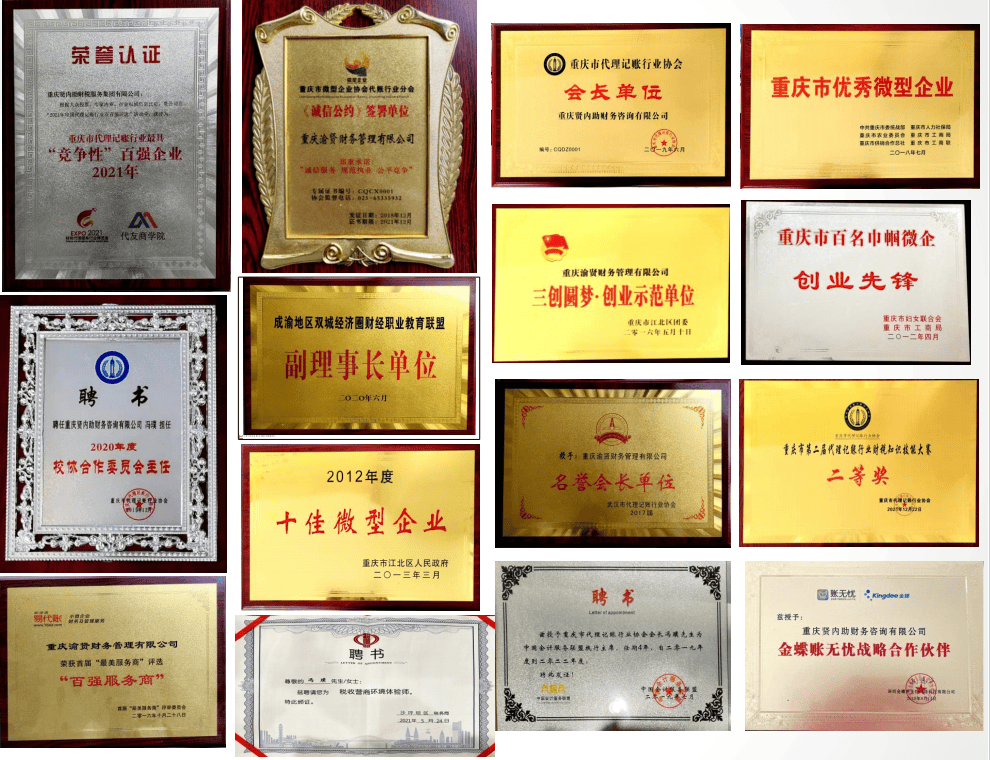
Group 1 - The core viewpoint of the article highlights the transition of tax regulation in Chongqing from "invoice-based tax management" to "data-driven tax management," which imposes significant compliance pressure on over 4 million market entities, particularly small and medium-sized enterprises [1] - Many enterprises still maintain a dual accounting system, with external accounts for tax compliance and internal accounts for actual business operations, which poses risks under digital tax supervision [1][2] - The inability to provide real, complete, and compliant financial data can lead to disadvantages in financing negotiations and missed development opportunities [2] Group 2 - The transformation from non-compliant internal accounts to a professional and compliant financial system, referred to as "beautiful accounts," is essential for many enterprises [2] - A professional "beautiful account" system can accurately reflect a company's profitability, cash flow health, and asset structure, serving as a reliable basis for management decisions and passing third-party inspections [2] - The Xian Neizhu Group has successfully assisted numerous enterprises in Chongqing in transitioning to compliant accounting practices, demonstrating the capabilities of professional institutions in creating "beautiful accounts" [2][3] Group 3 - Xian Neizhu Group helps enterprises eliminate the dual accounting model by thoroughly organizing old accounts and addressing historical issues to establish a fully compliant accounting foundation [3] - The group provides financial restructuring services that meet capital requirements, optimizing cost structures and ensuring accurate financial reporting to enhance financing success rates [3] - Xian Neizhu Group's service model includes a multi-layered support structure with experienced tax professionals and accountants, ensuring that all accounts undergo multiple reviews to meet "audit-friendly" standards [3] Group 4 - The group offers strategic support throughout the enterprise lifecycle, including equity structure design in the startup phase and cost control and tax planning during growth [5] - During the expansion phase, Xian Neizhu provides professional financial support for mergers, acquisitions, and asset divestitures, helping enterprises achieve rapid and safe growth [6] - The collaboration with local universities ensures a continuous supply of skilled financial professionals, enhancing the service quality provided to enterprises [6]
实体店一直零申报?三大致命坑已让数百老板被罚!税局最新口径来了
Sou Hu Cai Jing· 2025-12-27 14:13
Core Viewpoint - The article highlights the risks associated with zero tax declarations for physical stores, emphasizing that even within tax exemption limits, zero declarations can lead to penalties and audits due to the enhanced monitoring capabilities of the tax system. Group 1: Risks of Zero Declaration - Case of a clothing store in Zhejiang shows that declaring zero income while having significant monthly revenue (over 80,000 yuan) can lead to penalties, as all taxable activities must be reported [3] - A stationery store in Beijing faced penalties after six months of zero declarations, indicating that businesses must register for suspension if they are closed for more than three months [7] - A restaurant in Shenzhen was penalized for artificially creating a zero declaration scenario through inflated expenses, which was uncovered during an audit [8] Group 2: Tax System Monitoring - The upgraded tax system utilizes five verification dimensions, including third-party payment data, fund flows from corporate accounts, industry profit margin deviations, cost expense analysis, and upstream/downstream enterprise data [5] - The tax authority's monitoring system now includes a "three-flow comparison" that tracks cash flow, invoice flow, and goods flow to ensure compliance [9] Group 3: Correct Declaration Practices - Businesses should report income accurately, even if it falls below the exemption threshold, and avoid declaring zero income directly [10] - Loss declarations must accurately reflect costs for individual income tax, while VAT can be declared as zero [10] - New individual businesses must register for tax within 30 days, even if they have no income, and must submit zero declarations on time [10]

个税收入为何增长快?
Ren Min Ri Bao Hai Wai Ban· 2025-12-23 22:59
Core Viewpoint - The rapid growth of personal income tax (PIT) in China is attributed to stable increases in residents' disposable income, enhanced tax administration for high-income groups, and the active capital market, which collectively support the tax revenue growth [4][11]. Group 1: Personal Income Tax Growth - From January to November this year, China's personal income tax revenue reached 14,689 billion yuan, marking an 11.5% year-on-year increase [4]. - The growth rate of personal income tax has been accelerating, with quarterly increases of 7.1%, 8%, and 9.7% in the first, second, and third quarters respectively [4]. - The increase in personal income tax is primarily driven by high-income individuals, with over 60% of actual taxpayers falling under the lowest 3% tax rate [6][10]. Group 2: Tax Administration Enhancements - The tax administration has strengthened oversight on high-income earners, particularly those with overseas income and internet platform operators, leading to improved compliance and increased tax revenue [6][7]. - The implementation of the "Golden Tax Phase IV" system has significantly enhanced the efficiency of personal income tax collection, utilizing big data for better tax governance [8][10]. - As of December 8, over 7,000 domestic and foreign platforms have complied with tax information reporting requirements, contributing to a 12.7% year-on-year increase in tax payments from platform operators [7][10]. Group 3: Capital Market Influence - The active capital market has positively impacted personal income tax revenue, with high-income earners contributing significantly to tax collections [11][12]. - The trading volume in the stock market has remained high, with daily transactions exceeding 1 trillion yuan for 143 consecutive trading days, indicating robust market activity [11]. - Historical data suggests that during periods of capital market activity, personal income tax revenue growth typically outpaces overall economic growth [12].

600096:补税近4亿元,今年A股补税已超35亿元!
Xin Lang Cai Jing· 2025-12-03 14:04
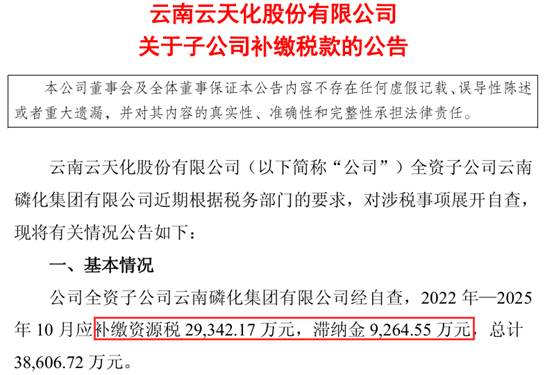
Core Viewpoint - Yunnan Yuntianhua Co., Ltd. has conducted a self-examination of tax matters as required by tax authorities, revealing a total tax payment and late fees of approximately 386.07 million yuan [1][2][10]. Company Overview - Yunnan Yuntianhua's main business includes fertilizers, phosphate mining, phosphate chemicals, new materials, and trade logistics, with key products such as urea, monoammonium phosphate, diammonium phosphate, compound fertilizers, phosphate rock, polyoxymethylene, yellow phosphorus, feed-grade calcium hydrogen phosphate, and iron phosphate [4][10]. Financial Performance - For the first three quarters of 2025, the company reported a revenue of 37.5 billion yuan and a net profit attributable to shareholders of 4.7 billion yuan [4][10]. - The total tax payment and late fees amount to approximately 8% of the net profit, while the total tax payments made by the company in the same period reached 2.4 billion yuan [4][10]. Tax Compliance Context - Yunnan Yuntianhua is the 76th listed company this year to pay back taxes and late fees, with a cumulative amount exceeding 3.5 billion yuan across all companies [10]. - Among the companies that have paid back more than 100 million yuan, Yunnan Yuntianhua's tax payment is significant, highlighting the ongoing trend of tax compliance issues among listed companies [5][10]. Industry Trends - The implementation of the Golden Tax Phase IV marks a significant shift towards digital tax governance in China, emphasizing the importance of tax compliance for companies [8][13]. - The digital tax system is designed to redefine compliance boundaries, encouraging companies to internalize compliance as a core aspect of their operations [13].

黄金珠宝经销商专家交流
2025-12-01 16:03
Summary of the Conference Call on the Gold and Jewelry Market Industry Overview - The gold and jewelry market in Henan experienced a significant slowdown in growth, with an increase of only 3.6% in October 2025, compared to 30%-50% in previous months. This slowdown is attributed to a 50% rise in gold prices and uncertainty surrounding tax reforms, particularly affecting the capital city, Zhengzhou, due to low wedding demand [1][4]. Key Points and Arguments - **Impact of Tax Reform**: The tax reform primarily targets investment gold bars, with upstream factories currently invoicing at a 13% VAT, leading to an increase of 70 RMB per gram in upstream costs, resulting in retail prices exceeding 1,200 RMB per gram. Domestic brands like Lao Feng Xiang and Lao Miao allow the exchange of old materials, mitigating cost pressures compared to Hong Kong brands like Chow Tai Fook and Chao Hong Ji, which do not allow such exchanges [1][5]. - **Sales Performance**: In November, overall sales performance was poor due to the off-season, with a 6.3% increase in monetary sales but a 24.6% decline in inventory weight. Lao Feng Xiang showed the best performance with a 12.6% year-on-year growth, while Chow Tai Fook reported a sales figure of 2.27 billion RMB due to software issues [2]. - **Market Dynamics**: The investment gold bars account for about 3% of the market, with most sales still focused on jewelry. The proportion of fixed-price products has increased, with Chow Tai Fook at 35.7% in Henan, while other brands like Lao Feng Xiang and Lao Miao are lower at 10-12% [3][10]. - **Inventory and Supply Chain**: There was a 20% decline in inventory in November, influenced by gold price fluctuations, rumors of the end of the Russia-Ukraine war, and uncertainties from tax reforms. Many brands reduced their purchase volumes due to cash flow issues caused by rising gold prices [11]. - **Government Regulation**: The government may enhance regulations on the recovery and trading of old materials and require upstream factories to purchase raw materials from the Shanghai Gold Exchange to reduce tax evasion [7]. - **Consumer Sentiment**: Consumers are primarily feeling the impact of rising gold prices. However, with increased transparency regarding potential tax increases, their initial wait-and-see attitude has eased, and wedding demand remains a significant factor [9]. Additional Important Insights - **Brand Strategies**: Major brands are reducing pressure on franchisees and developing IP series and high-end products to increase margins. Approximately 70% of purchases from leading brands are now series or IP products, which helps differentiate them from lower-end brands [12][13]. - **Future Expectations**: The willingness of consumers to spend in 2026 will depend on the clarity of tax policies. If the government clarifies that only investment gold bars will be taxed, it could significantly lower costs for franchisees and boost confidence in purchasing [17]. - **Franchisee Challenges**: Franchisees are currently facing challenges due to high tax burdens and are reducing inventory in anticipation of price corrections and tax policy changes. Many are also experiencing cash flow issues due to high inventory costs [15][16]. - **Brand Goals for 2026**: Brands are discussing their targets for 2026 with franchisees, with many facing declining sales targets due to store closures and high tax burdens. For instance, Lao Miao has projected a nearly 20% decline in order volume for 2025 [18].



你的境外收入,税务局开始“点名”了
经济观察报· 2025-11-24 12:49
Group 1: Tax Revenue Growth - Personal income tax revenue in China reached 13,363 billion yuan from January to October 2025, showing a year-on-year growth of 11.5%, with October's growth rate jumping to 27.3% [2] - The increase in personal income tax is attributed to improved tax administration efficiency and diversification of tax sources, reflecting significant progress in tax governance capabilities [3][5] - The growth in personal income tax revenue is closely linked to enhanced tax collection efforts, particularly regarding overseas income [8] Group 2: Overseas Income Tax Compliance - Tax authorities in major cities have been actively notifying Chinese tax residents who invest in overseas stocks through platforms like Futu and Tiger Brokers to complete their tax declaration for overseas stock trading gains from 2022 to 2024 [1][5] - The implementation of the "Golden Tax Phase IV" has improved the monitoring of cross-border income and enhanced the identification of hidden income among high-net-worth individuals [5][6] - This year marks the first large-scale collection of overseas income tax from Chinese tax residents, utilizing tools like the Common Reporting Standard (CRS) for information exchange [7][8] Group 3: Factors Supporting Tax Revenue Growth - The active capital market has significantly contributed to the increase in capital income, which is a key driver of personal income tax growth [10][11] - High-income groups have shown resilience in their income, with substantial growth in stock option income and performance bonuses among professionals, further supporting tax revenue [11] - Economic recovery and low base effects from the previous year have amplified the growth rate of personal income tax [11]